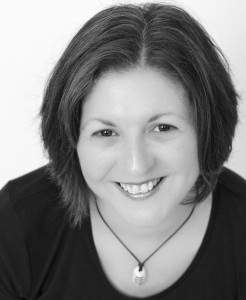
 A Birmingham author and member of the Historical Novel Society, Elaine grew up in an Anglo-Italian family. She attributes her lifelong interest in story-telling to the roguish tales her grandfather told of his Italian childhood, and family holidays visiting ancient burial sites and stone circles. She loves languages, history and travel and lives with her family and their chocolate labrador. A Birmingham author and member of the Historical Novel Society, Elaine grew up in an Anglo-Italian family. She attributes her lifelong interest in story-telling to the roguish tales her grandfather told of his Italian childhood, and family holidays visiting ancient burial sites and stone circles. She loves languages, history and travel and lives with her family and their chocolate labrador.
Congratulations on the release of your first title Wulfsuna, set in AD 433. Now, as a ‘Roman’, I’d like to know how much connection, or not, you felt to the shadow of the Roman presence in Britain as you described the Wolf Sons’ adventure?
First of all, thank you very much Alison for inviting me to be a guest on your blog. Wulfsuna seems to have had a good start in life and I’m so happy to be sharing it with everyone.
 From the first moments of writing Wulfsuna I was conscious of what presence may, or may not, remain of the Roman Empire’s influence in mid-5th century Britain. The first prose I wrote was for my heroine, a young Romano-British resident of a wealthy, wool-trading settlement. Her story relied heavily on how much (or how little) others in her community had held onto, or released the ideals of Roman life. Unable to obtain much written evidence and with varying professional opinions that were no more than assumptions, I chose to use this to my advantage. From the first moments of writing Wulfsuna I was conscious of what presence may, or may not, remain of the Roman Empire’s influence in mid-5th century Britain. The first prose I wrote was for my heroine, a young Romano-British resident of a wealthy, wool-trading settlement. Her story relied heavily on how much (or how little) others in her community had held onto, or released the ideals of Roman life. Unable to obtain much written evidence and with varying professional opinions that were no more than assumptions, I chose to use this to my advantage.
In such an unstable economic climate, even a 5th century one, I imagined there would be divided opinion: those who wanted to retain their Roman way of life and feasibly others who yearned to rediscover their Brytonic roots. For instance, under the Empire the carrying of weapons had been forbidden. With an increasing threat from several Germanic tribes in the east, freedom to carry arms would have been enticing to many wealthy landowners. Likewise, the subservience of women, as was the case in Roman culture, could have been something female Romano-Brytons craved. A return to the liberating ‘woman of the house’ ideal of their maternal ancestors must also have been a lure. Finally, setting my novel twenty years or so after Rome’s departure meant a generation had passed and along with it, as nowadays, their elders’ views and ideals. The youth of the time would be looking to forge futures of their own, in a world independent of Rome and under threat from foreign attack.
What has been the most surprising thing – good or bad – on your journey to publication? And during your research?
Believe it or not, I hated the idea of Twitter and yawned derisively at yet another social media platform. My husband encouraged me to join and I soon discovered it to be a great place to meet other writers, either starting out as I was, or published authors; that all of these word-lovers conversed as equals was a revelation to me. Access to professional authors and their wealth of experience has aided me greatly in my journey to publication. Writing is no longer a lonely profession!
 Another stand-out moment for me was sending Wulfsuna off for a professional edit, advised by one of the authors I had met online. I bit the bullet and paid the fee. When I received the 6-page report I cried and hid the paperwork away for a week. Eventually I forced myself to read it thoroughly and made notes. The result meant a huge rewrite and the addition of several chapters, but I am extremely happy I followed it through. (Ha! Some encouragement here on using reader reports) Another stand-out moment for me was sending Wulfsuna off for a professional edit, advised by one of the authors I had met online. I bit the bullet and paid the fee. When I received the 6-page report I cried and hid the paperwork away for a week. Eventually I forced myself to read it thoroughly and made notes. The result meant a huge rewrite and the addition of several chapters, but I am extremely happy I followed it through. (Ha! Some encouragement here on using reader reports)
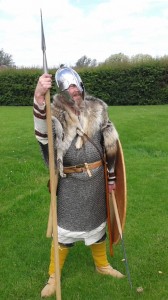
As for surprises in research, I asked a re-enactment friend to take me through some Saxon combat moves to assist me in adding some realism to battle scenes. I never realised the equipment weighed so much! Struggling beneath a helmet that felt as though it was going to snap my neck and taken off-balance by a 3-foot shield, it took all my strength to stand, let alone fight. However, these sensations and the smell and feel of all the equipment gave me a peek into the world of the Saxon warrior, which I would not have obtained simply reading about it.
I would never had believed you were a reluctant Tweeter, Elaine!
So what’s Wulfsuna about?
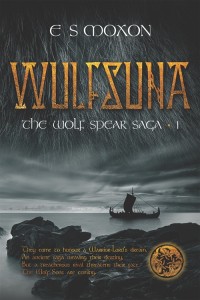 AD433. Torn apart when Rome abandoned Bryton, the Wulfsuna are a disparate tribe. AD433. Torn apart when Rome abandoned Bryton, the Wulfsuna are a disparate tribe.
Twenty years on, two long ships sail for the east fens to honour their Warrior-Lord’s dream and reunite with lost kin. Soon after landing however, a murderous betrayal divides loyalties, some craving revenge and others indignant on pursuing their Lord’s dream. Blood and brotherhood are tested to their deadly limits.
The discovery of a young Seer adds to the turmoil. Expelled from her village after foretelling of an attack by blue painted savages, the Wulfsuna are equally wary of one they call ‘Nix’. None fear her more than Lord Wulfgar, who refuses to believe an ancient saga bearing his name, is weaving the Seer’s destiny into his own. But a treacherous rival threatens their fate and Wulfgar must accept the Seer’s magic may be all that can save them.
Wulfsuna is available now from Amazon UK, Amazon US, Kobo, and the paperback direct from SilverWood Books or via any bookshop. Watch the book trailer.
Find out more about Elaine, Wulfsuna and post-Roman Britain on her blog. Connect with her on Facebook, Twitter and Goodreads.
Thank you, Elaine. I’m reading Wulfsuna at the moment – looking good!
Alison Morton writes the Roma Nova thrillers, INCEPTIO, and PERFIDITAS. Third in series, SUCCESSIO, is now out.
Find out more about Roma Nova, its origins, stories and heroines…
If you enjoyed this post, do share it with your friends!Like this:Like Loading...
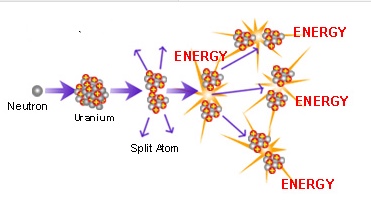
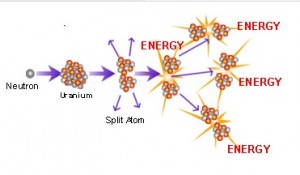 So, split the atom time. Well, as I’ve created two blogs out of one, it’s more a case of splitting the byte. So, split the atom time. Well, as I’ve created two blogs out of one, it’s more a case of splitting the byte.
Being an author today means developing entrepreneurial skills, especially marketing ones. I’m not talking about selling – although that’s ultra important – but about making people aware of your book’s, or books’, existence. It’s a slippery concept, marketing, but for me it means setting out your wares, and creating an environment that supports that.
But bewilderment grows if you try to include everything in one wrapper (or blog). Think of your weekly grocery shopping expedition at the supermarket; milk, eggs, bread, veg, fruit, meat/fish, juice, yoghurt, cereal, tea, coffee, etc. Basically food, with a bottle of shampoo and some multiple purpose cleaning product thrown in. But wait, you can also buy clothes, petrol, books, cameras, TV, tyres, banking services, insurance, a holiday.
Confused?
Well, I am. If I want a bank, I go to an, er, bank. For my insurance, I go to an insurer or broker, tyres come from a garage, a holiday from an online specialist or a travel agent – all dedicated to that sector and usually giving you a wide choice and good advice. I know where I am with a specialist.
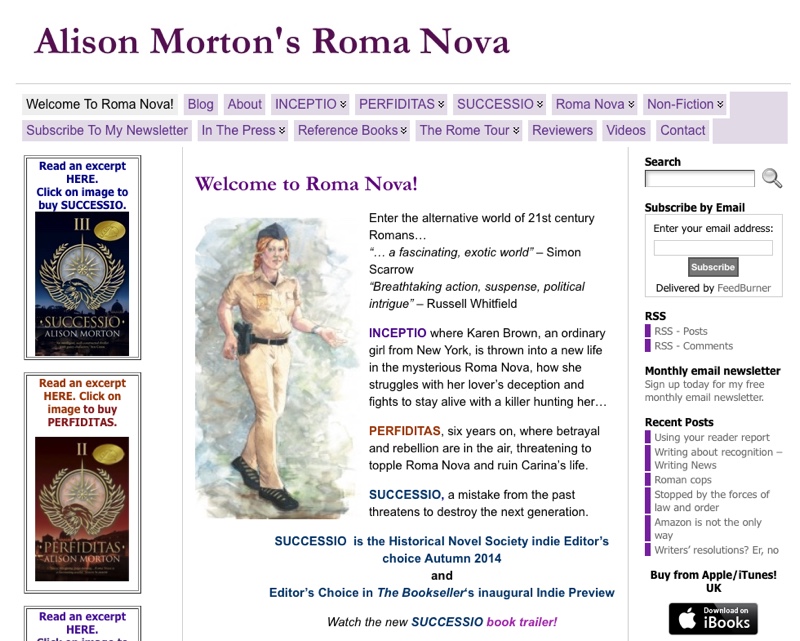
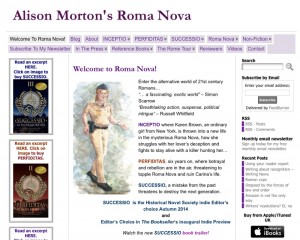 My website, originally Write A Novel? I Must Be Mad! had one main theme – a newbie’s adventures in writing-and-publishing-land, peppered with the odd post about Rome and alternative history. When my first book, INCEPTIO, came out, I changed it to Alison Morton’s Roma Nova and added in stuff about my books. My website, originally Write A Novel? I Must Be Mad! had one main theme – a newbie’s adventures in writing-and-publishing-land, peppered with the odd post about Rome and alternative history. When my first book, INCEPTIO, came out, I changed it to Alison Morton’s Roma Nova and added in stuff about my books.
Now with the fourth book, AURELIA, on the way, it’s time for another change. I asked for specialist advice. Reading the report (with a slightly sinking heart), I had to agree with it and acknowledge that Alison Morton’s Roma Nova was too fuzzy and cluttered. People looking for my books also got a raft of writing topics; others looking for writing and publishing kept getting all this Roman and Roma Nova stuff.
But I didn’t want to abandon any group of readers, so I put my site-splitting gloves on and decided to develop in both directions. In the past six years, I’ve accumulated knowledge and experience on writing and publishing topics and techniques and, while in no way setting myself up as a guru, would like to pass them on. Whether you want to read them is up to you. 😉
On Alison Morton’s Writing Blog (here!) you’ll be able to find my posts about writing, independent publishing, marketing, fabulous guests, research, author-entrepreneur skills, writing life and what I’ve been up to!
The darker Alison Morton, Author of the Roma Nova Thrillers features my books, plus this is where I’ll concentrate my photos and posts about Rome, alternative history and background about Roma Nova. And I have a very serious photo and tough new bio there…
Alison Morton is the author of Roma Nova thrillers, INCEPTIO, and PERFIDITAS. Third in series, SUCCESSIO, is now out.
Find out more about Roma Nova, its origins, stories and heroines…
If you enjoyed this post, do share it with your friends!Like this:Like Loading...
 This is one for the writers, but readers might be interested in a vital part of the process that goes to producing a story. I say producing, because like a piece of pottery, a story starts as a heap of dull, wet mud. Writing the first draft is like throwing that heap on to the wheel and teasing out a not-too-bad shape. After several tries, and a lot of concentration, hard work an a dollop of inspiration, you eventually have a well-shaped story which holds together, with no holes and no obvious imperfections. Now it has to be finished, decorated and glazed before firing in the publishing process. (Or do I mean kiln?) This is one for the writers, but readers might be interested in a vital part of the process that goes to producing a story. I say producing, because like a piece of pottery, a story starts as a heap of dull, wet mud. Writing the first draft is like throwing that heap on to the wheel and teasing out a not-too-bad shape. After several tries, and a lot of concentration, hard work an a dollop of inspiration, you eventually have a well-shaped story which holds together, with no holes and no obvious imperfections. Now it has to be finished, decorated and glazed before firing in the publishing process. (Or do I mean kiln?)
Writers use different finishing routes; mine always includes a professional (yes, parting with money!) report. If you are lucky enough to be a member of the Romantic Novelist’ Association’s New Writers Scheme, you will receive a massively subsidised report as part of your membership.
Professional readers can be multi-published authors, editors, creative writing tutors or literary consultants. Obviously, you will have checked out their qualifications and track record. Personal recommendation and references are vital; you are handing over your hours of hard graft, inspiration and possibly a part of your soul.
After a few weeks, the report drops into your inbox. Whether it’s the first time or the fourth time (as it is for me), the feelings of excitement and dread intermingle; did the reader ‘get’ your story? Is it a potential bestseller or a heap of crap? Are they going to suggest you take up accountancy instead?
 Make a cup of tea/coffee and open the damned thing; it’s done. This may sound hard, but nothing you feel now is going to change the report. You’ll be better off using that nervous energy in working on the revisions which result from it. But I’m getting ahead of myself – something I am told I do when I read my report. 😉 Make a cup of tea/coffee and open the damned thing; it’s done. This may sound hard, but nothing you feel now is going to change the report. You’ll be better off using that nervous energy in working on the revisions which result from it. But I’m getting ahead of myself – something I am told I do when I read my report. 😉
Let’s get practical
1. Sit quietly and read through it fairly quickly. That gets rid of anticipation and you can then read the content properly and with your writing brain rather than your emotions.
2. Then look at the structure of the report. Usually, there’s a general/introductory section at the beginning (usually with some nice words!), followed by headed sections about the chief concerns, for example, start of the story, each major character, minor characters, setting/world building, plot, then options and ways forward.
3. Reports will normally pinpoint only the weaker areas. If something isn’t mentioned or is only included in the introductory section with praise, then you’ve cracked those areas and don’t need to worry.
4. Print the report out in 1.5 spacing, or double, if you prefer. (I use up my old business letterhead for this internal stuff, so ignore the logo in the image.) Next mark up the report. You can’t use it effectively until you’ve analysed it. I underline the key words/phrases, e.g. “One of your strengths is writing action scenes.” I don’t need to underline “They are all terrific, immediate, visceral” which develops that comment, although I do go back and read it when I have an attack of self-doubt!
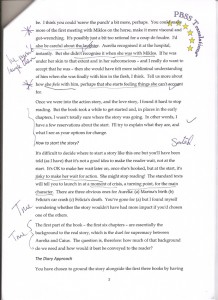 Moving on… “You have a lovely turn of phrase” I just tick that – job done. Then you read ”But I’d be careful about…” For me that’s a massive asterisk in the margin – an action point that must be addressed. I mark up things where I see the reader is right with ’True’. This alerts me to revisit that section of my manuscript. And importantly, any factual queries, I mark with ‘Check’. Doing this analysis methodically takes the sting out of any negatives identified. You are a in worker mode rather than reactor mode. Moving on… “You have a lovely turn of phrase” I just tick that – job done. Then you read ”But I’d be careful about…” For me that’s a massive asterisk in the margin – an action point that must be addressed. I mark up things where I see the reader is right with ’True’. This alerts me to revisit that section of my manuscript. And importantly, any factual queries, I mark with ‘Check’. Doing this analysis methodically takes the sting out of any negatives identified. You are a in worker mode rather than reactor mode.
5. If the reader has also annotated the text, work through those comments first, bearing in mind the overall points made in the report. A warning – you will find other things the reader hasn’t mentioned but which scream out at you now your senses are alerted. This is a great opportunity to tighten up other parts of the text and snip bits out of scenes that you now see are superfluous. And to develop scanty scenes which could contribute much more.
6.When you’ve finished that run through, have a glass of wine to celebrate. (Juice/tea/coffee as you prefer, but I need wine at this stage.)
7. Next day, sit at your keyboard and work through the general points underlined in the report. If it’s a major restructure, print out the sections/chapters concerned and work on them with a pen. You will be able to scribble, circle and arrow them much more easily than on the screen. You may even find a pair of scissors and a stapler/gluestick handy…
You may feel you’re starting all over again, but altering the detailed comments in the days before will have slotted you back into the story after a break of several weeks. I’ll ‘fess up – I had dithered around at the start of my latest manuscript, AURELIA, and had several interesting but redundant chapters at the beginning. Following the advice in my report, I consigned six chapters to the pyre, but two tighter chapters, full of tension, emotion and action, emerged from the flames.
8. No, you haven’t finished! Send the revised manuscript to your Kindle/print it out in single spacing and read it through as if it were a ‘real book’. Make notes, but don’t stop to change anything or you’ll lose the flow.
9. Incorporate changes you have spotted on your read through.
10. Send the manuscript to a trusted friend/critique partner/beta reader asking them to comment on the reader experience. They shouldn’t spot spelling, bad grammar and typos; you will have sorted out those glitches by now.
11. Final check and then send the manuscript off to the next stage, be it agent, publisher, or as I do to my copy editor before it I publish it under my Pulcheria Press imprint.
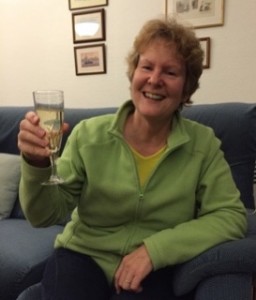 Now is definitely time to celebrate – you’ve achieved a huge step in your book’s existence. Now is definitely time to celebrate – you’ve achieved a huge step in your book’s existence.
Sometimes, a reader report is a genuine dud, but not often. In that case, go back to the reader/organisation and set out your points logically why it didn’t meet your expectations; keep the emotion out. Out of six reports from various sources, I’ve only had one poorly produced one and even the scheme organiser thought it wasn’t very good and offered me a second one free!
A reader’s job is not to slate, target or destroy your work and your confidence, but to show you weaknesses, and offer you ways to remedy them. They are industry professionals who want good books for the public. However emotionally you feel about it at first, do the hard work on it and it will not only make the current story better but also help you develop as a writer.
Any other tips?
Updated November 2021: Alison Morton is the author of Roma Nova thrillers – INCEPTIO, CARINA (novella), PERFIDITAS, SUCCESSIO, AURELIA, NEXUS (novella), INSURRECTIO and RETALIO, and ROMA NOVA EXTRA, a collection of short stories. Audiobooks are available for four of the series.Double Identity, a contemporary conspiracy, starts a new series of thrillers. Double Pursuit, the sequel, is now out!
Find out more about Roma Nova, its origins, stories and heroines and taste world the latest contemporary thriller Double Identity… Download ‘Welcome to Alison Morton’s Thriller Worlds’, a FREE eBook, as a thank you gift when you sign up to Alison’s monthly email newsletter. You’ll also be among the first to know about news and book progress before everybody else, and take part in giveaways.
If you enjoyed this post, do share it with your friends!Like this:Like Loading...
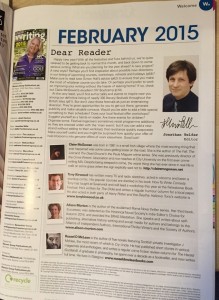 It’s a funny time to be pursuing a writing career, but an exciting one. All authors, apart from the biggest names, need to publicise their own books whether they’re self-published, small press or even big house published. It’s a funny time to be pursuing a writing career, but an exciting one. All authors, apart from the biggest names, need to publicise their own books whether they’re self-published, small press or even big house published.
Writing Magazine commissioned me to write a piece about how to seek and find recognition in today’s fiercely competitive publishing marketplace.
I set out what I had done and what had worked for me – a ‘how to’ list in very practical terms!
Define your goals and satisfaction levels
How to measure recognition
The seven interlinked tactics
Social media/’platform’
Endorsements
Reviews
Awards
Memberships
Press/online articles
Events
The inner secret…
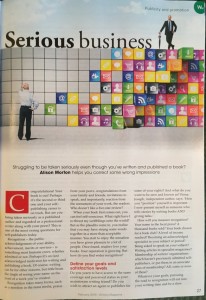 It was also a good exercise for me to review my own objectives for 2015! I called on writing colleagues to contribute experience on some of the subjects – a practical example of writers collaborating! It was also a good exercise for me to review my own objectives for 2015! I called on writing colleagues to contribute experience on some of the subjects – a practical example of writers collaborating!
Each author is different with different time and money resources, and can’t do everything, but I hope I’ve planted a few seeds.
Here’s how it starts:
“Congratulations! Your book is out! Perhaps it’s the second or third one and your self-publishing career is on track. But are you being taken seriously as a published author and regarded as a professional writer along with your peers? This is one of the most vexing questions for self-publishers today….”
You can read the full article in the February edition of Writing Magazine. It’s out now and available at most newsagents.
Alison Morton is the author of Roma Nova thrillers, INCEPTIO, and PERFIDITAS. Third in series, SUCCESSIO, is now out and Book 4 is in the editing process!
Find out about Roma Nova book progress, news, writing tips and info by signing up for my free monthly email newsletter.
If you enjoyed this post, do share it with your friends!Like this:Like Loading...
Thinking about police, gendarmes and emergency services in the past few days brought me to the law enforcers of Ancient Rome. Faced with terrorist attack (or riot, revolt and rebellion), they would have been robust in their attitude and actions. So who policed Rome?
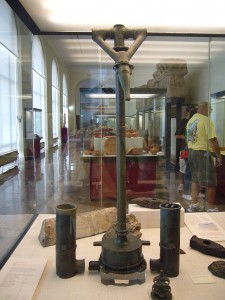 Portable Roman fire engine nozzle, Madrid Museum (Creative Commons) Vigiles as a public service were founded by Augustus as a new firefighting force to replace the private, often haphazard, groups. In AD 6, he levied a 4% tax on the sale of slaves to finance the service. They were commanded by the praefectus vigilum, who was of equestrian rank, and organised into seven cohorts of 500, later 1,000 men, each commanded by a tribune. A cohort would patrol two of the city’s fourteen administrative districts (regiones) from sub-stations throughout the city, plus detachments were stationed at Rome’s ports of Ostia and Portus.
Vigiles were dual role: they also acted as a night watch, keeping an eye out for burglars, cut-throats and low-life, and hunting down runaway slaves. Sometimes, they were used to maintain order in the streets. As well as the power to break into houses if they suspected an out-of-control fire inside, and demolish property to create firebreaks, vigiles could also check if householders had firefighting equipment and a ready reserve of water. If not, householders could be punished for negligence. So there was an element of preventative work as well as powers of investigation and enforcement…
In their firefighting role, the vigiles had a variety of specialist troops such as sifonarii, who worked the pumps, uncinarii, men who used grappling hooks, aquarii who identified and supervised the supply of water. As with true military forces, the vigiles enjoyed the benefit of their own medical support with four doctors (medici) attached to each cohort. The ordinary firefighters were called milites (soldiers).
For firefighting, the vigiles used quilts or mats, (most likely soaked in water and used to smother flames), ladders, axes, fire buckets made of rope treated with pitch, poles and hooks to push and pull over fire damaged walls. The height of sophistication was a sipho, a fire engine, pulled by horses and consisting of a large double-action pump that was partially submerged in a reservoir of water and fitted with a directional nozzle.
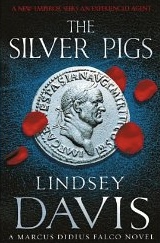 Recruited from the lower levels of Roman society, often ex-slaves, vigiles were not as highly regarded as their other policing colleagues. But their job wasn’t easy… Recruited from the lower levels of Roman society, often ex-slaves, vigiles were not as highly regarded as their other policing colleagues. But their job wasn’t easy…
I heartily recommend reading Lindsey Davis’ Falco series which features Petro (Lucius Petronius Longus), a vigiles watch captain in charge of a disparate lot and who helps main hero Falco investigate dastardly deeds in Ancient Rome.
Cohortes urbanae, also created by the ever busy Augustus, were formed to counterbalance the enormous power of the Praetorian Guard. The cohorts’primary role was to police Rome and to counteract the roaming mobs and gangs that so often haunted its streets during the Republic. These urban cohorts thus acted as a heavy duty police force, capable of riot control duties, while their contemporaries, the vigiles, had the day-to-day role of policing the streets and protecting against fires.
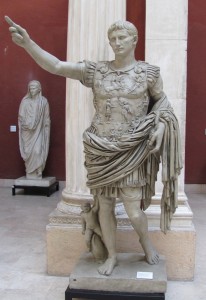 Augustus Originally, the cohortes urbanae were divided into three cohorts of around 500 men, each commanded by a tribune and six centurions. In the time of the Flavians (Vespasian, Titus and Domitian), this increased to four cohorts. Only free citizens, mainly of Italian origin, were eligible to serve in their ranks.
The man in charge of all the cohortes urbanae was the urban prefect (praefectus urbanus or praefectus urbi), a magistrate tasked with maintaining order in the city and within a hundred mile circumference. He was also tasked with administering the emperor’s laws, superintending guilds and corporations (collegia), overseeing officials responsible for the drainage of the Tiber and the maintenance of the city’s sewers and water supply system, as well as its monuments. Most importantly, he was ultimately responsible for the city’s provision with grain from overseas for the city’s large population; if the prefect failed to secure adequate supplies, riots usually broke out.
Urban cohorts, (known as city cohorts in non-Roman cities) were later created in both the Roman North African city of Carthage and the city of Lugdunum in Roman Gaul (modern Lyon).
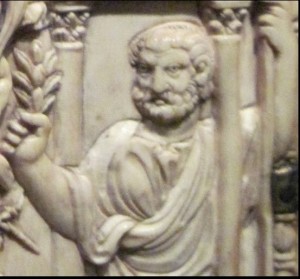 Symmachus In Late Antiquity, when the imperial court moved from Rome itself, the office of urban prefect became more powerful, as it was no longer under the emperor’s direct supervision or even his eye. Interestingly, from the Roma Nova angle, the office was usually held by leading members of Italy’s still largely pagan senatorial aristocracy. In such a capacity, Symmachus played a prominent role in the controversy over the Altar of Victory in the late 4th century.
So there are some parallels and overlaps with modern day services. In the UK, police (regionally based), military, fire brigades and ambulance/paramedic services are separate. Here in France, there are two police services – municipal (local) and gendarmerie (paramilitary). Ambulances are organised privately and publicly, but it’s a firefighter who is likely to arrive first at an accident and carry out paramedic services.
Alison Morton is the author of Roma Nova thrillers, INCEPTIO, and PERFIDITAS. Third in series, SUCCESSIO, is now out.
Find out about Roma Nova news, writing tips and info by signing up for my free monthly email newsletter.
If you enjoyed this post, do share it with your friends!Like this:Like Loading...
|
Subscribe to Blog via Email
Join 368 other subscribers.
Categories
Archive
|
 A Birmingham author and member of the Historical Novel Society, Elaine grew up in an Anglo-Italian family. She attributes her lifelong interest in story-telling to the roguish tales her grandfather told of his Italian childhood, and family holidays visiting ancient burial sites and stone circles. She loves languages, history and travel and lives with her family and their chocolate labrador.
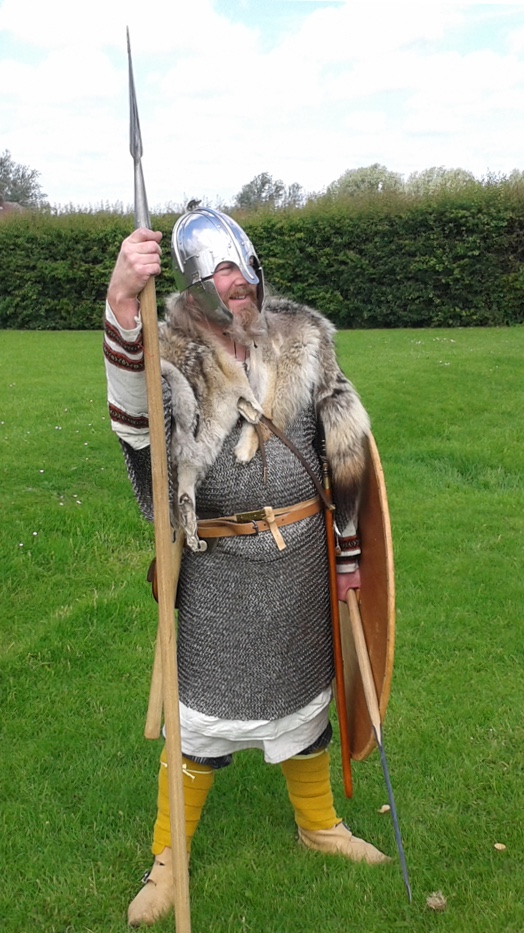 From the first moments of writing Wulfsuna I was conscious of what presence may, or may not, remain of the Roman Empire’s influence in mid-5th century Britain. The first prose I wrote was for my heroine, a young Romano-British resident of a wealthy, wool-trading settlement. Her story relied heavily on how much (or how little) others in her community had held onto, or released the ideals of Roman life. Unable to obtain much written evidence and with varying professional opinions that were no more than assumptions, I chose to use this to my advantage.
 Another stand-out moment for me was sending Wulfsuna off for a professional edit, advised by one of the authors I had met online. I bit the bullet and paid the fee. When I received the 6-page report I cried and hid the paperwork away for a week. Eventually I forced myself to read it thoroughly and made notes. The result meant a huge rewrite and the addition of several chapters, but I am extremely happy I followed it through. (Ha! Some encouragement here on using reader reports)
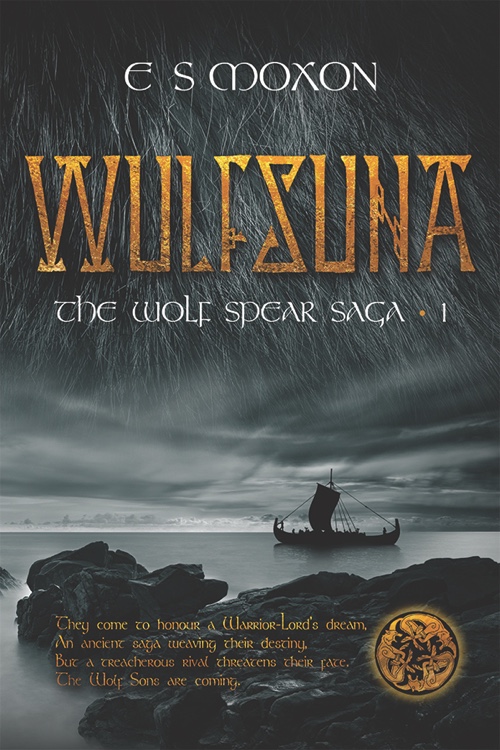 AD433. Torn apart when Rome abandoned Bryton, the Wulfsuna are a disparate tribe.