 My writing friend and pirate lady-in-chief/1066 chronicler Helen Hollick has nominated me as a versatile blogger. It’s a way to recognise other bloggers and introduce them and their readers to new blogs. And people blog about the most amazing subjects… My writing friend and pirate lady-in-chief/1066 chronicler Helen Hollick has nominated me as a versatile blogger. It’s a way to recognise other bloggers and introduce them and their readers to new blogs. And people blog about the most amazing subjects…
So, what do I have to do?
1. Display the logo (cut and paste it from her post)
2. Write a post and link back to the blogger who nominated me
3. Post seven interesting things about myself (am I that interesting?)
4. Nominate up to fifteen other bloggers (and why I’ve nominated them)
5. Inform them of their nomination
Seven things about me:
1. I grew up reading Children of the New Forest (Marryat), Heidi (Spyri), The Jennings series (Buckmaster), The Emerald Crown (Needham), Eagle of the Ninth (Sutcliff) and Narnia (Lewis). As a teenager, I passed on to The Saint (Charteris), Regency novels (Heyer), Pride and Prejudice (Austen), Modesty Blaise (O’Donnell) and The Prisoner of Zenda (Hope).
2. I’ve spoken French since I was five.
3. Roman Europe has been my playground from age eleven: Ampurias, Orange, Nimes, Lullingstone, Arles, Saarlburg, Zadar, Pont du Gard, Trier, Narbonne, Cyprus, Carleon and lately Cannae, Pompeii and Rome. On a dig at Usk, I once found a Roman glass vial – a proud moment!
4. My six years in the reserve forces were anything but reserved. I did a lot of very interesting things I can’t talk about, even now.
5. I love wine tasting, talking and listening, and planning trips but am not good at being bored.
6. I’m fascinated by gender attitudes, especially towards women in the military. In fact I wrote my masters’ dissertation on it and turned it into Military or Civilians?
7. I spend too much time on social media, but I learn so much from, and about, other people.
In my turn, I nominate a versatile selection for you!
1. Nik Morton (No relation!) He writes adventure, spies and Westerns at a prolific rate and has a terrific wide-ranging blog
2. Elaine Moxton who loves post-Roman Britain and writes a mean blog
3. David Ebsworth – who writes about heroines at Waterloo, the kraals at Ulundi, the Spanish Civil War and Jacobites. You can’t get more versatile than that!
4. Charlene Newcomb who writes historical, mainstream & SciFi with roots in the Star Wars expanded universe. Loves travel, coffee, & chocolate. Nuff said!
5. Debbie Young – who writes about the world of independent publishing, short stories, flash fiction and is commissioning editor of the Alliance of Independent Authors’ blog as well as advisor on marketing and PR.
6. J J Marsh – the creator of DI Beatrice Stubbs and writing guru
7. Mark Patton – another ‘Roman writer’, very clever and insightful – a treat to read his posts
8. Antoine Vanner – who writes about the Victorian age of stem, heroes, warfare, and moral dilemmas
9. Stephanie Hopkins – Her ‘Layered Pages’ is a famous book blog – guaranteed versatility!
Enjoy!
Alison Morton is the author of Roma Nova thrillers, INCEPTIO, PERFIDITAS and SUCCESSIO. The fourth book, AURELIA, is due out in May 2015.
Find out more about Roma Nova, its origins, stories and heroines…
If you enjoyed this post, do share it with your friends!
Readers never cease to surprise me – that’s the chief finding of the survey I ran over three weeks at the end of January/ beginning of February. I wanted to know how readers found the books they read and how they interacted with authors. It was pure curiosity combined with a sincere wish to give my readers what they want. Thank you so much to everybody who completed it!
So what were the questions and answers?
First, I asked what readers’ favourite genres were; although a huge range, crime/mystery/thriller, historical, romance and sci-fi/fantasy were most represented. I deliberately did not give readers a prompted choice; I wanted to see what they came up with! Read the complete list.
Next, “Where do you learn about new books?” Here, I didn’t include print media, only social media; perhaps this was a mistake, but it still produced an interesting result.
Friends, book blogs, social media book groups/clubs, social media generally and browsing Internet stores are the main sources with email from the author as the least important. Browsing in bookshops/stores was, I’m happy to see, was also significant.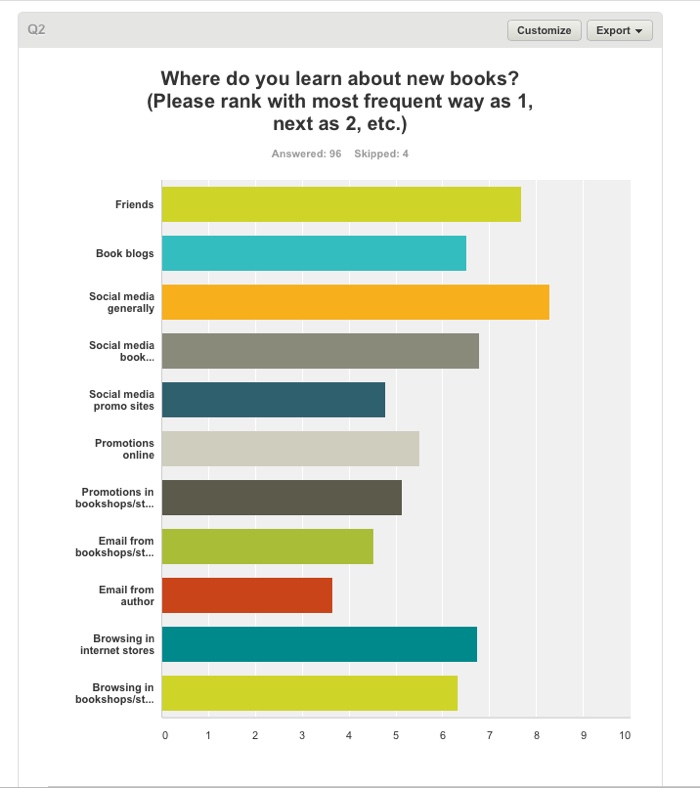
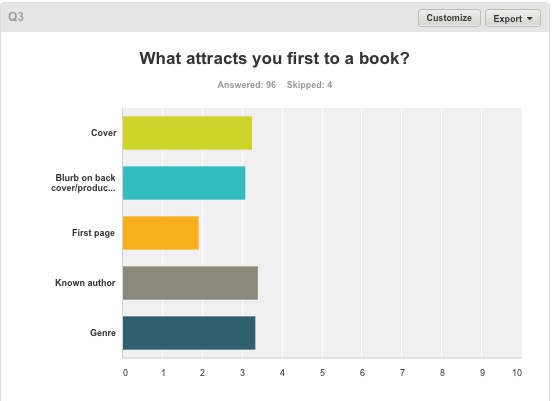
On attracting a reader to a book, no surprises: cover, blurb, genre and known author, with the last two slightly more significant. I was surprised by how evenly the top four elements scored.
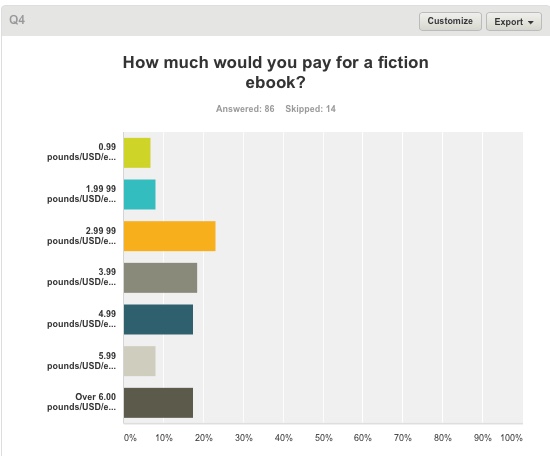
Question 4, a very wide and open question about how much would you pay for an ebook, produced some lively comments You can read all 27 here. In general, 2.99 to 4.99 ($, £ or €) is the ‘happy’ range of prices for most readers.
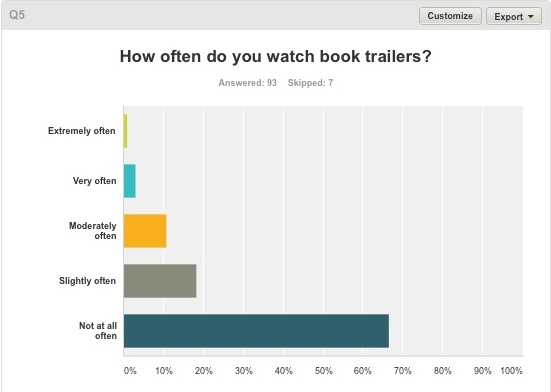
Book trailers are not watched it seems; a shame, as I love making them. Perhaps we should publicise them more? Some interesting comments here.
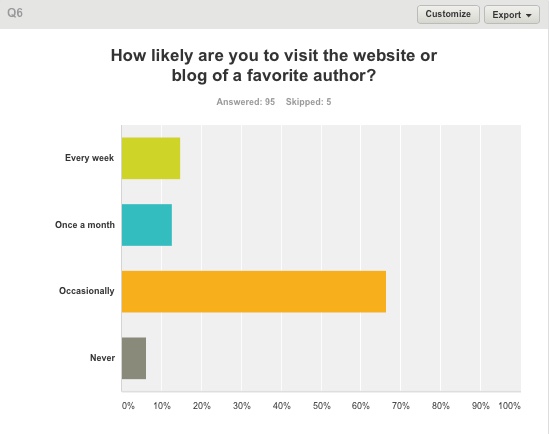
To blog or not to blog? In answer to Question 6, readers seem to visit author blog sites less often than writers might imagine (or wish!). And the comments seem to back up the statistics. Perhaps we writers should write more words in our books than our blogs?
Question 7 about the Roma Nova newsletter was selfish, but it was nice to see that five people would like to subscribe. Sadly, I can’t identify them as all respondents are, of course, anonymous. But if you’re one of the five, here’s the sign up page. 😉
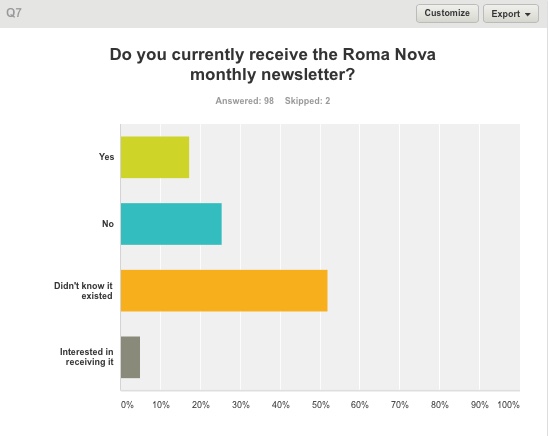
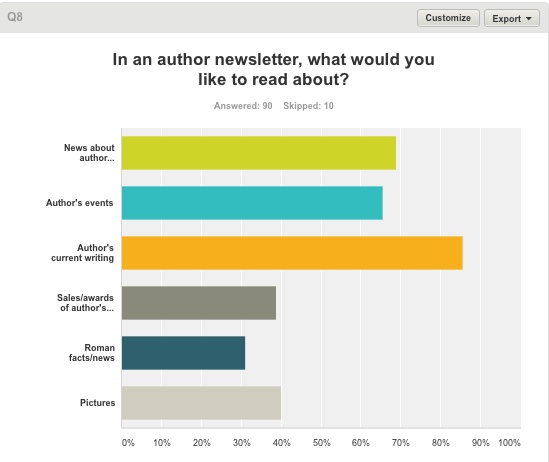
I was curious about what readers would like in a newsletter. The top three items in reply to Question 8 were: news about the author themselves, author’s current writing, author’s events and news about sales and awards. Pictures were not quite as popular as we think. The low score for Roman news/facts was probably due to the survey audience being wider than my own readers. Challenging comments for those of use who issue regular newsletters!
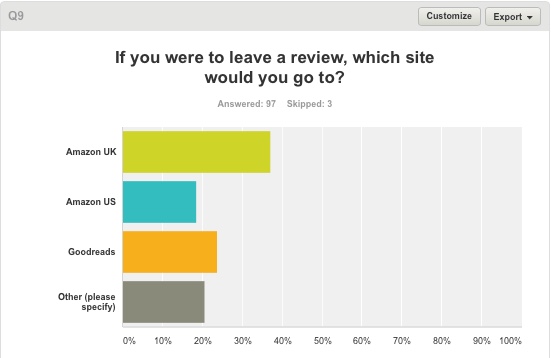
So where would readers leave a book review? I offered three of the ‘usual suspects’ – Amazon UK, Amazon US and Goodreads, plus ‘Other’ which was quite interesting… Authors know reviews are life-blood as they help a book’s journey in the competitive sea of publishing, but they acknowledge that reviews take a little time to write.
Readers who do squeeze out some of their precious time to write some words should be awarded medals and book bloggers made saints.
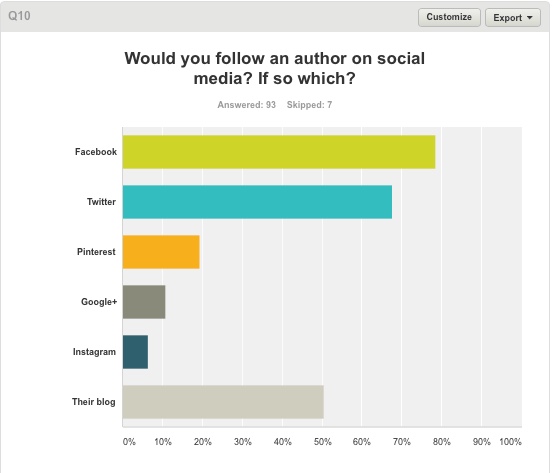
And lastly, for Question 10, “Would you follow an author on social media? If so which?” Facebook and Twitter won comprehensively, but “Their own blog” came a significant third. And again, the comments are worth reading!
How I did it
I’m not a professional marketer, so I kept it really simple. The readers were self-selecting from a spread of Facebook reader groups in the US, France and the UK, my own newsletter readers and random readers from a Twitter campaign. I used a free version of Survey Monkey which allowed 10 questions and 100 replies. Questions attracted a 90-97% response by people taking part. All links have been deleted in this report and the supporting lists.
Alison Morton writes the Roma Nova thrillers, INCEPTIO, and PERFIDITAS. Third in series, SUCCESSIO, is now out.
Find out more about Roma Nova, its origins, stories and heroines…
If you enjoyed this post, do share it with your friends!
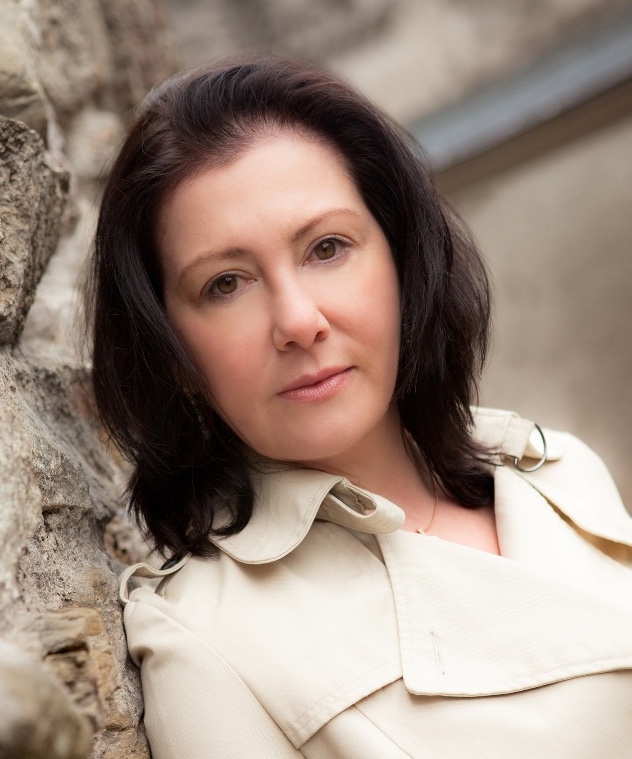
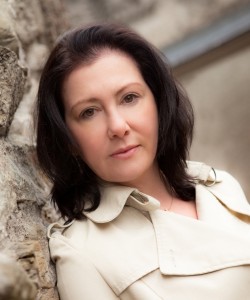 JJ Marsh grew up in Wales, Africa and the Middle East, where her curiosity for culture took root and triggered an urge to write. After graduating in English Literature and Theatre Studies, she worked as an actor, teacher, writer, director, editor, journalist and cultural trainer all over Europe. JJ Marsh grew up in Wales, Africa and the Middle East, where her curiosity for culture took root and triggered an urge to write. After graduating in English Literature and Theatre Studies, she worked as an actor, teacher, writer, director, editor, journalist and cultural trainer all over Europe.
Now based in Switzerland, Jill is a founder member of Triskele Books, forms half of The Woolf Quarterly and is a regular columnist for Words with JAM and Displaced Nation. She lives with her husband and three dogs, and in an attic overlooking a cemetery, she writes.
JJ and I met in a distanced way on Facebook – we both belong to the Alliance of Independent Authors – but when she and I were both selected as indie Editor’s Choices in prestigious UK publishing trade magazine ‘The Bookseller’, I decided I needed to investigate further…
Welcome, JJ!
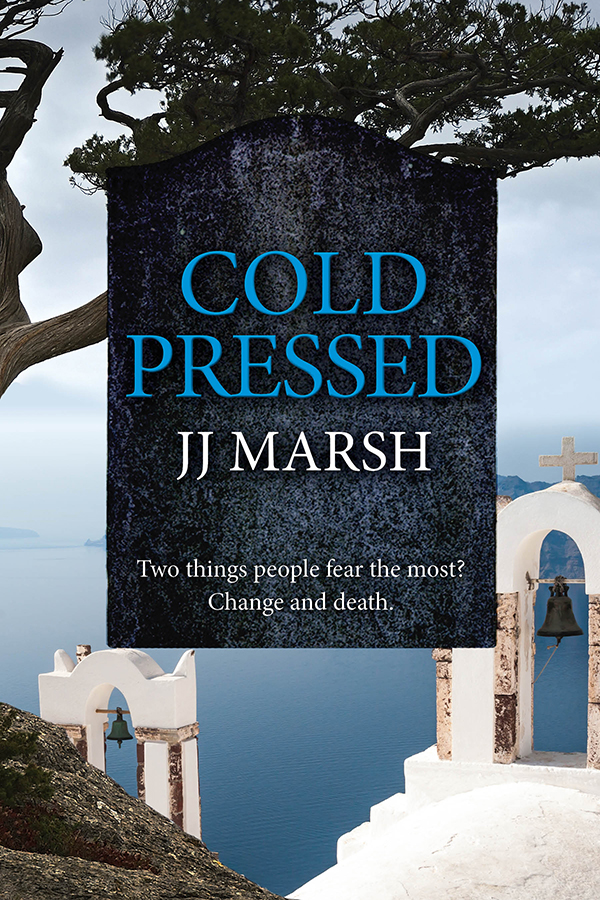
Now, I read Cold Pressed, your most recent crime mystery, and enjoyed it very much. Beatrice Stubbs, your heroine… (Or do you prefer “female protagonist”?) Where does she come from? Is she entirely imaginary?
I really had to think about that one. She’s been with me so long, and most definitely a heroine. I’ve always been drawn to writing characters older and wiser than myself. The spark of an independent woman, battling all the pressures that come with age and experience, struck me in the late 90s. I met a woman who personified the unconventional. As I do with every intriguing character, I put her in my notebook.
I just had to find the right vehicle for her. When I decided to tackle the credit crunch and the morality (or lack of) in contemporary capitalism, she became the essence of Beatrice Stubbs. Wholly unrecognisable from the original, but there is a disguised thank-you in every book.
How do you research the procedural background?
By hassling the experts. In Switzerland, I happened to meet a special police officer at a social event. He’s regretted it ever since. Wine vendors, social services, cruise workers, security officers and locals have all added an incredibly generous amount of authenticity to my work.
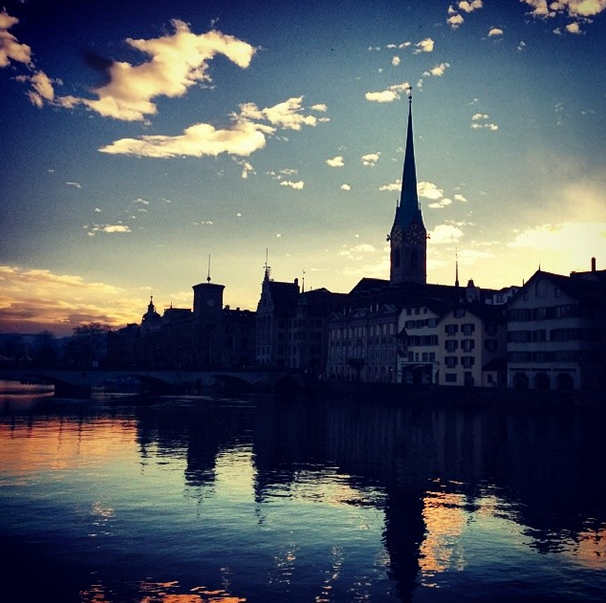
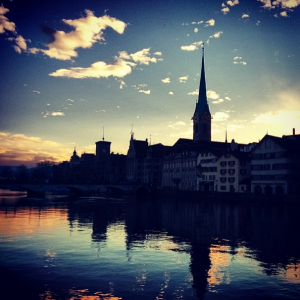 Zurich at night (Photo courtesy of Libby O) The Internet is handy, but if you connect with an individual who’s excited about the idea? Put it this way – I’m still corresponding with a butcher and a maker of model cars, despite neither element making it into the book.
The area in which I am most scrupulous is the procedures surrounding mental health. Beatrice’s battles with her bipolar condition and conversations with her therapist are carefully researched and checked with two clinical psychologist friends.
Zurich, Spain, the Greek Islands – Beatrice gets around. Why do you set her stories outside the UK?
Locations inspire atmosphere. I’m a massive Europhile and for me, places trigger stories.
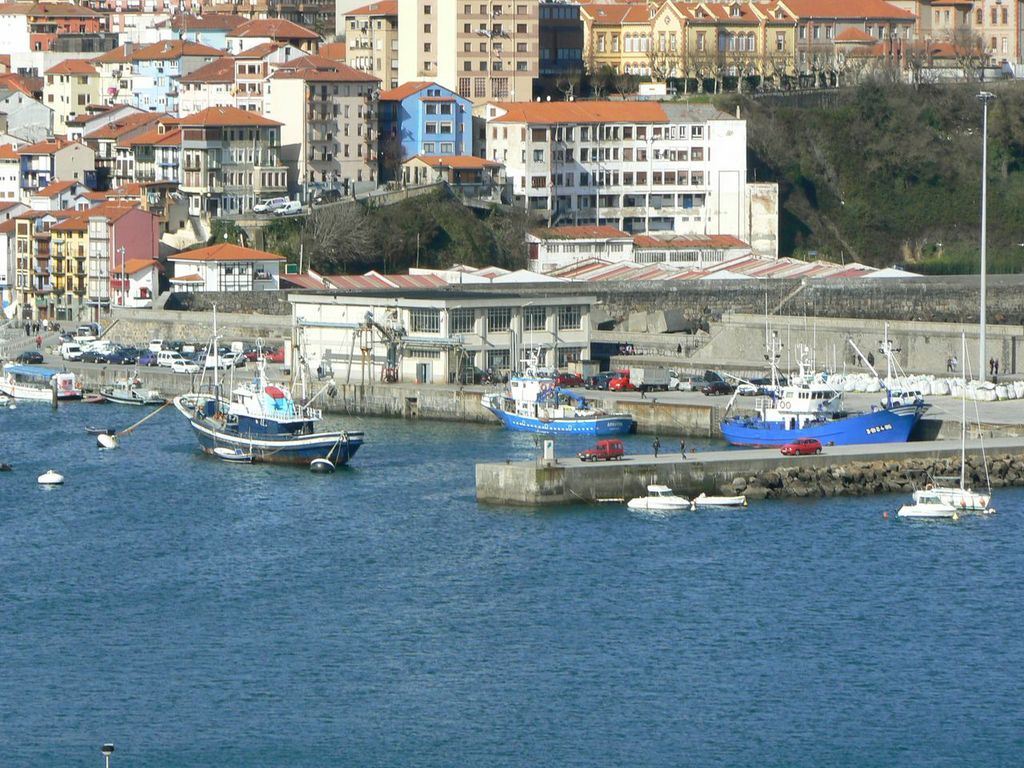
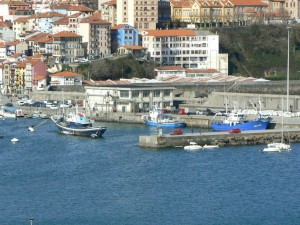 San Sebastian harbour (Photo courtesy of JD Lewis) Corporate crime and punishment seemed perfect for Zürich. Rioja and revenge – where else but Spain? My homage to the Golden Age had to be on a train or a cruise, so Greece it was. Not all my Beatrice books are set outside the UK – Raw Material is set in Finsbury Park and Pembrokeshire.
My definition of literary genius is writing about places you want to visit. We’re off to a wild island between Denmark and Germany next.
What is the single most important way to establish your characters in the reader’s mind?
I have to take readers inside my character’s head. None of this looking-in-the-mirror-and-describing-themselves nonsense. Who really does that? The only thing I ever say aloud while looking in the mirror is ‘Oh God, what a mess’.
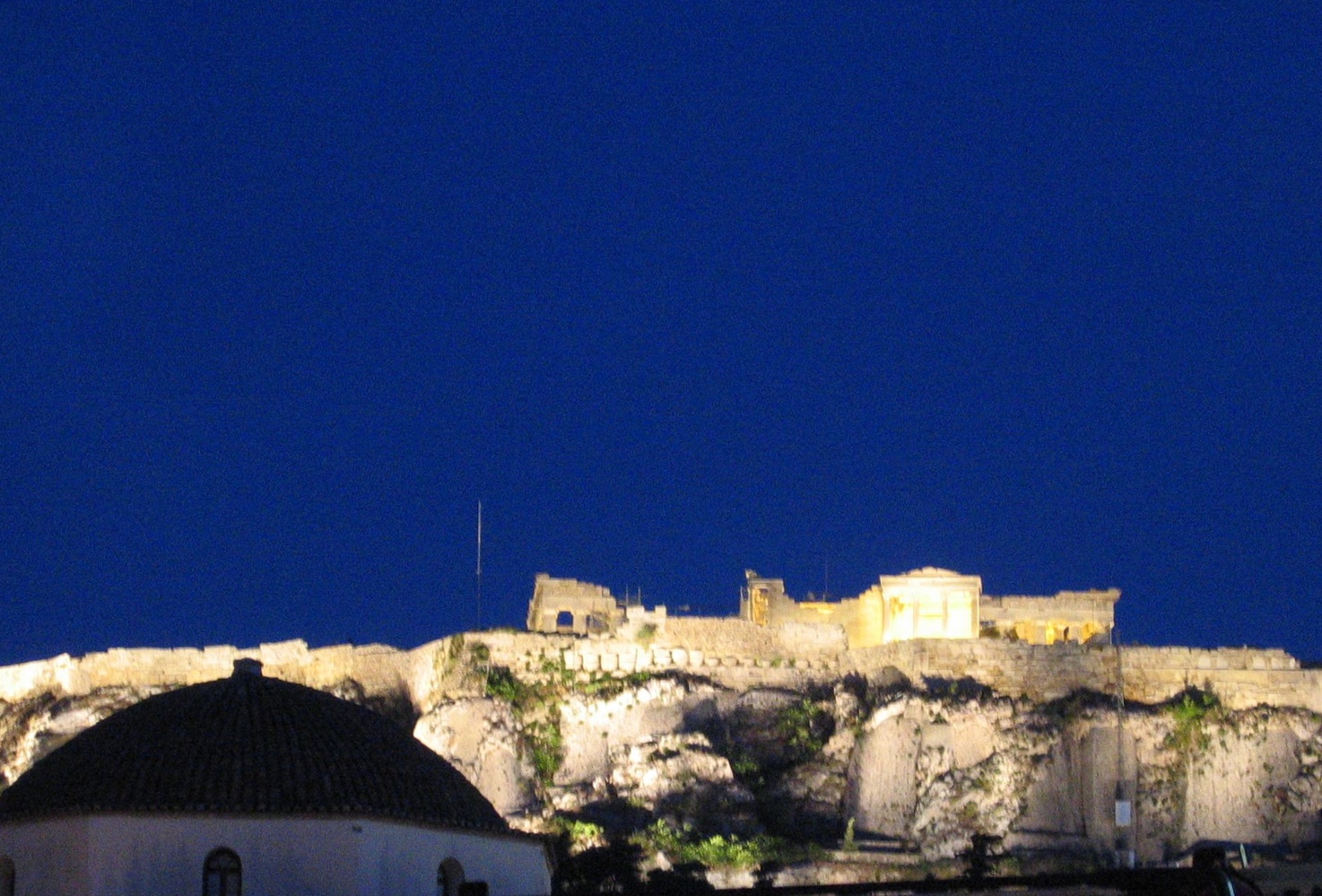
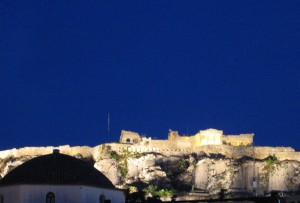 Athens at night I deliberately held back physical details of Beatrice’s appearance, so the reader must gain a picture from what other characters say about her.
But you know what she’s thinking. You are in her point of view even when observing from the outside (I write in the third person) and most importantly, you are on her side. It gets really interesting when you are on the sides of opposing characters and you want both, impossibly, to win.
I’d add that over four books (book five in progress) about the same character, she has to develop and be consistent. And most importantly, misbehave.
(Ha! Misbehave? Yes, all heroines should do that at least part of the time.)
Find out more about Beatrice http://www.beatrice-stubbs.com
So what’s Cold Pressed about?
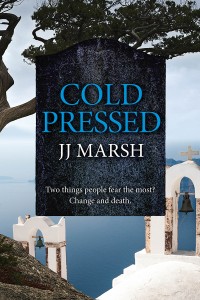 Santorini. Turquoise seas, ancient ruins and beautiful sunsets. Santorini. Turquoise seas, ancient ruins and beautiful sunsets.
And a woman thrown from a cliff.
The violent death shocks fellow passengers of the Empress Louise, a grand cruise liner packed with British tourists.
For newly promoted Inspector Nikos Stephanakis, the case poses linguistic and cultural problems. His request for assistance yields unexpected results.
DI Beatrice Stubbs, called in as support, flies to Greece. What with tension at home, the timing couldn’t be better. She anticipates a few days in the sun and a swift resolution.
But when an earlier death at sea proves suspicious and an elderly lady is killed in her cabin, terror spreads like contagion. Murder is aboard.
And someone has Beatrice in his sights.
From the Cyclades to the Dodecanese, Nikos and Beatrice pursue the killer and unearth a secret.
Revenge is a dish best served cold.
“This is J J Marsh’s fourth, snappily written crime mystery featuring the feisty but vulnerable Stubbs, a most appealing character. It’s all highly diverting, and an ideal read for those who like their crime with a lighter, less gruesome touch.” – Caroline Sanderson, The Bookseller
Fascinated? Buy on Amazon
Thank you, JJ Marsh for joining me on the blog today. Lovely to celebrate success with you!
If you enjoyed this post, do share it with your friends!
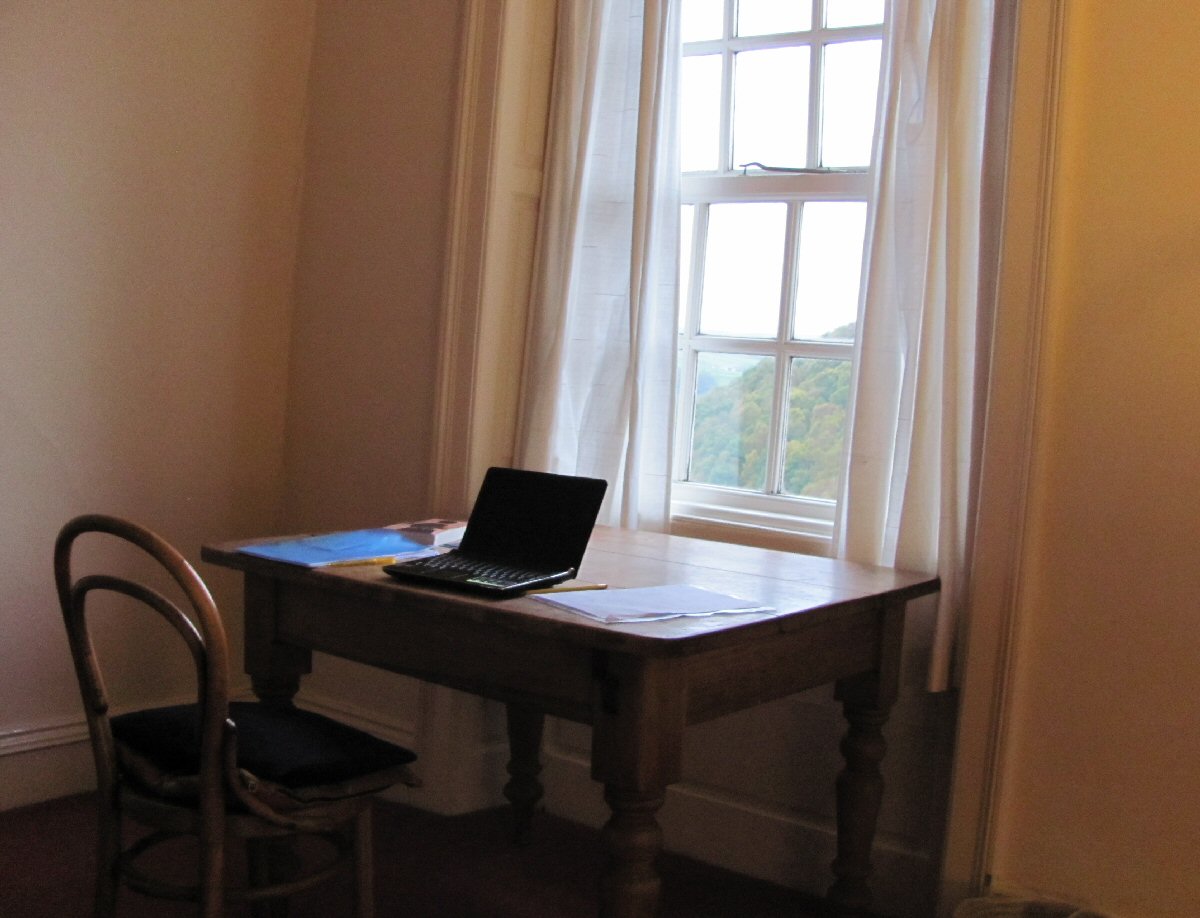
 My writing desk at Lumb Bank When I started my first novel, INCEPTIO, I had no idea what I was doing. Writing was an impulse, a reaction to a dire film and thinking I could produce something better. But not even halfway through the first draft, I realised I had a far bigger story than I’d anticipated. So I did the classic thing – I was going to make a trilogy.
While I was scribbling book 1, my focus shifted to planning book 2, which was going to be the pivot for books 1 and 3. Some trilogies develop from book 1 and the original story can widen out into an impossible sprawl in order to make each book more exciting than the previous one. Not for me!
Although I saw it differently at the time, the eighteen months of submitting my work to agents and publishers of book 1 gave me an invaluable period in which to plan, draft and hone the whole trilogy. I blush at what INCEPTIO would have been like without that maturation.
So what did I learn and what are my tips to pass on to other writers?
1. Work out the entire plot in advance
All three of my books are set in an imaginary country, Roma Nova, and follow the adventures of the same heroine, from when she (and the reader!) discovers Roma Nova to sixteen years later. And, of course, she will save the world and hopefully herself. But that’s too vague. Each book needs its own story, but one which contributes to the plot arc of the trilogy.
Crudely speaking, apart from the individual thriller story, book 1 sets the scene, introduces the world, the ‘rules’ of that world and the main characters. Book 2 consolidates, widens and sets the ground for the final reckoning in book 3. However, each book must stand on its own as a complete story. A reader may pick up book 2 first and while they may be eager to find out what went before and what happened afterwards, they must have a satisfying read from the book they bought. Writers need to drip in enough backstory to bring the new reader up to speed without boring the established fan.
2. Know your characters in advance
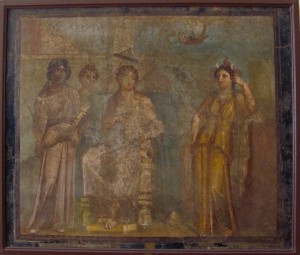 Adding a raft of new characters in each book is tempting. I confess to a fair number of characters, but Roma Nova operates on collectivities like families, military, even criminal organisations. Adding a raft of new characters in each book is tempting. I confess to a fair number of characters, but Roma Nova operates on collectivities like families, military, even criminal organisations.
Recycling characters in each book not only helps eliminate ‘character creep’, but is a pleasure for both writer and reader as we see each individual develop his or her own story. However, you do need new people now and again and however reluctantly, you should kill off one or two or you risk making your world too much like Shangri-La or Pleasantville.
3. Work out big secrets in advance and scatter little ones throughout all the books
As a reader, I like a good, heavy surprise at the end of books, or at least a ‘twist in the tale’ and hints about this should pop up throughout the book. As a writer, I love laying ‘Easter eggs’ in one book that hatch in another. I was lucky that I was able to do this with INCEPTIO, PERFIDITAS and SUCCESSIO as I had all first drafts written before INCEPTIO finally went to print.
4. Intrigue by revelation over a longer stretch
With a trilogy, you have the advantage of being able to reveal backstory and other facets of your characters over a longer span. This needs to be done carefully and not be an excuse for padding. In an epic, saga or high concept story, we all love ‘deep lore from the past’, hidden family secrets or a forbidden passion. Timely revelations also strengthen the bonds between the books.
5. Practicalities
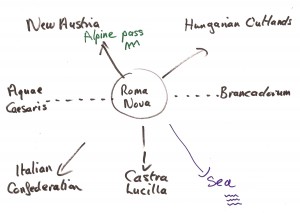 Your head may be stuffed with information about your setting, you may have notebooks or files full of research or you may just live in your books’ world. But you need to have consistent information to hand on the internal values and culture, governmental, societal and economic structures, geography, history, sources of income, education, food, religion and, of course language. Your head may be stuffed with information about your setting, you may have notebooks or files full of research or you may just live in your books’ world. But you need to have consistent information to hand on the internal values and culture, governmental, societal and economic structures, geography, history, sources of income, education, food, religion and, of course language.
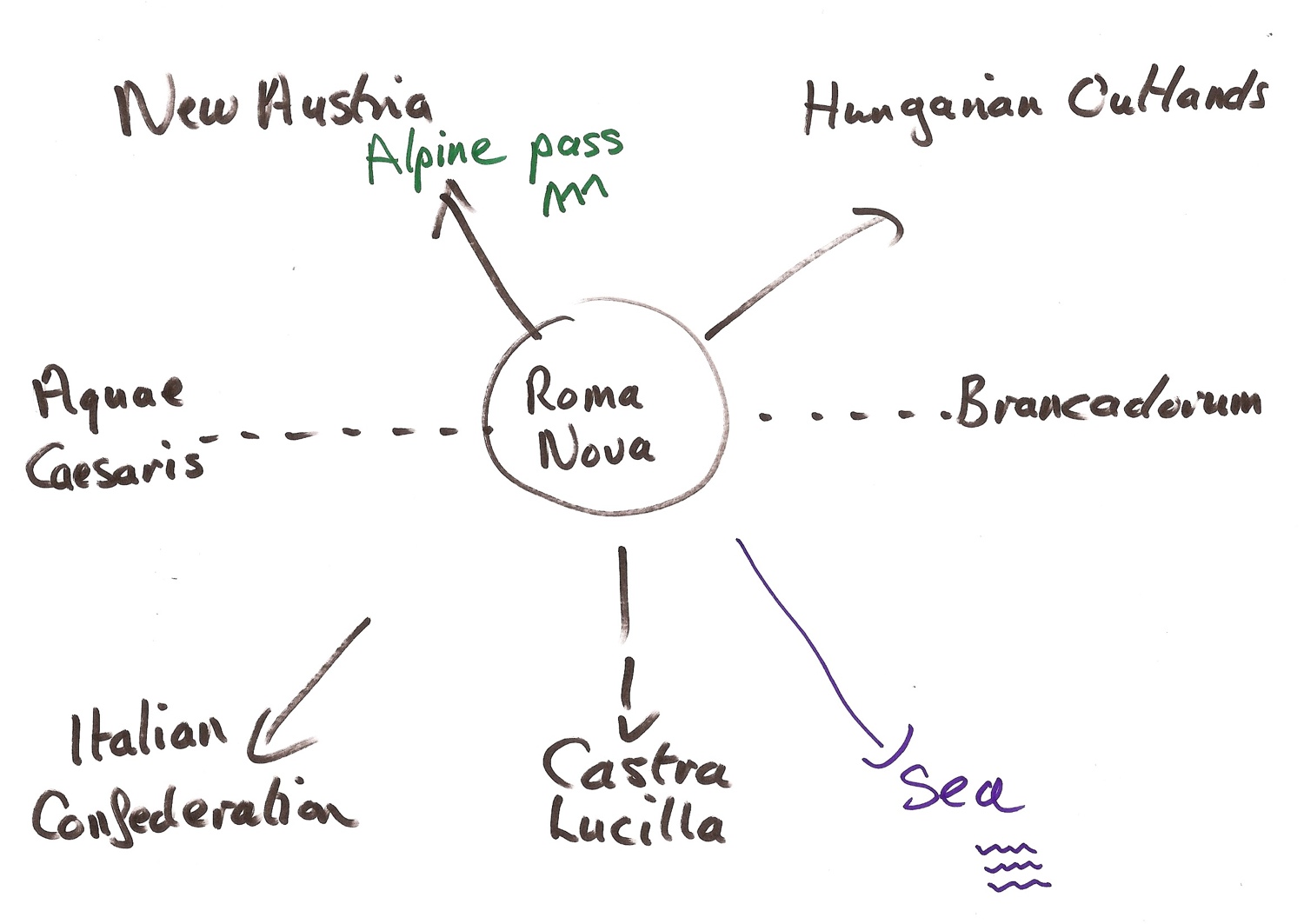
I don’t have a map, but I do know where Roma Nova is and that Castra Lucilla in to the south of the city and Aquae Caesaris and Brancadorum are to the west and east respectively.
I maintain a list of characters for each book, remembering to update it in the next as characters change job, get promoted, married, or move on. Something I’ve found indispensable is a spreadsheet of ages, tracking who is what age when something happens and preventing character X being older that his mother.
The very worst thing? I’m speaking as a reader here. When something or somebody pops up like a deus ex machina in a sequel or directly contradicts something in a previous book and there has not been the least hint about it. Even if you as a writer think up the cleverest idea in the world, don’t do it! Star Trek fans will cringe at the memory of the controversy over the changed Klingon physical appearance. One character told the humans not to ask – it was a Klingon-only secret – and another said it was due to a terrible disease in the past. Hm.
The trilogy in evolution?
Well, SUCCESSIO, the third Roma Nova thriller, set off into the world last June. But the books don’t end there – readers clamoured for further Roma Nova stories and I have plenty more in my story box. So I turned the ‘trilogy’ into the start of a series. I have at least three more planned around a significant secondary character and then, who knows?
Updated: Alison Morton is the author of Roma Nova thrillers INCEPTIO, PERFIDITAS, SUCCESSIO, AURELIA and INSURRECTIO. The sixth, RETALIO, will be published in Spring 2017. Audiobooks now available for the first four of the series
Find out more about Roma Nova, its origins, stories and heroines… Get INCEPTIO, the series starter, for FREE when you sign up to Alison’s free monthly email newsletter
If you enjoyed this post, do share it with your friends!
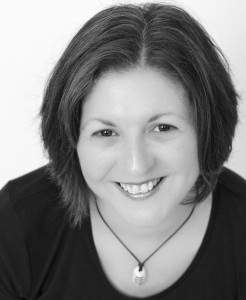 A Birmingham author and member of the Historical Novel Society, Elaine grew up in an Anglo-Italian family. She attributes her lifelong interest in story-telling to the roguish tales her grandfather told of his Italian childhood, and family holidays visiting ancient burial sites and stone circles. She loves languages, history and travel and lives with her family and their chocolate labrador. A Birmingham author and member of the Historical Novel Society, Elaine grew up in an Anglo-Italian family. She attributes her lifelong interest in story-telling to the roguish tales her grandfather told of his Italian childhood, and family holidays visiting ancient burial sites and stone circles. She loves languages, history and travel and lives with her family and their chocolate labrador.
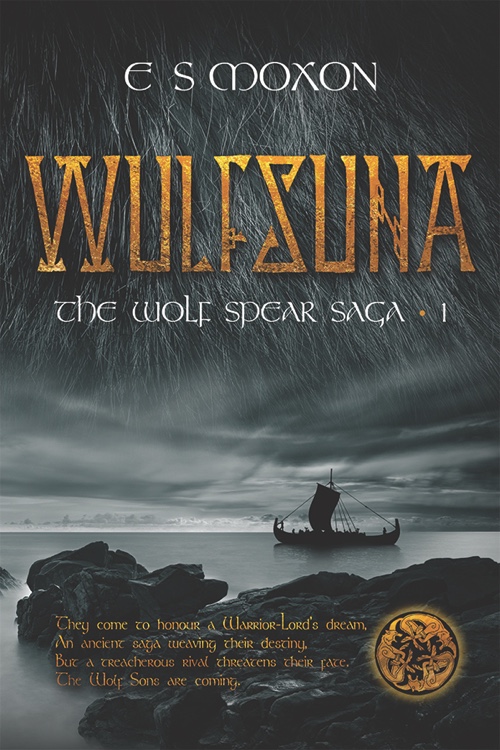
Congratulations on the release of your first title Wulfsuna, set in AD 433. Now, as a ‘Roman’, I’d like to know how much connection, or not, you felt to the shadow of the Roman presence in Britain as you described the Wolf Sons’ adventure?
First of all, thank you very much Alison for inviting me to be a guest on your blog. Wulfsuna seems to have had a good start in life and I’m so happy to be sharing it with everyone.
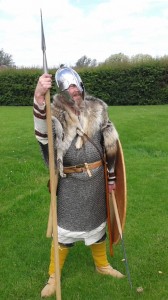 From the first moments of writing Wulfsuna I was conscious of what presence may, or may not, remain of the Roman Empire’s influence in mid-5th century Britain. The first prose I wrote was for my heroine, a young Romano-British resident of a wealthy, wool-trading settlement. Her story relied heavily on how much (or how little) others in her community had held onto, or released the ideals of Roman life. Unable to obtain much written evidence and with varying professional opinions that were no more than assumptions, I chose to use this to my advantage. From the first moments of writing Wulfsuna I was conscious of what presence may, or may not, remain of the Roman Empire’s influence in mid-5th century Britain. The first prose I wrote was for my heroine, a young Romano-British resident of a wealthy, wool-trading settlement. Her story relied heavily on how much (or how little) others in her community had held onto, or released the ideals of Roman life. Unable to obtain much written evidence and with varying professional opinions that were no more than assumptions, I chose to use this to my advantage.
In such an unstable economic climate, even a 5th century one, I imagined there would be divided opinion: those who wanted to retain their Roman way of life and feasibly others who yearned to rediscover their Brytonic roots. For instance, under the Empire the carrying of weapons had been forbidden. With an increasing threat from several Germanic tribes in the east, freedom to carry arms would have been enticing to many wealthy landowners. Likewise, the subservience of women, as was the case in Roman culture, could have been something female Romano-Brytons craved. A return to the liberating ‘woman of the house’ ideal of their maternal ancestors must also have been a lure. Finally, setting my novel twenty years or so after Rome’s departure meant a generation had passed and along with it, as nowadays, their elders’ views and ideals. The youth of the time would be looking to forge futures of their own, in a world independent of Rome and under threat from foreign attack.
What has been the most surprising thing – good or bad – on your journey to publication? And during your research?
Believe it or not, I hated the idea of Twitter and yawned derisively at yet another social media platform. My husband encouraged me to join and I soon discovered it to be a great place to meet other writers, either starting out as I was, or published authors; that all of these word-lovers conversed as equals was a revelation to me. Access to professional authors and their wealth of experience has aided me greatly in my journey to publication. Writing is no longer a lonely profession!
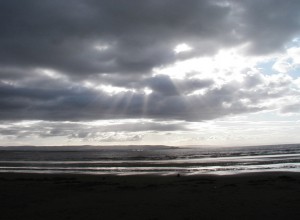 Another stand-out moment for me was sending Wulfsuna off for a professional edit, advised by one of the authors I had met online. I bit the bullet and paid the fee. When I received the 6-page report I cried and hid the paperwork away for a week. Eventually I forced myself to read it thoroughly and made notes. The result meant a huge rewrite and the addition of several chapters, but I am extremely happy I followed it through. (Ha! Some encouragement here on using reader reports) Another stand-out moment for me was sending Wulfsuna off for a professional edit, advised by one of the authors I had met online. I bit the bullet and paid the fee. When I received the 6-page report I cried and hid the paperwork away for a week. Eventually I forced myself to read it thoroughly and made notes. The result meant a huge rewrite and the addition of several chapters, but I am extremely happy I followed it through. (Ha! Some encouragement here on using reader reports)
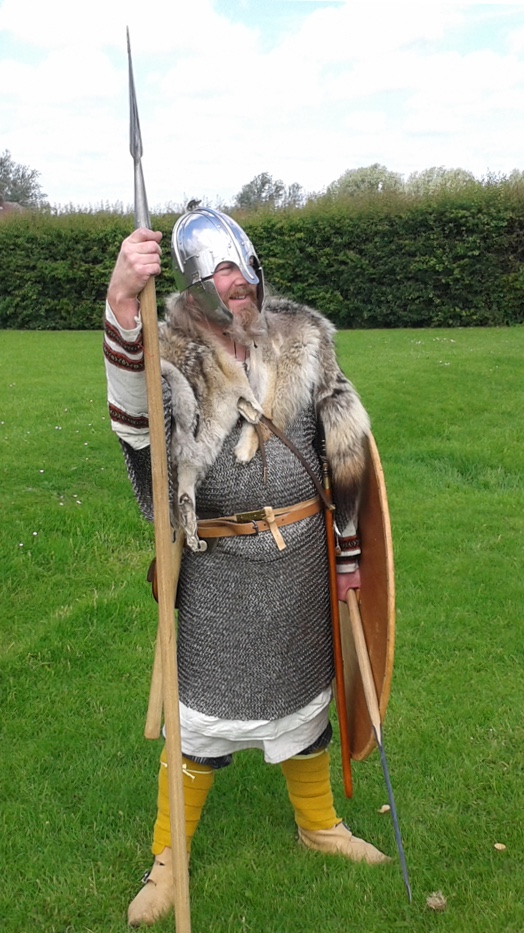
As for surprises in research, I asked a re-enactment friend to take me through some Saxon combat moves to assist me in adding some realism to battle scenes. I never realised the equipment weighed so much! Struggling beneath a helmet that felt as though it was going to snap my neck and taken off-balance by a 3-foot shield, it took all my strength to stand, let alone fight. However, these sensations and the smell and feel of all the equipment gave me a peek into the world of the Saxon warrior, which I would not have obtained simply reading about it.
I would never had believed you were a reluctant Tweeter, Elaine!
So what’s Wulfsuna about?
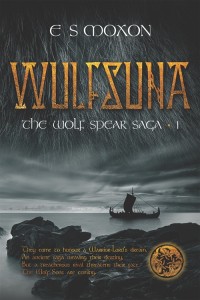 AD433. Torn apart when Rome abandoned Bryton, the Wulfsuna are a disparate tribe. AD433. Torn apart when Rome abandoned Bryton, the Wulfsuna are a disparate tribe.
Twenty years on, two long ships sail for the east fens to honour their Warrior-Lord’s dream and reunite with lost kin. Soon after landing however, a murderous betrayal divides loyalties, some craving revenge and others indignant on pursuing their Lord’s dream. Blood and brotherhood are tested to their deadly limits.
The discovery of a young Seer adds to the turmoil. Expelled from her village after foretelling of an attack by blue painted savages, the Wulfsuna are equally wary of one they call ‘Nix’. None fear her more than Lord Wulfgar, who refuses to believe an ancient saga bearing his name, is weaving the Seer’s destiny into his own. But a treacherous rival threatens their fate and Wulfgar must accept the Seer’s magic may be all that can save them.
Wulfsuna is available now from Amazon UK, Amazon US, Kobo, and the paperback direct from SilverWood Books or via any bookshop. Watch the book trailer.
Find out more about Elaine, Wulfsuna and post-Roman Britain on her blog. Connect with her on Facebook, Twitter and Goodreads.
Thank you, Elaine. I’m reading Wulfsuna at the moment – looking good!
Alison Morton writes the Roma Nova thrillers, INCEPTIO, and PERFIDITAS. Third in series, SUCCESSIO, is now out.
Find out more about Roma Nova, its origins, stories and heroines…
If you enjoyed this post, do share it with your friends!
|
Subscribe to Blog via Email
Join 368 other subscribers.
Categories
Archive
|