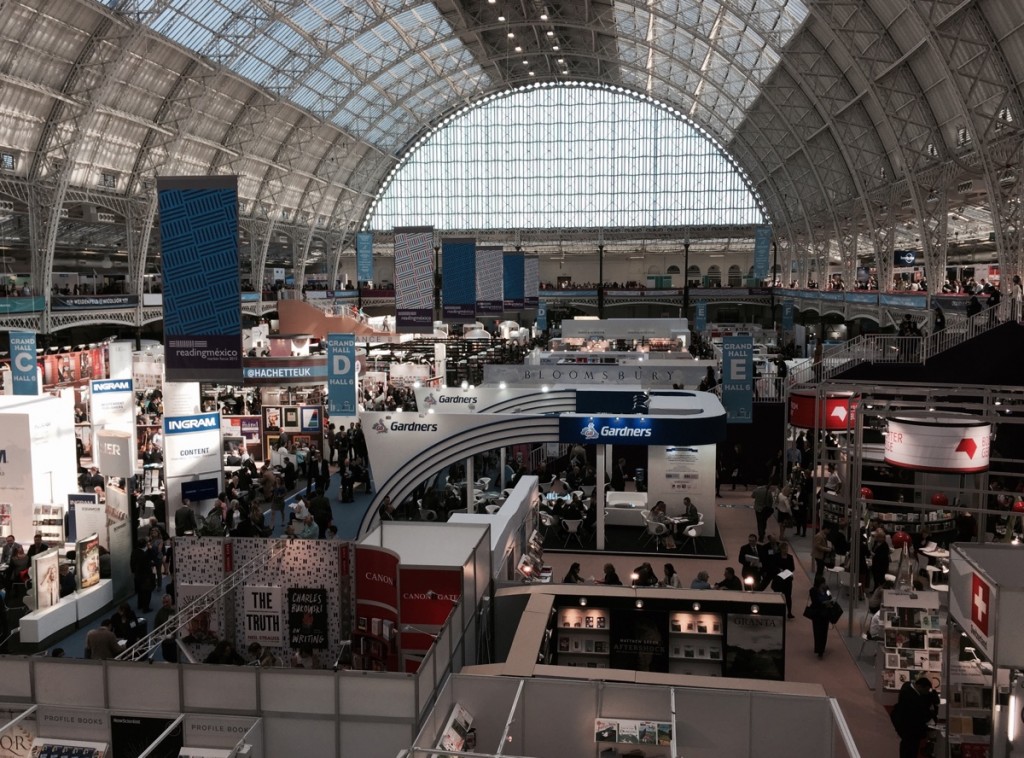
 This was the first year at Kensington Olympia – Earls Court has been deleted – and the comments about the layout were not too complimentary. However, feet having been found and map consulted, I made my way to the SilverWood Books stand, to meet up with Helen Hart, the director and my new publishing assistant, Bron. This was the first year at Kensington Olympia – Earls Court has been deleted – and the comments about the layout were not too complimentary. However, feet having been found and map consulted, I made my way to the SilverWood Books stand, to meet up with Helen Hart, the director and my new publishing assistant, Bron.
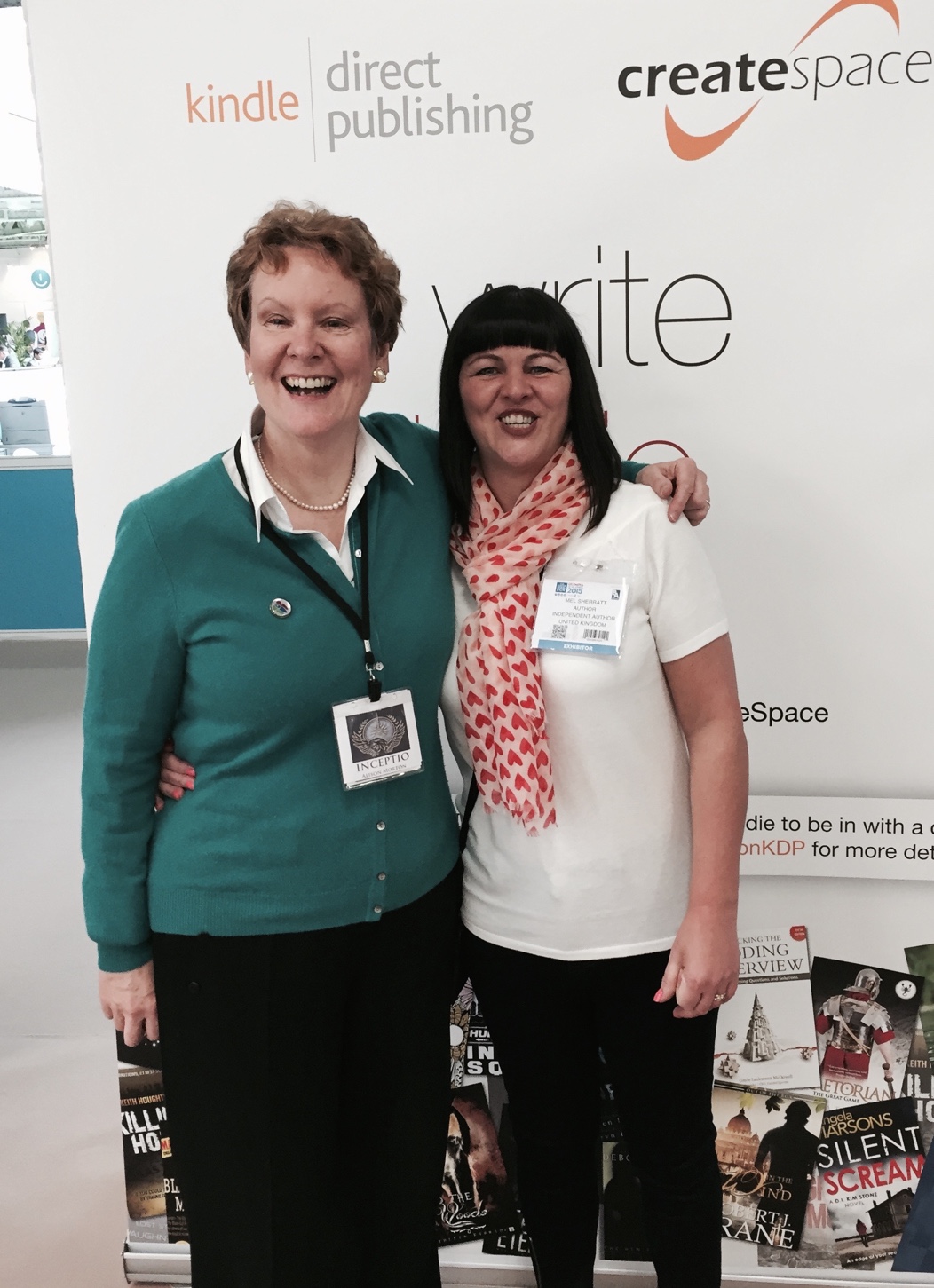
Then off to the author talks, not before I bumped into Mel Sherratt, crime writer extraordinaire…
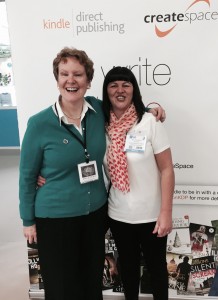
…and a crowd of Romantic Novelists!
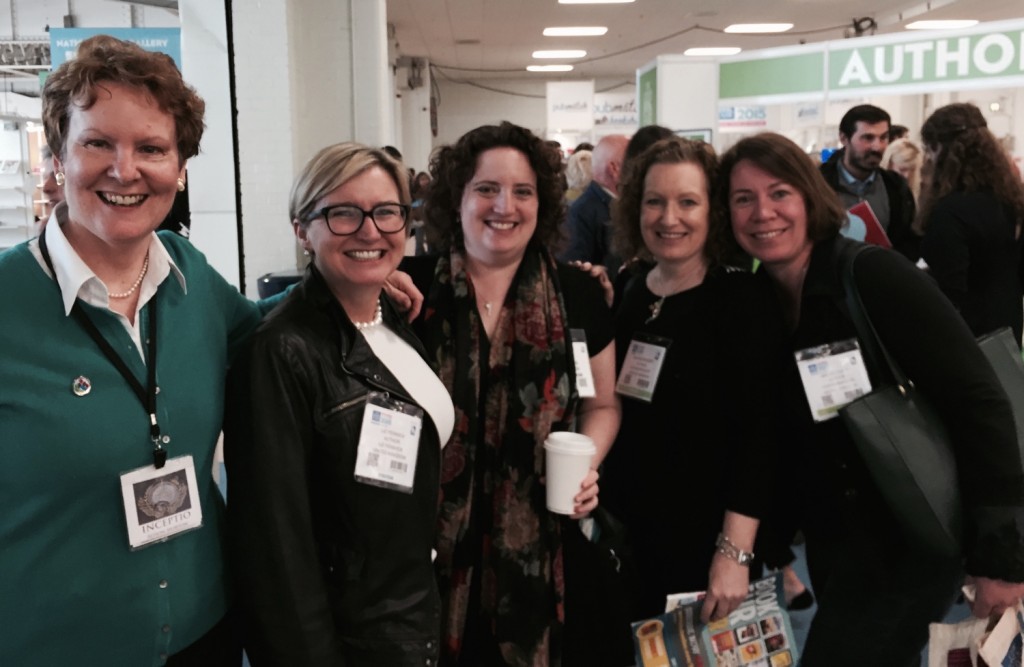 With Liz Fenwick, Fiona Harper, Sue Moorcroft, Brigid Coady On to the talks. First, a general introduction to publishing:
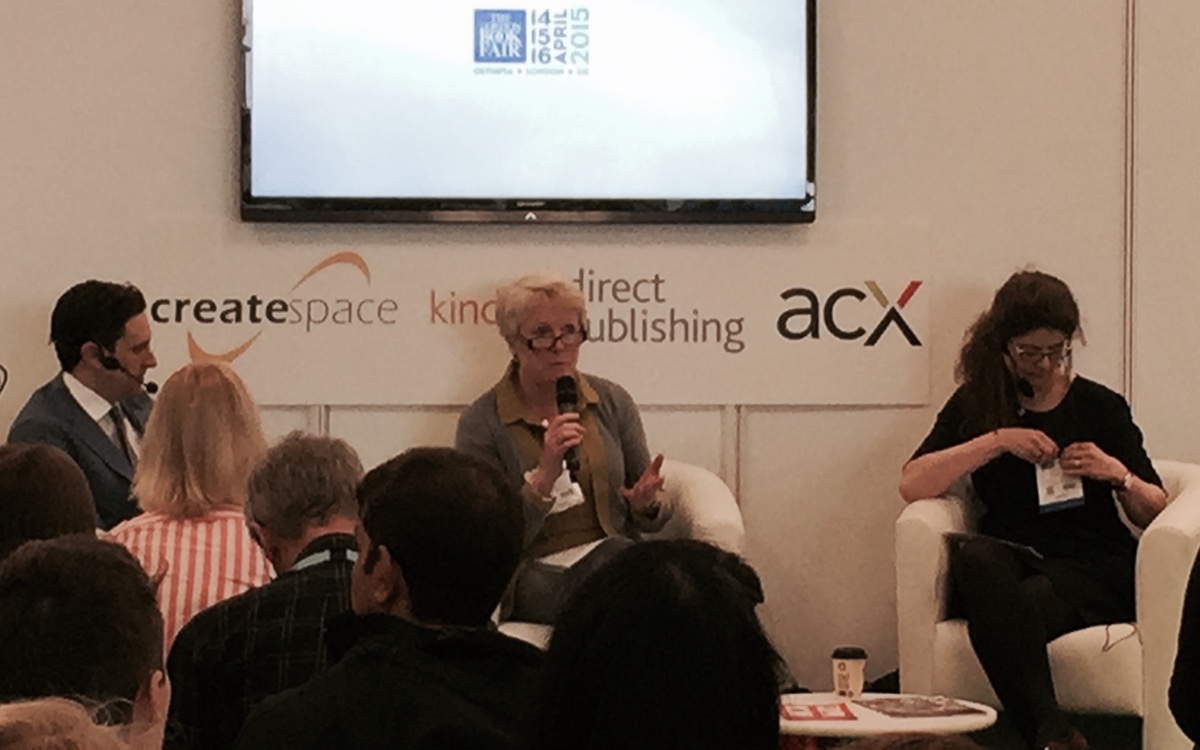
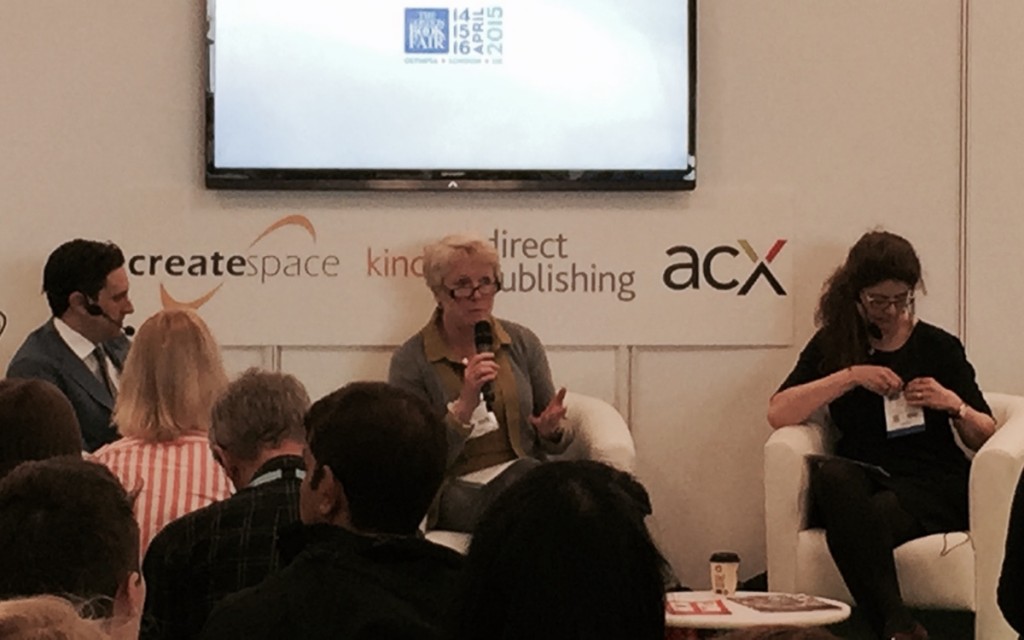 David Shelley (Little Brown), Alison Baverstock, Lizzie Kremer (David Hingham Assoc.) Then a passionate discussion about rights:
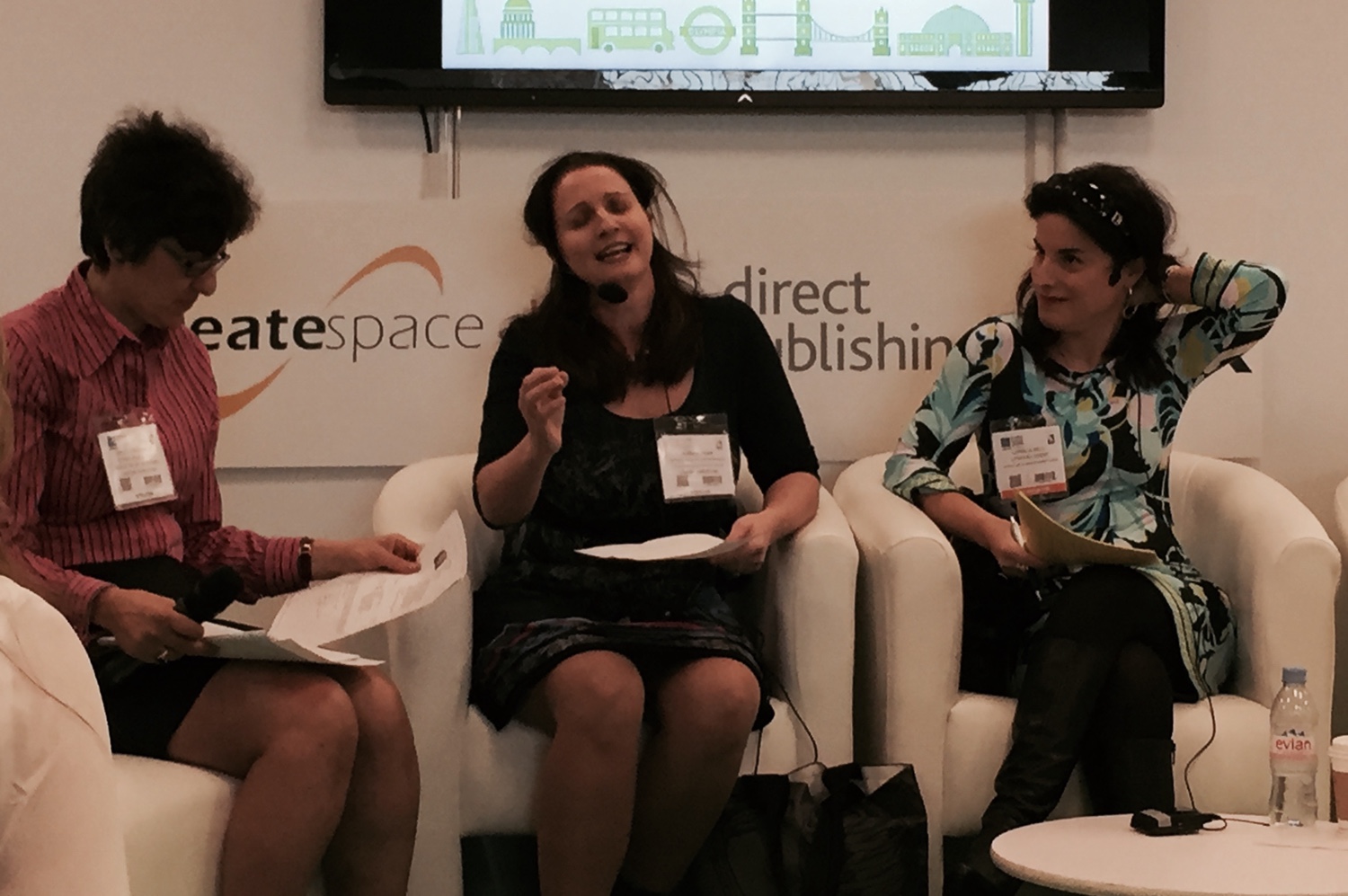
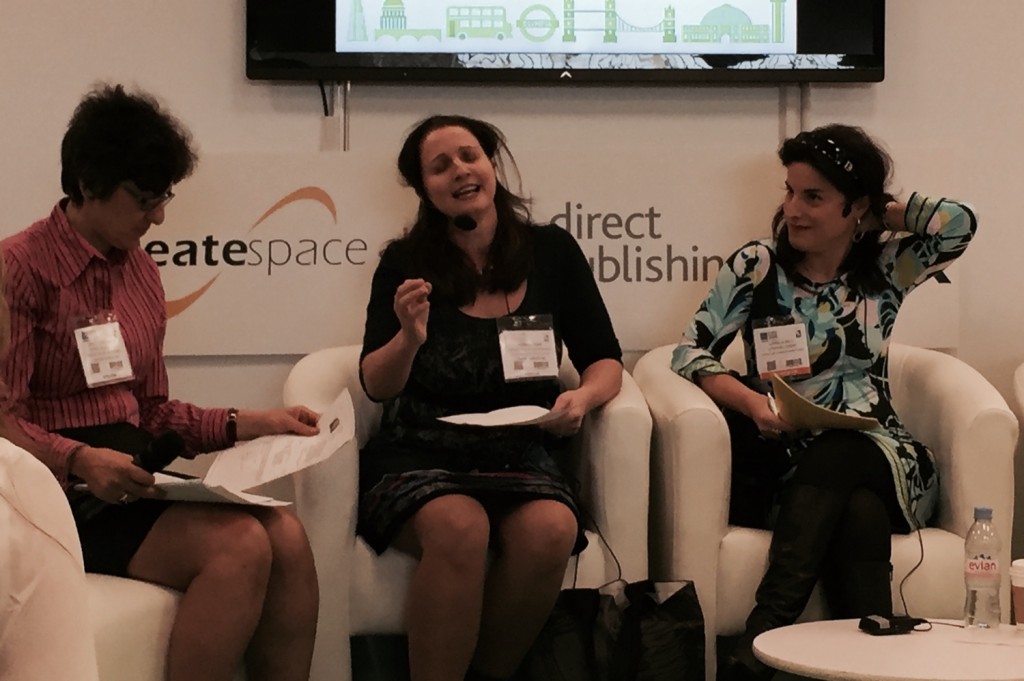 Nicola Solomon (Society of Authors), Joanna Penn The Creative Penn), Lorella Belli (Literary agent) Author friends waiting for the next talk which wasn’t particularly remarkable:
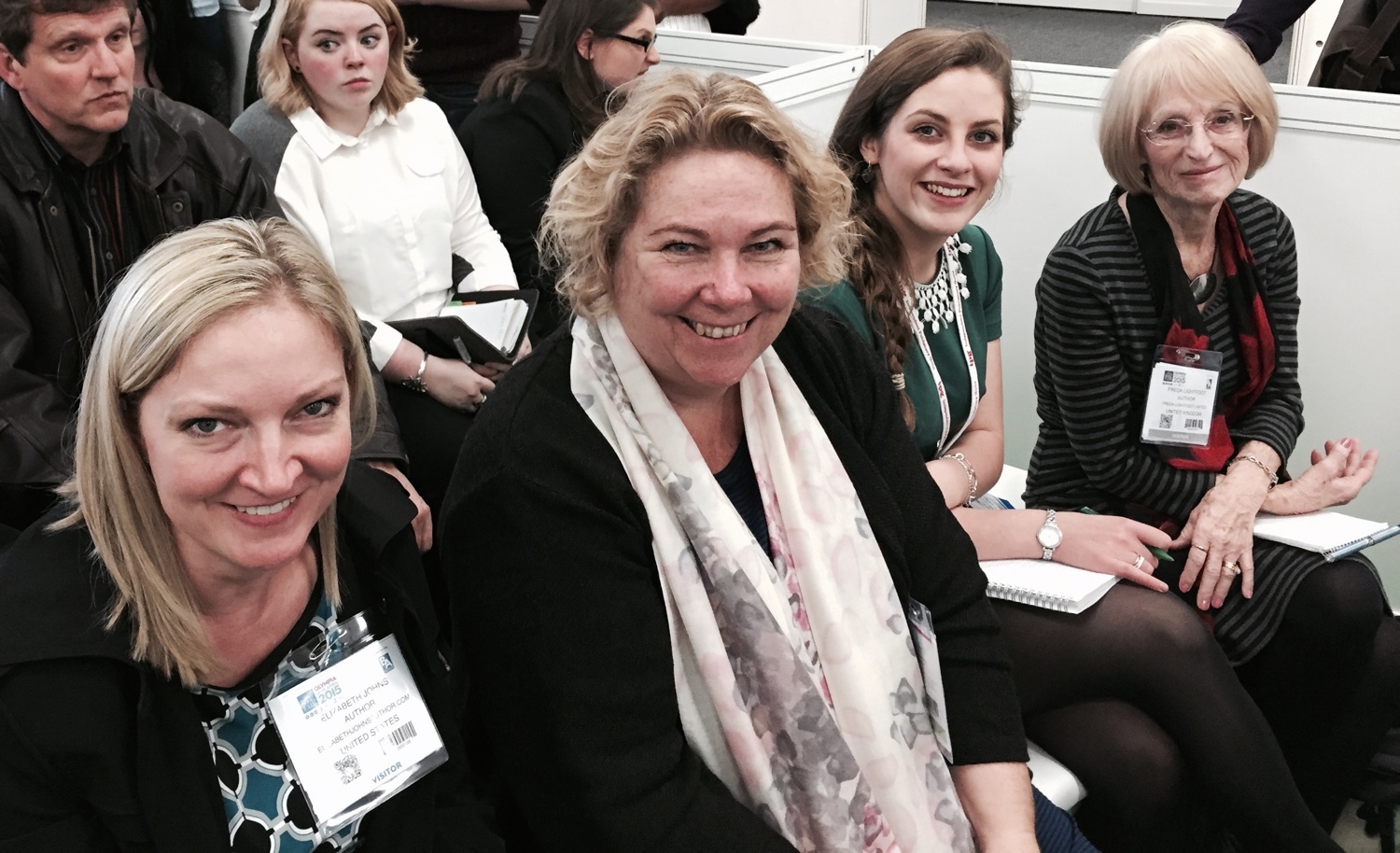
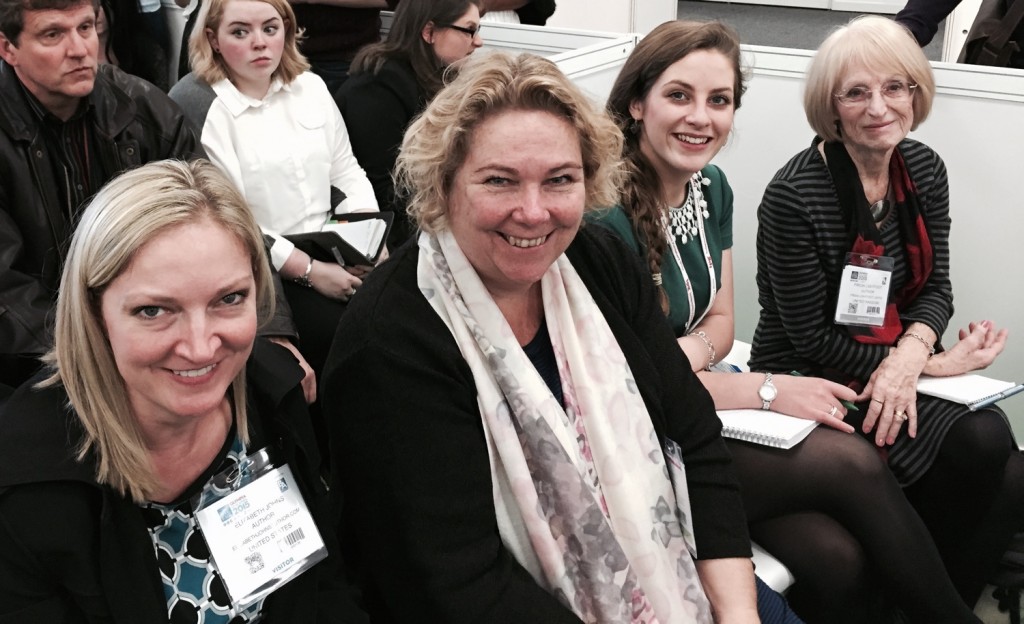 Elizabeth Johns, Anna Belfrage, Bron Wooton (SilverWood Books), Freda Lightfoot I was so interested in the genre spotlight talk on crime and thrillers with Sarah Hodgson from Harper Collins, agent Oli Munson and critic Jake Kerridge that I forgot to take a photo – sorry!
Then followed ‘networking with wine’ run by Byte the Book where I met up with a crowd of ‘virtual’ friends from ALLi. After talking myself hoarse, I toddled off to the bus back to the hotel.
So many people popped in and out my view – handshakes, hugs, kisses and some quick words; Orna Ross, Ian Sutherland, Piers Alexander, Chele Cooke, Ricardo from Reedsy It was like being an express train snaking through a vast forest of people…
On to Day 2
Alison Morton is the author of Roma Nova thrillers, INCEPTIO, PERFIDITAS and SUCCESSIO. The fourth book, AURELIA, is due out in May 2015.
Find out more about Roma Nova, its origins, stories and heroines…
If you enjoyed this post, do share it with your friends!
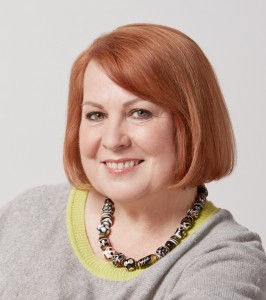 Kathryn Gauci was born in England. After studying textile design at Loughborough College of Art, she worked in Athens as a carpet designer for six years and after much travelling settled down to run her own textile design studio in Melbourne for fifteen years. She now lives in Australia with her husband. The Embroiderer is her first novel; a culmination of those wonderful years of design and travel, and especially of those glorious years in her youth living and working in Greece – a place that she is proud to call her spiritual home. Kathryn Gauci was born in England. After studying textile design at Loughborough College of Art, she worked in Athens as a carpet designer for six years and after much travelling settled down to run her own textile design studio in Melbourne for fifteen years. She now lives in Australia with her husband. The Embroiderer is her first novel; a culmination of those wonderful years of design and travel, and especially of those glorious years in her youth living and working in Greece – a place that she is proud to call her spiritual home.
Welcome Kathryn! Congratulations on the publication of The Embroiderer.
What fascinates you about Greece and the Ottoman Empire?
From 1972-78, I worked as a carpet designer in Athens. The factory was situated in the suburb of Kalogreza/Nea Ionia. The word nea in Greek means new – “New Ionia”. In Athens, there are several such suburbs, Nea Smyrni, Nea Filadelphia, etc., and they are all named after towns or areas in Turkey. When I was told that I was working in a refugee area, I was surprised.
“But these people are Greeks,” I replied in astonishment. ‘How can they be refugees in their own country?”
That was the beginning of a long learning curve about Greek/Turkish relations which, forty years later, I am still fascinated with. Most of the refugees arrived in Greece in 1922 after The Asia Minor Catastrophe and as I was to discover, this was an episode of such magnitude that it changed both Greece and Turkey forever.
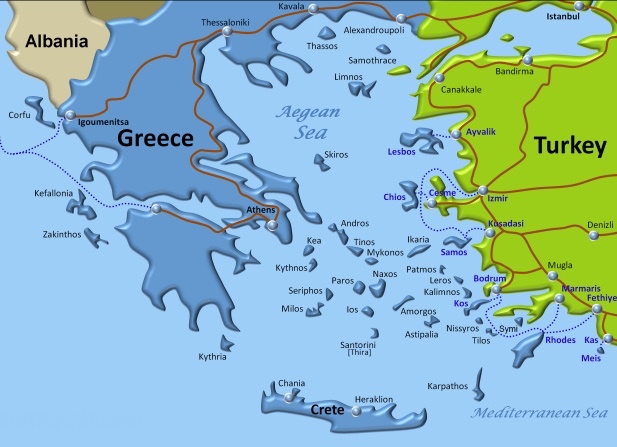
In 1919, after a brief entry into WWI on the side of the Allies, Greek troops occupied Smyrna (present day Izmir) and the surrounding area along the coast and inlands towards Angora (Ankara). When winter set in, the troops rested, gathering their strength for a spring offensive. Little did they know that Mustafa Kemal was amassing his troops for his own offensive. The result was a catastrophic defeat for the Greeks. Within a matter of weeks, the dejected remnants of the Greek Army returned to Smyrna awaiting ships to take them back to Greece. One week later, the richest and most cosmopolitan city in the Ottoman Empire, lay in ruins. A fire which began in the Armenian Quarter quickly spread throughout the city destroying everything except for the Turkish Quarter. In the course of a few weeks, 1,500.000 Greeks fled to Greece.
Almost a year later, the old Ottoman ministries were closed, the Sultan was in exile and the Nationalists under Ataturk were in power. In this new landscape, there was no room for troublesome minorities and under an agreement signed in Lausanne by both Greece and Turkey, all of Turkey’s Orthodox Christians were forced to leave their ancestral lands whilst in Greece, 400,000 Muslims were forced to leave for Turkey. A special exemption allowed the Greeks from Constantinople and the Orthodox Patriarchate to remain there, and a few Muslims were allowed to stay in Western Thrace. The upheaval ended more than two thousand years of Greek presence in the region. The end was swift and it was brutal.
The stories of the last days in Smyrna and of the lives led before the Catastrophe were the stories I heard in Athens. Despite everything, that yearning for their ancestral homeland never went away.
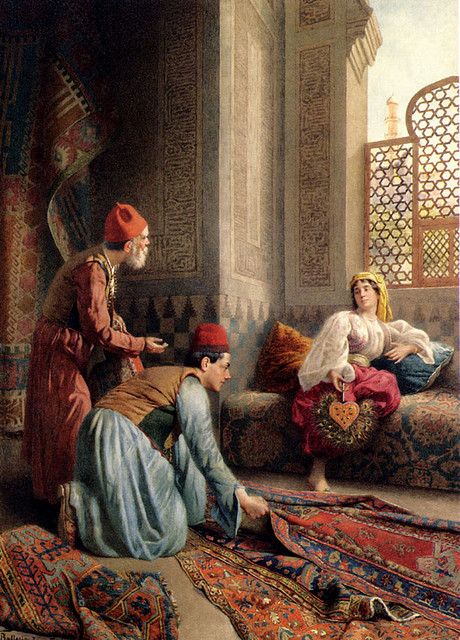
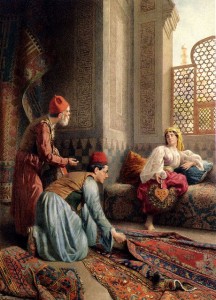 The Carpet Sellers, Francesco Ballesio (1830-1923 (from the author’s website) My work as a carpet and textile designer gave me a further insight into the Ottoman Empire. The history of textiles, and in particular, carpets, spans an area from Spain to China. Because of the nature of the art, one learns about everything from tribal migrations to the rise and fall of empires. The Ottoman Empire was a great trading empire covering a strategic part of the silk road on the one hand and trading with the west on the other, particularly, the Venetians. The Ottoman Turks had such a passion for decoration that it was often venerated in the works of great poets: architecture, weaponry, ceramics, garden art, calligraphy, cuisine, textiles and of course, embroidery.
In The Embroiderer, the intricate and rich world of silks and luxury, and equally rich Greek heritage, link Dimitra, Eleni and Sophia – your heroines… Where do the characters come from? Are they entirely imaginary?
The heroines are all women of their time. Each generation was different because the scope of their lives was different. With each generation, the women gained more freedom. In a changing and tumultuous world, their goals were different. I chose to set them in a world of textiles as that was really the only area where a woman was encouraged to excel – music was another, but that was usually in the upper echelons of society. And as a couturier, Sophia’s work amongst the privileged classes ultimately helped her work in the underground.
How did you research the materials and decorative use of embroidery used and worn at the time?
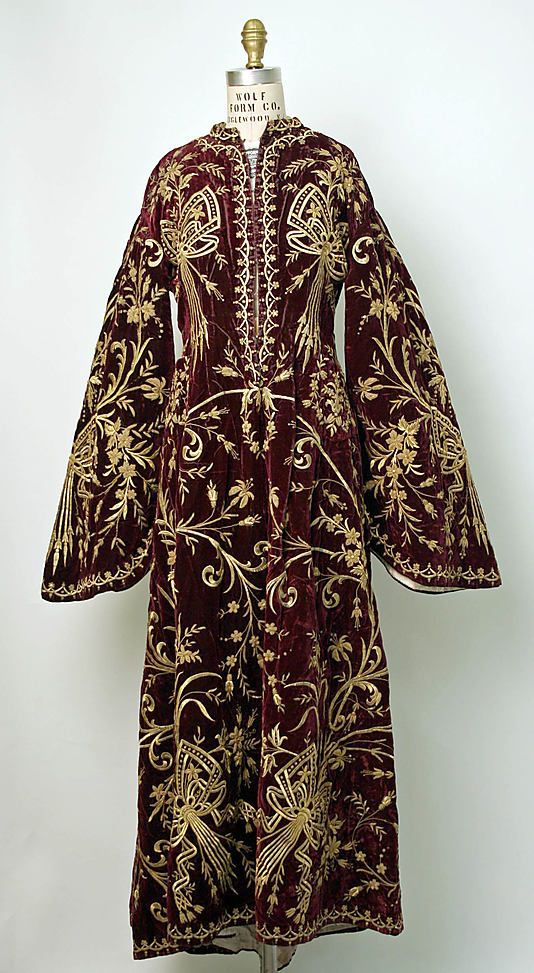
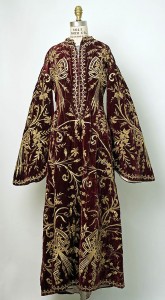 Gold on velvet embroidery, mid 19th century (from the author’s website) I studied textiles at art college and first developed an interest in embroidery when I was at Loughborough College of Art. In those days, embroidery was beginning to take on an abstract art form. Some of the designers went on to do ecclesiastical work, others went into the fashion industry. Research never stops. Books, museums; I can never have enough of these. The types of fabrics and embroidery mentioned in The Embroiderer are true to the period.
Do you think fiction does anything to help us understand the past or is it purely entertainment?
I believe that setting this period into fiction has enabled readers to understand the tumultuous times and lives of the characters. I wanted to make people feel that they knew about history without having read a history book. I am a believer that fiction can bring history alive. It touches the senses if we can live and breathe the characters. Historical fiction should also entertain. If it doesn’t hold us it has no meaning.
What is the hardest part of the writing process for you?
Getting the voice right. Each generation had to inhabit their time; they would have thought differently. Artemis would have been far more restrained than Dimitra. Likewise, Sophia took more chances than her grandmother, and Eleni was a modern woman.
So what’s The Embroiderer about?
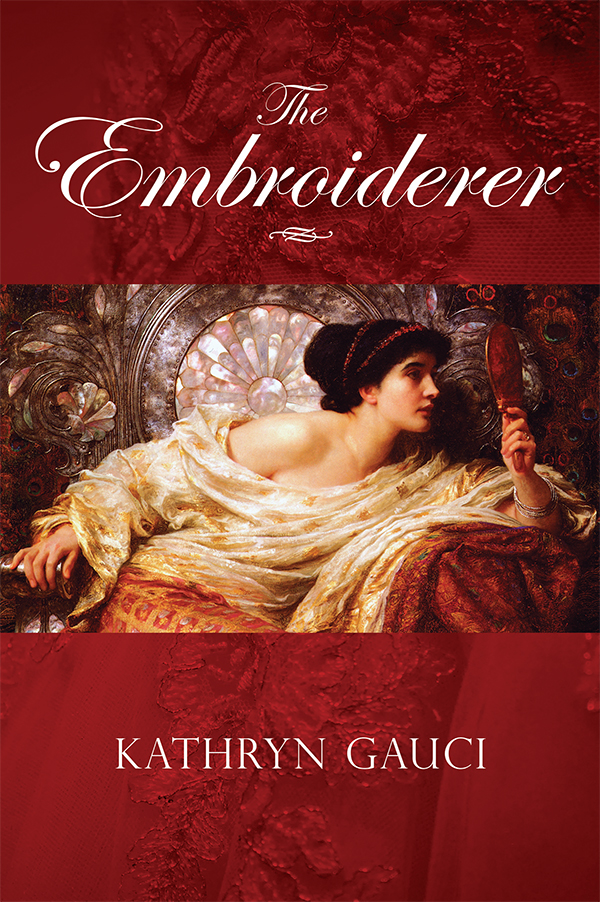
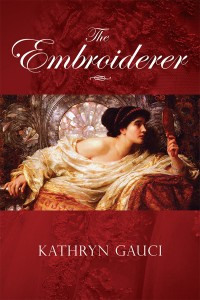 Set against the mosques and minarets of Asia Minor and the ruins of ancient Athens, The Embroiderer is a gripping saga of love and loss, hope and despair, and of the extraordinary courage of women in the face of adversity. Set against the mosques and minarets of Asia Minor and the ruins of ancient Athens, The Embroiderer is a gripping saga of love and loss, hope and despair, and of the extraordinary courage of women in the face of adversity.
1822: During one of the bloodiest massacres of The Greek War of Independence, a child is born to a woman of legendary beauty in the Byzantine monastery of Nea Moni on the Greek island of Chios. The subsequent decades of bitter struggle between Greeks and Turks simmer to a head when the Greek army invades Turkey in 1919.
During this time, Dimitra Lamartine arrives in Smyrna and gains fame and fortune as an embroiderer to the elite of Ottoman society. However it is her granddaughter, Sophia, who takes the business to great heights only to see their world come crashing down with the outbreak of The Balkan Wars, 1912-13. In 1922, Sophia begins a new life in Athens but the memory of a dire prophecy once told to her grandmother about a girl with flaming red hair begins to haunt her with devastating consequences.
1972: Eleni Stephenson is called to the bedside of her dying aunt in Athens. In a story that rips her world apart, Eleni discovers the chilling truth behind her family’s dark past plunging her into the shadowy world of political intrigue, secret societies and espionage where families and friends are torn apart and where a belief in superstition simmers just below the surface.
Published by SilverWood Books – Bristol BS1 4HJ United Kingdom, and available from all good bookstores and online retailers.
More about Kathryn and her fascinating world: www.kathryngauci.com
Connect with Kathryn: on Facebook and via Twitter @KathrynGauci
Thank you for being my guest today, Kathryn, and good luck with The Embroiderer.
Alison Morton is the author of Roma Nova thrillers, INCEPTIO, PERFIDITAS and SUCCESSIO. The fourth book, AURELIA, is due out in May 2015.
Find out more about Roma Nova, its origins, stories and heroines…
If you enjoyed this post, do share it with your friends!
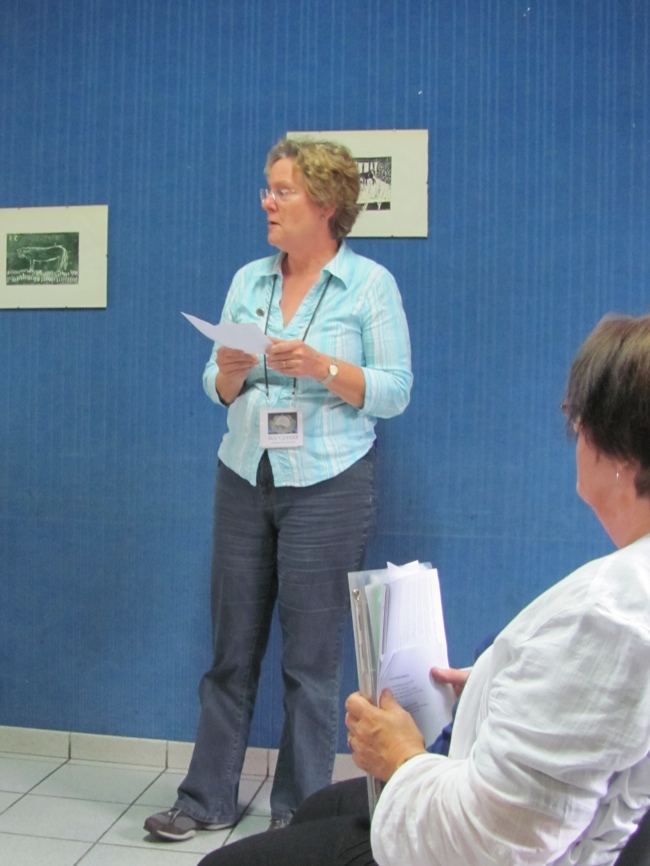
 I belong to a local writers’ circle and yesterday it was my turn to lead the session. We have a lively discussion which resulted in more ideas. Here’s a potted version… I belong to a local writers’ circle and yesterday it was my turn to lead the session. We have a lively discussion which resulted in more ideas. Here’s a potted version…
1. Know what you really want
Not what other people, e.g. family, spouses and friends think you want, nor what you think you should want.
Is writing a ‘want’, a ‘need’ or an ‘obsession’ (possibly an addiction)?
Deal with guilt that writing isn’t a good use of time or a valid job – it’s not selfish, it’s what you want to do.
2. Write now and enjoy it
Write and enjoy it, whatever your goals, whatever kind of writing you do.
Don’t over anticipate the future, e. g. ‘when I get discovered’, ‘when my book becomes a bestseller’.
But don’t let what you’ve done in the past set your writing agenda or stifle your work.
Have a plan, but don’t get obsessed by it – everything will change.
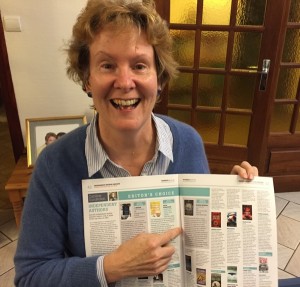 3. Be proud of what you have achieved 3. Be proud of what you have achieved
It can be by participating in a group, finishing a scene, being placed in a competition, publishing your work, getting a five star review or just making somebody laugh at your comedy writing or be moved by your poem.
And don’t compare your own achievements with other people’s; every writer is different.
4. Create and seize opportunities
You are not entitled to recognition however brilliant your writing.
It’s very rare to get a ‘break’ or ‘be discovered’ – usually only in novels or a films (Sorry!)
The old adage is true, ‘The harder I work, the luckier I get.’
Use every life event /change and every meeting with other people, especially fellow writers, as an opportunity.
And when opportunity is in front of you, take it.
5. Share with others
You won’t feel isolated, shut in your bat-cave, desperate to talk about your writing with somebody who understands.
Giving back knowledge and experience is more pleasurable than you think.
You might spark the next Booker prize winner on their way by giving them one little helpful hint.
Others will be open about sharing with you, to your great benefit.
 6. Take risks 6. Take risks
Dare to read your piece aloud, enter that competition, send your manuscript out to agent and publishers, or for assessments and competitions.
Put your opinion forward, volunteer to lead a session.
Try something you think you can’t do – you may surprise yourself.
If you have a deadline, feel overwhelmed or absorbed with a writing project, take the risk of saying no and displeasing others.
Creation is always risky; you never know what you may discover in yourself, both good and bad, but it may be something glorious.
Humans are naturally risk-averse – thank the Stone Age for that – but do it anyway.
7. Work hard and be persistent
Swanning around being creative is 5% of the job.
Sit down every day and write a minimum number of words even if you revise them all another day.
Organise your work, research methodically and turn off the Internet while you are inputting your words on the keyboard.
Don’t leave the hard slog of writing until a month before the deadline; start now.
Anything else to add to that list?
Alison Morton is the author of Roma Nova thrillers, INCEPTIO, PERFIDITAS, SUCCESSIO and AURELIA. The fifth in the series, INSURRECTIO, was published on 12 April 2016.
Find out more about Roma Nova, its origins, stories and heroines…
If you enjoyed this post, do share it with your friends!
 Today, I’m delighted to welcome historical novelist Kate Quinn. A native of southern California, Kate graduated from Boston University with bachelor’s and master’s degrees in Classical Voice. A lifelong history buff, she has written four novels in the Empress of Rome Saga and two set in the Italian Renaissance about the early years of the infamous Borgia clan. Readers may also remember Kate as one of the authors of A Day of Fire – see the interview with Ben Kane. Today, I’m delighted to welcome historical novelist Kate Quinn. A native of southern California, Kate graduated from Boston University with bachelor’s and master’s degrees in Classical Voice. A lifelong history buff, she has written four novels in the Empress of Rome Saga and two set in the Italian Renaissance about the early years of the infamous Borgia clan. Readers may also remember Kate as one of the authors of A Day of Fire – see the interview with Ben Kane.
Kate has succumbed to the blogging bug, and keeps a blog filled with trivia, pet peeves, and interesting facts about historical fiction. She and her husband live in Maryland with a small black dog named Caesar, and her interests include opera, action movies, cooking, and the Boston Red Sox.
Lovely to see you here, Kate. I really enjoyed Lady of the Eternal City about Vibia Sabina, Hadrian’s wife – thank you for the advance copy.
You’re welcome!
Hadrian is known to many people for Hadrian’s Wall in northern Britain, but he was a good governor, administrative reformer, proven military commander and patron of arts and architecture. But despite his love of Greece and Greek culture, he was very much a Roman of his time in his actions, i.e. prone to brutality and autocratic behaviour.
Roman women are often left out of the historical records; when they are included on occasion as Livia was, it’s exceptional. How do you approach ‘re-making’ the character of Sabina, when there is so little recorded about her?
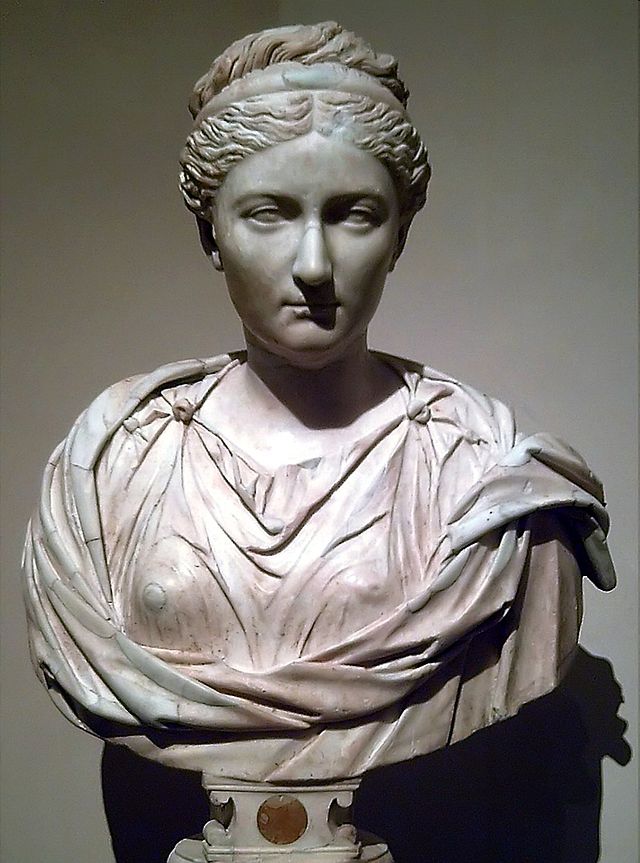
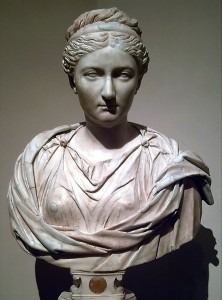 Vibia Sabina (Prado Museum, Madrid) Empress Sabina is a cipher—we have very few surviving concrete facts about her life, which I love. If it isn’t known, I’m free to make it up! What found the most interesting about her was her relationship with her mercurial husband, and with his beautiful male lover Antinous. There is historical evidence that Sabina and Hadrian disliked each other—but why did he still take her with him on his travels, and why did he never divorce her? And when he fell in love with Antinous, Sabina as the humiliated wife had good cause to feel shamed or angry, but she apparently gave the whole situation her seal of approval. Definitely some interesting marital dynamics there!
What was the most interesting, or shocking thing you discovered when researching this story?
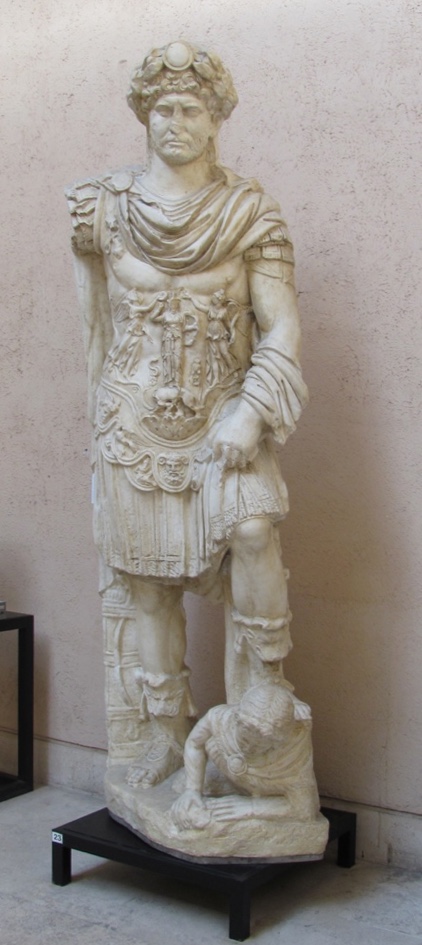
Hadrian’s personality was the most fascinating—and frustrating—thing I have ever found in my research. He’s an extremely mercurial, contradictory character; almost every personality trait he exhibits is bracketed by its exact opposite. He was a spiritual cynic; a superstitious man of science; a lazy workaholic; a humble bragger; a blood-thirsty animal lover. He was extremely hard to pin down as a character, and I still have no idea if my version is anywhere near the truth.
(I find this statue in the Museum of Roman Civilisation – made after one of Hadrian’s conquests – with its martial pose, yet the un-Roman moustache and curling hair a perfect physical example of this contradiction.)
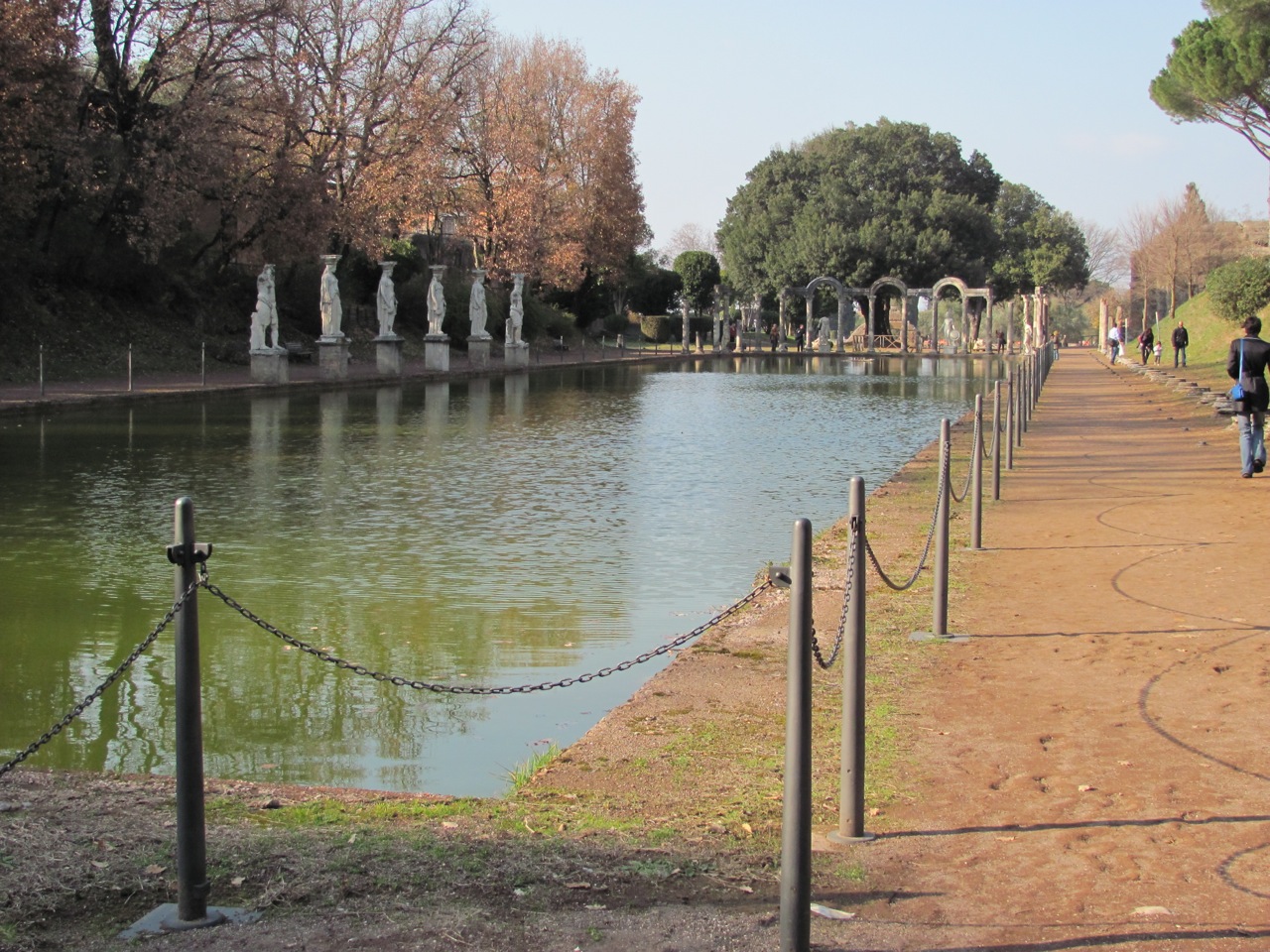
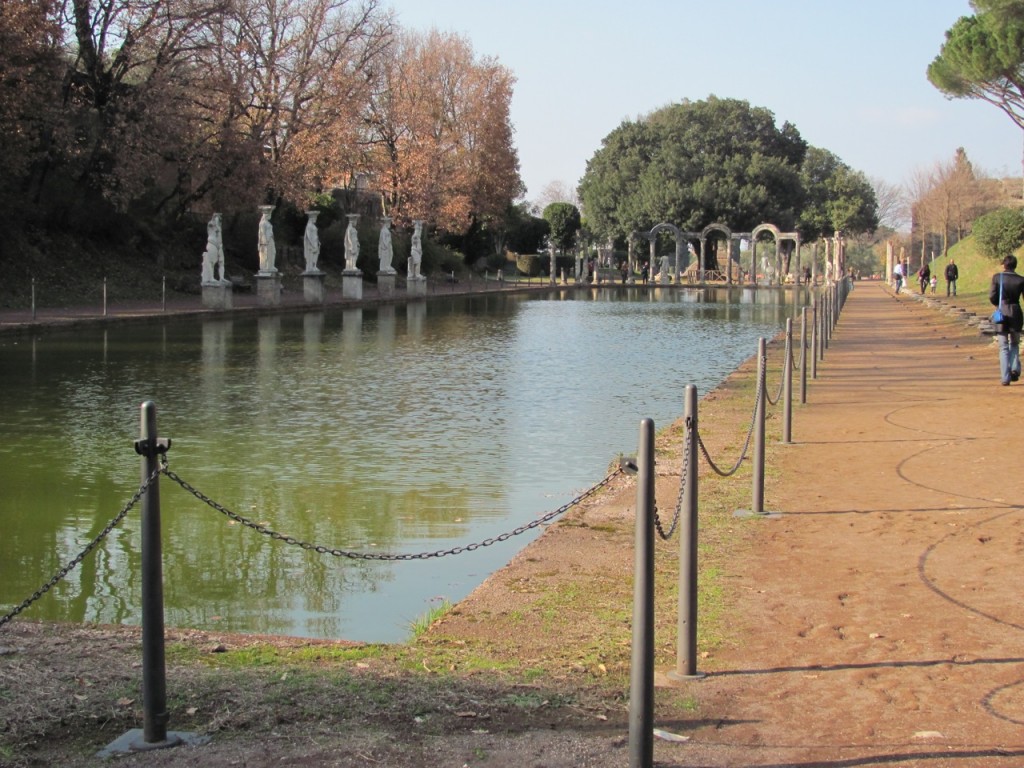 Hadrian’s villa at Tivoli outside Rome How do you feel about using setting and backstory in your work, especially for readers unfamiliar with Roman history?
There was both a lot of setting and a lot of backstory in this book. For one, Hadrian was an inveterate traveler and I had 10+ provinces to describe and make distinct. For the other, this book is a sequel to Empress of the Seven Hills where Hadrian, his future wife, and his future bodyguard first begin their dance of fascination, love, hatred, and secrets. 10 provinces and 20 years of complicated backstory is probably the reason this book is the longest I’ve written to date—but I loved playing with both, because I think it made the world inside the book richer. Ancient Rome sometimes gets boiled down to marble columns, gladiatorial games, and roast dormice at banquets—but showing readers how wide the range of experience was through the provinces and how the various social strata interacted with historical events makes for a more complete picture of a past era.
Do you think fiction does anything to help us understand the past, or is it purely entertainment?
Good historical fiction helps get rid of the veil over the past—the veil that keeps us from realizing that people of bygone eras were much like us. Even if the trappings of their lives are strange to modern eyes, people of ancient Rome or Renaissance France or WWI Britain still ate, drank, loved, laughed, hated, danced, and had all the same human feelings we do today—and good HF is just about the best way to make that real.
So what’s the new book Lady of the Eternal City about?
The fourth volume in the Empress of Rome series, published 3 March 2015, a new tale of the politics, power, and passion that defined ancient Rome.
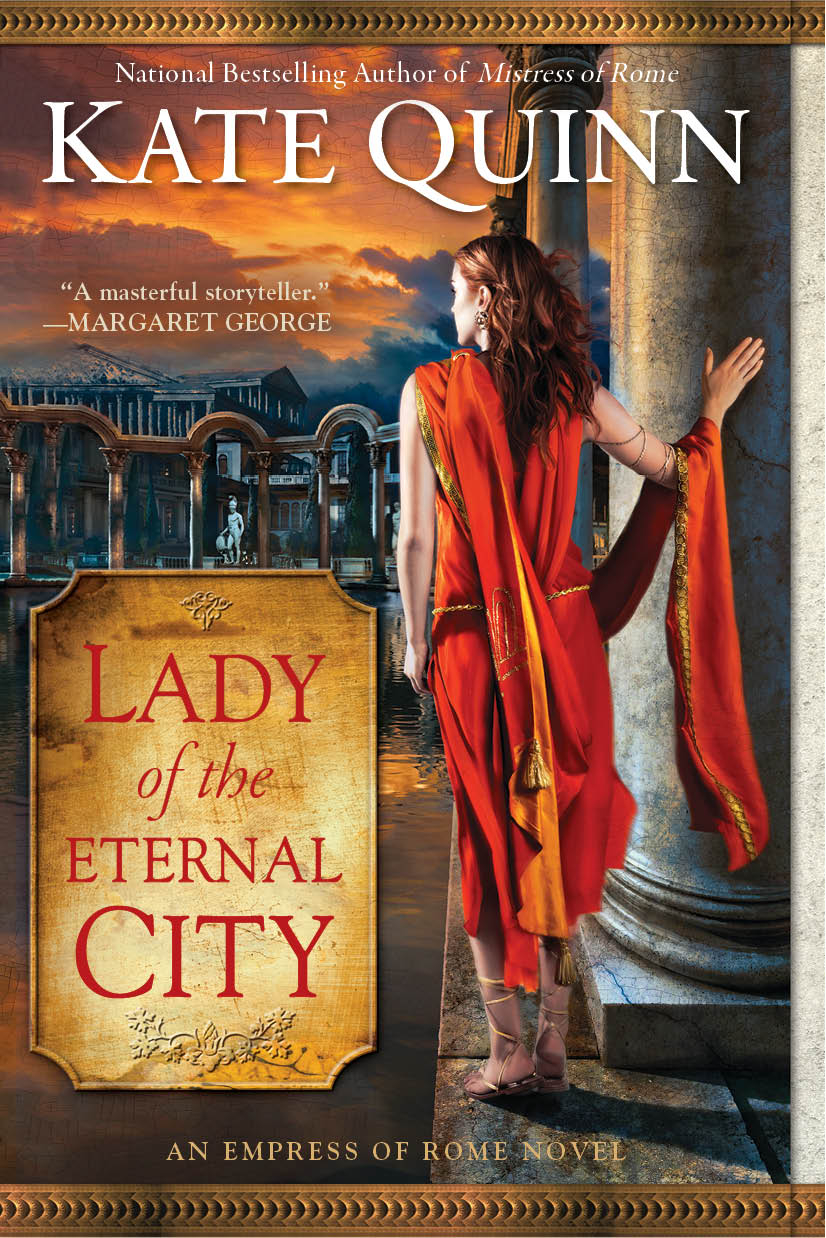 Elegant, secretive Sabina may be Empress of Rome, but she still stands poised on a knife’s edge. She must keep the peace between two deadly enemies: her husband Hadrian, Rome’s brilliant and sinister Emperor; and battered warrior Vix, who is her first love. But Sabina is guardian of a deadly secret: Vix’s beautiful son Antinous has become the Emperor’s latest obsession. Elegant, secretive Sabina may be Empress of Rome, but she still stands poised on a knife’s edge. She must keep the peace between two deadly enemies: her husband Hadrian, Rome’s brilliant and sinister Emperor; and battered warrior Vix, who is her first love. But Sabina is guardian of a deadly secret: Vix’s beautiful son Antinous has become the Emperor’s latest obsession.
Empress and Emperor, father and son will spin in a deadly dance of passion, betrayal, conspiracy, and war. As tragedy sends Hadrian spiraling into madness, Vix and Sabina form a last desperate pact to save the Empire. But ultimately, the fate of Rome lies with an untried girl, a spirited redhead who may just be the next Lady of the Eternal City . . .
Available in the UK at Amazon UK iTunes Nook Kobo
And my thoughts!
I knew about Hadrian, Sabina and Antinous from history, but the clever weaving of their stories with that of the fictional tough ‘barbarian’ Vix and the younger Faustina and Marcus as children enchants you. I have wandered through the remains of Hadrian’s Tivoli villa near Rome and, of course, embrace Hadrian’s Wall as part of my national heritage, but Kate Quinn breathes life into these places so you are gazing at the star sky at the northern edge of the world and feel the heartbreak of duty and love tearing you apart on the River Nile, in Judea, in Rome. The author uses different points of view with care, giving readers insight in to the minds and emotions of each character without burdening them with unnecessary detail nor losing them. Highly recommended.
More about Kate:
Website and blog Facebook Goodreads Twitter
Alison Morton is the author of Roma Nova thrillers, INCEPTIO, PERFIDITAS and SUCCESSIO. The fourth book, AURELIA, is due out in May 2015.
Find out more about Roma Nova, its origins, stories and heroines…
If you enjoyed this post, do share it with your friends!
 Yesterday was International Women’s Day – on balance, a good thing to remind us of women’s concerns, status and aspirations. And there were celebrations, affirmation and renewed determination – all good stuff. But it’s a bit like your birthday – all cake, champagne, greetings, celebrations – but today it’s about washing up, wiping up the spills, putting the bottles in the recycling bin and cleaning the loo. Yesterday was International Women’s Day – on balance, a good thing to remind us of women’s concerns, status and aspirations. And there were celebrations, affirmation and renewed determination – all good stuff. But it’s a bit like your birthday – all cake, champagne, greetings, celebrations – but today it’s about washing up, wiping up the spills, putting the bottles in the recycling bin and cleaning the loo.
#makeithappen was the hashtag for the day which was started thirty six years ago when the UN General Assembly invited member states to mark March 8 as a day to celebrate women and world peace. Impressive advances have been made with regard to women’s rights since the late 1970s. Science, politics and the economy have attempted to redress the imbalance on the part of governments and societies all over the world. Today, gender discrimination, societal exclusion and unfair cultural practices are condemned much more than ever before.
But… we are only a few steps along the road. I leave it to others to give solid data; there is no need to duplicate here statistics about rape, domestic abuse, FGM, honour killings and sexual abuse of young girls. Nor those of pay gaps, glass ceilings, objectification, catcalling, poor percentages of women’s media appearances and participation in the formal political process. Nor, despite women outperforming men in examinations at all levels of the education system, that they go on to earn substantially less than their male counterparts, and less status and credibility is given to their creative output. And the mystery that despite higher entry to professions like the law and journalism, few women attain very senior positions.
However, we don’t want to get hysterical about this, do we?
It’s not about men-bashing – these things impact men.
– Men are more likely to commit suicide than women (3-5 times more likely according the stats in Everyday Sexism). Is it because showing feelings, getting help and seeking assistance are seen as ‘girly’ things to do, something that men should be ashamed of? (You know how they hate asking for directions if they’re lost while driving.)
– Men are less likely to be given – and take – leave to go home sick from work and are pressured to return earlier than women are. Is it because women are seen as weaker than men, and men are expected to be strong?
– Men are less likely to secure time off work during school holidays, even if they have children. Is it because caring for children is seen as a woman’s role, and men are supposed to devolve that to the mothers, even though the latter also have jobs?
– Men staying off work to look after a sick child are praised for their progressive nature; women get docked their pay and are seen as weak team members. (This happened to me.)
– Men are pressured to conform to constructed gender patterns, especially in their peer group, the ’let’s do this for a laugh’ pressure when in their heart and mind they know the group action may hurt somebody or something else.
– Many men support their daughters openly and in subtle ways and we should applaud this because it’s not always the case. Many girls’ aspirations are knocked out of them before they transfer to secondary school.
Sometimes you see and hear about women praised for their achievements, especially if she’s ‘the first woman’ to do something, and often with that horrible phrase ‘succeeding in a man’s world.’ Hm. But only when it stops being remarkable should we stop making a song and dance about it.
I know the media love a bit of conflict and we live in a media age, but why must things about men and women always be depicted as a battle? Why do these patterns which abuse men as well as women continue? Why do we see open and aggressive disrespect of young women by young men today? Why do we still stick to an outmoded mental stance inherited from previous centuries? Is it fear, the wish to dominate because of inner uncertitude? And why do we keep picking at this particular scab? Surely as human beings we can do better than this.
Alison Morton is the author of Roma Nova thrillers, INCEPTIO, PERFIDITAS and SUCCESSIO. The fourth book, AURELIA, is due out in May 2015.
Find out more about Roma Nova, its origins, stories and heroines…
If you enjoyed this post, do share it with your friends!
|
Subscribe to Blog via Email
Join 368 other subscribers.
Categories
Archive
|
 This was the first year at Kensington Olympia – Earls Court has been deleted – and the comments about the layout were not too complimentary. However, feet having been found and map consulted, I made my way to the SilverWood Books stand, to meet up with Helen Hart, the director and my new publishing assistant, Bron.