 Today, I’m welcoming fellow Romantic Novelists’ Association member Joanna Maitland to talk about naming characters. Today, I’m welcoming fellow Romantic Novelists’ Association member Joanna Maitland to talk about naming characters.
After many years publishing Regencies with Harlequin Mills & Boon, Joanna is branching out into new fields as an independent author. With fellow author Sophie Weston, Joanna has just set up Libertà! where readers and writers can meet and share enthusiasms. Joanna hopes to welcome fans, old and new, and readers of all sorts of fiction to the website.
Joanna’s latest Regency ebook novella, His Silken Seduction, takes readers to pre-Waterloo France and the excitement of Napoleon’s Hundred Days. Her second, coming early in 2016, will be a timeslip, Lady In Lace. You can find all her books at http://LibertaBooks.com/joanna
Over to Joanna!
 Authors have different ways of naming characters. Some label their key characters hero and heroine until they have finished the first draft, others need names for their characters before they write a word. Authors have different ways of naming characters. Some label their key characters hero and heroine until they have finished the first draft, others need names for their characters before they write a word.
Names, for me, are integral to character. Names can even be part of the plot. In my early novel, My Lady Angel, the hero had two names – Frederick, the name used by the father he detested, and Max, the name by which his friends knew him. The difference between the two names, and the personalities that lay behind them, was a crucial thread of the story.
Sometimes, choosing a name doesn’t go particularly well. When I was working on A Regency Invitation, a three-novella joint story with Nicola Cornick and Elizabeth Rolls, I initially called my hero Will. But he hated it. His real name turned out to be Marcus and, once I’d changed it, he happily strode onto the stage and started talking. How did I know that his name was Marcus? I’m not sure. It just bubbled up from my subconscious. And I knew it was right immediately.
 All this may suggest that naming characters is a sort of alchemy, a half-magical process where the author negotiates with her characters as if they were real. It can feel like that, I’ll admit, but there’s also quite a lot of routine involved. All this may suggest that naming characters is a sort of alchemy, a half-magical process where the author negotiates with her characters as if they were real. It can feel like that, I’ll admit, but there’s also quite a lot of routine involved.
I have simple rules:
- make sure all characters’ names start with a different initial so there’s no chance that the reader will mix them up;
- try to have first names of different numbers of syllables, especially for hero and heroine – go for Elizabeth and Tom, say, rather than Elizabeth and Christopher;
- if possible, avoid names that end in -s or -es, like Bess, because the possessive can tie you in knots like “Bess’s best besom” (I broke my own rule with Marcus, I admit, but he insisted!)
- make sure characters’ names are appropriate for the period of the novel, whether it’s historical or contemporary; the name has to have been in use/in vogue at the time the character was born.
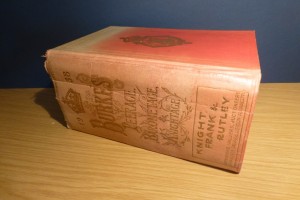 One trick is to check the names that real people of the time were using. You can find them in parish registers, contemporary letters and diaries, newspapers and so on. I tend to rely on my battered old copy of Burke’s Peerage (vintage 1938) where I borrow first names from real people. One trick is to check the names that real people of the time were using. You can find them in parish registers, contemporary letters and diaries, newspapers and so on. I tend to rely on my battered old copy of Burke’s Peerage (vintage 1938) where I borrow first names from real people.
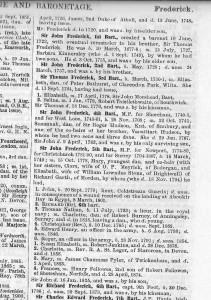 There’s part of a random page shown here, for the Frederick family. If you can read the tiny print (click the photo for a larger version), you’ll see that John, the heir to the 5th Baronet, died of wounds received at Aboukir Bay, Egypt, in 1801. Burke’s is full of such fascinating and thought-provoking details. There’s part of a random page shown here, for the Frederick family. If you can read the tiny print (click the photo for a larger version), you’ll see that John, the heir to the 5th Baronet, died of wounds received at Aboukir Bay, Egypt, in 1801. Burke’s is full of such fascinating and thought-provoking details.
It can be wise to avoid actual names, especially if you write contemporary stories. Real people do sue! Georgette Heyer use to pore over maps to find obscure place names for her characters. Fownhope (possibly the inspiration for Augustus Fawnhope in The Grand Sophy) is a Herefordshire village, for example. I regularly note down interesting place names from road signs. And you can always modify names, as Heyer did, turning them into something that never existed.
 A Warning! If you decide to change Will to Marcus, say, do beware of unintended consequences of Search/Replace. Your beautiful proposal scene, for example, might become something quite odd: A Warning! If you decide to change Will to Marcus, say, do beware of unintended consequences of Search/Replace. Your beautiful proposal scene, for example, might become something quite odd:
Hero (on bended knee) to heroine: I love you, darling. Marcus you marry me?
Heroine (overcome with joy): Oh, yes! Yes, of course I marcus.
We wish Joanna every success with Libertà!, her new joint venture with fellow author Sophie Weston.

Connect with Joanna:
Website: http://LibertaBooks.com
Blog: http://LibertaBooks.com/blog
Twitter: @LibertaBooks @joannamaitland @sophiewestonbks
Joanna Maitland’s latest Regency ebook novella, His Silken Seduction, takes readers to pre-Waterloo France and the excitement of Napoleon’s Hundred Days. Available now on Kindle
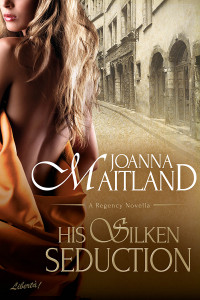
Wounded. Abandoned.
In the enemy’s bed.
He’s Wellington’s spy, surviving in war-torn France.
His silk-weaver’s touch is driving him wild.
But she’s the enemy.
Dare he trust her with his life?
Or his heart?
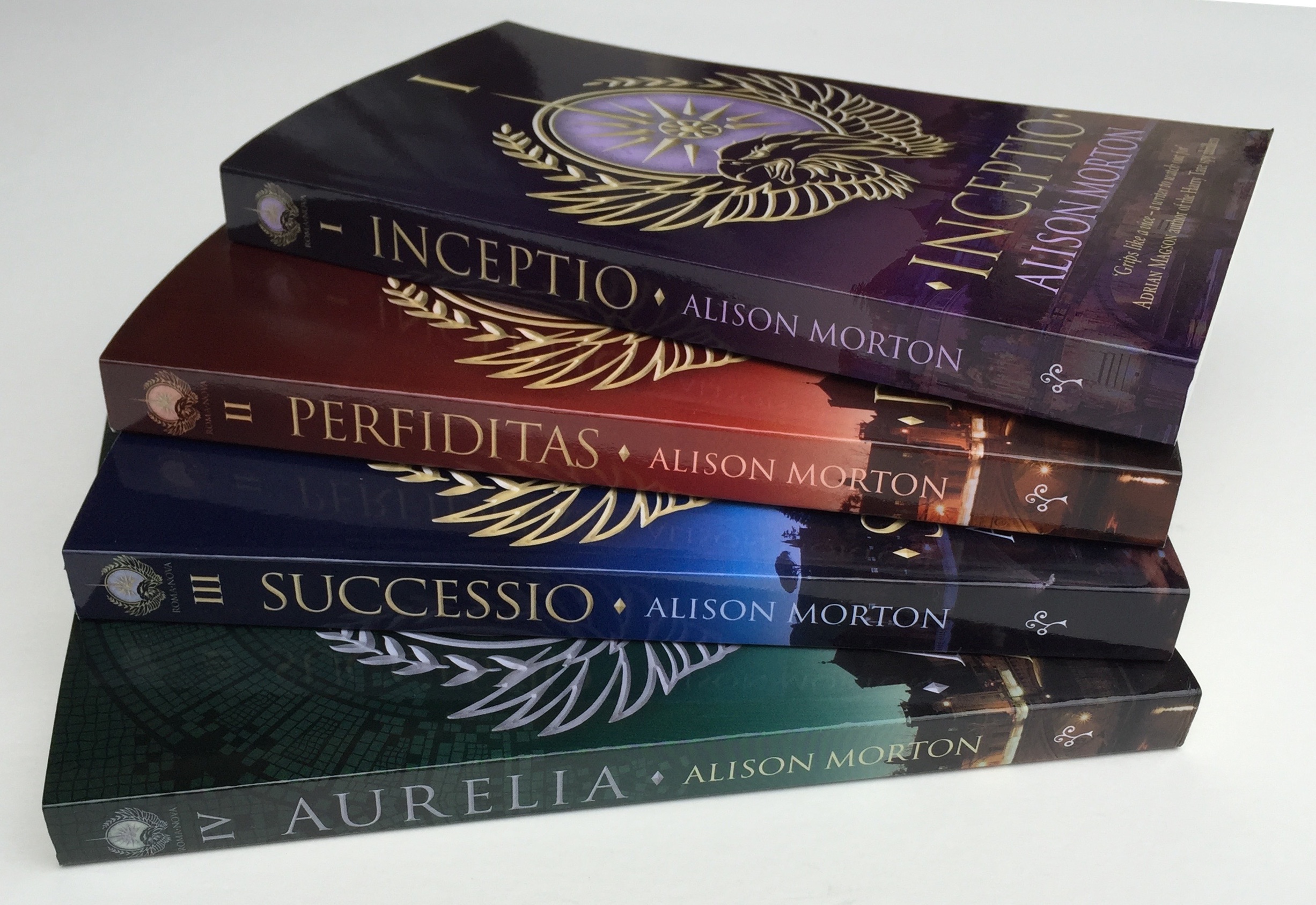
Alison Morton is the author of Roma Nova thrillers, INCEPTIO, PERFIDITAS and SUCCESSIO. The fourth book, AURELIA and the Roma Nova box set are now out.
Find out more about Roma Nova, its origins, stories and heroines…
If you enjoyed this post, do share it with your friends!Like this:Like Loading...
 Today, in this last ‘Ravens’ post I’m welcoming Ruth Downie, author and good friend of Roma Nova. We met in August 2013 on The Wonder of Rome blog hop (her post intriguingly called ‘First drown your ape’) and she enlightened us more about Roman medical practice in October 2014 in this post about historical truth and donkey poo. Ruth was also kind enough to endorse AURELIA. Today, in this last ‘Ravens’ post I’m welcoming Ruth Downie, author and good friend of Roma Nova. We met in August 2013 on The Wonder of Rome blog hop (her post intriguingly called ‘First drown your ape’) and she enlightened us more about Roman medical practice in October 2014 in this post about historical truth and donkey poo. Ruth was also kind enough to endorse AURELIA.
Ruth read too much Jane Austen at university, emerged with an English degree and a plan to get married and live happily ever after. She says she’s still working on it. She won the Fay Weldon section of the BBC’s End of Story competition in 2004. The first book in her crime series featuring Roman Army medic Ruso was a New York Times bestseller under the title ‘Medicus’. It was published as ‘Ruso and the Disappearing Dancing Girls,’ in the UK, where The Times recommended it as one of their ‘Seven best thrillers for Christmas’. The sixth in the series, ‘Tabula Rasa,’ came out in 2014. Ruth is currently working on the next book and also spends several weeks every summer wielding an archaeological trowel in search of inspiration.
Ruth has made grumpy, tough, but kind-hearted Ruso such a real character I’m surprised he isn’t listed in the Roman army rolls! I can’t wait for the next in the Ruso series (no pressure, Ruth), but in the meantime, she’s been collaborating with six other authors – E. (Eliza) Knight, Russell Whitfield, Kate Quinn, Stephanie Dray, S.J.A.Turney and Vicky Alvear Shecter – to produce seven stories set during Boudica’s revolt in Britain 60/61 AD.
Britannia: land of mist and magic clinging to the western edge of the Roman Empire. A red-haired queen named Boudica led her people in a desperate rebellion against the might of Rome, an epic struggle destined to consume heroes and cowards, young and old, Roman and Briton. A Year of Ravens is a novel in seven parts, overlapping stories of warriors and peacemakers, queens and slaves, Romans and Britons who cross paths during Boudica’s epic rebellion. But who will survive to see the dawn of a new Britannia, and who will fall to feed the ravens?
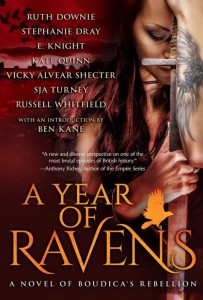 First of all, I have to say how much I enjoyed A Year of Ravens. These are not just weasel words – it’s a five star book, no question. Congratulations to Ruth on Ria’s story; it was very poignant and I enjoyed the view ‘from below’. I rather think she made the best king’s daughter of them all… First of all, I have to say how much I enjoyed A Year of Ravens. These are not just weasel words – it’s a five star book, no question. Congratulations to Ruth on Ria’s story; it was very poignant and I enjoyed the view ‘from below’. I rather think she made the best king’s daughter of them all…
As with others in this series of interviews, I asked Ruth some pertinent (possibly impertinent) questions about this project…
Why does Boudicca have an enduring attraction?
As a Briton myself it’s tempting to fall back on the cliché that we all love a heroic failure, but I think it’s deeper than that. Deeper, too, than just respect for a brave woman. Underlying Boudica’s story is a question that’s still relevant today: What do you do in the face of tyranny? Could she have made different choices? The extra lure for writers, I think, is that we only know about her through the words of her conquerors. There must have been another version of events, and that leaves a huge space for the imagination.
Were the group of authors self-selected or chosen? And how did you find working together?
I was invited to fill a gap in the group, and have only ‘met’ the other writers via the Internet – which I have to admit feels a bit weird, since our characters know each other very well indeed. Luckily, the core group had already figured out how to coordinate everything during their first book, and everyone was very welcoming, so it wasn’t hard to slot in. As the project’s gone along I’ve grown increasingly in awe of the skills the rest of the team have to offer – not just writing and editing, which you might expect, but all the other jobs that need to be done to get a book out there. Every time something came up, somebody turned out either to know how to do it or to know somebody who did. Real professionals!
What do you think is in it for the reader having such a diversity of author styles?
I’m hoping readers will get the best of all of us. For example, I’m fascinated by the question of how ordinary Britons would have survived under the constant pressure of the Roman occupation, but I wouldn’t have a clue how to write a big battle scene. Fortunately there are people in the team who are brilliant at them, as readers will find out.
Will there be another book focusing on a different event?
I guess that’ll depend on the people who read this one…
Publication date was 17 November and you can order A Year of Ravens from Amazon UK and Amazon US now.
Ruth very kindly hosted the Roma Nova box set on her blog. Read more about her Ruso series on her website.
Alison Morton is the author of Roma Nova thrillers, INCEPTIO, PERFIDITAS and SUCCESSIO. The fourth book, AURELIA and the Roma Nova box set are now out.
Find out more about Roma Nova, its origins, stories and heroines…
If you enjoyed this post, do share it with your friends!Like this:Like Loading...
 This week’s ‘Ravens’ guest is S J A Turney, author of the well-reviewed Roman legionary series, Marius’ Mules, The Ottoman Cycle and the Interregnum trilogy. His new series The Great Game, begins with Praetorian, published in March 2015. Simon combines a love of travel and history with that of architecture and writing. Since leaving school and University, he’s tried car sales, insurance, software engineering, computer network management, civil service and even painting and decorating! In 2003 he wrote his first full length novel which started Marius’ Mules. Two years later came Interregnum, a fantasy story with a heavy flavour of Rome. Now there are eight Marius Mules and three in the Interregnum series… This week’s ‘Ravens’ guest is S J A Turney, author of the well-reviewed Roman legionary series, Marius’ Mules, The Ottoman Cycle and the Interregnum trilogy. His new series The Great Game, begins with Praetorian, published in March 2015. Simon combines a love of travel and history with that of architecture and writing. Since leaving school and University, he’s tried car sales, insurance, software engineering, computer network management, civil service and even painting and decorating! In 2003 he wrote his first full length novel which started Marius’ Mules. Two years later came Interregnum, a fantasy story with a heavy flavour of Rome. Now there are eight Marius Mules and three in the Interregnum series…
But, of course, his latest work was the collaborative A Year of Ravens written with E. (Eliza) Knight, Ruth Downie, Russell Whitfield, Kate Quinn, Stephanie Dray and Vicky Alvear Shecter – seven stories set during Boudica’s revolt in Britain 60/61 AD.
Britannia: land of mist and magic clinging to the western edge of the Roman Empire. A red-haired queen named Boudica led her people in a desperate rebellion against the might of Rome, an epic struggle destined to consume heroes and cowards, young and old, Roman and Briton. A Year of Ravens is a novel in seven parts, overlapping stories of warriors and peacemakers, queens and slaves, Romans and Britons who cross paths during Boudica’s epic rebellion. But who will survive to see the dawn of a new Britannia, and who will fall to feed the ravens?
‘Ravens’ came out just over two weeks ago and is going like a hot cake. I suggest you buy it. (Amazon UK, Amazon US)
Simon tells the story of Andecarus, the son of a Celtic war leader, who has been fostered by the family of a high Roman official since childhood. It was very much part of the Roman/client ruler relationship that the latter’s children were ‘guests’ of Rome, not just to ensure the former’s compliance but to make the next generation of local rulers fully conversant with and embrace the Roman way.
Andecarus is such a sympathetic character. His dilemma as a child of two cultures resonates with me. Karen Brown/Carina Mitela experiences similar conflicts, although she makes her decision earlier in her story, although in PERFIDITAS she feels a different dual-pull. Andecarus really does go through the mill in two of the toughest and uncompromising cultures around. But eventually, in the midst of war and rebellion, he has to make a choice.
So here are Simon’s answers to my series questions…
Why does Boudicca have an enduring attraction?
Boudica stands out in many ways. She is a warrior woman in an almost Amazonian mould in an era when most of our historical figures of note are male, especially in the fields of warfare and politics. She is the underdog, and everyone loves the underdog. She and her Iceni and Trinovante warriors may have been numerous and strong, but counted against the fearsome Roman war machine, which could draw on resources of men and equipment that might have seemed almost infinite at the time, they were always going to be the underdog. And tied into that is the fact that any text you read on her, you know the end is brutal and bitter, so there is a grisly fascination in seeing how it comes about.
And then there is the nationalist aspect. You don’t have to be English, or even British to appreciate Boudica, who shares a place of national pride with figures like Arminius, Vercingetorix and Don Diego de Vivar (El Cid). She represents a final stand of an ancient, chaotic world against a more organized, more modern, more practical one. And, of course, she is a figurehead for all the Celtic peoples. To see how she lives on in the national consciousness, one only needs to look at the statue of her in London. She ticks a box on almost everyone’s wishlist in a heroine.
How did you find working together as a group of authors?
I have thoroughly enjoyed the collaboration. I’ve worked on collaborative efforts before, but only ever with one other writer, and it has been fascinating to see how well a truly deep and complex tale can evolve from the cross-pollination of ideas from seven different authors. At times it can be a little frustrating as several views conflict and need compex resolution, but when that resolution happens and you look back, you can see the improvement in the work that has been born from the discussion. In fact, there has been very little conflict over the book – surprisingly so to my mind.
I kick myself to some extent that, being given what could have been a straightforward section of the story to tell, I expanded the character to the point where he became involved in nearly every part of the overall story, making my part more complex than it should have been, but my co-authors took the character of Andecarus and ran with it, growing and deepening it beyond my wildest dreams, and the result, yet again, is far greater than anything I could have accomplished alone. And that, I think, is part of the joy of working on this, and will be part of the joy of reading it: the inter-connection between the characters, threads and stories that weave in and out create a depth that no single author would achieve. I would say that out of chaos is born a gem, but to be honest, even at the points when I felt my part was becoming chaotic, my co-authors were keeping everything together. Would I do it again? Hell, yes.
What do you think is in it for the reader having such a diversity of author styles?
Oops. Think I might have partially answered this already. The fact is that each author in this work has not only their own writing style, but their own ethos and very individual personality, and it is those that I feel shine through most in the work. With each very different mind-set, each tale has been focused slightly differently and, since they are all based around separate characters, that works well, for the idiosyncrasies and biases of that writer become part of the character. For example, I am a writer of Roman fiction, here telling the tale of a native, albeit a Roman-influenced one. Thus in my tale there are echoes of mighty Rome hovering in the wings at all time. I can’t prevent that. It’s part of me. But it has therefore become part of Andecarus and part of his journey.
Similarly, each writer brings individuality to the story and the character far beyond the writing style. And yet, because of the nature of the collaboration and the cross-pollination of ideas I mentioned earlier, those very separate themes and characters have been tied together in an intricate yet strong web. The reader here is being treated to a single story – one of the most important uprisings in either British or Roman history, but he or she is also being given the opportunity to see it through seven very different perspectives, and that to a great extent removes the bias you would naturally get with one viewpoint.
Will there be another book focusing on a different event?
I am positive there will be another. Whether or not I am one of the lucky few who get to contribute will depend upon a great number of different factors, such as workload, availability of contributors, whether or not the subject matter is suitable. For me, if the theme is right, I would love nothing more than to work on another book with this fine bunch (and maybe some of those I missed from The Day of Fire, too.) I would love to explore a few different eras and milieu. It may be a touchy subject, but Roman Judea and the Biblical epic is a fascinating subject. The fall of Jerusalem and the siege of Masada too appeal. The great fire of London has possibilities, as well as reconquista of Spain. There are so many stories waiting to be told, some of which would be vastly improved by being given this sort of treatment that I can only see the H Team’s work having only just begun…
Thank you, Simon!
Publication date was 17 November and you can order from Amazon UK and Amazon US now.
Simon very kindly hosted the Roma Nova box set on his blog and reviewed INCEPTIO – do pop over and read them!
Alison Morton is the author of Roma Nova thrillers, INCEPTIO, PERFIDITAS and SUCCESSIO. The fourth book, AURELIA and the Roma Nova box set are now out.
Find out more about Roma Nova, its origins, stories and heroines…
If you enjoyed this post, do share it with your friends!Like this:Like Loading...
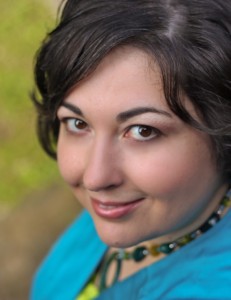 My third guest in the ‘Ravens’ series is Stephanie Dray, whom I had the pleasure of meeting at the Historical Novel Society conference in Denver this summer. Stephanie is a bestselling, multi-published author of historical women’s fiction and fantasy. Her critically acclaimed historical series about Cleopatra’s daughter has been translated into more than six different languages. Before she wrote novels, Stephanie was a lawyer, a game designer and teacher. My third guest in the ‘Ravens’ series is Stephanie Dray, whom I had the pleasure of meeting at the Historical Novel Society conference in Denver this summer. Stephanie is a bestselling, multi-published author of historical women’s fiction and fantasy. Her critically acclaimed historical series about Cleopatra’s daughter has been translated into more than six different languages. Before she wrote novels, Stephanie was a lawyer, a game designer and teacher.
A Year of Ravens was written in collaboration with E. Knight, Ruth Downie, Russell Whitfield, SJA Turney, Kate Quinn and Vicky Alvear Shecter and features seven stories set in the Boudican revolt in Britain 60/61 AD.
Britannia: land of mist and magic clinging to the western edge of the Roman Empire. A red-haired queen named Boudica led her people in a desperate rebellion against the might of Rome, an epic struggle destined to consume heroes and cowards, young and old, Roman and Briton. A Year of Ravens is a novel in seven parts, overlapping stories of warriors and peacemakers, queens and slaves, Romans and Britons who cross paths during Boudica’s epic rebellion. But who will survive to see the dawn of a new Britannia, and who will fall to feed the ravens?
‘Ravens’ came out last week and is going like a hot cake. I suggest you buy it. (Amazon UK, Amazon US)
Stephanie’s story is about Cartimandua, Queen of the Brigantes and client of Rome; the surprising thing was that the Romans treated with her at all as she stood for everything against Roman societal norms. She was clever in keeping her people neutral and safe and led a stable and peaceful kingdom (queendom?) for twenty years, whilst the much of Britain was under direct Roman rule. She is remembered negatively for handing over Caratacus to the Romans. Read Stephanie’s story for a different slant…
Welcome to Roma Nova, Stephanie!
Why does Boudicca have an enduring attraction?
For me, the attraction of Boudica’s story is that Romans never seemed to expect women to fight back against them, and it was their blindness in this area that was so often their undoing. Having written several books about Cleopatra’s daughter, I’m fascinated by the twisted relationship Rome had to powerful women, so I’m always drawn to powerful ancient queens who either got in Rome’s way–or learned to get along with them.
Were the group of authors self-selected or chosen? And how did you find working together?
After A Day of Fire, we knew we wanted to get the band back together and work on another collaboration, but because of other professional obligations, Ben Kane and Sophie Perinot couldn’t participate. That gave us an opportunity to reach out to some of our favorite writers. And we’re so glad that we did, because Russ, Simon and Ruth were aces to work with. Each of them brought unique strengths and talents to the project, and they were enormously patient with our brash American ways. Simon’s story in particular features a character that we all ended up using, forcing him to have to tinker every time one of us changed anything in our own stories. Somehow, he did not kill us. In the end, everyone was really dedicated to making the best overall book we could, together. No egos involved. It was very democratic. A lovely experience that makes me feel so honored to have been a part of it.
What do you think is in it for the reader having such a diversity of author styles?
Hopefully, the reader will come away from the book with a different perspective on the entire rebellion than has ever been presented before. Each story is a different facet of a tragic clash of cultures. All of us have our own unique voices and ways of telling a story, but we were all aware of the specific job we needed to do. For example, Kate’s known for her humor and by the time you get to her story you’re going to need a laugh.
Will there be another book focusing on a different event?
We think so. Do you and your readers have a particular event you’d like to see us cover?
Great question! Answers below, please.
Alison Morton is the author of Roma Nova thrillers, INCEPTIO, PERFIDITAS and SUCCESSIO. The fourth book, AURELIA and the Roma Nova box set are now out.
Find out more about Roma Nova, its origins, stories and heroines…
If you enjoyed this post, do share it with your friends!Like this:Like Loading...
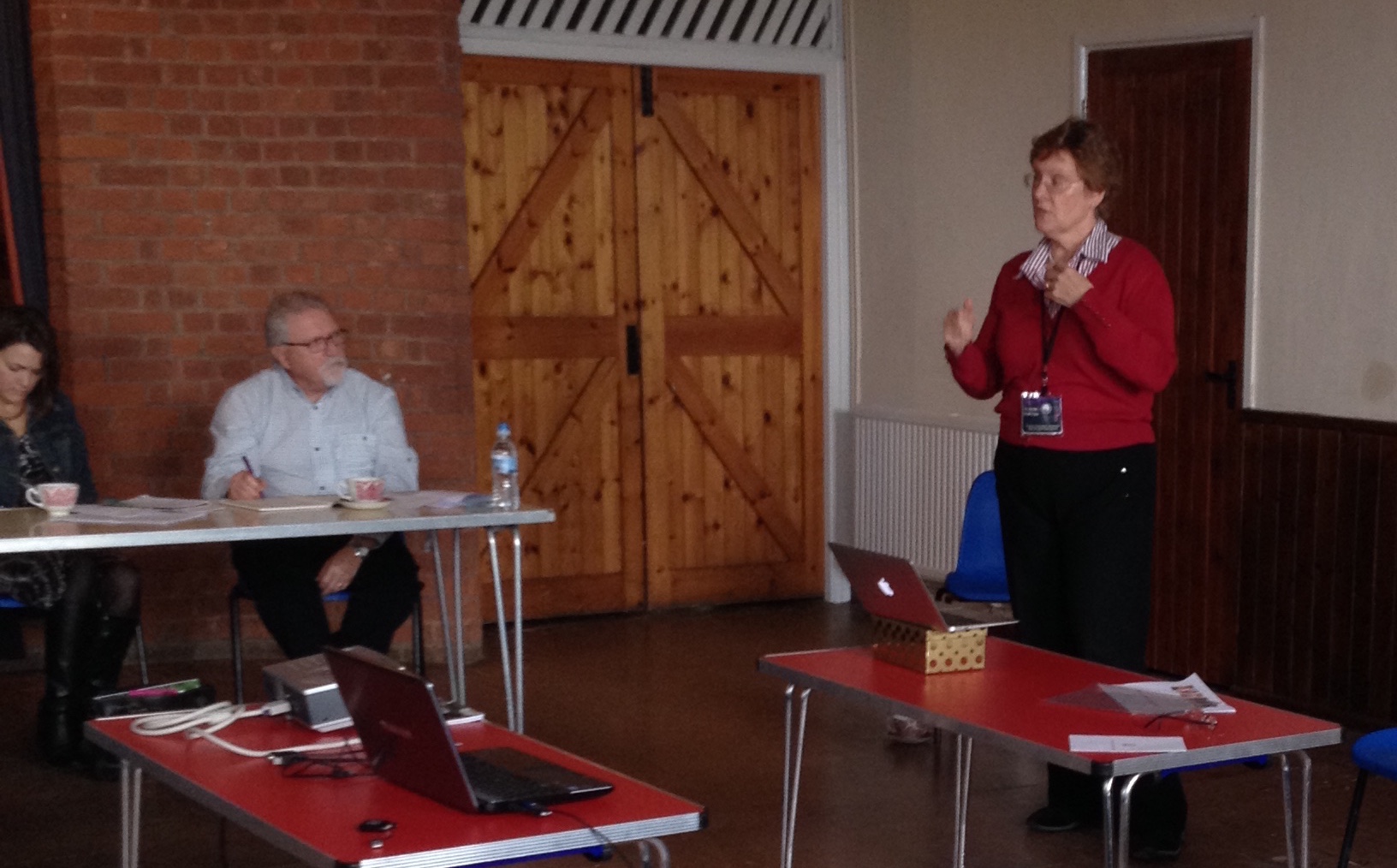
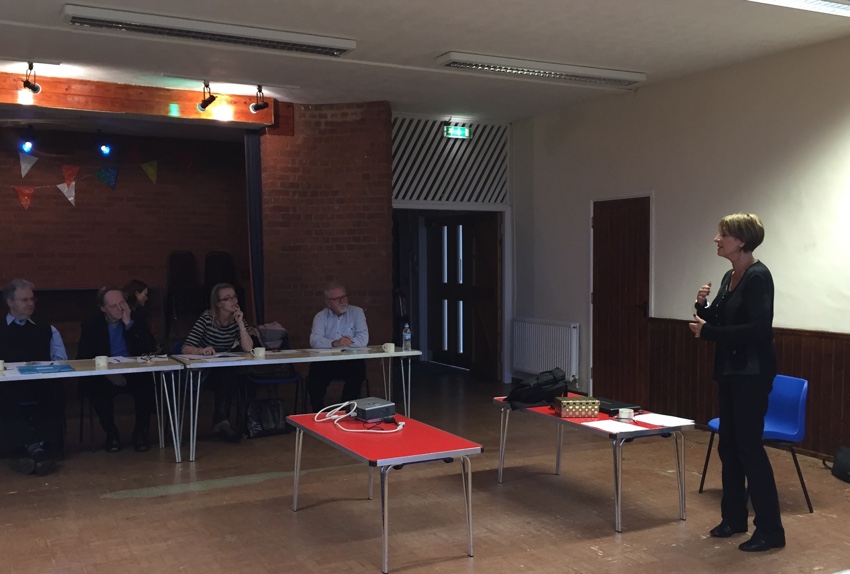
 In the pantheon of literary festivals, the Chipping Norton Literary Festival is reckoned to be one of the best: world class speakers, an unrivalled range of events, the ‘localness’ yet global appeal, and not least, enthusiasm and fun. So when I was invited via my writing friend Liz Harris to speak on self-publishing at one of their satellite events, I nearly fell over myself to get to my keyboard to type, ‘YES!’. In the pantheon of literary festivals, the Chipping Norton Literary Festival is reckoned to be one of the best: world class speakers, an unrivalled range of events, the ‘localness’ yet global appeal, and not least, enthusiasm and fun. So when I was invited via my writing friend Liz Harris to speak on self-publishing at one of their satellite events, I nearly fell over myself to get to my keyboard to type, ‘YES!’.
Although I wasn’t asked, I sent in a full proposal detailing what I would speak about, what the participants would learn, and what my experience and credentials were.
Tip: Have this document ready for when the call comes – it creates a professional impression. It needs to be as clear and polished as any other piece of writing.
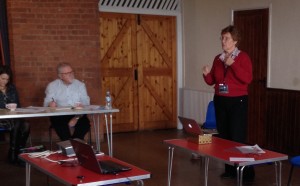 The organiser asked if I would take part in a second talk called ‘Researching your novel’; Liz would talk about general and historical research and I would follow with tips for researching imaginary settings. This didn’t apply only to my Roma Nova series – alternative historical thrillers – but also to science fiction and fantasy writing. The organiser asked if I would take part in a second talk called ‘Researching your novel’; Liz would talk about general and historical research and I would follow with tips for researching imaginary settings. This didn’t apply only to my Roma Nova series – alternative historical thrillers – but also to science fiction and fantasy writing.
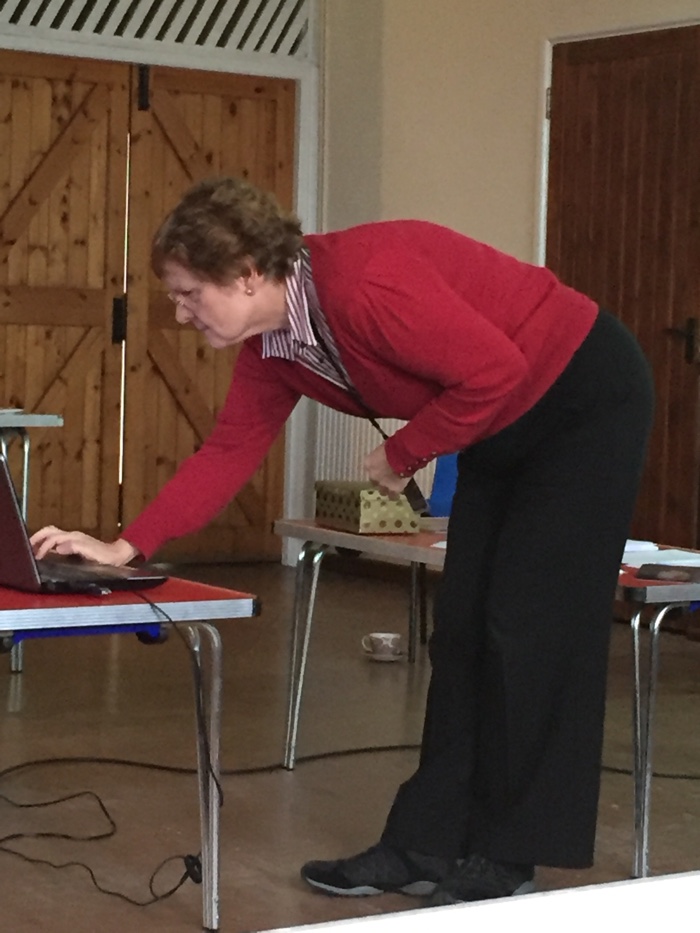
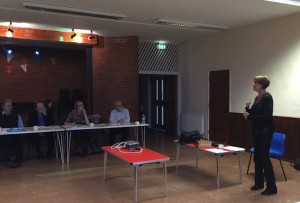 The day starting with Liz talking about plotting and how everything – setting, structure, research, conflict and character – winds into and around it. Despite a technical failure with the projector until halfway through her talk, she carried on gamely from her notes. This was down to two things – she knew her subject and wasn’t spooked by the setback. The day starting with Liz talking about plotting and how everything – setting, structure, research, conflict and character – winds into and around it. Despite a technical failure with the projector until halfway through her talk, she carried on gamely from her notes. This was down to two things – she knew her subject and wasn’t spooked by the setback.
Tip: Practice, practice and practice beforehand and ensure you have prompt cards so you can continue with your talk when a technical failure sends your lovely PowerPoint presentation into the abyss.
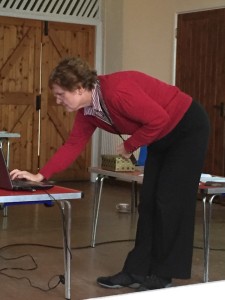 Will it work? Next was our joint session on research. Liz and I knew each other already through the Romantic Novelists’ Association, but we discussed beforehand the structure of the session, how long we’d each speak for and exactly what each of us would be saying.
Tip: If presenting jointly or sitting on a panel, communicate with your fellow speakers well before the day. If you don’t sort out content and running order beforehand, you not only look incompetent, but the audience doesn’t get its money’s worth. When I chaired the self-publishing panel at the Historical Novelist Society conference in Denver this year, I set out ‘rules’ about not mentioning our own books and emphasising the audience’s requirements as well as consulting with them extensively on topics.
Self- or indie publishing is far more complex today and needs forethought and dedication to do it successfully. In my hour’s talk I interspersed the good, the bad and the practical with photos, questions and anecdotes.
Tip: Audiences are keen to hear what you want to say, but keep it snappy and digestible. You do not have to cram everything in.
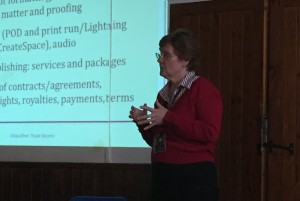 I stressed the twin needs for quality of production and self-started marketing. A few faces blenched at the latter, but I suggested that publishing meant just that – making public! I stressed the twin needs for quality of production and self-started marketing. A few faces blenched at the latter, but I suggested that publishing meant just that – making public!
Tip: Offer handouts as a summary of your talk, further reading or deeper detail of a specific topic covered in your talk. For this session, I gave out notes on the slides, how to choose a publishing services company and social media marketing for authors.
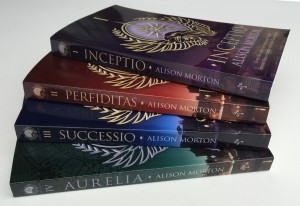 And yes, I took along a small supply of my SilverWood Books published Roma Nova thrillers and my DIY self-published The 500 Word Writing Buddy to show what could be done at different ends of the self-publishing spectrum. And sold both. And yes, I took along a small supply of my SilverWood Books published Roma Nova thrillers and my DIY self-published The 500 Word Writing Buddy to show what could be done at different ends of the self-publishing spectrum. And sold both.
Tip: If the event organiser doesn’t mention selling your books, raise the subject yourself – they probably assumed you would, or they just forgot!
Speaking at events is a way of spreading word of your and your books’ existence, an opportunity to give something back to newer writers and the pleasure of mixing with other writers.
Alison Morton is the author of Roma Nova thrillers, INCEPTIO, PERFIDITAS, SUCCESSIO and AURELIA.
Find out more about Roma Nova, its origins, stories and heroines…
If you enjoyed this post, do share it with your friends!Like this:Like Loading...
|
Subscribe to Blog via Email
Join 368 other subscribers.
Categories
Archive
|
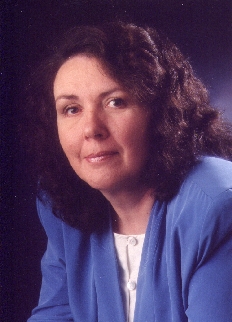 Today, I’m welcoming fellow Romantic Novelists’ Association member Joanna Maitland to talk about naming characters.
 Authors have different ways of naming characters. Some label their key characters hero and heroine until they have finished the first draft, others need names for their characters before they write a word.
 All this may suggest that naming characters is a sort of alchemy, a half-magical process where the author negotiates with her characters as if they were real. It can feel like that, I’ll admit, but there’s also quite a lot of routine involved.
 One trick is to check the names that real people of the time were using. You can find them in parish registers, contemporary letters and diaries, newspapers and so on. I tend to rely on my battered old copy of Burke’s Peerage (vintage 1938) where I borrow first names from real people.
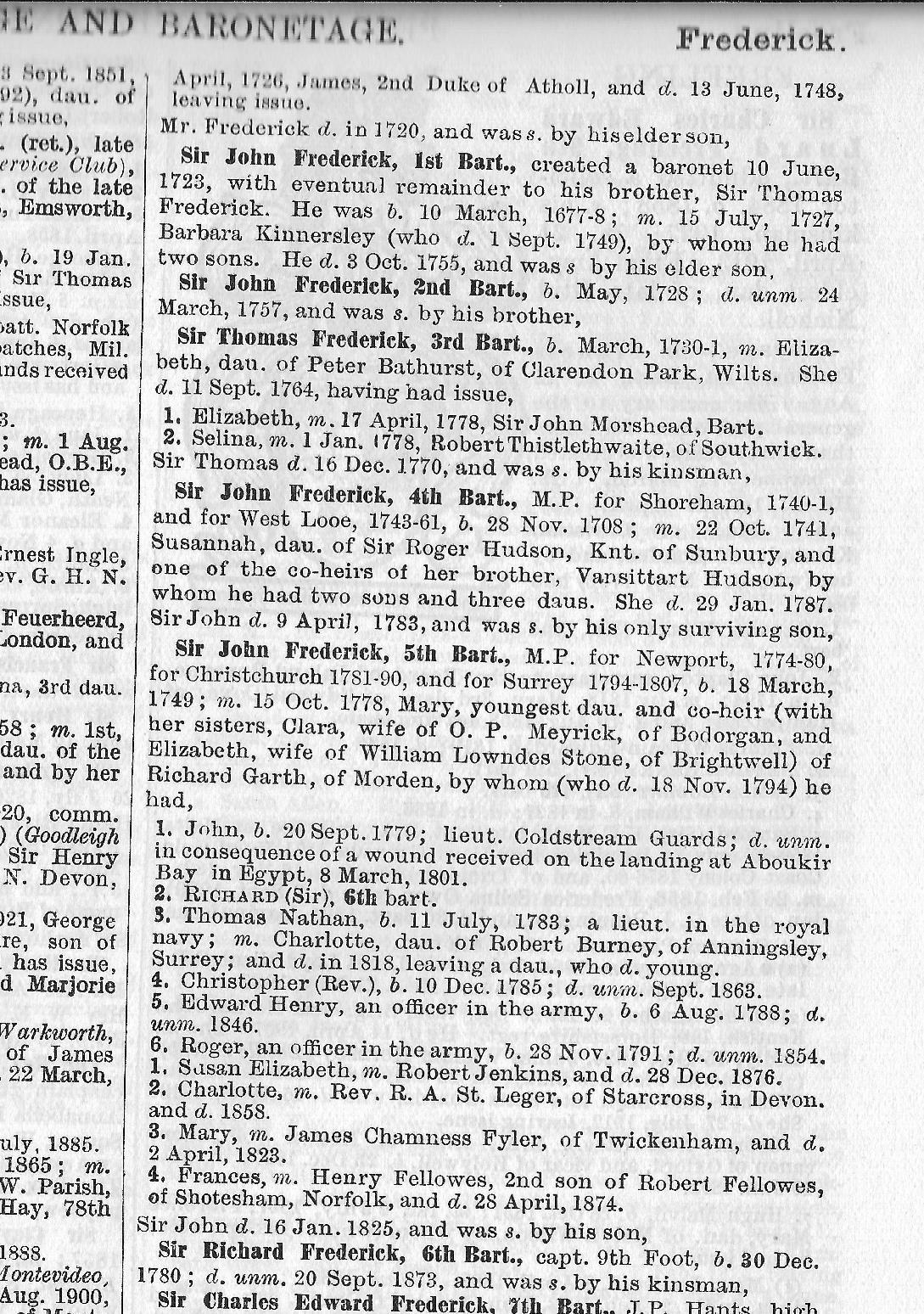 There’s part of a random page shown here, for the Frederick family. If you can read the tiny print (click the photo for a larger version), you’ll see that John, the heir to the 5th Baronet, died of wounds received at Aboukir Bay, Egypt, in 1801. Burke’s is full of such fascinating and thought-provoking details.
 A Warning! If you decide to change Will to Marcus, say, do beware of unintended consequences of Search/Replace. Your beautiful proposal scene, for example, might become something quite odd: