Yesterday in Versailles, France honoured two murdered police officials. A national ceremony of homage led by the French president with hundreds of policewomen and men in dress uniform, all accompanied by drum rolls, funeral music and honour guards. Both were made posthumous members of the Légion d’Honneur.
 Commandant Jean-Baptiste Salvaing (42), a very popular officer, and his companion, Jessica Schneider (36), an administrative assistant at the station where they both worked, were stabbed to death; he as he arrived at their home after work, she when the attacker burst into the house after the first killing. The couple’s three year old was present when the attacker slit his mother’s throat. Commandant Jean-Baptiste Salvaing (42), a very popular officer, and his companion, Jessica Schneider (36), an administrative assistant at the station where they both worked, were stabbed to death; he as he arrived at their home after work, she when the attacker burst into the house after the first killing. The couple’s three year old was present when the attacker slit his mother’s throat.
Neither was on duty, nor on a stake-out or chasing a suspect; she was at home with her child, possibly thinking about dinner, her working day, what they might all do at the weekend. Her partner coming home after tough day at office – the state of emergency is still on in France.
 Britain is mourning the murder of a young MP who was in her constituency, a place she had grown up in. She was holding an open advice surgery for her constituents – an intrinsic part of an MP’s working life, often ignored by media and critics. An energetic and passionately sincere rising Parliamentary star Jo Cox (41) was respected across the political divide. According to eyewitnesses, she was shot three times – once near the head—and stabbed multiple times. Parliamentarians of all political shades united to condemn the attack and mourn the loss of this mother of two young children. The Prime Minister, the Leader of the Opposition (head of Jo Cox’s political party) and the Speaker of the House went to Birstall yesterday along with other Parliamentary colleagues to honour their murdered colleague. Britain is mourning the murder of a young MP who was in her constituency, a place she had grown up in. She was holding an open advice surgery for her constituents – an intrinsic part of an MP’s working life, often ignored by media and critics. An energetic and passionately sincere rising Parliamentary star Jo Cox (41) was respected across the political divide. According to eyewitnesses, she was shot three times – once near the head—and stabbed multiple times. Parliamentarians of all political shades united to condemn the attack and mourn the loss of this mother of two young children. The Prime Minister, the Leader of the Opposition (head of Jo Cox’s political party) and the Speaker of the House went to Birstall yesterday along with other Parliamentary colleagues to honour their murdered colleague.
Some have screeched police brutality, moaned about insensitivity and flinched at images of police charging rioters on TV. At a more mundane level, people find police checks tiresome, holding them up on their journeys. I was stopped locally for a routine check after the November killings in Paris. None of us is comfortable with burly men and women in uniform carrying heavy weapons on Charing Cross commuter platforms or at CDG Airport in Paris. We would far rather do without any of this.
And it’s been fun badmouthing MPs about expenses even if some were perfectly allowable, although duck houses were a tad off.
Yes, there are bad hats, twisters and corrupt public officials and these should be exposed and sanctioned. They work for us, we pay their salaries and they should not break our trust.
But much of the hype is exaggerated or even untrue. Public servants like police officials and MPs go into these jobs wishing to do good. A lot of their work consists of the quiet stuff; for MPs reading and writing papers, meeting constituents, serving on committees, promoting constituency and international initiatives and representing their party and Parliament; for police officers, similar administrative work, especially when heading a unit, but all the time dealing with the fall-outs from society, the accidentally and intentionally criminal and the mean, vicious and terrorist elements in society.
Both groups work long hours under pressure and sometimes make mistakes. Don’t we all? But they have been subject to persistent carping and attack, often not justified. I believe I’m thinking of the word ‘respect’.
The deaths of public servants Jean-Baptiste Salvaing, Jessica Schneider and Jo Cox have pulled us up short – they should.
#thankyourMP
If you enjoyed this post, do share it with your friends!
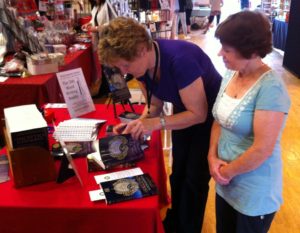 Each year I set up my stall and sell my books at the Marché de Noël at Terves. Not only do happy customers go away clutching copies of one or several Roma Nova books, but I’ve had the pleasure of chatting about writing, books, feminism, adventures, history, Rome, publishing, the holidays, travel – you name it! I’m sort of ‘famous’ locally as I write the monthly column about writing and publishing in the local English language magazine, The Deux-Sèvres Monthly, and spoke at the Charroux Litfest in August. Each year I set up my stall and sell my books at the Marché de Noël at Terves. Not only do happy customers go away clutching copies of one or several Roma Nova books, but I’ve had the pleasure of chatting about writing, books, feminism, adventures, history, Rome, publishing, the holidays, travel – you name it! I’m sort of ‘famous’ locally as I write the monthly column about writing and publishing in the local English language magazine, The Deux-Sèvres Monthly, and spoke at the Charroux Litfest in August.
So it’s easy, isn’t it this book-selling lark, isn’t it? You roll up with a box of your fantastic books and a smile and off you go.
Er, no.
Now, I’m not bigging myself up, but I do get some compliments about my stand, ‘professional’ being the most frequent one. So do I have years of publishing PR/marketing behind me? No. Was I a marketing manager in a previous career? No. Or an event manager? No. But I have years of experience in small business where you have to do it all yourself.
I love talking with people; it’s a natural nosiness and a desire to discuss ideas, to connect, to enjoy things in common. Throughout my working life I’ve been on courses, attended workshops and listened hard at conferences to sessions on interfacing with the public and communicating the message: information-giving, presentation, marketing materials, displays, public speaking and networking skills. I’ve listened to talks about sales funnels, customer expectations, phased marketing, market segmentation, closing the sale, customer relations, and I’ve watched experts. Closely.
But there’s a second, equally important factor – preparation. It’s not only physical things like a nice tablecloth, but thinking about how the potential customer will see you and your books, as well as working out the most effective way of getting your message across without being terminally annoying.
So here’s what I did for the Terves Christmas market last December.
Book in advance
I booked it from the previous year. The best fayres and fêtes get booked up months or even years ahead, but sometimes you can be lucky if somebody drops out at the last minute. Scrutinise past event reports, photos/videos on the event website/Facebook/magazine articles and advance information about the event. Contact the organiser to say hello and to find out specifics like table size (and if it’s provided), wall spots, electric sockets, access, timings, etc.
Advance PR
The first time I booked a stand three years ago, I posted about it on Facebook and Twitter and mentioned it in my November column in The Deux-Sèvres Monthly. This year, I added a small paid advertisement in the DSM and posted further afield online about the event using an attractive graphic sent to me by the organiser. I posted initially in mid-November, then once a week until the beginning of December when it was twice a week plus the day before.
Stand
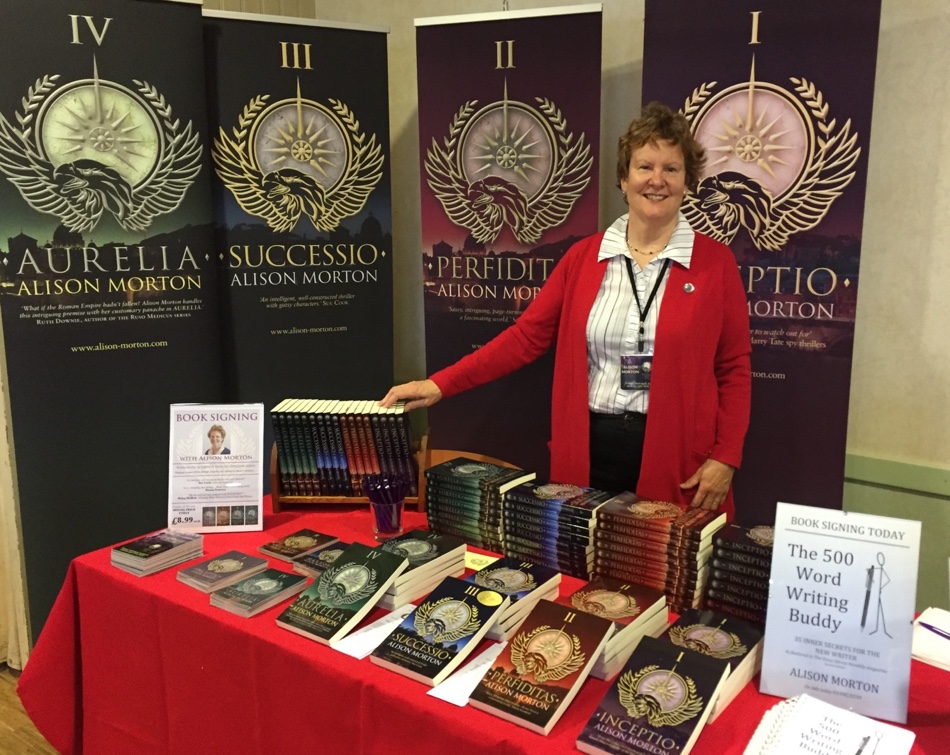
Design: work out what it’s going to look like in advance. I printed out a photo of last year’s stand to save having to re-think it all, but the first year I sketched out a plan. I like height, colour and ease of navigation for the customer. The idea is to catch the customer’s eye; nothing is more dreary than a blank wall behind you.
Pull-up banners: Mine include a graphic, book title, name, endorsement and website. Another option is to have a generic one relating to the theme, genre or period of all your books. Remember that the bottom half is likely to be hidden so get all the important info ‘above the fold’. Order pull-ups well in advance. You may have to shell out for some professional graphic design. Ask the banner manufacturer for the exact specification (size, resolution). Alternatively you may find a PR business or printer who will handle it all for you.
Materials: postcards and bookmarks are essential. Not everybody will buy a book on the day – many download to an ereader. I encourage people to help themselves to the cards, but I reserve the double-sided bookmarks as an added extra when people buy a book. Again, order these in advance. Mine have a graphic on the front and book information on the back. I also have freebie pens in Roma Nova imperial purple and gold; these go down very well. Stack them in a glass so it gives height and stops them wandering all over the stand. If your book has won an award, make up and print some simple bookmarks (160 gsm card and use the Tables setting in Word) to place by that book. You can do the same for cards with details of how to sign up for your newsletter. It’s said that 63% of people who pick up print PR materials hand on to them.
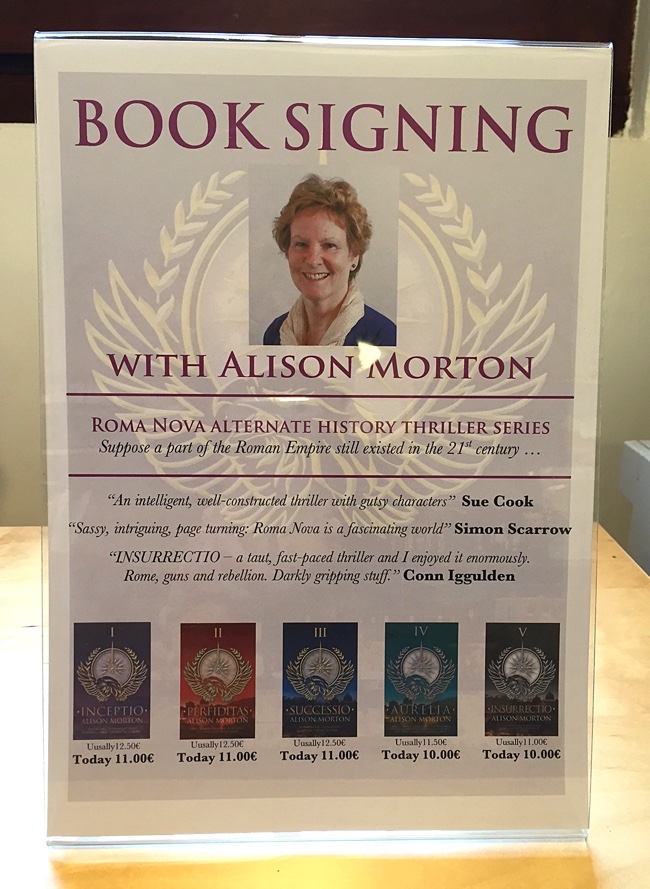
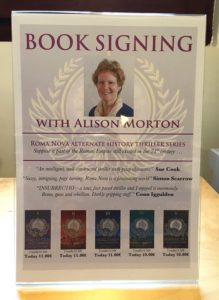 Placecards: You can buy an A4 size acrylic stand at stationery shops, especially those with business sections, or use glass fronted picture frames perched on a plate stand. You can then slot in a different printed sheet for each event. Decide on a headline and print it as BIG as you can. My favourite is BOOK SIGNING in the same font as the titles of my books. Add a photo and, if you have them, short endorsements and images of your book(s). And most importantly, the price! Placecards: You can buy an A4 size acrylic stand at stationery shops, especially those with business sections, or use glass fronted picture frames perched on a plate stand. You can then slot in a different printed sheet for each event. Decide on a headline and print it as BIG as you can. My favourite is BOOK SIGNING in the same font as the titles of my books. Add a photo and, if you have them, short endorsements and images of your book(s). And most importantly, the price!
Covering: Invest in several metres of fabric (at least four) in a plain colour to make a table covering that will emphasise your book covers. Look for remnants at a fabric shop or market. Pre-manufactured tablecloths are fine for a small table, but most fair tables are 3 metres wide these days. Do NOT use a table cloth from home that has any kind of pattern – it looks naff. Oh, and wash and iron your cloth if you’re reusing it. Last time’s dried on tea/coffee stains and lunch food remnants are not attractive…
 Practicalities Practicalities
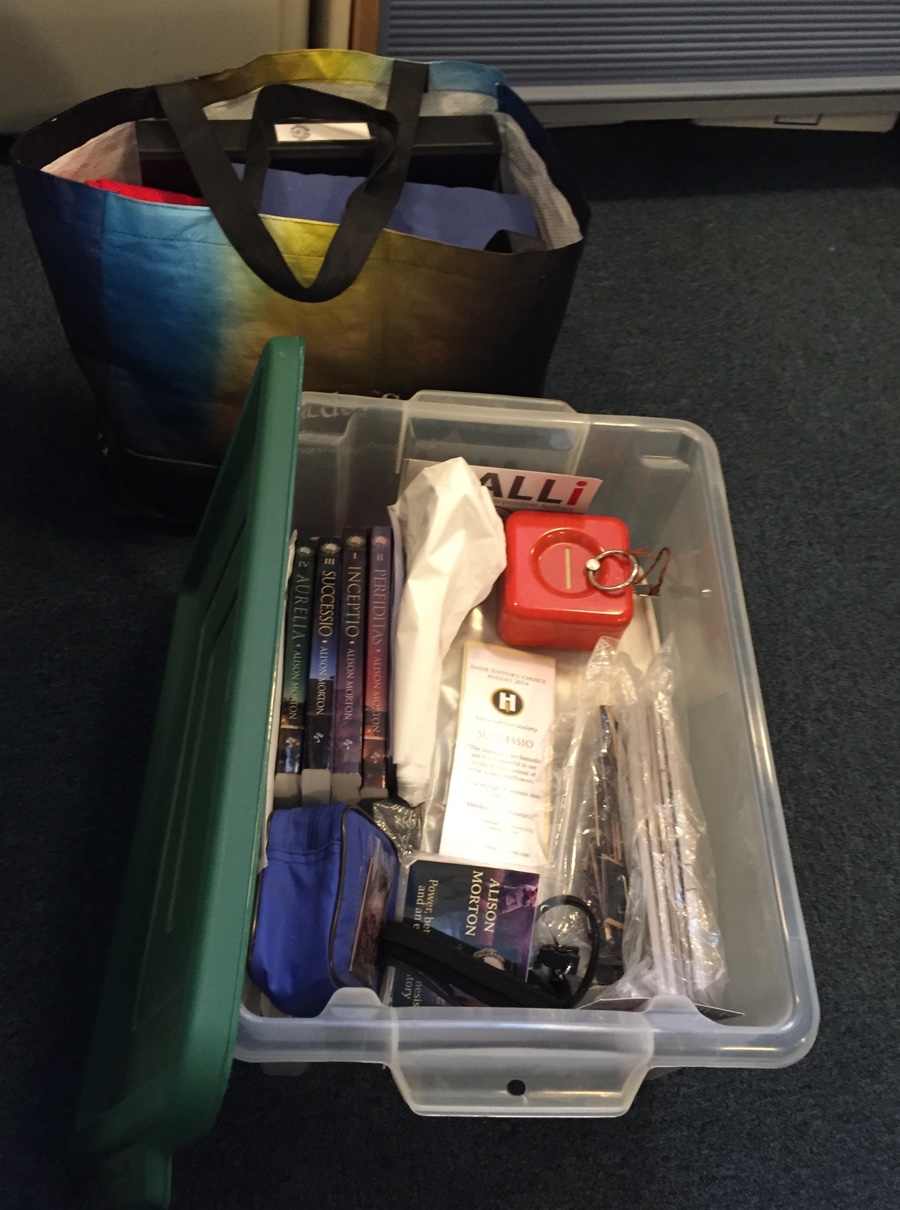
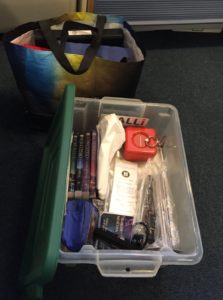
Pack all the smaller things like your own demo copies of books, materials, stationery kit (scissors, Sellotape, stapler, punch, rubber bands, paperclips foldback clips, notepad, string, Blutack) etc. in a robust plastic storage box with a lid. It will rain or drip from the trees on the day you unload from the car and you might well spill your cuppa into an open box. More than that, a lidded box can stack more easily and also serve as a mini table under your stand. Larger things like bookstands, table cloth(s) can be packed in a strong carrier bag.
Float
I take 50 euros of change (Substitute pounds/dollars, etc. as you wish). It’s guaranteed that the first three customers will pay with a 20 note. Do not let them get away! I sold my books at 11 euros for the novels and my writing book for 5 euros, so my float had 10 single euro coins, four 5 euro notes and two 10 euro notes. Make up your float after each event so it’s ready and you don’t have to scrabble round on the morning of the next one.
You
Your clothes and shoes: clean, smart and casual, but comfortable. If your shoes pinch, it will show in your face; if you’re freezing, you will hunch and look unwelcoming. Most halls are heated, but not well – it’s too expensive – so if you’re a chilly mortal wear a warm top layer. You can look chic and French with an artfully arranged scarf (men and women).
WEAR A BADGE! Sorry about the capitals, but is so important. People always look at badges; they stop and talk to you, they ask you about your book, and you look more professional.
Behaviour: Stand. Yes, take little pauses, and stretch your legs if there’s a lull in the room, but stand 95% of the time. You don’t see shop assistants sitting. The only exception is when eating your lunch. If you have no helper, you will have to eat at your stand, but sit down, take small bites and have handwipes/tissues to hand. And take several small bottles/flasks of water – you’ll need them with all the talking you’ll be doing.
Interacting with the customers: I could write several posts on this, but essentially, ‘with’ is the word, not ‘at’. Selling is not unarmed combat, it’s a conversation. ‘Do you read?’, ‘What do you like reading?’, ‘What did you think of that?’ and so on. They will show interest or not, and you can go from there. Try and get one of your postcards into their hand at least. But be interested, engaged and listen. And smile.
Photos
Take a photo of your stand before the public gets in – a great aide-memoire for next time – and get several people to take several photos of you and your stand during the day. Every single event photo is a gold drop in the PR river. You can build up a good post on your blog/Facebook etc. from the quietest event. Take some of the event generally and send it/them to the organisers; it’s a nice way of saying thank you.
Oh, yes, and take as many books as you can manage. It’s always better to have a box of leftovers than running out halfway during the day.
Happy selling!
I originally wrote this post for the Alliance of Independent Authors (ALLi)’s blog in March 2016.
Alison Morton is the author of Roma Nova thrillers, INCEPTIO, PERFIDITAS, SUCCESSIO and AURELIA. The fifth in the series, INSURRECTIO, was published on 12 April 2016.
Find out more about Roma Nova, its origins, stories and heroines…
If you enjoyed this post, do share it with your friends!
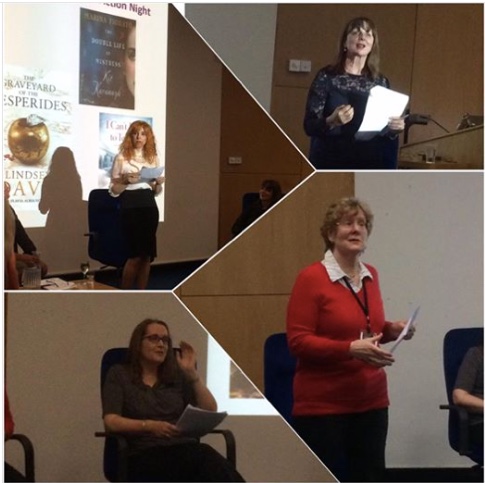
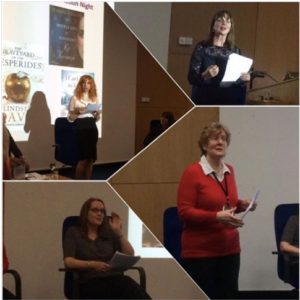 The four authors on Historical Fiction Night, Wrexham Photo courtesy of Phil Burrows Hay, Oxford, Edinburgh, Port Eliot, Cheltenham, Wigtown – all big beasts of the literature festival circuit and there are many more. Places where famous and worshipped celebrities jostle along with people who write books, places where zillions of books are on sale, events burst out of their programmes, and the public is invited to adore.
There is no doubt these are places to listen to entrancing stories of the stories behind books, the writers’ journeys, insights (possibly outsights) about writing and publishing today and tomorrow. But the trouble with many large events is that they are too large, too regulated and the writers are separated from readers. Who is allowed in the exclusive Green Room, who goes to the ‘in’ parties, who is in the circle and who is not? As an attendee, you go to talks, events, buy (expensive) sandwiches and snacks, make a few new friends, but never really touch the heart of things.
Specific genre events like the Romantic Novels’ Association or Historical Novel Society conferences are different because enthusiastic writers talk to enthusiastic readers, although there are sometimes hints of separation. But I love both.
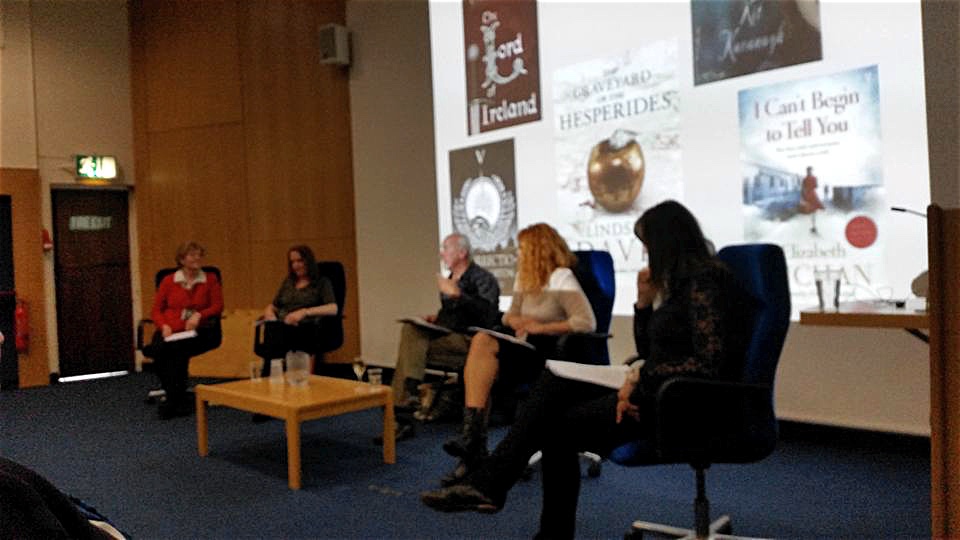 Wrexham Carnival of Words panel But whether writer or reader, to be more involved at a visceral, grassroots level, take part in local and/or less well-known events. In the past week, I’ve been privileged to speak at events for two smaller yet highly successful festivals. Both festivals were packed with events, celebrations and books. And they were fun and very friendly.
Wrexham Carnival of Words (brilliant title!)
Organised by Dave McCall (writing as David Ebsworth) and Sue Miller, four of us – Elizabeth Buchan, Marina Fiorato, E M (Elaine) Powell and I attempted to prove that our eras – 1940s, Victorian, medieval and Roman respectively – were the best historical periods, whatever that meant.
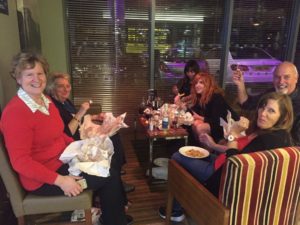 Lindsey Davis, creator of the Roman detective Falco series and one of my writing heroines, was sitting in the audience as she was speaking after us. So no pressure for me! She’s rather lovely, actually, and a great supporter of Roman concrete. Lindsey Davis, creator of the Roman detective Falco series and one of my writing heroines, was sitting in the audience as she was speaking after us. So no pressure for me! She’s rather lovely, actually, and a great supporter of Roman concrete.
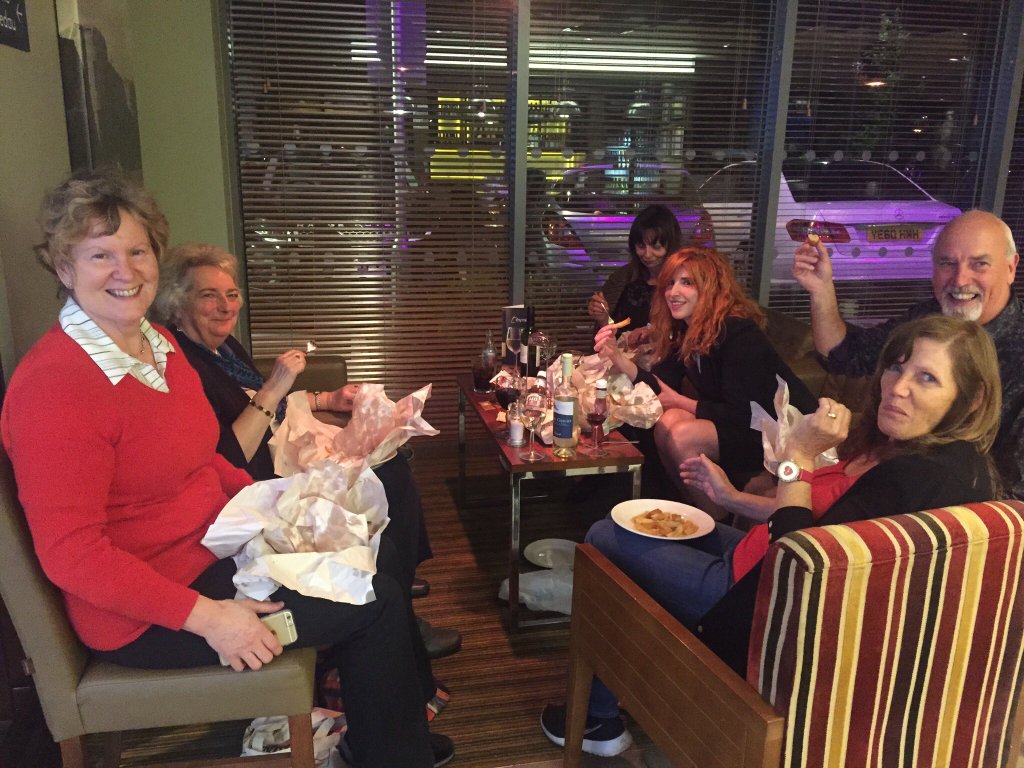
And afterwards, we had chips!
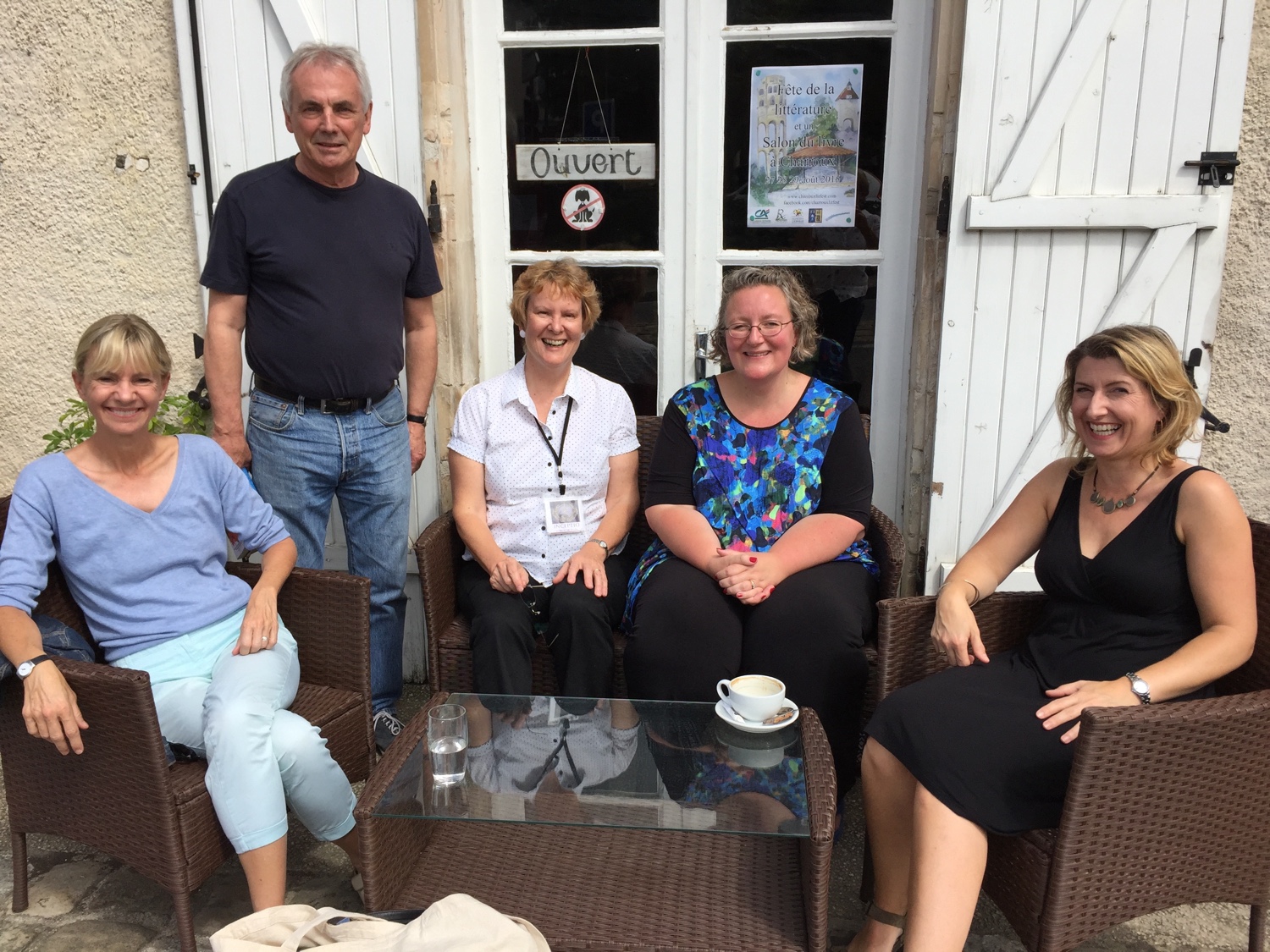
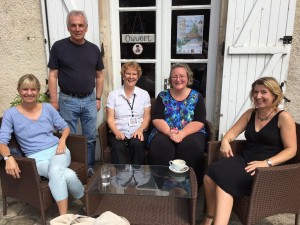 Charroux authors Kate Mosse, Barry Walsh, me, Elizabeth Haynes, Isobel Ashdown Charroux LitFest
I was delighted to be invited to be part of the first Charroux LitFest last August, speaking about the Roma Nova books and then being a panel member on crime and thrillers.
The festival was professionally organised by KateRose, Christine Collette and team and focused on the sessions, yet it was so friendly and genuine. Authors and writers munched sandwiches and drank wine side-by-side talking about writing, France, books and friendship.
Now, Charroux LitFest is running a series of lunches and workshops throughout the year and I was delighted to be invited as their May guest.
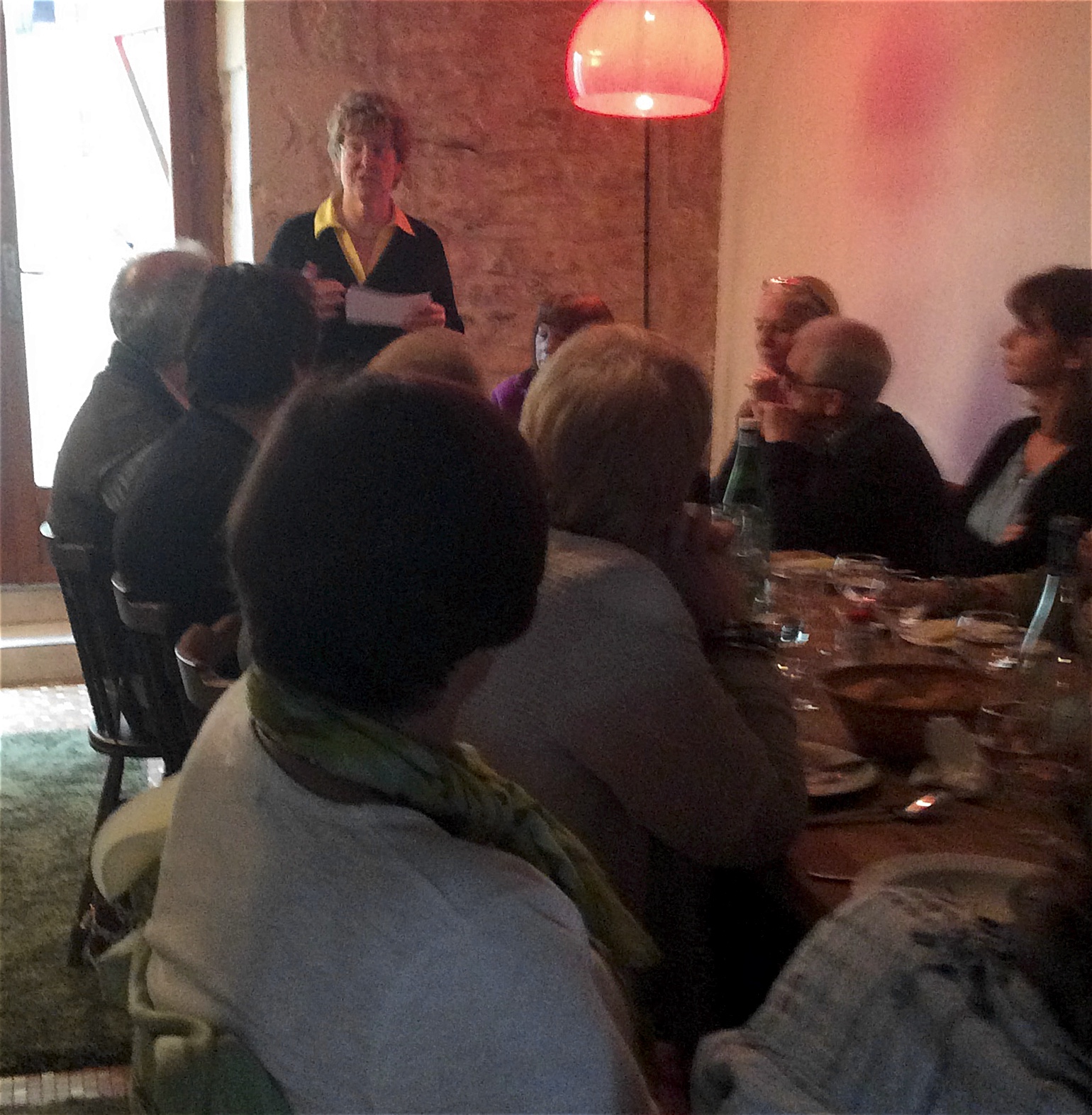
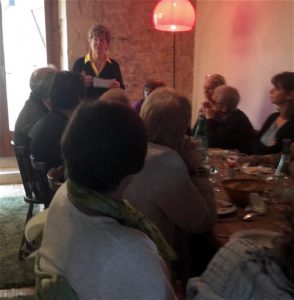 Charroux lunch
Delicious lunch and even more delicious group of writers. They submitted to the harsh exercises I inflicted on them with good grace, much enthusiasm and bright humour. They also produced some lovely work on character and setting. We all laughed a lot. Oh, and they bought a few books. 😉
Do read Susie Kelly’s account of being one of my victims: https://nodamnblog.wordpress.com/2016/05/20/not-yet-a-novelist/
Being honest, I wouldn’t say no if any of those giant festivals called me and invited me to speak. (Who am I kidding?)
In the meantime, I’m having fun with the friendly locals.
Alison Morton is the author of Roma Nova thrillers, INCEPTIO, PERFIDITAS, SUCCESSIO and AURELIA. The fifth in the series, INSURRECTIO, was published on 12 April 2016.
Find out more about Roma Nova, its origins, stories and heroines…
If you enjoyed this post, do share it with your friends!
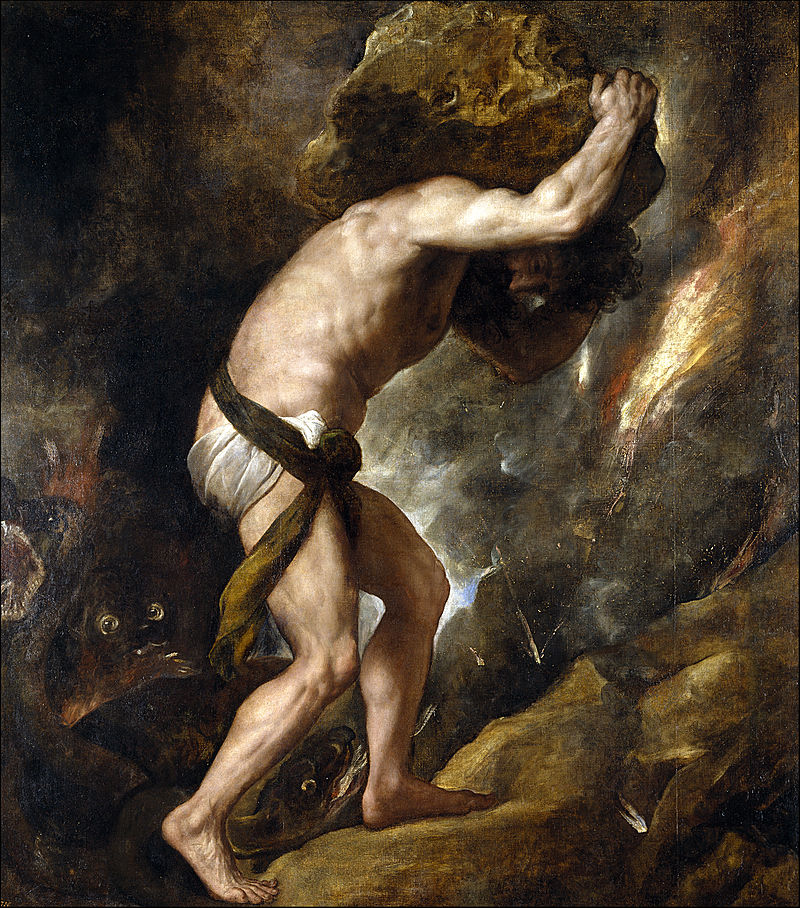
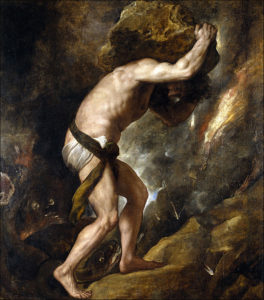 The Punishment of Sisyphus Titian, Prado Museum, Madrid Wake up. 6:07 am. I really must finish that workshop plan today. So many notes I don’t know where to start. What will they expect? Will I meet it? Must put geranium cuttings in before I go on event trip to UK at the weekend. Gods, my back aches. Tea. Lean over and click the kettle on. Determine to read another half-hour’s worth of ‘duty book’. Maybe it’s me, but I just can’t get into it. Despite the beautiful writing, I have no sympathy for any of the characters – self-indulgent flaneurs, stereotypes or ‘monstres sacrés’.
Reach over and check social media on my iPhone. 100% more interesting. Oh, look a lovely RT from A Famous Person, lots of Likes for a photo of my garden. Spend half an hour chatting on Facebook re books, literary fiction, herbs, history, cats and weather, but see only three books sold overnight on KDP. 🙁
Tea drunk, I head for the shower. Scales or not? Oh, okay, why change from what I do every morning? Gods, despite two hours sweating in the garden yesterday, still the wrong side of the ‘You are fat’ figure according to all the health websites. Pulls stomach in. No breakfast for me.
Coffee, downstairs to office. Pitiless ‘To do’ list – write own blog, write guest posts, pitch others, order vitamins, take tax return in, phone doctor re back, write event proposal (includes spreadsheets), check overnight misdemeanours and membership applications on Facebook groups I admin, read emails, read critique partner stuff, run errands for events I’m helping with, update website page about latest book and… Oh, yes, scribble a few words of my current Work in Progress.
Have mopped floor, emptied dishwasher, zapped naughty posts, chatted with reasonable people, answered emails about future events and projects, written this blog post. Can I please have an hour to write my WIP now?
Ah, no, I still have the workshop to sort out. And it’s only 10.30 am.
Alison Morton is the author (when she can carve out the time to write) of Roma Nova thrillers, INCEPTIO, PERFIDITAS, SUCCESSIO and AURELIA. The fifth in the series, INSURRECTIO, was published on 12 April 2016.
Find out more about Roma Nova, its origins, stories and heroines…
If you enjoyed this post, do share it with your friends!
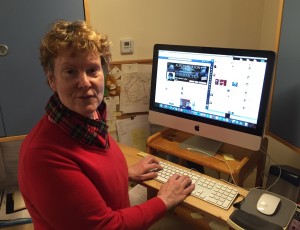 It is a truth universally acknowledged that an author in possession of a book must be in want of social media. Okay. that’s corny, but it’s true. But how hard should we pursue out courtship of social media and should we toss our head, be defiant and stick up for our principles, yet concede that old fashioned prejudice is out of place in a modern publishing relationship? It is a truth universally acknowledged that an author in possession of a book must be in want of social media. Okay. that’s corny, but it’s true. But how hard should we pursue out courtship of social media and should we toss our head, be defiant and stick up for our principles, yet concede that old fashioned prejudice is out of place in a modern publishing relationship?
Leaving aside dodgy metaphors, how should we reassess this, given the ubiquity of social media. Be honest, who doesn’t stretch out their hand for their smartphone first thing in the morning? Apparently the majority do within 5 seconds of waking. I can’t quote the source as I was only half listening to Radio 4 as I was checking Facebook.
I’ll come clean. I LOVE social media: I’ve used Twitter since July 2009; I’m a keen Facebooker; I love blogging; I’ve even given talks to authors on using it. I could spend all day (and night) on it, making and talking to friends on five continents. That’s what human beings do, communicate, isn’t it?
Here’s the ‘but’.
Note the word ‘continent’. This is what we aren’t. It’s the fatal trap of doing it because we can. Twitter lures us, blogs seduce us, Facebook entraps us. And what Google+ and Pinterest do belongs in Fifty Shades.
Authors now have the privilege and the fun of interacting with each other and even better with their readers. Information (properly sifted and checked, obvs) is at their fingertips. Opportunities, events, connections are many and rich. You can read journals, newspapers, academic research at the click of a mouse. You can also do daft quizzes and rant at will.
 I can’t keep away from SM in the same way I can’t stop eating chocolate. But I could manage it better. Turning it off completely is a nonsense, but to get any work done I’ve found setting limits is sensible. Of course, it’s not that simple. I can’t keep away from SM in the same way I can’t stop eating chocolate. But I could manage it better. Turning it off completely is a nonsense, but to get any work done I’ve found setting limits is sensible. Of course, it’s not that simple.
My first task in the morning (after checking my phone) is to write a ‘to do’ list for the day. Yes, despite my electronic calendar, I use a pen or pencil on paper because the physical act makes the list stick in my brain. Then I set my day’s goals in priority order; today writing this blog post is first task. Next will be my column for The Deux-Sèvres Monthly, then another post for this pre-launch week. (My fifth book, INSURRECTIO, is published and launched at the London Book Fair next week on the 12th – eek!) Normally, I’d be working on my next book, but this is the modern world of publishing so it’s almost wall-to-wall social media this week.
After each piece of ‘proper’ work is completed, I reward myself with a quick peek at social media. But now, I keep a firm eye on the clock. I post a review, comment on other posts, announce something like a cover reveal, repost an interesting or provocative article and have a chat with one or two people. Then it’s back to work.
Social media is part of today’s world and for any author, mainstream or indie, an absolute given. This is where your colleagues are, the readers are, the world is. Ignoring it is like shutting the door on people. But everybody has to work, eat and talk walks. Balance is the trick and like everything else, you have to work at it.
Alison Morton is the author of Roma Nova thrillers, INCEPTIO, PERFIDITAS, SUCCESSIO and AURELIA. The fifth in the series, INSURRECTIO, will be published on 12 April 2016.
Find out more about Roma Nova, its origins, stories and heroines…
If you enjoyed this post, do share it with your friends!
|
Subscribe to Blog via Email
Join 368 other subscribers.
Categories
Archive
|
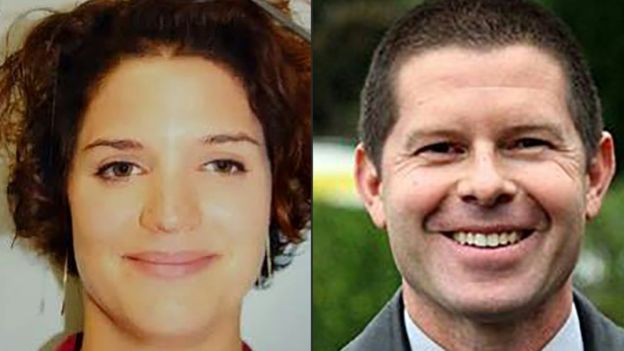 Commandant Jean-Baptiste Salvaing (42), a very popular officer, and his companion, Jessica Schneider (36), an administrative assistant at the station where they both worked, were stabbed to death; he as he arrived at their home after work, she when the attacker burst into the house after the first killing. The couple’s three year old was present when the attacker slit his mother’s throat.
 Britain is mourning the murder of a young MP who was in her constituency, a place she had grown up in. She was holding an open advice surgery for her constituents – an intrinsic part of an MP’s working life, often ignored by media and critics. An energetic and passionately sincere rising Parliamentary star Jo Cox (41) was respected across the political divide. According to eyewitnesses, she was shot three times – once near the head—and stabbed multiple times. Parliamentarians of all political shades united to condemn the attack and mourn the loss of this mother of two young children. The Prime Minister, the Leader of the Opposition (head of Jo Cox’s political party) and the Speaker of the House went to Birstall yesterday along with other Parliamentary colleagues to honour their murdered colleague.