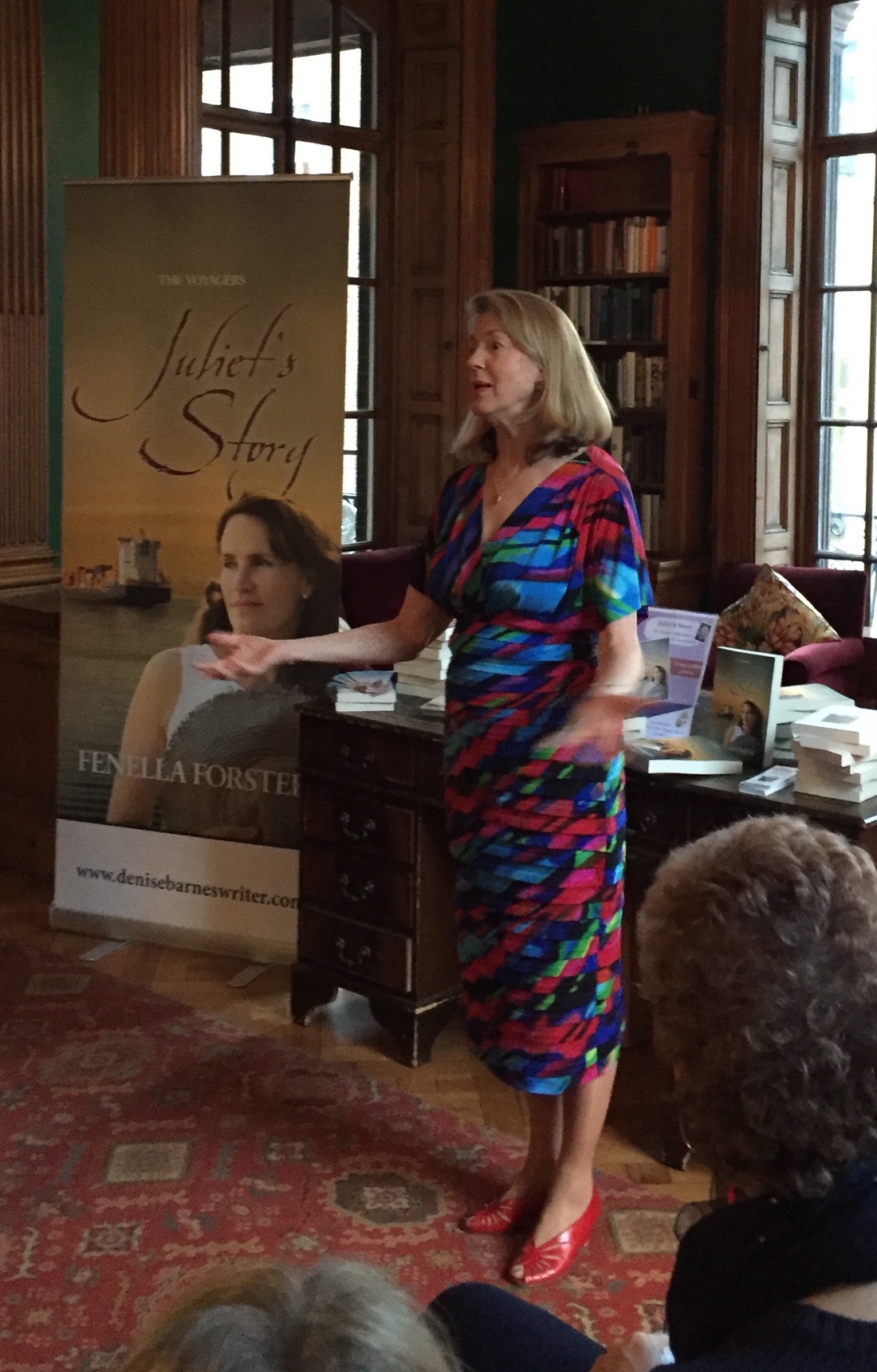
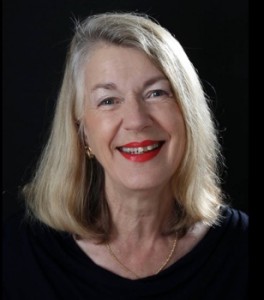
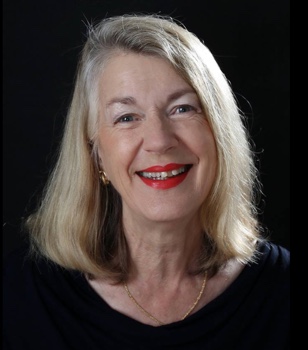
 Today I’m welcoming Fenella Forster, writer extraordinaire. Her debut book, Annie’s Story, set in the early 20th century, came out last year with great enthusiasm and was recently awarded the prestigious B.R.A.G. Medallion. Her second book, Juliet’s Story, has just launched. Both books are part of ‘The Voyagers’ trilogy stretching from 1913 to the present day. Fenella Forster writes non-fiction (from Bad to Wurst and Seller Beware: How not to sell your business) under her real name Denise Barnes. Today I’m welcoming Fenella Forster, writer extraordinaire. Her debut book, Annie’s Story, set in the early 20th century, came out last year with great enthusiasm and was recently awarded the prestigious B.R.A.G. Medallion. Her second book, Juliet’s Story, has just launched. Both books are part of ‘The Voyagers’ trilogy stretching from 1913 to the present day. Fenella Forster writes non-fiction (from Bad to Wurst and Seller Beware: How not to sell your business) under her real name Denise Barnes.
Welcome Fenella!
Writers often have ‘second book blues’ when they worry if the second is as good as their first. How did you find writing and publishing Juliet’s Story?
This was easier than it might have been, because these two novels started life as one. It was to be called ‘The Voyagers’ and was to be a dual time-line – the story of Annie set in the early 20th century interwoven with the story of Juliet, the granddaughter, set in the present.
 I eventually finished the manuscript at 150,000 words – far too long for any agent or publisher to risk taking on a debut author. Undeterred, I began writing the sequel about another family member, Kitty. When a couple of agents suggested I split the first book into two separate stories I was beside myself. But you learn not to be too precious in the writing world. You’ll remember, Alison, it was you who said: ‘Split Annie and Juliet, then Kitty becomes the third book in the trilogy.’ (Remember it well!) I eventually finished the manuscript at 150,000 words – far too long for any agent or publisher to risk taking on a debut author. Undeterred, I began writing the sequel about another family member, Kitty. When a couple of agents suggested I split the first book into two separate stories I was beside myself. But you learn not to be too precious in the writing world. You’ll remember, Alison, it was you who said: ‘Split Annie and Juliet, then Kitty becomes the third book in the trilogy.’ (Remember it well!)
You can’t imagine how spurred on I was to think I was writing a trilogy. Trouble was, Juliet was fine at 100,000 words, but Annie was way too light. I ended up almost writing another book for her. So Books 1 & 2 of the trilogy were written together, you might say – hence no deep worry about whether the second novel would be as good.
Publishing Juliet’s Story was a breeze. It went the same way as Annie’s Story – straight to SilverWood Books, the brilliant all-encompassing service for indie authors.
Juliet’s Story is part of a series called The Voyagers. Tell us more about the series.
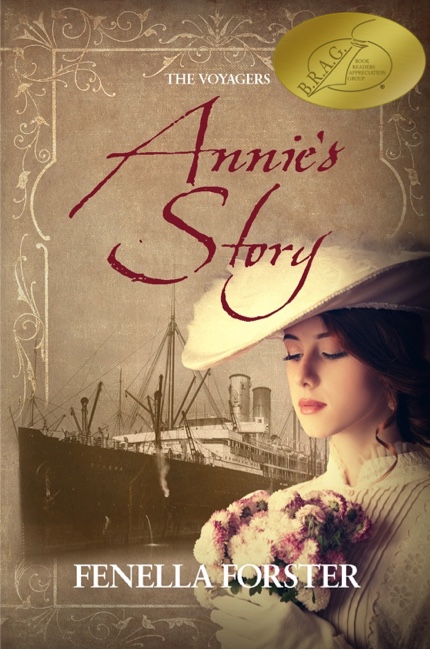
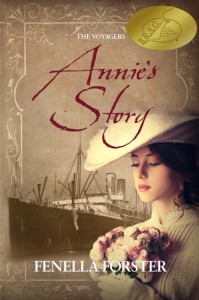 The trilogy begins in 1913 with Annie’s Story. She’s a housemaid in a fine country house in Norfolk, recently engaged to Ferguson, a footman from a neighbouring house. He springs it on her that they should go to Australia ‘to better themselves’. Annie knows her place is to follow her husband-to-be or break off the engagement so she decides to take the risk. The voyage out throws up new problems for Annie to deal with, not to mention Alexander Townsend, the handsome ship’s doctor. And once they are in Melbourne, Ferguson finds it difficult to stick to his promises. I’d better not say anymore! The trilogy begins in 1913 with Annie’s Story. She’s a housemaid in a fine country house in Norfolk, recently engaged to Ferguson, a footman from a neighbouring house. He springs it on her that they should go to Australia ‘to better themselves’. Annie knows her place is to follow her husband-to-be or break off the engagement so she decides to take the risk. The voyage out throws up new problems for Annie to deal with, not to mention Alexander Townsend, the handsome ship’s doctor. And once they are in Melbourne, Ferguson finds it difficult to stick to his promises. I’d better not say anymore!
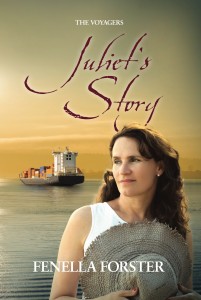
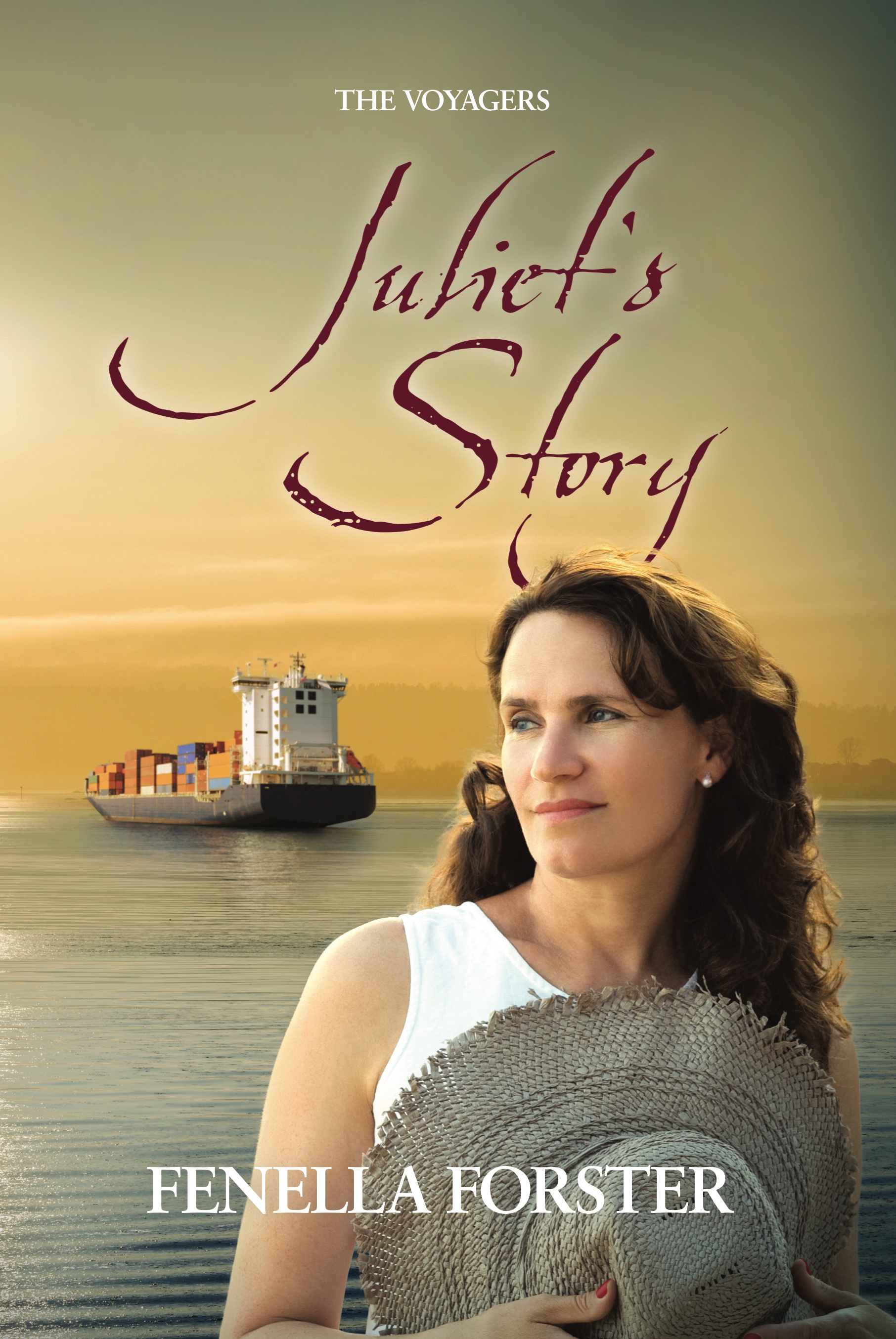
In Book 2, Juliet’s Story, it’s in 2005 Juliet, Annie and Ferguson’s granddaughter, is a careworn businesswoman who has a passionate longing to go to Australia. There, she believes the secret she holds close to her heart might be resolved. But how can she ever get away? An ex-client provides her with the opportunity and Juliet boards a freighter, mainly in deference to her grandparents – they wouldn’t have enjoyed the kind of luxury modern passenger ships provide – and also it seems more of an adventure. However, she doesn’t reckon on meeting the enigmatic Jack Delaney, one of the six passengers… I’m going all fuzzy so I’ll stop there!
In Book 3, Kitty’s Story, we drop back to 1941. Kitty is the youngest of Annie’s children. She’s seventeen when the story opens, and her only dream is to become a singer like her idol Vera Lynn. She joins ENSA and is sent to Cairo. There, singing to the soldiers in the desert, she meets the man who will change her life forever. Ruggero Andreotti is a high-ranking Italian prisoner-of-war, with a passion for opera – and for Kitty. But Kitty has to face a terrible choice between the conflicting demands of her duty and her heart.
The epilogue ties up the whole trilogy, though each book can be read as a stand alone.
So what’s next for you?
My fourth novel is a complete breakaway from the sweeping sagas and I’ve already written the second draft.

It’s a rom-com set in 1975, loosely based on one of the experiences in my own life when I was a chauffeuse (we used the feminine terms in those days) to a multi-millionaire Swiss tax lawyer. I lived in his house on Lake Zurich near a small village. So Ashley, my heroine, does the same. But instead of her boss being plain and elderly – as mine was – hers is quite dishy, though rather serious, leading Ashley to fall for his even more handsome fun-loving brother Benvenuto. There are lots of misunderstandings but you’ll have to read it to find out if it all comes out right in the end.
One lonely rom-com didn’t seem enough so I’ve started another, where my heroine goes off to Beijing on the Trans-Siberian Express. I’ve done this same trip so unfortunately don’t have to do much research. Shame.
Thanks so much for inviting me as a guest on your blog, Alison. I always enjoy your posts, and this has really been fun to do.
Thank you for being my guest and good luck with Kitty’s Story and The Lies.
Juliet’s Story available now from
Amazon UK Amazon US Kobo B&N Nook
Alison Morton is the author of Roma Nova thrillers, INCEPTIO, PERFIDITAS, SUCCESSIO and AURELIA
Find out more about Roma Nova, its origins, stories and heroines…
If you enjoyed this post, do share it with your friends!
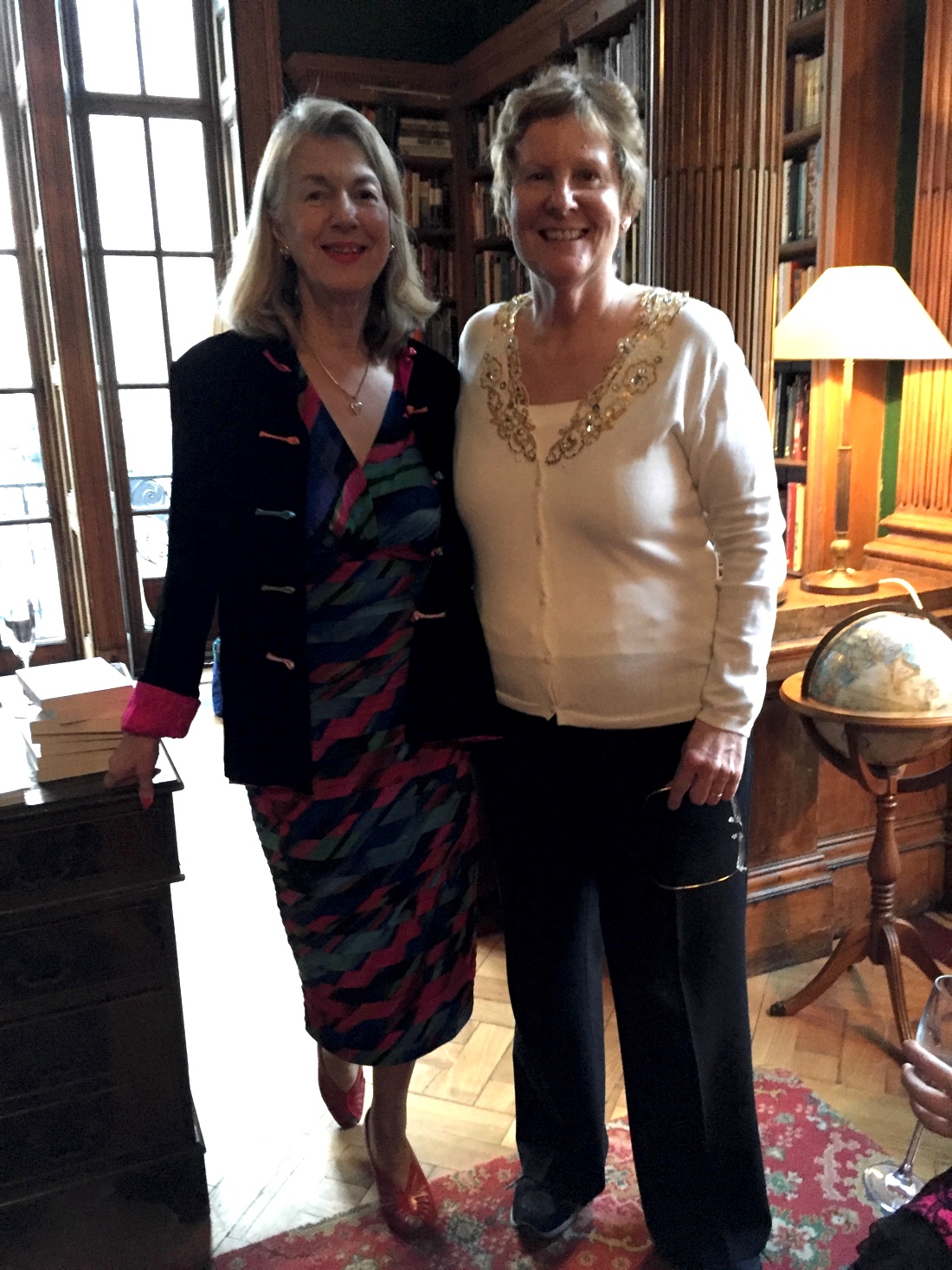
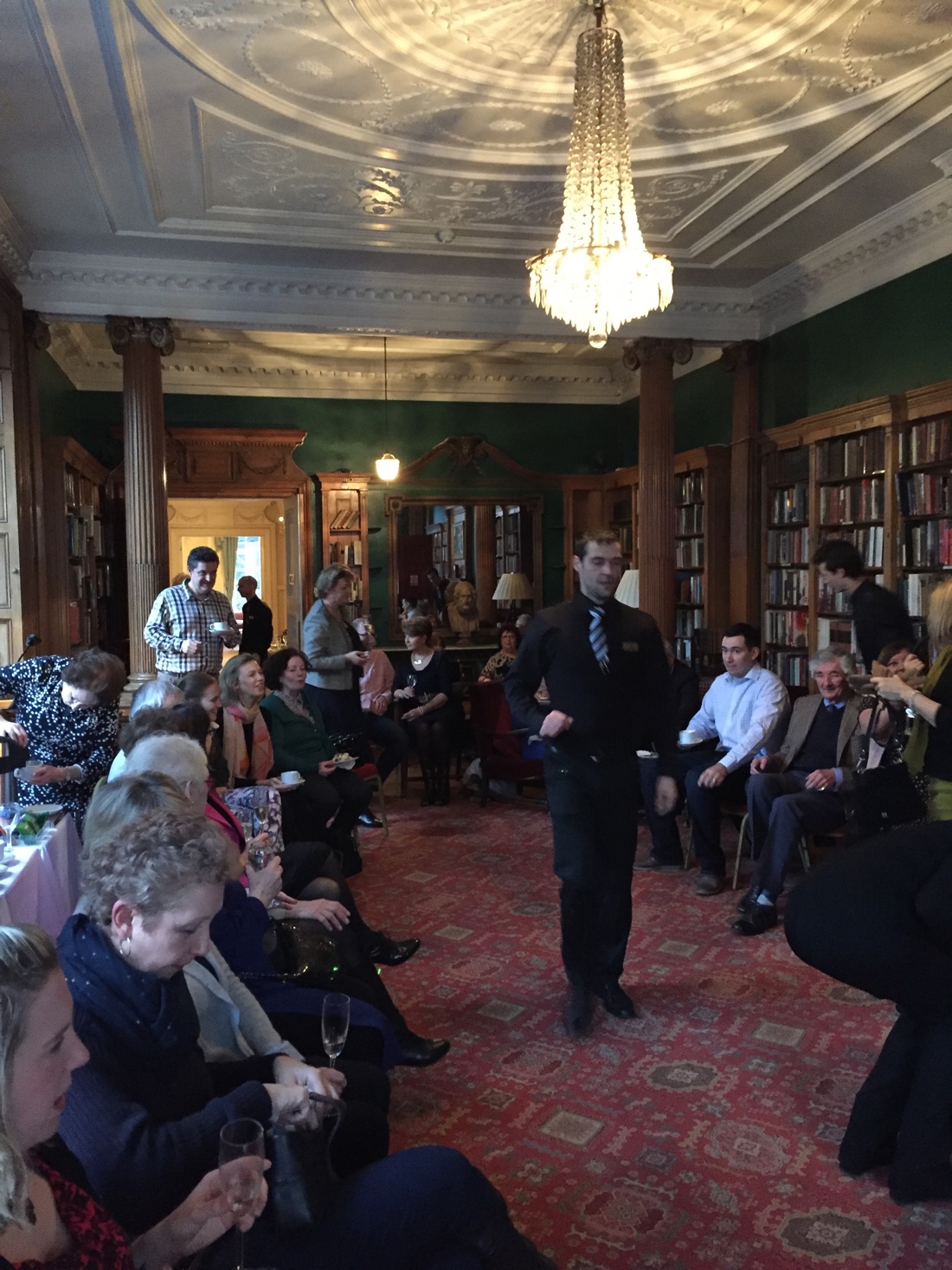
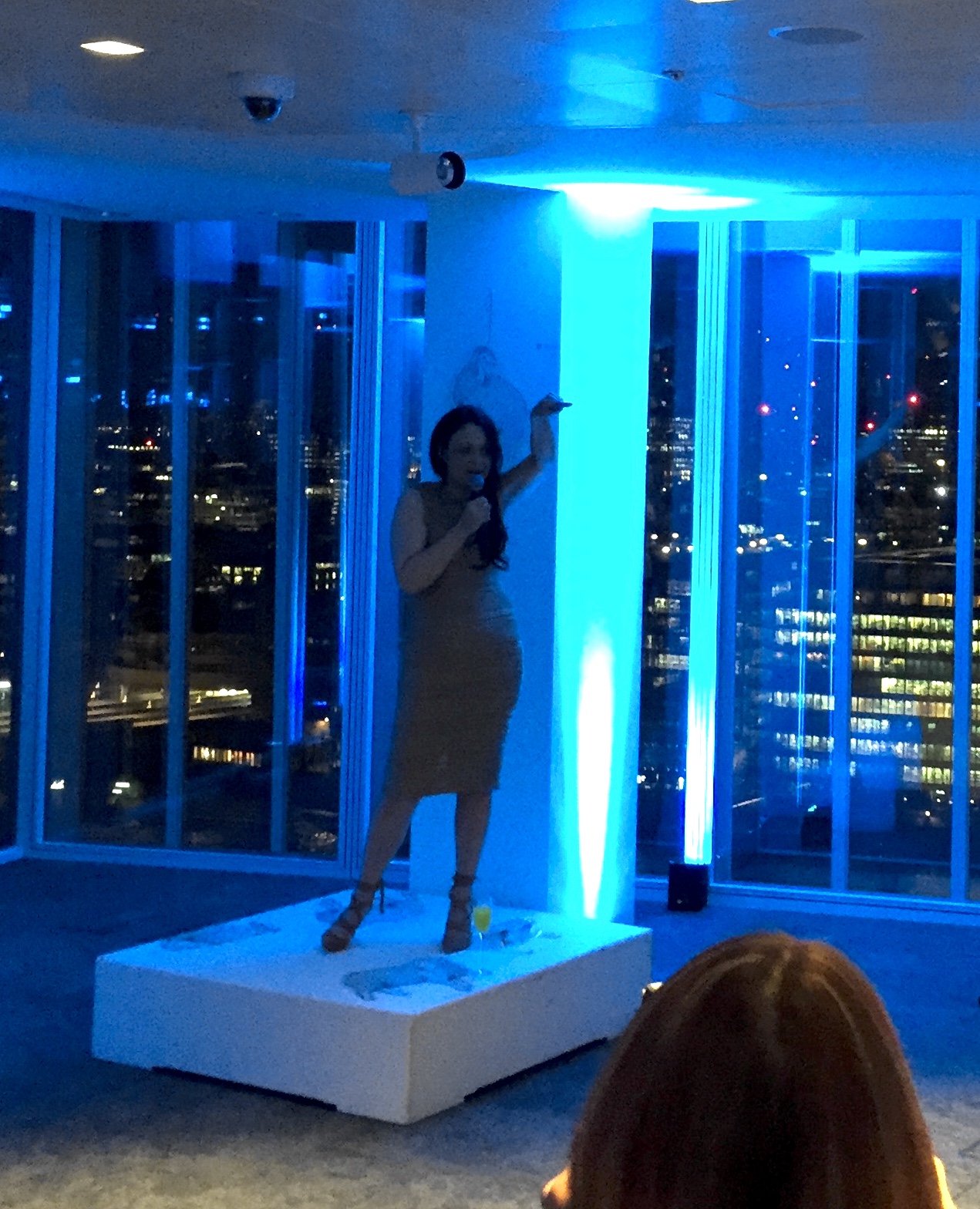
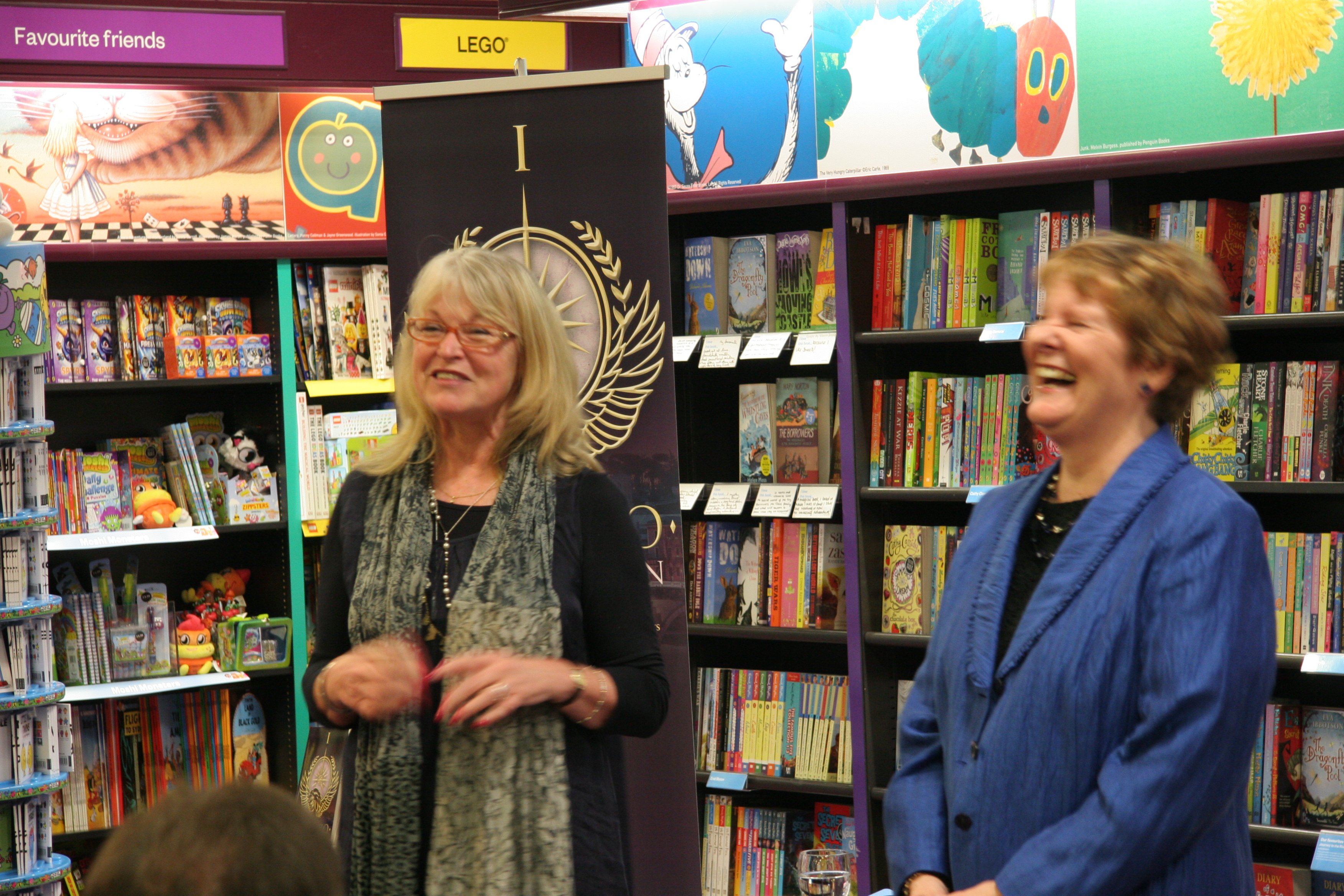
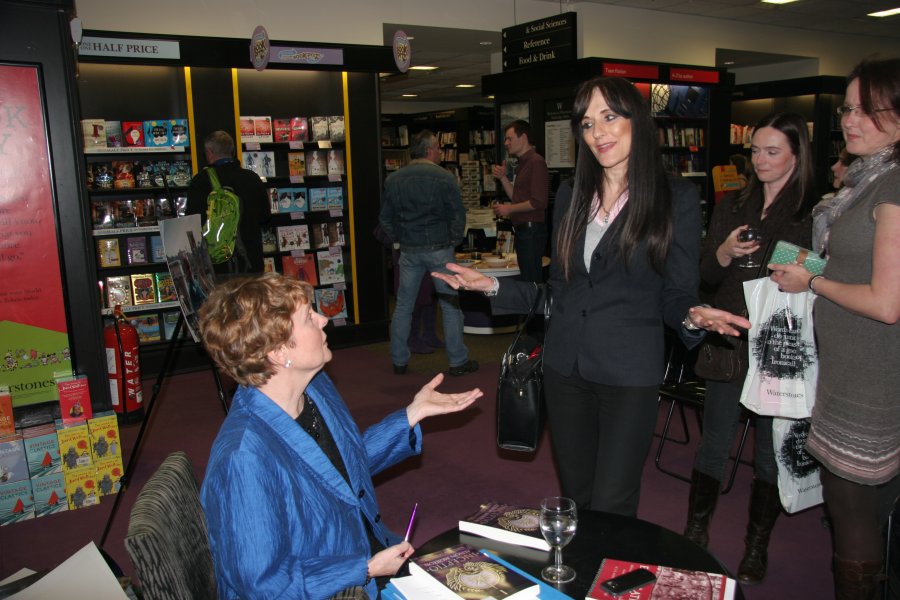
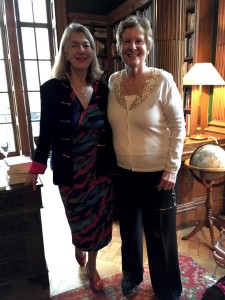 Last week, I had the enormous pleasure of attending book launches for two writing friends. On Saturday 23 January, I drank bubbly, ate scones and cake with Denise Barnes who launched her second book, Juliet’s Story, at the University Women’s Club. The magnificent library was a perfect setting for us to hear about the research behind Denise’s book and to have a glimpse into her writing journey, some of which I shared with her. Last week, I had the enormous pleasure of attending book launches for two writing friends. On Saturday 23 January, I drank bubbly, ate scones and cake with Denise Barnes who launched her second book, Juliet’s Story, at the University Women’s Club. The magnificent library was a perfect setting for us to hear about the research behind Denise’s book and to have a glimpse into her writing journey, some of which I shared with her.
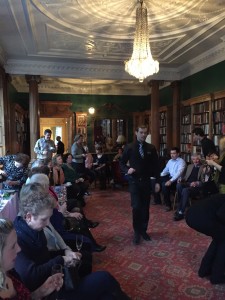
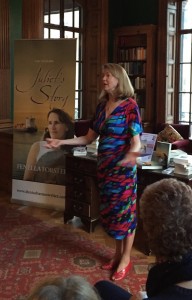
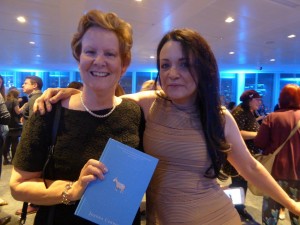
A few days later, I was off to Harper Collins’ incredibly impressive offices to share Jo Cannon’s triumph as she launched her much acclaimed The Trouble with Goats and Sheep.
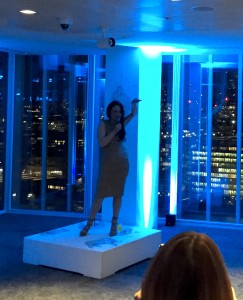
I remember the three of us cowering in a corner at the 2010 Festival of Writing in York. We were rather over-awed by the famous names, too scared to pitch to agents, but eager to go to classes, workshops and learn as much as possible. After a glass of Dutch courage, aka wine, we actually approached some people!
We’ve all three come on a bit from there…
So, launches – why, what and how?
However you’re published, there are similarities and differences. Denise’s launch was a celebration amongst friends, fellow writers, her publisher, Helen Hart of SilverWood Books, and supporting relatives, all taking in the atmosphere in a rather lovely traditional Mayfair club.
Jo’s launch was organised by her publisher, The Borough Press, part of Harper Collins. It was glamorous and smart, but still very personal. Jo explained that everybody present had been invited because they had supported her by an act of kindness. She has hundreds if not thousands of fans, so all of us there felt very honoured.
But both authors mingled beforehand and then, out in front of their audiences, gave a personal account of why they’d written their book and a little about the characters and story. Both authors’ work was on sale to keen fans!
Although Jo’s event was organised by the Harper Collins ‘machine’ with plenty of support staff, she had undertaken an enormous amount of social media work to publicise her book beforehand. As an indie, Denise had the responsibility of organising her event herself with the splendid support of the University Women’s Club team, plus social media tweeting and posting by her and her friends, including yours truly.
So whatever your publishing route, what do you need to do when you launch?
1. Don’t wait to start planning. Although a beautiful book is a pre-requisite, you must think about where, how and when as soon as you’re even thinking of publishing your book.
2. Network in real life at conferences, courses and events, and virtually on Twitter and Facebook. Try and meet as wide a circle of people as possible. Apart from the pleasure of talking with new people and learning new things, you may come across one or more published authors in your genre or known specialists in your field. Ask them for their thoughts, their advice, but in a polite way. Who knows, they may come to your launch and add some magic dust.
3. If you are thinking of a bookshop launch, go and buy some books there and become known to the staff. Make an appointment to go and see the owner or events manager. Be business-like.
4. Before making an approach, ensure your publisher has already loaded your book on to Nielsen Bookdata so that the shop staff can check you are a pukka author. Have your Bookseller Information Sheet in your hand and a good quality business card with your contact details. Prepare your ideas for getting the audience in – your friends and more importantly, the general public – and how you’re going to publicise the event. And if you have got a ‘name’ to agree to come along to your launch, mention this as part of your pitch.
5. Publicise your book’s publication date on social media with cover reveal, the blurb, posts about the setting/background short extracts and your motivation for writing the book. However, don’t give too much away!
6. Invite your guests in good time; people have very busy schedules. About four weeks to six weeks ahead is a good balance. Invite about a third to a half as many again as your target for this very reason.
7. The key to a successful evening is, rather predictably, preparation. Write your talk, speak it aloud, condense it on to cards, but practise it. Make sure the launch venue has glasses/plates/bowls or take your own. Do offer a drink, both alcoholic and soft. You don’t need fancy canapés (although the food at both the above launches was wonderful!); good supermarket nibbles are fine. Take plenty of postcards (you can put one on each chair beforehand), bookmarks, pens etc. and a guest book. And task somebody to take photos!
And at the event itself, smile. The audience has come to see you. They want to hear what you have to say, they want to take photos, especially one with you. And they can be incredibly lovely when they queue with their book for you to sign.
Alison Morton is the author of Roma Nova thrillers, INCEPTIO, PERFIDITAS, SUCCESSIO and AURELIA
Find out more about Roma Nova, its origins, stories and heroines…
If you enjoyed this post, do share it with your friends!
The Roma Nova thrillers are definitely unusual. Although part of the historical fiction canon, alternate history stories ask readers to follow a speculative but hopefully historically logical path. In a way they are niche, but one which I hope will grow.
Some periods are fashionable like the Tudors, others eternally loved like Regency, others wax and wane in popularity such as the Second World War, or (dare I say) Greek and Roman. But some are relatively unexplored and contain treasure waiting to be discovered.
 Unusual Historicals sets out to highlight these hidden pearls and diamonds. A group of historical author-bloggers established in 2006 explore unusual and until now hidden settings and times to create distinctive, intriguing novels on the edge of historical fiction. Unusual Historicals sets out to highlight these hidden pearls and diamonds. A group of historical author-bloggers established in 2006 explore unusual and until now hidden settings and times to create distinctive, intriguing novels on the edge of historical fiction.
And I’ve just been invited to join this august group! 🙂
Posts are clustered round themes, and the fifteen regular contributors provide four or five posts each month throughout during the year. In 2016, you’ll see these:
January: New Year Traditions
February: Unlikely Romances
March: First Ladies
April: The Intellectuals
May: My Characters Lived In ….
June: Slaves and Servants
July: Beyond Our Stars
August: The Arts
September: Revolutions
October: Treasure
November: Odd Jobs
December: Imagining the End
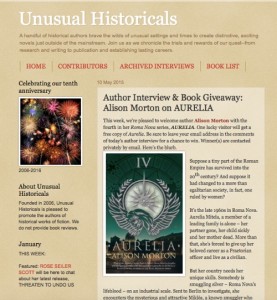 And interspersed are posts from visitors with extracts from their new books, plus author interviews. All the Roma Nova novels have been featured, so I know about the friendliness and the scope of the site. And interspersed are posts from visitors with extracts from their new books, plus author interviews. All the Roma Nova novels have been featured, so I know about the friendliness and the scope of the site.
Group blogging is beneficial for writers and readers.
Writers can share research, insights and photos related to their period as well as have the discipline of commitment to produce regular pieces of work apart from their own books.
Readers discover new authors and fascinating facts about clothes, manners, food, architecture and all aspects of daily life in the past from a select but knowledgeable group of historical authors. Win-win!
‘Eclectic mix’ is the expression designed for this site – all unusual and definitely historical. Do go and have a look and if you like what you see, follow us. It’ll be a great ride!
Alison Morton is the author of Roma Nova thrillers, INCEPTIO, PERFIDITAS, SUCCESSIO and AURELIA. The Roma Nova box set is available only until 31 January 2016.
Find out more about Roma Nova, its origins, stories and heroines…
If you enjoyed this post, do share it with your friends!
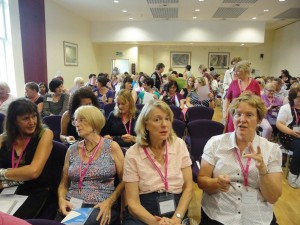 I’ve published 12 books – seven novels, two novellas, a short story collection and two non-fiction (as at 2021) – via the indie route since 2012, but in the preceding three years I learnt how to write for publication. More importantly, I learnt writing techniques: structure, plot, dialogue; how to delete adverbs, adjectives and over-writing; the techniques needed in the publishing world – proposals, submission packages, approach letters and etiquette in approaching agents and publishers; how the publishing industry worked, who was who and how to make and use opportunities. I’ve attended conferences, courses, fairs, seminars, I read how-to books, joined writers’ groups and associations and talked to other writers, tutors, assessors, publishing experts and mentors. I brought in my business skills: time management, networking, project management, accounting, cost analysis, pricing, marketing, PR and negotiating. And I listened. I’ve published 12 books – seven novels, two novellas, a short story collection and two non-fiction (as at 2021) – via the indie route since 2012, but in the preceding three years I learnt how to write for publication. More importantly, I learnt writing techniques: structure, plot, dialogue; how to delete adverbs, adjectives and over-writing; the techniques needed in the publishing world – proposals, submission packages, approach letters and etiquette in approaching agents and publishers; how the publishing industry worked, who was who and how to make and use opportunities. I’ve attended conferences, courses, fairs, seminars, I read how-to books, joined writers’ groups and associations and talked to other writers, tutors, assessors, publishing experts and mentors. I brought in my business skills: time management, networking, project management, accounting, cost analysis, pricing, marketing, PR and negotiating. And I listened.
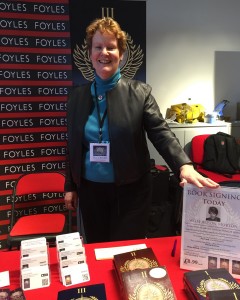
Now I’m not some Mary Sue in whose lap Fortuna spilt luck and prosperity. I worked for it all. But along the way, I learnt a great deal including some essential dos and don’ts.
Contrary to the jolly cheerleader ‘you can have it all’ approach, I’m going to be negative, and possibly crushing, because there are a lot of things you shouldn’t do if you want to succeed as an indie author.
Here are five cautions you might like to consider:
1. You are not entitled to inflict rubbish on readers just because you can
In this glorious age of democratisation of publishing – the sheer accessibility of digital and print on demand technologies is exhilarating – anybody can publish a book. Being honest, at least 80% of them shouldn’t.
Grammar, punctuation, gripping prose, a rattling good story edited by a competent experienced editor and a fabulous book jacket are minima. If you DIY publish and many do, learn how to do it properly: read ‘how to’ books, go on courses, research online and read guides, join specialist forums, learn from the experts. Doing anything else is lazy or arrogant.
2. Don’t whinge
The world is unfair. You learnt that in the playground. If you have a plan, work hard, research thoroughly and cultivate people, you will increase your chances of success astronomically.
You will see others get breaks, seem to prosper, receive plaudits, win prizes. Admit it, you’re left feeling resentful and envious. A secret – they’ve been in the exact same place, but slogged on. If you need to whinge, talk to the cat/dog/your critique partner. But don’t do it in public or you’ll be seen as needy. And nobody likes to be seen supporting a needy whinger…
3. Don’t diss others in the food chain
This is a life thing and applies even more to writing and publishing; it’s a village. Be friendly to all whether they’re a stellar bestseller or the newbie in your writing group. Of course, there are people we don’t warm to – the bumptious, the snobby, the unctuous and the darnright obnoxious. They have their own problems and really, we have to feel sorry for them.
As an indie, you have the benefits of freedom, control and the ability to be fully flexible in your PR and marketing. But please don’t sneer at mainstream authors or regard them as ‘sold out.’ They have chosen their way as you have yours. Remember you are all writers, especially if you share a genre.
4. Don’t be a pest
It’s hard, really hard, when you’re clutching your sweated-over manuscript or self-published book to your chest and you see your dream publisher/agent/endorser twenty paces from you not to rush over and gabble about your treasure in a demented über-pitch. This was one agent’s experience.
Now, nobody is more passionate about your book than you and that’s how it should be; you have immersed long hours in it and probably part of your soul. But rein it back and think strategically. Approach people in the terms they find acceptable, be gradual, wear your sensible hat and exert your brain, not your emotions. Publishers and agents outline their requirements on their websites – easy. Endorsers and reviewers, slightly trickier, are often very busy and/or fighting deadlines. Approach politely and if they don’t have time or don’t wish to read your book, thank them and withdraw gracefully. Ditto if you decide to approach agents and publishers and your book is rejected. And please don’t send unreadable files (silly fonts, midget type, badly formatted) to anybody at any stage.
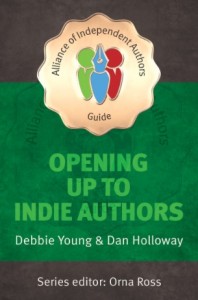 Once your book is published, bookshops and libraries are not obliged to stock it. See the Alliance of Independent Authors’ very sensible guide on how to succeed in this. Once your book is published, bookshops and libraries are not obliged to stock it. See the Alliance of Independent Authors’ very sensible guide on how to succeed in this.
Amazon UK Amazon US Kobo
5. Don’t expect to be the great breakthrough author, nor to be rich beyond dreams
More books = more income, but in the ferociously competitive book world, you’re statistically unlikely to become one of the ‘big beasts’. However, with hard work (that expression again), you can enjoy a supplementary, even comfortable income. And as you mature as a writer, people will ask for your opinion, read your blog, ask you to speak and, as long as you produce good content and information, come to regard you as an expert in your field. You may not win the Booker Prize, but you’ll probably be eligible for, and even win, some well-regarded indie ones.
Harsh? Probably. Realistic, certainly.
But being a writer, although creative, is a job. As an indie writer, you just have to show you’re also a professional.
Updated 2021: Alison Morton is the author of Roma Nova thrillers – INCEPTIO, CARINA (novella), PERFIDITAS, SUCCESSIO, AURELIA, NEXUS (novella), INSURRECTIO and RETALIO, and ROMA NOVA EXTRA, a collection of short stories. Audiobooks are available for four of the series.
Find out more about Roma Nova, its origins, stories and heroines and taste the latest contemporary thriller… Download ‘Welcome to Alison Morton’s Thriller Worlds’, a FREE eBook, as a thank you gift when you sign up to Alison’s monthly email newsletter. You’ll also be among the first to know about news and book progress before everybody else, and take part in giveaways.
If you enjoyed this post, do share it with your friends!
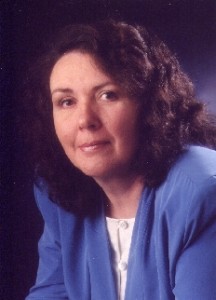 Today, I’m welcoming fellow Romantic Novelists’ Association member Joanna Maitland to talk about naming characters. Today, I’m welcoming fellow Romantic Novelists’ Association member Joanna Maitland to talk about naming characters.
After many years publishing Regencies with Harlequin Mills & Boon, Joanna is branching out into new fields as an independent author. With fellow author Sophie Weston, Joanna has just set up Libertà! where readers and writers can meet and share enthusiasms. Joanna hopes to welcome fans, old and new, and readers of all sorts of fiction to the website.
Joanna’s latest Regency ebook novella, His Silken Seduction, takes readers to pre-Waterloo France and the excitement of Napoleon’s Hundred Days. Her second, coming early in 2016, will be a timeslip, Lady In Lace. You can find all her books at http://LibertaBooks.com/joanna
Over to Joanna!
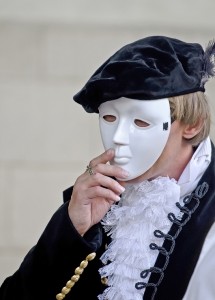 Authors have different ways of naming characters. Some label their key characters hero and heroine until they have finished the first draft, others need names for their characters before they write a word. Authors have different ways of naming characters. Some label their key characters hero and heroine until they have finished the first draft, others need names for their characters before they write a word.
Names, for me, are integral to character. Names can even be part of the plot. In my early novel, My Lady Angel, the hero had two names – Frederick, the name used by the father he detested, and Max, the name by which his friends knew him. The difference between the two names, and the personalities that lay behind them, was a crucial thread of the story.
Sometimes, choosing a name doesn’t go particularly well. When I was working on A Regency Invitation, a three-novella joint story with Nicola Cornick and Elizabeth Rolls, I initially called my hero Will. But he hated it. His real name turned out to be Marcus and, once I’d changed it, he happily strode onto the stage and started talking. How did I know that his name was Marcus? I’m not sure. It just bubbled up from my subconscious. And I knew it was right immediately.
 All this may suggest that naming characters is a sort of alchemy, a half-magical process where the author negotiates with her characters as if they were real. It can feel like that, I’ll admit, but there’s also quite a lot of routine involved. All this may suggest that naming characters is a sort of alchemy, a half-magical process where the author negotiates with her characters as if they were real. It can feel like that, I’ll admit, but there’s also quite a lot of routine involved.
I have simple rules:
- make sure all characters’ names start with a different initial so there’s no chance that the reader will mix them up;
- try to have first names of different numbers of syllables, especially for hero and heroine – go for Elizabeth and Tom, say, rather than Elizabeth and Christopher;
- if possible, avoid names that end in -s or -es, like Bess, because the possessive can tie you in knots like “Bess’s best besom” (I broke my own rule with Marcus, I admit, but he insisted!)
- make sure characters’ names are appropriate for the period of the novel, whether it’s historical or contemporary; the name has to have been in use/in vogue at the time the character was born.
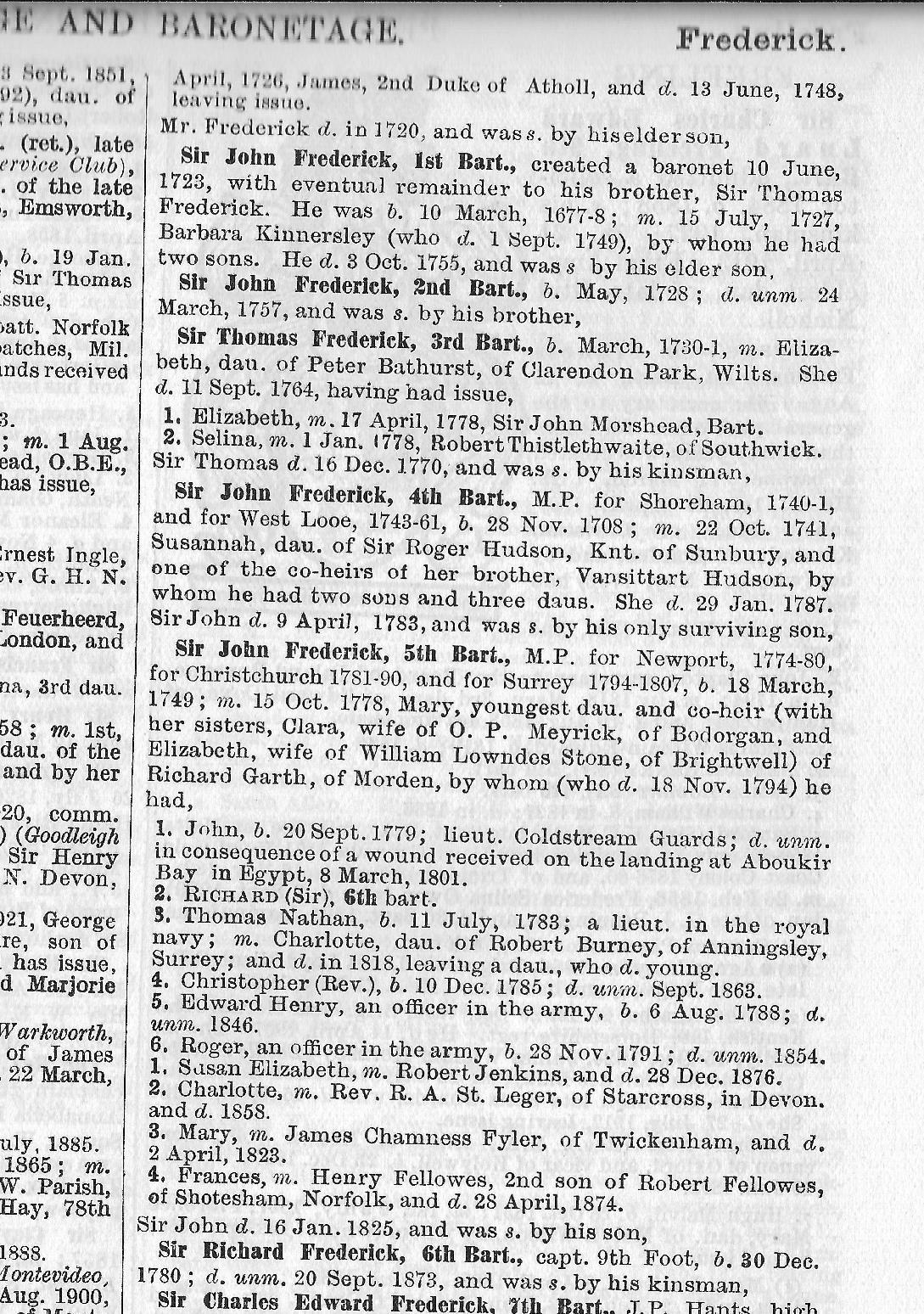
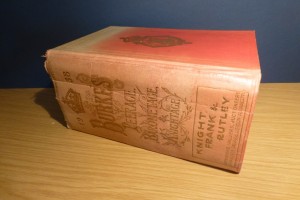 One trick is to check the names that real people of the time were using. You can find them in parish registers, contemporary letters and diaries, newspapers and so on. I tend to rely on my battered old copy of Burke’s Peerage (vintage 1938) where I borrow first names from real people. One trick is to check the names that real people of the time were using. You can find them in parish registers, contemporary letters and diaries, newspapers and so on. I tend to rely on my battered old copy of Burke’s Peerage (vintage 1938) where I borrow first names from real people.
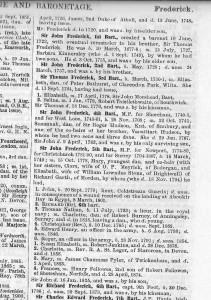 There’s part of a random page shown here, for the Frederick family. If you can read the tiny print (click the photo for a larger version), you’ll see that John, the heir to the 5th Baronet, died of wounds received at Aboukir Bay, Egypt, in 1801. Burke’s is full of such fascinating and thought-provoking details. There’s part of a random page shown here, for the Frederick family. If you can read the tiny print (click the photo for a larger version), you’ll see that John, the heir to the 5th Baronet, died of wounds received at Aboukir Bay, Egypt, in 1801. Burke’s is full of such fascinating and thought-provoking details.
It can be wise to avoid actual names, especially if you write contemporary stories. Real people do sue! Georgette Heyer use to pore over maps to find obscure place names for her characters. Fownhope (possibly the inspiration for Augustus Fawnhope in The Grand Sophy) is a Herefordshire village, for example. I regularly note down interesting place names from road signs. And you can always modify names, as Heyer did, turning them into something that never existed.
 A Warning! If you decide to change Will to Marcus, say, do beware of unintended consequences of Search/Replace. Your beautiful proposal scene, for example, might become something quite odd: A Warning! If you decide to change Will to Marcus, say, do beware of unintended consequences of Search/Replace. Your beautiful proposal scene, for example, might become something quite odd:
Hero (on bended knee) to heroine: I love you, darling. Marcus you marry me?
Heroine (overcome with joy): Oh, yes! Yes, of course I marcus.
We wish Joanna every success with Libertà!, her new joint venture with fellow author Sophie Weston.

Connect with Joanna:
Website: http://LibertaBooks.com
Blog: http://LibertaBooks.com/blog
Twitter: @LibertaBooks @joannamaitland @sophiewestonbks
Joanna Maitland’s latest Regency ebook novella, His Silken Seduction, takes readers to pre-Waterloo France and the excitement of Napoleon’s Hundred Days. Available now on Kindle
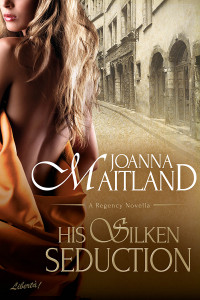
Wounded. Abandoned.
In the enemy’s bed.
He’s Wellington’s spy, surviving in war-torn France.
His silk-weaver’s touch is driving him wild.
But she’s the enemy.
Dare he trust her with his life?
Or his heart?
Alison Morton is the author of Roma Nova thrillers, INCEPTIO, PERFIDITAS and SUCCESSIO. The fourth book, AURELIA and the Roma Nova box set are now out.
Find out more about Roma Nova, its origins, stories and heroines…
If you enjoyed this post, do share it with your friends!
|
Subscribe to Blog via Email
Join 368 other subscribers.
Categories
Archive
|
 Today I’m welcoming Fenella Forster, writer extraordinaire. Her debut book, Annie’s Story, set in the early 20th century, came out last year with great enthusiasm and was recently awarded the prestigious B.R.A.G. Medallion. Her second book, Juliet’s Story, has just launched. Both books are part of ‘The Voyagers’ trilogy stretching from 1913 to the present day. Fenella Forster writes non-fiction (from Bad to Wurst and Seller Beware: How not to sell your business) under her real name Denise Barnes.
 I eventually finished the manuscript at 150,000 words – far too long for any agent or publisher to risk taking on a debut author. Undeterred, I began writing the sequel about another family member, Kitty. When a couple of agents suggested I split the first book into two separate stories I was beside myself. But you learn not to be too precious in the writing world. You’ll remember, Alison, it was you who said: ‘Split Annie and Juliet, then Kitty becomes the third book in the trilogy.’ (Remember it well!)
 The trilogy begins in 1913 with Annie’s Story. She’s a housemaid in a fine country house in Norfolk, recently engaged to Ferguson, a footman from a neighbouring house. He springs it on her that they should go to Australia ‘to better themselves’. Annie knows her place is to follow her husband-to-be or break off the engagement so she decides to take the risk. The voyage out throws up new problems for Annie to deal with, not to mention Alexander Townsend, the handsome ship’s doctor. And once they are in Melbourne, Ferguson finds it difficult to stick to his promises. I’d better not say anymore!