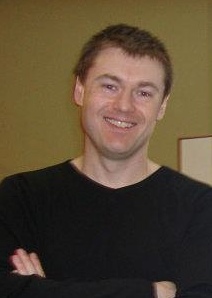
 Today, I have a special guest, Russell Whitfield, a true friend of Roma Nova who endorsed INCEPTIO and AURELIA. Russ’s first novel, Gladiatrix, was published in 2008 by Myrmidon Books. The sequel, Roma Victrix, continued the adventures of Lysandra, the Spartan gladiatrix. The third, Imperatrix, released this year, is just simply a tour de force. Today, I have a special guest, Russell Whitfield, a true friend of Roma Nova who endorsed INCEPTIO and AURELIA. Russ’s first novel, Gladiatrix, was published in 2008 by Myrmidon Books. The sequel, Roma Victrix, continued the adventures of Lysandra, the Spartan gladiatrix. The third, Imperatrix, released this year, is just simply a tour de force.
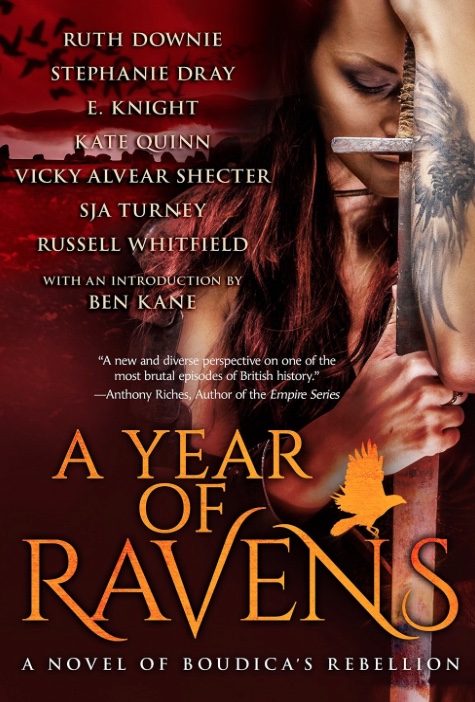
Now, you may remember A Day of Fire six stories about the eruption of Vesuvius in AD 79 which he co-wrote as a highly successful collaborative novel with a group of other historical authors. Well, they’re doing a second one, this time about the Boudican revolt in Britain 60/61 AD, called A Year of Ravens.
Britannia: land of mist and magic clinging to the western edge of the Roman Empire. A red-haired queen named Boudica led her people in a desperate rebellion against the might of Rome, an epic struggle destined to consume heroes and cowards, young and old, Roman and Briton . . . and these are their stories.
- A calculating queen foresees the fires of rebellion in a king’s death
- A neglected slave girl seizes her own courage as Boudica calls for war
- An idealistic tribune finds manhood in a brutal baptism of blood and slaughter
- A death-haunted Druid challenges the gods themselves to ensure victory for his people
- A conflicted young warrior finds himself torn between loyalties to tribe and to Rome
- An old champion struggles for everlasting glory in the final battle against the legions
- A pair of fiery princesses fight to salvage the pieces of their mother’s dream as the ravens circle.
A novel in seven parts, overlapping stories of warriors and peacemakers, queens and slaves, Romans and Britons who cross paths during Boudica’s epic rebellion. But who will survive to see the dawn of a new Britannia, and who will fall to feed the ravens?
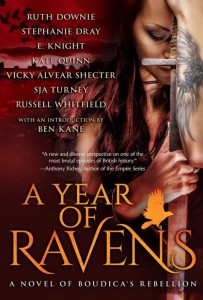 The authors – E. Knight, Ruth Downie, Stephanie Dray, Russell Whitfield, SJA Turney, Kate Quinn and Vicky Alvear Shecter – have all agreed to be guests on this blog over the next few weeks and give their personal take on writing a collaborative project. What a feast! The authors – E. Knight, Ruth Downie, Stephanie Dray, Russell Whitfield, SJA Turney, Kate Quinn and Vicky Alvear Shecter – have all agreed to be guests on this blog over the next few weeks and give their personal take on writing a collaborative project. What a feast!
Today, we’re starting with Russell. The questions will be gentle – no hint of a Roman vigiles punishment officer to carry out the interrogation!
Why does Boudica have an enduring attraction and why did you choose it as the focus for this book?
I think because she’s a woman who kicks serious arse. All the way back to the Ancient Greeks and the Amazons, there’s a fascination with women who step outside of their supposed norm and assume the mantle of the warrior. Hers is the story of the mouse that roared – taking on the Romans and very nearly making them pull out of Britannia is an epic tale in and of itself. As a Romanophile, it’s a strange one for me too, because Boudica is a symbol of British resistance – so I’m a bit torn!
Were the group of authors self-selected or chosen? And how did you find working together?
I was asked to participate in this by Ben Kane and it was a huge honour to be invited as I’m a fan of all the other authors (it’s a small world this writing lark). How’s it been? Great – I know that we’re supposed to say that it was all seamless with no issues – but it really was like that. To be honest, the story that I got to write (about Agricola) was pretty self-contained so there was only a bit of plot crossover, whereas I know many of the other authors were meticulous in getting everything spot on as they referenced each other’s stories. I have to say that this was the most fun though; reading other people’s version of a character that you’d worked on was a great thrill. It was great fun – I loved every moment of this project (well, apart from the editing, cos no one likes that!). No, it was full of ace and awesome.
What do you think is in it for the reader having such a diversity of author styles?
Good question. I hope that people will like it because each story has its own voice. The point of the piece was to show the conflict from many different perspectives so the styles of the writers of course reflect that. The main thing is that Kate Quinn – editor-in-chief and potential member of the Justice League (cos she’s that much of a superheroine) ensured that – crucially – the events flowed well and that the i’s were dotted, t’s were crossed and the piece wasn’t just a bunch of short stories. Not that there’s anything wrong with short stories, but “A Year of Ravens” needed to read and feel like a novel. Thanks to Kate, it does – she chaperoned us all through the hard parts.
The thing is, Kate and all the other writers on this project are amazingly talented people – all writing the same story. It might be a different approach, but these guys are so good that I would imagine that any reader will just get caught up and swept along with it.
Will there be another book focusing on a different event?
I certainly hope so. As I say, this was a huge honour and pleasure for me to be involved in… if there is another one in the future and I’m lucky enough to be invited on board, I’d be there with bells on.
Thank you, Russell!
Publication date is 17 November, but you can pre-order from Amazon UK and Amazon US now.
I’ve been lucky enough to have read a pre-publication copy and will let you know my thoughts later in the series!
Alison Morton is the author of Roma Nova thrillers, INCEPTIO, PERFIDITAS and SUCCESSIO. The fourth book, AURELIA, is now out.
Find out more about Roma Nova, its origins, stories and heroines…
If you enjoyed this post, do share it with your friends!
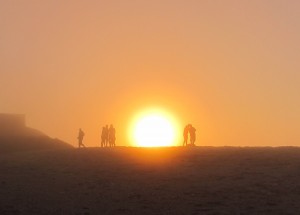 Seasons drive our behaviour whether we like it or not. We no longer live in caves, but in heated and insulated houses with curtains, double-glazing and electric light which weather-proof our lives But am I the only person who tends to ‘hibernate’ in winter and virtually live outside in summer? Seasons drive our behaviour whether we like it or not. We no longer live in caves, but in heated and insulated houses with curtains, double-glazing and electric light which weather-proof our lives But am I the only person who tends to ‘hibernate’ in winter and virtually live outside in summer?
When we write, we must take the season into account. Of course, weather is a wonderful external element; it can belt down with rain in mid-summer and the sun can burst through on a freezing December day. Unexpected or sudden weather can be a gift for a writer as it disrupts the character’s actions wonderfully. More about using weather in your story
Seasons are different. The general rhythm of long summer days and short winter ones in the northern hemisphere where I live is well established, but there are variations between Sweden and Portugal, Ireland and Bulgaria. The nearer the equator, the more equal the days and night, whatever the season. Dusk falls faster the further south you go.
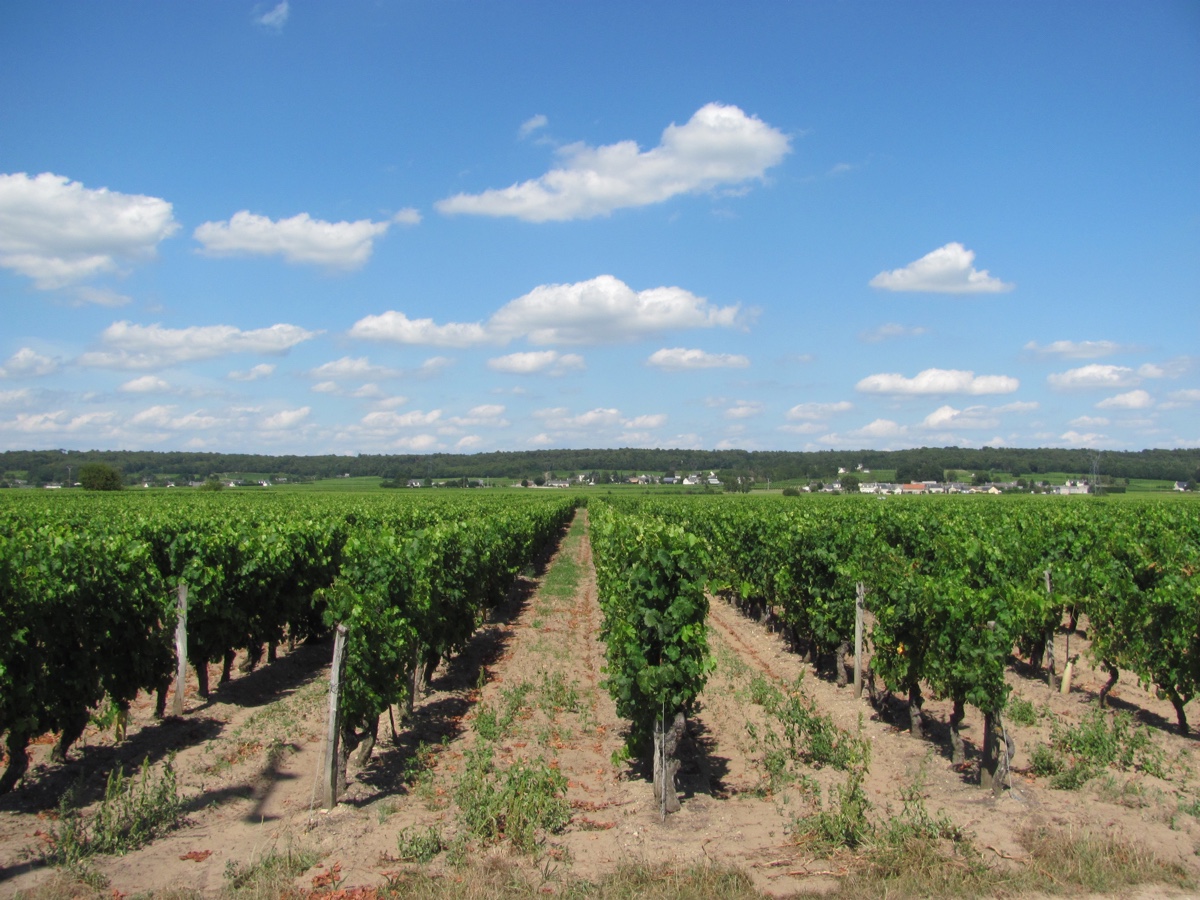
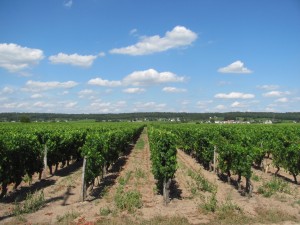 Vines in summer What does this mean for writers? Firstly, establish what season you are in because that will not only give you a clue about the weather but also tell you how light or dark the evenings are. At 6.15pm in October, it’s dusk in south central Europe. However, in June, sunset is around 9pm CET in the same place. So if you want a character in a thriller moving stealthily, check the time when they will be under cover of darkness. A great resource for this, and climate, is http://www.timeanddate.com
Maritime tides are not just affected by the moon, but by seasonal shifts in patterns, e.g. Trade Winds, El Nino, the hurricane season. And check river flows and depths throughout the year.
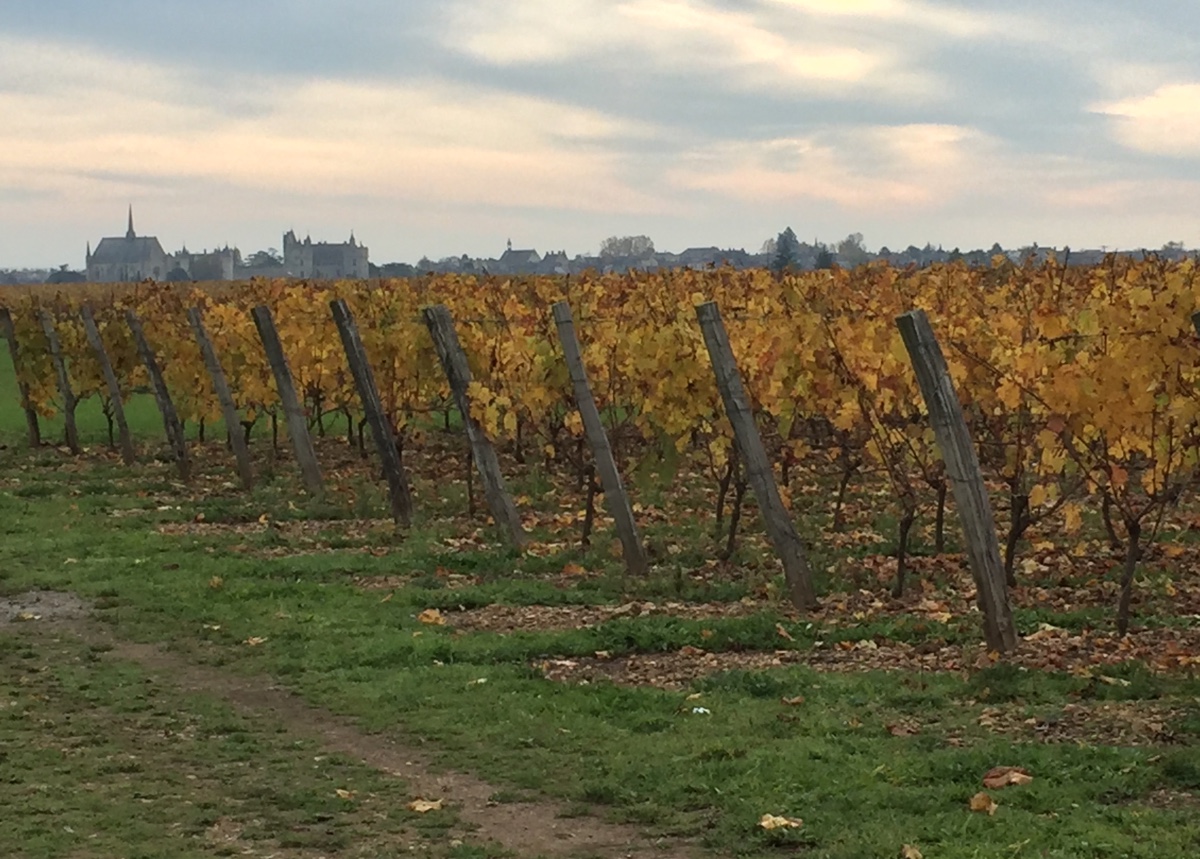
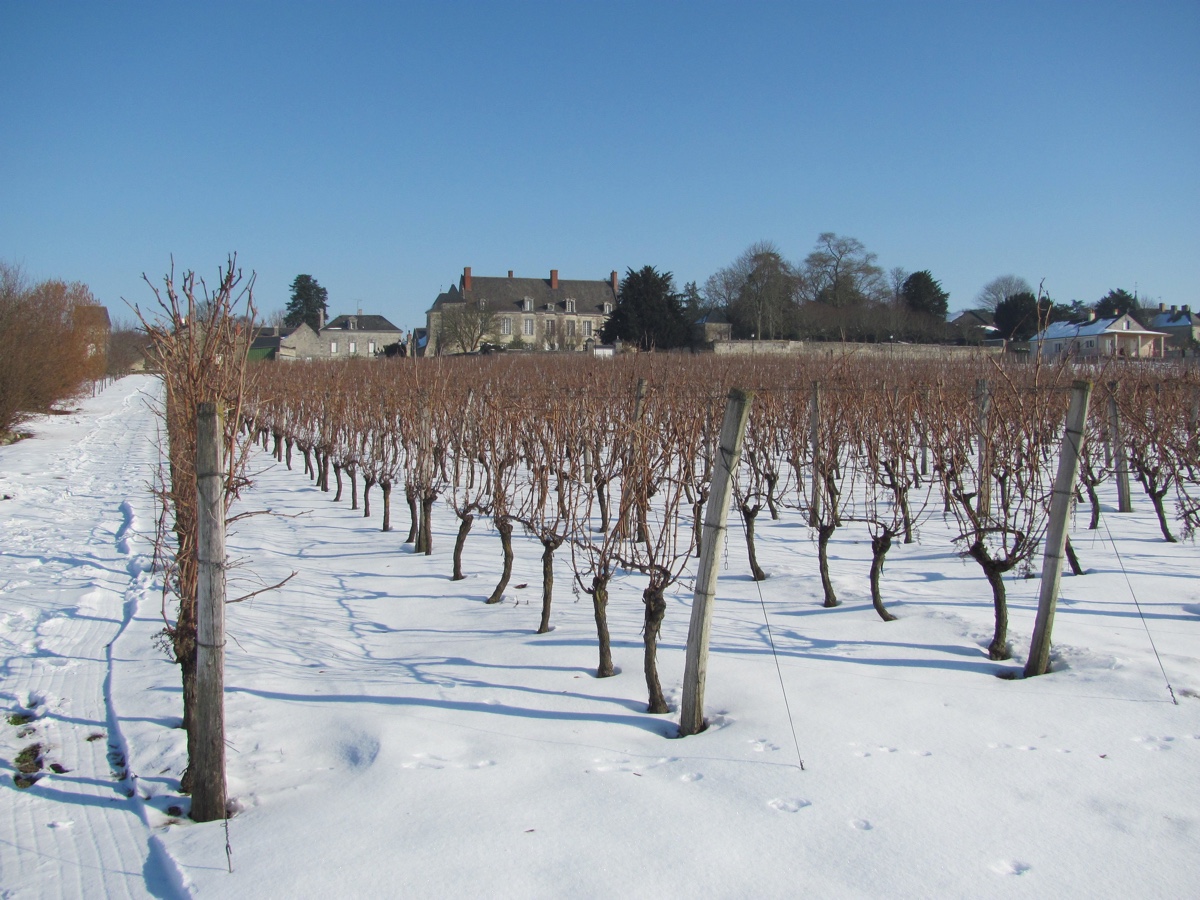
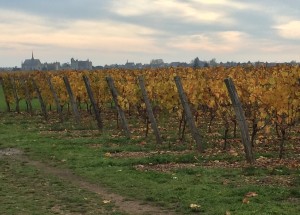 Vines in autumn Green and verdant farmland will be untidy, brown and a tad boring in October/November, but deciduous woodland will be glorious in red and gold. In summer, especially if it’s hot, grass and open spaces can look like the legendary badlands or the Australian bush. Vines, which we all visualise as lush green rows hanging with grapes (aka proto-wine!), stretch for acres of yellow in autumn, then look like bunches of twigs in early January.
Public parks are generally designed with planting resistant to the seasons, but be aware that you will have better line of sight in winter and conversations might not be muffled so well by vegetation during assignations of a romantic or clandestine nature. And if your story takes place in an alpine country or mountains, check the dates of the climbing season and whether the snowline has retreated or advanced.
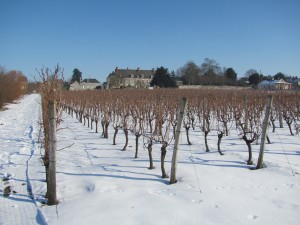 Vines in January snow Transport schedules change between seasons, so don’t count on the no.41 bus coming along for your character all the year round or flights to regional airports being every day. And summer may bring a lot more people to your chosen location as tourists, something that may help or hinder your characters.
Seasons can affect the whole story. In stories set in ancient and medieval periods and into relatively modern times, armies often fought during the ‘campaigning season’ starting in spring after the muddy/snowy/freezing weather which decimated troops through frostbite, hunger and disease had finished. And during the harvest season, desertion was common.
Cold, hot and monsoon seasons bring added misery, or possibly escape for our characters. An out-of-season heat wave or three-metre snowfall can bring transport problems, insects, shortages, communication disruption. And then if everything’s closed for Christmas…
On a more personal level, it could be the time to put out or take in the garden furniture, the first or last drinks evening outside, shutting a beach hut or summer house up for the season, the end of the fishing season. And does your character dread the onset of winter with mist, fog and crisp, dark mornings or welcome the spring when he or she sees bulbs peeping up through the earth? Does it have some symbolism for them, such as the start of a new year, a fresh start?
Alison Morton is the author of Roma Nova thrillers, INCEPTIO, PERFIDITAS and SUCCESSIO. The fourth book, AURELIA, is now out.
Find out more about Roma Nova, its origins, stories and heroines…
If you enjoyed this post, do share it with your friends!
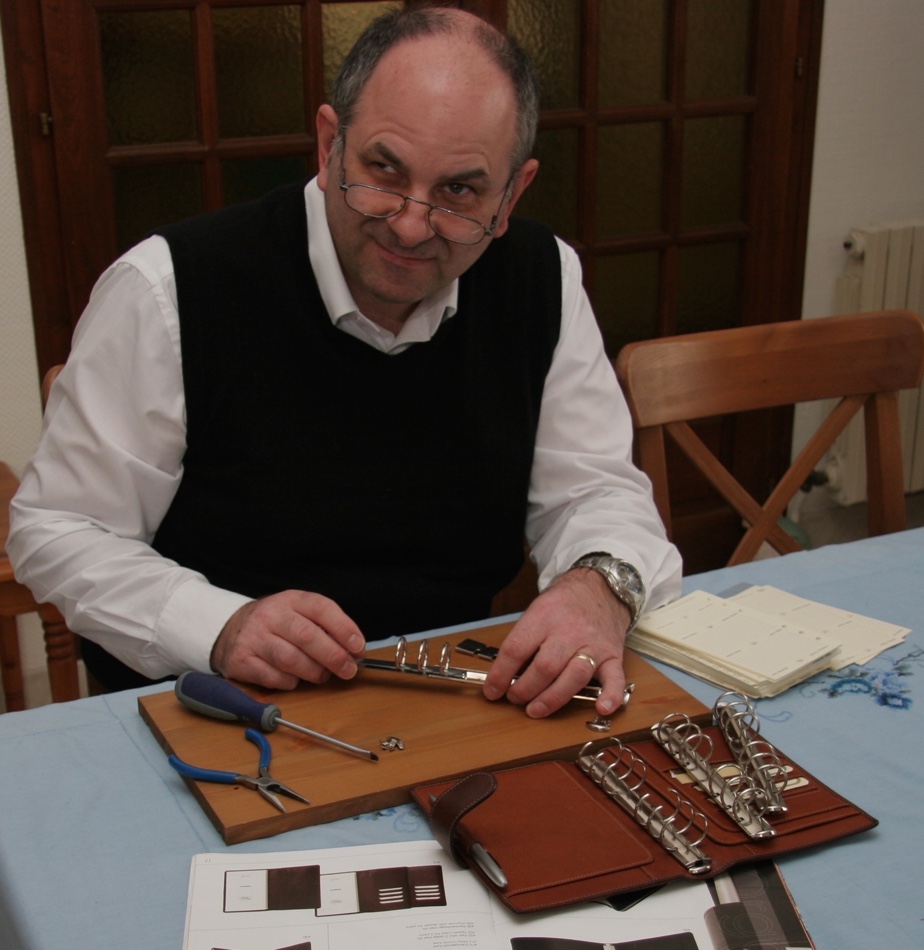
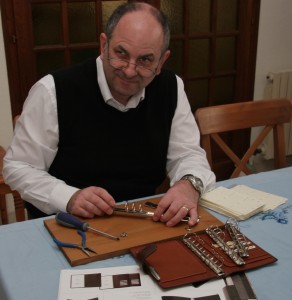 Today is an unusual one. My guest is my husband, Steve Morton, who is a contributor to the ‘Dull Men of Great Britain’ published today by Ebury Press, part of Random House. I wouldn’t be letting you into a big secret if I say he’s not really that dull! Today is an unusual one. My guest is my husband, Steve Morton, who is a contributor to the ‘Dull Men of Great Britain’ published today by Ebury Press, part of Random House. I wouldn’t be letting you into a big secret if I say he’s not really that dull!
A former radio engineer, he’s written online content for many years and has been supporting many friends, colleagues and voluntary organisations with their IT problems. And then he rediscovered his Filofax…
Welcome, Steve! Tell us why you qualify to be a member of the Dull Men’s Club?
I suppose it’s my unusual interest in something that most people gave up using years ago… a Filofax or ring bound personal organiser. With us all having smart phones these days (including me), why would anyone want to still use pen and paper?
Simply the speed of entry and recall of information. The times I enter in my planner don’t change when I change time zones. I can vary the layout and the colours of entries on an individual basis if I want to prioritise entries in a certain way. There is no instruction book required, it really is simple and intuitive to use.
For tasks and ideas, I can download my thoughts anywhere I happen to be, no batteries or internet connection is required.
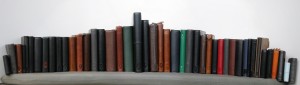
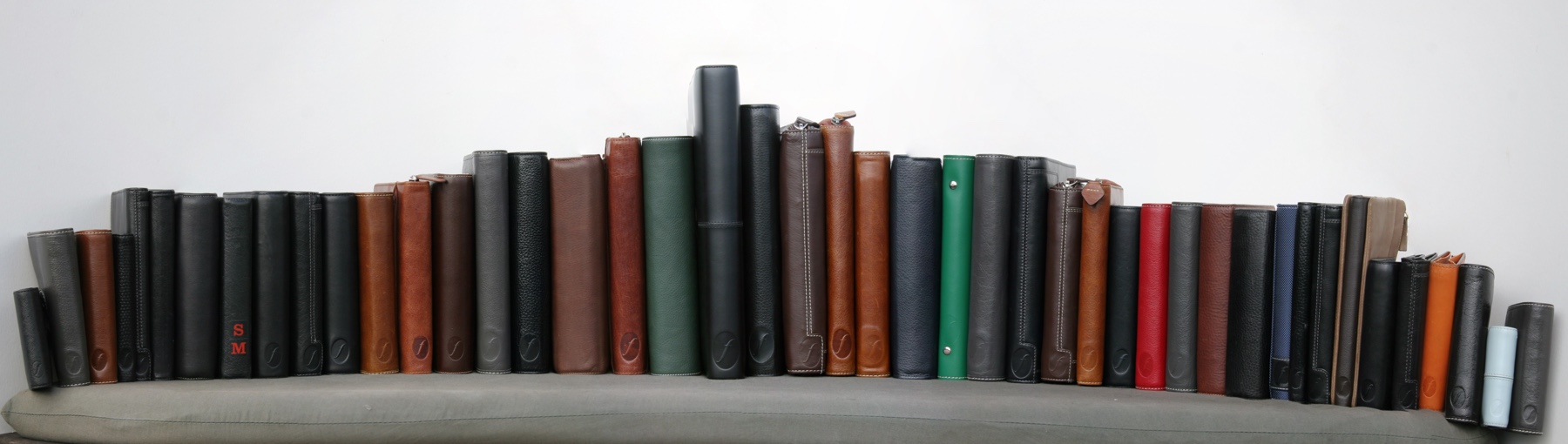
I suppose, though, being a user of a Filofax is one thing; having a large collection of them is another. And to dedicate a lot of time to investigate the small design details, as I have done over the last six years, has taken things to extremes. I know this when companies ask me now for advice and information on the design, or changes to their designs, of organisers for different paper sizes. I look at it as a complex 3D puzzle of where the paper is going to sit within the organiser when it closes and whether the dimensions of the cover are going to be wide enough to allow for the tabs of the dividers, pen loops and other accessories.
What have you found most interesting (if that’s not too strong a word) about the whole book publishing project?
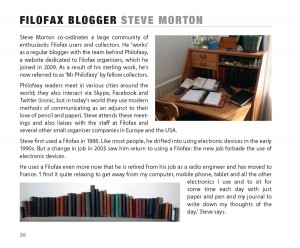 I’ve not been directly involved in the project as such; my own contribution went to the publisher back in January soon after I was ‘accepted’ as a participant. I had quite a task reducing my own entry to the required number of words, trading off some parts against others so it still made sense but gave the reader a balanced view. I hope my own contribution will be up to the mark set by others in the book! I’ve not been directly involved in the project as such; my own contribution went to the publisher back in January soon after I was ‘accepted’ as a participant. I had quite a task reducing my own entry to the required number of words, trading off some parts against others so it still made sense but gave the reader a balanced view. I hope my own contribution will be up to the mark set by others in the book!
It certainly seems a long time ago now; I’m surprised it has taken this long to complete. My copy arrived for signing off in July and it has been a further two months to get it to the stage of being ready to produce the final books for sale today.
Where can readers find more information about your particular obsession?
I blog more or less on a daily basic over at http://philofaxy.com the Philofaxy blog, which celebrates its tenth anniversary this year. I’ve been a main contributor there for the last 6 years.
Thank you, Steve. More interesting than you might imagine. The Daily Telegraph, Daily Mail, Daily Mirror, Daily Express and The Sun all had good spreads on the book yesterday. Good luck to all the ‘dull men’ and good sales!

Dull Men of Great Britain
Neil collects bricks, Kevin is a roundabout enthusiast, John runs the Apostrophe Protection Society and Keith’s actual job is watching paint dry. They are members of the Dull Men’s Club and are passionate about the everyday, unglamorous things in life. They are dull and proud and urge the good ordinary men of the nation to join them now. Whether you have a thing for pylons or rhubarb, reclaim and celebrate the ordinary. Includes Free Honorary Membership.
Predictable * Reliable * Safe
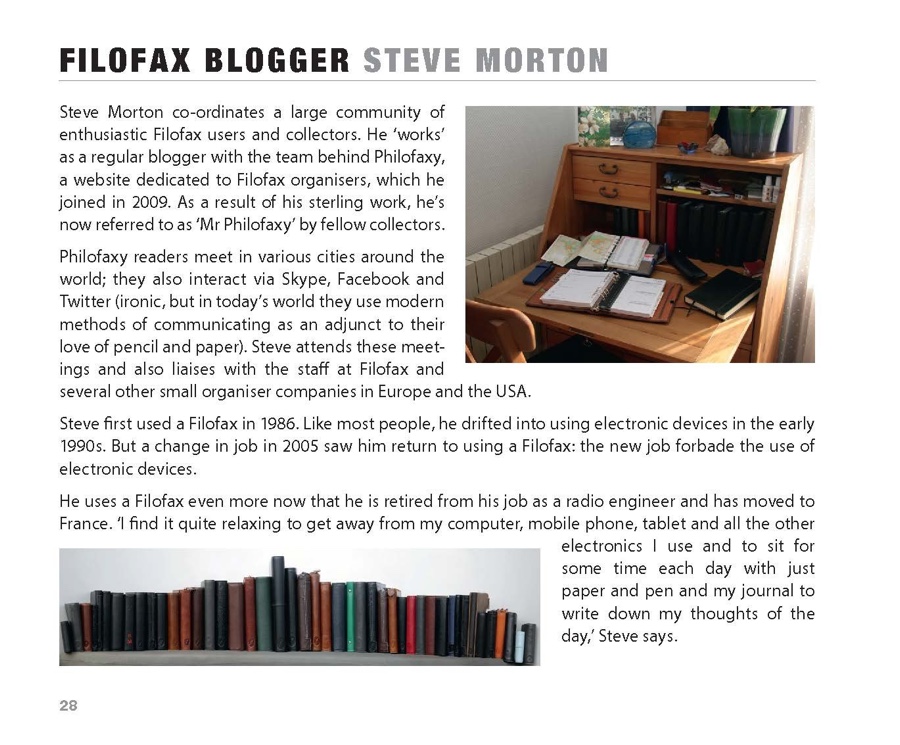
(Steve is featured on page 28!)
Dull Men of Great Britain is now on sale at Amazon (Kindle and hardback £8.99), WH Smith, Waterstones and your local bookshop.
Alison Morton is the author of Roma Nova thrillers, INCEPTIO, PERFIDITAS and SUCCESSIO. The fourth book, AURELIA, is now out.
Find out more about Roma Nova, its origins, stories and heroines…
If you enjoyed this post, do share it with your friends!
 Perhaps you thought that when you typed ‘The End’ (if you do), you’d finished writing your novel. Well, sadly not. It’s like being pregnant and not realising you have a good twenty years ahead of you dealing with the result. Slightly less drastic with a book, but it’s still your creation, your baby, and it needs a lot more nurturing. Perhaps you thought that when you typed ‘The End’ (if you do), you’d finished writing your novel. Well, sadly not. It’s like being pregnant and not realising you have a good twenty years ahead of you dealing with the result. Slightly less drastic with a book, but it’s still your creation, your baby, and it needs a lot more nurturing.
After drawing breath, catching up on emails and blinking at the real world from my writing bat cave, I do the first tidy-up on my manuscript. It’s not even the first self-edit described here which is best left for two or three weeks at least. No, it’s reading through to check for plot holes and obvious gulfs in continuity.
I send the draft to my Kindle and read it through without interruption (apart from comfort breaks, food and sleep). I jot down quick notes or chapter references and then motor on. This way, I get the flavour of the book and find out if it works as a completed story. Checking this after the first draft is fresh in my mind has saved me hours of wasted writing time because any large faults leap out and hit me between the eyes.
Next, I print it all out in 1.5 line space and set to remedying these bumpy bits. I find it much easier to tackle a physical page . With my latest book, working title INSURRECTIO, I’ve found places that need a linking scene, or a couple of lines of description. I visualise all the scenes in my head and need to remind myself that readers need me to write some words to show them where the characters are! The other danger with a book in a series – this is the fifth Roma Nova thriller and the second in the AURELIA cycle – is that not all readers will have read the previous ones. So this is the time to drip in little bits of backstory.
Once I’ve done this, I leave it alone for a while and let it mature. This waiting period also clears my mind of the intense thrall I’ve been in while writing this book. Only then is it on to wielding the red pen time…
Alison Morton is the author of Roma Nova thrillers – INCEPTIO, PERFIDITAS, SUCCESSIO, AURELIA, INSURRECTIO and RETALIO. CARINA, a novella, and ROMA NOVA EXTRA, a collection of short stories, are now available. Audiobooks are available for four of the series. NEXUS, an Aurelia Mitela novella, is now out.
Find out more about Roma Nova, its origins, stories and heroines… Download ‘Welcome to Roma Nova’, a FREE eBook, as a thank you gift when you sign up to Alison’s monthly email newsletter. You’ll also be first to know about Roma Nova news and book progress before everybody else, and take part in giveaways.
If you enjoyed this post, do share it with your friends!
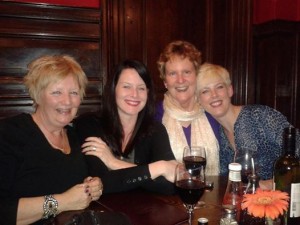 With indie authors Glynis Smy, Jessica Bell and Talli Roland What does ‘independent’ mean?
“Having independent means” – economically self-sufficient
“Independence Day” – departure from the another country’s dominion
“Independence in law” – e.g. ancient Roman emancipation from the parent’s legal authority
“The Independent” – A newspaper with no financial or political ties
All express the freedom to act and to have control over your destiny, and the responsibility and power to make your own decisions.
“Independent author” has grown out of the self-publishing movement. Originally, self-publishers wrote their book and posted it on Amazon. Job done. Before then, and if you had the money, you could contract with a subsidy publisher to produce a garageful of hard or paperback print books. As self-publishing matured, professional services such as editing, cover design and formatting have grown as have assisted publishing services such as SilverWood Books offering full support packages.
Inevitably, there are a lot of substandard, and frankly rubbish, books out there for sale as a result of this democratic revolution. Some originators of content (I’m not calling them writers) don’t care or don’t know any better; they’ve produced words in a file, sometimes with great emotion on their part, and sent them off into the digiverse without any check.
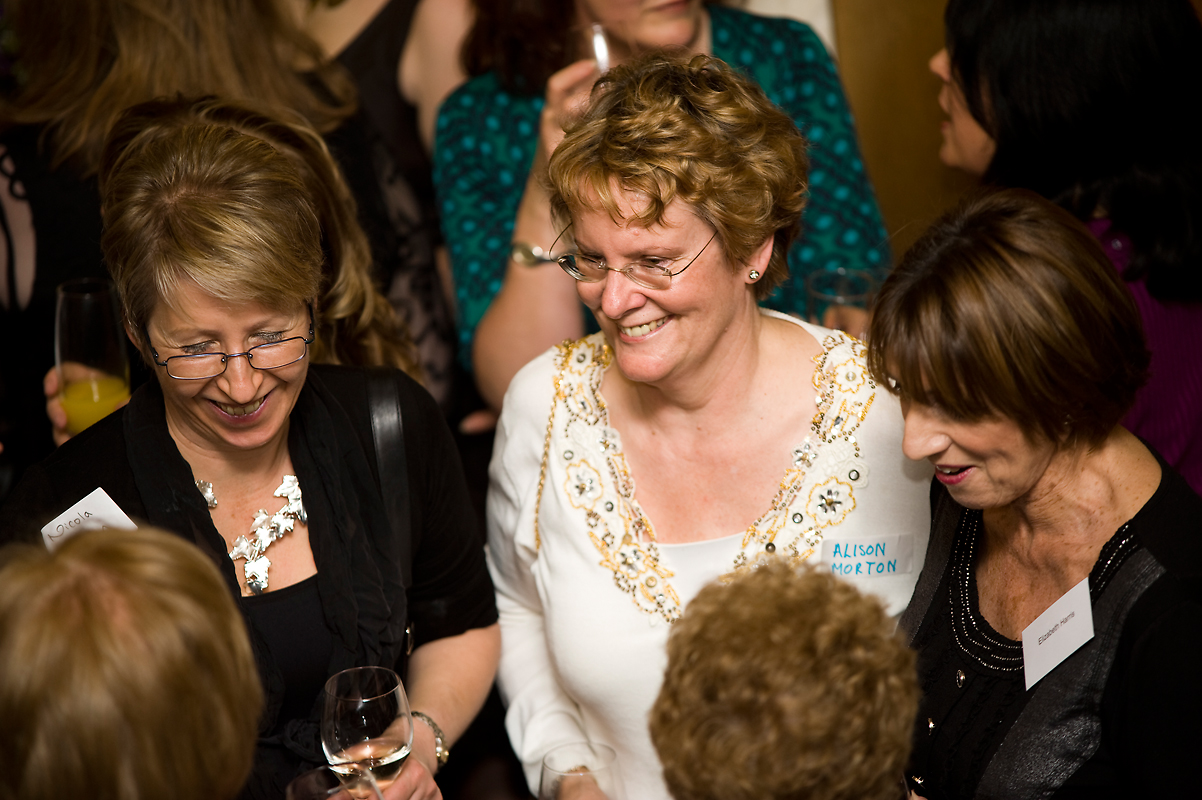
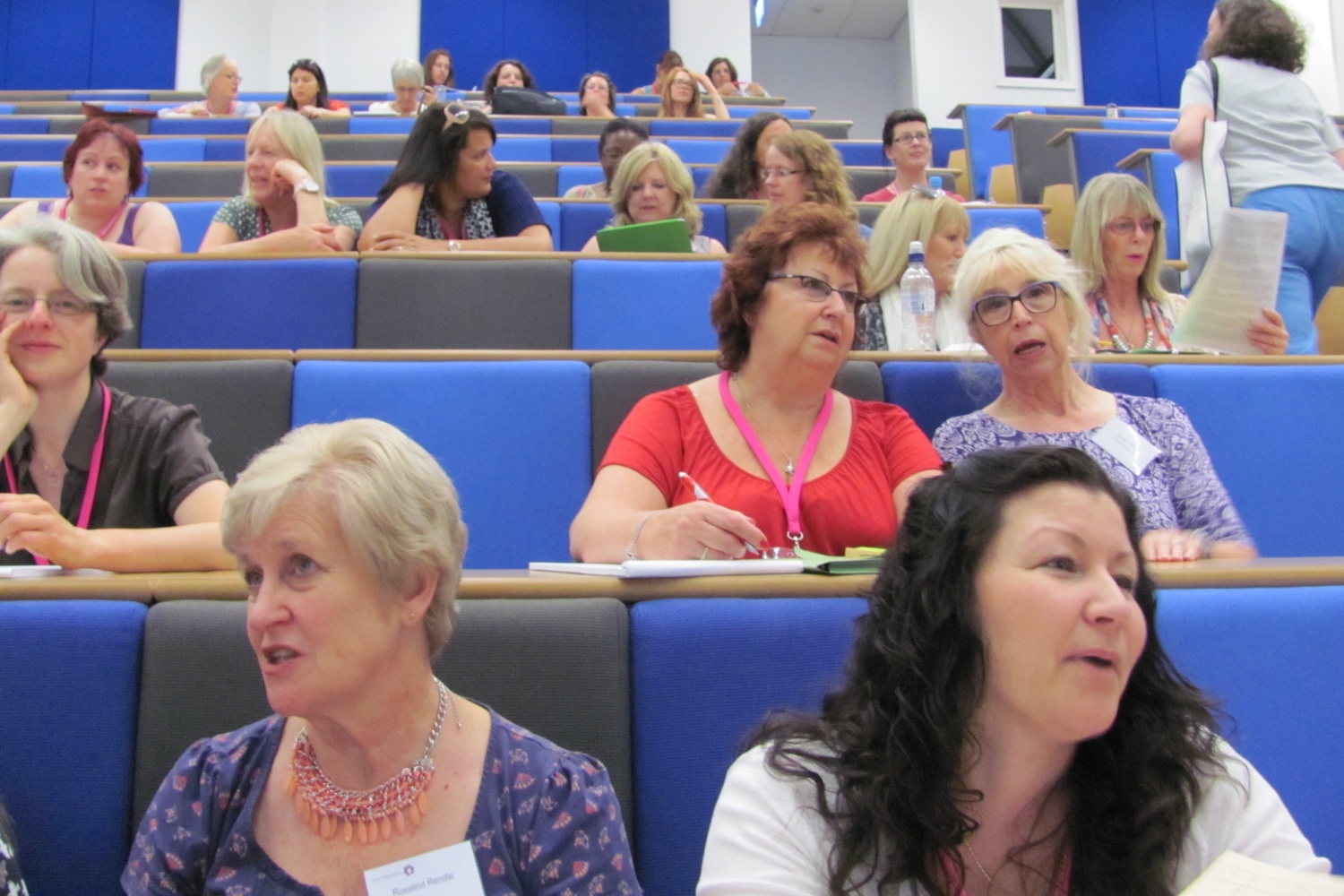
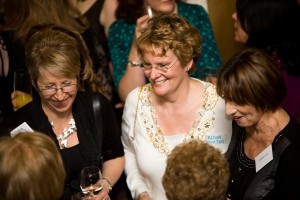 Nicola Morgan, Alison Morton, Liz Harris sharing a good joke at an RNA party However, serious self-publishers know better. Alongside other writers (however published or aspiring to be published) they will have joined writing groups, listened to other authors, read magazines, self-help books, had their work critiqued, attended conferences and gone on courses. At the risk of boring you with the list, here’s some of my own history:
Up to 2009, most of my published writing output had been about France, property, business and translation. After selling my translation business in 2009, I started writing my first Roma Nova novel. I’ve always been a ‘wordsmith’. Translating professionally for much of my career has made me nit-picky about words, grammar, punctuation, document cohesion, theme and structure.
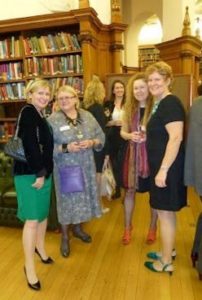 With Liz Fenwick, Carole Blake and Christina Courtney at another RNA party! • Joined the Romantic Novelists’ Association (RNA) in January 2010 under the New Writers’ Scheme – attended courses, conferences, meetings, London & SE chapter meetings, parties
• Went on Circle of Missé six day writers’ bootcamp, Arvon Foundation course on commercial fiction (Mavis Cheek and the late, great Paul Sussman as tutors)
• Attended the Festival of Writing at York – met mentor Adrian Magson, multi-selling crime and thriller writer
• Joined the Historical Novel Society, the Alliance of Independent Authors (ALLi), International Thriller Writers (lots of hoops to jump for that one), Society of Authors (now full member because of sales)
• Visited London Book Fair several years to network with other writers, go to seminars and catch news and developments
• Attend one day marketing, social media and craft courses on an ongoing basis as well as constantly research and discuss the background to my writing field.
• Interact continuously with all these associations and writing and reading colleagues within them.
And the books?
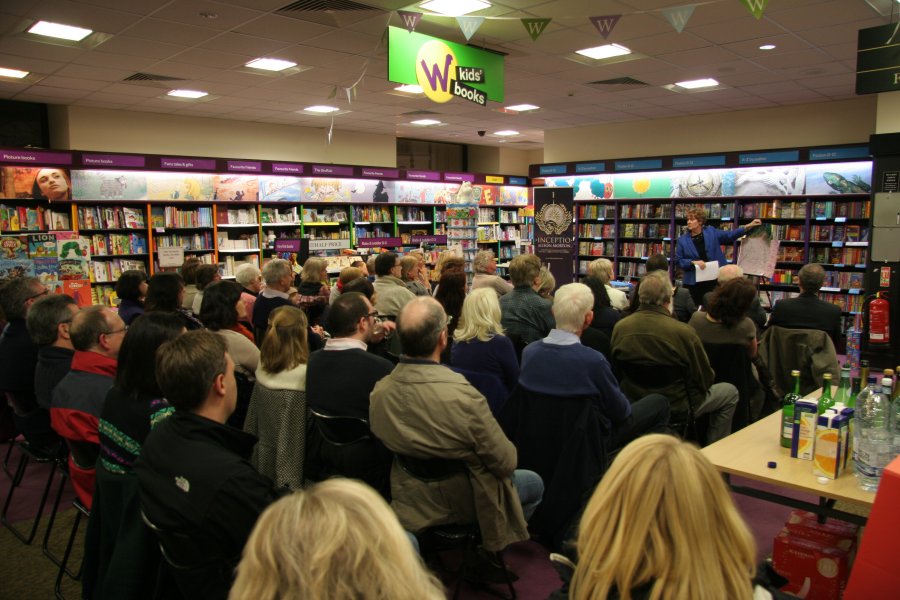
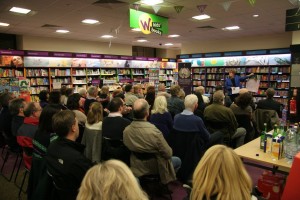 Launching INCEPTIO at Waterstones
The first two were launched at Waterstones Tunbridge Wells in 2013 and the third in London in 2014 at the University Women’s Club when broadcaster Sue Cook interviewed me. The first two books were joint runners up in Writing Magazine’s Self-Published Book of the Year award, the third and fourth both Editor’s Choices of the Historical Novel Society. The first three have qualified as B.R.A.G. Medallion honorees and the third was an Editor’s Choice in The Bookseller’s inaugural indie preview (“this classy thriller”).
More importantly, readers have been kind enough to say they enjoy reading the books – over 115 reviews alone for the first book on Amazon UK/US combined with a 4.4 average.
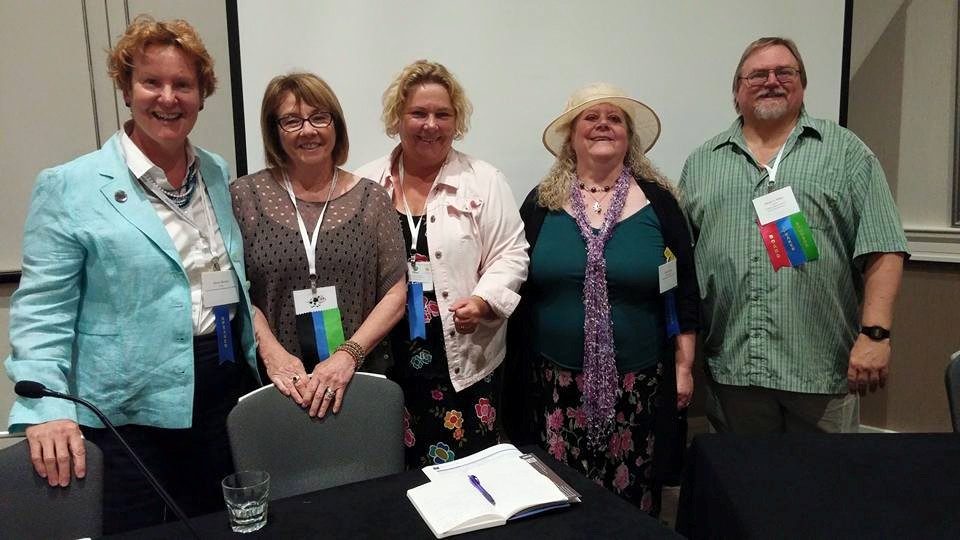
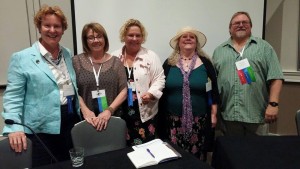 HNS Denver – the indie panel Now I give talks on writing, self-publishing, alternative and historical fiction at writers’ conferences (including the RNA), tutorial groups and associations, write a regular writing column in my local English language magazine and write occasionally for Writing Magazine. This year I chaired the HNS panel in Denver on indie publishing and recently returned from speaking on the same programme as Kate Mosse at arguably the biggest French litfest outside Paris. Not only that, I had the enormous pleasure of being able to pass on my experience to newer writers.
With reasonable UK/US sales behind me, I contacted Annette Crossland of A for Authors literary agency to represent me for the subsidiary and foreign rights for my books. The agency agreement was in my inbox five minutes after we finished our exploratory cal!
This is not to boast. This is to illustrate that serious indies put in the time and effort to achieve quality books and develop the skills of professional authors. But how to separate the dross from the diamonds? Several new quality organisations are appearing, such as IndieBRAG which rejects 90% of its applications, the HNS review system analyses new historical fiction and runs an annual prize. But books are about readers and many indies have enjoyed phenomenal best selling success because their well-written books are loved by their readers.
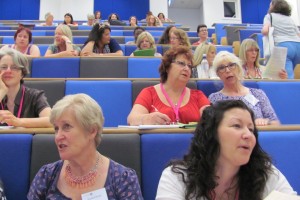 RNA Conference 2014 The RNA has struggled and debated internally about the self-published/independent question. As a volunteer run organisation, they understandably fear being overcome by a flood of sub-standard rubbish which they do not have the resources to check. The Association’s New Writers’ Scheme had become blocked up with authors who have released numbers of books which have sold very well, but who had not had anywhere else to go in the association. It is to these authors’ credit that they have stayed loyal to the RNA in these circumstances. The Association obviously still has a special attraction for them!
The criteria for independent membership of the RNA have evolved after much discussion and consultation. An author must have self published at least two works of romantic fiction over 30,000 words in length. At least one of those works must have achieved sales in excess of 1000 copies in a single 12 month period and/or generated income from sales over £500 in a single 12 month period. Some think these are conditions that some mainstream authors would struggle to achieve, but that’s a whole other argument! Perhaps the membership criteria will evolve…
Given the solid establishment of successful author-directed publishing in all its forms, i.e. where the author sells books, receives income and accolades and satisfies readers, it is indeed time the professional writing organisations embraced these writers. If they do not, organisations will not attract the next generation of writers, writers who now have a range of options to bring their work to market.
As a proud member of the RNA, a place where I have found friends, colleagues, support and champions and where I am able to give back to newer writers, I’m delighted to transfer from the New Writers’ Scheme to became the first ever Independent Author Member.
Alison Morton is the author of Roma Nova thrillers – INCEPTIO, CARINA (novella), PERFIDITAS, SUCCESSIO, AURELIA, NEXUS (novella), INSURRECTIO and RETALIO, and ROMA NOVA EXTRA, a collection of short stories. Audiobooks are available for four of the series.
Find out more about Roma Nova, its origins, stories and heroines and taste the latest contemporary thriller… Download ‘Welcome to Alison Morton’s Thriller Worlds’, a FREE eBook, as a thank you gift when you sign up to Alison’s monthly email newsletter. You’ll also be among the first to know about news and book progress before everybody else, and take part in giveaways.
If you enjoyed this post, do share it with your friends!
|
Subscribe to Blog via Email
Join 368 other subscribers.
Categories
Archive
|
 The authors – E. Knight, Ruth Downie, Stephanie Dray, Russell Whitfield, SJA Turney, Kate Quinn and Vicky Alvear Shecter – have all agreed to be guests on this blog over the next few weeks and give their personal take on writing a collaborative project. What a feast!