Thank you so much to readers who completed my recent survey asking them how they found books and interacted with authors.
It was a follow up to a similar survey two years ago triggered by pure curiosity combined with a sincere wish to give my readers what they want.
Headline results:
– Fewer people complete surveys!
– Subscribers read across a broad spectrum of genres
– Email is now the most important source for learning about new books
– Favourite price is now 99pence/cents but 3.99 is next favourite
– Facebook and Amazon have taken over the world
– You still like to hear about author’s current writing
– Nearly all of you have read INCEPTIO!
So what were the questions and answers?
First, I asked readers to list their favourite genres. I deliberately did not give readers a prompted choice; I wanted to see what they came up with! Although a huge range including paranormal, military fiction and alternative history, the favourites were the ‘usual suspects’! First preferred genre winners were mystery, historical fiction and joint third, thrillers and sci-fi. Second genre choice winners were thrillers (by a wide margin), fantasy and historical fiction. Third genre choices were wider with historical fiction first, then fantasy and thriller joint second place and horror and mystery tying for third place. Honourable mentions go to crime, suspense and military and naval history.
Next, “Where do you learn about new books?” I didn’t include print media, only digital and social media; this was entirely selfish as these are the principal channels for me,
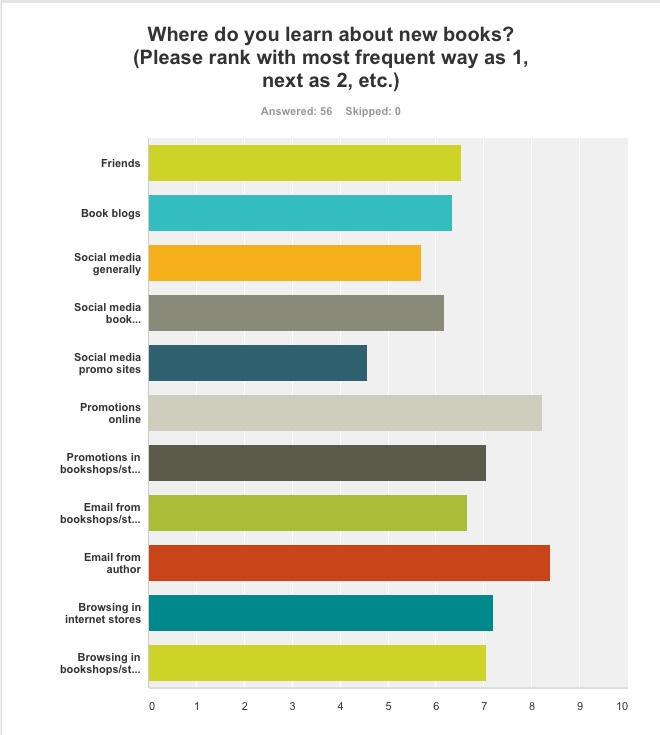
Email from author jumped from the 2015 level of least important source to top source in 2017! Promotions online and browsing internet stores came next was next with browsing in bookshops and email from bookshops/retailer next. Social media promo sites was bottom of the list Friends, book blogs and social media book clubs hovered between. In 2015 friends, book blogs, social media book groups/clubs, social media generally and browsing Internet stores were the main sources with email from the author as the least important. Browsing in bookshops/stores remains steady, but now seems slightly more important than recommendations from friends.
Virtually no change from 2015 about what attracts you to a book: cover, blurb, genre and known author, with the first very slightly more significant. I was again surprised by how evenly the top four elements scored.
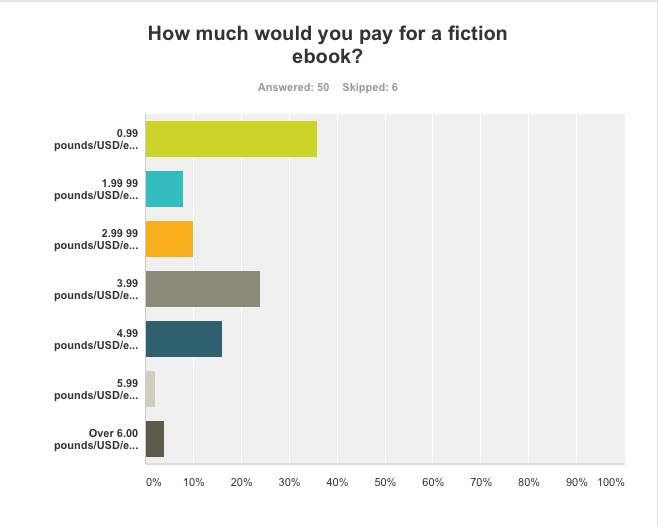
How much you would pay for an ebook has changed considerably! A third of you opted for 99 pence/cents, with a quarter paying 3.99 pounds/dollars/euros. The next price level was 4.99, then 2.99. This compares with the 2.99 to 4.99 range in 2015 when the 0.99 share was only 7%. Comments were interesting… Q4 Price.
Watching book trailers has slightly increased; around 27% of you watch occasionally to extremely often but non-watchers total 72%. This is a shame, as they give a little frisson of what to expect. Some respondents didn’t know they existed. I should obviously publicise mine more! Here’s a taster…
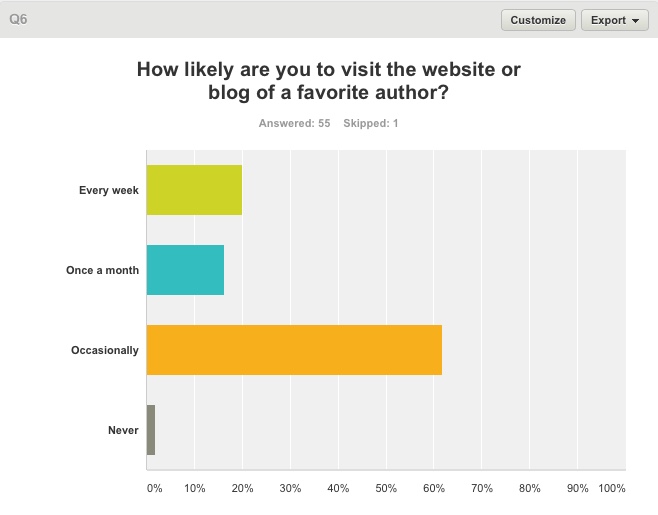
To blog or not to blog? In answer to Question 6, readers seem to visit author blog sites less often than writers might imagine (or wish!). But while ‘Occasionally’ is still the answer for most readers (over 60%), more of you are visiting regularly; once a month 16% (in 2015 12%) and every week 20% (in 2015 15%). Not missing news was a prominent reason in the comments. But perhaps we writers should write more words in our books than our blogs?
Question 7 about the Roma Nova books was selfish, but it was nice to see that 95% of you who responded had read INCEPTIO! Nearly half have gone onto PERFIDITAS (43%) with SUCCESSIO, AURELIA and INSURRECTIO well clear of 30%. Happy reading!
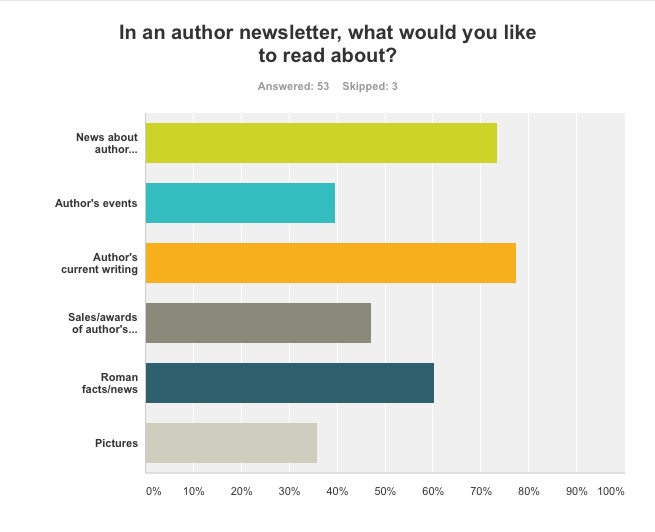
Once again, I was curious about what readers would like in a newsletter. In 2015, the top three items were: author’s current writing, news about the author and author’s events. This year, author’s current writing is just ahead of news about author, closely followed by Roman facts/news. Author’s events had slipped back behind sales/awards of author’s published books.
So where would readers leave a book review? I offered three of the ‘usual suspects’ – Amazon UK, Amazon US and Goodreads, plus ‘Other’ .As in 2015, Amazon is by far the most popular place to leave a review (61% for the Amazon UK and US combined, with mentions for Amazon Canada in the comments). Goodreads holds up at 20% of the replies. Authors, including me, know reviews are life-blood as they help a book’s journey in the competitive sea of publishing, but appreciate they take a little time to write.
Readers who do squeeze out some of their precious time to write some words should be awarded medals, and book bloggers made saints.
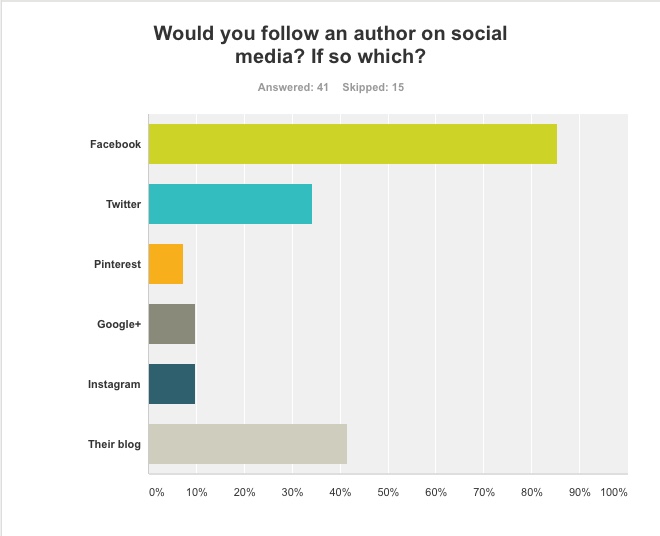
Would you follow an author on social media? Facebook hogs the limelight; 85% of you go there compared with 78% in 2015. Twitter is not so popular with you; just over a third follow authors on Twitter compared with two thirds of you in 2015. Half of you followed an author’s blog in 2015, but slightly down this time at 41%. From the comments, a surprising number of you don’t follow social media. I’m doubly honoured that you like receiving the Roma Nova newsletter!
How I did it
I’m not a professional marketer, so I kept it really simple. The readers were self-selecting from my own newsletter subscribers. I used a free version of Survey Monkey which allows 10 questions and 100 replies. Questions attracted a 90-97% response by people taking part. All links have been deleted in this report and the supporting lists. You can find the 2015 survey report here.
So, an interesting result! Did it surprise you?
Alison Morton is the author of Roma Nova thrillers INCEPTIO, PERFIDITAS, SUCCESSIO, AURELIA and INSURRECTIO. The sixth, RETALIO, will be published in Spring 2017. Audiobooks now available for the first four of the series
Find out more about Roma Nova, its origins, stories and heroines… Get INCEPTIO, the series starter, for FREE when you sign up to Alison’s free monthly email newsletter
If you enjoyed this post, do share it with your friends!
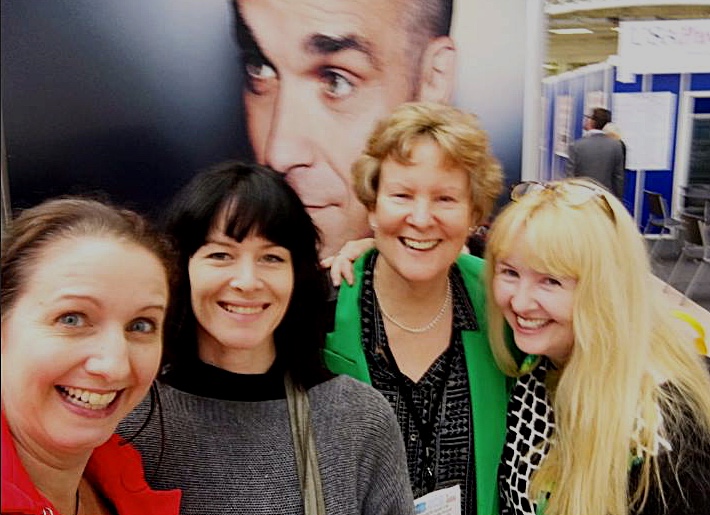 Left to right: ‘ALLis’ Joanna Penn, Jessica Bell, me, Rebecca Lang LBF 2017 Back in March 2010, I started this blog. Weeks later, in the Year of the #Ashtag, I descended on Earl’s Court for my very first London Book Fair. Breathless newbie that I was to this writing and publishing game, I was entranced.
I went there, with my planned schedule, aiming to get a feel of the industry, to increase my knowledge, to talk to people and, of course, to meet up with fellow Twitterers(sic!). All this I did. But I got a lot more.
Although it was a trade show, and it was obvious that many meetings were prescheduled business deal-makers, what struck me was the friendliness and willingness to talk of all those I got chatting to, whether on the stands or at the coffee shops.
As a newbie to this world, I am not yet cynical or blasé, so despite my sore feet I was very satisfied with my day out.
Last week I went to my fifth one: the other four were 2013; 2014(1), 2014(2), 2014(3); 2015(1), 2015(2), 2015(3); 2016 (INSURRECTIO launch!).
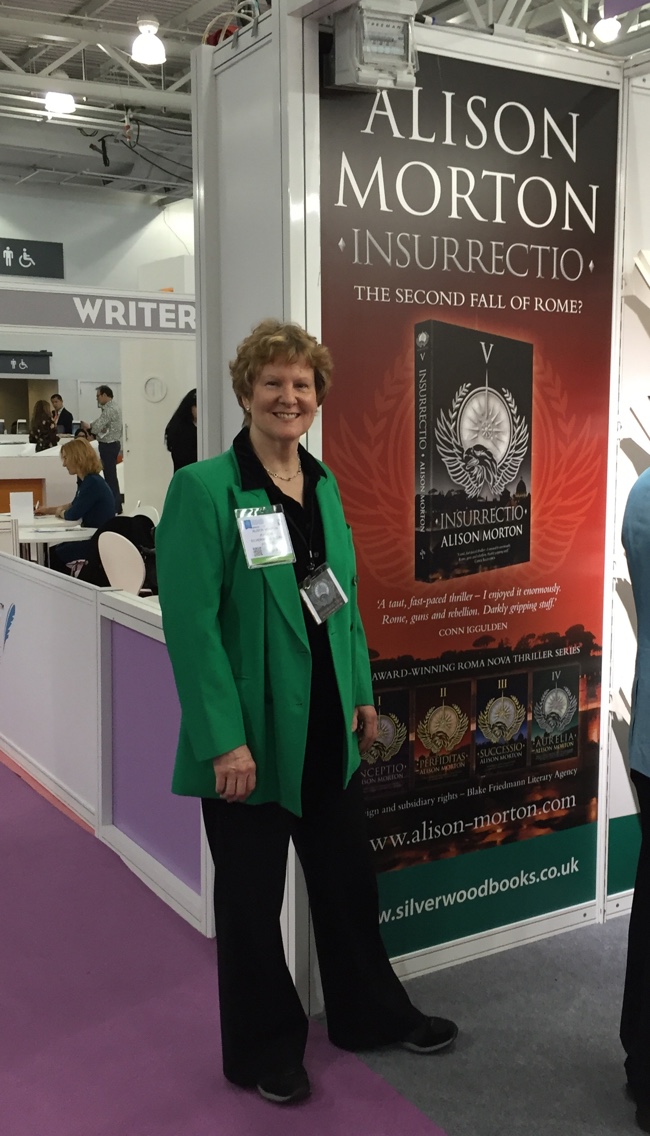
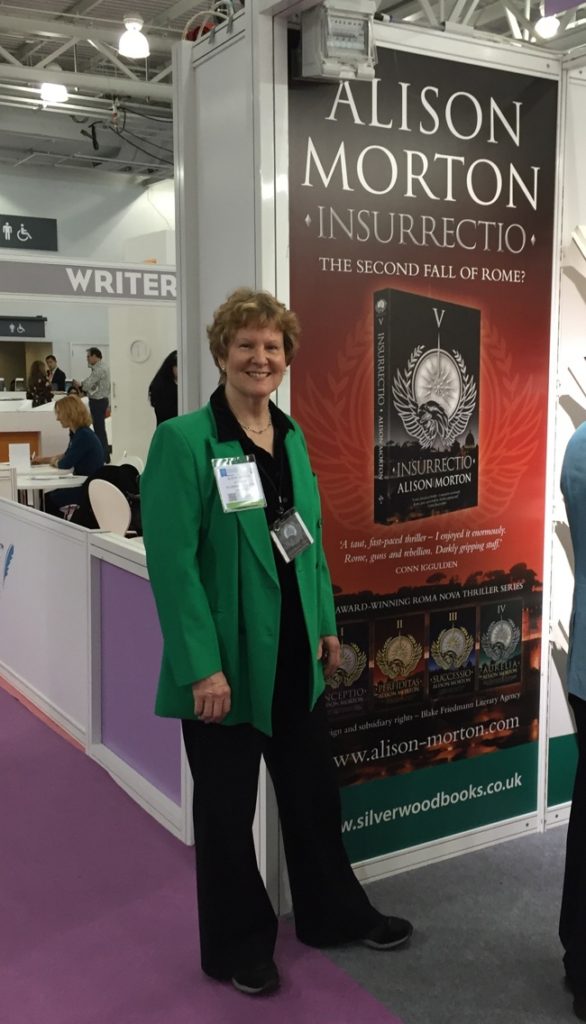 London Book Fair 2016 – INSURRECTIO launch! As I became more established on my publishing journey, I learnt increasingly more about publishing and marketing and knew more people – agents, authors, publishers, movers and shakers. My focus shifted from sitting in talks to talking to people.
This year, I went for three days and spent 90% of my time talking to others. What about? Anything and everything to do with books, concerns, opportunities, how to do things, other people to meet.
I did go to two useful talks: Region Spotlight: America and Get Over Yourself: There Is No Such Thing As “The Reader”
Region Spotlight: America
The panellists gave an overview of the American publishing industry, from what genres and authors are most popular through to how American publishing industry differs to that in the UK, and the process of book to film and TV in America.
Panellists: US literary agent Gail Hochman, President, Brandt & Hochman Literary Agents Ltd, and president of the AAR, the professional organisation of American literary agents; Philippa Donovan, Editor of her consultancy Smart Quill, and literary scout for Mad Rabbit, a producer in LA. Previously, she commissioned children’s and YA fiction for Egmont, and managed authors as a literary scout for Random House and literary agency A P Watt; Porter Anderson, Editor-in-Chief, Publishing Perspectives, online business magazine that covers the trends, people, and companies shaping the global book industry.
Chaired by Dr Alison Baverstock, Associate Professor Alison Baverstock PhD PFHEA co-founded MA Publishing at Kingston University.
So what did they say?
There had been slightly less growth in the book market, but audio was on the increase. Colouring in books had peaked, but scratch off books were the newest novelty! (Sigh) Romance, mystery, thriller and suspense dominated, literary fiction not so much. Bowker recorded 625,000 indie published books with ISBNs; they had no record of books published without, so that could be any figure you could think of. The chief problem in the US market was the ‘wall of content’, i.e. so many books published that it was very difficult to make yours heard about the roar. The trend now is for fewer books of higher quality; don’t bash out X books per year in order to keep shoving books in front of your audience. And don’t just self-publish – submit to mainstream publishers too.
Publicly, optimism level for the book market is 8/10; realistically 4-5/10. Only 3% of the US market was translated work, so UK authors had the advantage of English. For TV series which are hotter than feature films, companies are looking for UK books with excellent sales, said Philippa. For fiction, Gail said you didn’t need a huge social media platform, you just needed to grab an agent with your book. Great characters, a strong story, magic writing are essential and editors like books that would be popular for book clubs. The main takeaway was that all three stressed the importance of character; a strong protagonist would win through.
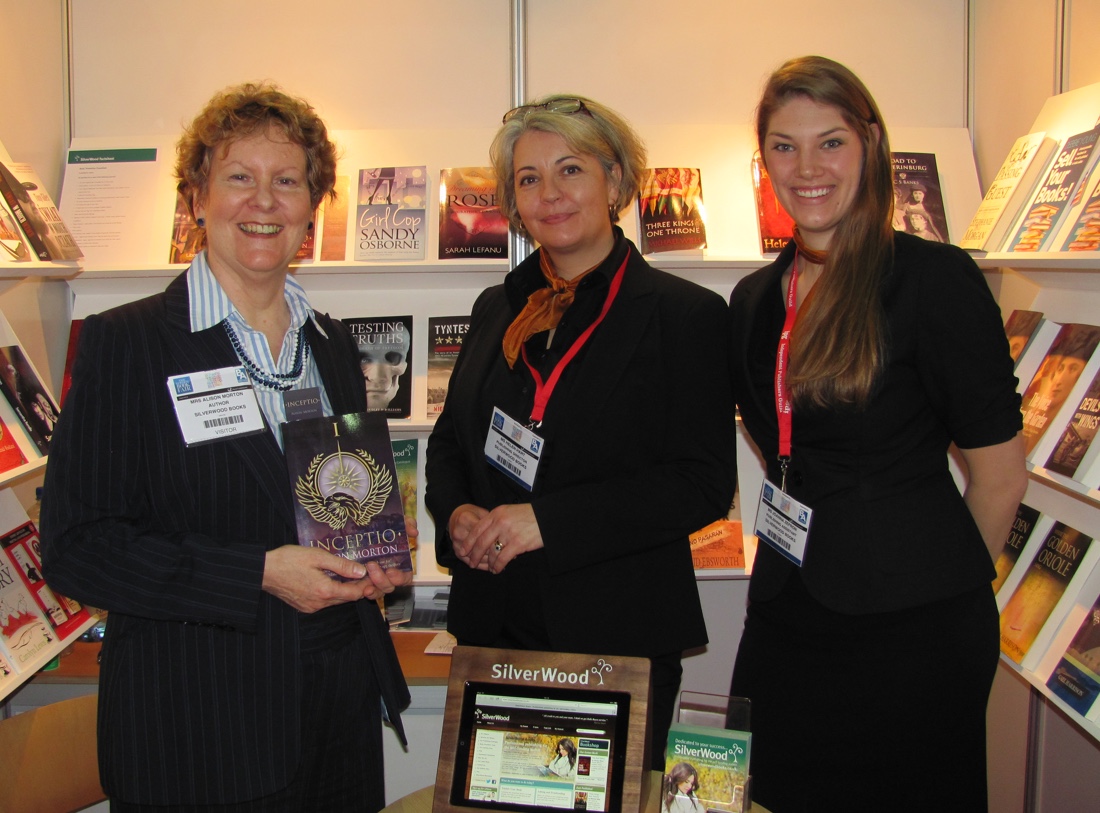
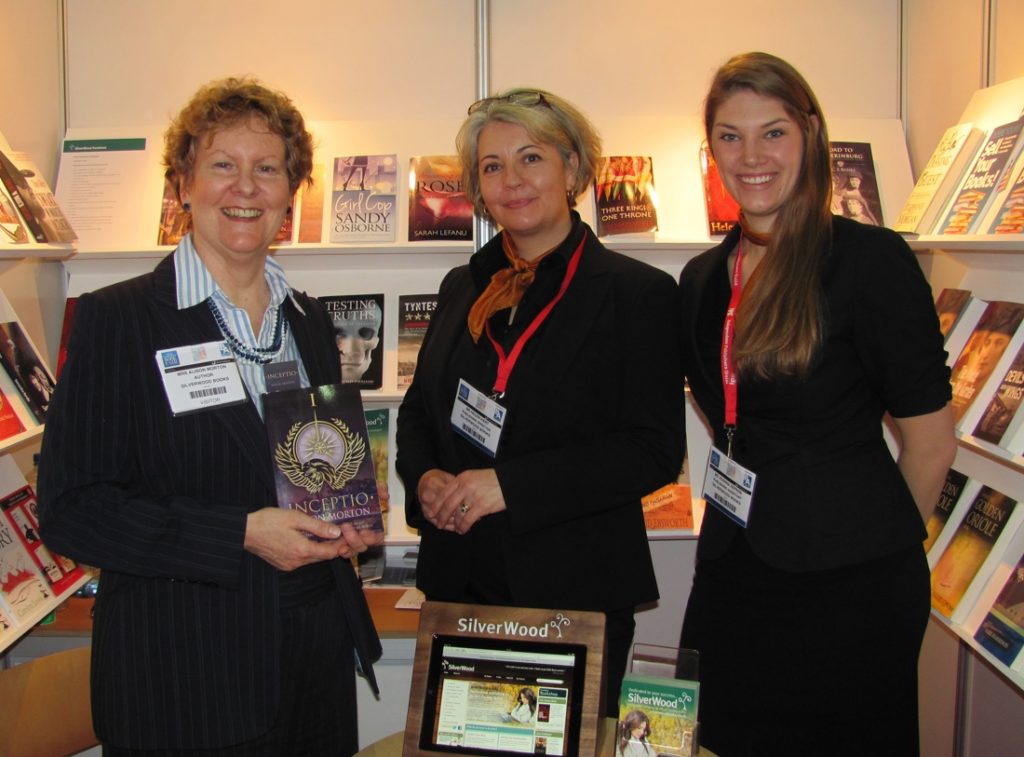 London Book Fair 2013 – on the SilverWood Books stand (not posed at all!)
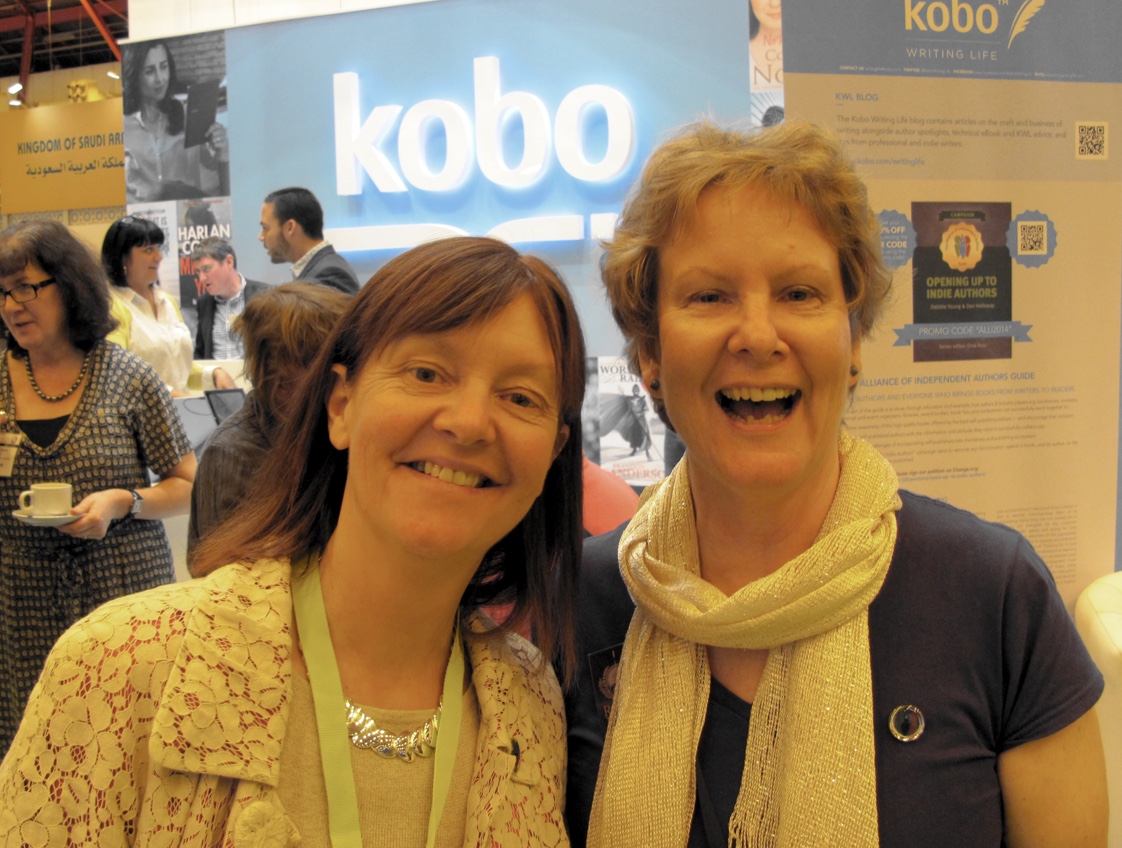
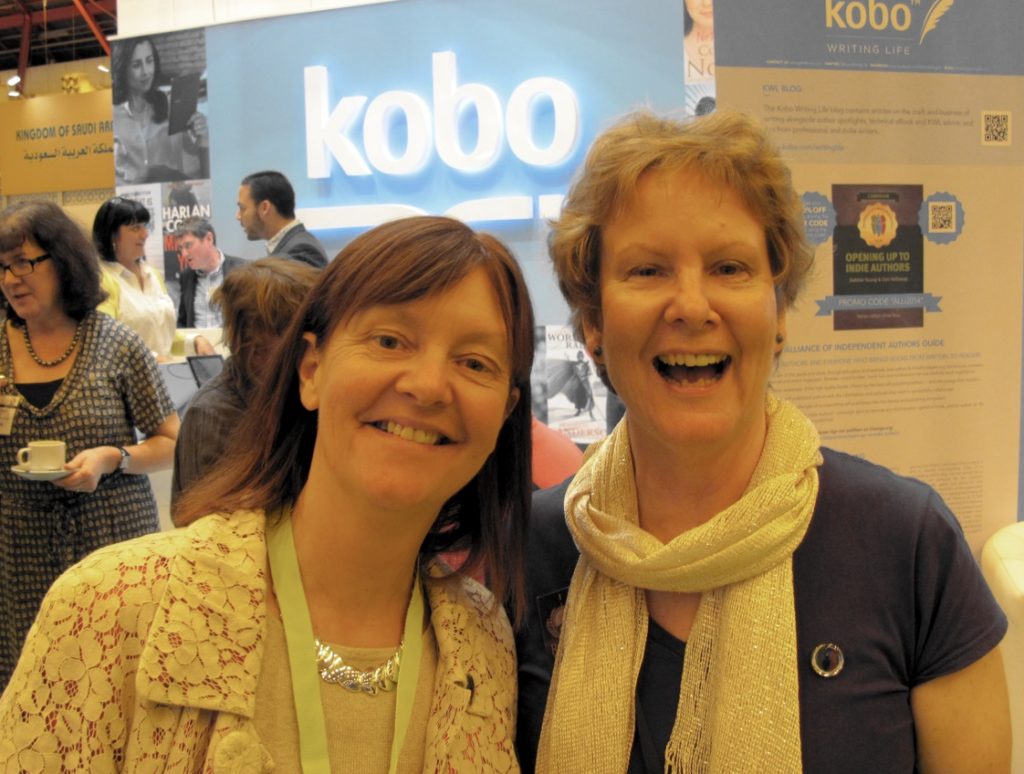 London Book Fair 2014 – with Orna Ross from the Alliance of Independent Authors Get over Yourself: There Is No Such Thing As “The Reader”
Panellists: James Spackman, freelance publisher and consultant, currently working with Profile Books; Katie Roden, publishing, marketing, branding and content strategy consultant and chaired by Peter McKay, Chief Executive of The Publishing Training Centre.
This was a session chiefly aimed at publishers, marketers and booksellers, but I wasn’t the only author in the room…
As an industry, we love books – and attach a huge amount of value to them. But if we think ‘the reader’ looks just like us, we fail to understand the preferences and behaviour of real people who might buy books, or of the way books exist in people’s lives. How they use them, talk about them, and the hard fact that for many they are a brief holiday distraction at best and a complete irrelevance at worst.
Insight teams tend to be the preserve of big conglomerates, and don’t always manage to overcome anti-research culture to become genuinely influential. Even those that have broken through focus solely on easy targets – the small minority of the population that already buy books regularly.
Book trade people have a weird and distorted view of books; objects, texts and cultural currency. The two lively presenters gave some hard truths with the aid of voxpops, then some practical ways to ‘get over ourselves’.
So what did they say?
Three clichés to challenge:
1. Everybody loves a bookshop
No, many people are intimidated by them, seeing them as alienating and not for them. If they do venture inside, they feel awkward as they don’t now where to look or how a bookshop ‘works’. Best quote: ‘It’s like going into B&Q if you’re not into DIY.‘
The solution? Go to ‘normal places’ like supermarkets, airport departure lounges and watch how people interact with books there. How do they behave around books? Join book groups. What do they choose and why? Associate with fans of the ideas behind the subject of the book. A gem: people hate a quote on the front of a book that doesn’t tell them what it’s about.
2. Mobile
It matters. Look at how our content, description and cover appear on mobile devices. Forty-two per cent of users only use apps for books that they already use for other purposes. Reading has a ‘boring’ image and is not seen for fun and leisure. You are up against Candy Crush which is highly addictive. Why? Also consider that not everybody reads fast, so short chapters are good. Read bestsellers to see why they are bestsellers. Consider seasonal hooks like snow on the cover when releasing a book in the second half of the year.
3. It isn’t normal to have a TBR (To Be Read pile). It’s niche.
Reading for some is a holiday activity. However, everybody cares about something. Watch out for news, features, programmes in print, other media, social media about the books you are publishing/selling. Where do people spend their hard earned cash? Look for stories about people and the events they go to.
Well, for an indie author that was interesting. Many of us talk direct to our readers now; we belong to interest groups online and in real life, we are aware of mobile, bookshops are generally not our main outlets. But before we become too cocky, we sometimes don’t break out of the zones where we operate and are in danger of becoming just as insular.
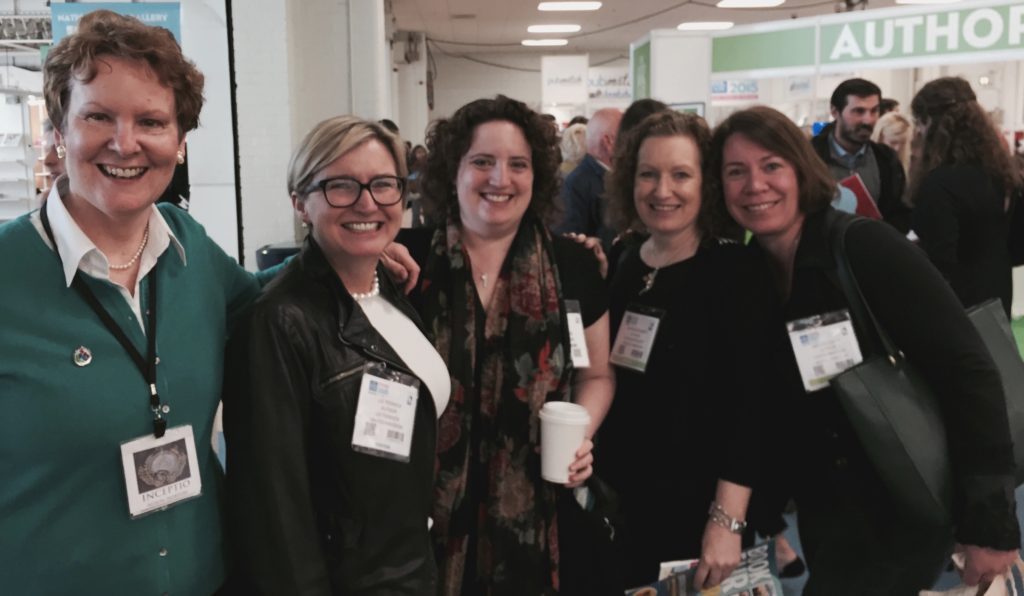 London Book Fair 2015 Fellow authors from the Romantic Novelists’ Association My take-home? However experienced you are, you can always learn something. I’m probably more ‘cynical and blasé’ than that newbie seven years ago, but ‘despite my sore feet I was very satisfied with my days out.’
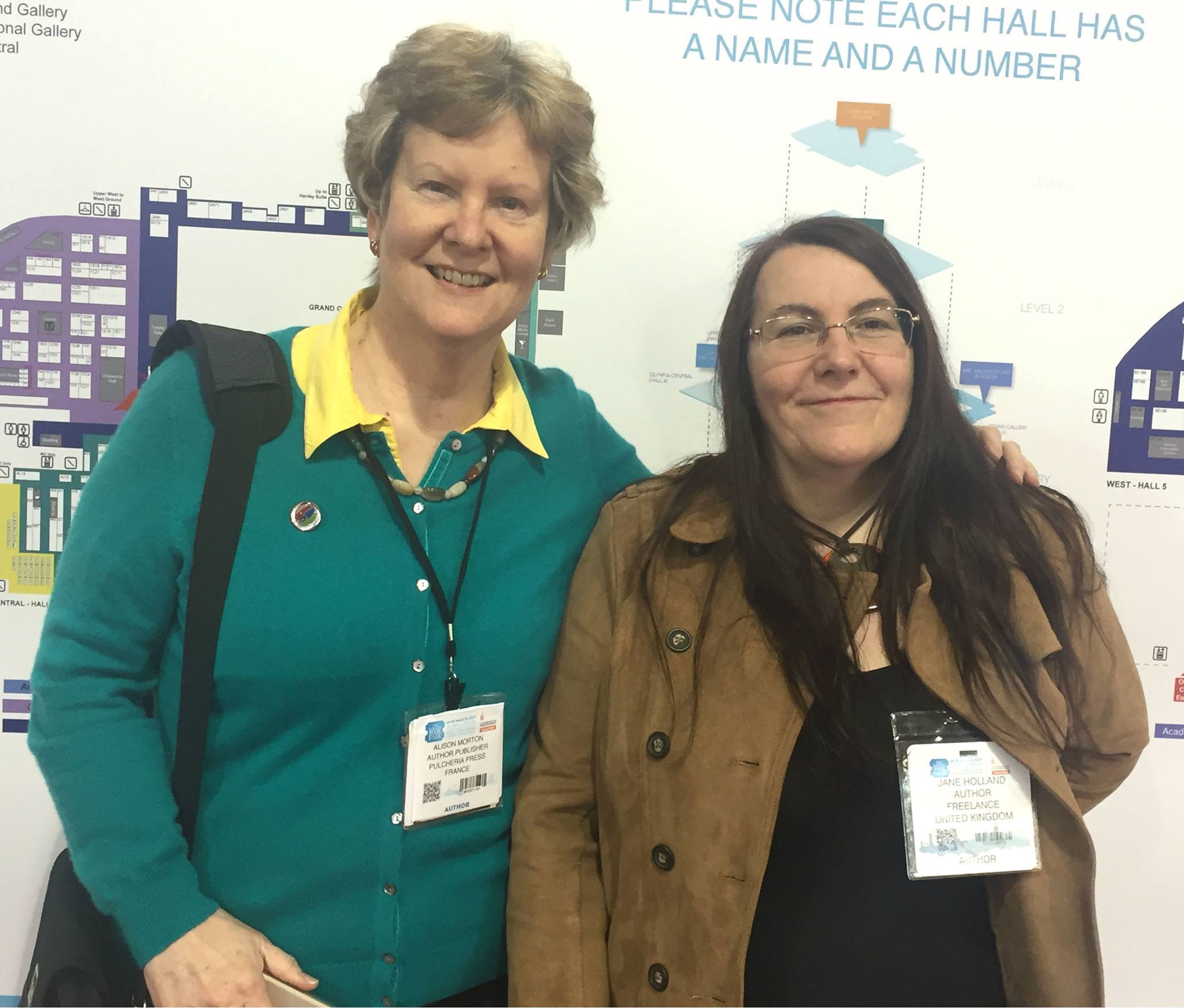
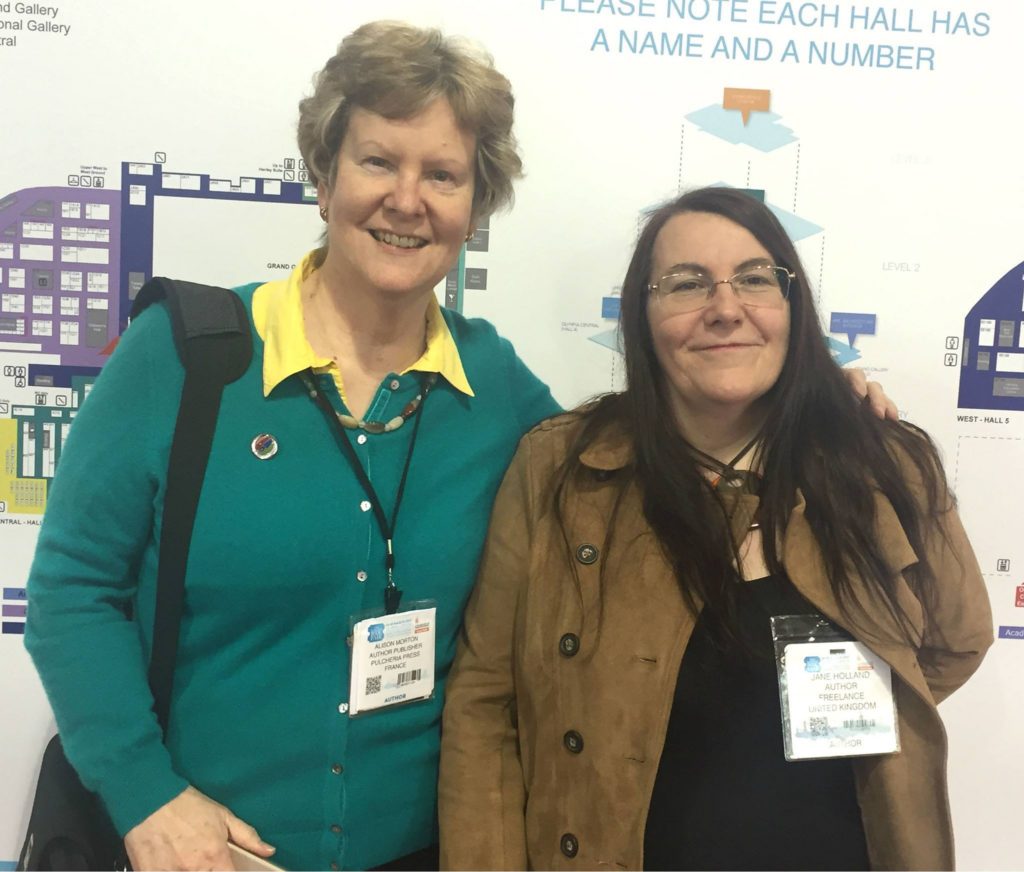 With the inimitable Jane Holland London Book Fair 2017 (Photo courtesy of Anita Chapman, neetsmarketing.com) Alison Morton is the author of Roma Nova thrillers INCEPTIO, PERFIDITAS, SUCCESSIO, AURELIA and INSURRECTIO. The sixth, RETALIO, will be published in Spring 2017. Audiobooks now available for the first four of the series
Find out more about Roma Nova, its origins, stories and heroines… Get INCEPTIO, the series starter, for FREE when you sign up to Alison’s free monthly email newsletter
If you enjoyed this post, do share it with your friends!
 Authors often talk about the heroines in their books. You may have caught me mentioning Carina and Aurelia from time to time. (Whistles in the air) But a conversation about heroines and their heroes led to something else… Authors often talk about the heroines in their books. You may have caught me mentioning Carina and Aurelia from time to time. (Whistles in the air) But a conversation about heroines and their heroes led to something else…
This post was inspired by author Helen Hollick. It’s mainly in her voice with bits and pieces from me and my writing friend Anna Belfrage. Over to Helen…
“Author Anna Belfrage, during a recent conversation mentioned a thought about the real heroines behind the fictional heroines. I wondered if heroes should also be included, but March is Women’s History Month, so let’s stick to the ladies here. (We can spotlight the men another time to balance the books.)
In this instance, Anna was referring to the writer as the heroine – the author, the person tapping away at a keyboard or scribbling with a pen on paper ( ).
The fictional heroine usually goes through hell and back in a story, or at least some sort of trauma or disaster or romantic upheaval, or complication or… well, you get the picture. But what about the writer who is creating that character, that scene, that story? Is it a case of sitting down at a desk from 9-5 Monday to Friday, tapping out a few thousand words a day, Other Half supplying a cup of tea/coffee/wine/gin on the hour every hour? Those several thousand words flowing freely, the plot flashing along, scene after scene with no wavering? Novel finished, a dutiful re-write, check for the occasional missed blooper, then off to the editor for a quick once-over?
Oh, I wish!
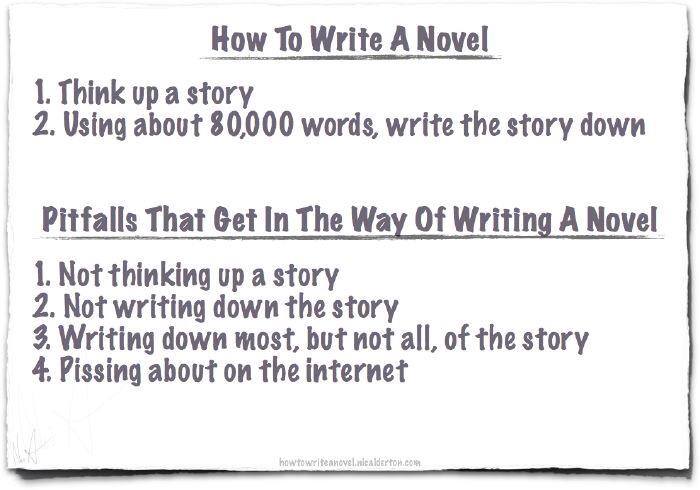 Courtesy of Helen Hollick The only bit of the above that is mildly true for me personally is the tea/coffee appearing a couple of times a day in between countless re-runs of Westerns on the TV which my husband watches with avid fascination, apparently completely unaware that he watched the same John Wayne/Jimmy Stewart et al movie the day before. And the day before that.
Meanwhile, I struggle during the dark, miserable days of winter. Even the effort to get out of bed some dank, dark, damp mornings is hard work for those of us who suffer from S.A.D. (Seasonal Affective Disorder – basically, a desire to hibernate during winter.) To be creative, to find the words to write when I can’t even remember the cat’s name (I am not joking!) is hard work.
Then there is the research, particularly for historical fiction writers who need to know the facts of a period or event before they can even start writing Chapter One. All genres need a certain amount of research, even fantasy and science fiction – possibly even more so, because to make the unbelievable believable the facts have to be correct, otherwise all the believability goes out the window.
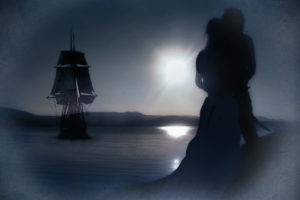 For writers, meeting our new characters – male or female – is not always a walk in the park, although for me, I did meet my pirate hero, Jesamiah Acorne, on a drizzly-day Dorset beach. Long story, cut short: I was walking on the beach thinking up ideas for Sea Witch. Looked up and saw a vision of Jesamiah. Might have been my imagination, might have been a spirit from the past – no matter, I saw him. In full pirate regalia. And immediately fell in love. For writers, meeting our new characters – male or female – is not always a walk in the park, although for me, I did meet my pirate hero, Jesamiah Acorne, on a drizzly-day Dorset beach. Long story, cut short: I was walking on the beach thinking up ideas for Sea Witch. Looked up and saw a vision of Jesamiah. Might have been my imagination, might have been a spirit from the past – no matter, I saw him. In full pirate regalia. And immediately fell in love.
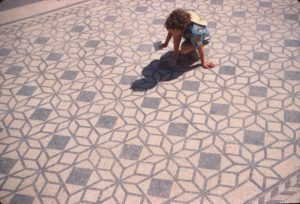 Alison says hers have been swishing around in her head for decades ever since she trod on a Roman mosaic floor at age eleven! Firmly gripped by the Romans, she started wondering what the world would have been like if a tiny part of Rome had survived… Alison says hers have been swishing around in her head for decades ever since she trod on a Roman mosaic floor at age eleven! Firmly gripped by the Romans, she started wondering what the world would have been like if a tiny part of Rome had survived…
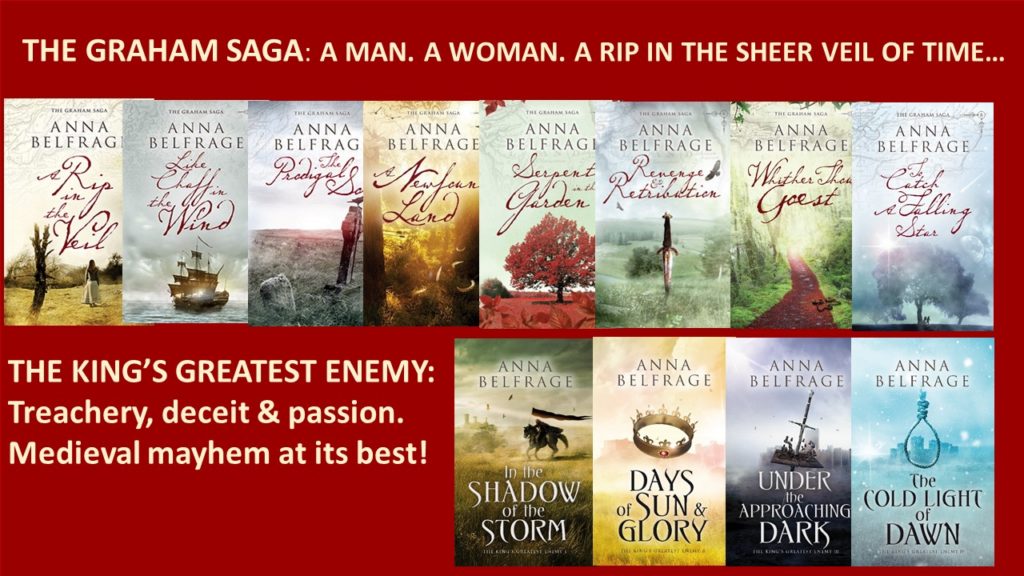
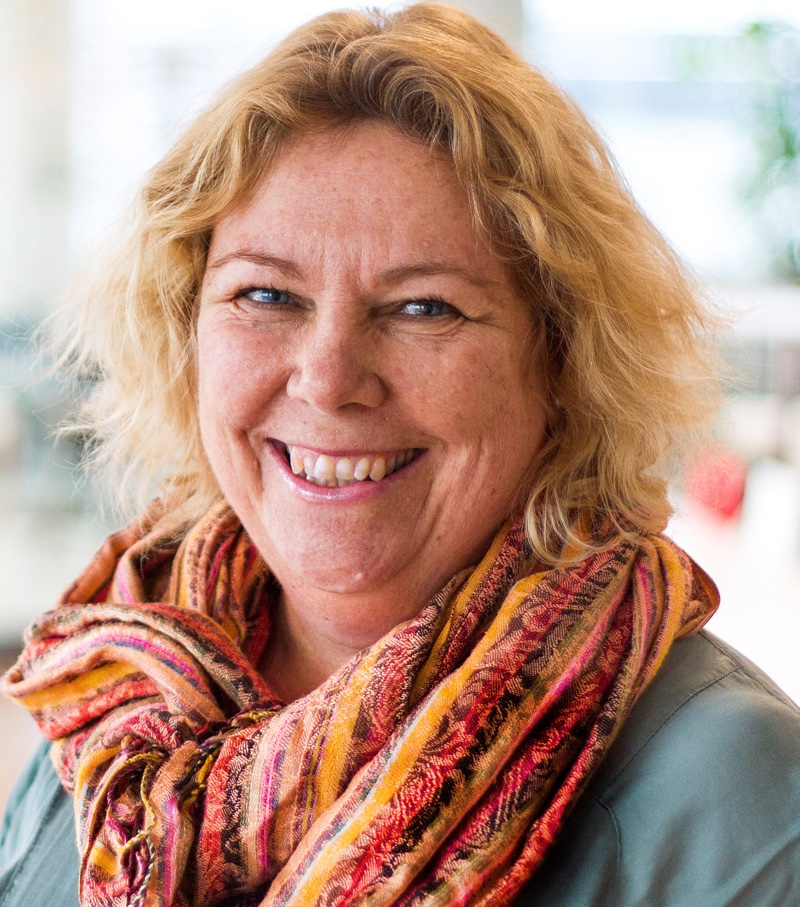 As for Anna, she blames it all on her husband. It was all because of his family history, which involved fleeing Scotland in 1624 due to religious persecution. She started reading up on the 17th century and fell in love. (Why the 17th century? A declaration of love.) One day, Matthew Graham stepped out of her murky imagination and demanded she tell his story, which she has done, over several books. As for Anna, she blames it all on her husband. It was all because of his family history, which involved fleeing Scotland in 1624 due to religious persecution. She started reading up on the 17th century and fell in love. (Why the 17th century? A declaration of love.) One day, Matthew Graham stepped out of her murky imagination and demanded she tell his story, which she has done, over several books.
Our characters get under our skin, into our hearts, minds, lives and very being. When it is time to finish the book, or a series – oh, the heartache of saying goodbye and letting them go! To create believable characters, to bring them alive, to make them look, feel, behave, sound real, to do real (even if they are impossibly over-the-top real) things takes dedication, skill, determination and courage.
Yes. Courage.
Writing can be a hard taskmistress. We slog away in our studies, corner of a room, spare bedroom or wherever, trying to get a paragraph – a sentence – right. We edit, re-edit and edit again and again. We spend hours writing a scene, then delete it because it isn’t good enough. I have deleted entire chapters. We wake up with our characters, walk, live, play, think of, go to bed with them (No, not that sort of ‘go to bed’!) They are there with us 24/7 because if these fictional people are real to us, then they will become as real to our readers. In theory.
I am not being sexist here, but I do think women writers have a tougher time of it than do the men. Admittedly, I am talking in general here, but many women writers already have a full-time 24/7 job of bringing up children and organising the family; at least this was so thirty years ago when I gave up the ‘hobby’ of scribbling my ideas and got on with attempting to do it properly with the end goal of being published in mind. Often it is the woman who gets the kids off to school, does the housework, the shopping, the laundry, goes to her own job, collects the kids from school, cooks the dinner, gets the kids to bed… We grab coffee breaks or the bliss of a quiet hour in the evening to get that next paragraph written. I’m not saying that the blokes in between work and chores also have to snatch those golden moments where they can sit and write, but I’d wager that many an established male writer wanders off to his study in the morning, saunters out at lunchtime, strolls back to his desk to emerge around six-ish to watch TV. Lunch, dinner, clean shirts and tidy house happening via the Magic House Fairy.
At least, now, women writers can create our stories under our own name. How many of our great female writers from the past had to invent a male pseudonym to be heard and published? I think the term ‘heroine’ definitely applies to these brave and determined ladies of the past.
So why do we do it? Why do we spend hours doing this darn silly job of writing fiction? It’s not for the money that’s for sure. Very few writers outside the top listers make enough to equal a suitable annual wage. So why?
 Julian Alps, Slovenia by Petar Milošević (Creative Commons BY-SA 3.0) Ever heard the answer to a question put to Sir Edmund Hilary when he had successfully climbed Everest in 1953?
“Why did you want to climb it?”
His answer? “Because it’s there.”
Well, for us, for fiction authors, we write the words because they are not there…”
————-
Thank you, Helen, for this wonderful post. Um, please keep writing!
To celebrate Women’s History Month, and to show you what we actually produce, I’m giving away a signed paperback copy of INSURRECTIO, featuring the ever brave (and ever fallible) Aurelia Mitela as she tries to battle the rising tide of a populist demagogue. Of course, the struggle is always personal as well as political…
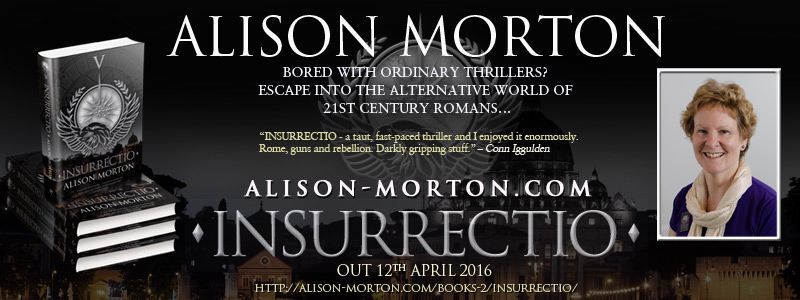 INSURRECTIO giveaway Just leave a comment below by 30 March.
The draw will be made on 31 March.
Plus, plus, plus: Helen and Anna are also offering a giveaway of one of their books to celebrate this special month! Why not pop over to Helen‘s and Anna‘s sites to discover what they are giving away.
Helen’a books:
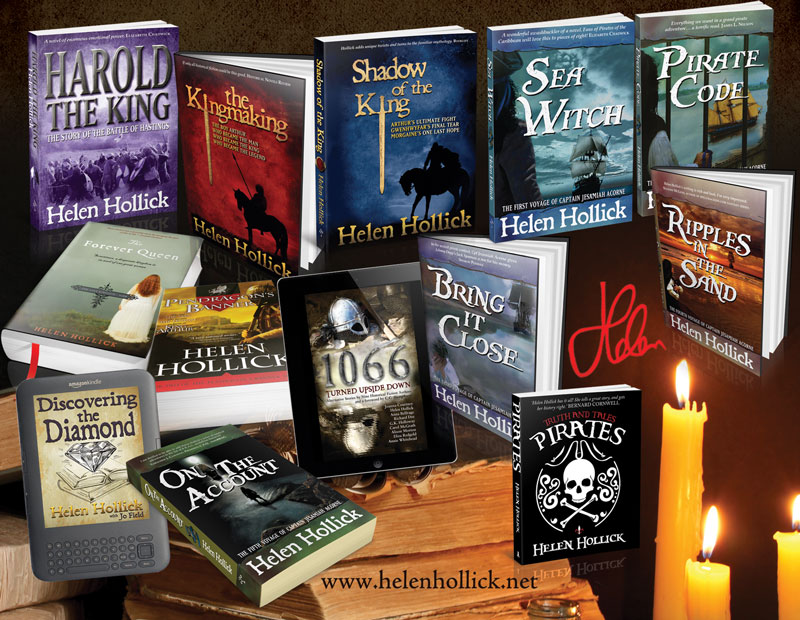
Anna’s books:
The Graham Saga: http://myBook.to/TGS
The King’s Greatest Enemy: http://myBook.to/TKGE
Alison Morton is the author of Roma Nova thrillers INCEPTIO, PERFIDITAS, SUCCESSIO, AURELIA and INSURRECTIO. The sixth, RETALIO, will be published in Spring 2017. Audiobooks now available for the first four of the series
Find out more about Roma Nova, its origins, stories and heroines… Get INCEPTIO, the series starter, for FREE when you sign up to Alison’s free monthly email newsletter
If you enjoyed this post, do share it with your friends!
 Fed with with the news and weather? Low energy and bored with most things? Eating more chocolate? Even though brilliant December days lighten the feeling, many of us dislike that grey dull period stretching from dismal November to that liver-yellow time in February and view with relief the first flower burst in spring. Fed with with the news and weather? Low energy and bored with most things? Eating more chocolate? Even though brilliant December days lighten the feeling, many of us dislike that grey dull period stretching from dismal November to that liver-yellow time in February and view with relief the first flower burst in spring.
But for a small proportion of us, it takes over our lives. We actively dread the shortening of the days. Anxious eyes note the day length on the clock each evening. Cosy evenings around an open fire don’t do it for us. Winter means darkness, the withdrawal of life’s light, a shutting down of our being. Christmas is a brief respite; a sugar, carbohydrate and alcohol push with family and friends, but it’s soon gone. Valentine’s Day passes by in a distant drift; it’s happening out there, not inside your own world.
If this sounds self-pitying and sentimental, it’s a taste of what really happens. We’re not looking at winter blues, but at a blight on daily life for several months of the year. You lose direction, everyday tasks become onerous and complicated, even simple regular self-care and time slips out of your grasp. You almost can’t be bothered to make a cup of tea. For some, including me, eyesight deteriorates temporarily. Functioning on two out of four pistons is quite a good analogy.
The renowned Mayo Clinic lists the symptoms of seasonal affective disorder more objectively:
Symptoms specific to winter-onset SAD, sometimes called winter depression, may include:
- Irritability
- Tiredness or low energy
- Problems getting along with other people
- Hypersensitivity to rejection
- Heavy, “leaden” feeling in the arms or legs
- Oversleeping
- Appetite changes, especially a craving for foods high in carbohydrates
- Weight gain
What does this mean as a writer?
The first sign is that you lack the natural obsession to pour out words onto the keyboard. Your usually crap typing deteriorates to unbelievably bad levels. You miss things out, you forget how to spell. You forget to note down research sources and you even lose the plot – literally. You forget to answer emails and miss blogpost deadlines. And you fret about it, castigating yourself. That is, when it’s all passing you by as just too much effort.
Any day when you see poor sales adds to the growing black dog feeling as we lurch towards mid-winter. You become locked into your own world of failing energy. Your nearest and dearest see a moody, unsmiling person who has lost her enthusiasm for anything and gained multiple sensitivity antennae. February is worst as you’ve had months of light deterioration. And both my (thankfully short) bouts of clinical depression began in late January.
Why?
Why does this happen to otherwise energetic, well-motivated and cheery people? Nobody really knows! It’s probably one of those Stone Age things when sensible people retreated into the cave for winter hibernation.
Three things may play a role:
- Your biological clock (circadian rhythm). The reduced level of sunlight may disrupt your body’s internal clock and lead to feelings of depression.
- Serotonin levels. A drop in serotonin, a brain chemical (neurotransmitter) that affects mood and which may trigger depression.
- Melatonin levels. The change in season can disrupt the balance of the body’s level of melatonin, which plays a role in sleep patterns and mood.
Seasonal affective disorder (SAD) is considered a subtype of major depression. Not being dramatic, you should take SAD signs and symptoms seriously. As with other types of depression, SAD can get worse and lead to even more serious problems if it’s not treated. These can include social withdrawal, school or work problems, substance abuse or even suicidal thoughts or behaviour.
So what can we do about it?
The first thing is recognising it for what is. It’s not you losing your marbles or at best feeling a bit down on every dull day. Obviously, it’s best to see your doctor about this, but I’ve found these ways of coping.
- Getting outside even on the grottiest winter day. If it’s one of those crisp sunny days, then that’s an enormous bonus. Find somewhere sheltered to sit and lap up the sun.
- Exercise (I know!) But if you can go for a walk as well on that sunny day you can almost feel normal. And even indoor exercise can lift your mood, even temporarily. And all that sweating, breathlessness and protesting muscles give you something different to moan about. More seriously, it can depress your ravenous appetite and keep weight gain down.
- Indoors, work near a window, grab the sunniest room in the house for your writing room.
- Lightbox. Now the good ones are not cheap, but mine works for me, especially if I use it in the first hours of the morning, so I regard it as an investment that has changed my life.
- Attitude and self-discipline (also known as grit). These are the hardest; true uphill work. You have to make your brain take control. If you can set some goals/write a to-do list, establish some kind of structure to your day, even set events in your diary, it helps keep the muddle away.
- Self care; rest, keeping warm, tea, vitamins, yoga, balanced meals at regular times, days out. Have a long, hot bath – great for both warmth and relaxation.
- Don’t nag yourself and don’t listen to any horrible little imagined voices saying words like ‘wimp’, ‘pathetic’, ‘ought’, ‘should’, ‘lazy’ or similar.
- Visualise: I know, it’s a bit touchy-feely, but imagine (or remember) lying somewhere pleasant soaking up so much sun that it seems to get right into your bones. Twenty concentrated minutes of that can stimulate the same responses in your body as the real thing. (Apparently it also works for chocolate cravings.) Well, it seems to make me feel a little less down.
 I’m not a doctor, so please don’t take what I do as any kind of treatment. I’ve just learnt over the years that these things help me. I’m not a doctor, so please don’t take what I do as any kind of treatment. I’ve just learnt over the years that these things help me.
Update 2021: These days I’ve added a daily Vitamin D tablet into the mix. Even if it just produces expensive wee, I feel it might do me some good.
Update January 2023: My new general practitioner gave me 6 months’ worth of concentrated Vitamin D taken in a single dose each end of month. Seems a bit sledgehammer approach, but I’m not arguing.
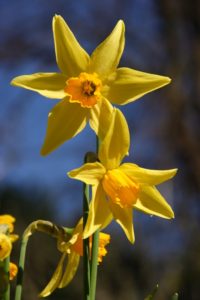
But nothing makes me feel happier than when that first daffodil bursts out of its green sheath into yellow glory.
The long days will have returned.
Alison Morton is the author of Roma Nova thrillers – INCEPTIO, CARINA (novella), PERFIDITAS, SUCCESSIO, AURELIA, NEXUS (novella), INSURRECTIO and RETALIO, and ROMA NOVA EXTRA, a collection of short stories. Audiobooks are available for four of the series.Double Identity, a contemporary conspiracy, starts a new series of thrillers. JULIA PRIMA, a new Roma Nova story set in the late 4th century, is now out.
Find out more about Roma Nova, its origins, stories and heroines and taste world the latest contemporary thriller Double Identity… Download ‘Welcome to Alison Morton’s Thriller Worlds’, a FREE eBook, as a thank you gift when you sign up to Alison’s monthly email update. You’ll also be among the first to know about news and book progress before everybody else, and take part in giveaways.
If you enjoyed this post, do share it with your friends!
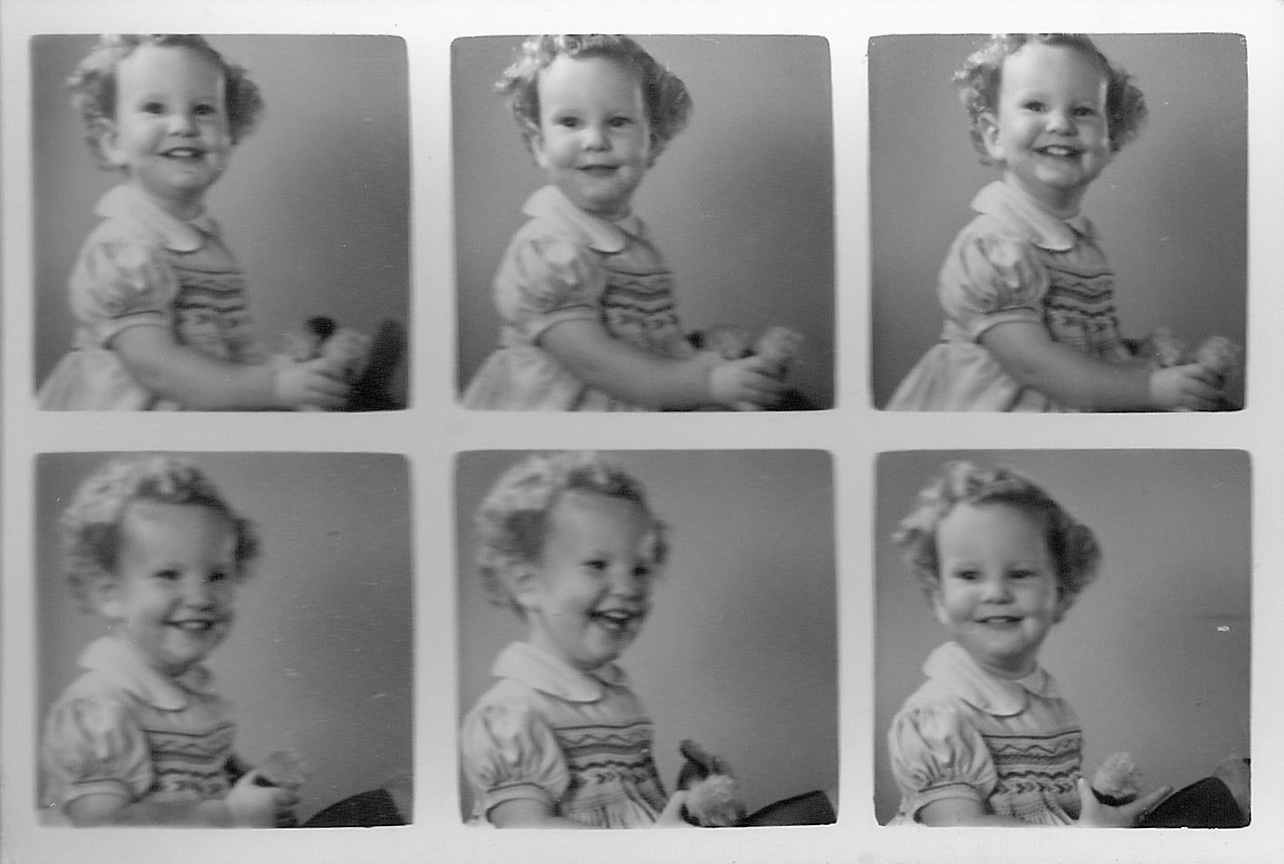
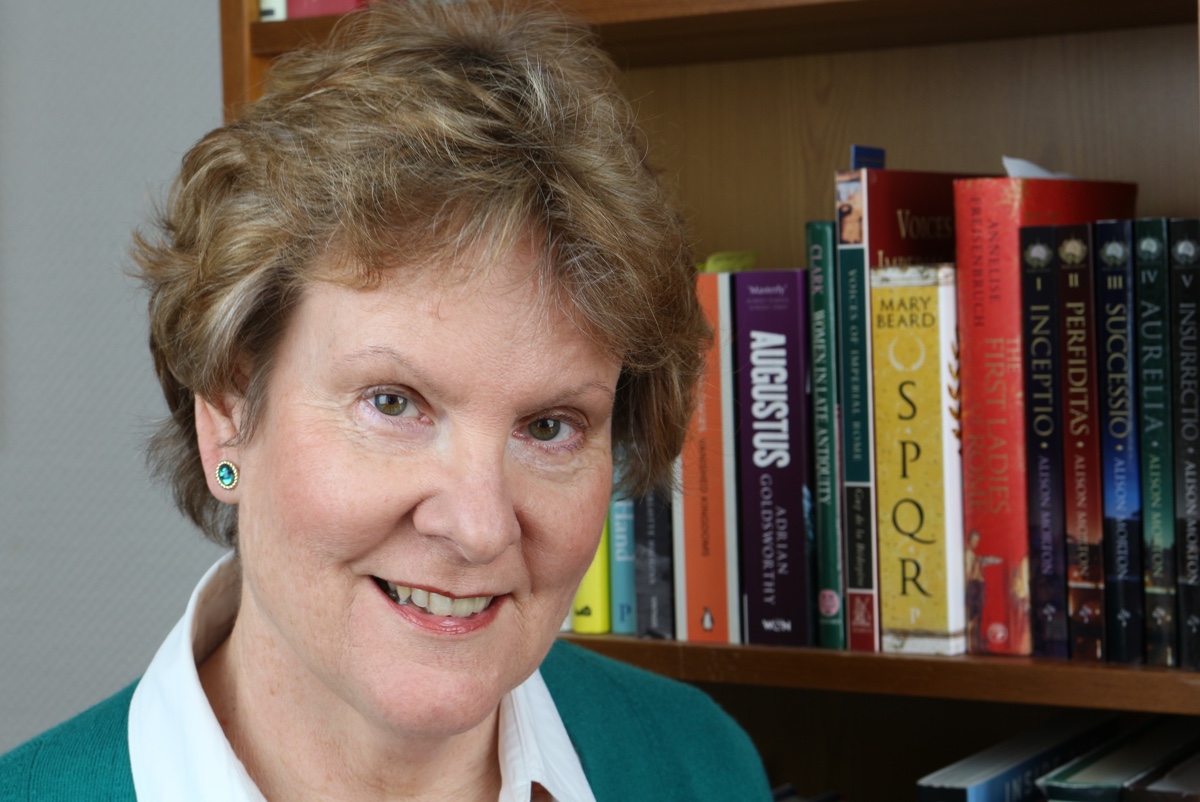
Could you answer 30 personal questions in a public forum? And would you want to? There’s a quiz going round Facebook but just to be different, I thought I’d answer them here!
1. Who are you named after? My first name, nobody, but my second name ‘Mary’ pops up frequently in my mother’s family.

2. Last time you cried? When our cat died.
3. Do you like your handwriting? I think it’s characterful. Everybody else thinks it’s the perfect inline cypher system.
4. What is your favorite lunch? Anything seafood! I also like salad of any kind.
5. Do you have any kids? One son; it’s his thirtieth birthday today!
6. Do you use sarcasm? Moi?
7. Do you still have your tonsils? Nope, nor my adenoids.
8. Would you bungee jump? Probably a bit late – I have a back problem. Possibly when younger…
9. What is your favorite cereal? My own made up muesli.
10. Do you untie your shoes when you take them off? Yes, anything else is a lack of moral fibre. 😉
11. Do you think you are strong? Physically, less than I used to be. Mentally and emotionally, as strong as ever.
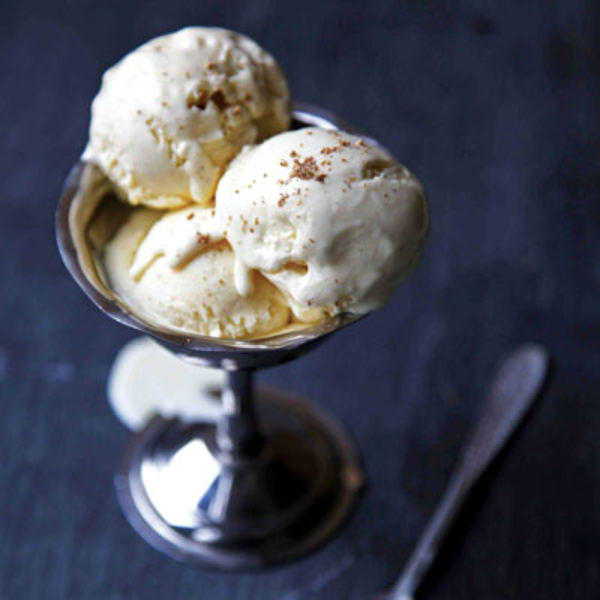
12. What is your favorite ice cream? Vanilla, preferably with some nutmeg and cinnamon.
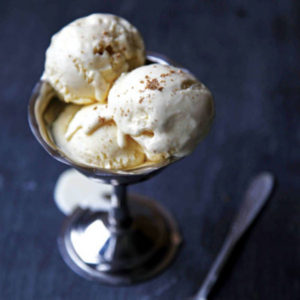 Courtesy of http://www.saveur.com/best-ice-cream-recipes 13. What is the first thing you notice about someone? Their face.
14. Football or Baseball? Neither – couldn’t care less.
15. What is the least favourite thing you like about yourself? Can’t think of anything in particular, but I wouldn’t mind losing 10 kgs.
16. What colour trousers are you wearing? Black
17. Last thing you ate? Greek yoghurt
18. What are you listening to right now? My husband talking on Skype with his mates.
19. If you were a crayon, what color would you be? Red (or possibly royal blue)
20. What’s your favourite smell? Vanilla
21. Who was the last person you spoke to on the phone? The coordinator of my writing group
22. Favorite sport to watch on TV? None
23. Hair color? Good question!
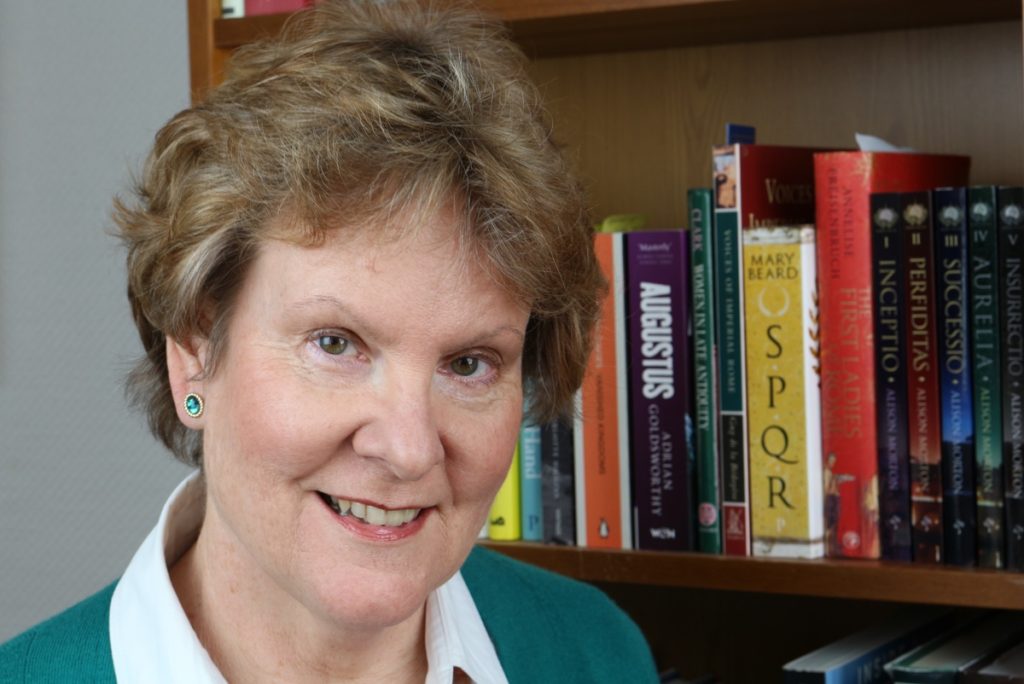
24. Eye colour? Hazel
25. Favorite food to eat? Chocolate (Of course, it’s a food!)
26. Scary movies or happy? Happy, but it has to be a strong story.
27. Last movie you watched? Sully
28. What colour shirt are you wearing? Black with a white pointillé pattern.
29. Favourite holiday? Warm, good food and some interesting Roman ruins.
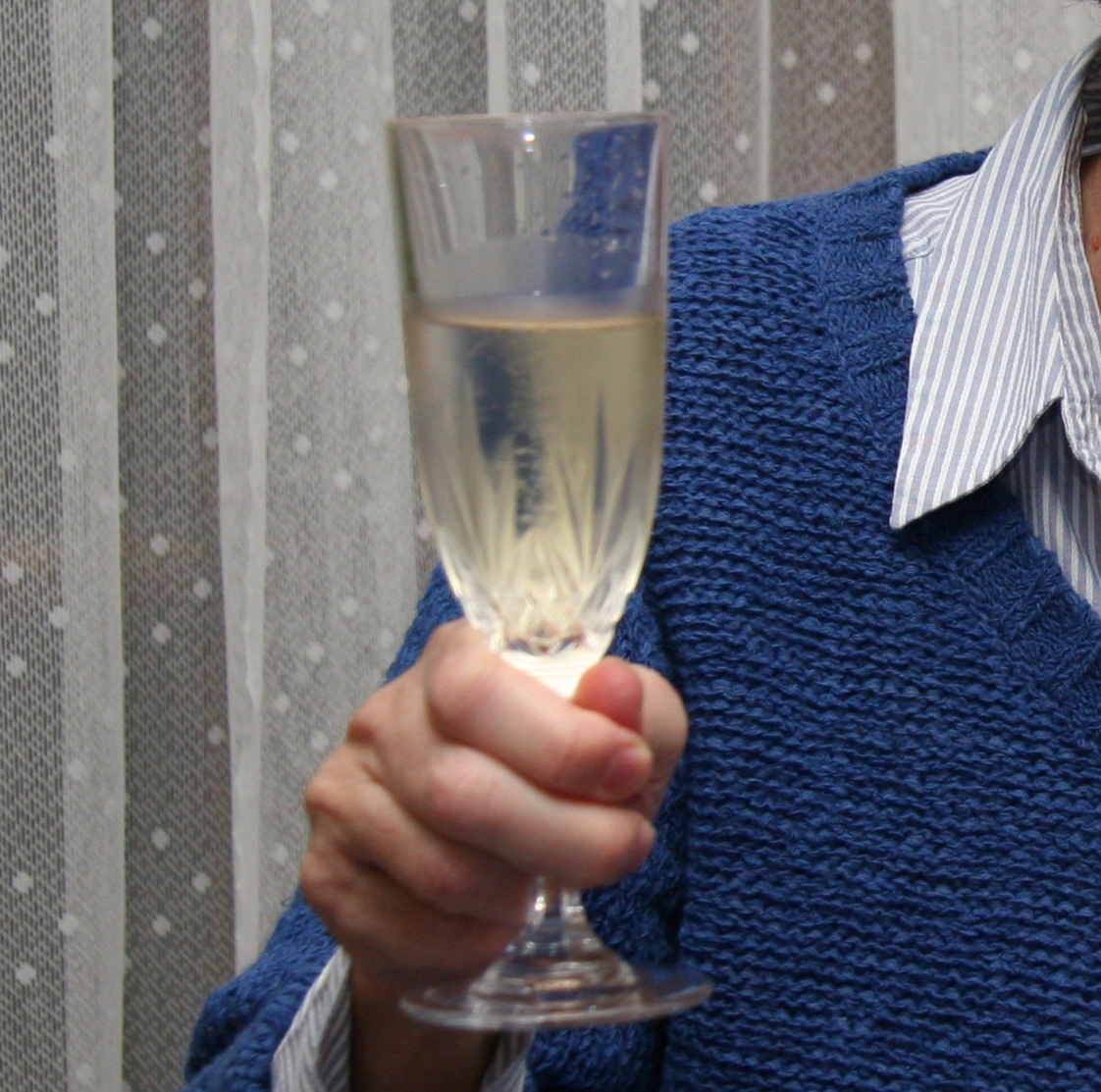
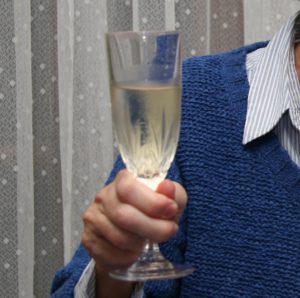
30. Wine or beer? Wine, especially the bubbly sort. Cheers!
Alison Morton is the author of Roma Nova thrillers INCEPTIO, PERFIDITAS, SUCCESSIO, AURELIA and INSURRECTIO. The sixth, RETALIO, will be published in Spring 2017. Audiobooks now available for the first four of the series
Find out more about Roma Nova, its origins, stories and heroines… Get INCEPTIO, the series starter, for FREE when you sign up to Alison’s free monthly email newsletter
If you enjoyed this post, do share it with your friends!
|
Subscribe to Blog via Email
Join 368 other subscribers.
Categories
Archive
|