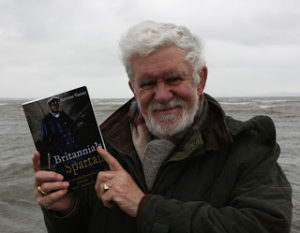
 I’m delighted to welcome writing friend Antoine Vanner back to the blog! I’m delighted to welcome writing friend Antoine Vanner back to the blog!
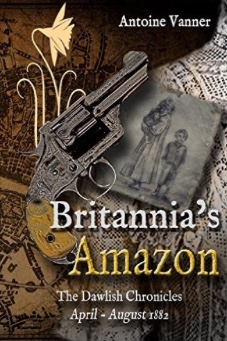
His Victorian naval fiction series – the Dawlish Chronicles – is gathering a very fair wind and steaming to success. I recently reviewed Britannia’s Amazon featured the redoubtable Captain Nicholas Dawlish’s wife Florence. Was she typical of her time? What was a strong Victorian woman like? I’ll let Antoine tell us about one remarkable Victorian who amongst her accomplishments named Nigeria!
In my most recent novel, Britannia’s Amazon, I have written the story from the viewpoint of a female lead-character. As it is set in 1882 I was concerned with reflecting the constraints that society placed on women in that period and the extent to which a clever, resourceful and dedicated woman could still operate successfully within them. I was especially determined not to depict a 21st Century woman, with present-day values and attitudes, in Victorian dress.
 The lives of several women of the time who were successful – against all odds, and facing radically different challenges – were useful sources of inspiration. One of the most interesting for me, since I spent much of my life in the country she coined a name for, was Flora Shaw (1852-1929), who later became Lady Lugard and was also created a Dame (the female equivalent of a Knight) in her own right. The lives of several women of the time who were successful – against all odds, and facing radically different challenges – were useful sources of inspiration. One of the most interesting for me, since I spent much of my life in the country she coined a name for, was Flora Shaw (1852-1929), who later became Lady Lugard and was also created a Dame (the female equivalent of a Knight) in her own right.
Flora Shaw’s origins – and indeed early adult life – gave no indication of what she would afterwards achieve. One of the fourteen children of a British army-officer who would later be a general, and of a mother of French stock from Mauritius, her earliest published work consisted of morally-elevating and conventional children’s literature. She was in her mid-thirties, and still unmarried at a time when the prospects for middle and old-aged spinsters were decidedly bleak, when she found employment as a journalist at the Pall Mall Gazette and at The Manchester Guardian newspapers. The Gazette connection was especially important, since at that time its editor, W.T. Stead, was inventing the concept of investigative journalism and initiating campaigns against child prostitution and other abuses.
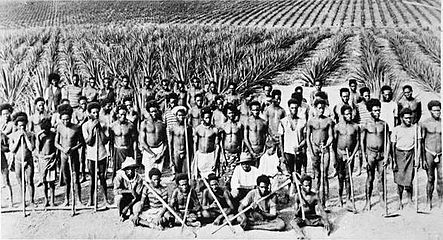 Melanesian labourers on a Queensland sugar plantation 1890s Flora Shaw’s first exposure to international affairs seems however to have been her assignment by The Guardian to cover an anti-slavery conference. Thereafter her focus settled on foreign affairs, especially those related to colonial expansion. This led to her appointment as The Times colonial editor, a hugely prestigious position, given the immense reputation of the newspaper at the time, and she became best-paid female journalist of the era. This role brought her all over the British Empire – including investigation of abuses of Melanesian labour imported to Australia, reports on political and economic matters in South Africa and even a visit to the Klondike at the time of the gold-rush there in the late 1890s.
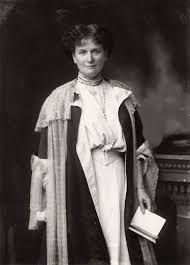 Flora Shaw, when Lady Lugard It is notable that though she wrote initially as “F. Shaw” to disguise the fact that she was a woman, she later identified herself as “Flora Shaw”, a name which was to be synonymous with expertise in political and economic matters. Her South African associations, especially with Cecil Rhodes, resulted in her being investigated by Parliament for involvement in the notorious Jameson Raid of 1895, though she was exonerated.
In the mid-1890s British interests in West Africa fell under several different administrations and it was Flora Shaw who was to argue for consolidation of the largest ones into a single entity. For this she coined the name “Nigeria”, inspired by the huge River Niger that flows through the area. It was not until 1902 however that she was to marry the man – Frederick Lugard (1858-1945) – who was later to unite the separate territories involved under a single administration. In 1960 this became, through independence from Britain, the modern Republic of Nigeria.
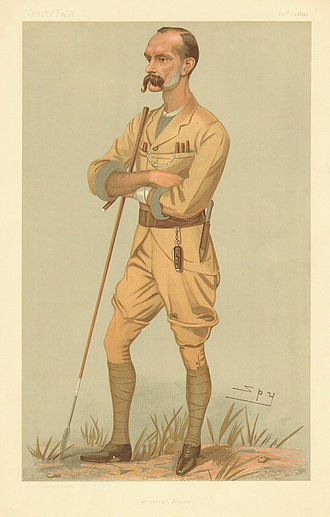 Frederick Lugard – the epitome of an Empire Builder (Vanity Fair, 1895) Lugard – afterwards Lord Lugard – was one of the late-Victorians who was to have an enviable life of adventure and achievement in Africa and elsewhere, and yet he was still playing a valuable role in the League of Nations and the International Labour Organisation in the 1930s, with particular focus on continuing anti-slavery concerns. His most important achievement was however formulation of the concept – unfashionable today – of “The Dual Mandate”, governance of territories by cooperation and division of responsibilities between Britain and local tribal and other potentates. Nigeria was to be the proving ground for the idea and this, combined with the fact that the climate discouraged land-occupation by Europeans, has been influential in making the country what it is today.
The Lugards’ marriage proved be a very successful and equal partnership, with Flora accompanying her husband on various gubernatorial appointments in Nigeria and Hong Kong. In the latter colony, they were instrumental in founding of the University there and during First World War Flora took a leading role in refugee relief that was to earn her Damehood. She died in 1929, leaving her husband to lead an active and useful life into his eighties.
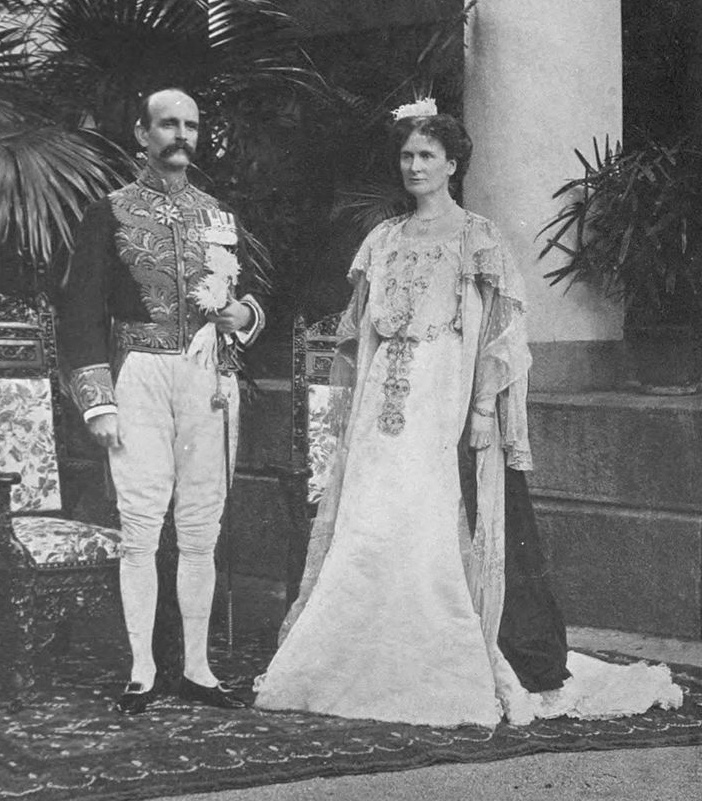 Lord and Lady Lugard in court dress I’ve always been fascinated by this woman who allowed nothing to stand in her way as regards achieving eminence in a profession that was previously, and for much of her life, closed to women. Her opinions and advice were respected at the highest levels and the fact that she was a woman did not detract from them. She exemplified the truth of the dictum “If you think it can’t be done, get out of the way of those who are doing it.” One wonders therefore why she is largely forgotten today and does not figure as an icon of feminine achievement against the odds. The answer may lie in the fact that she was an avowed supporter and unashamed proponent of the imperial dream that is so widely derided today. The Lugard partnership was a counterpart, on the other end of the political spectrum, of Beatrice and Sidney Webb, who are remembered despite their later admiration of Stalinist Russia.
One suspects however that in any era Flora Shaw would have made her mark, a shining example of the belief that anything is possible. Unfashionable today or not, let us honour memory.
We would have welcomed her with open hearts and deep respect in Roma Nova! Thank you, Antoine, for introducing us to strong and capable woman from the 19th century.
Connect with Antoine: Website Dawlish Chronicles blog Twitter
What’s Britannia’s Shark about?
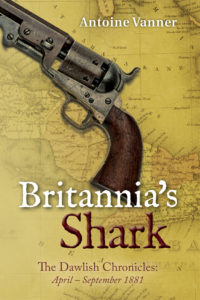 1882 and Captain Nicholas Dawlish RN has just taken command of the Royal Navy’s newest cruiser, HMS Leonidas. Her voyage to the Far East is to be a peaceful venture, a test of this innovative vessel’s engines and boilers. 1882 and Captain Nicholas Dawlish RN has just taken command of the Royal Navy’s newest cruiser, HMS Leonidas. Her voyage to the Far East is to be a peaceful venture, a test of this innovative vessel’s engines and boilers.
Dawlish has no forewarning of the nightmare of riot, treachery, massacre and battle he and his crew will encounter.
A new balance of power is emerging in the Far East. Imperial China, weak and corrupt, is challenged by a rapidly modernising Japan, while Russia threatens from the north. They all need to control Korea, a kingdom frozen in time and reluctant to emerge from centuries of isolation.
Dawlish finds himself a critical player in a complex political powder keg. He must take account of a weak Korean king and his shrewd queen, of murderous palace intrigue, of a powerbroker who seems more American than Chinese and a Japanese naval captain whom he will come to despise and admire in equal measure. And he will have no one to turn to for guidance…
Alison Morton is the author of Roma Nova thrillers INCEPTIO, PERFIDITAS, SUCCESSIO, AURELIA and INSURRECTIO. The sixth, RETALIO, will be published in Spring 2017.
Find out more about Roma Nova, its origins, stories and heroines… Get INCEPTIO, the series starter, for FREE when you sign up to Alison’s free monthly email newsletter
If you enjoyed this post, do share it with your friends!
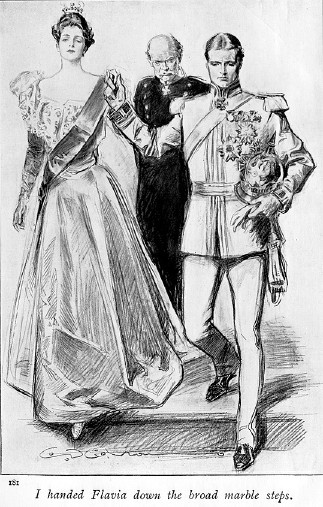 Frontispiece to The Prisoner of Zenda, Charles Dana Gibson Rudolf Rassendyll (Sigh)
Princess Flavia (Aaah!)
Duke Michael (Grrrr!)
Rupert of Hentzau (Wow but grr!)
When I picked up The Prisoner of Zenda at age 12, I was enraptured. It was a torch under the bedclothes job. When it ended I cried, partly from the denouement, partly because it had finished. You know that sense of deep loss when you say goodbye to beloved characters.
Then I discovered Rupert of Hentzau. Thank the gods. I was plunged back into the thrills, romance, courage and sacrifice of Ruritania. And the high moral choice of the hero and heroine.
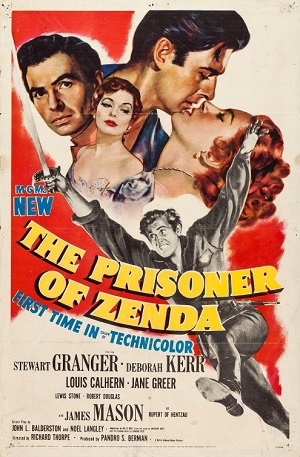
The stories set between the 1850s and 1880s have been updated and revised; they’ve been made into a BBC television series and feature films, notably the one starring the fabulous Stewart Granger, but what’s between the covers still grabs my mind and emotions.
 Ruritania itself is an imaginary country in central Europe, a ‘placeholder kingdom’ and is used in academia and the popular mind to refer to a hypothetical country. The author, Anthony Hope, depicts Ruritania as a German-speaking Catholic country under an absolute monarchy, with deep social, but not ethnic, divisions reflected in the conflicts of the first novel, The Prisoner of Zenda. Ruritania itself is an imaginary country in central Europe, a ‘placeholder kingdom’ and is used in academia and the popular mind to refer to a hypothetical country. The author, Anthony Hope, depicts Ruritania as a German-speaking Catholic country under an absolute monarchy, with deep social, but not ethnic, divisions reflected in the conflicts of the first novel, The Prisoner of Zenda.
Hope’s novels resulted in ‘Ruritania’ becoming a generic term for any small, imaginary European kingdom used as the setting for romance, intrigue and the plots of adventure novels. It even lent its name to a whole genre of writing, the ‘Ruritanian romance’.
Such stories are typically centered on the ruling classes, almost always aristocracy and royalty, or as in Winston Churchill’s novel Savrola the dictator in the republican country of Laurania who is overthrown. The themes of honour, loyalty and love predominate, and the works frequently feature the restoration of legitimate government after a period of usurpation or dictatorship.
 The genre has been much spoofed, mined and copied: GB Shaw’s Arms and the Man, Dorothy L Sayers’ Have his Carcase and Nabakov’s Pale Fire parody elements. In the satire The Mouse That Roared, the Duchy of Grand Fenwick (the title role played by the brilliant Margaret Rutherford) attempts to avoid bankruptcy by declaring war on the United States as a ploy for gaining American aid. The genre has been much spoofed, mined and copied: GB Shaw’s Arms and the Man, Dorothy L Sayers’ Have his Carcase and Nabakov’s Pale Fire parody elements. In the satire The Mouse That Roared, the Duchy of Grand Fenwick (the title role played by the brilliant Margaret Rutherford) attempts to avoid bankruptcy by declaring war on the United States as a ploy for gaining American aid.
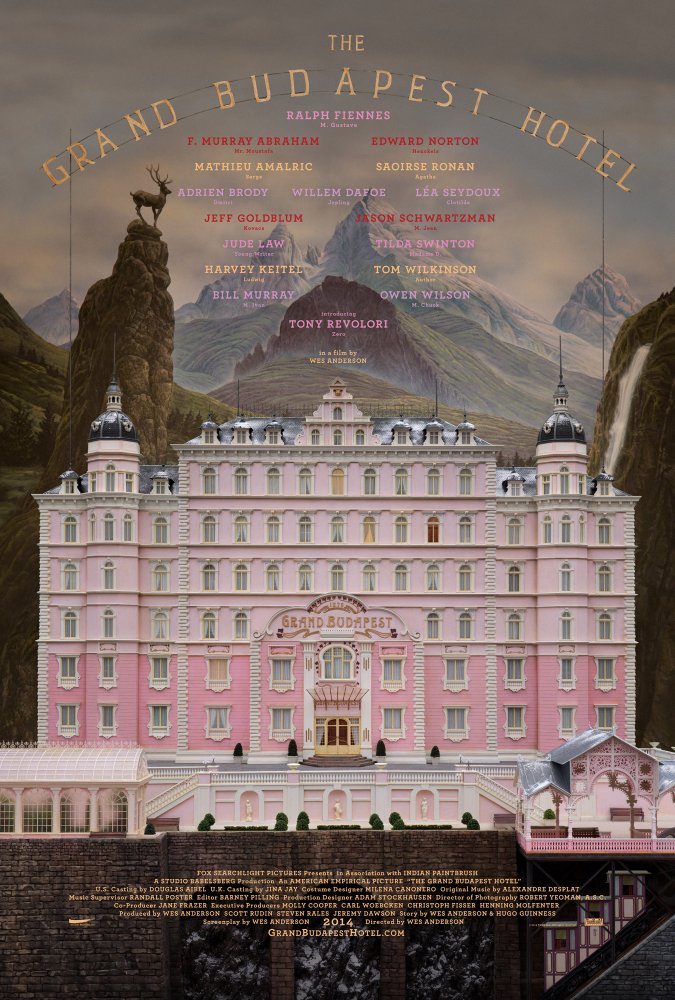
Sci-fi writer André Norton borrowed many elements and Ursula K. Le Guin set a number of short stories and a novel in the fictitious and essentially Ruritanian East European land of Orsinia. The Grand Budapest Hotel, a 2014 comedy film is set in the fictional nation of Zubrowka, a central European alpine state teetering on the outbreak of war.
Why does the idea of Ruritania persist and why do the books still attract readers?
Let’s unpick the themes behind the stories…
– There’s romance – the heaviest read genre on the planet – and the ‘world lost for love’ vs. ‘love lost for the world’ conflict
– Thrills, tension, mixed motives, dark plots and evil schemes, turning the screw on our emotions
– And as for action adventure, apart from the storyline of the books, there are chases, sword fights, gun duels, escape by night, dungeons and secret stairways
– The ‘noble Englishman’ idea which we may think is dead – I suggest Jonathan Pine in The Night Manager or even our old friend James Bond keep this one on the front burner
– Exaggerated nature of fictional characters who can be more noble or dastardly than we are
 Jonathan Pine – the ‘noble English hero’ Of course, Ruritanian stories have to be plausible by having a good number of connections to our world while maintaining that essential difference, and they have to be consistent within their own world. Nobody likes being jolted out of a fictitious world by sloppy writing.
Now, there are plenty of imagined other worlds, often projecting an existence hundreds or thousands of years in the future or one here on Planet Earth, but after a massive disaster. Both can be pretty grim. But do alternative existences have to be dystopian or post-apocalyptic to be authentic?
Enter Ruritania. The stories are hopelessly old-fashioned, somewhat sexist and rather naive, but they are essentially optimistic. But more than anything they are an escape from the dullness and stress of everyday and emphasise the good guys winning in a morally acceptable way.
Roma Nova is a world away from Ruritania but it does use its core concepts of adventure, romance, honour and taking tough moral decisions. While its stories are set in a small European country, the small state’s Roman-ness, intense struggle through history and egalitarian social system separate it from Ruritania, making it unique, possibly the centre of a new genre even?
While often patrician, Roma Nova’s characters are more fallible, yet more robust and are ready to step over any moral line set by Anthony Hope.
They would eat Rupert of Hentzau for breakfast.
Alison Morton is the author of Roma Nova thrillers – INCEPTIO, CARINA (novella), PERFIDITAS, SUCCESSIO, AURELIA, NEXUS (novella), INSURRECTIO and RETALIO, and ROMA NOVA EXTRA, a collection of short stories. Audiobooks are available for four of the series. Double Identity, a contemporary conspiracy, starts a new series of thrillers.
Find out more about Roma Nova, its origins, stories and heroines and taste world the latest contemporary thriller Double Identity… Download ‘Welcome to Alison Morton’s Thriller Worlds’, a FREE eBook, as a thank you gift when you sign up to Alison’s monthly email newsletter. You’ll also be among the first to know about news and book progress before everybody else, and take part in giveaways.
If you enjoyed this post, do share it with your friends!
 It’s my great pleasure to welcome back crime writer J J Marsh. We met a while ago in a distanced way on Facebook – the two of us belong to the Alliance of Independent Authors – but when she and I were both selected as indie Editor’s Choices in prestigious UK publishing trade magazine ‘The Bookseller’ I invited her to talk to us about her book, Cold Pressed, its world and heroine. It’s my great pleasure to welcome back crime writer J J Marsh. We met a while ago in a distanced way on Facebook – the two of us belong to the Alliance of Independent Authors – but when she and I were both selected as indie Editor’s Choices in prestigious UK publishing trade magazine ‘The Bookseller’ I invited her to talk to us about her book, Cold Pressed, its world and heroine.
Writer, journalist, teacher, actor, director and cultural trainer, Jill has lived and worked all over Europe. Now based in Switzerland, she’s a founder member of Triskele Books, writes for Words with JAM magazine, co-edits Swiss literary hub The Woolf and reviews for Bookmuse.
Welcome Jill!
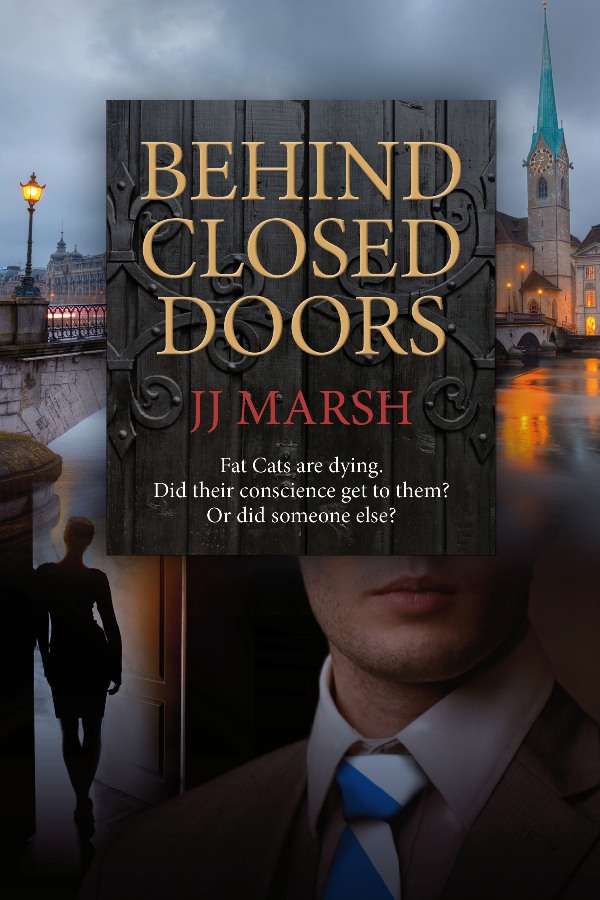
Why did you write Behind Closed Doors?
After getting heartily sick of crime novels where the only roles for women were mutilated prostitute or ‘feisty kickboxing nubile ladycop’. I wanted to read about women who were good and bad, flawed, complex, morally questionable, physically ordinary and real. So I created Beatrice Stubbs. (And as a reader, I can tell you she’s a wonderful heroine, full of flaws, insight, ordinariness and cleverness at the same time.)
Why do you think Beatrice is like she is?
Beatrice has developed coping strategies after years of struggling with depression and mood swings. After all, she’s from a generation in which mental health is a matter of ‘pulling yourself together’. Her appetites are lusty, her temper unpredictable and her loyalties unswerving. People’s assumptions about her generally work in her favour, so she plays up to them. And still, after all this time, she feels guilty.
What does she think she’s like?
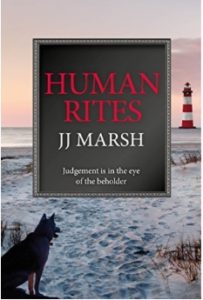 Extract from Human Rites: “Beatrice had always prided herself on a clear-eyed self assessment – she knew she was nothing special. Hard work and application enabled her to rise through the ranks of the Met, because her intelligence was no more than the upper end of average. Talent, kindness and wit, albeit mediocre, were in evidence, as were selfishness and greed. Her looks would never turn heads, apart from her hair, and that caused more alarm than admiration. She lacked vanity, despite a sizeable ego, but on the whole, she’d always quite liked herself. Until her diagnosis.” Extract from Human Rites: “Beatrice had always prided herself on a clear-eyed self assessment – she knew she was nothing special. Hard work and application enabled her to rise through the ranks of the Met, because her intelligence was no more than the upper end of average. Talent, kindness and wit, albeit mediocre, were in evidence, as were selfishness and greed. Her looks would never turn heads, apart from her hair, and that caused more alarm than admiration. She lacked vanity, despite a sizeable ego, but on the whole, she’d always quite liked herself. Until her diagnosis.”
Oh, that’s a teaser line to end on!
What’s Behind Closed Doors about?
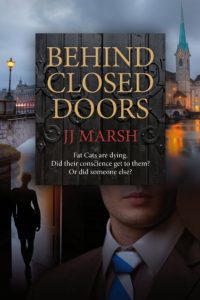 “Fat Cats are dying. Did their conscience get to them? Or did someone else?” “Fat Cats are dying. Did their conscience get to them? Or did someone else?”
Suicide – the act of taking one’s own life.
Homicide – the act of taking someone else’s.
An unethical banker suffocates. A diamond dealer slits his wrists. A media magnate freezes in the snow. A disgraced CEO inhales exhaust fumes. Four unpopular businessmen, four apparent suicides. Until Interpol find the same DNA at each death.
Beatrice Stubbs, on her first real case since ‘the incident’, arrives in Switzerland to lead the investigation. But there’s more to Zurich than chocolate and charm.
Potential suspects are everywhere, her Swiss counterpart is hostile and the secretive world of international finance seems beyond the law. Battling impossible odds by day and her own demons at night, Beatrice has never felt so alone.
She isn’t.
Someone else believes in justice.
The poetic kind.
“Thrilling new crime fiction from a seriously good writer” – Annemarie Neary, author of Siren
Buy on Amazon Buy on iBooks/iTunes
Connect with JJ Marsh Website Twitter: @jjmarsh1
Alison Morton is the author of Roma Nova thrillers, INCEPTIO, PERFIDITAS, SUCCESSIO and AURELIA. The fifth in the series, INSURRECTIO, was published in April 2016.
Find out more about Roma Nova, its origins, stories and heroines… Get INCEPTIO, the series starter, for FREE when you sign up to Alison’s free monthly email newsletter
If you enjoyed this post, do share it with your friends!
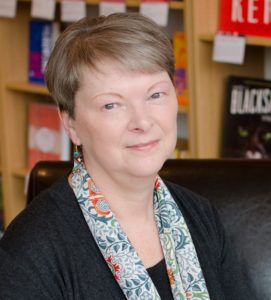 Lucienne Boyce has published two historical novels, To The Fair Land (2012) and Bloodie Bones: A Dan Foster Mystery (2015). She published The Bristol Suffragettes (non-fiction) in 2013. She is currently working on the second Dan Foster Mystery and the biography of a suffragette with Bristol connections. She is a steering committee member of the West of England and South Wales Women’s History Network, and recently joined Bristol’s BCfm Radio as a presenter on the Silver Sound programme. Lucienne Boyce has published two historical novels, To The Fair Land (2012) and Bloodie Bones: A Dan Foster Mystery (2015). She published The Bristol Suffragettes (non-fiction) in 2013. She is currently working on the second Dan Foster Mystery and the biography of a suffragette with Bristol connections. She is a steering committee member of the West of England and South Wales Women’s History Network, and recently joined Bristol’s BCfm Radio as a presenter on the Silver Sound programme.
Why did you write Bloodie Bones: A Dan Foster Mystery?
I write historical fiction about the eighteenth century and non-fiction about the women’s suffrage campaign. Both are aspects of my interest in radical history and the history of protest. I’m interested in telling stories of how people made powerless by the law are finally driven to resist that law – to become stone-throwers, vandals, arsonists – and in thinking about how far they could and should go in those struggles.
At the same time, I’d been pleasantly surprised by how much I enjoyed writing the mystery elements of my first novel, To The Fair Land (also set in the eighteenth century – about the search for the anonymous author of a book about a voyage to the South Seas which involves the hero getting to the bottom of old and new crimes). More to the point, readers were telling me they enjoyed those aspects of the story. I’ve always loved detective fiction – I’m a huge fan of Lord Peter Wimsey, Sherlock Holmes and Inspector McLevy. I also have a long-standing interest in the eighteenth century, a period when I think many of the systems we live with today were established or developed, including the policing system. The Bow Street Runners were the forerunners of our modern CID, and even without the assistance of modern forensic processes many of their investigative methods are remarkably familiar.
So it seemed natural to combine all this and come up with a Bow Street Runner as my main character. In that way, I could write about someone whose job is to uphold the law at a time of great social change and unrest. One of the most far-reaching of those changes was land enclosure, when land previously accessible to the poor was taken into private ownership. For many poor people it was an economic disaster, driving them out of their homes and into the cities, where they provided the cheap labour that made the expansion of industry possible.
 Decaying hedges mark the lines of the straight field boundaries created by the 1768 Parliamentary Act of Enclosure of Boldron Moor, County Durham. Creative Commons Attribution-Share Alike 2.0 Generic licence. Attribution: Andy Waddington A major inspiration for Bloodie Bones was John Clare’s poem The Mores, which reminds us that these changes had an emotional impact as well as an economic one. All too often, the history of enclosures (like that of its urban counterpart, industrialisation) has been told as part of a narrative of “progress”. Clare’s poem draws our attention to the fact that it affected real people: “Inclosure came and trampled on the grave/Of labour’s rights and left the poor a slave.”[1]
Why do you think your main character, Dan Foster, is like he is?
Dan Foster had a tough upbringing. Abandoned and homeless as a child, he survived on the streets by thieving. That means he understands what it is to be hungry and homeless, to be ragged and cold, to be treated as a scrounger and a beggar. He also knows that law and justice are not necessarily synonymous. Yet he often struggles with his sense of injustice and his duty to uphold the law. In Bloodie Bones, for example, he begins to realise what’s at stake for the protestors. It’s a tension that can only intensify – perhaps one day he will have to decide on which side he stands.
He also has a deep-rooted fear of being cast back into the poverty, violence and squalor of his past. That makes him ambitious to succeed in his profession. As the series develops we’ll see him trying to balance this with his growing distaste for an oppressive legal system. He’ll struggle with personal issues too, and in particular his unhappy marriage and his love for his wife’s sister.
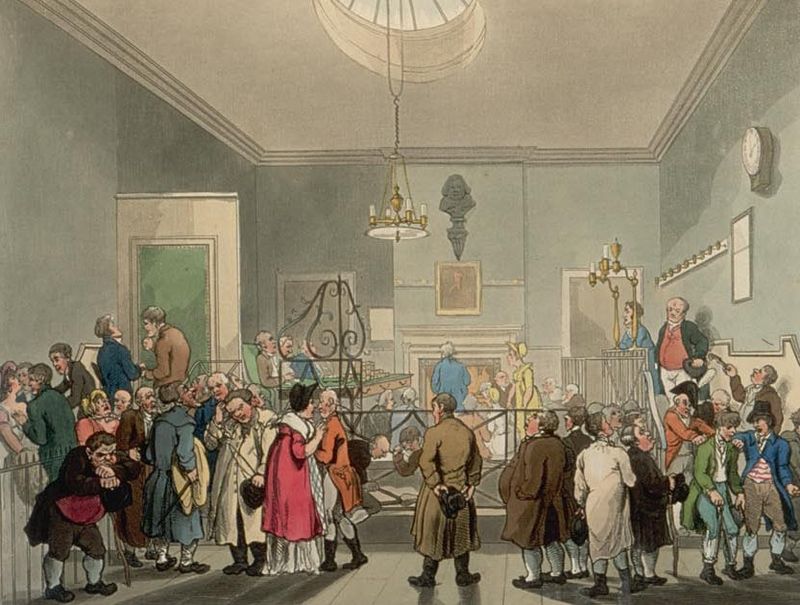 Bow Street Magistrates’ Court in London: This engraving was published as Plate 11 of Microcosm of London (1808) What does Dan Foster think he is like?
“I’m a Principal Officer attached to Bow Street Magistrates’ Court – what you might know as a Bow Street Runner – though we’re known by many other names too, which I won’t mention in polite company. I’d never have got this far if it hadn’t been for the man I call Dad, Noah Foster. Noah came across me at the Oliver v Johnson fight back in ’81. I was out on the prigging lay* and I’d got into a fight of my own with another diver* who thought I was poaching on his patch. Gave me a beating too, but Noah saw something in the savage, sullen thing I was then and he took me home to his gym, brought me up, trained me to fight scientifically.
I know there are those who think that boxing is low and vicious and it’s true there are plenty who call themselves pugilists who are nought but butchers. But what Noah taught me was something different. It was discipline and courage. It was self-respect. It was to hate a bully, to stand up to the strong who prey on the weak. It was the saving of me – and still is, for in my line of work soft words are not always enough to turn what you might call the hand of wrath. I’m not so keen on pistols, only as a last resort. So the science comes in handy.
I’ve never wanted to turn professional – I’ve seen too many good fighters ruined by fame and fortune. Dad’s always accepted that – in fact, it was him who suggested I join the Bow Street patrol as a way of earning some money, though I’ll inherit the gym one day. A day I hope is a long way off yet. But Mrs Foster – Caroline – doesn’t see it that way. She’d rather be married to a boxing champion than a Bow Street Runner. But if my fighting skills are to mean anything it’s here, in the job. This is who I am. I’m Dan Foster, Principal Officer of Bow Street.”
*prigging lay – thieving
* diver – pickpocket
[1] John Clare, The Mores, in Selected Poems and Prose of John Clare, edited by Eric Robinson and Geoffrey Summerfield (Oxford: Oxford University Press, 1967), pp. 169 – 171.
So what’s Bloodie Bones: A Dan Foster Mystery about?
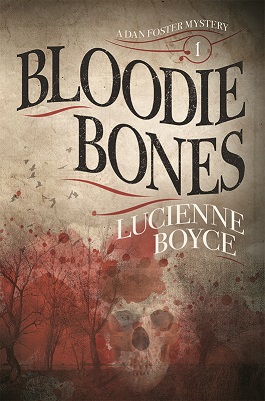 “Parsons and tyrants friends take note. We have born your oppreshuns long enough. We will have our parish rights or else Bloodie Bones will drink your blood.” “Parsons and tyrants friends take note. We have born your oppreshuns long enough. We will have our parish rights or else Bloodie Bones will drink your blood.”
When Lord Oldfield encloses Barcombe Wood, depriving the people of their ancient rights to gather food and fuel, the villagers retaliate with vandalism, arson and riot. Then Lord Oldfield’s gamekeeper, Josh Castle, is murdered during a poaching raid. Dan Foster, Bow Street Runner and amateur pugilist, is sent to investigate.
Dan’s job is to infiltrate the poaching gang and bring the killers to justice. But there’s more to Castle’s death than at first sight appears. What is the secret of the gamekeeper’s past and does it have any connection with his murder? What is Lord Oldfield concealing? And did someone beside the poachers have a reason to want Josh Castle dead?
As tensions in Barcombe build to a thrilling climax, Dan will need all his wits and his fighting skills to stay alive and get to the truth.
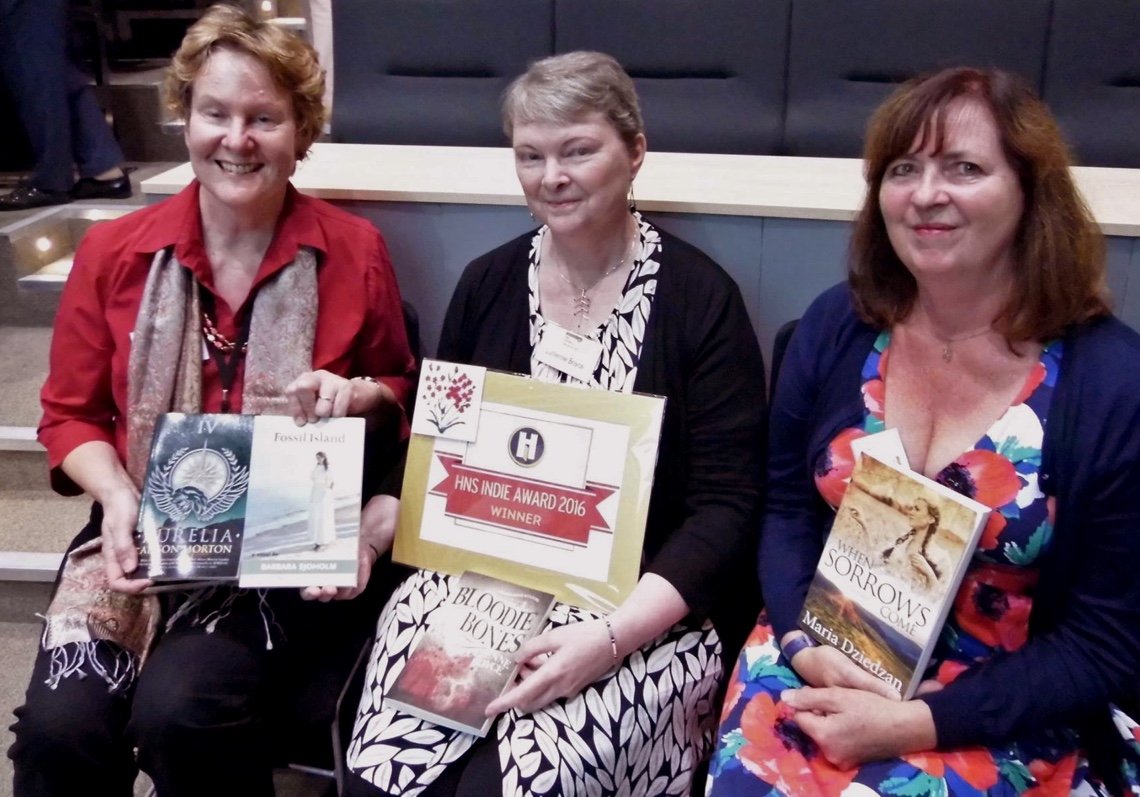
Bloodie Bones is a winner of the Historical Novel Society Indie Award 2016 and was a semi finalist for the M M Bennetts Award for Historical Fiction 2016.
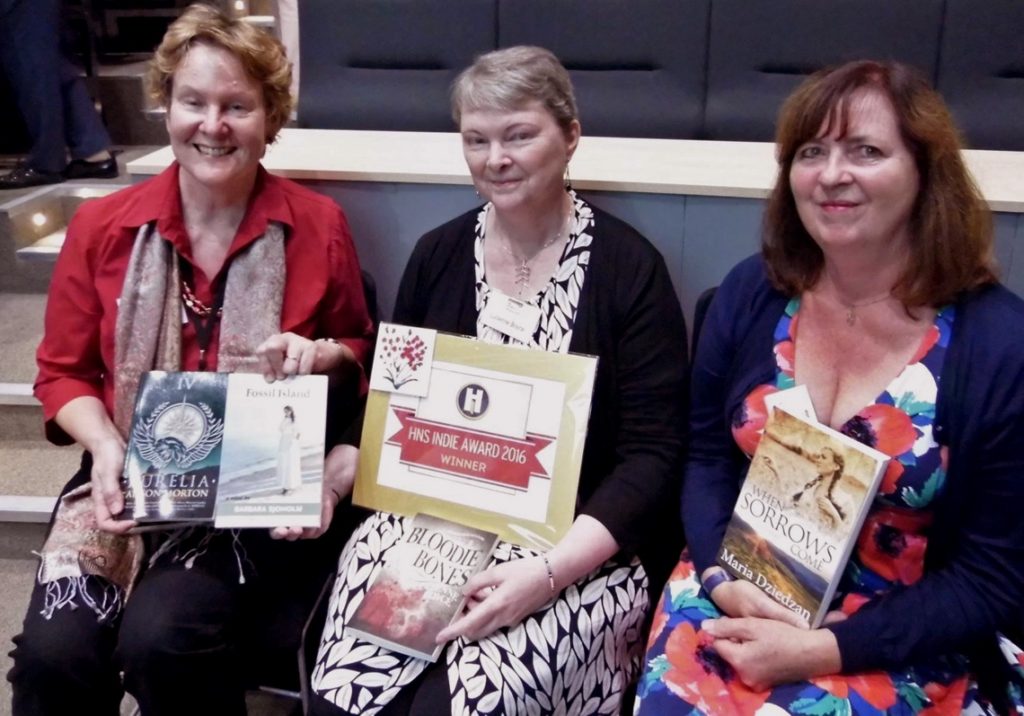 Alison, Lucienne and Maria, three of the 2016 finalists, Historical Novel Society Indie Award  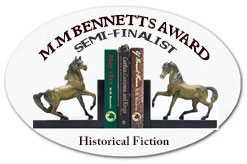
Buying links: Amazon.co.uk Amazon.com
Also available on Kobo, Nook and iBooks.
Connect with Lucienne: Website Twitter @LucienneWrite
Facebook Blog Goodreads
Alison Morton is the author of Roma Nova thrillers, INCEPTIO, PERFIDITAS, SUCCESSIO and AURELIA. The fifth in the series, INSURRECTIO, was published in April 2016.
Find out more about Roma Nova, its origins, stories and heroines… Get INCEPTIO, the series starter, for FREE when you sign up to Alison’s free monthly email newsletter
If you enjoyed this post, do share it with your friends!
Readers need books. Writers want to write. Seems like a match made in heaven, doesn’t it ? ?
Writing is a solitary occupation. But publishing a book can’t be done without others: beta readers, critique partners, editors (structural, developmental, line, copy) and proofreaders. Take your pick.
Then we need a marketing team: advance readers, blog hosts, friends/colleagues who will tweet and post on social media, reviewers, connectors. All these are needed to show readers that a book exists.If your book is a gripping read, well formatted with a stunning cover and blurb and available on several platforms and in different formats (ebook of various types, paperback, perhaps audio), they you have a good start.
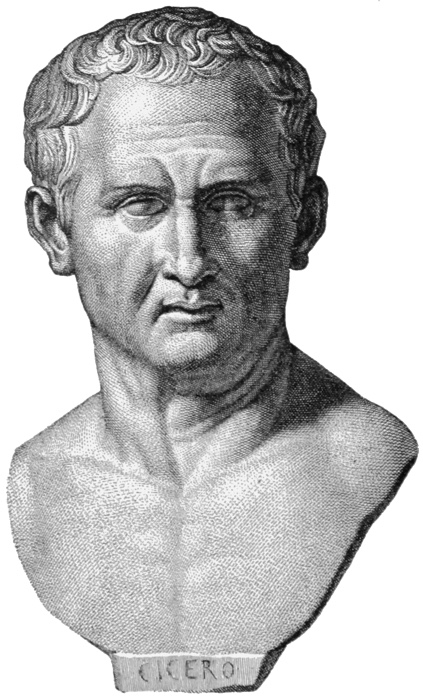
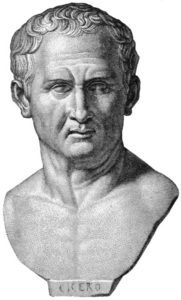 As Cicero said, everybody is writing a book these days. Many are not good, but how to make the diamonds stand out amongst the pile of poo? Once discovered by appreciative readers, much of the work is done. If your books’s any good, they will tell their friends, leave a review and hopefully rave about them generally. And if you write another, then readers will start to give you their love. Be respectful of that – they are spending life hours reading your stuff. Make sure it’s worth it. 🙂 As Cicero said, everybody is writing a book these days. Many are not good, but how to make the diamonds stand out amongst the pile of poo? Once discovered by appreciative readers, much of the work is done. If your books’s any good, they will tell their friends, leave a review and hopefully rave about them generally. And if you write another, then readers will start to give you their love. Be respectful of that – they are spending life hours reading your stuff. Make sure it’s worth it. 🙂
I digress. There’s an old motto in French “L’union fait la force” (Strength through unity). You’re not going to be surprised that it has a Latin source – yep, it’s those pesky Romans again. Gaius Sallustius Crispus, or Sallust as we generally call him, was a Roman historian and politician (86 – c. 35 BC). Although probably more famous for his account of the Cataline conspiracy, he wrote a tome about the Jugurthine War and in Chapter 10 said “concordia res parvae crescunt” (small things flourish by concord). Everybody loves to jump on a saying from the Roman Empire for their national and state motto and several countries have done so.
 ALLI authors meet up at the London Book Fair April 2014 For authors, this rule applies. Working together, we can achieve a great deal more than by ourselves. This is why we join writing associations and groups, not just because we are lonely. If you read my Roma Nova blog, Facebook page and follow me on Twitter, you know I talk about my books, hopefully not in a spammy way. But it’s from joint promotion that I gain most. And bringing my books to readers is what counts, not just for the money, but to get my stories to them, entertain them and possibly provoke them. 😉
Alison Morton is the author of Roma Nova thrillers, INCEPTIO, PERFIDITAS, SUCCESSIO and AURELIA. The fifth in the series, INSURRECTIO, was published in April 2016.
Find out more about Roma Nova, its origins, stories and heroines… Get INCEPTIO, the series starter, for FREE when you sign up to Alison’s free monthly email newsletter
If you enjoyed this post, do share it with your friends!
|
Subscribe to Blog via Email
Join 368 other subscribers.
Categories
Archive
|
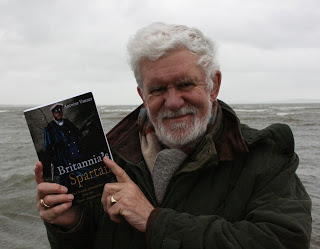 I’m delighted to welcome writing friend Antoine Vanner back to the blog!
 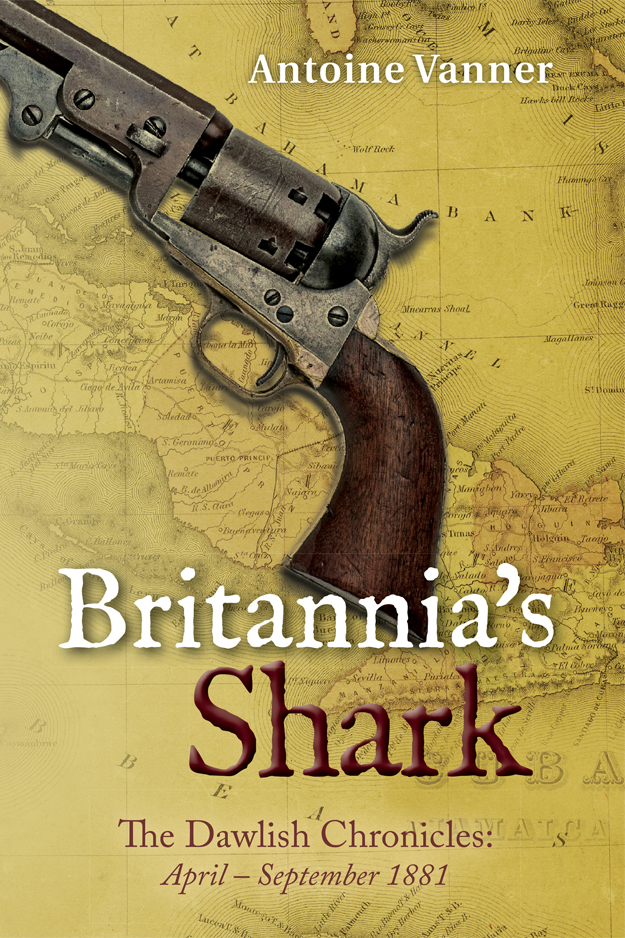 1882 and Captain Nicholas Dawlish RN has just taken command of the Royal Navy’s newest cruiser, HMS Leonidas. Her voyage to the Far East is to be a peaceful venture, a test of this innovative vessel’s engines and boilers.