It’s 1976 and in the world of The Alteration England is dominated by a pervasive and morally twisted Catholic theocracy with a suspicion of but willingness to exploit science. Martin Luther became the radically reforming Pope, Germanian I, and the English succession skipped the man we know as Henry VIII and passed to Prince Stephen, the son of Catherine of Aragon and Henry’s elder brother, Arthur. It’s 1976 and in the world of The Alteration England is dominated by a pervasive and morally twisted Catholic theocracy with a suspicion of but willingness to exploit science. Martin Luther became the radically reforming Pope, Germanian I, and the English succession skipped the man we know as Henry VIII and passed to Prince Stephen, the son of Catherine of Aragon and Henry’s elder brother, Arthur.
Hubert Anvil is a ten-year-old chorister with a sublime voice. The Church hierarchy, anxious to preserve it for the the glory of God, decrees Hubert should be turned into a castrato – an “alteration” that could bring him fame and fortune, but would also separate him permanently from an adult world he is curious to discover.
The narrative follows Hubert, his indecision and ultimate rebellion against the process. His stern, devout father heads a household where his wife Margaret counts herself lucky he discusses concerns in private and does not enforce his marital rights. Hubert is sympathetically drawn, and I found myself engaging fully with his sense of being trapped by his parents, his school and his society. For me, a weakness is that although he is supposed to be an old head on young shoulders, he acts more like a 16 or 17-year-old.
Amis’ beautifully written world bustles with altered technology and yet retains familiar historical details: express barouches, seven-hour transport between London and Rome, gaslight, photograms and airships yet ermines, silks, velvet, fustian, servants and apprentices. The language is historical and structured, such as you would find in C J Sansom or Ann Lyle, but it never disguises people’s motivations or emotions. And then there are the witty allusions to Jean-Paul Sartre as a Jesuit, Foot and Redgrave as enforcers and the Yorkshire pope who could be Harold Wilson.
Darker themes such as population control through war, separate development (aka apartheid) and brutal intransigence against any other orthodoxy than the official one are woven into the narrative as if they were perfectly natural.
The Alteration describes both the threat hanging over Hubert and the alteration in the historical timeline which symbolises the strangulation of the development of European civilisation. All Amis’ usual knack for character, incident and satire is there in The Alteration. The most disturbing thing is how convincing this alternative world is.
If you enjoyed this post, do share it with your friends!
 The Roman Empire didn’t ‘fall’ in a cataclysmic event as the movies and TV would have you believe – it localised and eventually dissolved like chain mail fragmenting into separate links, giving way to rump states, local city states and petty kingdoms. New, dynamic and often warring nations emerged – Goths, Franks, Alamans and Burgundians. The Roman Empire didn’t ‘fall’ in a cataclysmic event as the movies and TV would have you believe – it localised and eventually dissolved like chain mail fragmenting into separate links, giving way to rump states, local city states and petty kingdoms. New, dynamic and often warring nations emerged – Goths, Franks, Alamans and Burgundians.
But one part of the Roman empire hung on in Gaul – the intriguing Domain of Soissons.
Officially, the last Roman emperor in the West reigned until AD 475 (Julius Nepos) or AD 476 (Romulus Augustulus) – take your pick of the two available contenders. But the last really effective Roman emperor, Majorian, had died in AD 461. Before he did, he’d appointed Aegidius in AD 457 to command all military forces in Gaul as magister militum (master of soldiers).
Soissons in the north-west was the only remaining Roman territory in Gaul by then and included Angers, Orleans, Reims, Paris and much of modern day Normandy up to the Channel coast. A corridor to Italy was annexed by the Germanic tribes occupying Gaul, cutting off Aegidius and his citizens from the empire.
Aegidius managed to rule in much of his province, but died in AD 464 or AD 465 and after a brief rule by Paulus, a Roman official, his son Syagrius succeeded him as ruler. Although Syagrius was sometimes called Rex Romanorum (King of the Romans), probably by the barbarians settled on Soissons’ borders, the citizens living there didn’t consider themselves as anything other than inhabitants of a separated province of the Western Roman empire. They perpetuated Roman rule and core structures for nearly thirty years despite being cut off from the Italian homeland (which was also pretty chaotic at this time).
 Alaric handing Syriagus over to Clovis Unfortunately for Syriagus, in AD 486 he came up against the most dynamic and ruthless leader of the new Europe, the Frankish king Clovis, and lost the Battle of Soissons. Syriagus sought sanctuary with Alaric, king of the Visigoths, but when Clovis threatened war, he handed Syriagus over to Clovis for execution.The Gallo-Roman enclave was absorbed into the Frankish kingdom, a step that established the Franks as the major regional power and laid the foundations of a later nation-state, France.
Even though it’s a footnote of history, Romans carrying on a Roman life – social, economic, legal – surrounded by barbarians does have a tinge of the romantic, of a people stranded in time…
Alison Morton is the author of Roma Nova thrillers, INCEPTIO, and PERFIDITAS. Third in series, SUCCESSIO, is now out.
Find out about Roma Nova news, writing tips and info by signing up for my free monthly email newsletter.
If you enjoyed this post, do share it with your friends!
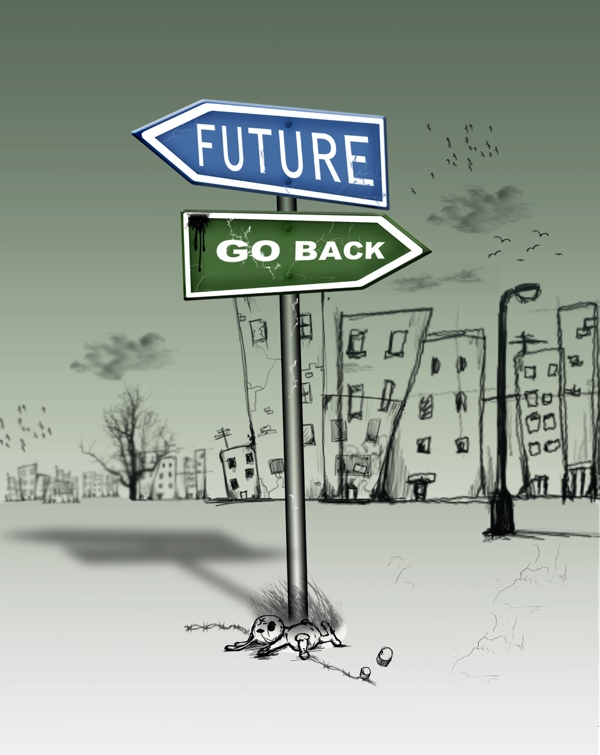 How do you make a decision? Whether it’s buying a new pair of shoes, going to law or plunging into a new life in a different country and culture, it’s a complicated question. How do you make a decision? Whether it’s buying a new pair of shoes, going to law or plunging into a new life in a different country and culture, it’s a complicated question.
First of all, there’s an instinctive reaction to the decision: you see, you want, you say yes. Then your brain kicks in: do I have the money, will I have the time, will this change my life, will I look better, will I enjoy it, do I want all that upheaval?
Basically, it boils down to the hassle of pushing yourself to change from where you are versus the pleasure you will gain or threat you’ll avoid once you’ve made the decision.
Most people love the status quo – it’s familiar, the pluses and minuses are there to be seen (And I’m not talking about the rock band!). The original Latin in statu quo res erant ante bellum (in the state in which things were before the war), meant all troops were withdrawn and boundaries back where they were before the war. These days status quo generally means the ways things are set up at the moment. Status quo can also refer to a situation that nobody likes but the result of changing it seems too risky.
Here you have two choices: wait and see, or take a risk to change it.
Human beings tend to be irrationally loss averse. In other words, we sometimes prefer to avoid the risk of loss even at the cost of a better than fair prospect. This isn’t us being wimpish; our propensity to protect what is already in hand is hard-wired into our brains. For most of human evolution, our biological ancestors lived in an environment where resources were scarce. If you wanted to feed your family, you had to hunt or gather. If there were natural impediments such as extreme weather, or unfriendly wildlife like sabre-tooth tigers, you might not survive. Over countless generations, this developed a biological basis to loss aversion.
So, taking a decision means overcoming an instinctive dislike of risk. For most people it’s “Shall I buy those shoes?”, “Can I get into that parking space?”, “Which type of pasta shall we have for supper?”. For your hero or heroine, it’s “Shall I turn my back on this?”, “Shall I put myself in danger?”, “Can I trust him/her?”, “Why would I leave my safe but boring life and risk an uncertain but wealthy life with strangers?”.
Writers have the power of pushing characters to that decision point by introducing a crushing threat. Readers love seeing characters struggling with these decisions, it makes delicious tension. But writers must chart how their characters deal with conflict and come to make decisions or they’ll look unbearably smart and a bit wooden.
Of course, it’s a heroic virtue to be able to make a good decision under pressure, but even the most decisive character has to have a wobble from time to time…
References: Kahneman & Tversky’s Prospect theory (http://en.wikipedia.org/wiki/Prospect_theory) and Pearlman’s Loss aversion, evolution and Risk complacency (http://philpearlman.com/2009/02/03/75319882/)
UPDATED 2022:Alison Morton is the author of Roma Nova thrillers – INCEPTIO, CARINA (novella), PERFIDITAS, SUCCESSIO, AURELIA, NEXUS (novella), INSURRECTIO and RETALIO, and ROMA NOVA EXTRA, a collection of short stories. Audiobooks are available for four of the series.Double Identity, a contemporary conspiracy, starts a new series of thrillers. Double Pursuit, the sequel, is now out!
Find out more about Roma Nova, its origins, stories and heroines and taste world the latest contemporary thriller Double Identity… Download ‘Welcome to Alison Morton’s Thriller Worlds’, a FREE eBook, as a thank you gift when you sign up to Alison’s monthly email newsletter. You’ll also be among the first to know about news and book progress before everybody else, and take part in giveaways.
If you enjoyed this post, do share it with your friends!
 What if the Nazis had won the Second World War (Fatherland – Robert Harris, The Man in the High Castle – Philip K Dick) or England had remained Catholic (Pavane – Keith Roberts, The Alteration – Kingsley Amis) or if Alaska rather than Israel had become the Jewish homeland (The Yiddish Policemen’s Union – Michael Chabon)? Or perhaps if Roosevelt had lost the 1940 election and right-wing Charles Lindbergh had become US president (The Plot Against America – Philip Roth)? What if the Nazis had won the Second World War (Fatherland – Robert Harris, The Man in the High Castle – Philip K Dick) or England had remained Catholic (Pavane – Keith Roberts, The Alteration – Kingsley Amis) or if Alaska rather than Israel had become the Jewish homeland (The Yiddish Policemen’s Union – Michael Chabon)? Or perhaps if Roosevelt had lost the 1940 election and right-wing Charles Lindbergh had become US president (The Plot Against America – Philip Roth)?
These are serious works. No aliens, no time-travellers slipping back to points in history to change it, no fantasy or magic, just a development of history on a different course triggered sometimes by a very minor historical event. I recommend Erik Durschmied’s The Hinge Factor – How Chance and Stupidity Have Changed History which shows how easily this could, and has, happened.
So what if it did?
The trigger causes a “point of divergence” (POD) splitting it from “our timeline” i.e. the history we know and live in, to the “alternate timeline” in which some or many things have changed to create a new, alternate world. Quite a number of things in the alternate world will seem the same as the ones we know in our normal time which gives us a false anchor. Others, including social structures and attitudes as well as politics and nations, may be disturbingly different.
Scientific investigation into parallel universes and alternate worlds has prompted new thought and writing. With the advent of the Internet, wide-ranging discussion and speculation has appeared in newsgroups, blogs, and produced sites like Althistory Wiki, Alternative History Weekly Update and a well-respected magazine AltHist which publishes alternative and historical short stories. The Historical Novelists’ Society embraces alternative history in its remit and is including a session on alternative history in its September conference.
In books, film and television, alternate history has often been flavoured with time travel or timeslip, e.g. Sliding Doors or Eric Flint’s 1632 series of books or fantasy such as Susanna Clarke’s Jonathan Strange & Mr Norrell or Naomi Novik’s Temeraire series. Steampunk, which originated during the 1980s and early 1990s, incorporates elements of alternate history as well as science fiction, fantasy, horror and speculative fiction.
As with any other genre or sub-genre, the writing varies, as does the plausibility of themes and plots. Personally, I believe you have to know your own timeline history well, or know how to research it methodically and extensively before attempting to “alternate” it. New terms have been created in alternate history discussion groups to deal with anomalies. Said to have originated on the usenet group soc.history.what-if, the term “alien space bats” is used to criticise implausible alternate histories or an improbable deus ex machina. Dan Hartland in Strange Horizons called alien space bats “everyone’s favourite SF plot McGuffin”.
 For me, the most appealing alternate history stories are those set naturally in their world without info dumps or long explanations. Yes, we need some clues, and yes, we need character 1 to tell character 2 to duck when a steam-driven arquebusque loaded with a radiating bullet is about to blow their head off. But we don’t need a full explanation of how the technology was developed. Keith Robert’s Pavane suffers a tad from this. In her Eve Dallas detective series set in 2057 J D Robb effortlessly describes the futuristic elements as they arise, and only in bare, scraped detail. These are not alternate history as such, but crime stories set in a different, though possible future. I use them to illustrate the style I’m aiming for. For me, the most appealing alternate history stories are those set naturally in their world without info dumps or long explanations. Yes, we need some clues, and yes, we need character 1 to tell character 2 to duck when a steam-driven arquebusque loaded with a radiating bullet is about to blow their head off. But we don’t need a full explanation of how the technology was developed. Keith Robert’s Pavane suffers a tad from this. In her Eve Dallas detective series set in 2057 J D Robb effortlessly describes the futuristic elements as they arise, and only in bare, scraped detail. These are not alternate history as such, but crime stories set in a different, though possible future. I use them to illustrate the style I’m aiming for.
Writers can use techniques such as photos, pictures, the new person asking the long-standing resident, reading the info online, reading a map, or asking a guide, getting an older relative/mentor to recount something to fill in these gaps, but not in a dump-y way. The essential thing is to get the alternate world’s history right and then develop it around the story in a plausible way. This is not easy and the odd spreadsheet helps…
At its best, alternate history challenges fixed ideas while providing entertainment. Readers, especially those who haven’t tried an alt history book before, are intrigued by the different setting, but are still after the things I listed at the end of this post – in summary, a cracking good story with emotional grip. In my own books, where the POD was over 1,500 years ago. I use an alternate world not only as a setting but as an essential interactive layer – a mix of culture clash with temperament clash.
 And plot? In Book 1 the heroine, from a version of the New World that looks reasonably familiar to us, is having enough trouble dealing with an uncompromising special forces officer from a very different Europe, let alone struggling to stay alive when a vengeful enforcer is attempting to obliterate her. And plot? In Book 1 the heroine, from a version of the New World that looks reasonably familiar to us, is having enough trouble dealing with an uncompromising special forces officer from a very different Europe, let alone struggling to stay alive when a vengeful enforcer is attempting to obliterate her.
Alternative history gives us a rich environment in which to develop our storytelling. I’m taking full advantage of this, but above all, I’m aiming to give the reader some damn good thrillers!
More info:
Alt Hist: Historical Fiction and Alternate History -The new magazine of Historical Fiction and Alternate History
Alternative History Weekly Update
Wikipedia – Alternate history article
Uchronia: The Alternate History List is an online database that contains 2900 alternate history novels, stories, essays and other printed material
Althistory.wiki
If you enjoyed this post, do share it with your friends!
 Agents are busy people – we know that – so when I read this (handwritten) note, I was strangely pleased: Agents are busy people – we know that – so when I read this (handwritten) note, I was strangely pleased:
“Please forgive my incredibly slow response, but I liked your writing and had put it aside to get back to. It’s not right for my list, but I’m sure you will find an agent to suit.”
The cynical may say it’s pretty standard, but this was a personal note added after the formal printed text. Me, I regard it as a near miss.
The last few replies from agents have said nice things about my writing: “well-written”, “intelligent”, “your work is good”, so I’m happy that the quality of my work is at publishable level.
It’s the list thing. Publishing is at an uncertain place and I can understand that companies are opting for the safe and known. I write thrillers with an alternative history setting, which is probably speculative in all senses of the word.
But I have faith, but hopefully not hubris, that my books will be published.
If you enjoyed this post, do share it with your friends!
|
Subscribe to Blog via Email
Join 368 other subscribers.
Categories
Archive
|