 I’m delighted to welcome Anna Belfrage to the blog to talk about language, writing and words. Had Anna been allowed to choose, she’d have become a time-traveller. As this was impossible, she became a financial professional with three absorbing interests: history, romance and writing.
Anna has authored the acclaimed time travelling series The Graham Saga, set in 17th century Scotland and Maryland, as well as the equally acclaimed medieval series The King’s Greatest Enemy which is set in 14th century England, and The Castilian Saga, which is set against the medieval conquest of Wales. She has also published a time travel romance, The Whirlpools of Time, and its sequel Times of Turmoil, and is now considering just how to wriggle out of setting the next book in that series in Peter the Great’s Russia, as her characters are demanding…
All of Anna’s books have been awarded the IndieBRAG Medallion, she has several Historical Novel Society Editor’s Choices, and one of her books won the HNS Indie Award in 2015. She is also the proud recipient of various Reader’s Favorite medals as well as having won various Gold, Silver and Bronze Coffee Pot Book Club awards.
Over to Anna!
There are certain benefits when writing about people who lived over seven centuries ago, the primary one being that no one really knows who they were. Yes, we have chronicles, but they were written for recording purposes, not to give us a window into the souls of these long departed people.
The drawback, of course, is the same: we don’t know all that much about them, beyond the events they may have taken part in.
When I was doing my research for Queen of Shadows, I came across mentions of Leonor de Guzmán, this fermosa (beautiful) and bien entendida (very smart) woman here and there. And as I really wanted to find out just where Alfonso XI celebrated Christmas one particular year, I was delighted to find the Chronicle of Alfonso XI online. Marvellous thing, this digital age.
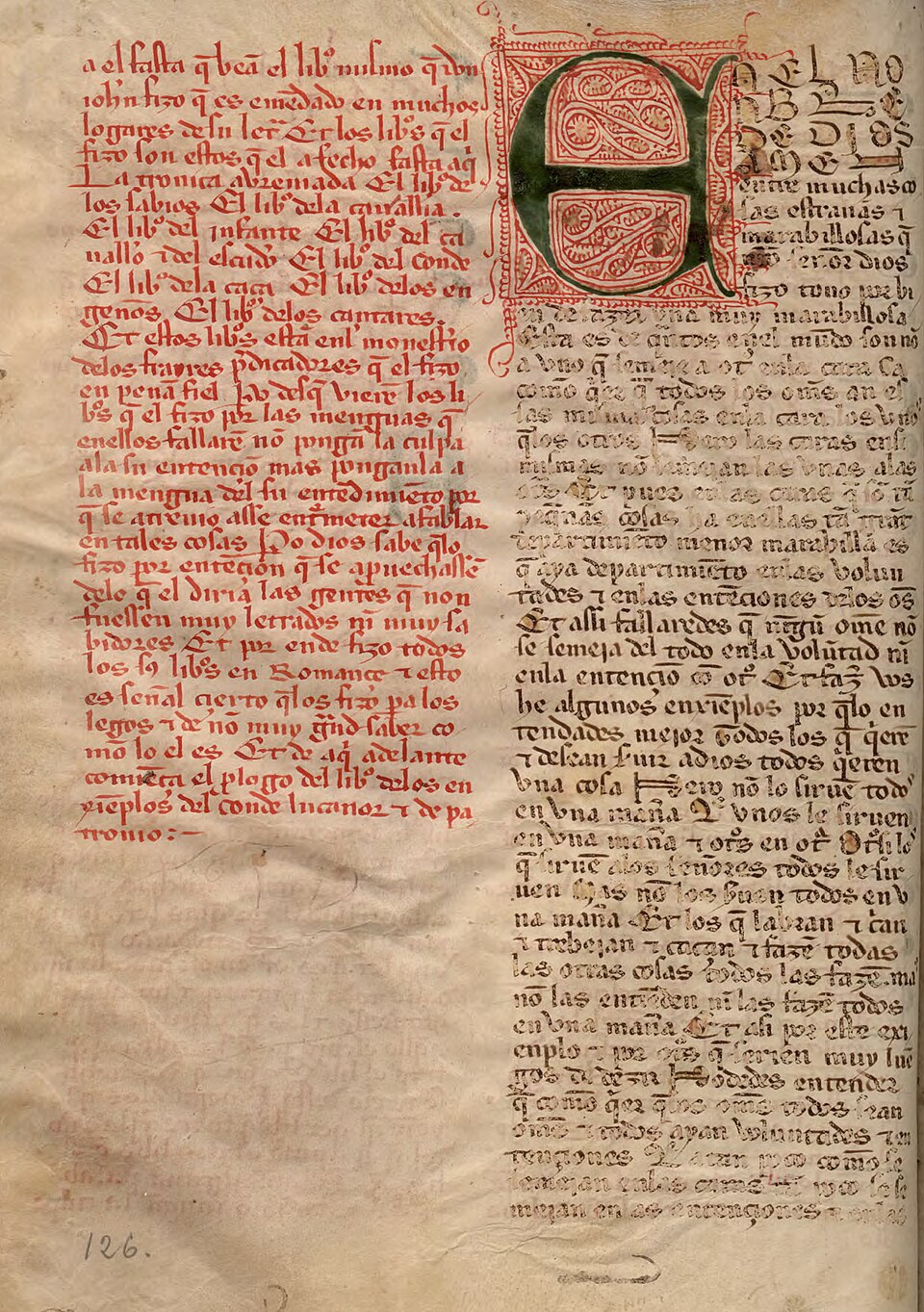
The Chronicle of Alfonso XI is an extensive and detailed description of the events marking this king’s reign. There is an interesting little paragraph that describes how the king, frustrated by the lack of sons by his wife (after like two years of marriage) lets his eye wander. And there, lo and behold, he finds the gorgeous and intelligent Leonor de Guzmán—whom he already knew since some years back. The chronicle lauds her great fermosura (beauty) while telling us the king had lost his heart to her some years back. She is also wealthy, widowed, politically astute, and willing to help him with whatever matters she can. This is when it is important to remember the chronicle had been commissioned by Alfonso and Leonor’s son, Enrique—albeit basing it on all the rolls, laws and privileges approved by the king during his reign.
What really caught my eye, though, was the language. Every single fijo instead of hijo (son in present Spanish), every fablaba instead of hablaba (spoke) every onrrado instead of honrado (honoured), ciubdat instead of ciudad (city), ricos-omes instead of ricos-hombres (rich men, i.e. nobles) and, my favourite, fijos-dalgo instead of hidalgo (high-born, effectively son-of-someone-important) sent happy shivers down my back. It also made me long for my mother—she would have loved sitting beside me as I read my way through this 14th century text.
Not that my mother was all that interested in Alfonso XI but she was utterly enamoured of language in general and Spanish in particular. She would have loved seeing fermosura instead of hermosura, fazer instead of hacer, likely launching herself into a long monologue about how the initial f became an aspirated h as Castilian developed into modern day Spanish. She would then have expanded into the influence of Latin, on how evident it was that Latin had been kept alive in Spain throughout all the centuries since the Roman Empire collapsed, and would have sighed happily as she delved deeper into verb conjugations.
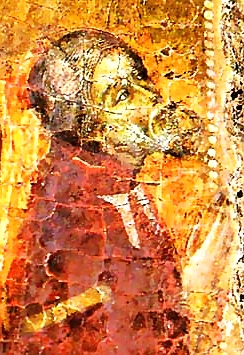
Don Juan Manuel de Villena
I read page after page of this medieval text, surprised by how much I understood. Had I attempted to read a similar text in 14thcentury Swedish, I would have failed dismally, but this medieval Castilian is a very, very close cousin to modern Spanish. There were also instances where the text was inconsistent: in one place, it said levar for “take to”, in another llevar (the modern spelling) I took this to indicate this was a language under development. After all, the first books to ever be written in Castilian were written in Alfonso XI’s reign by Don Juan Manuel de Villena, great-uncle of Alfonso. (Not the warmest of relations, seeing as Juan Manuel was mostly rebelling against his king and admonishing him to set his beloved mistress aside)
Like all chronicles, there were times when it was exceedingly repetitive, and I will readily admit I didn’t read all of it. But what I read, helped me enrich my narrative—and I do believe I can thank my mother and her passion for language and reading (passed on to me since I was knee-high) for having found this so enjoyable—and informative.
King Alfonso XI’s life was a life dedicated to war—against his rebellious noblemen, against his father-in-law, against the Marinids. But then there was Leonor, his beautiful, supportive and loving mistress, offering him solace and moments of joy. Obviously, this did not endear him—or Leonor—to the humiliated Maria of Portugal. How it all ends? Well, I suggest you read Queen of Shadows to find out!
________
Connect with Anna here:
Website: www.annabelfrage.com
X: https://twitter.com/abelfrageauthor
Facebook: https://www.facebook.com/annabelfrageauthor
Instagram: https://instagram.com/annabelfrageauthor
Bluesky: https://bsky.app/profile/abelfrageauthor.bsky.social
Book Bub: https://www.bookbub.com/profile/anna-belfrage
Amazon Author Page: http://Author.to/ABG or http://amazon.com/author/anna_belfrage
Goodreads: https://www.goodreads.com/author/show/6449528.Anna_Belfrage
________
What’s Queen of Shadows about?
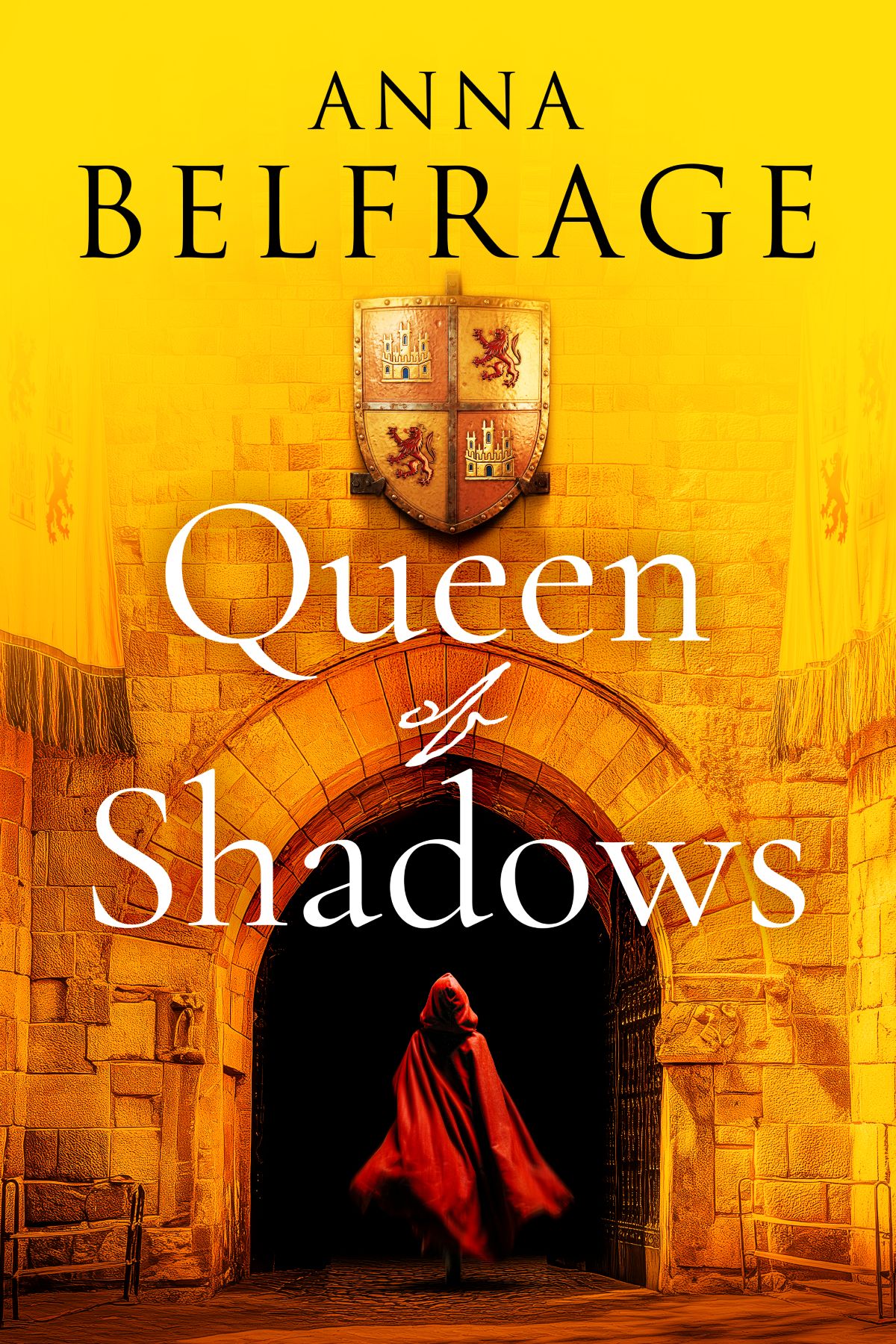 She should have stayed in the shadows—but Leonor de Guzmán yearned for the sun
Castile in the 1330s is a place of constant turmoil. King Alfonso must contend with the incursions from the Muslim Marinids eager to reclaim Al-Andalus while struggling with repeated rebellions against his firm rule.
When Alfonso needs respite, he finds it in the arms of his Leonor—the most beautiful woman in the realm. But while he may love Leonor over all others, his lawful wife, Maria of Portugal, is tired of being constantly displaced by the fair Leonor.
Leonor loves her man. She gives him healthy sons, a place to be himself. But she is only a mistress, even if Alfonso treats her like a queen. Leonor’s enemies watch and hate.
Flying too close to the sun comes at a high price. How much will Leonor’s love cost her?Blurb
________
Buy Queen of Shadows here: https://mybook.to/QofS
________
My thoughts
Leonor de Guzmán is the epitome of a powerful medieval woman. Beloved of King Alfonso XI of Castile in 14th century Castile and treated like his queen, she is the mother of his ten children including many sons. However, Alfonso had made a political marriage with Maria, the daughter of the King of Portugal. And here is the crux of the story – legal queen and shadow queen.
Passions spill out over this classical triangle, something Ms Belfrage is expert at depicting. But she is too good a writer to keep it that simple. She deftly portrays the conflicts at the heart of the three characters’ thoughts, emotions and actions all played out under searing heat of the sun and within the deep undercurrents of political intrigue and jealousy.
Medieval Spain in the 1330s was in the throes of identity conflict, illustrated very well by Alma, a young woman of mixed Castilian and Moorish blood serving Leonor. Her story illustrates the subterranean tensions of Castile: the uneasy coexistence of faiths, cultures and heritage. Alma is steadfast and loyal but must navigate the brooding hypocrisies of many around her.
Ms Belfrage also excels drawing the contrasting faces of Castile, the more northern high plateau and the sun-drenched south. As well as revelling in magnificent architecture, we experience day to day aspects such as food, herbal medicine and travel so vividly we can almost smell, taste and feel them.
This is a poignant story of love and power, of fear and joy, of jealousy and generosity. Sometimes it’s a difficult read, but a rewarding one. The past is not a romantic place of silk dresses and noble knights. These were people in some ways like us with their fears and cares, their loves and compassions, but in other ways, alien to our modern values and attitudes. And Ms Belfrage ensures we feel and see everything. Highly recommended.
Alison Morton is the author of Roma Nova thrillers – INCEPTIO, CARINA (novella), PERFIDITAS, SUCCESSIO, AURELIA, NEXUS (novella), INSURRECTIO and RETALIO, and ROMA NOVA EXTRA, a collection of short stories. JULIA PRIMA and EXSILIUM, set in the late 4th century, tell the story of Roma Nova’s foundation. Audiobooks are available for four of the series. Double Identity, Double Pursuit and Double Stakes form a new contemporary thriller series. A new collection of Roma Nova short stories, HEROICA, is now out.
Find out more about Roma Nova, its origins, stories and heroines and taste world the latest contemporary thriller Double Identity… Download ‘Welcome to Alison Morton’s Thriller Worlds’, a FREE eBook, as a thank you gift when you sign up to Alison’s monthly email update. As a result, you’ll be among the first to know about news and book progress before everybody else, and take part in giveaways.







Thank you so much for hosting me, Alison! And that review makes me very, very happy.
It was a riveting read. A pleasure to host you.