Photo: AllaSerebrina Love it or hate it, Amazon, is now part of our lives. Even if we prioritise buying local, we slip into the seductive single click of buying online from the world’s biggest universal supplier.
As part of the popular antipathy to large corporates prevalent in the digiverse at present (for a multitude of motivations), many people are taking a stand, ‘Anywhere but Amazon’ is now a cry.
Absolutely a right of every single consumer. We all make choices on principle as well as on financial grounds.
But… (You knew it was coming.)
The impact on independent/self-published authors has been significant. Not on all, but very many have noticed their sales drop. Before you say “Ah, didums“, I’d like to highlight a few things.
Through its KDP pushing portal Amazon has democratised publishing and opened doors otherwise locked and barred. Until self-publishing arrived, every manuscript had to be submitted to an agent who then submitted it to a potential publisher. The next stage was the Star Chamber of the sales & marketing meeting where decisions were made on a commercial rather than a literary basis. Next, those S&M teams had to persuade bookshops to put a book on their limited shelf space. At each stage, most books were rejected.
Many books beautifully written, evocative, thrilling, meaningful, heart wrenching and soul-searching fell into oblivion and readers’ choices were limited. Come the digital revolution, the range of books exploded. Admittedly, there’s a lot of dross, as is published through the more traditional route, but as the indie sector has matured, readers now have an everlasting feast of choice at their fingertips.
Amazon makes no charge to authors who upload their books to its platform. It takes its cut, of course. It’s a business. In general, 30% of the price paid by the customer goes to Amazon and 70% to the vendor, i.e. the author who uploaded the book, as long as the author prices their book in a set range (e.g. for the UK market £1.77 -£9.99). If the book is priced between the minimum 77 pence and £1.76 in the UK, then the author receives 35% of the retail price. Other markets have different ranges, and terms.
But the principle is the same: there is no initial financial barrier for any author.
Amazon paved the way for the ‘one upload for the whole world’ idea. My books sell in so many parts of the world that my brain hurts to attempt counting them all. I would never have been able to distribute my books to Texas, Berlin, Sydney, Vancouver, Sao Paolo, Johannesburg and all parts in between without Amazon.
Now, I instinctively dislike monopolies, so from the very beginning, I decided to distribute my ebooks via several big retailers: Kobo, Apple and B&N Nook. Aggregators such as Draft2Digital provide access to many other smaller retailers. Through Ingram Spark, which prints my non-Amazon paperbacks, those paperbacks are distributed through online stores such as Waterstones, Barnes & Noble, Indigo (Canada), Angus & Robertson (Australia) and libraries all over the place.
Publishing my ebooks via other online retailers means my books cannot be accepted into the Kindle Unlimited scheme which, for a monthly subscription, allows readers to download and read as many books within the scheme as they like. Kobo is more generous. You can sell your ebooks anywhere else and still put them in the Kobo Plus subscription scheme equivalent to Amazon’s Kindle Unlimited.
However, none of the other retailers matches up anywhere near Amazon for sheer sales numbers and thus revenue. Please don’t ask me to take down my books from the Amazon stores – my writing career would be finished and my book income collapse. My own act of rebellion will take the form of highlighting other sales platforms first before Amazon.
Feeble? Possibly, but many ‘small’ authors, especially indies, just can’t manage to pay the bills without Amazon sales.
If you wish to make your own act of rebellion, by all means choose a retailer other than Amazon for your books. I have a Kobo ereader which I rather like, so if I find a book is available there as well, I may well choose to buy it there. Or perhaps I may read the book from Apple on an iPad or phone. The important thing is choice. But for the moment, Amazon is the Big One and that’s the world we live in.
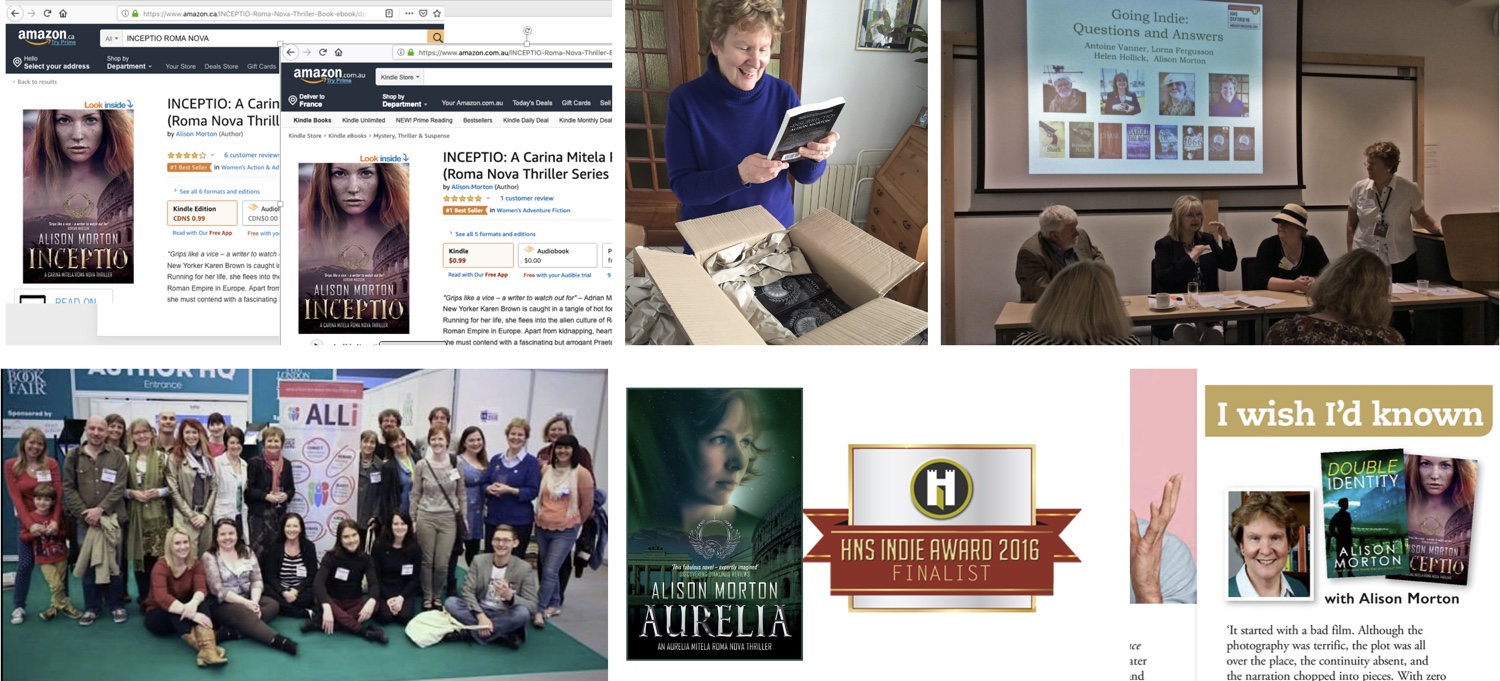
Alison Morton is the author of Roma Nova thrillers – INCEPTIO, CARINA (novella), PERFIDITAS, SUCCESSIO, AURELIA, NEXUS (novella), INSURRECTIO and RETALIO, and ROMA NOVA EXTRA, a collection of short stories. Audiobooks are available for four of the series. Double Identity, a contemporary conspiracy, starts a new series of thrillers. JULIA PRIMA, Roma Nova story set in the late 4th century, starts the Foundation stories. The sequel, EXSILIUM, is now out.
Find out more about Roma Nova, its origins, stories and heroines and taste world the latest contemporary thriller Double Identity… Download ‘Welcome to Alison Morton’s Thriller Worlds’, a FREE eBook, as a thank you gift when you sign up to Alison’s monthly email update. As a result, you’ll be among the first to know about news and book progress before everybody else, and take part in giveaways.
If you enjoyed this post, do share it with your friends!Like this:Like Loading...
 Writing as a life choice isn’t easy. It’s actually a bit mad. But those who have the urge just can’t stop. Writing as a life choice isn’t easy. It’s actually a bit mad. But those who have the urge just can’t stop.
However, everybody will give you advice and I suppose I’m doing the same here. 🙂
Not advice about punctuation, dialogue or how to set the scene or bring characters to life – that’s craft for you to learn yourself.
These are suggestions for the writing life gleaned from things I’ve learnt over the past fifteen years – things I remind myself of every day.
1. Know what you really, really want
Not what other people, e.g. family, spouses and friends think you want, nor what you think you should want. Is writing a want, a need or an obsession, possibly an addiction?
Resist any guilt – internal or external – that writing isn’t a good use of time or a valid job. It’s not selfish, it’s what you want to do.
2. Write now and enjoy it
Write and enjoy it, whatever your goals, whatever kind of writing you do. Of course, it’s foolish to disregard the market if you would like to publish your work, but try not to over anticipate the future, e. g. ‘when I get discovered’, ‘when my book becomes a bestseller’. And don’t let what you’ve done in the past set your writing agenda or stifle your current work. Have a plan, but don’t get obsessed by it. As in life, one thing is sure – everything will change.
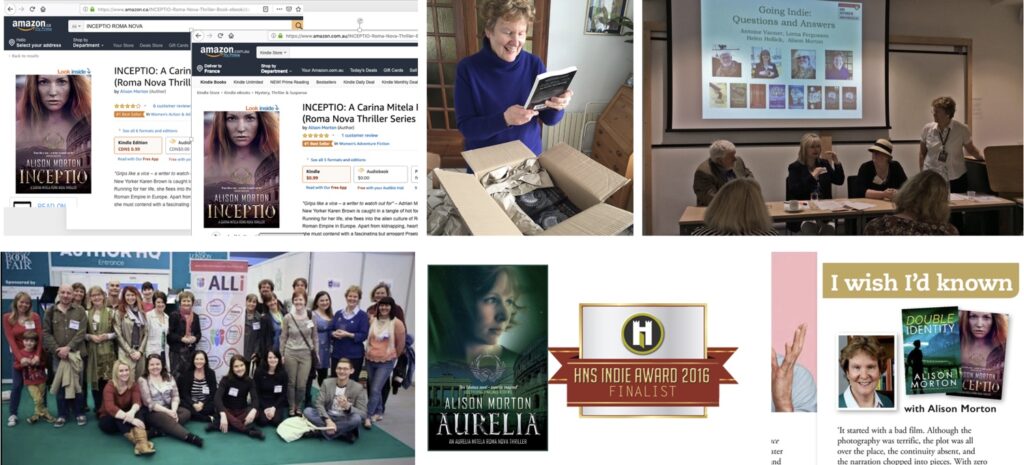
3. Be proud of what you have achieved
It can be by participating in a group, finishing a scene, being placed in a competition, publishing your work, getting a five star review or just making somebody laugh at your comedy writing or be moved by your poem. Most people don’t even start a story, let alone complete it (whatever they say). Resist the urge to compare your own achievements with other people’s. It’s hard, I know, and I’ve experienced twinges of envy, but every writer is different and every story is different.
4. Create and seize opportunities
A hard fact – you are not entitled to recognition however brilliant your writing. It’s very rare to get a ‘break’ or ‘be discovered’ – usually only in novels or films (Sorry!) However, the old adage is true, ‘The harder I work, the luckier I get.’ Use every life event /change and every meeting with other people, especially fellow writers, as an opportunity. And when opportunity is in front of you, grab it.
5. Share with others
You won’t then feel isolated, shut in your bat-cave, desperate to talk about your writing with somebody who understands. Giving back knowledge and experience is more pleasurable than you think. I’ve almost lost count of the talks, panels and workshops I’ve given over the years. The delight when somebody comes up to you afterwards and says you’ve triggered their writing career is immeasurable. You never know, you might spark the next Booker prize winner on their way by giving them one little helpful hint.

Others will be open about sharing with you, to your great benefit. You never stop learning during your whole writing career. Actually, throughout your whole life.
6. Take risks
Dare to read your piece aloud, enter that competition, send your manuscript out to agent and publishers, or for assessment and review. Put your opinion forward, volunteer to lead a session. Try something you think you can’t do – you may surprise yourself.
If you have a deadline or feel overwhelmed or absorbed with a writing project, take the risk of saying no and displeasing others. Explain your reasons in a professional manner.
Creation is always risky. You never know what you may discover in yourself, both good and bad, but it may be something glorious. Humans are naturally risk-averse – thank the Stone Age for that – but do it anyway.
7. Work hard and be persistent
Swanning around being creative is 5% of the job. Sit down every day and write a minimum number of words even if you revise them all another day. Blog posts, articles, short stories, a talk – these all count. Organise your work, research methodically and turn off the Internet while you are inputting your words on the keyboard, unless you really do need to check something vital.
A tip for your mental health – don’t leave the hard slog of writing until a month before the deadline; start now.
Anything else to add to that list?
Alison Morton is the author of Roma Nova thrillers – INCEPTIO, CARINA (novella), PERFIDITAS, SUCCESSIO, AURELIA, NEXUS (novella), INSURRECTIO and RETALIO, and ROMA NOVA EXTRA, a collection of short stories. Audiobooks are available for four of the series. Double Identity, a contemporary conspiracy, starts a new series of thrillers. JULIA PRIMA, Roma Nova story set in the late 4th century, starts the Foundation stories. The sequel, EXSILIUM, is now out.
Find out more about Roma Nova, its origins, stories and heroines and taste world the latest contemporary thriller Double Identity… Download ‘Welcome to Alison Morton’s Thriller Worlds’, a FREE eBook, as a thank you gift when you sign up to Alison’s monthly email update. As a result, you’ll be among the first to know about news and book progress before everybody else, and take part in giveaways.
If you enjoyed this post, do share it with your friends!Like this:Like Loading...
 Absolutely delighted to have Lorna Fergusson back on the blog after a 10 year absence! Apart from being a skilled and evocative writer, she’s a writing coach, editor and speaker. Her work includes The Chase and An Oxford Vengeance. Absolutely delighted to have Lorna Fergusson back on the blog after a 10 year absence! Apart from being a skilled and evocative writer, she’s a writing coach, editor and speaker. Her work includes The Chase and An Oxford Vengeance.
She runs Fictionfire Literary Consultancy and has taught on various Oxford University writing programmes since 2002. Her stories have won an Ian St James Award, the Historical Novel Society’s Short Story Award and been shortlisted for the Bridport Prize and Pan Macmillan’s Write Now prize. In 2021 and 2022, she was runner-up for the Mogford Prize. In 2024, she made the category shortlist in the Historical Novel Society’s First Chapter competition.
She’s developing one of her Mogford stories as a novel, as well as working on poetry and a book on mindset for writers. Her latest book is One Morning in Provence, a collection of stories set in France.
Over to Lorna!
Writers make things up, don’t they? Of course they do. But writers also tap into real knowledge, experience and emotions. We may set out to do that deliberately, or it happens once we are under way, unearthing memories long forgotten, memories which invest the story we’re writing with emotional resonance.
The power of place often comes first in my creative process. I’ve been lucky to live in some amazingly historic or lovely locations. I was brought up in the north of Scotland and have lived in Oxford for many decades. Hard to avoid inspiration there! I visit Cornwall every year – it is another of my soul-places. And then there’s France…
 Shutters on a building in Arles I’ve been inspired by France all my life, during many visits long and short. A half-share in a holiday home in the Dordogne gave rise to my novel The Chase, where buying a mysterious house in the forest teaches my main characters how the past resonates into the present.
Last year I decided to write a collection of stories set in France, one of which ended up being a sequel to the events in The Chase. Where better to start writing them but during a wonderful writers’ retreat in the Loire with my friends? And yes, I know the internet gives us all sorts of opportunities to ‘visit’ places virtually, but there really is no substitute for physically being there.
 Visiting Amboise: Left to right: Jane Davis, Jean Gill, Alison Morton, Lorna Fergusson, Carol Cooper, Karen Inglis, Clare Flynn What happened was quite extraordinary. I tapped into my own experiences of France, over a lifetime’s worth of trips. Each of those experiences was linked to a particular French region. As I invented people and adventures my own sensory memories flooded in and gave each story its flavour.
 Ochre cliffs at Roussillon When you’re writing, you want to transport your readers to the setting. You want them to feel they temporarily inhabit it. The mistake is to fill a story with dry facts. You are not writing a guidebook. When people travel, they are open to new thoughts, new realisations, new epiphanies, because a change of place has that effect. There’s a vulnerability. There’s a dislocation from familiar routines. Travel makes you look at things in a new light.
A theme started to emerge, as story after story flowed onto my iPad screen. I hadn’t set out with a single binding notion for this collection. It created itself. My characters, when they visited Paris, the Loire, the Dordogne, the Atlantic coast, Provence – these wonderful locations where they would be transient presences – found out something. Yes, they learned about French geography, gastronomy, history, culture – but more than that, they learned about themselves. They were confronted by memories, longings, forgotten emotions, important turning-points.
Avoiding a dry guidebook style, as I’ve said, is crucial. So too is an overly schematic diagram of human psychology. Good stories are well-structured but they should have an organic quality. The lessons and revelations in these tales needed to emerge as a natural consequence of interaction, not just with people but with place. And it’s here that the senses play such a crucial role.
We’ve all heard of Proust’s Madeleines: how the taste of a cake triggers a cascade of memory, not just of the flavour of the cake but of the ‘self’ one was when one ate it before. My characters were eating cake, or olives, or fine cheese. They were listening to the sound of olive branches bending as the Mistral blew. They were basking in the heat of the south, standing on top of the highest sand dune in Europe or gazing awestruck at the rose window of Chartres cathedral. I plucked sensory images from my own memories and gave those to the characters, fascinated by how they would take those impressions and run with them. They often ran in unexpected directions!
 Hilltop village of Gordes If you like writing about places, whether you’re describing an urban or rural landscape, a strange or a familiar one, help your reader out: go deep into the world of the senses. Don’t stop at the visual – remember sound, touch, scent and taste too. A choice image can do the work of a ten-line paragraph if it speaks straight to your reader’s sensory memory – and it will!
—————–
I cannot agree more with Lorna and I heartily recommend her new collection of stories which will plunge you into la France profonde.
 One Morning in Provence One Morning in Provence
To travel is to meet yourself…
The sensory richness of France unlocks unexpected truths for those who travel there.
A stressed-out publicist learns what getting away really means.
A divorcee’s new happiness bewilders her friends.
A woman’s dream holiday rental turns to nightmare.
Unhappy couples fantasise about new passion.
A young girl is transformed by wonder on her first trip abroad.
Pain strikes an older woman, in a landscape of impossible perfection.
A widower finally understands the consolation of art, unlike the artist who has spent his life denying it.
In these evocative stories flawed people are ambushed by hopes, regrets and longings. Inspired by the breathtaking beauty around them, can they change their lives?
Buy One Morning in Provence here: https://books2read.com/ProvenceMorning
(Ebook and paperback)
———
Connect with Lorna:
Website: https://www.lornafergusson.com/ and https://www.fictionfire.co.uk
Facebook: https://www.facebook.com/LornaFergussonAuthor
LinkedIn: https://www.linkedin.com/in/lornafergusson/
Bluesky: https://bsky.app/profile/lornafergusson.bsky.social
X: https://x.com/LornaFergusson
———
My thoughts
Living in France and having visited almost every part of the country since childhood, these stories resonated with me – each story was a delight as each one opened up a memory for me. I remember sipping an Orangina in a café when I was a child!
The star of the stories is always the place: you feel you are touching the gate wall, being thoroughly warmed by the southern sun and surrounded by the sounds and scents rising from the herbs and pines around you, all under a luminous blue sky characteristic of the south.
But the characters are achingly well-drawn. You are inside the mind of each person, their small and large concerns and feelings. And they are oh, so human.
France is a big country, but Lorna makes it easy for us by including a little map before each story.
A sumptuous read. Treat yourself!
Alison Morton is the author of Roma Nova thrillers – INCEPTIO, CARINA (novella), PERFIDITAS, SUCCESSIO, AURELIA, NEXUS (novella), INSURRECTIO and RETALIO, and ROMA NOVA EXTRA, a collection of short stories. Audiobooks are available for four of the series. Double Identity, a contemporary conspiracy, starts a new series of thrillers. JULIA PRIMA, Roma Nova story set in the late 4th century, starts the Foundation stories. The sequel, EXSILIUM, is now out.
Find out more about Roma Nova, its origins, stories and heroines and taste world the latest contemporary thriller Double Identity… Download ‘Welcome to Alison Morton’s Thriller Worlds’, a FREE eBook, as a thank you gift when you sign up to Alison’s monthly email update. As a result, you’ll be among the first to know about news and book progress before everybody else, and take part in giveaways.
If you enjoyed this post, do share it with your friends!Like this:Like Loading...
 Delighted to welcome Helen back to the blog today to talk about a very different aspect of the past – the supernatural. She and her daughter Kathy have written a fascinating book about on that very subject. More below! Delighted to welcome Helen back to the blog today to talk about a very different aspect of the past – the supernatural. She and her daughter Kathy have written a fascinating book about on that very subject. More below!
Known for her captivating storytelling and rich attention to historical detail, Helen might not see ghosts herself, but her nautical adventure series, and some of her short stories, skilfully blend the past with the supernatural, inviting readers to step into worlds where the boundaries between the living and the dead blur.
The Romans were an incredibly suspicious lot and like many ancient peoples were always calling up the spirits of the dead as well and the vast pantheon of gods and goddesses. So I asked Helen to tells us about this…
Did ghosts march with the Romans?
Whether you believe in ghosts or not is immaterial – belief in their presence has been around since very ancient times. They are mentioned in several ancient cultures, and the religions of Sumer, Babylon, Assyria, and other early Mesopotamian areas. Ghosts were – are – believed to be created at the time of death. They ‘pass’ to another world, where they are assessed, judged or appointed tasks. Some remain in that otherworld, others come back for various reasons. The surviving living were expected to place food, drink and useful goods within a burial chamber (of whatever sort) in order for the dead person to enjoy. The tomb of Tutankhamun as a good example.
The Hebrew Bible has several ghost references, although most are connected to occult activities. For instance, I Samuel 28:3–19 where King Saul commands the Witch of Endor to summon the ghost of Samuel. Christ returns from the dead as a Holy Spirit. And are angels a religious interpretation of ghosts?
Egyptian ideas of the afterlife evolved constantly through several thousand years of their history. However, the concept of a bandaged mummy coming back to life to create havoc is modern. (Thanks, Scooby Doo!)
The Odyssey and Iliad feature ghosts, often useful to the heroes for predicting prophecies, but by the 5thcentury BC Greek ghosts had plumped for haunting and frightening the living.
To the Romans, though, a ghost was useful for revenge against an enemy – scratch a curse on a stone or some pottery, place it on a grave and wait patiently for a satisfying result. (Also, on lead and chuck it in a sacred spring.)
The baths at Chaeronea were haunted by the ghost of a murdered man, according to Plutarch. Fed up with the ghost’s loud groans, the townsfolk eventually sealed up the place. There doesn’t seem to be any follow-up indication that their work stopped the noise. Except, as it was probably caused by faulty drains, disuse of the place may have resulted in success?
 Pliny the Younger (c. 50 AD) described the haunting of a house in Athens, referring to the Stoic philosopher Athenodorus, who lived in the house at least 100 years before Pliny started writing. Athenodorus deliberately put his writing desk where the ghost was assumed to appear, and wrote until late at night… He was eventually disturbed by a chain-bound ghost. Pliny the Younger (c. 50 AD) described the haunting of a house in Athens, referring to the Stoic philosopher Athenodorus, who lived in the house at least 100 years before Pliny started writing. Athenodorus deliberately put his writing desk where the ghost was assumed to appear, and wrote until late at night… He was eventually disturbed by a chain-bound ghost.
Following the apparition outside, it pointed to a specific spot where Athenodorus later discovered a shackled skeleton. Giving the remains a proper burial the haunting ceased. A good story, or was Athenodorus a gifted medium?
Closer to modern day, though, was a report of Roman ghosts in York, England.
Back in 1953, an apprentice plumber, Harry Martindale, was working in the cellar of the Treasurer’s House. He looked up and saw a Roman soldier walking through the wall, followed by several other Roman soldiers. All were visible upward from just below the knee, so they were walking on a lower, hidden, level. Martindale gave a good description of their shields, short swords, green tunics and the laces of the (unseen) sandals – the lacing going up the leg to what little he could see of below the knee.
 Treasurer’s House, York, 2023 Several who heard his tale disbelieved him, or put his account down to fantasy as his description did not tally with what was, then, known… BUT…
At a later excavation it was realised that the Treasurer’s House was, in fact, built above a Roman road, and new discoveries at Hadrian’s Wall proved that auxiliary troops in the 4th century carried round shields and laced their sandals up to their knees, just as Martindale had described.
I’m disappointed that there do not seem to be many Roman remains here in North Devon. There are quite a few in South Devon, mind you – Exeter in particular. Known as Isca Dumnoniorum, meaning water or river of the Dumnonii, the town was a busy trade port, and several small settlements have been unearthed nearby.
Romans crossed the River Taw at what is now Newland Mill, near North Tawton and established a succession of military camps there over the years. The Roman fort is believed to have been called Nemetostatio, ‘the road-station of the sacred groves’ (possibly) located on the site of an ancient druidic sanctuary. Strategically, it lay on the Roman road between Isca Dumnoniorum (Exeter) and Okehampton.
North Devon? Virtually nothing, though I cannot believe the Romans were not here along our coast. The two main rivers, the Taw and Torridge flow for miles from central Devon, with Barnstaple and Bideford (each only a few miles from the Bristol Channel) becoming exceedingly busy ports by the 17th century. I personally believe that Roman foundations would be found beneath the present Georgian buildings that dominate much of Barnstaple. But, of course, you can’t go knocking down old Georgian buildings to see what lies below them!
I haven’t heard of any Roman ghosts lingering in Barnstaple, so maybe it’s true? The Romans didn’t bother with our beautiful part of Britain.
(Sorry, Helen, I can’t find any trace either – Alison)
 From the Ordnance Survey, Map of Roman Britain, 1956 About Ghost Encounters: The Lingering Spirits of North Devon
 Everyone assumes that ghosts are hostile. Actually, most of them are not. Everyone assumes that ghosts are hostile. Actually, most of them are not.
You either believe in ghosts or you don’t. It depends on whether you’ve encountered something supernatural or not. But when you share a home with several companionable spirits, or discover benign ghosts in public places who appear as real as any living person, scepticism is abandoned. In GHOST ENCOUNTERS: The Lingering Spirits Of North Devon, mother Helen Hollick and daughter Kathy Hollick share their personal experiences, dispelling the belief that spirits are to be feared.
Ghost Encounters will fascinate all who enjoy the beautiful region of rural South-West England, as well as interest those who wish to discover more about its history… and a few of its ghosts.
(Includes a bonus of two short stories and photographs connected to North Devon)
Pre-order the e-book on Amazon – https://mybook.to/GhostEncounters
Paperback published February 28th – e-book will also be available on Kindle Unlimited
———–
Connect with Helen and Kathy
Website: https://helenhollick.net/
Amazon Author Page: https://viewauthor.at/HelenHollick
Bluesky: @helenhollick.bsky.social
Blog: supporting authors & their books https://ofhistoryandkings.blogspot.com/
Kathy’s Official Website: https://www.white-owl.co.uk/
For additional (and any new ghost encounters!) visit: https://ghostencountersofdevon.blogspot.com/
———–
About Helen
Known for her captivating storytelling and rich attention to historical detail, Helen might not see ghosts herself, but her nautical adventure series, and some of her short stories, skilfully blend the past with the supernatural, inviting readers to step into worlds where the boundaries between the living and the dead blur.
Her historical fiction spans a variety of periods and her gift lies in her ability to bring historical figures and settings to life, creating an immersive experience that transports readers into the past. Her stories are as compelling as they are convincing.
Helen started writing as a teenager, but after discovering a passion for history, was published in the UK with her Arthurian Trilogy and two Anglo-Saxon novels about the events that led to the 1066 Battle of Hastings, one of which became a USA Today best-seller. She also writes the Jan Christopher cosy mystery series set during the 1970s, and based around her, sometimes hilarious, years of working as a North London library assistant.
Helen, husband Ron and daughter Kathy moved from London to Devon in January 2013 after a Lottery win on the opening night of the London Olympics, 2012. She spends her time glowering at the overgrown garden and orchard, fending off the geese, helping with the horses and, when she gets a moment, writing the next book…

About Kathy
When not encountering friendly ghosts, Kathy’s passion is horses and mental well-being. She started riding at the age of three, had a pony at thirteen, and discovered showjumping soon after. Kathy now runs her own Taw River Equine Events, and coaches riders of any age or experience, specialising in positive mindset and overcoming confidence issues via her Centre10 accreditation and Emotional Freedom Technique training to aid calm relaxation and promote gentle healing.
 Kathy riding Lexie Kathy lives with her farmer partner, Andrew, in their flat adjoining the main farmhouse. She regularly competes at affiliated British Showjumping, and rides side-saddle (‘aside’) when she has the opportunity. She produces her own horses, several from home-bred foals.
She also has a fun diploma in Dragons and Dragon Energy, which was something amusing to study during the Covid lockdown.
Alison Morton is the author of Roma Nova thrillers – INCEPTIO, CARINA (novella), PERFIDITAS, SUCCESSIO, AURELIA, NEXUS (novella), INSURRECTIO and RETALIO, and ROMA NOVA EXTRA, a collection of short stories. Audiobooks are available for four of the series. Double Identity, a contemporary conspiracy, starts a new series of thrillers. JULIA PRIMA, Roma Nova story set in the late 4th century, starts the Foundation stories. The sequel, EXSILIUM, is now out.
Find out more about Roma Nova, its origins, stories and heroines and taste world the latest contemporary thriller Double Identity… Download ‘Welcome to Alison Morton’s Thriller Worlds’, a FREE eBook, as a thank you gift when you sign up to Alison’s monthly email update. As a result, you’ll be among the first to know about news and book progress before everybody else, and take part in giveaways.
If you enjoyed this post, do share it with your friends!Like this:Like Loading...
 Republished Republished
As a language nerd, certified translator and writer of fiction (and in a previous existence of proposals, reports, corporate documentation, advertising and PR copy), I’ve always been interested in the power of words. Tone, style and formality as important as context.
Although multi-lingual, I write in my mother-tongue English, but when writing a story in a country where the residents speak a different language or other characters speak a different language, I drop in a few appropriate words of that foreign language. It can add to the flavour of the setting and/or to a character’s background.
However, there are many traps along the way.
Overdoing it is one pitfall to avoid. Using Google Translate is “The Big Don’t“.
Language traps
In French, we have several problems, one of which is the tu/vous conundrum. In English ‘you’ covers all relationships. If you want to go beyond the odd bonjour, au revoir and merci, for instance, for one character to ask if another has understood what the first one said, you need to know what the relationship is. There’s a world of difference between Tu piges? and Vous comprenez? It’s all about context!
The other things to watch are gender and verb conjugation. Dictionaries usually give the infinitive form of verbs or the singular form of nouns. Stringing them together and, in the case of German, using the correct article and adjective cases can be tricky. Even though Google Translate can provide a (rickety) translation of large chunks of text from a foreign language into English for information purposes, when going from English into another language like French, it doesn’t know its conditional from its coordinating conjunction.
When to use foreign language in your story
Above all, you want your readers to grasp what is being said. Nothing throws a reader out of a story like something baffling or jarring that leaves them wondering what just happened. If you stick to short expressions like greetings, or ma chére, mon ami, or s’il vous plaît, very few readers will feel lost. Instead, they may well be charmed.
One choice horror to avoid is inserting the English translation in brackets after the foreign language expression spoken by a character. I have seen it and I cringe. A good writer will find other ways to show what is meant either by the context or another character’s reaction or reflection on what was just said.
As with any ‘rule’, there’s an exception. If a character is explaining how a foreign system works and it’s relevant, then you can explain it.
‘Thank you. Are you able to follow in French?’
‘Mostly,’ McCracken answered.
‘Very well. Please stop me or anybody else if you need an explanation. However, I would stress that while I recognise you have full authority, I would ask you to sit at the side and address any questions through me.’
‘Of course, monsieur le juge,’ McCracken replied.
‘For the sake of clarity and so my greffier – my legal clerk, Mr McCracken – sitting over there—’ he nodded towards the man who had showed them in ‘—can record everything correctly, I will briefly outline the situation.’
If it’s a moment of high drama where a French-speaking character would say something such as “Va-t-en!” and push the other person away, that second character can reply, “No, I’m staying right here until you tell me what’s going on.” The reader will understand from the context what the French words meant.
Swearing is the other place you can use foreign words. The context will convey the distress or anger of the character saying it, but the language will hopefully not upset readers as much as if the swearing was in plain English. Bon Dieu or Bon sang should hopefully not ruffle the sensibilities of religious believers as much as the counterpart words in English. In my modern contemporary thrillers written in English I can have my French-speaking ex-military special forces heroine under great stress say “putain” which conveys strength of feeling without English readers being upset by the f-word in black and white.
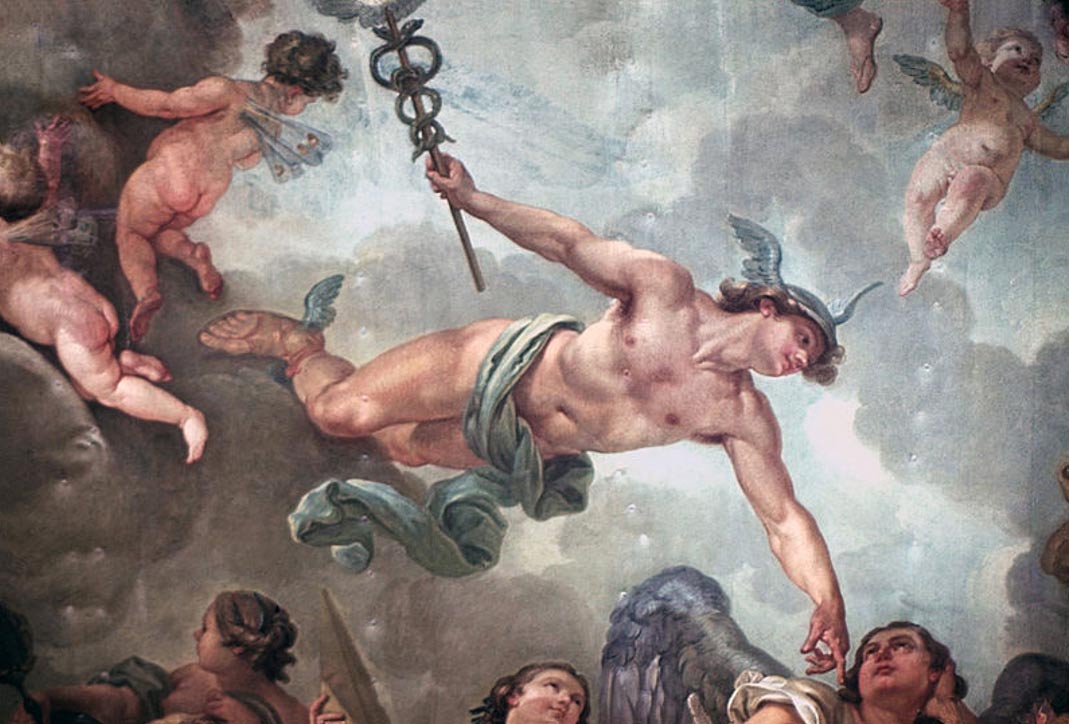
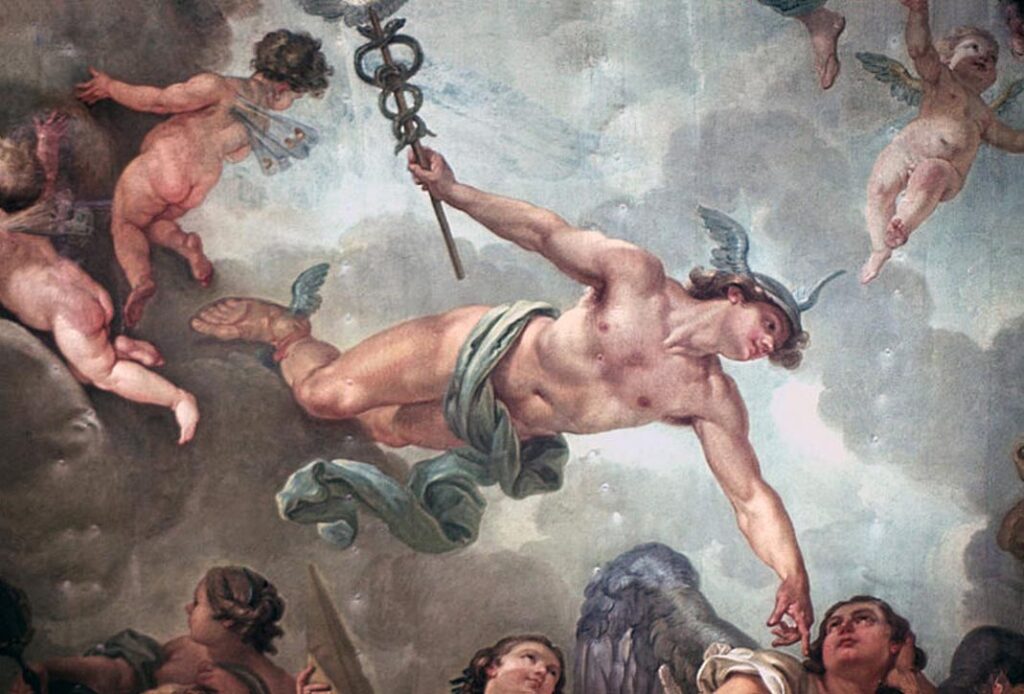 Mercury in saving mode In my Roma Nova thrillers, my characters can swear by the various gods – “Oh, Mercury save us!”, or “Jupiter’s balls!” The worst is “Pluto in Tartarus”; both Tartarus and Pluto denote hell but Pluto is the darkest, deepest and most infernal hell and linguistically reinforces the strength of Tartarus.
The odd word or phrase in a foreign language adds a piquancy to the narrative, dialogue and atmosphere. But you should check with a mother-tongue speaker or professional translator that vocabulary, grammar and style are correct for the time and place of the story or your credibility as a competent author could be at stake.
Bonne chance! Viel Glück! Bona fortuna!
Alison Morton is the author of Roma Nova thrillers – INCEPTIO, CARINA (novella), PERFIDITAS, SUCCESSIO, AURELIA, NEXUS (novella), INSURRECTIO and RETALIO, and ROMA NOVA EXTRA, a collection of short stories. Audiobooks are available for four of the series. Double Identity, a contemporary conspiracy, starts a new series of thrillers. JULIA PRIMA, Roma Nova story set in the late 4th century, starts the Foundation stories. The sequel, EXSILIUM, is now out.
Find out more about Roma Nova, its origins, stories and heroines and taste world the latest contemporary thriller Double Identity… Download ‘Welcome to Alison Morton’s Thriller Worlds’, a FREE eBook, as a thank you gift when you sign up to Alison’s monthly email update. As a result, you’ll be among the first to know about news and book progress before everybody else, and take part in giveaways.
If you enjoyed this post, do share it with your friends!Like this:Like Loading...
|
Subscribe to Blog via Email
Join 368 other subscribers.
Categories
Archive
|