Let’s face it – 2022 has been a weird year.
Coming out of the strict Covid regulations and try to recover a ‘normal’ (ha-ha!) book life, I planned a busy year. And so it turned out:
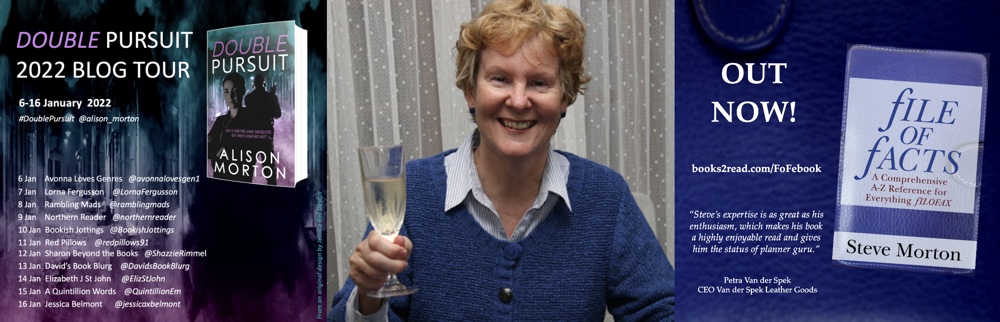
On 3 January, I published my husband’s fantastic book File of Facts about using personal organisers. (He is a world expert!)
On 12 January, I took part in an Amazon Book Chat Live on amazon.com (US and rest of world) to talk about my favourite books. It was great fun! https://www.amazon.com/live/broadcast/a2dc3d11-8d82-49e8-b884-de1acad34a81
6-17 January saw a blog tour for my second Mélisende French thriller, Double Pursuit.
February was planning, writing and self-editing (JULIA PRIMA mostly), plus promotions for INCEPTIO and AURELIA.
At the beginning of March, I announced the results of the ‘Authors you Love’ competition. That was revelatory!
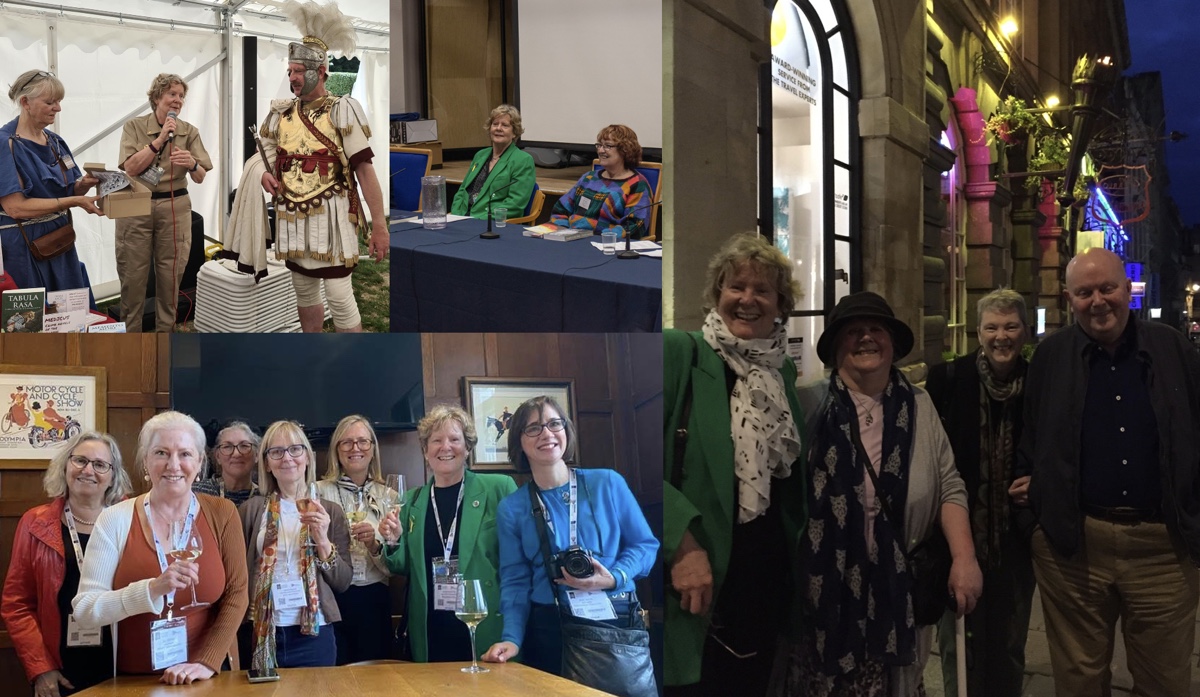
Then the joy of live events with REAL people!
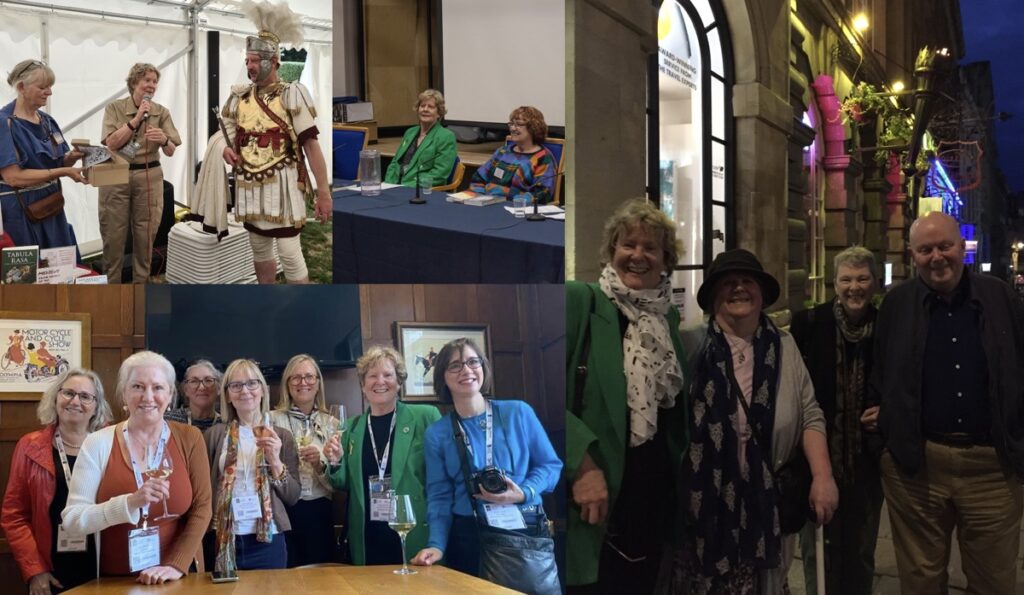
Portsmouth MysteryFest March, on two panels: Historical Mysteries (as substitute for Edward Marston) and Crime and Mental Health. First live event post Covid!
London Book Fair, April, when I volunteered on the Alliance of Independent Authors’ stand, spreading the word! https://alisonmortonauthor.com/2022/04/london-book-fair-2022/
CrimeFest Bristol, May, where I met up with writing friends I hadn’t seen for 3 years and made new ones. Also I checked out new book trends and met colleagues from the Crime Writers’ Association.
Eboracum Roman Festival June, in the bookroom with a clutch of Roman writing friends, but we escaped from time to time.
Colchester Roman Festival, July – the first one ever! I was on two panels: ‘Colchester, garrison town for 2,000 years. Differences and similarities, the Roman and British armies’ and ‘When does Roman fact become fiction?’ https://www.alison-morton.com/2022/08/08/colchester-roman-festival-2022-the-first-one-ever/
Oh, yeah, my new Roma Nova story, JULIA PRIMA, the first Foundation story, set in AD 370 came out on 23 August! 😉 There followed excerpts, blog tour, special newsletters, reviews and a ton of all kinds of promotion.
Historical Novel Society conference, September, in Durham, UK, where I was on a panel called ‘Twisting Time in Historical Fiction – An Alternative Approach’ with Anna Belfrage and Christina Courtenay. We were just a group of time-twisters but we knew how to have fun with history… https://hns-events.com
October was a busy month! It began with a second blog tour for JULIA PRIMA, this time run by the Coffee Pot Book Club. Next, I was interviewed by the French regional press La Nouvelle République. Slightly surreal as I don’t have any of my books in a French translation. But still fun! And then the local French language class where I help out as an ‘assistant’ decided to feature the article in two of its lessons. Talk about embarrassing…
In October and November, I hosted a run of other authors on this blog: It’s always fun to make others talk! Anna Belfrage, Jean Gill, Helen Hollick, Elizabeth St John
Towards the end of November, I was invited onto French local radio in Poitiers for a live interview. FranceBleu is part of a national network run by the French equivalent of the BBC. After nattering on for there-quarters of an hour in French, I definitely needed coffee!
In December I was appointed Ambassador of the Alliance of Independent Authors (ALLi) here in France. I’m still learning what it entails, but I feel honoured!
Oh, and in between I found time to write a few lines of the next book and plan a special project.

So how does this help with 2023?
- 2022 provided me with reconnection with normal writer’s book life. Apart from writing books, we make connections, meet agents, publishers, fellow writers, service providers and genre experts, but above all READERS. We learn and exchange, we swap techniques, run ideas past each other and share a glass or two of wine. Having had such a frenetic 2022, I feel I have re-established this part of my life.
- Reassured me I have not been forgotten. Imposter syndrome is rife in the writing world, however elevated you are and however many or few books you sell or however many five-star reviews you have.
- Released me to plan a calmer 2023. I don’t feel quite the same urge to dash all over the place.
- Allowed me to say ‘no’ to some opportunities. Nobody can do everything and ultimately it’s up to us to choose what suits us. For instance, wonderful that social media is to publicise our books and interact with readers and colleagues, we can’t keep up with everything or our heads will explode. I’m determined to do more saying ‘no’ in 2023.
Alison Morton is the author of Roma Nova thrillers – INCEPTIO, CARINA (novella), PERFIDITAS, SUCCESSIO, AURELIA, NEXUS (novella), INSURRECTIO and RETALIO, and ROMA NOVA EXTRA, a collection of short stories. Audiobooks are available for four of the series.Double Identity, a contemporary conspiracy, starts a new series of thrillers. JULIA PRIMA, a new Roma Nova story set in the late 4th century, is now out.
Find out more about Roma Nova, its origins, stories and heroines and taste world the latest contemporary thriller Double Identity… Download ‘Welcome to Alison Morton’s Thriller Worlds’, a FREE eBook, as a thank you gift when you sign up to Alison’s monthly email update. You’ll also be among the first to know about news and book progress before everybody else, and take part in giveaways.
If you enjoyed this post, do share it with your friends!
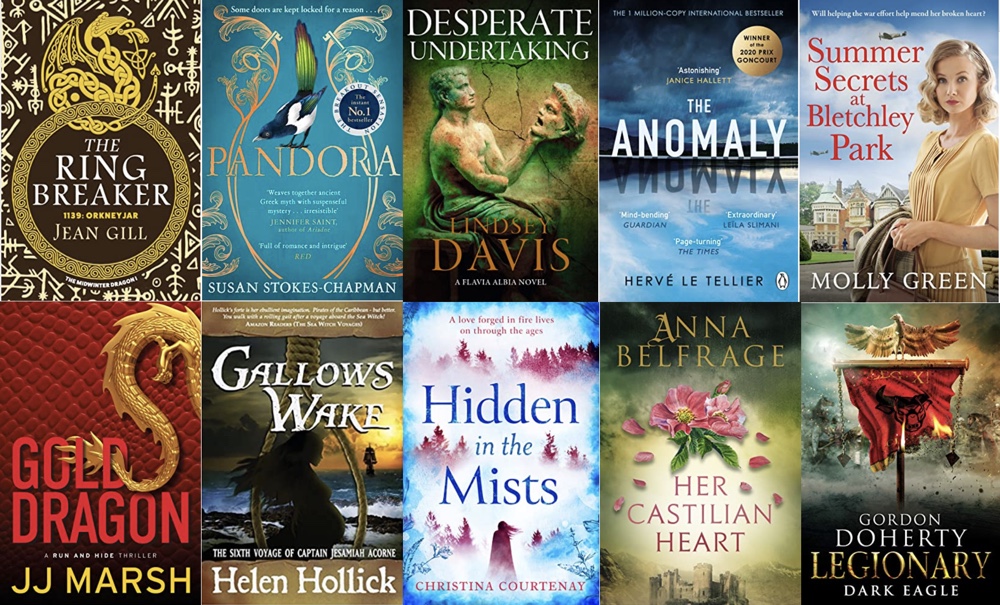
As in 2021, reading books has given me enormous pleasure. This year, I published a historical fiction story, JULIA PRIMA, set in AD 370, the first foundation story to my Roma Nova thriller series, but in this post I’m writing as a reader.
This is not a beauty contest or a selection. The list below contains just books I’ve read this year and enjoyed. Some made me catch my breath, others made me weep with joy or sorrow and others appalled me. But they all enthralled me.
I’m not mentioning those I read or part-read and didn’t enjoy – that’s not fair to the authors concerned as I’m probably not their ideal reader.
I’m a fussy reader. I use Amazon’s ‘Send a free sample’ service mercilessly, especially if it’s an author new to me. But I have discovered some real gems that way.
Oh, and I’ve read a few non-fiction for research and ‘professional development’
Fiction
Desperate Undertaking (Flavia Albia), Lindsey Davis
How to Find Love in the Little Things, Virginie Grimaldi
Pearl Moon, JJ Marsh
The Legacy of Halesham Hall, Jenni Keer
The Secrets of Saffron Hall, Clare Marchant
Legionary: Dark Eagle (Legionary 8), Gordon Doherty
Killashandra, Anne McCaffrey (re-read)
The Anomaly, Hervé Le Tellier, Adriana Hunter
Lady Helena Investigates, Jane Steen
Her Castilian Heart, Anna Belfrage
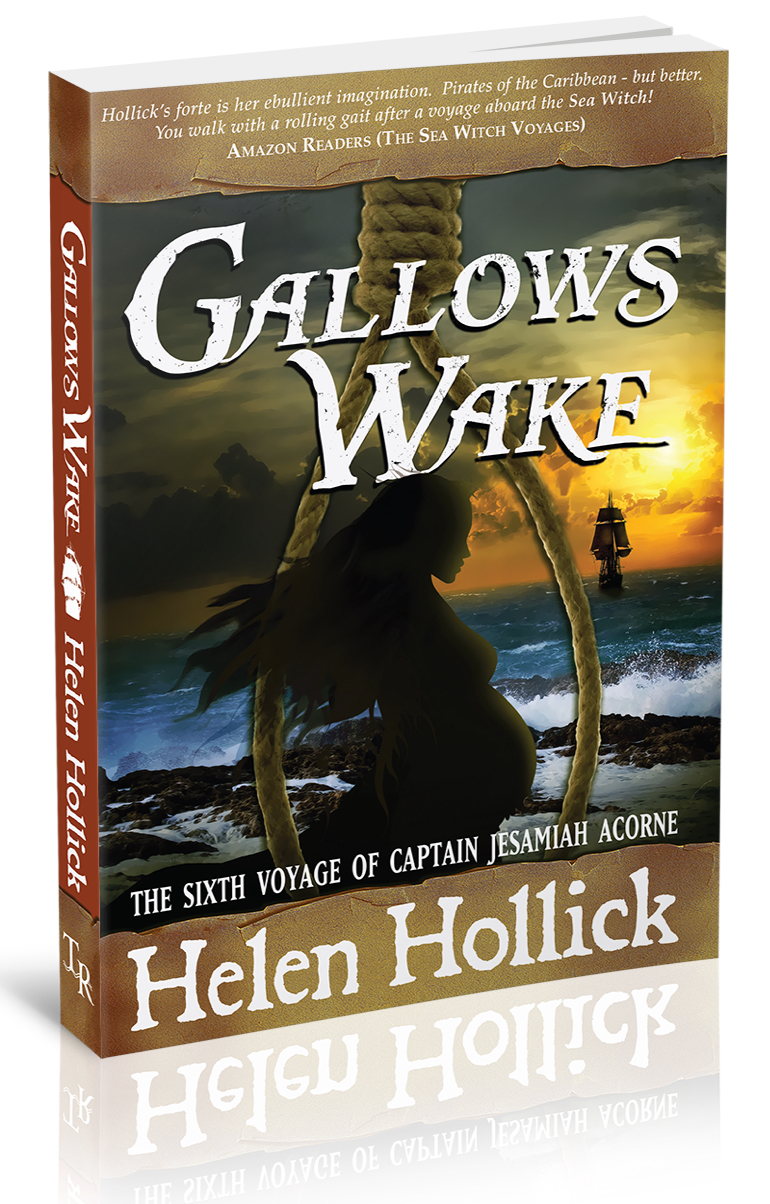
Gallows Wake, Helen Hollick
And By Fire, Evie Hawtrey
Beyond a Broken Sky, Suzanne Fortin
Men Like Gods, H. G. Wells
Hidden in the Mists, Christina Courtenay
The Berlin Exchange, Joseph Kanon
Ariadne, Jennifer Saint
The Apothecary’s House, Adrian Mathews
A Roman Shadow, H L Marsay
Pandora, Susan Stokes-Chapman
Gold Dragon, JJ Marsh
The Fugitive Colours, Nancy Bilyeau
A Pinch of Pure Cunning: Six Mysteries from Ancient Rome, Jane Finnis
Ascent (House of Normandy Book 1), Cathie Dunn
JUDAS 62, Charles Cumming
From the Ashes, Marion Kummerow
The Khan, Saima Mir
The Wolf Den, Elodie Harper
The Thread, Victoria Hislop
Time and Time Again, Ben Elton
A Bitter Chill, Jane Finnis
Summer Secrets at Bletchley Park, Molly Green
The One, John Marrs
Anachronist, Andrew Hastie
Too Soon the Night (Theodora Book 2), James Conroyd Martin
The Helsingør Sewing Club, Ella Gyland
An Instance of the Fingerpost, Iain Pears
Miss Graham’s War, Celia Rees
The Blood of the Iutes: The Song of Octa Book 1, James Calbraith
Find You First, Linwood Barclay
The Adventure of the Christmas Pudding (Poirot), Agatha Christie
The Ringbreaker, Jean Gill
Siege, Alistair Tosh
Bloody Dominions: The Conquest, Nick Macklin
Non-fiction
Christendom: The Triumph of a Religion, Peter Heather
Rome and Italy: The History of Rome from its Foundation, Livy, R.M. Ogilvie, Betty Radice (Re-read)
Julia Velva, A Roman Lady from York: Her Life and Times Revealed, Patrick Ottaway
The Long War for Britannia 367–664: Arthur and the History of Post-Roman Britain, Edwin Pace
Sex and Sexuality in Ancient Rome, L J Trafford
Alison Morton is the author of Roma Nova thrillers – INCEPTIO, CARINA (novella), PERFIDITAS, SUCCESSIO, AURELIA, NEXUS (novella), INSURRECTIO and RETALIO, and ROMA NOVA EXTRA, a collection of short stories. Audiobooks are available for four of the series.Double Identity, a contemporary conspiracy, starts a new series of thrillers. JULIA PRIMA, a new Roma Nova story set in the late 4th century, is now out.
Find out more about Roma Nova, its origins, stories and heroines and taste world the latest contemporary thriller Double Identity… Download ‘Welcome to Alison Morton’s Thriller Worlds’, a FREE eBook, as a thank you gift when you sign up to Alison’s monthly email update. You’ll also be among the first to know about news and book progress before everybody else, and take part in giveaways.
If you enjoyed this post, do share it with your friends!
 Bonjour! Aujourd’hui j’ai participé à une émission “Balance ton pote” sur France Bleu Poitou, le média de la vie locale. (Trouver “Alison Morton la plus thouarsaise des auteures britanniques” et cliquer sur la fleche rouge pour l’écouter.) J’habite le Poitou et suis fière m’appeler poitevine ‘par adoption’. Bonjour! Aujourd’hui j’ai participé à une émission “Balance ton pote” sur France Bleu Poitou, le média de la vie locale. (Trouver “Alison Morton la plus thouarsaise des auteures britanniques” et cliquer sur la fleche rouge pour l’écouter.) J’habite le Poitou et suis fière m’appeler poitevine ‘par adoption’.
Today, I took part in a radio show “Call out your mate” on my local radio station France Bleu Poitou and (Find “Alison Morton la plus thouarsaise des auteures britanniques, then click on the little red arrow at the left to listen – in French) I live in a part of Poitou and I’m proud to call myself a Poitevine ‘by adoption’.
Le présentateur, Ludovic Schaap, m’a posé des questions sur Roma Nova, l’écriture, mon installation ici en France, mes activités dans ma vie d’écrivaine…
The show host, Ludovic Schaap, asked me about Roma Nova, moving to France, what I did in my writing life and so on.
Mon invité – mon pote – était Didier Morin avec lequel je travail comme assistante dans ses classes de ‘Français comme langue étrangère’ au Centre socio-culturel de Saint-Varent, pas loin de Thouars, Deux-Sèvres.
My ‘mate’ who I invited to join me was Didier Morin with whom I work as an assistant in his ‘French as a Foreign Language’ classes at the Social & Cultural Centre in Saint-Varent, near Thouars in the Deux-Sèvres (where I live).
Ludovic était très sympa et accueillant et également très professionnel dans son studio de radio de pointe. Nous nous sommes très bien amusés pendant qu’il me posait des questions.
Ludovic was very friendly and at the same time very professional in his state of the art broadcast studio. We enjoyed ourselves and laughed a lot while he asked his questions.
_________
Luckily, I’d had experience of doing interviews on BBC Radio Kent with the lovely Pat Marsh, so not too unfamiliar, but interesting doing it live in French 🙂
Alison Morton is the author of Roma Nova thrillers – INCEPTIO, CARINA (novella), PERFIDITAS, SUCCESSIO, AURELIA, NEXUS (novella), INSURRECTIO and RETALIO, and ROMA NOVA EXTRA, a collection of short stories. Audiobooks are available for four of the series.Double Identity, a contemporary conspiracy, starts a new series of thrillers. JULIA PRIMA, a new Roma Nova story set in the late 4th century, is now out.
Find out more about Roma Nova, its origins, stories and heroines and taste world the latest contemporary thriller Double Identity… Download ‘Welcome to Alison Morton’s Thriller Worlds’, a FREE eBook, as a thank you gift when you sign up to Alison’s monthly email update. You’ll also be among the first to know about news and book progress before everybody else, and take part in giveaways.
If you enjoyed this post, do share it with your friends!
 I’m delighted to welcome Helen Hollick back to the blog to celebrate the release of the latest Captain Jesamiah Acorne adventure. And what breath-robbing story it is! More later… 😉 I’m delighted to welcome Helen Hollick back to the blog to celebrate the release of the latest Captain Jesamiah Acorne adventure. And what breath-robbing story it is! More later… 😉
First accepted for traditional publication in 1993, Helen became a USA Today Bestseller with her historical novel, The Forever Queen (titled A Hollow Crown in the UK) with the sequel, Harold the King (US: I Am The Chosen King) being novels which explore the events that led to the Battle of Hastings in 1066. Her Pendragon’s Banner Trilogy is a fifth-century version of the Arthurian legend, and she writes a nautical adventure/fantasy series, The Sea Witch Voyages. She is now also branching out into the quick read novella, ‘Cosy Mystery’ genre with her Jan Christopher Murder Mysteries, set in the 1970s, with the first in the series, A Mirror Murder incorporating her own, often hilarious, memories of working as a library assistant.
Her non-fiction books are Pirates: Truth and Tales and Life of A Smuggler. She lives with her family in an eighteenth-century farmhouse in North Devon and occasionally gets time to write…
Welcome, Helen! Over to you…
Writing stories, especially an ongoing series, can be great fun. Can be. It can also be an enormous headache, especially if, at the beginning, the series wasn’t intended as a series. (I know the feeling! – Alison)
When I wrote Sea Witch, way back in 2005, I had only envisioned a one-off nautical adventure that had been inspired by the first Pirates of the Caribbean movie, The Curse of the Black Pearl. I wrote the book because I loved the movie and wanted to read something similar – swashbuckling fun with a lovable rogue hero and a splash of supernatural fantasy with a little bit of, well, lets say ‘romantic adult content’, if you get my drift. I couldn’t find anything. Back then, novels were only straight nautical, primarily with male characters for a male-readership market, or young adult for mid-range teenagers. So I decided to write my own. As you do!
But that first one did well, and I rather fell for my hero, Captain Jesamiah Acorne. Voyage Two followed, then Three – and now I have recently launched Voyage Six, Gallows Wake, with a novella prequel story, When the Mermaid Sings adding to the series.
The stories, the plots, are not a problem – trouble follows Jesamiah Acorne like a ship’s wake, so there is always plenty of trouble to land him in (and get him out of!) But the continuity with previous Voyages is the cause of MY trouble!
Every writer of every novel, whether it be historical, fantasy, alternative, romance, thriller, or contemporary has to be conscious of continuity. Obvious things such as a character with blue eyes at the beginning must have blue eyes at the end. A short person cannot suddenly become a tall person. If it is raining at the start of a scene, it must be raining at the end of the scene – or mention that the rain has stopped. A big no-no I often come across in novels is the phases of the moon – a full moon becomes, two days later, a new moon. And the sun wouldn’t be in the west before noon…
Keep a close eye on other practical things as well, the smallest blooper that was not researched for factual detail can ruin what should otherwise have been a good book – hummingbirds, for instance cannot be found wild in England. Would a young Victorian lady really be sitting an English garden, reading, in late January? Keep watch on what your characters do or say – and keep note of their everyday character as well as their quirks and foibles.
With a series a writer has to check all the little ‘incidentals’ with the previous stories. And believe me, keeping track of it all is hard work! Keep a notebook or spreadsheet (whatever you are comfortable with – I have my Captain’s Log!) Jot down even the smallest bit of information … ‘lost his ring in Bk 2’, or ‘hates cheese’ etc.
And the biggest tip of all? If you can’t remember, or cannot find a previous reference, don’t put it in. Did he have a scar on his left or right cheek? Drat … I can’t remember. Oh well, rather than ‘He scratched at the scar on his right cheek’ just cheat and put ‘ He scratched at the scar on his cheek.’ And just hope that his scar is on his cheek, not his forehead… Believe me, someone, sometime will notice! (So true!)
See what I mean? Continuity can be an enormous headache. But writing a series can also be – frequently is – great fun!
I can endorse everything that Helen says, especially about continuity. Sometimes, readers are kind and let you know about slips and blips, but you can disappoint fans and wound their enjoyment grievously if you mess up on continuity.
_________
Connect with Helen
Website: www.helenhollick.net
Newsletter Subscription: http://tinyletter.com/HelenHollick
Blog: www.ofhistoryandkings.blogspot.com
Facebook: www.facebook.com/HelenHollick
Twitter: @HelenHollick https://twitter.com/HelenHollick
_________
The Voyages
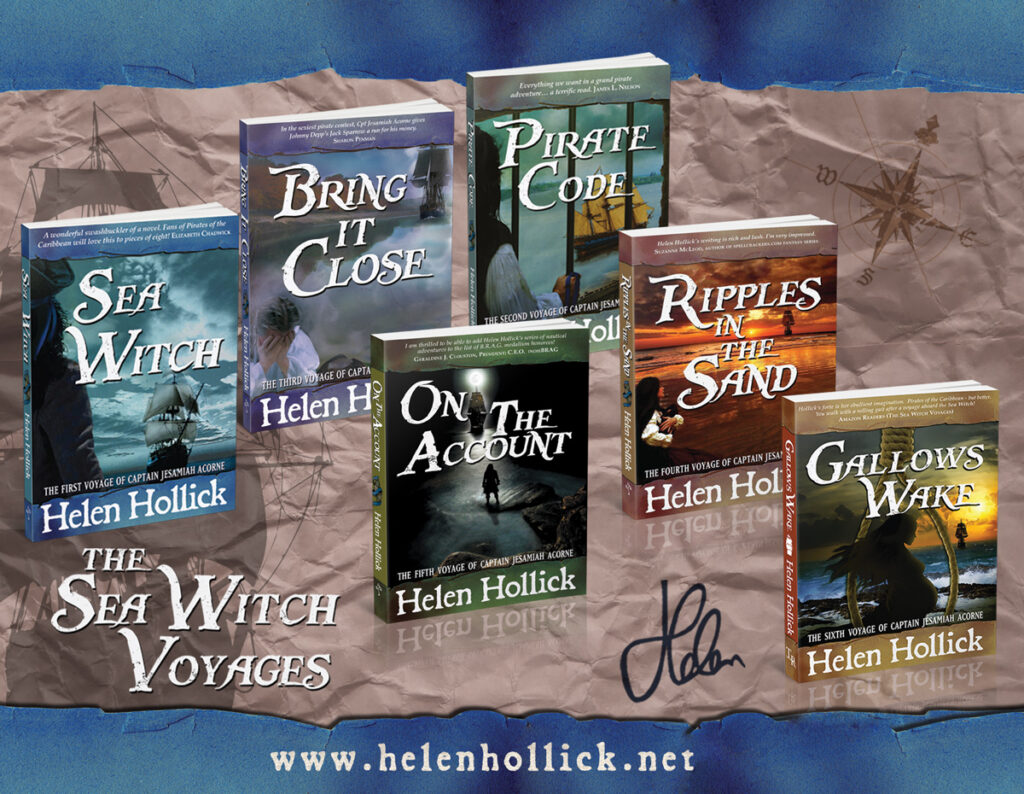
Just published…
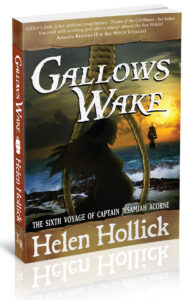 GALLOWS WAKE – The Sixth Voyage of Captain Jesamiah Acorne GALLOWS WAKE – The Sixth Voyage of Captain Jesamiah Acorne
Where the Past haunts the future…
Damage to her mast means Sea Witch has to be repaired, but the nearest shipyard is at Gibraltar. Unfortunately for Captain Jesamiah Acorne, several men he does not want to meet are also there, among them, Captain Edward Vernon of the Royal Navy, who would rather see Jesamiah hang.
Then there is the spy, Richie Tearle, and manipulative Ascham Doone who has dubious plans of his own. Plans that involve Jesamiah, who, beyond unravelling the puzzle of a dead person who may not be dead, has a priority concern regarding the wellbeing of his pregnant wife, the white witch, Tiola.
Forced to sail to England without Jesamiah, Tiola must keep herself and others close to her safe, but memories of the past, and the shadow of the gallows haunt her. Dreams disturb her, like a discordant lament at a wake.
But is this the past calling, or the future?
Buy Gallows Wake here: Amazon Author Page (Universal link) https://viewauthor.at/HelenHollick
Where you will find the entire series waiting at anchor in your nearest Amazon harbour – do come aboard and share Jesamiah’s derring-do nautical adventures! (Available as Kindle, Kindle Unlimited and in paperback)
My review
A Sea Witch voyage is always a pleasure to look forward to, but this one is a real cracker. And like the waves on the sea, just as you are getting over the roll of last high and low incident, another crashes into you. Hollick’s ingenuity and ability to pile on the pressure may bring about not mere gasps, but actual stopping of breath.
Apart from the pace, the sheer level of atmosphere and period detail shines through. And she writes a good fight, too! Betrayal vies with noble intent, love struggles with doing the right thing, while courage never fails. But the author writes the time as it was with fear of witchcraft, mob movements, casual brutality and constant danger at sea. Exhilarating as adventures are, death is all too present and injury often means a descent into poverty, starvation and a miserable end. This is not the 21st century.
But of course, it’s the people who count. Jesamiah is his usual direct self – very much a man of his century – and one who does not know the word ‘shirk’. He’s not always polite 😉 but goodness, you would want him on your side! Tiola, haunted by the past is nevertheless practical, loving and courageous. She needs to be. And I was delighted to meet an intriguing character from the past again…
Even if you haven’t read any other books in the series (why not?) go and get this one. Highly recommended.
Now, when’s the next one out?
Alison Morton is the author of Roma Nova thrillers – INCEPTIO, CARINA (novella), PERFIDITAS, SUCCESSIO, AURELIA, NEXUS (novella), INSURRECTIO and RETALIO, and ROMA NOVA EXTRA, a collection of short stories. Audiobooks are available for four of the series.Double Identity, a contemporary conspiracy, starts a new series of thrillers. JULIA PRIMA, a new Roma Nova story set in the late 4th century, is now out.
Find out more about Roma Nova, its origins, stories and heroines and taste world the latest contemporary thriller Double Identity… Download ‘Welcome to Alison Morton’s Thriller Worlds’, a FREE eBook, as a thank you gift when you sign up to Alison’s monthly email update. You’ll also be among the first to know about news and book progress before everybody else, and take part in giveaways.
If you enjoyed this post, do share it with your friends!
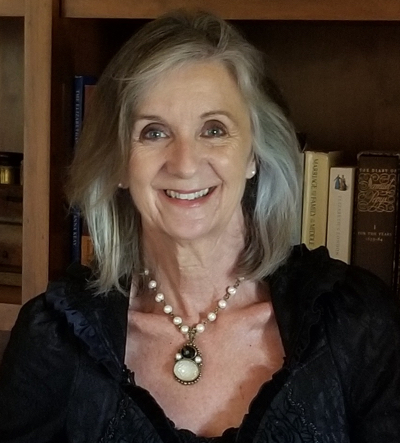 I’m delighted to welcome historical novelist Elizabeth St.John to the blog especially as she is going to reveal a secret about one of the English crown’s biggest mysteries… I’m delighted to welcome historical novelist Elizabeth St.John to the blog especially as she is going to reveal a secret about one of the English crown’s biggest mysteries…
Elizabeth ’s critically acclaimed historical novels tell the stories of her ancestors: extraordinary women whose intriguing kinship with England’s kings and queens brings an intimately unique perspective to Medieval, Tudor, and Stuart times and a fair amount of danger.
Inspired by family archives and residences from Lydiard Park to the Tower of London, Elizabeth spends much of her time exploring ancestral portraits, diaries, and lost gardens. And encountering the occasional ghost. But that’s another story.
Now, we both contributed to Betrayal: Historical Stories. You can guess the theme… (And it’s either 99pence/cents or even free on Apple, Kobo and B&N Nook to download 😉 )
Elizabeth tells me that during our collaboration she became consumed with her character’s potential and with that little spark of research (a command from one king, followed by a pardon from another) she spent two whole years creating The Godmother’s Secret, a full-length historical novel. And now you can read it.
After the introduction, you can read an excerpt, then discover more about the 21st century Elizabeth…
If you knew the fate of the Princes in the Tower, would you tell? Or forever keep the secret?
May 1483: The Tower of London. When King Edward IV dies and Lady Elysabeth Scrope delivers her young godson, Edward V, into the Tower of London to prepare for his coronation, she is engulfed in political turmoil. Within months, the prince and his brother have disappeared, Richard III is declared king, and Elysabeth’s sister Margaret Beaufort conspires with her son Henry Tudor to invade England and claim the throne.
Desperate to protect her godson, Elysabeth battles the intrigue, betrayal, and power of the last medieval court, defying her Yorkist husband and her Lancastrian sister under her godmother’s sacred oath to keep Prince Edward safe. Bound by blood and rent by honour, Elysabeth is torn between the throne and her family, knowing that if her loyalty is questioned, she is in peril of losing everything—including her life.
Were the princes murdered by their uncle, Richard III? Did Margaret Beaufort mastermind their disappearance to usher in the Tudor dynasty? Or did the young boys vanish for their own safety? Of anyone at the royal court, Elysabeth has the most to lose–and the most to gain–by keeping secret the fate of the Princes in the Tower.
Inspired by England’s most enduring historical mystery, Elizabeth St.John blends her family history with known facts and centuries of speculation to create an intriguing story about what happened to the Princes in the Tower.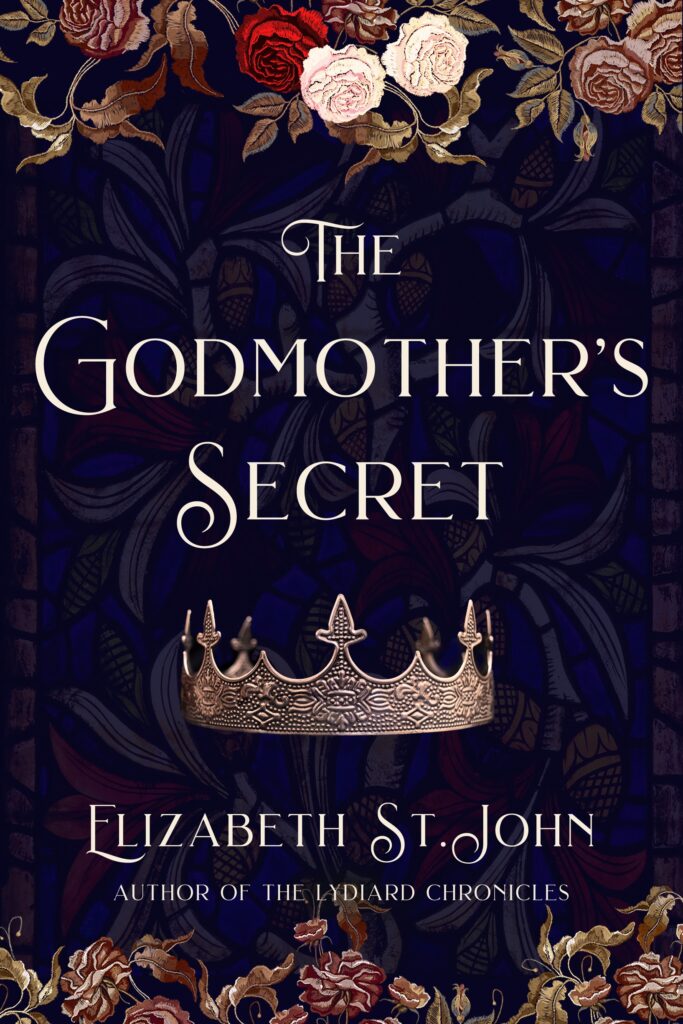
An excerpt!
Chapter 1
November 1470, Westminster Abbey
A secret has been conceived . . .
“Entry, in the name of God and King Henry!” My guard clouts the iron-clad door of Cheyneygates, challenging the sanctuary of Westminster Abbey. “The Lady Elysabeth Scrope demands entry!”
 The Abbot’s House A murther of crows startles from the gables, cawing and whirling around my head and circling up into the clouded heavens. I join three fingers in the holy trinity and cross myself; head, chest, sinister and dexter. These ancient purveyors of death do not disturb me, for I have not survived this war to be hindered by a superstition. If there were a crow for every dead soldier, England would be a huge raucous rookery. But it never hurts to invoke God’s protection. The crows swoop and squabble and alight singly among the gargoyles on the parapets of the soot-stained Abbey. Like the granite tors of my Yorkshire home, these walls are impenetrable and inaccessible. And just as hostile. God offers protection to all who claim sanctuary. And men erect walls to keep them safe.
No stirring from within. I sigh. Not unexpected. “Knock again,” I command the guard. “Let them know their visitors will not leave.”
The waning October afternoon trickles shadows into the well of the courtyard. I pull my cloak closer, thankful I had chosen my finest weave to keep the warmth in and the damp out. The sun had shone golden when we rode out from London, but upon reaching Westminster we collided with the rain clouds streaming in from the west.
Fallen mulberry leaves clog the stone steps rising before me, rotting unswept in the hollows. Someone isn’t taking care of the abbot’s house. It is clear that no one has left nor entered for a while. The guard’s hammering is unanswered, and yet to the right of the door a candle flame glimmers through a browed window and a shadow flits elusively.
I push back my hood, and a spatter of rain needles my face. Here, gatekeeper. Here’s reassurance I bear your fugitive no threat. I am of middling age, graceful, fair of face, my countenance pleasing, I’ve heard say. Hardly a threat.
The rain unfurls in sheets. I raise my voice. “I am not asking the queen to break sanctuary.” God knows the wretched woman would make it easier on all of us if she did. I motion the guard aside and edge up the slippery steps to the door. “I am here to join her.” My voice competes with a dripping gutter and gets lost under the pitter-patter.
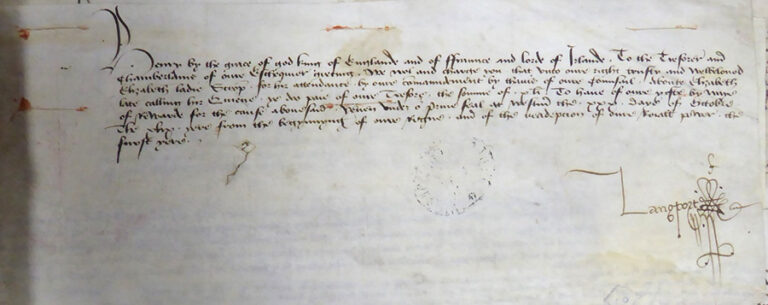 Elysabeth Scrope’s Appointment to attend Elizabeth Woodville (National Archives) At the foot of the steps, my stepdaughter, Meg Zouche, hums with a redhead’s restless energy; her curly hair springs wildly from her hood, laced with jeweled droplets of Thames mist. “The queen thinks to defy fate with a barred door.” Meg scowls at the blank and blackened oak.
“She will admit us. Eventually. Even one such as she cannot birth her child alone,” I reply. “I may not be her choice for an attendant, but a captive has no say in their guard.” Temper’s blood warms my cheeks. I stand resolute at the door, ignoring the invisible eyes taking my measure. If this time in sanctuary is to be the battle of wills I anticipate, then I must win the first foray. I plant my feet in the composting leaves, ignore the damp seeping from the stone into the soles of my boots, and wait.
Bolts grate top and bottom, and the door creaks open. I swallow a last breath of rain-washed air, hoarding the fresh scent for the stifling weeks to come, for the queen’s confinement shapes my own prison sentence. Reaching for Meg’s warm hand, I cross the threshold into the abbot’s house. The splashing steps of our guard fades, his duty done, mine just beginning. And if I fail and the child dies, I will be shown no mercy from Henry, the king that rules, nor Edward, the king in exile.
We are herded like moorland sheep into the cramped entry corridor, and the steward squints down his drip-tipped nose and sniffs. Meg glares back at him until he drops his gaze. She may be only nineteen, but she has been mine since she was two years of age, and I have trained her to run a great household. She will brook no truck with an insolent servant. Let Meg practice her learnings on the poor man; he is, after all, the enemy.
“Escort my mother to the queen,” Meg commands, “and then show me our lodgings.”
He grudgingly dips his head. “Wait here, Dame Zouche.”
So the household expects our arrival. They just don’t choose to welcome us. Of course, there is little that will escape the queen, for certainly she has her spies and informers even as she invokes sanctuary to protect her unborn child.
“This way, Lady Scrope.”
I kiss Meg’s warm cheek. “Make friends with him, Meg,” I whisper. “We’re going to need all the help we can muster. I’ll return shortly.”
She grins and winks. “Bon chance, Belle-maman.”
The steward sets off at a brisk trot through a passage that runs alongside the entry courtyard. He does not look back to see if I keep up nor to extend me the courtesy of a deferential bow nor even a head tilt that my rank demands. So. This is how we will engage.
He leaves me at the open door to a dim chamber, and I pause to let my eyes adjust to the shadows and to reclaim my dignity. I am aware that whoever is in the room sees me before I see them.
The lofty wood panelling is underlit by half-burned candles struggling in the damp air. At the end of the chamber is a diamond-paned window, beyond which the Abbey lurks, blocking the waning light. Resting in a high-backed chair before the hearth, her pure profile dark against the blue flames of a meagre fire, is Queen Elizabeth—I still think of her as Elizabeth Woodville—her belly swollen under a beaver-fur mantle. Three little girls huddle on red velvet prayer cushions at her feet, the youngest child perhaps eighteen months.
So this is the commoner queen and her brace of healthy children. Yet still no male heir to claim the throne. What are the odds this next child is a boy? High, I reckon. Especially given the wellspring of prayers God must be receiving daily from the queen and her followers.
Buy The Godmother’s Secret
Amazon universal link: https://geni.us/GodmothersSecret
(Subscribers to Kindle Unlimited can download it free.)
Connect with Elizabeth:
Website: http://www.elizabethjstjohn.com/
Twitter: https://twitter.com/ElizStJohn @ElizStJohn
Facebook: https://www.facebook.com/ElizabethJStJohn
Instagram: https://www.instagram.com/elizabethjstjohn/
Book Bub: https://www.bookbub.com/authors/elizabeth-st-john
Goodreads: https://geni.us/GoodreadsElizStJohn
My review
If you thought the Roman Empire had the monopoly on power squabbles, egotistical opportunists and ruthless schemers, read this book! But as with the Ancient Romans, there are true hearts and great moral courage in the 15th century along with mysterious disappearances and unsolved enigmas.
The ‘princes in the Tower’ must be one of the most intriguing mysteries in English history. Pick your villains and victims from the circling characters: Richard of York, Margaret Beaufort, Elizabeth Woodville, Harry Buckingham, the Woodville/Grey brothers, Edward IV, Henry Tudor…
Ms St John has very deftly focused on one character loyal to her values and principles, but one whose compassion and courage guides her actions. Elysabeth Scrope might not have been highlighted as a prominent actor in previous stories of this period, but the author has done us a great service in telling the story of a woman at the centre of these tumultuous events.
Heroine Elysabeth is no ‘goody two shoes’; she fails and is conflicted like anybody else, but not least by her complex family relationships, so prevalent amongst the nobility of the period. The relationship – loving and hostile and exasperating – between Elysabeth and Margaret is particularly well drawn.
But why do Elysabeth’s desire to ensure her voice is heard in the maelstrom and her actions to be seen as independent, yet centred around the children’s welfare seem so important? Why do we feel compelled to follow her story? It’s the writing, of course. The descriptions are vivid and rich, the period detail thoroughly researched, yet subtly dripped in and the dialogue is authentic. Highly recommended.
Alison Morton is the author of Roma Nova thrillers – INCEPTIO, CARINA (novella), PERFIDITAS, SUCCESSIO, AURELIA, NEXUS (novella), INSURRECTIO and RETALIO, and ROMA NOVA EXTRA, a collection of short stories. Audiobooks are available for four of the series.Double Identity, a contemporary conspiracy, starts a new series of thrillers. JULIA PRIMA, a new Roma Nova story set in the late 4th century, is now out.
Find out more about Roma Nova, its origins, stories and heroines and taste world the latest contemporary thriller Double Identity… Download ‘Welcome to Alison Morton’s Thriller Worlds’, a FREE eBook, as a thank you gift when you sign up to Alison’s monthly email update. You’ll also be among the first to know about news and book progress before everybody else, and take part in giveaways.
If you enjoyed this post, do share it with your friends!
|
Subscribe to Blog via Email
Join 368 other subscribers.
Categories
Archive
|