Now I’ve started telling people about my first alternate history thriller coming out in March, one person said, ‘Oh, you’re lucky, you can make up anything!‘
Er, no.
It’s about plausibility. Merriam Webster gives one definition: ‘appearing worthy of belief <the argument was both powerful and plausible>‘. Synonyms include credible, creditable, likely, believable, presumptive, probable.
So how far can a storyteller stray? To enjoy a story, we need to feel that the author’s world is – within its own logic – plausible. We know that too many coincidences are not a good thing in fiction, however frequently they actually occur in real life.
Ideally, a writer builds up a sequence of events that not only follows a plausible path but which we the readers believe could not possibly develop in any other way. And if there are two equally plausible choices at critical points, thus preventing us from guessing what’s going to happen next or at the end, the story will not disappoint by being predictable.
And for a story, however fantastical, to be plausible it must be grounded in the reader’s world. If Boudicca (Boadicea in old money) met Buffy the vampire slayer, we know they were both women fighters who defied enemies threatening the existence of their worlds, had both lost a deeply significant other and passionately loved their families. Okay, one was a tad dim…
But defiance, loss and love are things we all know about. Within a story, we have to detect aspects of our own world otherwise we won’t understand, let alone engage with the story. In short, plausibility in fiction is the detection of familiarity.
How can writers give their stories plausibility even if the plots or characters are very weird?
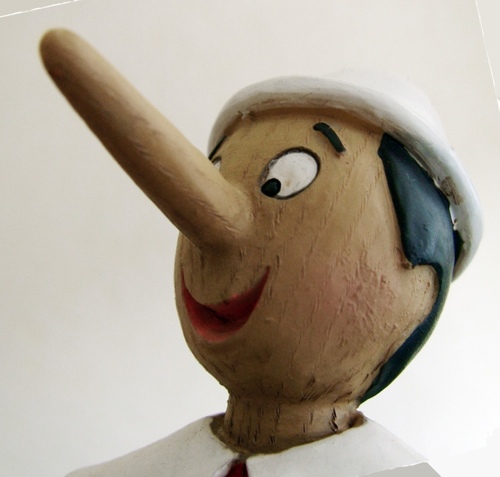
1. Tell whoppers confidently.
Almost every story hinges upon an implausibility – it’s a set-up, a problem the writer has purposefully created. Many TV crime stories feature a superintendent or chief inspector interviewing suspects and knocking on doors in the crime area.
Ridiculous.
Such hands-on work is carried on by the experts on the ground – the constables and sergeants.
But we all accept it.
How often is a film carried by a formerly dismissed maverick scientist, often a reformed drunk or grief bound widower, coming back and saving the day?
Ridiculous.
The refresher courses and retraining would take weeks and months and security clearance forever.
But we all accept it.
Why? Because once we have swallowed the confident lie, we’ll follow the rest of the story as long as the writer keeps our trust. One way to do this is to infuse, but not flood, the story with corroborative detail so that it verifies and reinforces the original whopper.
Even though my book is set in the 21st century, the Roman characters say things like ‘I wouldn’t be in your sandals (not shoes) when he finds out.’ And there are honey-coated biscuits (honey was big with the ancient Romans) not chocolate digestives in the squad room.
2. Give your characters normal behaviour.
Human beings of all ages and cultures have similar emotional needs, hurts and joys. Of course, they’re expressed differently, sometimes in an alienating or (to us) peculiar way. But a romantic relationship, whether as painful as in The Remains of the Day or as instant as Colonel Brandon when he sees Marianne in Sense and Sensibility or careful but intense relationship of Eve Dallas and Roarke in the Death series binds us into their stories.
3. Tie up loose ends.
This is especially important in stories not obviously part of the standard world, whatever that is. In fact, no writer should leave possible loopholes or gaps for us to wander into, whatever the setting. When drafting, I mark my script with words in blue font in square brackets such as [does this character need to do this here?], [what happened to the doctor?]. I know my fellow readers will want to know.
That doesn’t mean every character needs to have their life story told but writers should try not to leave any obvious dangling bits, or non sequiturs, if you prefer.
4. No alien space bats
One use of a dangling character, i.e. who made a brief appearance to get the hero/heroine stuck into the plot and hasn’t appeared since, is to use them as a catalyst at a crucial point in the story. This way you avoid the cop-out known in the speculative fiction world as an ‘alien space bat‘ or more classically as a ‘deus ex machina‘. Nobody likes the ‘she woke up and found it had all been a dream’ ending. Or even less ‘it was only a trip in virtual reality’.
And if you do need to use a character with strange gifts or knowledge, a few lines of background carefully woven in will smooth their introduction. If a writer can make those absurdities or missing links appear rational, we will be believe every word in the story and go on to buy the next book in the series.
If you enjoyed this post, do share it with your friends!
 What? What?
When I first started this blog on World Book Day not quite three years ago (4 March 2010) I had just signed my indentures as a mad newbie writer, so the title Write a Novel? I must be mad! was an appropriate one. While I will never give up learning – no human being, let alone no writer ever should – I feel that it’s time for refreshment. And we’re not talking about a cup of tea.
My first book, INCEPTIO, comes out on 1 March this year. I have survived the initial mad phase and am passing into the institutionalised one where I hope to produce novels on a reasonably regular basis. Perhaps I will never be released from this obsession of writing…
I write thrillers with a strong heroine. She gets into scrapes: treason, death threats, kidnappings, betrayals, let alone organised crime, and comes near to losing her life and her love several times in the course of the novels. She has a temper, but tends to let it out only when she thinks she’s being treated unfairly. But she matures and learns valuable, if not always palatable, lessons about herself.
But her biggest challenge is the world she lives in, mainly because she wasn’t born there. Roma Nova, lying somewhere between the Northern Confederation of Italy and New Austria was founded sixteen centuries ago by a group of Romans fleeing persecution by the Christian Emperor Theodosius in AD 395. And they’ve managed to tough it out until the 21st century.
Welcome to the world of Roma Nova.
If you enjoyed this post, do share it with your friends!
 A butterfly in the Amazon jungle makes that little extra flutter of its wings and a few weeks later there’s a storm or even a hurricane in the Caribbean that wrecks cities. That’s a little crudely put, but this is the idea behind Edward Lorenz’s chaos theory. In reality, the butterfly’s flapping wing is just as likely to prevent that storm with an equal number of changes both ways. The random nature of the ‘butterfly effect’ makes it impossible to predict which way at any given time. A butterfly in the Amazon jungle makes that little extra flutter of its wings and a few weeks later there’s a storm or even a hurricane in the Caribbean that wrecks cities. That’s a little crudely put, but this is the idea behind Edward Lorenz’s chaos theory. In reality, the butterfly’s flapping wing is just as likely to prevent that storm with an equal number of changes both ways. The random nature of the ‘butterfly effect’ makes it impossible to predict which way at any given time.
This equalising idea is a bit boring, so writers tend to opt for the doom scenario, ladling all sorts of dreadful consequences over the butterfly’s head. Closely related is the ‘For the want of a nail’ theory when one tiny missing thing leads to world-changing events. And they’re always bad ones.
In alternate history, writers can play with these types of ideas to introduce a point of divergence to bring about full-blown complex political, economic and social change. In Ray Bradbury’s A Sound of Thunder, a butterfly is crushed in the time of the dinosaurs by a time-traveller which has the consequence in the ‘present’ of electing a fascist leader instead of a moderate one. Alternatively, in a film like Sliding Doors, dealing with a purely personal story, missing a train splits the heroine’s life into two possible timelines, one transforming and the other fatal.
If you’re fascinated by the butterfly of doom as a story device visit TV Tropes.
 In our timelime, or OTL as alternate historians abbreviate it, the poor Red Admiral is known as the butterfly of doom. Writer and lepidopterist, Vladimir Nabokov, mentioned it in his work. The Red Admiral was especially abundant in Russia in one year in the late 19th century; the markings on the underside of its two hind wings seem to read ’1881′. That year, the Russian Tsar Alexander II was assassinated. In our timelime, or OTL as alternate historians abbreviate it, the poor Red Admiral is known as the butterfly of doom. Writer and lepidopterist, Vladimir Nabokov, mentioned it in his work. The Red Admiral was especially abundant in Russia in one year in the late 19th century; the markings on the underside of its two hind wings seem to read ’1881′. That year, the Russian Tsar Alexander II was assassinated.
Everybody has potential points of divergence in their lives when they make choices. But the butterfly, or missing nail, can make those choices for you.
Find out about Roma Nova news, writing tips and info by signing up for my free monthly email newsletter.
Alison Morton is the author of Roma Nova thrillers, INCEPTIO, and PERFIDITAS. Third in series, SUCCESSIO, is now out.
If you enjoyed this post, do share it with your friends!
Oh, the sneering! Oh, the superiority! Even Lynne Truss (Eats, Shoots and Leaves) is on BBC Radio4 broadcasting a series of witty ripostes to round-robins (RRs).
Now some RRs are painful: long-winded, which goes hand-in-hand with boring; poorly composed and/or typed; with scattered blurry photos; and produced with tight margins in tiny, coloured or weird fonts. But some gems are witty, near professional offerings, mostly photos with hilarious captions leaving you wanting more. The best ones make you grab the ‘phone or start bashing out an email to the sender immediately after reading.
In time-strapped, intense lives, the RR can reach many more people without the sender getting RSI, paying a fortune for individually printed photos or dying from exhaustion and insanity repeating the same stuff up to, and possibly beyond, a hundred times. How are RRs different from all the blog posts we chuck out indiscriminately into the digiverse?
But, like trying to avoid the slush-pile that many writers end up on, how do you write an RR that’s entertaining, informative and has that spark of something special? I’ve been sending them out for over twenty-five years, well before the time they became fashionable, so I’ve got some experience.
Keep these key points in front of you:
- The recipient may only have a quick minute to scan your letter, so keep it snappy
- Include lots of photos, but interesting, non-forced ones. Do not reduce them down to such a low resolution that they look like a blurry mess.
- Do not witter on about Jemima’s first day at school. Most people have been to school, so have their children – we know. Just say J has started school and add a photo of her in her too large uniform.
- Yes, a mention of holidays, but not a detailed description of the sangria night when you all got trollied. As above, we know this experience.
- Achievements – careful does here. Of course, say that Jemima bagged a first in Icelandic or her sister passed her hairdressing apprenticeship and has secured a stylist job in a top London salon – these are great things. But don’t go on about it (Even I was reasonably restrained about the publication of my debut novel INCEPTIO on 1 March 2013. 😉 ).
- What people in the family are doing now – as in the point above. A brief sentence or two is enough.
- Try to inject some wit, but don’t force it.
- And guess what? Edit it! An RR is like any other piece of writing and if you are sending it to recipients who are your friends and relations, they deserve the same courtesy as the rest of the reading public.
- Lastly, make sure you leave a space at the end for a short, personal, handwritten message and signature.
Do you write or receive RRs? Go on, now, tell me your thoughts…
Updated 2025: Alison Morton is the author of Roma Nova thrillers – INCEPTIO, CARINA (novella), PERFIDITAS, SUCCESSIO, AURELIA, NEXUS (novella), INSURRECTIO and RETALIO, and ROMA NOVA EXTRA, a collection of short stories. Audiobooks are available for four of the series. Double Identity, a contemporary conspiracy, starts a new series of thrillers. JULIA PRIMA, Roma Nova story set in the late 4th century, starts the Foundation stories. The sequel, EXSILIUM, is now out.
Find out more about Roma Nova, its origins, stories and heroines and taste world the latest contemporary thriller Double Identity… Download ‘Welcome to Alison Morton’s Thriller Worlds’, a FREE eBook, as a thank you gift when you sign up to Alison’s monthly email update. As a result, you’ll be among the first to know about news and book progress before everybody else, and take part in giveaways.
If you enjoyed this post, do share it with your friends!
 I’m reading a book at the moment full of “prithee, varlet” language. It’s as irritating as Hades, but maybe that’s just me. The atmosphere of fear is building, the characters are forming and the plot slowly emerging. I’m reading a book at the moment full of “prithee, varlet” language. It’s as irritating as Hades, but maybe that’s just me. The atmosphere of fear is building, the characters are forming and the plot slowly emerging.
But despite the over-elaborate language, the author’s grammar is spot on. And that’s what saves it.
Writing is a form of communication and when we structure writing correctly then our message is unambiguous, even in “prithee” language. The reader reads what we intended them to read. Even in a very minimalist-styled book such as any of Lee Child’s Jack Reacher thrillers, the accuracy and clarity of the writing enables the reader to see exactly what the author is saying.
If we don’t write clearly, then the poor reader has to re-read sentences and pause to work out what he or she thinks we meant. After a few jolts to continuity, it’s inevitable that the reader’s pleasure diminishes. And after too many, the reader chucks the book on the floor.
Editors can, and do, do a wonderful job, but even they get to the hair-tearing stage in the face of relentless sloppiness. If they have the choice of working on a well-written manuscript and one weighed down with mistakes, guess which one they’ll prioritise?
Poor grammar and spelling are the things that irritate readers of self-published books most, and most quickly, even in a free book. We have so much choice these days, why would we spend precious life-hours reading something that is written in a careless and sub-standard way?
However fabulous the plot, characters and narrative thrust of the story, good grammar and spelling matter.
Horrors to avoid (Any one of these makes me chuck the book on the floor.)
your/you’re
Can you say ‘you are’ instead? If so, then it’s ‘you’re’. ‘Your’ is to indicate something belonging to ‘you’, e.g. your book.
it’s/its
Can you say ‘it is’? Then it’s ‘it’s’. 😉 As with ‘your’, when used to show something that belongs to ‘it’, ‘its’ doesn’t have the abused apostrophe, e.g. “Gorgeous book. I love its cover.”
There/their
Can you say ‘here’ instead of ‘there’. e.g. ‘there are /here are’? There you are, then. Remember, ‘their’ is very possessive…
Affect/effect
‘Affect’ is an active verb. ‘Effect’ is the outcome, e.g. cause and effect. A quick way of remembering is that A comes before E, i.e. you have to affect something before you can see the effect.
‘Bored of’ or ‘bored with’?
Please don’t start me on this one. I hope you know the correct version. See me in the comments if you don’t.
Updated 2024:Alison Morton is the author of Roma Nova thrillers – INCEPTIO, CARINA (novella), PERFIDITAS, SUCCESSIO, AURELIA, NEXUS (novella), INSURRECTIO and RETALIO, and ROMA NOVA EXTRA, a collection of short stories. Audiobooks are available for four of the series. Double Identity, a contemporary conspiracy, starts a new series of thrillers. JULIA PRIMA, Roma Nova story set in the late 4th century, starts the Foundation stories. The sequel, EXSILIUM, is now out.
Find out more about Roma Nova, its origins, stories and heroines and taste world the latest contemporary thriller Double Identity… Download ‘Welcome to Alison Morton’s Thriller Worlds’, a FREE eBook, as a thank you gift when you sign up to Alison’s monthly email update. You’ll also be among the first to know about news and book progress before everybody else, and take part in giveaways.
If you enjoyed this post, do share it with your friends!
|
Subscribe to Blog via Email
Join 368 other subscribers.
Categories
Archive
|