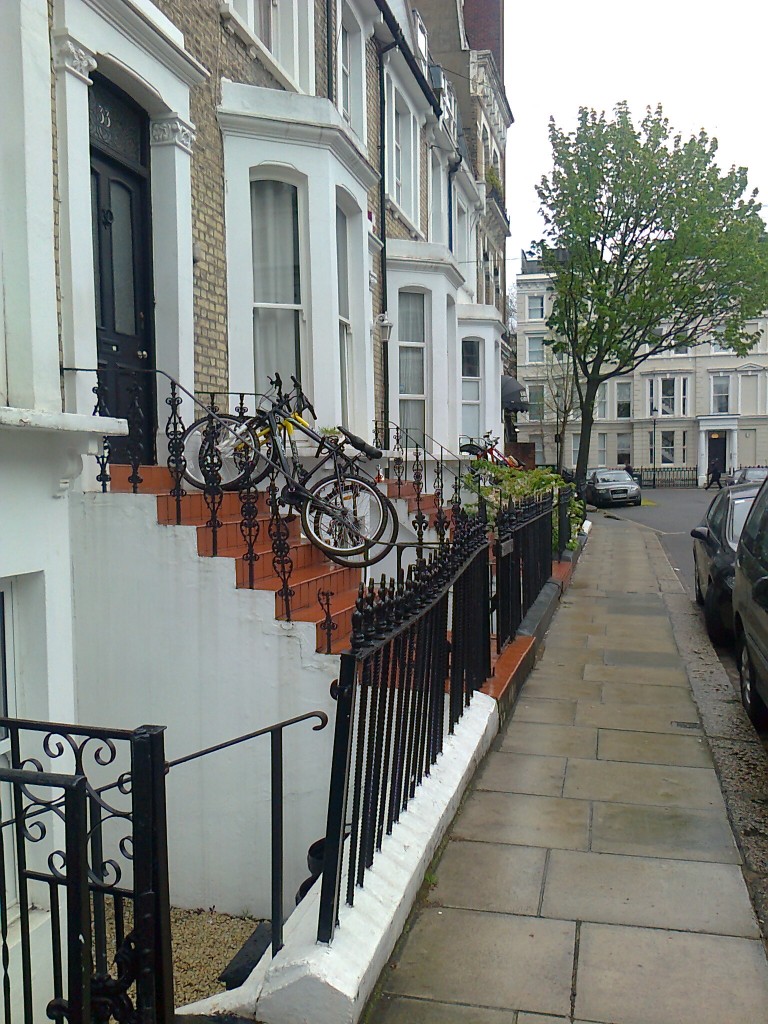
 Out into the rain this morning on my way to the British Museum to see the Vikings, I walked down Earls Court Gardens and spotted sets of bicycles chained artistically to the railings. I guess there’s nowhere else to store them. Out into the rain this morning on my way to the British Museum to see the Vikings, I walked down Earls Court Gardens and spotted sets of bicycles chained artistically to the railings. I guess there’s nowhere else to store them.
After fairly mundane ride on the Picadilly Line, I arrived at the British Museum, Montague Place entrance. (I’m Friend so get free entrance, cloakroom, etc.)
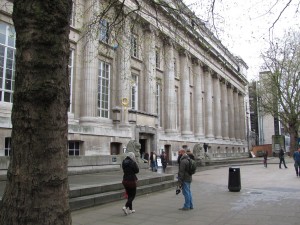 The route to the Viking Exhibition was barred on ‘elf and safety grounds – one of the shutters had partly descended (very uncomfortable). I asked myself what Ragnar the Viking would have done, but we obeyed, more in the vein of Noggin the Nog. However, a jolly museum attendant guided us back to the Sainsbury Gallery off the Great Court and I began a fascinating tour. The route to the Viking Exhibition was barred on ‘elf and safety grounds – one of the shutters had partly descended (very uncomfortable). I asked myself what Ragnar the Viking would have done, but we obeyed, more in the vein of Noggin the Nog. However, a jolly museum attendant guided us back to the Sainsbury Gallery off the Great Court and I began a fascinating tour.
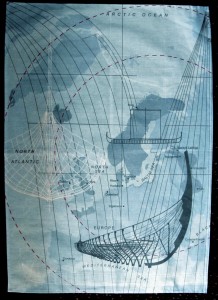 Sadly, photography wasn’t allowed as the lending institutions guarded their intellectual copyright, a room steward explained, so you’ll have to make do with the tea towel I bought. The most impressive big thing was the longship and the best small things were pieces from the Lewis chess set. Read more here. Sadly, photography wasn’t allowed as the lending institutions guarded their intellectual copyright, a room steward explained, so you’ll have to make do with the tea towel I bought. The most impressive big thing was the longship and the best small things were pieces from the Lewis chess set. Read more here.
Lovely sandwich lunch plus chocolate brownie (Oh, sinfulness!) and a chat with stone carver Simon Keeley. Here’s some of his beautiful work. Then on to the (guess what) Romans. Now you can’t sensibly ‘do’ the Romans at the BM. My targets were Etruscans, the shrine of Diana Nemorensis and the translation from late Roman (when my Roma Nova stories start) to early Middle Ages. I’ll be putting some of these pictures online in the next few weeks, but here’s a taster.
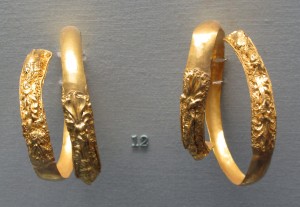
Gold Etruscan bracelets with embossed female heads.palmettes and the figure of Eros 300-200BC
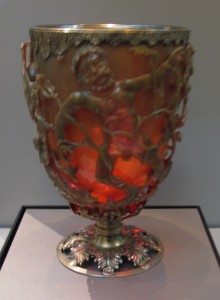
The Lycurgus Cup, Late Roman Empire, AD 300s. This very rare cage cup’s glass contains tiny amounts of gold abad silver which cause it to turn from opaque green to translucent red when light is shone through it. The gilded silver rim and foot were probably added in the 1700s.
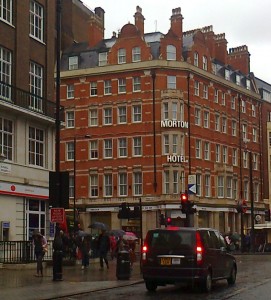 On the way back, I couldn’t help noticing this interestingly named hotel. Am I staying in the wrong place? On the way back, I couldn’t help noticing this interestingly named hotel. Am I staying in the wrong place?
And just when you thought nothing was relevant to the book fair, I can report that publishing director Helen Hart and fellow SilverWood Books author Sandy Osborne have arrived. I bumped into them in the hotel lobby as I arrived back., footsore and gasping for tea. Tomorrow, we start in earnest (whoever he is).
Alison Morton is the author of Roma Nova thrillers, INCEPTIO, and PERFIDITAS. Third in series, SUCCESSIO, is now out.
Find out about Roma Nova book progress, news, writing tips and info by signing up for my free monthly email newsletter.
If you enjoyed this post, do share it with your friends!
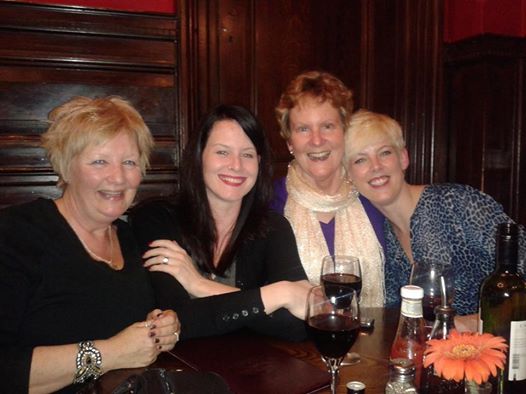 Glynis Smy, Jessica Bell, me, Talli Roland Energised by meeting a terrific group of other writers last night. No, ‘energised’ is not a euphemism for hangover. The atmosphere really did fizz. Writers are used to listening, observing and absorbing, and they are genuinely interested in each others’ progress. And, of course, their problems and successes.
And as lonely creatures, musing and tapping away at our keyboards we like to get out sometimes…
We are never at a loss for a subject, whether the hard work and mess of combining motherhood with book deadlines, time distortion, revising and editing work, talking genres, comparing pies in front of us, uploading books, ALLi’s Open Up to Indies launch, the pull between writing and promoting, our book fair schedule, flights, SilverWood Books, comparing cameras on phones – you see how it goes…
Alison Morton is the author of Roma Nova thrillers, INCEPTIO, and PERFIDITAS. Third in series, SUCCESSIO, is now out.
Find out about Roma Nova book progress, news, writing tips and info by signing up for my free monthly email newsletter.
If you enjoyed this post, do share it with your friends!
Although I have a guest as usual on Thursday, I’m going to be posting pictures when I can of my trip this week to LBF. It’s going to be a mix, but this is posting ‘on the hoof’ or if you want to be arty, ‘performance posting’.
 I flew in today on Ryanair from Poitiers. I’m actually quite a fan of RA; although definitely in the ‘no frills’ category, they get you there. I treat the flight as a bus trip and it works fine. So, a smooth journey on the Stansted Express and I arrived at Liverpool Street Station – alas no dancers! But the Marks & Spencer was open and they do a mighty fine chocolate raisin… I flew in today on Ryanair from Poitiers. I’m actually quite a fan of RA; although definitely in the ‘no frills’ category, they get you there. I treat the flight as a bus trip and it works fine. So, a smooth journey on the Stansted Express and I arrived at Liverpool Street Station – alas no dancers! But the Marks & Spencer was open and they do a mighty fine chocolate raisin…
Delighted to discover that the Central Line was closed when I was pulling ‘The Beast’ (my stalwart Antler suitcase) behind me and heaving it over footbridges on the antiquated stations of the District Line… However, a couple of charming, jolly and slightly sloshed East Europeans (I think) were lovely and helped me on the train and insisted on singing Happy Birthday in full baritone. (It wasn’t my birthday.) That frightened the rest of the passengers.
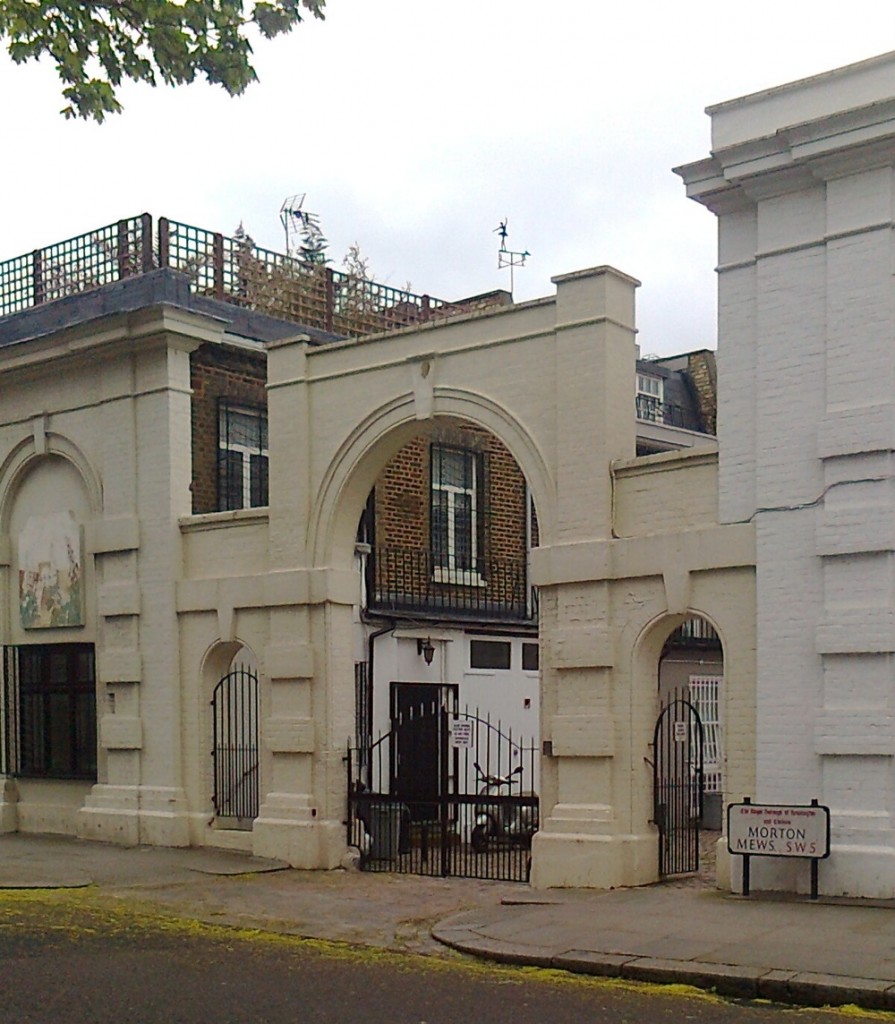 Emerged in Earls Court station, and on the way to the hotel, I spotted a sign to warm the heart. Note the street name – if only! Emerged in Earls Court station, and on the way to the hotel, I spotted a sign to warm the heart. Note the street name – if only!
I’m meeting up this evening with some fellow writers (in the flesh instead of virtually) at a local pub, so wine, food and shouted conversation will be the order of the day.
Oh, yes.
Alison Morton is the author of Roma Nova thrillers, INCEPTIO, and PERFIDITAS. Third in series, SUCCESSIO, is now out.
Find out about Roma Nova book progress, news, writing tips and info by signing up for my free monthly email newsletter.
If you enjoyed this post, do share it with your friends!
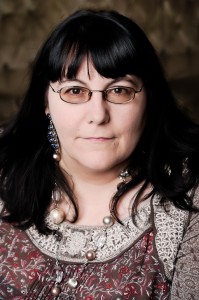 Today, I’m delighted to welcome Victoria Lamb, historical novelist of some repute as well as fun-loving person. Her exciting Tudor series for adults beginning with The Queen’s Secret is centred around the enigma of Shakespeare’s ‘Dark Lady’ while her Tudor Witch series for Young Adults has been described as ‘Twilight meets The Other Boleyn Girl’. Her knowledge of Tudor England is vast and, like me, she has a penchant for Latin… Today, I’m delighted to welcome Victoria Lamb, historical novelist of some repute as well as fun-loving person. Her exciting Tudor series for adults beginning with The Queen’s Secret is centred around the enigma of Shakespeare’s ‘Dark Lady’ while her Tudor Witch series for Young Adults has been described as ‘Twilight meets The Other Boleyn Girl’. Her knowledge of Tudor England is vast and, like me, she has a penchant for Latin…
Beyond the level of peasants labouring in the fields, Latin was omnipresent in Tudor society. Before the Reformation, Latin was the language of church services and biblical readings – so if you could not understand Latin, you just sat and picked your nose. It was used in legal, state and municipal documents, with English a poor second choice when it came to anything even remotely important. But after Henry VIII made the Catholics personae non gratae, Latin dropped out of use in church – except for a last hoorah under Bloody Mary. It was replaced by the Book of Common Prayer, and English translations of the Bible courtesy of early reformers like Thomas Cranmer and William Tyndedale, who reportedly said he wanted ‘the boy that driveth the plow’ to know as much scripture as the clergy.
So how did most people in the educated classes learn Latin in the first place?
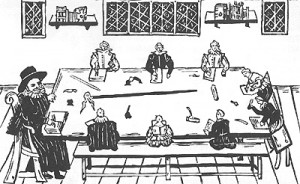 Girls and boys learned to read and write in ‘petty’ schools from age 4 to 7, but those families who could afford it then sent their sons to grammar school until the age of 14. (Girls were either privately tutored after the age of 7, or had no further formal education.) Latin was what boys learnt at grammar school – as the name suggests – along with Greek, religion, arithmetic and some history. To distinguish between an ablative and a dative, they studied William Lily’s famous Rudimenta Grammatices, authorized by Henry VIII in 1542. Lily’s Grammar was so well-known that Shakespeare referenced it in several plays, and it continued to be used in schools until Kennedy’s Primer took its place in the early nineteenth century. (I used Kennedy’s at school in the 1980s, which shows how long-lived these grammars can be!) Girls and boys learned to read and write in ‘petty’ schools from age 4 to 7, but those families who could afford it then sent their sons to grammar school until the age of 14. (Girls were either privately tutored after the age of 7, or had no further formal education.) Latin was what boys learnt at grammar school – as the name suggests – along with Greek, religion, arithmetic and some history. To distinguish between an ablative and a dative, they studied William Lily’s famous Rudimenta Grammatices, authorized by Henry VIII in 1542. Lily’s Grammar was so well-known that Shakespeare referenced it in several plays, and it continued to be used in schools until Kennedy’s Primer took its place in the early nineteenth century. (I used Kennedy’s at school in the 1980s, which shows how long-lived these grammars can be!)
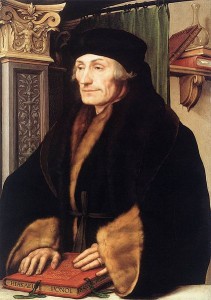 Erasmus Some early Tudor humanists like Erasmus and his followers – including Thomas More – believed Latin had become corrupted during the Middle Ages. Latin was still a living language at that point, so had absorbed many neologisms and changes in pronunciation and usage that they disliked, just as some disdain ‘text speak’ today, so they wanted to purify the way it was spoken and written. They advocated new writings in this purer Latin, along with strictly classical loan-words: this move eventually become known as Neo-Latin. Unfortunately, the Great Vowel Shift which took place in Tudor England – and incidentally paved the way for Modern English – also affected the ‘received pronunciation’ championed by Erasmus and Co. – so their neo-classical Latin came through a little less pure than intended.
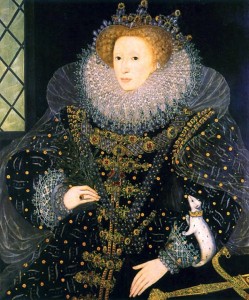 Elizabeth I After the Reformation, Latin continued to be used in legal and state documents such as the Charter Rolls and Patent Rolls. But increasingly English became more popular in official documents, either as an expression of nationalism, or as a way of cocking a snoot at Catholics and their Latinate church services. By the time of Elizabeth’s death – a keen classical scholar who translated a number of Latin texts as a child – the English were more than ready for King James’ authorized English Bible. The great age of Latin reform was over, and it was all downhill from thereon.
Tibi gratias maximas agimus Victoria Agna!
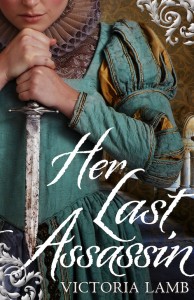 Victoria Lamb writes historical fiction for Random House. Read her latest novel, set in the reign of Elizabeth I, is Her Last Assassin. Victoria Lamb writes historical fiction for Random House. Read her latest novel, set in the reign of Elizabeth I, is Her Last Assassin.
Lady-in-waiting Lucy Morgan is once again torn between her dangerous attraction to William Shakespeare and her loyalty to Queen Elizabeth I. England is facing its gravest threat yet. The Spanish have declared war, and Elizabeth finds herself attacked by sea – and by Catholic conspiracy from within her own court. Master Goodluck goes undercover, tasked with discovering the identity of this secret assassin, leaving his ward Lucy not knowing if the spy is alive or dead. Meanwhile, Queen Elizabeth is growing old in a court of troublesome young noblemen, while Lucy is struggling to love a man whose duties lie elsewhere. When the final challenge comes, these two women must be ready to face it. But there is one last surprise in store for both of them.
About Victoria…
Victoria Lamb is a novelist with two historical series from Random House set in the Tudor era, one for adults (Bantam) and one for Young Adult readers (Corgi). She also writes poetry and literary fiction as Jane Holland, and adult romance as Elizabeth Moss.
Born in Essex in the mid-sixties, Victoria is the middle daughter of bestselling novelist Charlotte Lamb and the classical biographer Richard Holland. When the family later moved to the peaceful Isle of Man, Victoria was brought up in rural surroundings in a home full of books.
She returned to England for her education as an adult, and married there. While living in Warwickshire, affectionately known as Shakespeare Country, she began writing The Queen’s Secret, a novel set at nearby Kenilworth Castle during an epic visit by Queen Elizabeth I in 1575.
Victoria now lives in Cornwall with her husband, four of her five children, and a highly energetic Irish Red Setter. In her leisure time, she has been known to write poetry and go for long walks across the moors. She writes other kinds of fiction under various names, and as a former Warwick Poet Laureate, her poetry is published under the name Jane Holland.
Website: http://www.victorialambbooks.com/
Twitter: @VictoriaLamb1
Alison Morton is the author of Roma Nova thrillers, INCEPTIO, and PERFIDITAS. Third in series, SUCCESSIO, is out early summer 2014.
If you enjoyed this post, do share it with your friends!
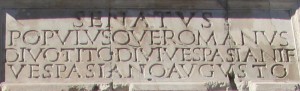 Writing guest posts, emails and tweets about INCEPTIO, PERFIDITAS and soon, SUCCESSIO, I’ve been asked why I write the titles in capitals. Some bloggers and respondees have written the book names with title case, e.g. Inceptio, Perfiditas and I’ve gently pointed out that it’s not quite correct. Writing guest posts, emails and tweets about INCEPTIO, PERFIDITAS and soon, SUCCESSIO, I’ve been asked why I write the titles in capitals. Some bloggers and respondees have written the book names with title case, e.g. Inceptio, Perfiditas and I’ve gently pointed out that it’s not quite correct.
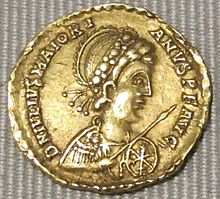
So here’s the reason…I’m not SHOUTING, but following classical Roman usage. You may have noticed inscriptions on Roman tombs, arches and buildings are always in capitals. So are inscriptions on coins.
 The Romans used just 23 letters to write Latin. There were no lower case letters at first, and K, Y and Z used only for writing words of Greek origin. The letters J, U and W were added to the alphabet at a later stage to write languages other than Latin. J is a variant of I, U is a variant of V, and W was introduced as a ‘double-v’ to make a distinction between the sounds we know as ‘v’ and ‘w’ which was unnecessary in Latin. The Romans used just 23 letters to write Latin. There were no lower case letters at first, and K, Y and Z used only for writing words of Greek origin. The letters J, U and W were added to the alphabet at a later stage to write languages other than Latin. J is a variant of I, U is a variant of V, and W was introduced as a ‘double-v’ to make a distinction between the sounds we know as ‘v’ and ‘w’ which was unnecessary in Latin.
Lowercase letters developed from cursive versions of the uppercase letters:
Old Roman cursive was the everyday form of handwriting used for writing letters (including love letters and dinner invitations), by merchants writing business accounts, by schoolchildren learning the Latin alphabet, and even emperors issuing commands.
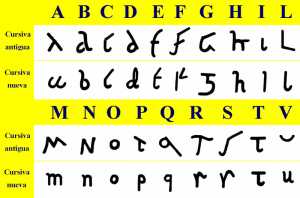 Top row Old Roman cursive, bottom row New Roman cursive A more formal style of writing was based on Roman square capitals, but cursive was used for quicker, informal writing. It was most commonly used from about the 1st century BC to the 3rd century, but it probably existed earlier than that.
New Roman cursive script was in use from the 3rd century to the 7th century, and uses letter forms that are more recognisable to modern eyes; a,b,d and e had taken a more familiar shape, and the other letters were proportionate to each other.
As Roma Novans are very proud of their Roman roots, they still follow classical practice of CAPITALS, so it seemed rude not to follow it for my book titles.
Alison Morton is the author of Roma Nova thrillers, INCEPTIO, and PERFIDITAS. Third in series, SUCCESSIO, is out early summer 2014.
If you enjoyed this post, do share it with your friends!
|
Subscribe to Blog via Email
Join 368 other subscribers.
Categories
Archive
|