 When I starting this scribbling business in 2009, I wrote the second part of my trilogy first. I didn’t know I had at the time. I sat down one morning in front of my computer and typed for three months. When I starting this scribbling business in 2009, I wrote the second part of my trilogy first. I didn’t know I had at the time. I sat down one morning in front of my computer and typed for three months.
As a professional translator, I knew it would have to edit anything I produced. I joined a writer’s group and got through the terror of reading my offering out loud and receiving comments and criticism. I toughened up. I ordered and consumed books on writing, I swapped others with the writing group members. I put out tentative feelers to find out how to publish. I went along to seminars, listened to talks. I was on my way.
My novel’s heroine was established in her role; she knew her world, she had a significant other and she duly saved the day. What could be wrong?
But after one writer’s group evening, the discussion confirmed a doubt which had started sliding into my head by the back door a week or two earlier. Why had I started where I had? Why hadn’t I started at the beginning of her story?
I explained to myself and the group that I would publish(!) the first part afterwards. I didn’t need to be all conventional.
Er, yes, I did.
To get a second sale, you have to hook your readers. When did you ever read a trilogy or series that didn’t start with part 1? I don’t mean the absolute beginning of the heroine’s or hero’s life, but their first adventure/case/ revelation/ pivotal point in their life. (I’ll probably get bombarded with comments and emails quoting hundreds of examples now 😉 ).
But I saw the logic and took another three months to draft the first part. Seven drafts later, I submitted it to the Romantic Novelists’ Association New Writer’s Scheme and received terrific feedback plus a load of points to work on. This is the book whose progress I have mentioned from time to time in this blog.
But what of that book I wrote first – the second part of the trilogy? The one I cut my teeth on. I dug it out of the archive, printed it out and wept. It was crap. The story was basically sound, but dear gods, the words: clichés, telling, dough, fluff, gratuitous scenes, sag, cardboard characters.
So out came the machete, the clichéometer was cranked up and the stomper readied. I have left some sentences and even the odd paragraph untouched. This is encouraging. I am on page 41 with 248 to go. It’ll be over before Christmas.
I realise that since putting that first novel aside, I have learned so much and practised so much more. My writing is at a different level altogether and importantly, I can see that. Which is quite a relief.
So am I alone or have you noticed a similar change in your writing?
If you enjoyed this post, do share it with your friends!
 This morning, I wiped away a tear when I re-read my post last March about the first time I submitted my three chapters and synopsis to agents. I think I was partly touched by my cheerful optimism and partly sad that I had fallen into the classic mistake of submitting too early. This morning, I wiped away a tear when I re-read my post last March about the first time I submitted my three chapters and synopsis to agents. I think I was partly touched by my cheerful optimism and partly sad that I had fallen into the classic mistake of submitting too early.
Looking through my file of reply letters, I saw all the agents had replied, even if only by formulaic letter. Some had made complimentary remarks, one was handwritten, one had asked to read the full manuscript (which got me more than a little excited!) but the result was a universal ‘No, thanks’.
I needed answers.
So, I took action.
With some trepidation and after a thorough exchange of emails, I sent my baby, plus synopsis, a note of writerly ambitions and a selection of agents’ comments off to the redoubtable Nicola Morgan‘s Pen2Publication writing consultancy.
Brave or what?
She was characteristically bracing, but specific:
“At the end, you will see a list of things I think you need to do to it to make it good enough for quality publication, or for success in self-published form. Sometimes I recommend that a writer simply leaves this first novel as a practice-run and starts again. I’m not saying that with you, because I think you have an enjoyable idea with potential; but don’t underestimate what needs to be done to it.”
The following conclusion spurred me on and has remained hovering in the forefront of my brain for the past year:
“But I don’t want you to forget that there were also good things about this, and promising aspects, especially in your rich imagination of […]. If I didn’t think it was worth working on, I’d have suggested you begin a new book but I think there is enough in here that shouldn’t be lost. No idea is ever wasted. I believe that if you take these things on board you have every chance of being able to create a genuinely interesting, exciting and unusual story – unusual in a way that could be publishable.”
So I did. I got the machete out and chopped 30,000 words of fluff and dough and added in tighter, tougher and kick-ass ones.
I did an inspiring, but practical Arvon Foundation course on commercial fiction, I read books, blogs and articles until my eye-balls fried, I attended the Festival of Writing at York this year. Most of all, I interacted with other writers and read, read read.
All the time, I was editing, polishing, agonising. On one run-through, I got rid of 28 ‘felt’s (Smug or what?).
Now I’m submitting again because I want to be published. This time, I think it’s a much better product. And out there, I know there’s somebody who just might agree.
If you enjoyed this post, do share it with your friends!
Last weekend, I was in Caerleon, South Wales attending the Romantic Novelists’ Association conference. It’s a joyous event, where you re-affirm old friendships and form new ones, where you’re are reminded of old things you’ve forgotten and learn new ones. Talks on characters, publishing contracts, marketing; presentations by those who have made it and those who hope to; meetings with publishers, agents and industry gurus. And the wine…
For a flavour of the event, have a look at these. Warning! May contain shoes and smiles.
RNA blog – Day 1 pictures RNA blog – Gala dinner (and shoes) A first timer’s view

I’m not going to repeat their words – they’ve said it all. But I’m going to tell you about something else I did that weekend before the conference got started.
I went off on a Roman holiday. Caerleon or Isca Augusta was one of the three permanent Roman military HQs in Britain.
Isca became the headquarters of the II Legion Augusta in about AD 75, when Governor Sextus Julius Frontinus began the conquest of Roman Wales. Recent finds suggest Roman occupation of some kind as late as AD 380. More info here
Being me, I took a load of photos. (Click on the individual links for more photos.) The most impressive remains are of the amphitheatre, the only fully excavated one in Britain.
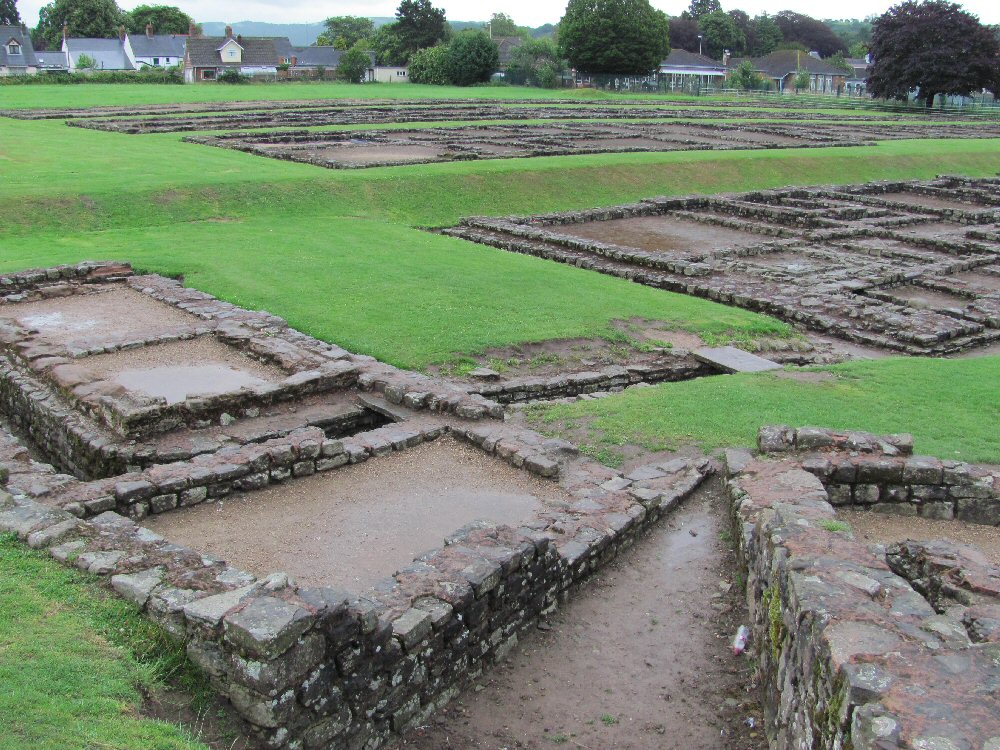
Nearby are part of the fortress wall and the Prysg Field Barracks, (right) the only Roman legionary barracks visible in Europe.
The National Roman Legion Museum contains some very interesting finds, including carved gemstones lost down the drains!
Behind the museum is a Roman-inspired garden which gave me a few ideas for my own.
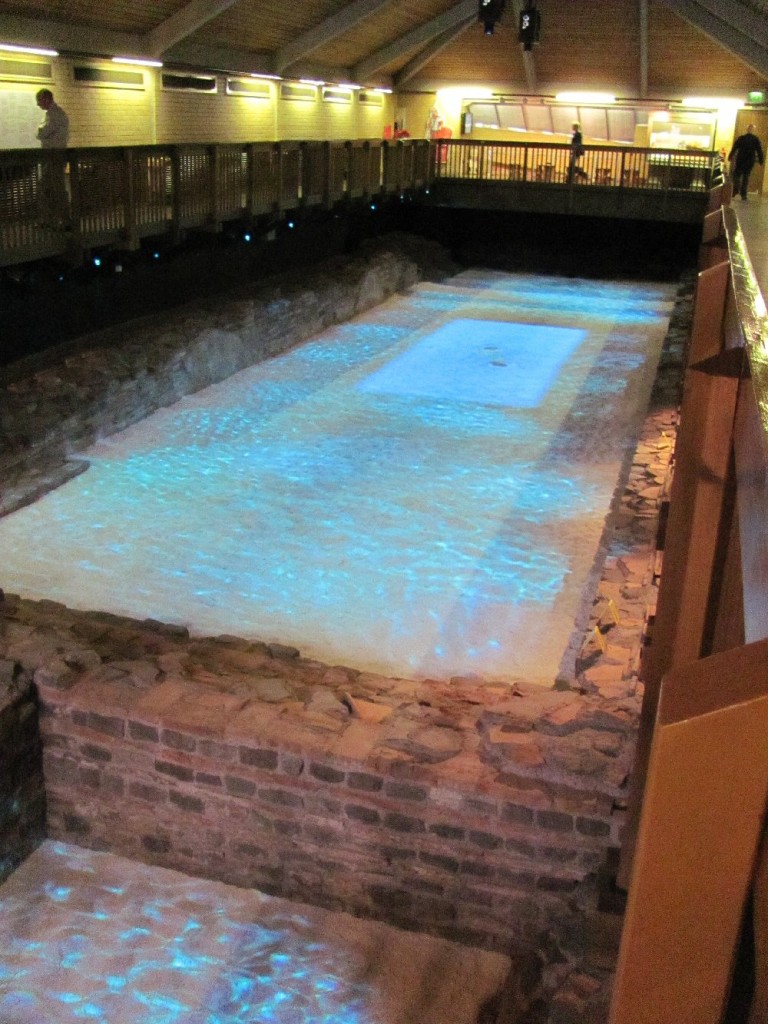
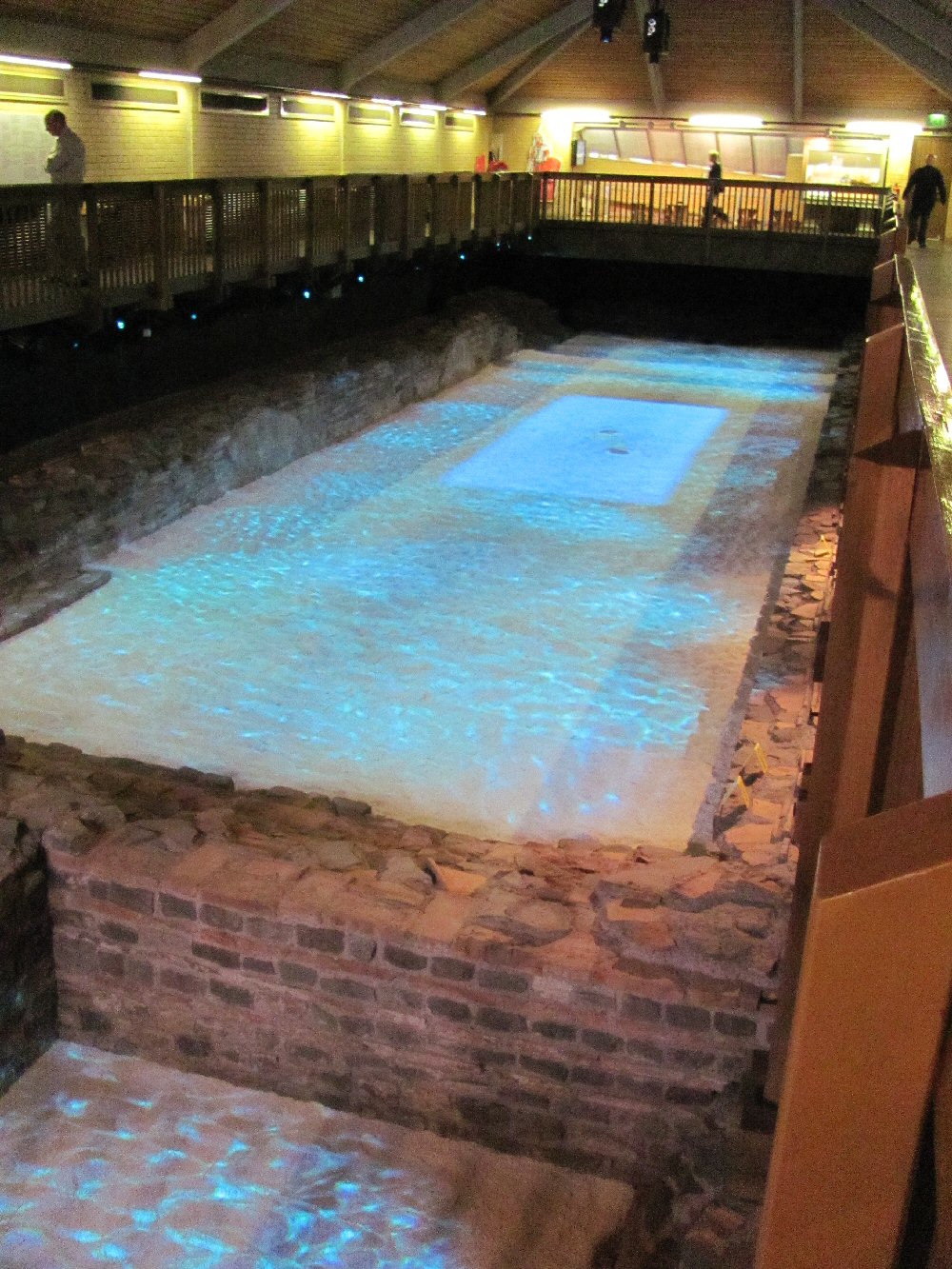
And if you fancied a swim, then the fabulous display at the Roman baths museum could entice you in. (It’s not real water, but the effect is very well done.)
And there is more to come. Last year archaeologists found traces of a huge building which may turn out to be the size of Fishbourne Roman Palace in Sussex.
Alison Morton is the author of Roma Nova thrillers, INCEPTIO, and PERFIDITAS. Third in series, SUCCESSIO, is now out.
Find out about Roma Nova news, writing tips and info by signing up for my free monthly email newsletter.
If you enjoyed this post, do share it with your friends!
 This afternoon, I launched a rocket-fresh new writers’ group. This afternoon, I launched a rocket-fresh new writers’ group.
When I arrived in my new home in France, I eagerly searched out existing groups. Like any new relationship, it takes a while to mesh with established groups, so I went to several meetings, full of optimism and using my best networking and charm skills.
I dutifully presented my work for critiquing. Now, I’ve hardened up over the past year or so, but I blinked, hard, when one member turned on me and said he hated it. In those words and with fury all over his face.
Okaaay.
I took a deep breath and explained about genre writing, the large readership of women’s fiction, etc. etc. He used the H word again. Embarrassment from the facilitator. I persisted over a few more meetings, even volunteering a session on character (Thank you, Arvon), but concluded too many of the personalities in the group were parading their egos. Time to move on…
Dispirited and dejected after several months, I knew none of the groups was right for me. Writing is a visceral, instinctive thing and I should have clicked instantly if a group was right. Alas, no clicks.
I was spoiled after my terrific group in the UK where I met my critique partner (I blogged about writing buddies here last March.).
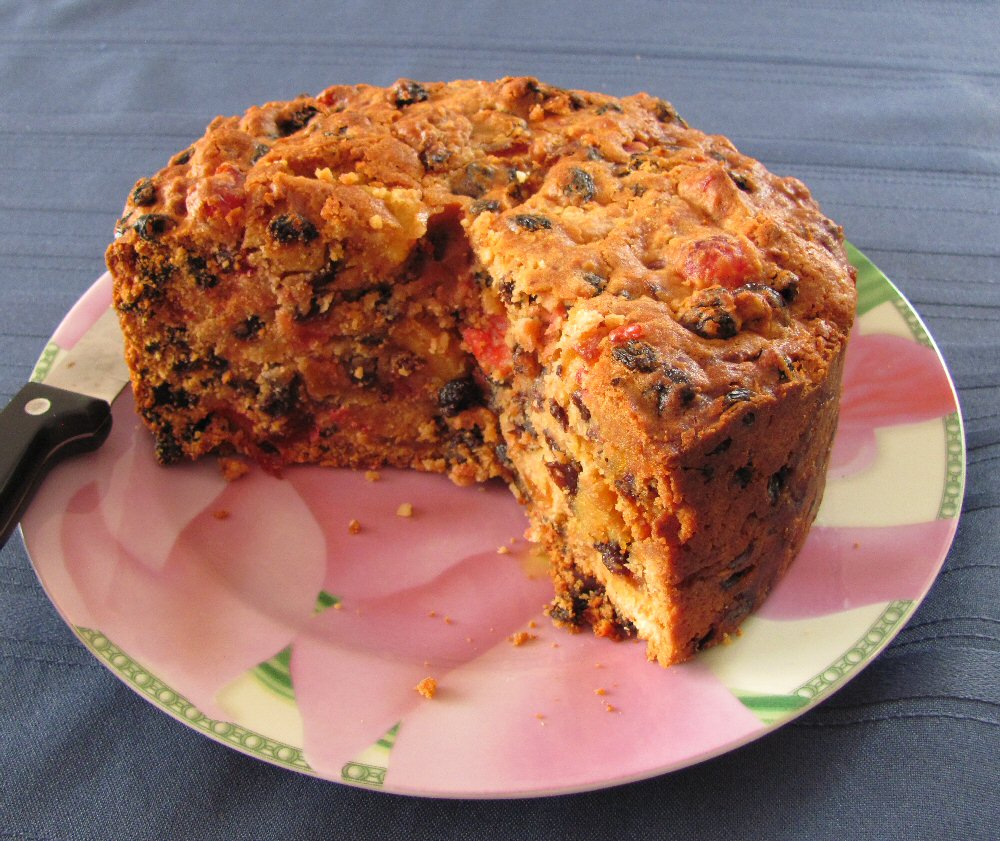
So after drinking enough vinegar, I decided to brew my own champagne. A writer friend who had traipsed round some of the groups with me and a colleague with a track record of writing plays and musicals who was starting on her first long fiction met over tea and cake (thanks to Helen of Haddock in the Kitchen) and set up our group. We hope to invite another local writer, an alumnus from UEA, no less, and then set to work.
The buzz from talking, exchanging and communing on an almost telepathic level with other obsessives cannot be beaten. We have our objectives and the next date.
Do you belong to a writing group? How does it enhance your writing?
Update 2024: Alison Morton is the author of Roma Nova thrillers – INCEPTIO, CARINA (novella), PERFIDITAS, SUCCESSIO, AURELIA, NEXUS (novella), INSURRECTIO and RETALIO, and ROMA NOVA EXTRA, a collection of short stories. Audiobooks are available for four of the series. Double Identity, a contemporary conspiracy, starts a new series of thrillers. JULIA PRIMA, Roma Nova story set in the late 4th century, starts the Foundation stories. The sequel, EXSILIUM, is now out.
Find out more about Roma Nova, its origins, stories and heroines and taste world the latest contemporary thriller Double Identity… Download ‘Welcome to Alison Morton’s Thriller Worlds’, a FREE eBook, as a thank you gift when you sign up to Alison’s monthly email update. As a result, you’ll be among the first to know about news and book progress before everybody else, and take part in giveaways.
If you enjoyed this post, do share it with your friends!
Who’d be a critic? I’m not talking about the flesh-tearing but insecure ego-tripper as in Sebastian Faulks’ A Week in December, but more somebody who assesses manuscripts and/or mentors writers.
Sending your baby out for review produces numbing fear in a writer; desperate for feedback, but scared the reviewer/assessor/critic will deem it a heap of crap. So when that envelope thuds on your doormat or that email pings in your inbox, it’s a moment of pure courage to open it. Over the shock and the flouncing about, what to do?
Think about this to get balance:
- Reviewers/editors are generally acting with good intentions and good ones want to work with you to help you improve;
- There are positive, encouraging comments in the report – you may have only concentrated on the negatives;
- The criticism is about the work, not you personally.
So what can we do with the report?
- Leave it alone for a couple of days;
- Read it through thoroughly – make a copy and mark it up, sentence by sentence. Don’t dash off and change the manuscript at that moment, keep going through and mark it up: D (disagree); A (Agree); * action point; underline (Oh, how true!) and scribble all over it.
What do we learn?
- Perhaps you didn’t get a particular point across well;
- You may have been lazy by not showing rather than telling;
- Was that piece of dialogue an indulgence?
- Perhaps your protagonist is a tad boring;
- Did you miss an opportunity to show reaction/emotion?
- Perhaps that fab sunset or those rolling hills have nothing to do with the character or plot, but were something you are proud of (kill your darling alert);
- Those things you know in your heart that are wrong have been exposed.
What is the result?
- A note of strengths – check the good comments and be proud of them;
- Weak points have been scooped up and dumped back on you to improve;
- You’ve been made to think, not just the points under scrutiny, but the whole thing. You have been granted ferret-like awareness to root out other discrepancies. Profit from it;
- You’ve been given a professional assessment, so be equally professional and listen and act on it.
You wouldn’t be human if you weren’t a little hurt by the negatives, but do you really want an assessment that says ‘You were wonderful, darling,’ when deep-down, you know you might not be 100% wonderful?
Coaches say that you should turn any set-back into an opportunity. I know I sound like Pollyanna, but it’s true. I firmly believe that while I may not agree with everything the reviewer says, I know that each time I undergo such a process, it sparks off a frenzy of brain activity. Sure, I see cringe-worthy mistakes, lapses and lacks but I discover I am writing at a higher level, my imagination brings out fresh insights. I have developed the ability to slice through the dross and replace it clever plot turns and deeper characters. (Well, until next time 🙂 )
So, bon courage!
If you enjoyed this post, do share it with your friends!
|
Subscribe to Blog via Email
Join 368 other subscribers.
Categories
Archive
|