Today, I’m thrilled to welcome Jane Thynne to my blog. Jane has worked as a journalist for the BBC, The Sunday Times, The Daily Telegraph, and The Independent. She has been a panellist on the BBC Radio 4 literary panel game The Write Stuff on many occasions and was a member of the judging panel for the Oldie of the Year award in 2010 and a judge for the Best Online Only Audio Drama award of the first BBC Audio Drama Awards in 2012. Her first novel, Patrimony, was published in 199 followed by The Shell House in 1999, The Weighing of the Heart in 2010 and Black Roses in 2013. Today, I’m thrilled to welcome Jane Thynne to my blog. Jane has worked as a journalist for the BBC, The Sunday Times, The Daily Telegraph, and The Independent. She has been a panellist on the BBC Radio 4 literary panel game The Write Stuff on many occasions and was a member of the judging panel for the Oldie of the Year award in 2010 and a judge for the Best Online Only Audio Drama award of the first BBC Audio Drama Awards in 2012. Her first novel, Patrimony, was published in 199 followed by The Shell House in 1999, The Weighing of the Heart in 2010 and Black Roses in 2013.
Jane and I share a fascination not only for Berlin but for the lives of women during the Third Reich in Germany, mine non-fiction, hers spy thrillers in the world of the Nazi leaders’ wives, so it seemed natural to grill her about this…
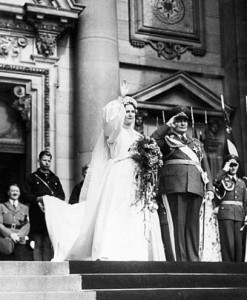 Goering marriage What attracted you to writing about women in Nazi Germany and having a woman protagonist in what has been depicted as a very male-dominated period?
The lives of German women under Hitler – like so much in the Third Reich – was rife with contradictions. It was an intensely misogynistic regime, and yet Hitler received more fan-mail than The Beatles and Mick Jagger put together. No one encapsulated these ironies more than the senior Nazi wives, who were expected to embody Nazi values but diverged from them in dramatic ways. We know a little of what it felt like because several of them, such as Emmy Goering, wrote memoirs about their lives. In many cases they were an important influence on their husbands – some of them, like the wives of von Ribbentrop and Heydrich – more Nazi than their men. Others, like Frau Goering, the wife of Baldur von Schirach, actively interceded with their husbands on an occasional basis to save friends.
But I was also interested in the lives of ordinary women, trying to live under an increasingly restricted, totalitarian regime. In my new novel, The Winter Garden, a murder takes place in a Bride School, one of those institutions established in 1935 by Himmler for women hoping to marry into the SS. Women actually had to gain a certificate in order to qualify for their wedding. Incredible!
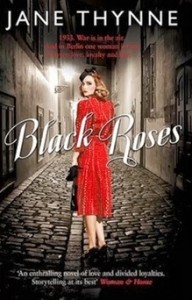 It seemed a good idea to make Clara Vine, my protagonist, an Anglo-German actress. Berlin was the centre of European film making – it really was the Hollywood of Europe. Actresses occupied an uneasy middle grown between ‘respectable’ women and celebrities and with acting also came many metaphors around playing a role and spying. It seemed a natural fit. It seemed a good idea to make Clara Vine, my protagonist, an Anglo-German actress. Berlin was the centre of European film making – it really was the Hollywood of Europe. Actresses occupied an uneasy middle grown between ‘respectable’ women and celebrities and with acting also came many metaphors around playing a role and spying. It seemed a natural fit.
Your period detail was rich and cleverly present throughout Black Roses. Do you have an affinity or special knowledge of Germany or was it a hard slog?
It’s impossible not to be intrigued by the country at the centre of the seismic event of the twentieth century. And if you’re interested in Germany, your eyes naturally turn to Berlin. I’ve walked the streets of Berlin over and over in reality and every day in my head for the past couple of years. It’s strange seeing your own imaginary Berlin like a palimpsest under the modern, rebuilt Berlin, but It helps that I have a working knowledge of German and I visit a couple of times a year.
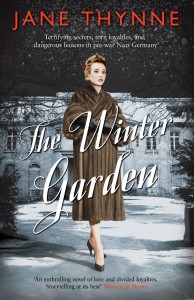 Thank you, Jane. I loved Black Roses which Jane talked about at the Harrogate History Festival last October and the sequel, The Winter Garden, is on my TBR pile. Thank you, Jane. I loved Black Roses which Jane talked about at the Harrogate History Festival last October and the sequel, The Winter Garden, is on my TBR pile.
Jane has kindly donated a copy for a giveaway and one lucky winner will win it in a draw. All you have to do is make a (sensible) comment by 22 March and your name will go in the hat!
Goering marriage photo from Bundesarchiv, Creative Commons Licence
Alison Morton is the author of Roma Nova thrillers, INCEPTIO, PERFIDITAS, SUCCESSIO and AURELIA. The fifth in the series, INSURRECTIO, was published in April 2016.
Find out Roma Nova news and book progress before everybody else, and take part in giveaways by signing up for her free monthly email newsletter.
If you enjoyed this post, do share it with your friends!Like this:Like Loading...
 Yesterday I had a health scare and spent a significant part of the day in Casualty/ER/Urgences (take your pick), so I don’t have a prepared post. Lying hooked up and waiting for blood test results, the next ECG, whatever, I had time to think. And this morning in the shower, my random thoughts solidified. Yesterday I had a health scare and spent a significant part of the day in Casualty/ER/Urgences (take your pick), so I don’t have a prepared post. Lying hooked up and waiting for blood test results, the next ECG, whatever, I had time to think. And this morning in the shower, my random thoughts solidified.
No, it’s not the life/death thing or bucket lists. It’s about the strange book world I now live in. For some reason, a writing friend’s question came back to me. A couple of weeks ago, I’d been sorting out some guest posts for this blog and she (a rather keen self-publisher), was surprised at the list. She thought now I had followed the indie route that I would be exclusively ‘of that world’.
‘What do you mean? I asked.
‘Well’ she said, although you’ve had quite a lot of full reads, you’ve had over XX rejections. I thought you wouldn’t want anything to do with any of them.’
Where to start? I have demoted her to acquaintance in my head.
Friends are friends wherever they are and whatever they’re doing.They may do things you wouldn’t, or live with people you wouldn’t. You may be just a teensy-weensy bit envious of their achievements. But the friendship stays. When you first meet somebody and something goes click, the spark of an answering smile in their eyes, you know you’ll be friends. So it is in the book world.
I’m inviting some of my book friends onto my blog mainly because I’m nosy. It’s the historian in me: why, what, how, etc. They’ve done interesting things and have interesting things to say that I think my readers will enjoy. And they come from the entrenched mainstream/traditional to the radical self-publisher and all stops in between.
Ecumenical? Yeah, that’s me.
Alison Morton is the author of Roma Nova thrillers, INCEPTIO, and PERFIDITAS. Third in series, SUCCESSIO, is out early summer 2014.
If you enjoyed this post, do share it with your friends!Like this:Like Loading...
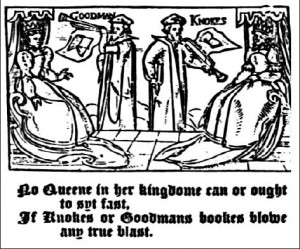 Wikipedia defines women’s history as follows, ‘Women’s history is the study of the role that women have played in history, together with the methods needed to study women. It includes the study of the history of the growth of woman’s rights throughout recorded history, the examination of individual women of historical significance, and the effect that historical events have had on women. Wikipedia defines women’s history as follows, ‘Women’s history is the study of the role that women have played in history, together with the methods needed to study women. It includes the study of the history of the growth of woman’s rights throughout recorded history, the examination of individual women of historical significance, and the effect that historical events have had on women.
Inherent in the study of women’s history is the belief that more traditional recordings of history have minimized or ignored the contributions of women and the effect that historical events had on women as a whole; in this respect, woman’s history is often a form of historical revisionism, seeking to challenge or expand the traditional historical consensus.’
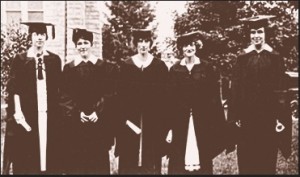 Hm. Maybe I haven’t drunk enough coffee this morning, and there’s a lot to unpick in those sentences, but I read it as if a favour is being granted. Hm. Maybe I haven’t drunk enough coffee this morning, and there’s a lot to unpick in those sentences, but I read it as if a favour is being granted.
“Let’s allow the girls to have a whole section of history to themselves. They’ll be able to go off and write serious stuff that other girls will love and it will keep them out of our mainstream hair.”
When I was younger and questioning the under-representation of women and the male dominance of history, heroines such as Joan of Arc, Elizabeth I and Florence Nightingale were quoted at me as strong, exceptional, female models.
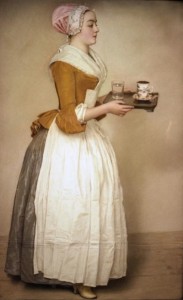 Exceptional. Exceptional.
Exactly.
The unremarked lives of other women, duchesses to beggars, who made up fifty per cent of the population, were peripheral and hidden in traditional women’s auxiliary roles as wives, mothers, sisters, servants.
Both historical accounting and public awareness of history are moving on; it would be harsh to say otherwise. In the media we have the splendid Mary Beard, Bettany Hughes, Lucy Worsley and Lucinda Hawksley leading us into grand sweeps and minute details of places and lives of both women and men.
But even with women talking about life and death in Rome, Socrates in Athens or Kensington Palace and British crime, are we much further on?
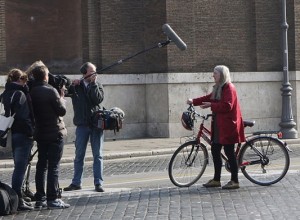
You may remember the virtual attacks on Professor Beard for not confirming to female norms in respect of appearance and behaviour?
Her clever and often witty insights into past lives and her wealth of knowledge were ignored in torrents of spite about her hair, clothes and teeth and the fact she had spoken out at all. Vicious and rather sad.
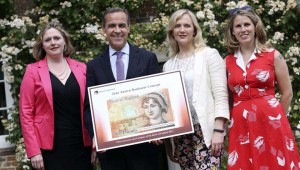
Caroline Criado-Perez (right) was told to ‘shut up’ and threatened with rape when she campaigned for at least one female historical figure to be portrayed on UK bank notes as Elizabeth Fry was to be dropped from the £5 note. Happily, Jane Austen will appear on the £10 note from 2017 but even in the 21st century, it’s depressing to see that in some quarters traditional male attitudes to female speakers and active participants in life are still welded to ancient roots.
In brief, there are two strands here: the historical account itself and dissemination of that account. Perhaps this is where ‘good’ historical fiction comes in, ‘good’ meaning meticulously researched and well written: no fictional spouses; no anachronistic food or clothes; no characters saying ‘great’ or ‘no way’ in response to a suggestion in the seventeenth century; muskets and spathae in their correct wars.
 Works of fiction are by their nature made up, or fictionalised versions of known stories. Historical fiction in the hands of a competent writer can fill out the known account and suggest logical developments even when there are very few substantiated facts. Sarah Johnson from the Historical Novel Society produced some thoughtful guidelines to what historical fiction is, and can do. Although written in 2002, they still provide a helpful definition. Works of fiction are by their nature made up, or fictionalised versions of known stories. Historical fiction in the hands of a competent writer can fill out the known account and suggest logical developments even when there are very few substantiated facts. Sarah Johnson from the Historical Novel Society produced some thoughtful guidelines to what historical fiction is, and can do. Although written in 2002, they still provide a helpful definition.
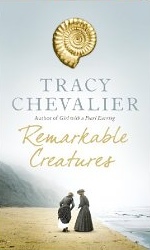 Historical novels are an increasingly popular genre with readers, and more women’s stories set in the past are being portrayed by, for instance, Philippa Gregory, Diana Gabaldon, Amy Tan and Tracy Chevalier. Making women as present as men in historical events and stories should be the norm. Historical novels are an increasingly popular genre with readers, and more women’s stories set in the past are being portrayed by, for instance, Philippa Gregory, Diana Gabaldon, Amy Tan and Tracy Chevalier. Making women as present as men in historical events and stories should be the norm.
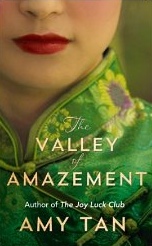 While it isn’t possible for every female historical protagonist to be a kick-ass heroine like Buffy the Vampire Slayer, writers are bringing forward more positive and active representations of women as courageous, decision-making and resilient. And stories of known events, but from a female point of view, are filling the real and virtual bookshelves. While it isn’t possible for every female historical protagonist to be a kick-ass heroine like Buffy the Vampire Slayer, writers are bringing forward more positive and active representations of women as courageous, decision-making and resilient. And stories of known events, but from a female point of view, are filling the real and virtual bookshelves.
Whether this message seeps through into public consciousness and helps change attitudes may take a little longer.
Updated 2020: Alison Morton is the author of Roma Nova thrillers – INCEPTIO, PERFIDITAS, SUCCESSIO, AURELIA, INSURRECTIO and RETALIO. CARINA, a novella, and ROMA NOVA EXTRA, a collection of short stories, are now available. Audiobooks are available for four of the series. NEXUS, an Aurelia Mitela novella, is now out.
Download ‘Welcome to Roma Nova’, a FREE eBook, as a thank you gift when you sign up to Alison’s monthly email newsletter. You’ll also be first to know about Roma Nova news and book progress before everybody else, and take part in giveaways.
If you enjoyed this post, do share it with your friends!Like this:Like Loading...
Our first encounter with Romans is often a film or TV series depicting soldiers marching in armour, being tough, shouting and thrusting a sword into some barbarian in a dark, wet and enemy-infested wood. Or perhaps we think about the ruins left of magnificent imperial or public buildings?
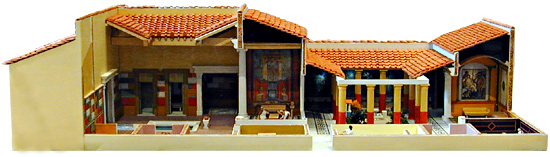
But what about the calmer side of Roman life? Where did the civilian Romans live? The very rich and/or powerful lived in palaces or extensive town villas, but the middle-class merchants who had done well, or professional families, lived in something like this:
Model of a Roman townhouse (domus)
 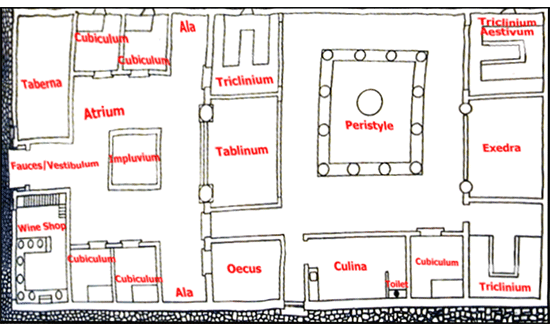
| Atrium |
formal reception hall |
| Ala |
wings/large alcoves opening from the atrium |
| Cubiculum |
small room/bedroom |
| Culina |
kitchen |
| Exedra |
garden room |
| Impluvium |
sunken part of the atrium in to catch and carry away rainwater |
| Oecus |
salon/large dining room |
| Peristylium |
colonnaded garden |
| Taverna |
(wine) shop |
| Tablinium |
office/study |
| Triclinium |
dining room |
| Vestibulum |
entrance hall |
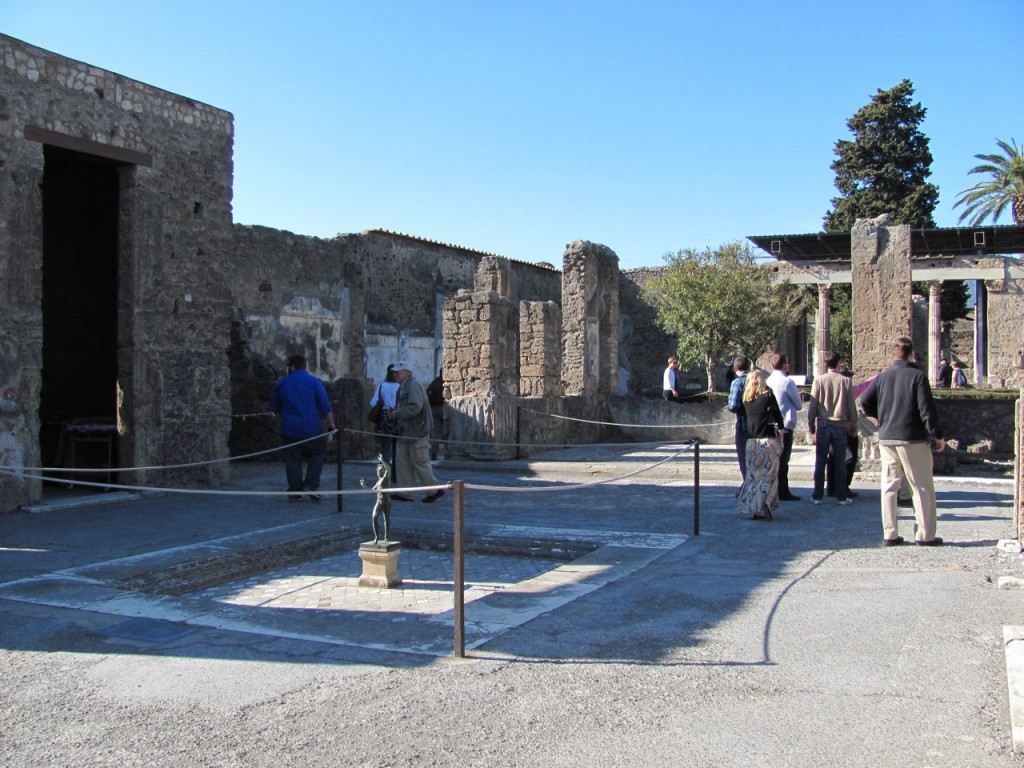 Impluvium and atrium This is based on a house lived in by a middle ranking Roman in Pompeii.
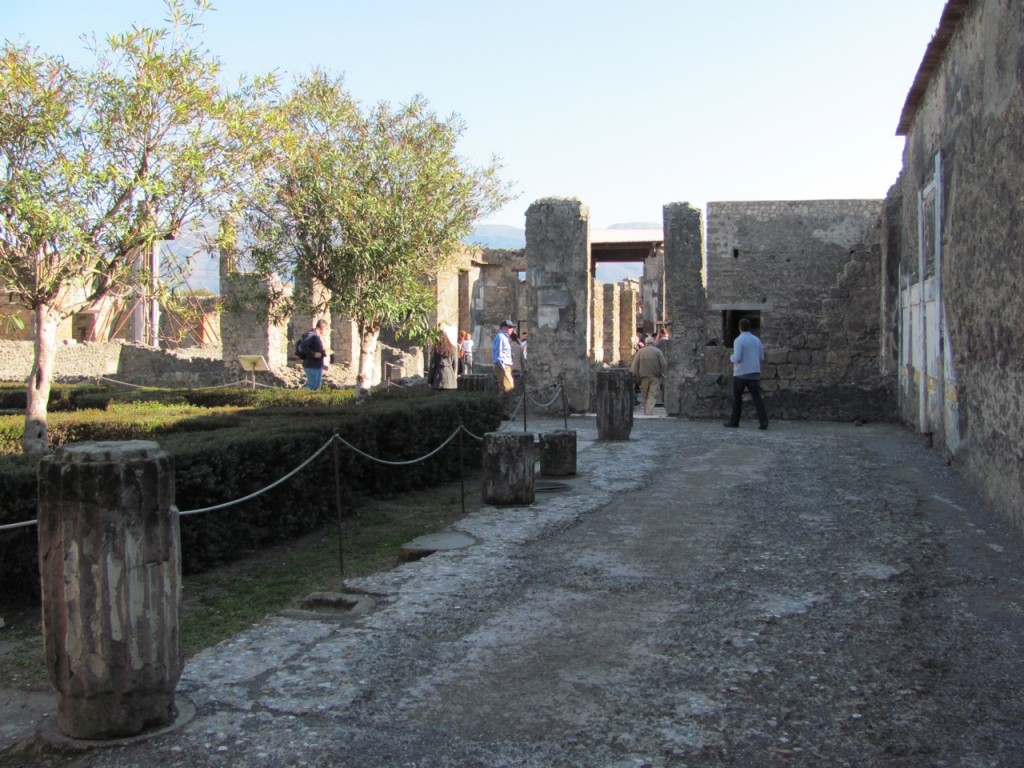 Peristylium Most families, in more modest circumstances, lived in one or two rooms in apartment blocks of varying stability called insulae. Although kitchen and latrines could be shared, the blocks did have running water and sanitation. Rooms could be owned or rented. They were built in timber, mud brick, and later primitive concrete and supposed to be restricted in height to about 20 metres. Some rare examples survive in Rome at the foot of the Capitoline Hill and in Ostia Antica, Rome’s ancient port.
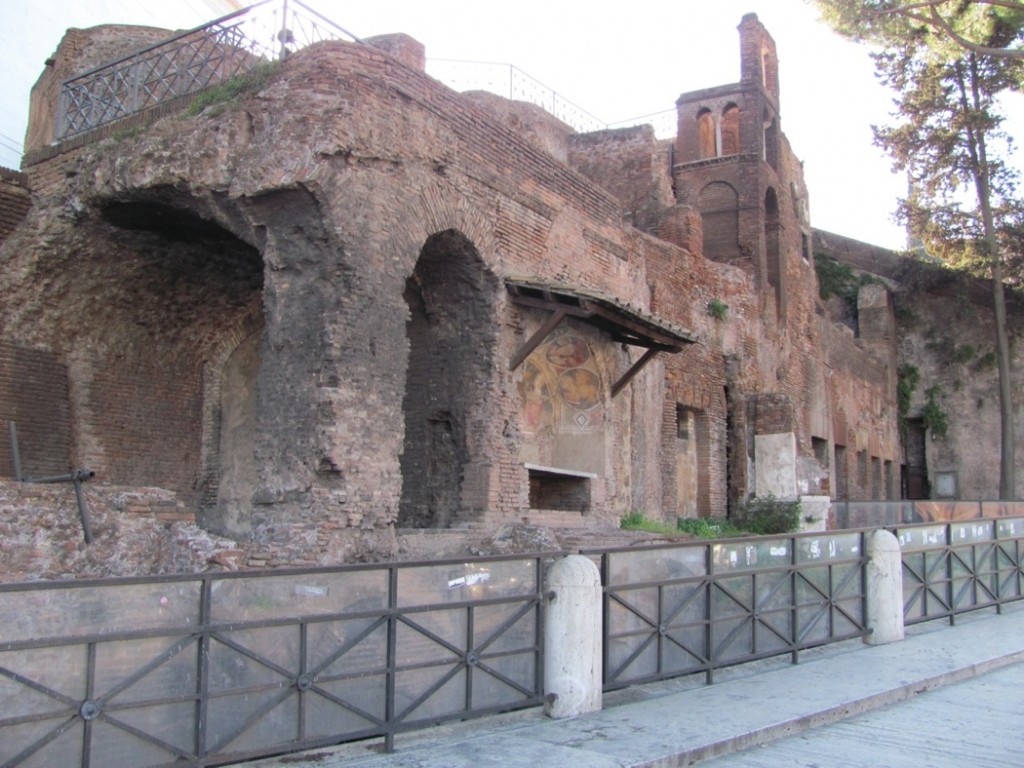 Insulae (apartment blocks) at the foot of the Capitoline Hill, Rome 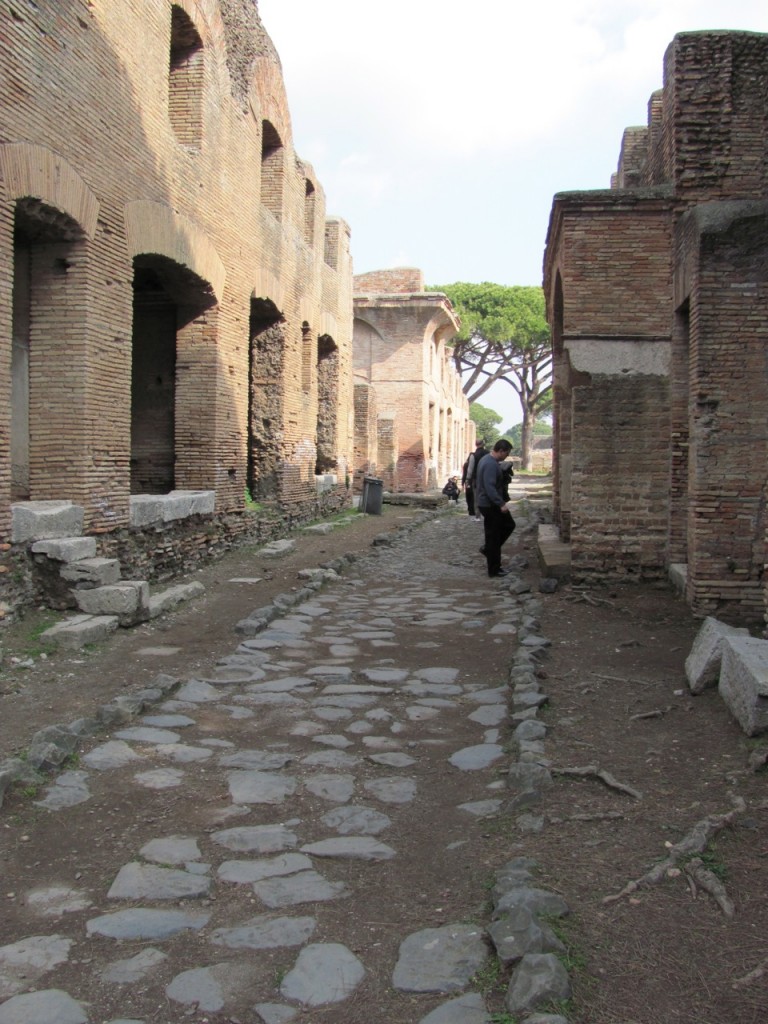 Insulae in Ostia Antica Carina and her family in 21st century Roma Nova live in a large townhouse still called a domus – Domus Mitelarum – which has an atrium with an oculus – a bull’s eye – in the roof to let in light, but no longer rainwater – it’s been glazed over as has the impluvium. But there are alcoves (ala) to sit in and a peristyle garden in the old part of the house.
Model and map courtesy of the University of Pennsylvania Museum of Archaeology via http://www.vroma.org/~bmcmanus/house.html
Alison Morton is the author of Roma Nova thrillers, INCEPTIO, and PERFIDITAS. Third in series, SUCCESSIO, is out early summer 2014.
If you enjoyed this post, do share it with your friends!Like this:Like Loading...
Enter the Goodreads giveaway by 3 March 2014 to win a FREE posted to you signed copy of PERFIDITAS!
Alison Morton is the author of Roma Nova thrillers, INCEPTIO, and PERFIDITAS. Third in series, SUCCESSIO, is out early summer 2014.
If you enjoyed this post, do share it with your friends!Like this:Like Loading...
|
Subscribe to Blog via Email
Join 368 other subscribers.
Categories
Archive
|