 Today I’m delighted to welcome historical fiction writer Derek Birks and his fearsome character Ned Elder. Derek was born in Hampshire, England but spent his teenage years in New Zealand, where he still has strong family ties. After many years teaching history he took early retirement to concentrate on writing. He also spends his time gardening, travelling, walking and taking part in archaeological digs at a Roman villa. Today I’m delighted to welcome historical fiction writer Derek Birks and his fearsome character Ned Elder. Derek was born in Hampshire, England but spent his teenage years in New Zealand, where he still has strong family ties. After many years teaching history he took early retirement to concentrate on writing. He also spends his time gardening, travelling, walking and taking part in archaeological digs at a Roman villa.
Derek’s favourite period is the late medieval and he writes action-packed fiction rooted in accurate history. His debut historical novel, Feud, is set during the Wars of the Roses and is the first in the Rebels & Brothers series following the fortunes of the fictional Elder family. The fourth and final book of the series, The Last Shroud, was published in 2015. But fans will be relieved to hear that the Elders will return in Scars from the Past, the first of a new series, in December 2016.
Welcome, Derek. Why did you write this book?
I started writing Feud – my debut novel – about ten years ago. I had always wanted to write stories of adventure and action but had never found the time to do it. Work commitments meant that I found it impossible to give my writing the dedicated time it required. So I went part-time but, even then, I still could not find enough hours in the day to write. Finally, I took early retirement and committed full time to writing. The idea of writing Feud was not just a decision to write, but a decision to change what I did with my life.
Why the Wars of the Roses? In my former life I was a history teacher and my favourite period of history was a stick of rock with the word Plantagenet running through it. The events – well you couldn’t make them up. What I wanted to do was write a story with a raw edge to it: fast, brutal and real. I wanted young fictional characters to interact with the actual historical figures. There had to be both male and female protagonists and I wanted the reader to be constantly surprised about what would happen to the characters next – right up to the last page. The result is Feud and I hope it fulfils what I set out to achieve.
Who is your main character?
One of the heroes in Feud is Ned Elder, a young Yorkshire knight on the eve of the outbreak of the Wars of the Roses. Ned did not change very much in all the time I was writing Feud. He’s young: around 18 when the story begins in September 1459. He is a second son and thus inexperienced, untrained in estate management, strategy or leading men in battle.
He is a skilled swordsman, though he relies on strength rather than finesse. In battle, he is headstrong and frequently careless of his own safety – and probably that of others.
Ned has his own code of honour and when his family is brutally attacked he is stunned. He can make no sense of it. He is clutching at plans of action. His sisters have been abducted, so he should try to rescue them. His lands have been taken, so he should try to win them back, etc, etc. But how he might actually achieve any of these things, he has no idea.
Feud is about how Ned tries – in his own somewhat bludgeoning style – to recover what has been lost. Ned and his two sisters – the other main protagonists – are all young and they make mistakes as young people do. Does Ned learn from his mistakes? Yes, he does, but not before the end of Feud.
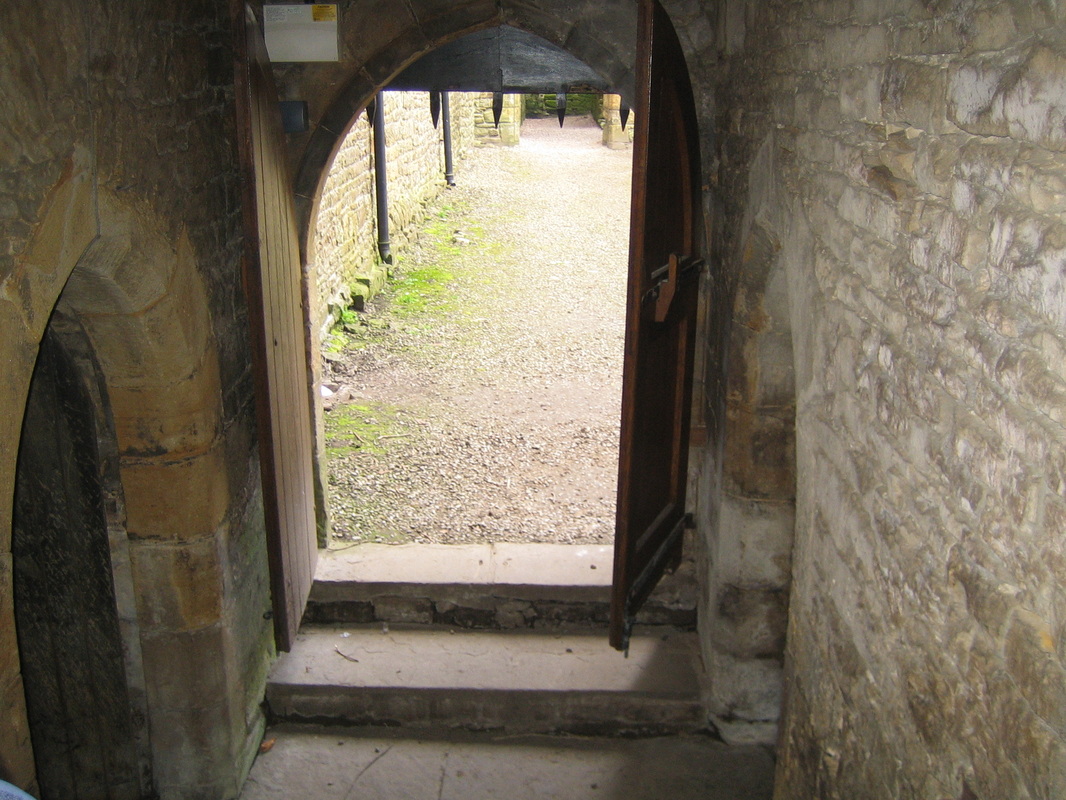
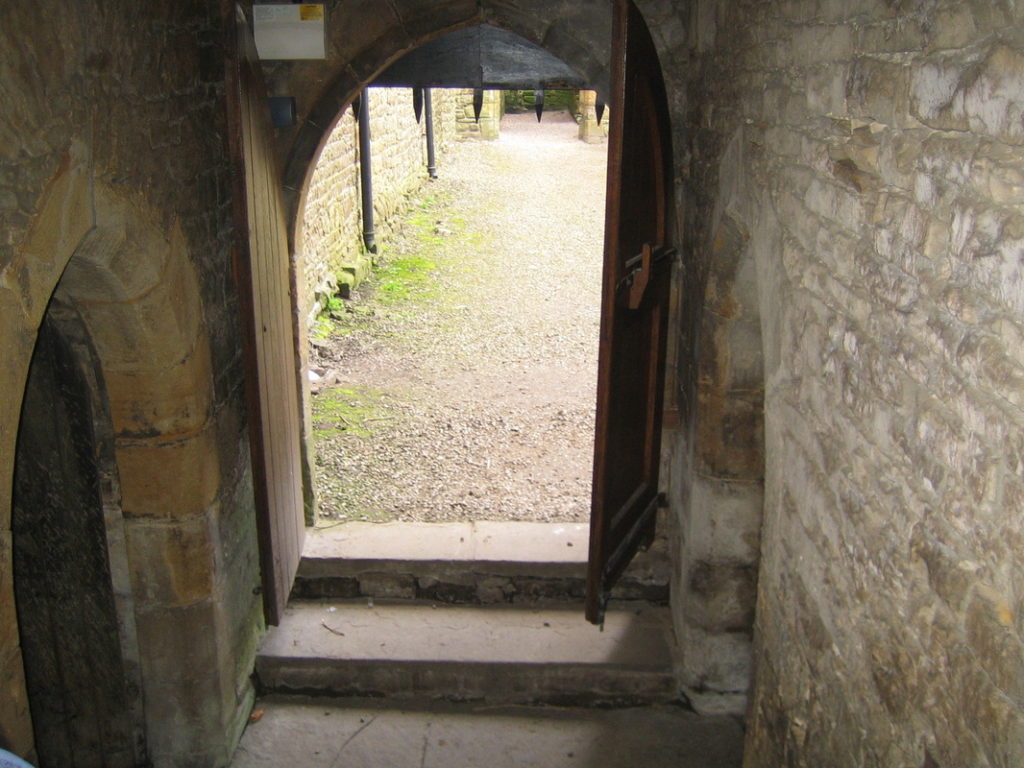 “Yoredale Castle” (alias Bolton Castle) Why do you think Ned Elder is like he is?
My hero, in a time of war, needs to have martial skills. That is an essential ingredient: he is a warrior with a warrior’s spirit. I want him to protect the weak and to be true to himself.
BUT… such characters are often painted as flawless: always right, endlessly decisive and always arriving in the nick of time to save the day. I wanted Ned to seem real, which means to be flawed: sometimes arriving too late to save the day, sometimes making the wrong call with fatal consequences for those he loves and sometimes utterly overwhelmed by what he faces.
Some readers find this annoying; they also find it annoying that the mistakes this young, untried leader makes cause people to be killed. But that’s what can happen in life. Over the four books of this series, Ned changes. As he gets older he learns – as hopefully we all do – from experience.
What does Ned think he is like?
Ned sees himself through a fifteenth century lens as a Christian knight, a man of honour. He also sees his future path as a follower not a leader because he expects that his older brother, Thomas, will inherit the family estates.
A second son is a “spare” so he is unlikely to enter the church. More usually, he is trained as a soldier and destined to play a supporting role to his elder brother. Ned idolises Thomas and is comfortable in the supporting role. He seeks no more than that. He envisages life as a soldier, perhaps fighting overseas at some point as his own father had fought in the French wars in the 1440s.
When “all hell breaks loose” Ned feels cast adrift because all the certainties of his world have been removed: father, brother, sisters, lands, home… To him, it’s as if all that has happened up to that moment is irrelevant, meaningless. He must play a different role from that which he always expected.
Which of us would not struggle to adapt to such a situation at the age of 18?
He can rely on only a few followers but they expect him to lead them and he does not know how to lead. Ned falls back on what he knows best: how to wield a sword. He therefore leads in a very blunt and warlike manner. Throughout the story, Neds finds it difficult to believe what is happening to him and his supporters. He becomes more brutal and ruthless, propelled by rage and thoughts of revenge.
His relationship with Amelie, a French girl he meets along the way, is clouded by the violence that strikes at them all. He cannot, as she sometimes does, seek solace in the church. He is close to despair and the only way forward he can see is to fight. His desperation leads him to accept that he may very well not survive the struggle.
You may think that Ned Elder sounds rather rash but you wouldn’t if you met his sister, Eleanor… but that’s another story…
(One which we must hear about sometime!)
thank you Derek (and Ned) for being my guests today.
So what’s Feud about?
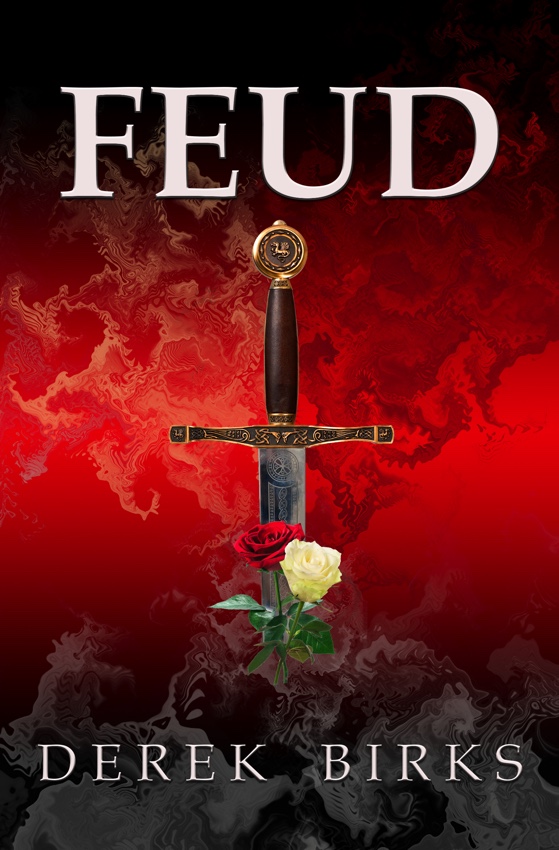 1459. England stands on the brink of chaos and as the Wars of the Roses begin, the rule of law breaks down… 1459. England stands on the brink of chaos and as the Wars of the Roses begin, the rule of law breaks down…
Whilst York and Lancaster go to war for the throne, in the heart of Yorkshire the Radcliffe family have an old score to settle with their neighbours, the Elders.
When the feud breaks out, Ned Elder is a young, untried knight. With his father executed, his older brother butchered and his two sisters roughly abducted, it seems that Ned is the family’s last hope of survival. Yet he barely escapes with his life and is pursued across the land with only a few loyal companions. To defeat the Lancastrian Radcliffes, Ned must join the civil war on the side of York, but victory seems a long way off.
Imprisoned in a remote nunnery, his wild and rebellious sister, Eleanor, has not given up but can she find the strength to fight back? The fate of the Elders will hang as much upon the courage of Ned’s sisters as his own skill with a sword.
As the civil war rages across the snow-covered battlefield of Towton, the Elders fight for survival and the bitter feud is played out to its bloody conclusion.
“From the eye-catching cover to the last page, Feud is an exciting story of survival through personal upheaval during a vicious war, where the outcome is not always certain.” Historical Novel Society.
Feud is the first of a four book series entitled Rebels and Brothers. The story continues in A Traitor’s Fate.
Links to Amazon.co.uk and Amazon.com
Connect with Derek via Twitter (@feud_writer), website and blog.
Alison Morton is the author of Roma Nova thrillers, INCEPTIO,
PERFIDITAS, SUCCESSIO and AURELIA. The fifth in the series, INSURRECTIO, was published in April 2016.
Find out more about Roma Nova, its origins, stories and heroines…
If you enjoyed this post, do share it with your friends!
The 2016 Historical Novel Society in Oxford – fabulous speakers, sharp engaging talks, lively expert panels plus rampaging Saxons – a celebration of all things historical and fictional. This was the feast before us.
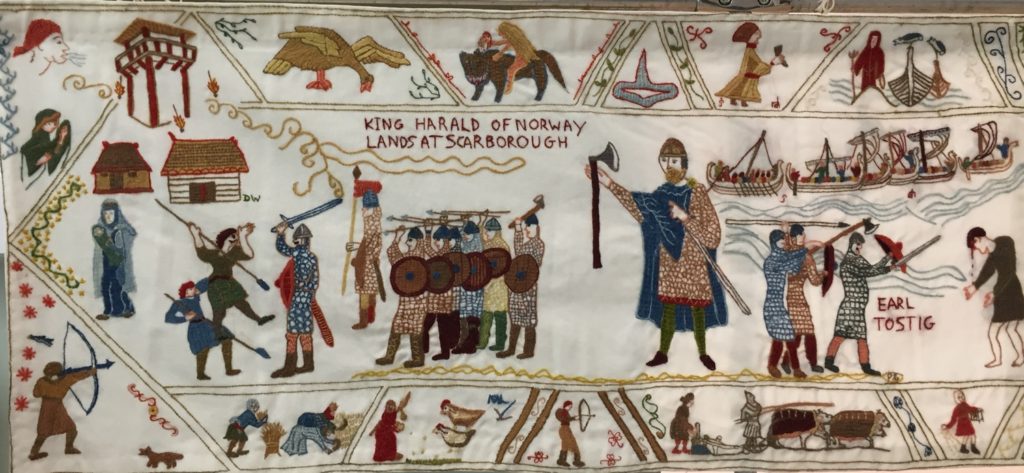 Battle of Fulford 1066 tapestry. (Click image for more info) Many colleagues have written accounts which make compelling reading for different reasons. I’ve picked out a few I that made me laugh and/or made me think:
Christina Courtenay
Anita Chapman
Ruth Downie
Lorna Fergusson, here and here.
I’m not going to duplicate their excellent posts, but I urge you to read them!
So, my little interim post gave a few glimpses of the weekend. But my involvement with the conference began last year. I was asked to join the organising committee and became the deputy publicity officer working alongside publicity officer Anita Chapman who runs the social media consultancy neetsmarketing. I also took on responsibility for co-ordinating indie activities including an indie display table and (with Helen Hollick) an indie panel. Somehow I volunteered for front of house (problem solver) which occupied a lot of my time!
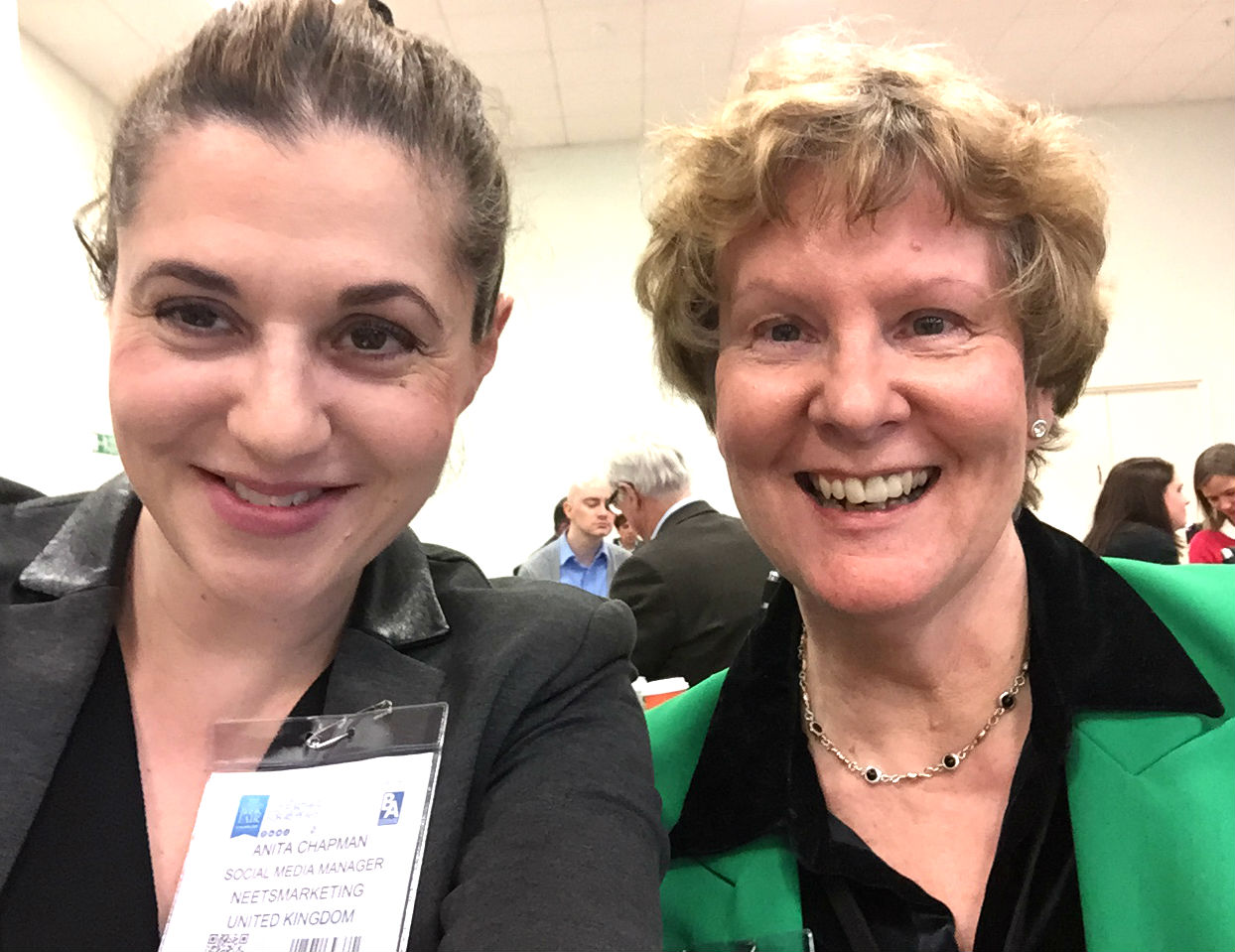
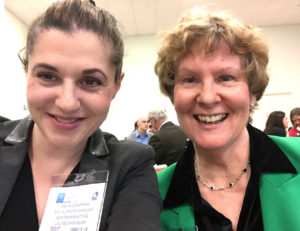 With Anita at the London Book Fair (Photo courtesy of Anita Chapman) Well, Anita and I launched our PR plan nice and early letting HNS members across the world know about the exciting things planned for the conference. Although she lives in the UK and I’m in France, we kept up to date with each other as we rolled the phases out. We even managed a meeting during the London Book Fair earlier this year in April.
Our PR campaign led to record breaking early sales and more importantly generated huge enthusiasm from those who booked to come to the conference. I loved liaising with delegates and hoped I answered all their questions fully! I couldn’t get to many committee meetings, but I kept in touch with Anita, front of house manager Antoine Vanner, bookselling contact Liz Harris and fellow indie co-ordinator Helen Hollick by Skype throughout the run-up.
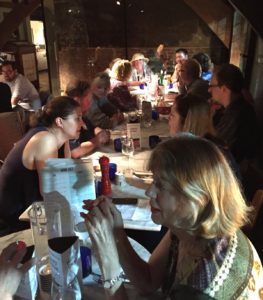
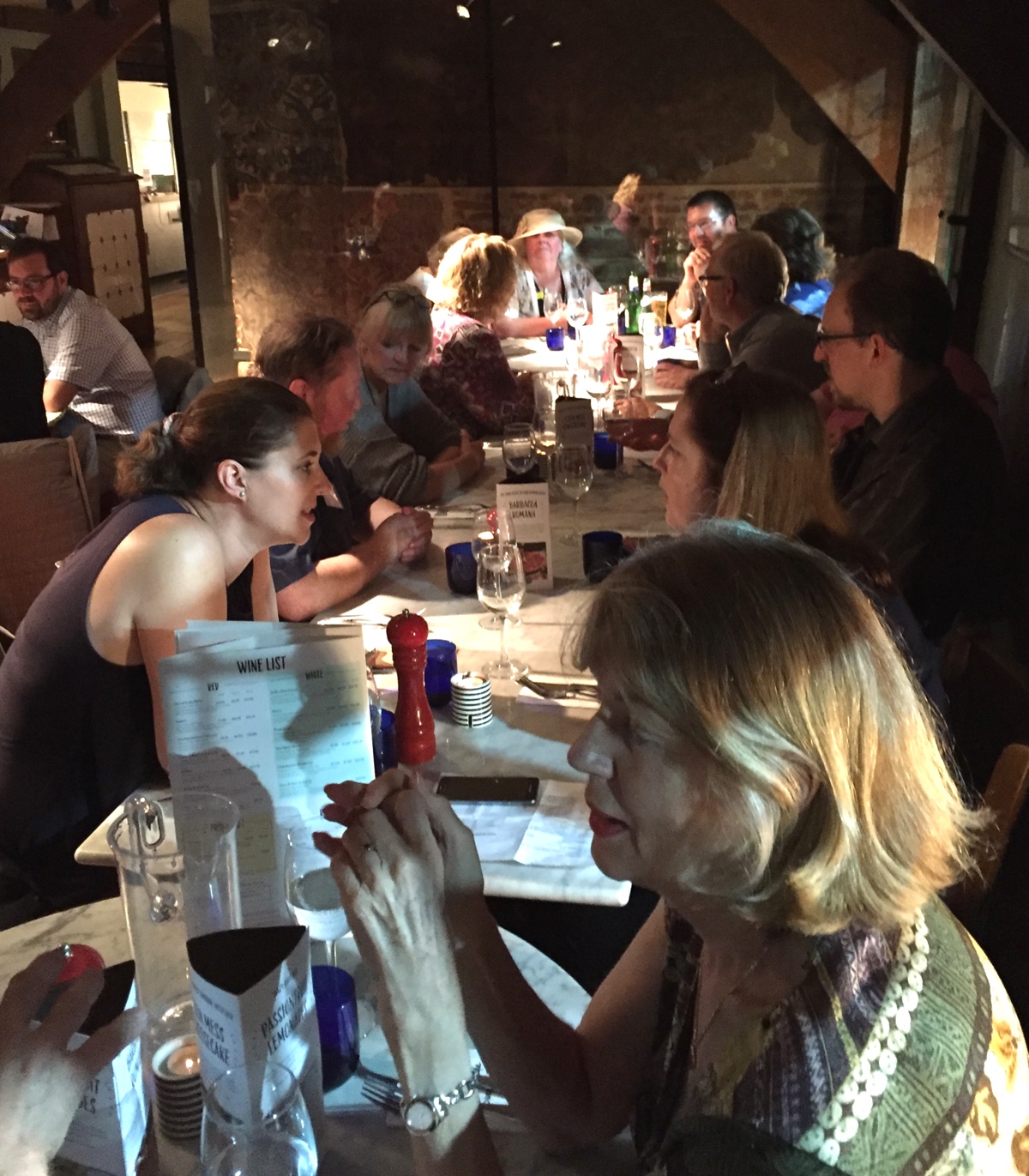
Well, the weekend arrived! Leading the excursion to Blenheim Palace on 2 September was a total pleasure, and a pizza and salad dinner amongst friends (organised by Elaine Powell) was the perfect end to the day. But that was relaxation before the frenzy.
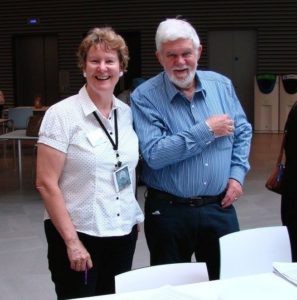 From Friday evening until Sunday lunchtime, I was in perpetual motion! My Fitbit records over 12,000 steps each day! I reported to Antoine, the front of house supremo whom we christened “The Master”. (He does write naval fiction after all!) Streams of delegates were booked in, questions answered, directions given, queries solved. And so it continued for two days. From Friday evening until Sunday lunchtime, I was in perpetual motion! My Fitbit records over 12,000 steps each day! I reported to Antoine, the front of house supremo whom we christened “The Master”. (He does write naval fiction after all!) Streams of delegates were booked in, questions answered, directions given, queries solved. And so it continued for two days.
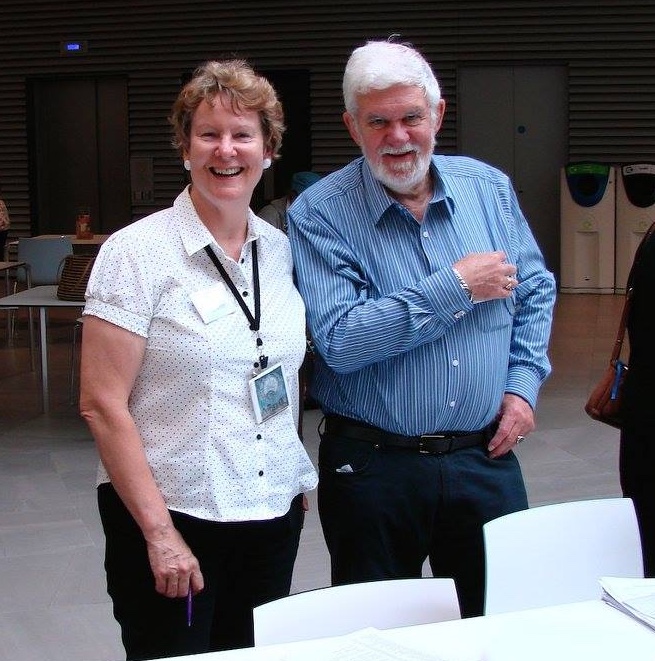
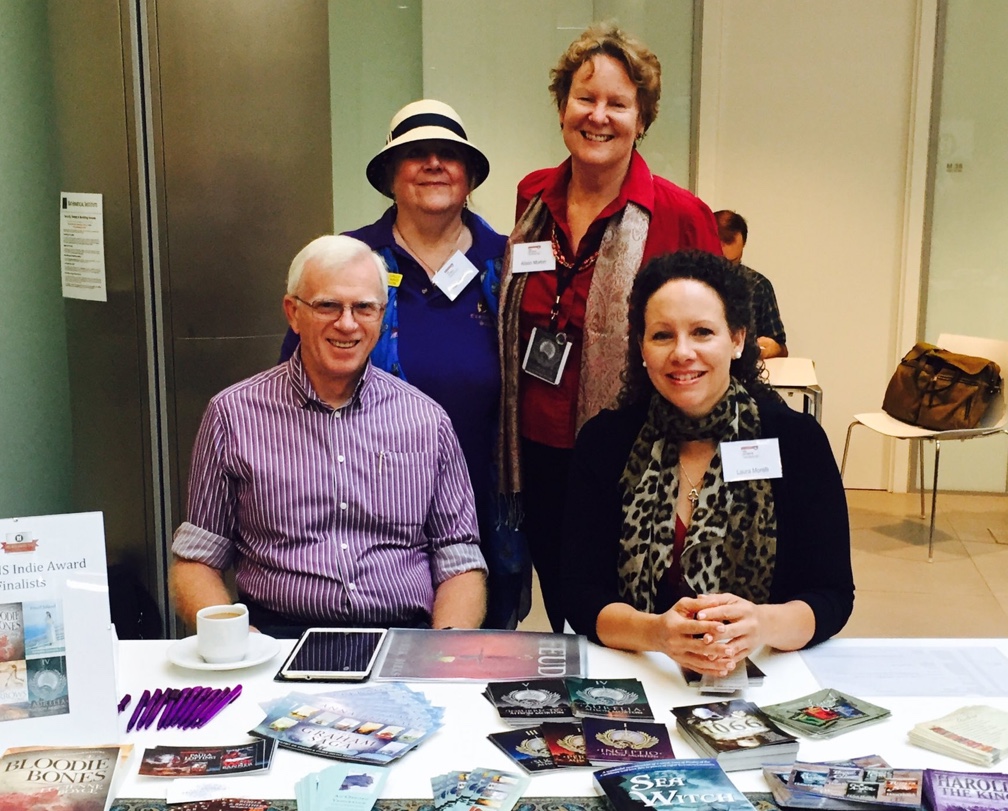
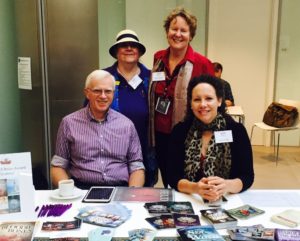 With Derek Birks and Laura Morelli (sitting) and Helen Hollick (standing, left) Helen, Anna Belfrage and I set up the indie table Saturday morning and the first of our (pre-organised) volunteers arrived promptly at 9 am; people buzzed round it non-stop.
Anita Chapman and I had the pleasure of speaking (she more than me) to Michael Caines of the Times Literary Supplement who wrote a splendid piece about the conference.
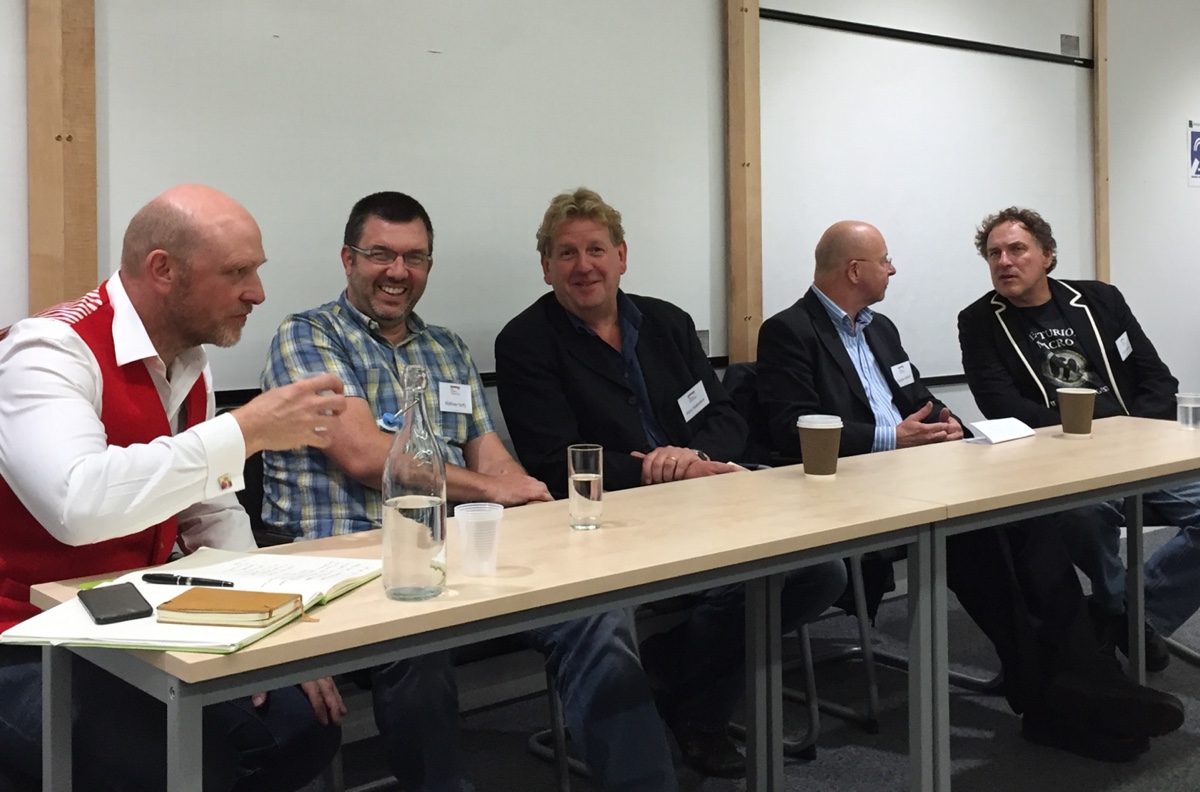
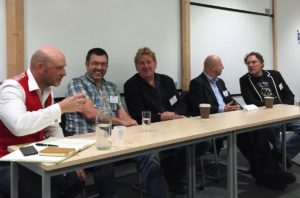 Justin Hill, Matthew Harffy, Harry Sidebottom, Douglas Jackson and Simon Scarrow. Not a clue what Matthew, Harry and I were joking about! I managed to get into a few sessions, including the one on ‘Battle Scenes: Guts, gore and glory’ with Justin Hill, Matthew Harffy, Harry Sidebottom, Douglas Jackson and Simon Scarrow. It was a bit ‘laddish’ but very entertaining. No, I didn’t ask the ‘women in battle’ question as it went past so quickly, there wasn’t time!
AURELIA which was one of the four finalists for the 2016 HNS Indie Award didn’t win, but apparently, the judges had a terrible time deciding. 😉 The joint winners were Lucienne Boyce’s Bloodie Bones and Barbara Sjoholm’s Fossil Island.
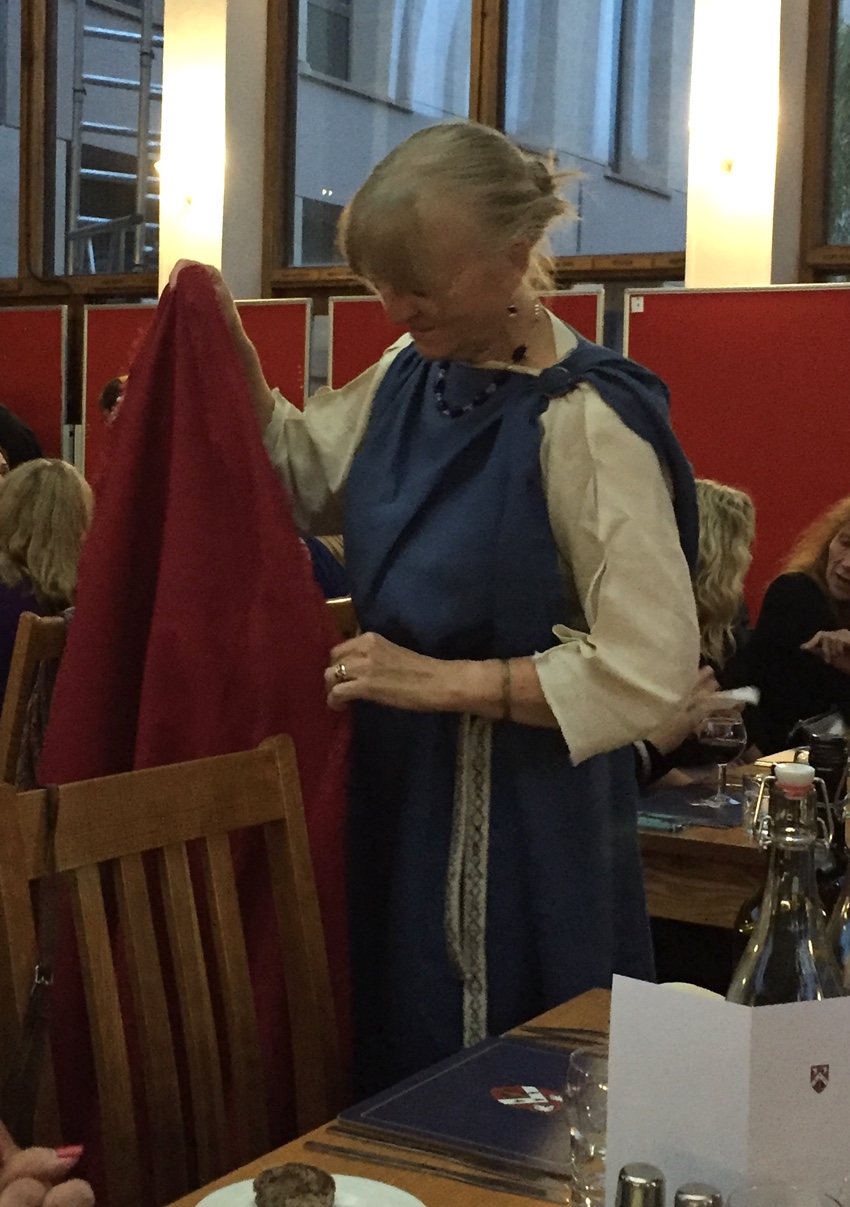
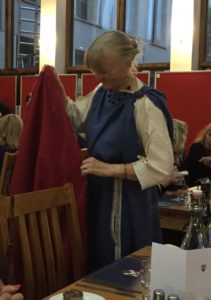 Tilla, the Romano-Briton (alias Ruth Downie)
Scrambling into my frock and posh shoes for the gala dinner, I was disappointed to see the weather had made good its dark promise: it was belting down. Raincoat to the rescue… The bonus was that we had a Roman at our table. Well, Romano-British if we are truthful!
On Sunday, Tracy Chevalier was on excellent form, succinct and clear: “The past is what happened, history is the account we make of it.” I remember her talk at the London Book Fair – entertaining yet full of sound common sense.
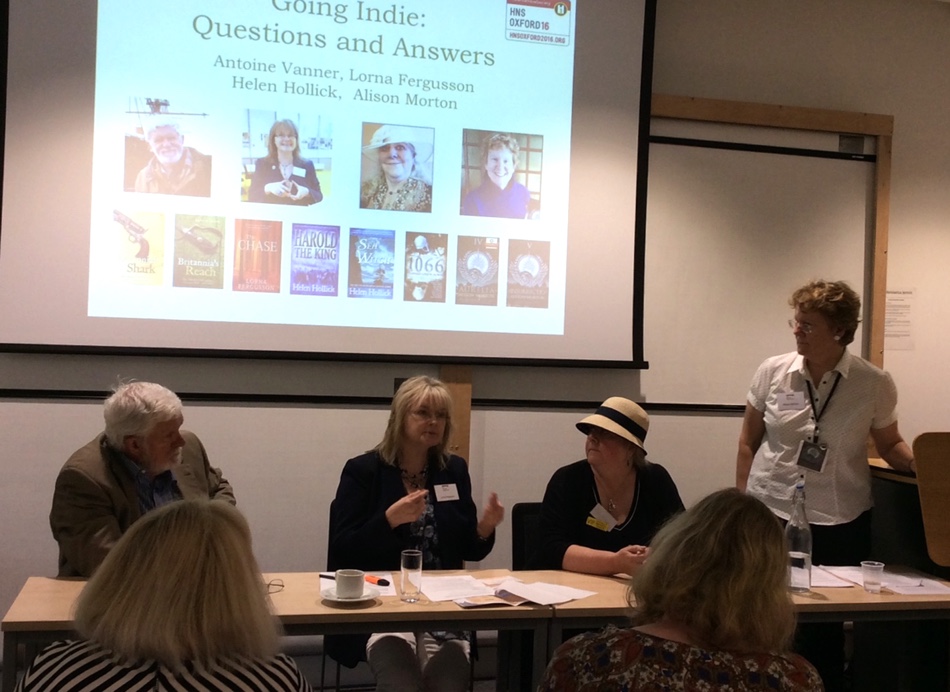 Antoine Vanner, Lorna Fergusson, Helen Hollick and me Our panel ‘Going Indie: Questions and Answers’ with Antoine Vanner, Lorna Fergusson, Helen Hollick and me had a packed house, even a couple of people standing!
Unfortunately, Helen had eye problems so handed over the reins to me. We had so much to pack into an hour and all the panellists were passionate about striving for quality, retaining control and communicating with readers. Helen Hollick explained about the HNS Indie Review scheme, Antoine Vanner gave his marketing expertise, Lorna Fergusson explained the intricacies of editing and I frightened everybody by saying what a lot of hard work it was.
We’d be here all day if I noted down all the friends and colleagues I spent time with over the weekend and I’m bound to miss somebody out, but I was particularly pleased to have a good coffee chat with Chris Gortner with whom I’d shared a book signing table with last year at HNS Denver, my agent Carole Blake, Douglas Jackson (who endorsed INSURRECTIO!), Anna Belfrage, Elizabeth Chadwick and the delightful Ruth Downie.
My sincere thanks to the indie table volunteers: Derek Birks, Laura Morelli, Lucienne Boyce, Nicky Moxey, Anna Belfrage, Jane Steen and Elizabeth Johns. Helen and I were delighted but not surprised by the mutual support that exists between indie colleagues and the buzz they created.
Oh, and I sold and signed a few books…
Alison Morton is the author of the Roma Nova thriller series, INCEPTIO, PERFIDITAS, SUCCESSIO and AURELIA. The fifth in the series, INSURRECTIO, was published in April 2016.
Find out more about Roma Nova, its origins, stories and heroines…
If you enjoyed this post, do share it with your friends!
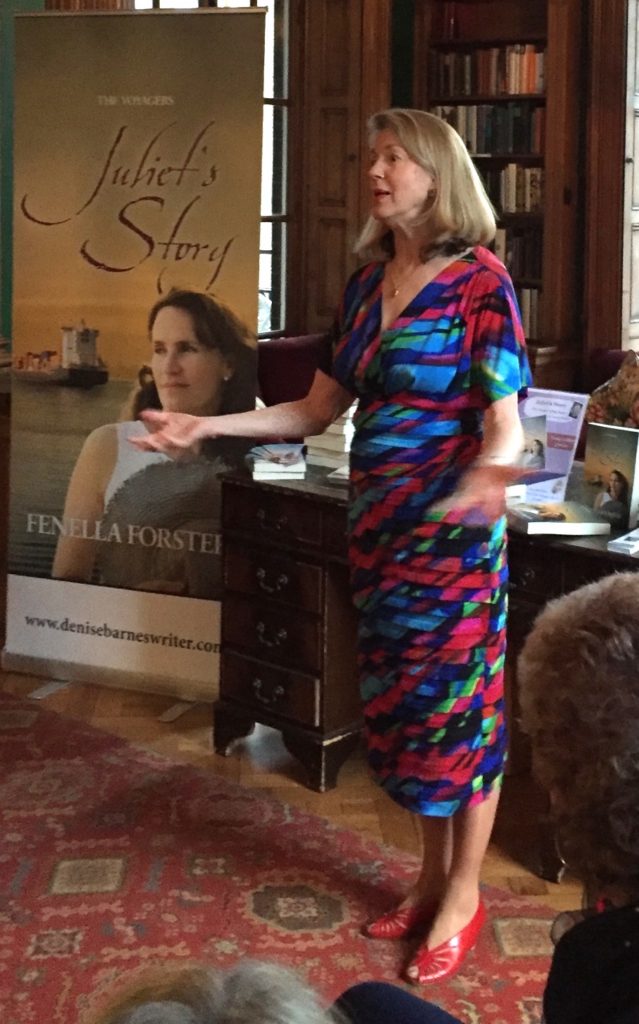 Today is the start of a new, possibly disruptive series, ‘Love me, love my character’. I’m inviting authors and their characters to give us their separate views. Hopefully, we may get some unexpected results. Today is the start of a new, possibly disruptive series, ‘Love me, love my character’. I’m inviting authors and their characters to give us their separate views. Hopefully, we may get some unexpected results.
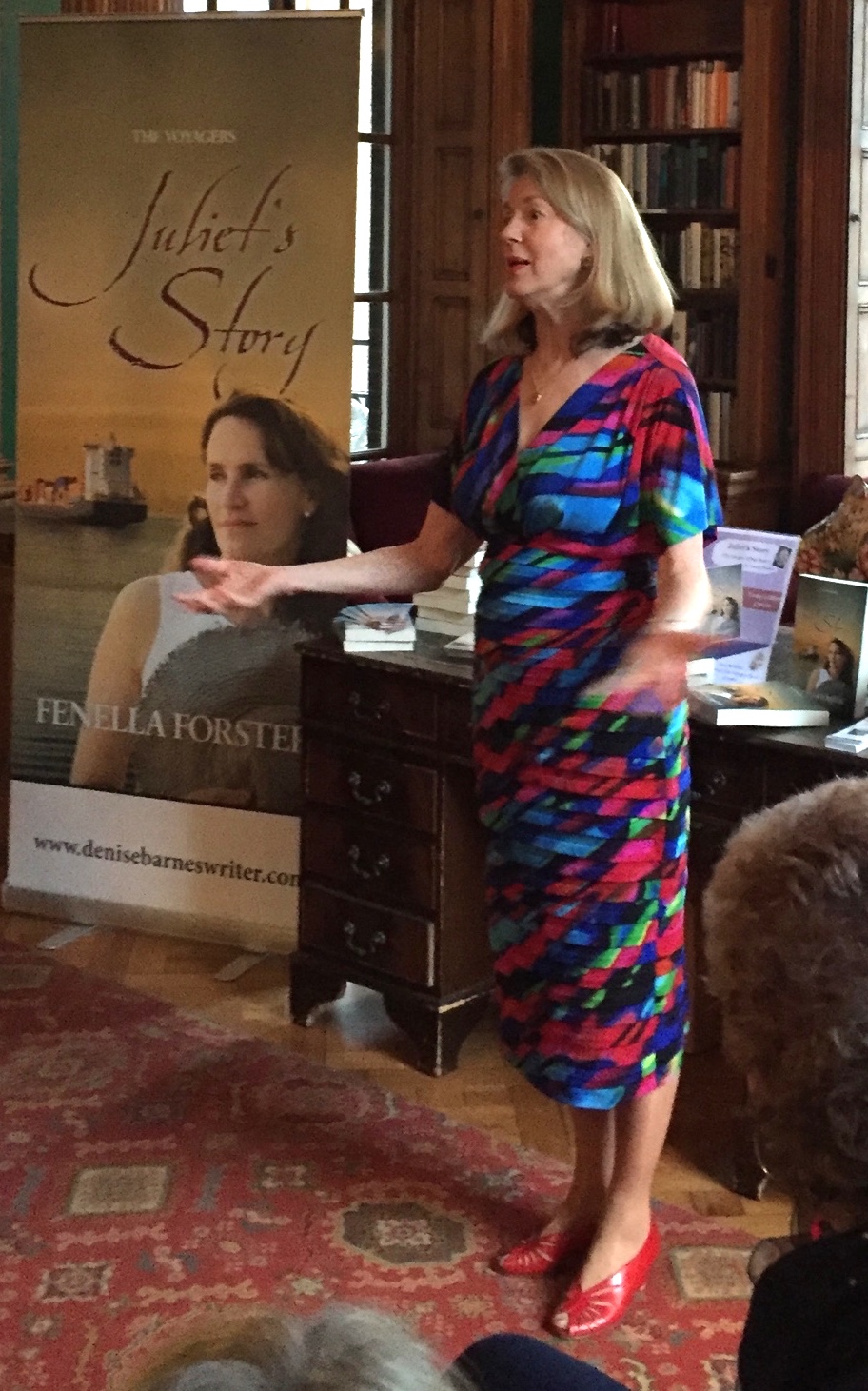
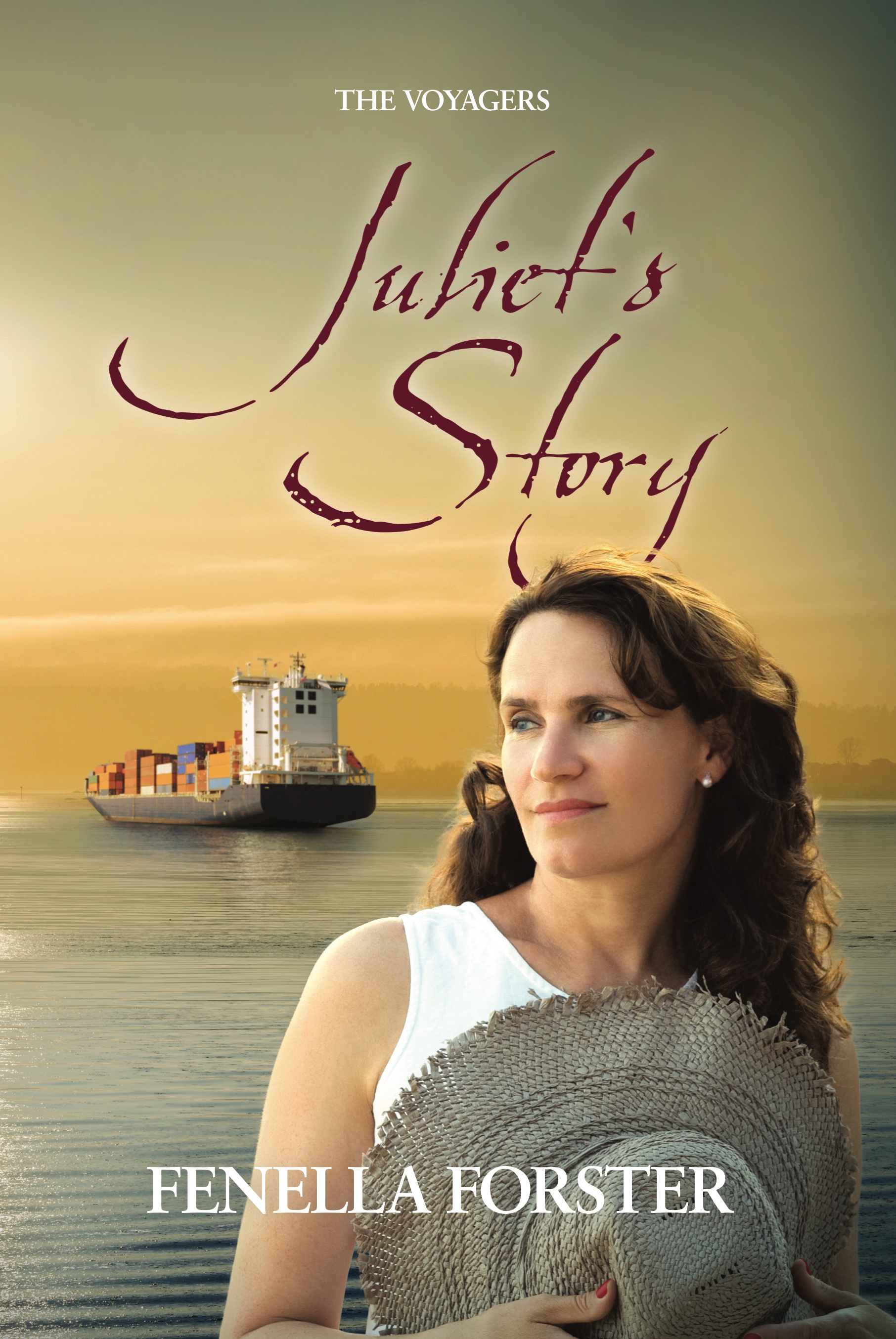
Fenella Forster (the writing name of Denise Barnes) writes sagas with a difference: all involve ‘voyages’, physical as well as emotional ones. Her heroines live in the early 20th century, the recent past and the Second World War; we travel from Norfolk to Australia, London, Cairo, Italy and across three generations to discover deep family secrets, some shocking. Annie’s Story and Juliet’s Story are published through SilverWood Books and Kitty’s Story is in the works.
Thanks, Alison, for inviting me on to your blog to talk about Juliet’s Story. It’s great to be here.
Why did you write this book?
It was a natural progression to Annie’s Story, which is Book 1 of The Voyagers trilogy. Although the first book is a historical saga set in 1913, Juliet’s Story, Book 2 in the trilogy, is a present-day heroine who is Annie’s granddaughter. I wrote them together in a dual timeline story to begin with as they both sail to Australia, though Juliet has very different reasons from her grandmother, but was advised by a couple of agents that it was too long and to split them into two separate novels. I was really upset at the time, but am so pleased with the result as both women now have their own far richer stories to tell.
Why do you think Juliet is like she is?
Juliet is an intelligent and attractive woman of 47. She’s recently divorced and brilliantly runs her own business selling other people’s businesses, but she doesn’t have much success in running her own life. She’s full of insecurities and feels a failure where men are concerned and not a little cynical. So when she’s confronted by the gorgeous Jack on the freighter to Australia she’s confused by her strong feelings of sexual attraction. In her nervousness she is unjustifiably acerbic with him. Most of these insecurities stem from her background and the secret she holds close in her heart. She goes to pieces more than once, big time, but on the whole she thinks she handles things pretty well. We know she doesn’t. She’s quite selfish and opinionated, yet she’s generous and would be demonstrative and loving if only she could stop being so cynical.
What does Juliet think she is like?
‘I’ve made a balls-up about a lot of things in my life but I try hard not to let it make me bitter. My parents encouraged me into a marriage where it was obvious to anyone I never loved him. I was trying to please them and let myself be talked into it because I thought Gerrard would help me get over my terrible mistake when I was a teenager. Then I found I couldn’t talk to him about it because he was always so judgemental. I just felt I needed to escape my problems and that’s why I couldn’t wait to leave the business and sail off to Australia. But I wasn’t prepared to meet someone like Jack. I became tongue-tied like some silly love-struck teenager. And every time we got a bit close I’d spoil things and say something hurtful. I hated myself but I couldn’t stop it. But I was terrified of falling in love with him and he was just using me for a shipboard romance. So I had to pretend I didn’t care.
But in the end it was the voyage which began to change me, and I’m sure for the better. I think I became more compassionate because so many people on the ship, and in Australia, showed me great kindness. It’s made me realise how lucky I am. And maybe – just maybe – I am loveable enough to be loved.’
(Well said, Juliet!)
Back to Denise…Thanks, Alison, for having me. It was fun talking about Juliet, and I must say I was quite surprised with what she came out with about herself. She knows her own shortcomings more than I’d realised!
Thank you, Fenella (and Juliet) for stopping by.
So what’s Juliet’s Story about?
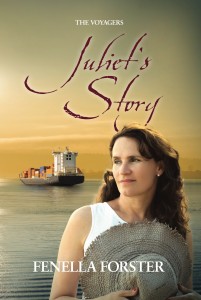 Can secrets destroy love? Can secrets destroy love?
It’s 2005. Whatever the risk, businesswoman Juliet Reece grabs a once-in-a-lifetime opportunity with both hands.
She’s been given the freedom and time to sail to Australia to trace her emigrant grandparents’ story back in 1913. But buried under the surface is a more compelling reason – a secret she has held close since she was a vulnerable sixteen- year-old, which only her grandmother, Annie, shared – and whose answer may lie in Australia.
When Juliet boards the Alexandria at Tilbury she doesn’t count on meeting the enigmatic Jack Delaney. But is it wise to fall for a man from the other side of the world who seems to be carrying dark secrets of his own?
Available as a paperback from good bookshops and online retailers, and as an ebook from Amazon, Kobo iBooks, Nook; all links here.

Connect with Denise via Twitter, Facebook and her blogsite.
STOP PRESS! I’ve just heard that Denise has been snapped up by the hhb literary agency who will be representing her for all her work.
Congratulations, Denise/Fenella!
Alison Morton is the author of Roma Nova thrillers, INCEPTIO,
PERFIDITAS, SUCCESSIO and AURELIA. The fifth in the series, INSURRECTIO, was published in April 2016.
Find out more about Roma Nova, its origins, stories and heroines…
If you enjoyed this post, do share it with your friends!
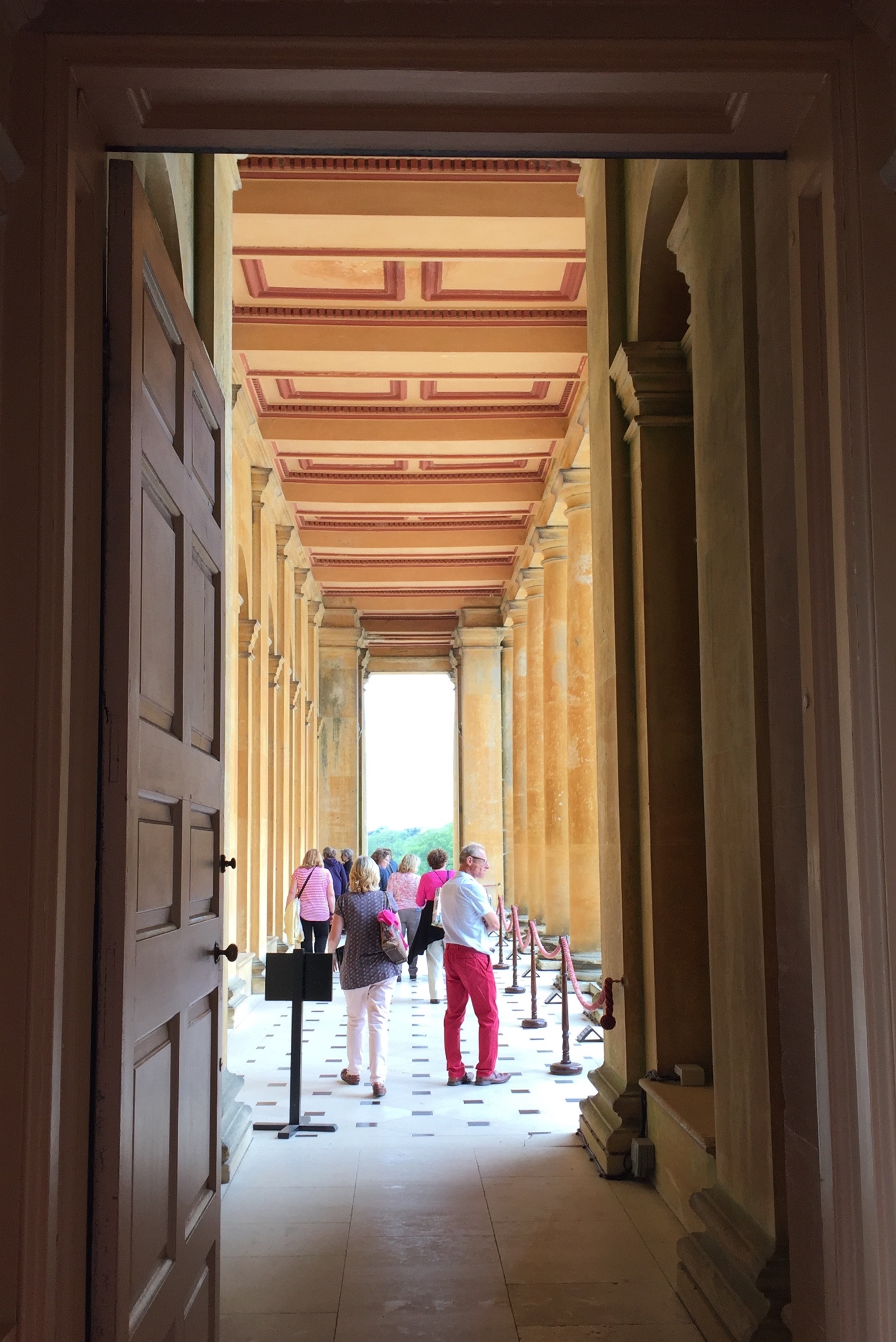
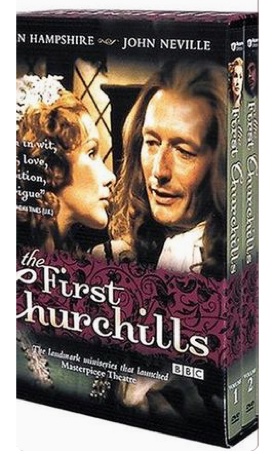 I’d never been to Blenheim, or Blenheim Palace as it’s more properly called. I knew it was the home of John and Sarah Churchill, the first (gifted and ambitious) Duke and Duchess of Marlborough, by having watched The First Churchills, an excellent BBC series made in 1969. I’d never been to Blenheim, or Blenheim Palace as it’s more properly called. I knew it was the home of John and Sarah Churchill, the first (gifted and ambitious) Duke and Duchess of Marlborough, by having watched The First Churchills, an excellent BBC series made in 1969.
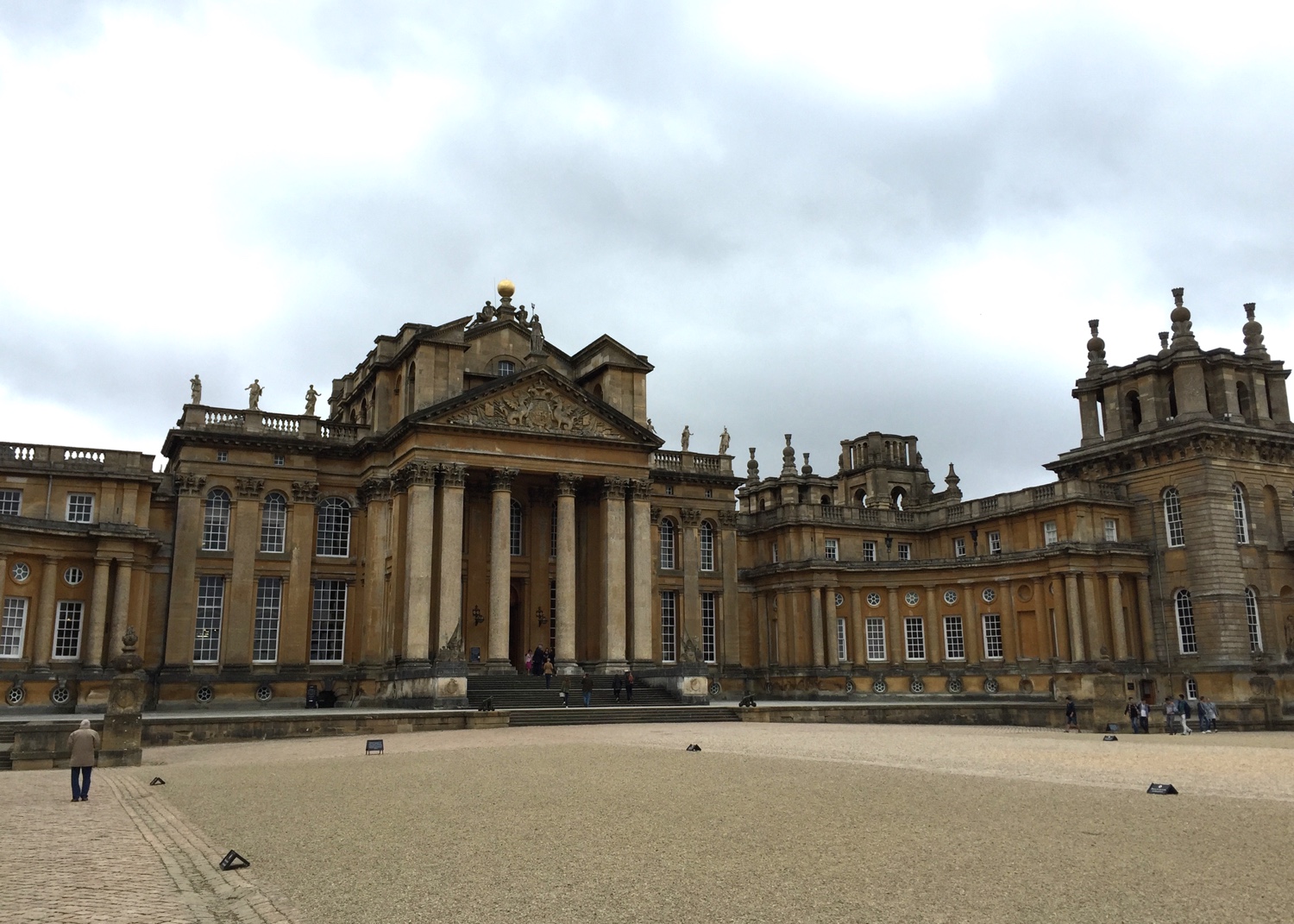
Built built between 1705 and circa 1722 in the English Baroque style, it’s the only palace that wasn’t a royal or episcopal one, a gift (mostly) from a grateful nation for Marlborough’s military triumphs against the French and Bavarians during the War of the Spanish Succession, culminating in the 1704 Battle of Blenheim.
However (there’s always a ‘however’), soon after its construction began, the palace became the subject of political infighting which led to Marlborough’s exile, the fall from power and influence of his duchess and lasting damage to the reputation of the architect Sir John Vanbrugh.
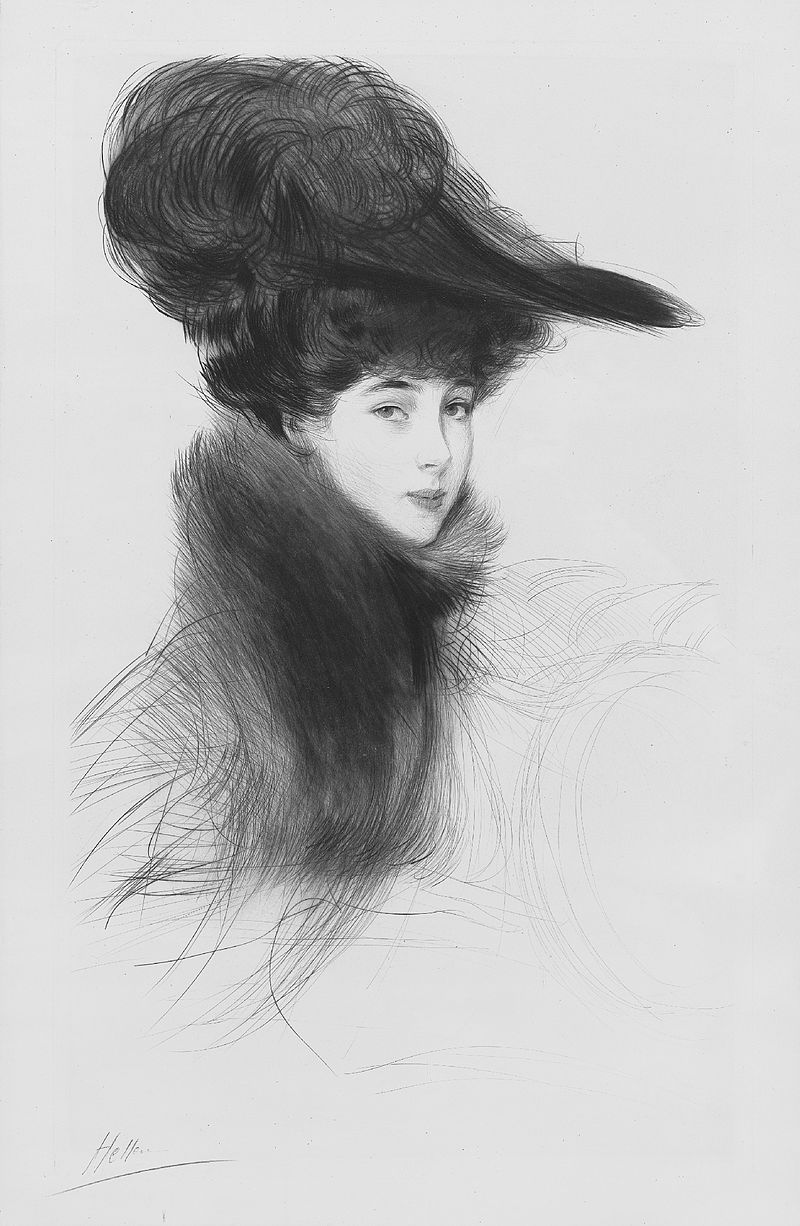
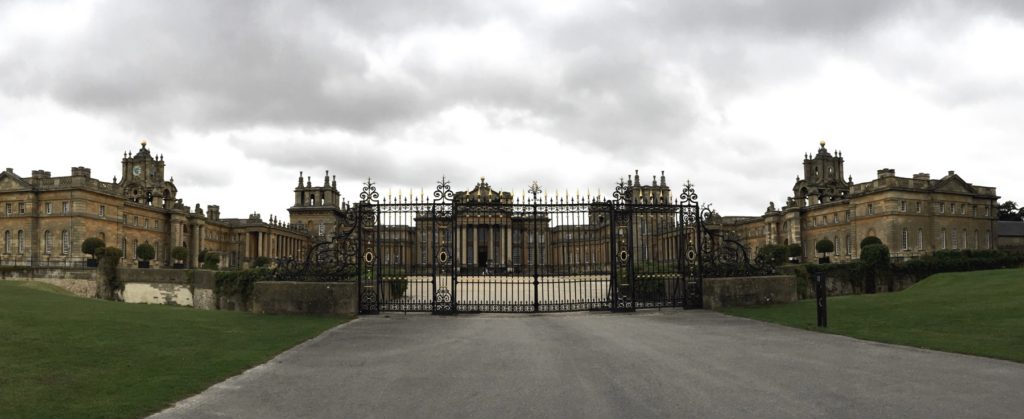 The Great Court 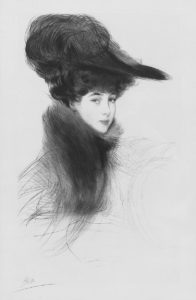 Consuelo Vanderbilt by Paul César Helleu At the end of the 19th century, the palace was saved from ruin by funds gained from the 9th Duke of Marlborough’s marriage to American railroad heiress Consuelo Vanderbilt. Her mother, Alva Vanderbilt, was desperate to see her daughter a duchess, and the bride’s father, William Vanderbilt, paid for the privilege. The final price was $2,500,000 (worth over $70 million today) but it wasn’t a very happy marriage; and they separated and both remarried. The other famous fact is that Winston Churchill was born at Blenheim and retained close links all his life with his cousins there.
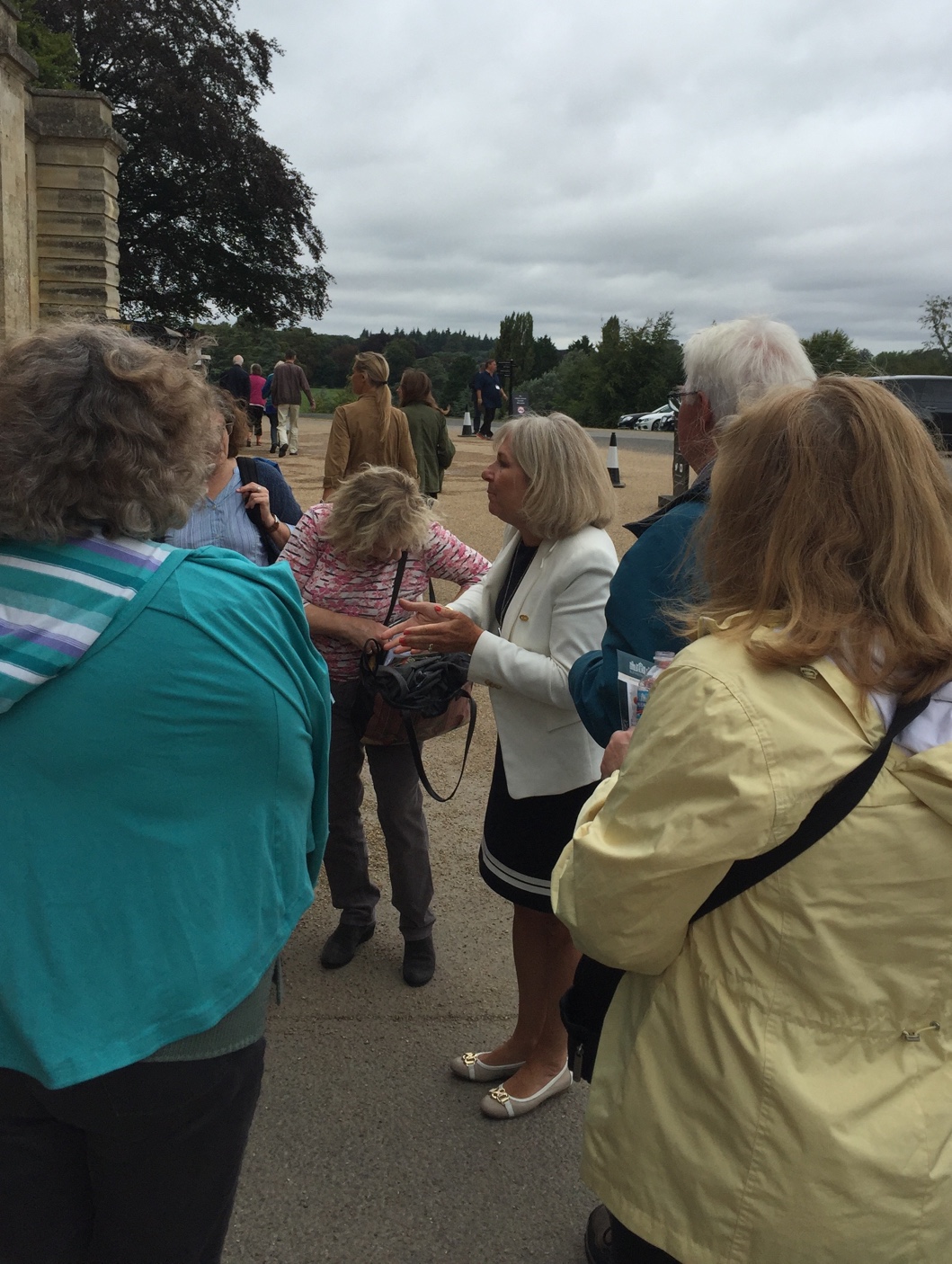
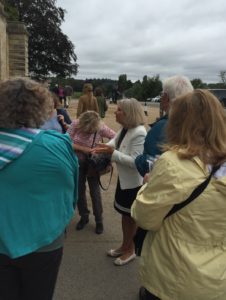 Isobel, giving us some background When one of my colleagues on the a fellow member of the Historical Novel Society organising committee asked for a volunteer to accompany the group making the excursion there, I leapt at it. Although cloudy,it didn’t actually rain. We had a friendly and knowledgeable guide, Isobel, from Explore Oxford Tours, plus an indoor guide, the softly spoken William.
Although a ‘national monument’ and UNESCO World Heritage Site the palace remains the home of the Dukes of Marlborough. The palace, park, and gardens are open to the public and include a maze, adventure playground, mini-train, gift shops, butterfly house, fishing, cafeteria and bottled Blenheim Natural Mineral Water. Game, farming and property rentals, along with concerts, filming and festivals in the palace and park help keep the palace financially afloat.
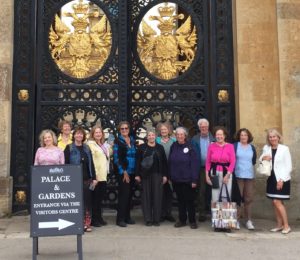 Our happy band Our jolly group enjoyed the house tour and then explored part of the grounds by buggy, taking the obligatory photos, plus a few anarchic ones, ate in the cafeteria in the basement (very tastefully decorated, but we knew our place) and strengthened ourselves by some retail therapy.
So what did we see?
(My anarchic selection!)
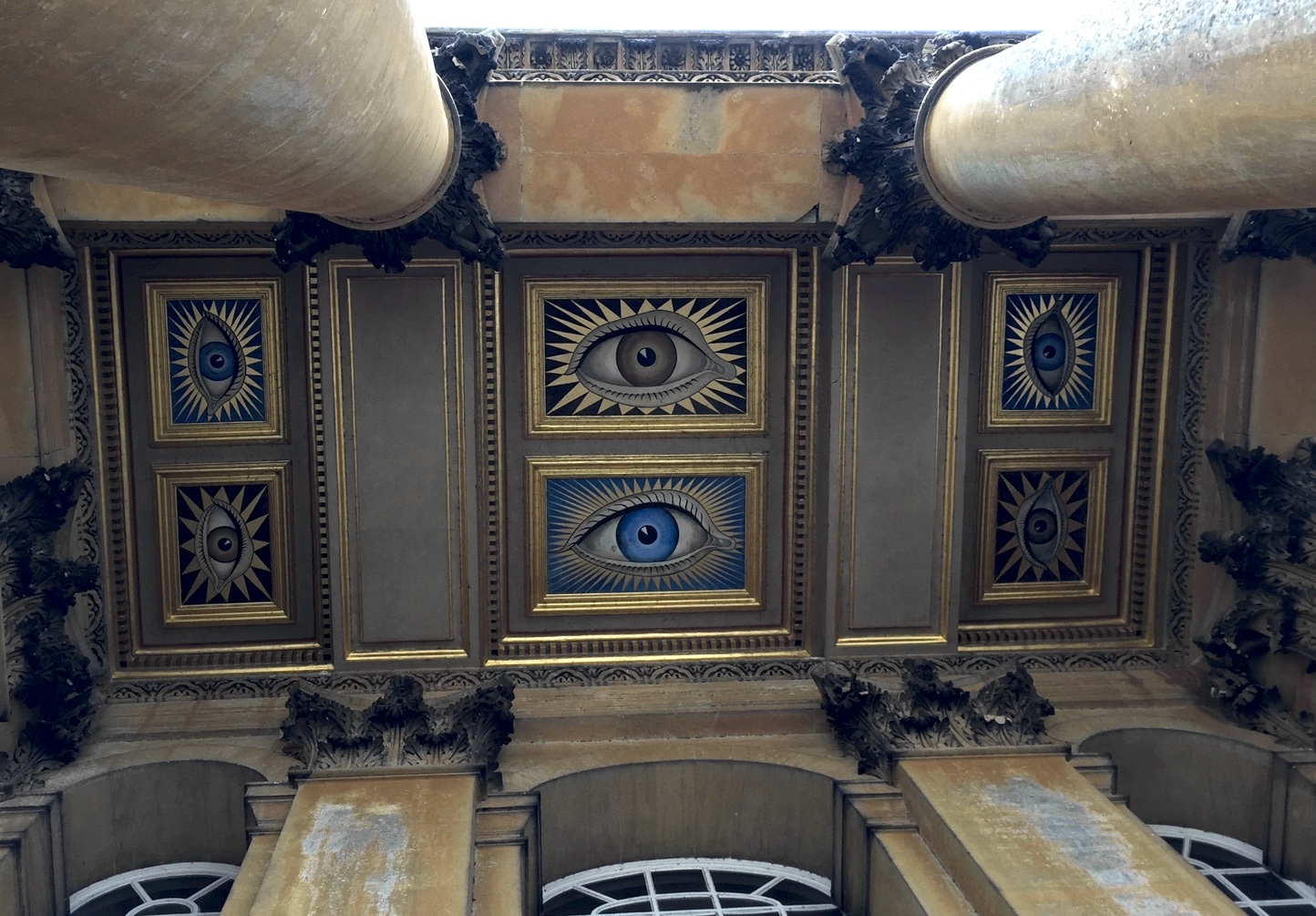
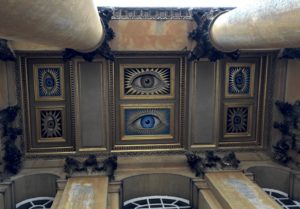 Eye-eye! The second wife of the 9th duke had their eyes painted under the main portico 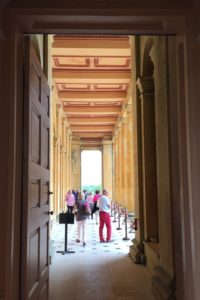 Pespective
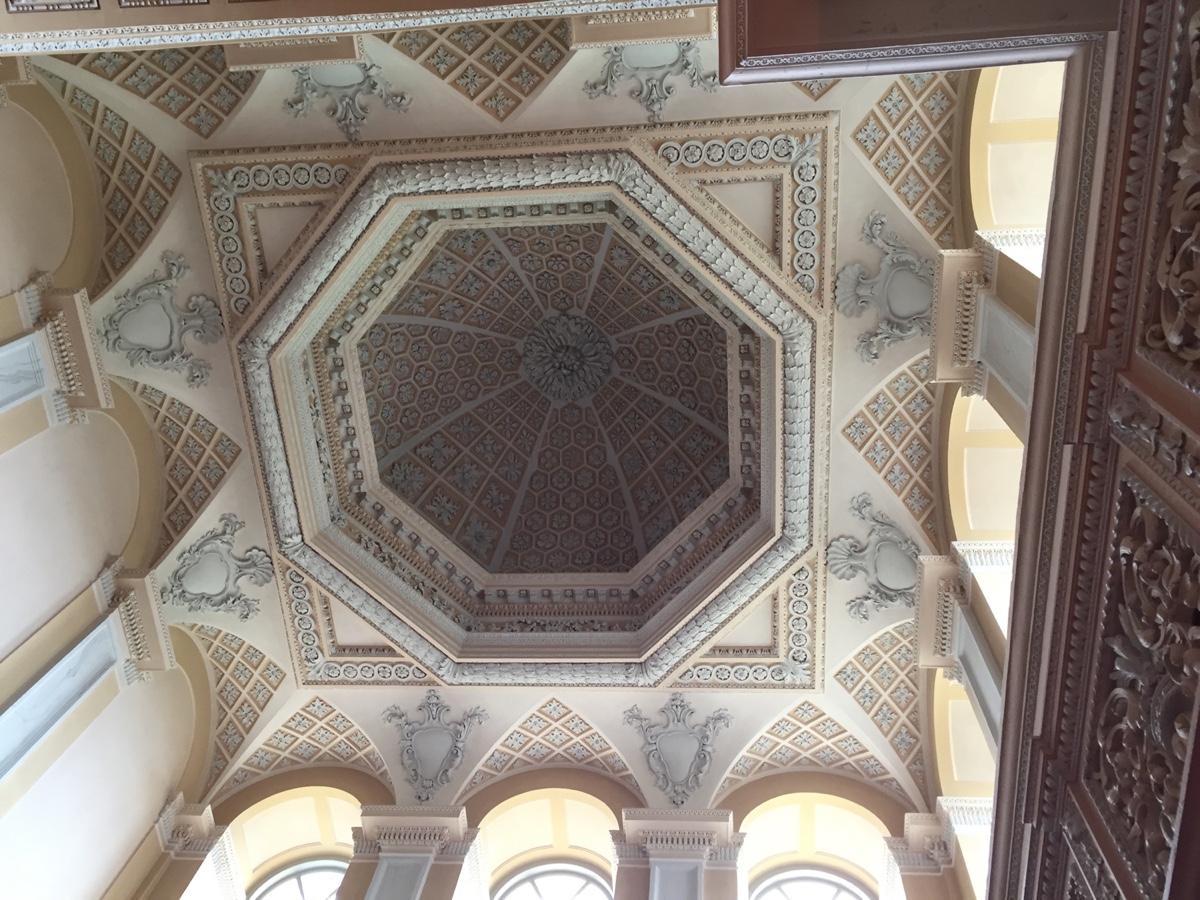
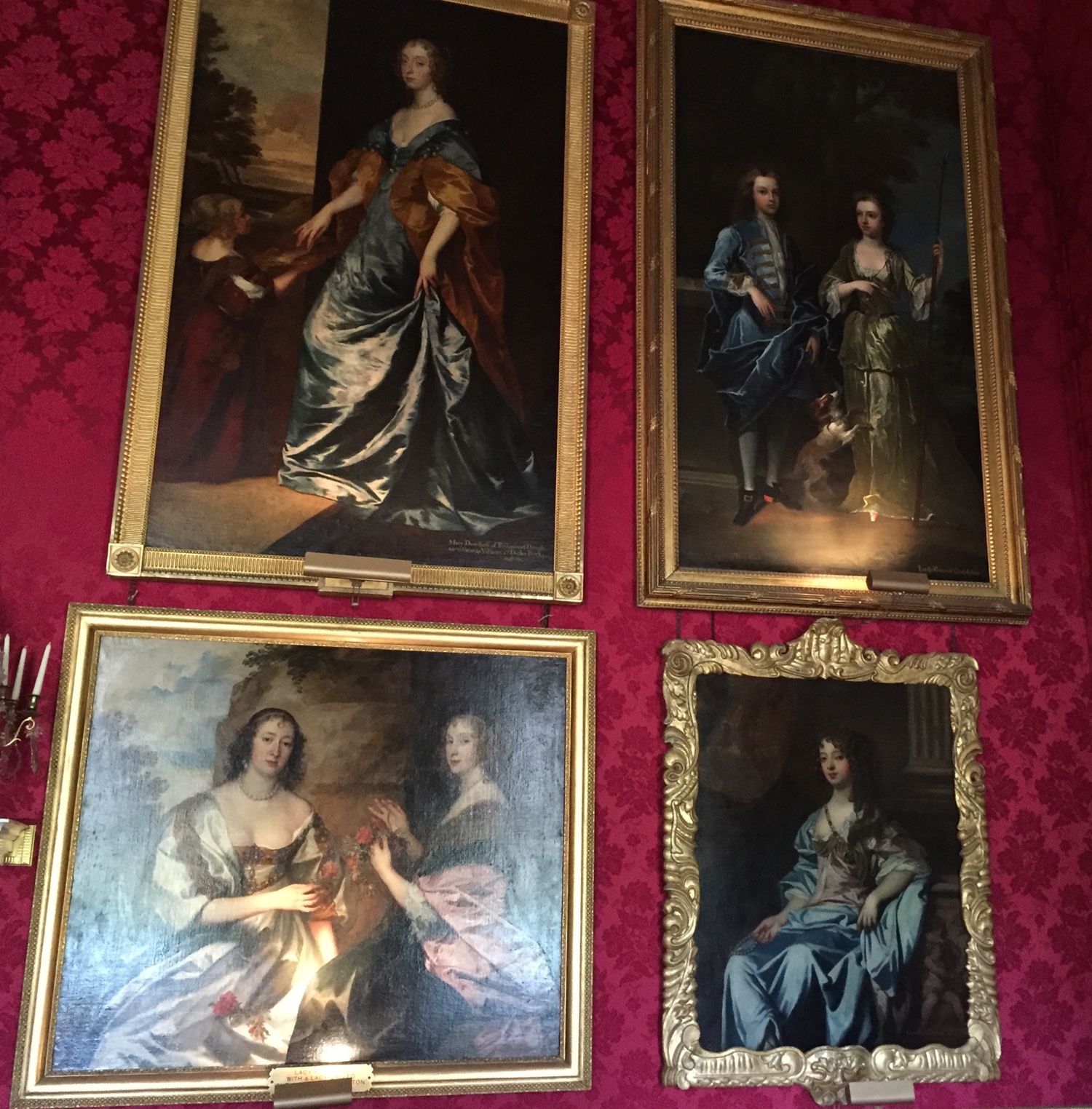
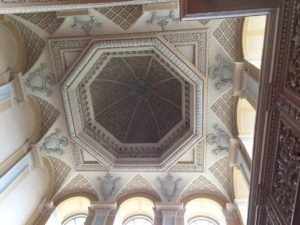 Beautiful ceiling, library 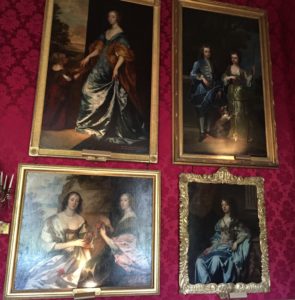 Churchill and Spencer ladies
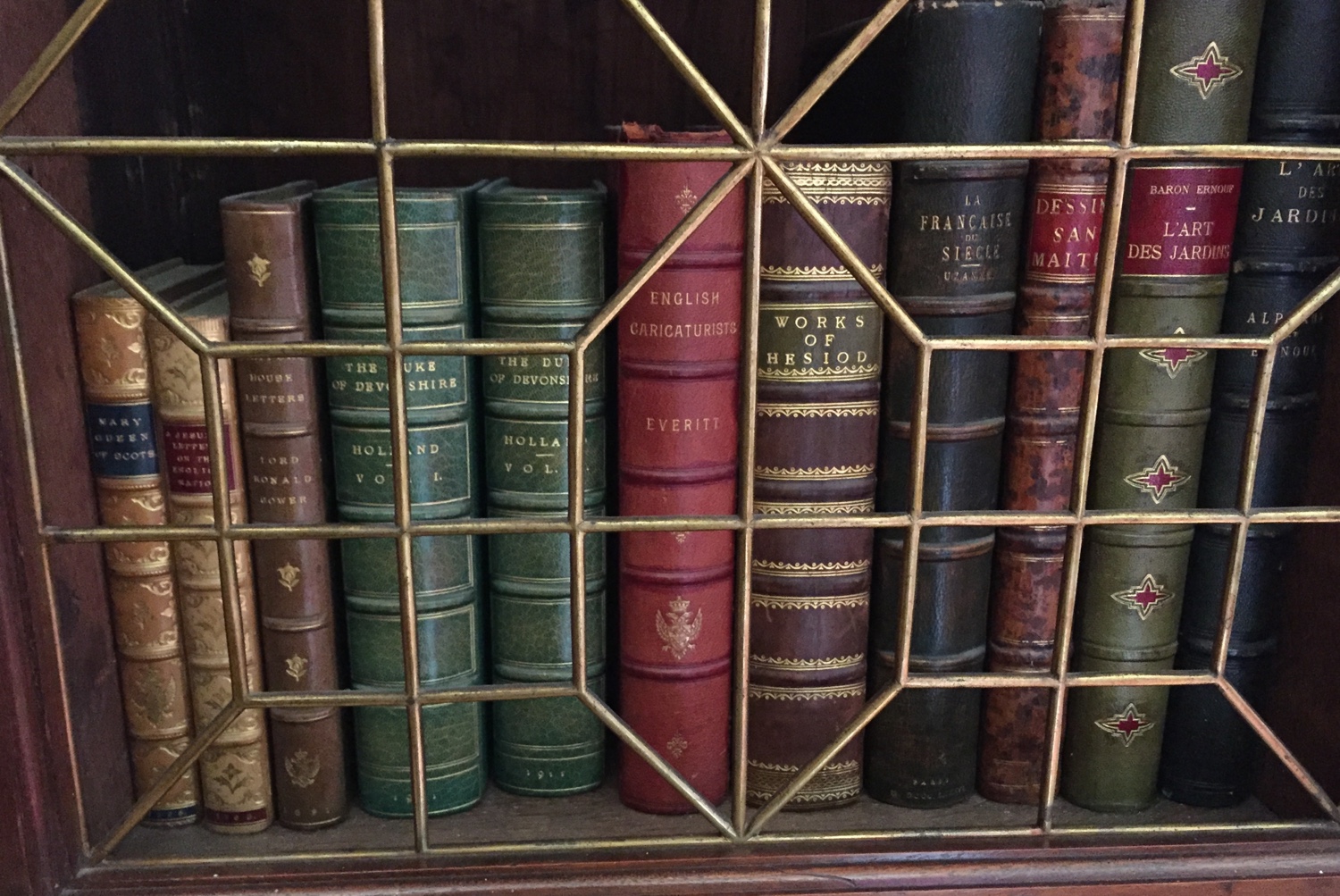
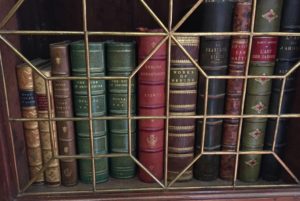 Interesting selection on one shelf (Click to see what I mean.)
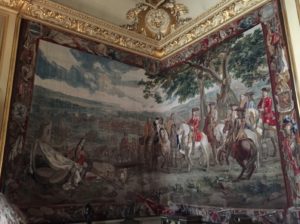 Tapestry of Marlborough accepting the French surrender after the Battle of Blindheim 1704 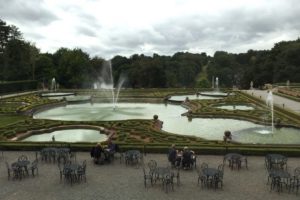 Water terraces
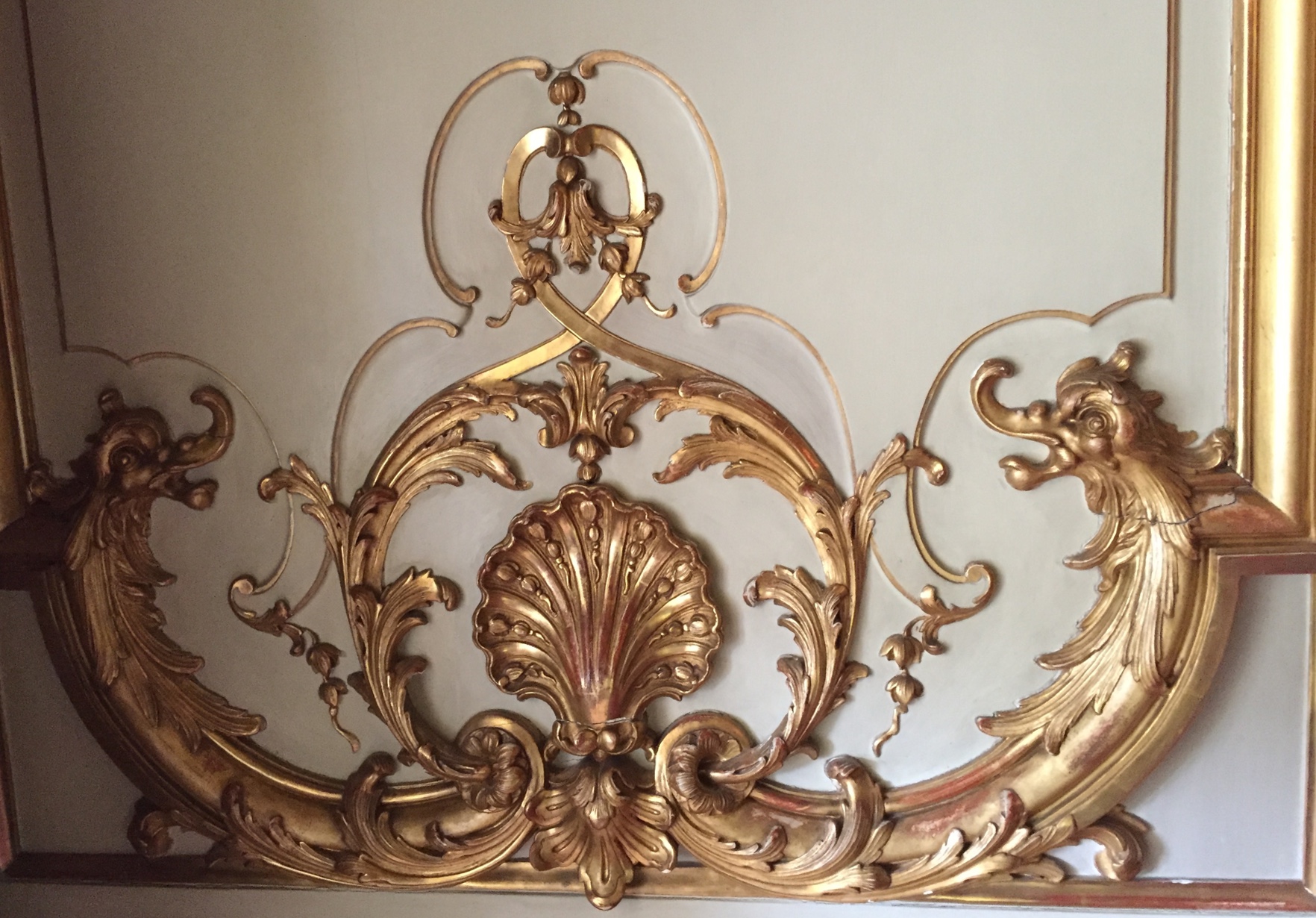
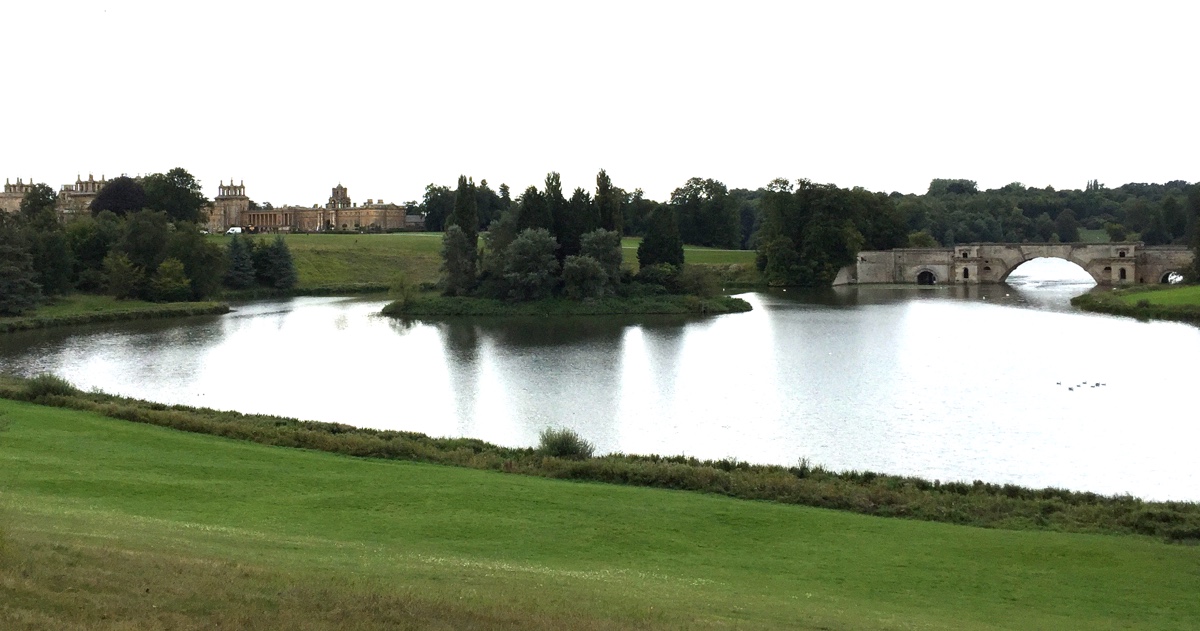
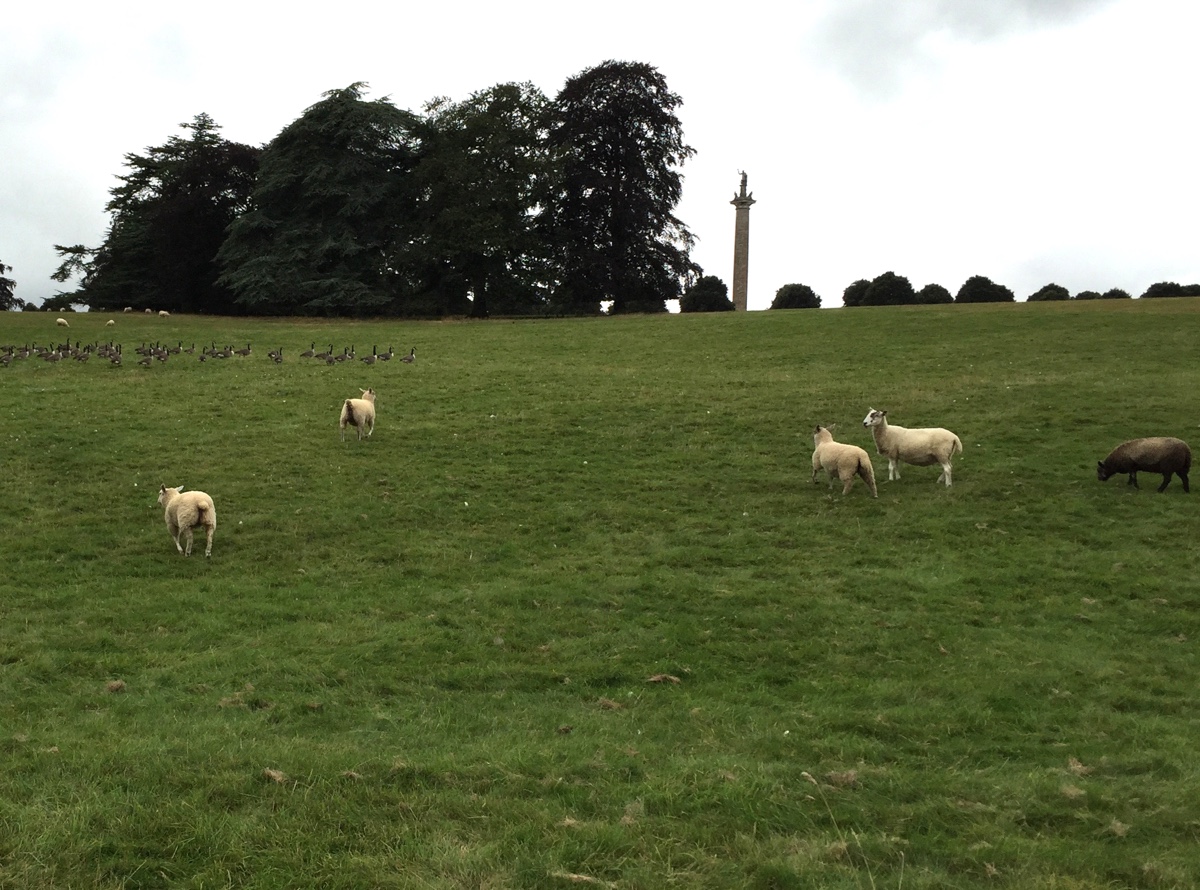
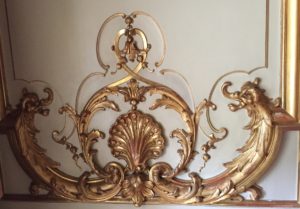 Gilded decoration 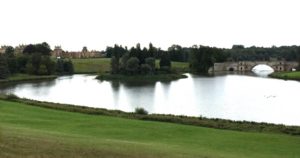 The classic view 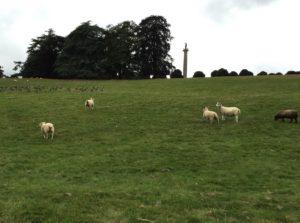 Sheep, geese and Victory 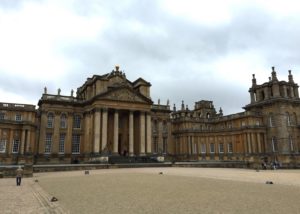 One side of the Great Court
 Retail therapy results
Update 2022: Alison Morton is the author of Roma Nova thrillers – INCEPTIO, CARINA (novella), PERFIDITAS, SUCCESSIO, AURELIA, NEXUS (novella), INSURRECTIO and RETALIO, and ROMA NOVA EXTRA, a collection of short stories. Audiobooks are available for four of the series.Double Identity, a contemporary conspiracy, starts a new series of thrillers. JULIA PRIMA, a new Roma Nova story set in the late 4th century, is now out.
Find out more about Roma Nova, its origins, stories and heroines and taste world the latest contemporary thriller Double Identity… Download ‘Welcome to Alison Morton’s Thriller Worlds’, a FREE eBook, as a thank you gift when you sign up to Alison’s monthly email update. You’ll also be among the first to know about news and book progress before everybody else, and take part in giveaways.
If you enjoyed this post, do share it with your friends!
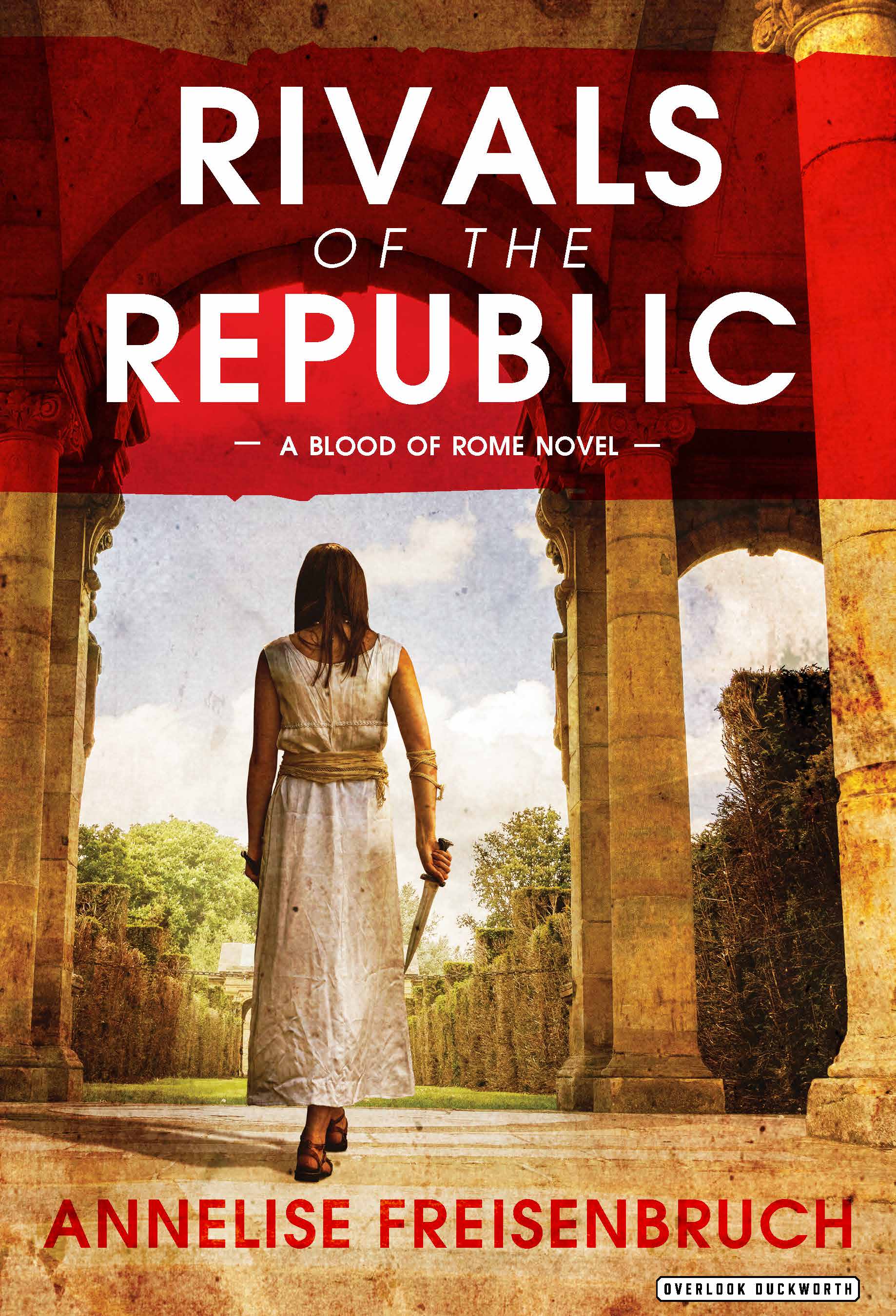
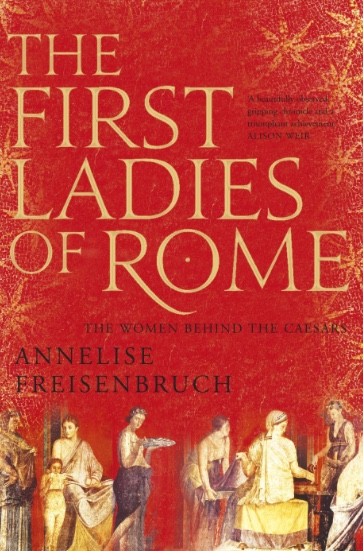
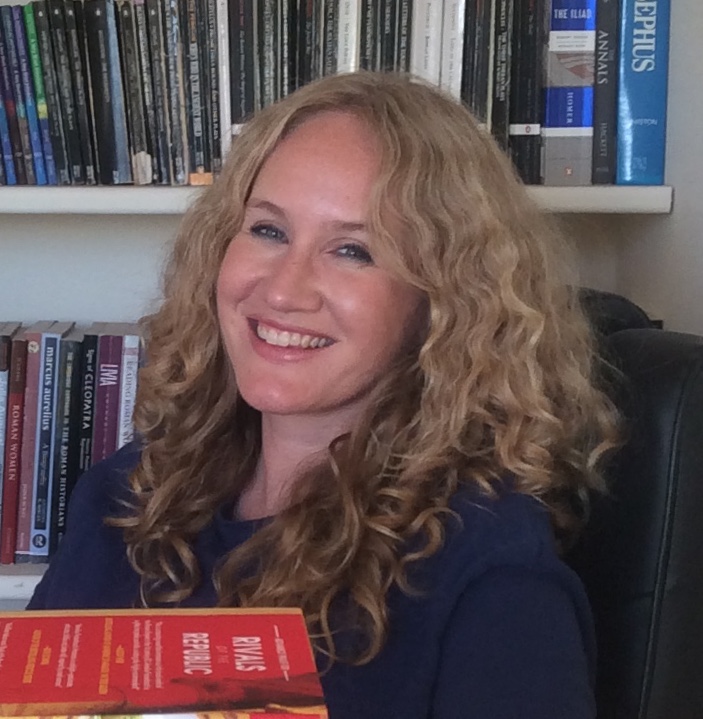 Today I’m delighted to welcome to my blog somebody whose writing I deeply admire. I bought ‘The First Ladies of Rome’, which explored the hidden history of women in Ancient Rome, as soon as I saw it in 2010. The author and today’s honoured guest, Annelise Freisenbruch, was born in Bermuda and studied Classics at Newnham College, Cambridge, receiving her PhD in 2004. She currently lives in Dorset and is Head of Classics at Port Regis School. In 2010, her first book ‘The First Ladies of Rome’ (‘Caesars’ Wives’ in the US) was published to critical acclaim. Her first novel ‘Rivals of the Republic’ – the opening instalment of The Blood of Rome series – has just come out in the US and will appear in the UK on 20 Octoober. Today I’m delighted to welcome to my blog somebody whose writing I deeply admire. I bought ‘The First Ladies of Rome’, which explored the hidden history of women in Ancient Rome, as soon as I saw it in 2010. The author and today’s honoured guest, Annelise Freisenbruch, was born in Bermuda and studied Classics at Newnham College, Cambridge, receiving her PhD in 2004. She currently lives in Dorset and is Head of Classics at Port Regis School. In 2010, her first book ‘The First Ladies of Rome’ (‘Caesars’ Wives’ in the US) was published to critical acclaim. Her first novel ‘Rivals of the Republic’ – the opening instalment of The Blood of Rome series – has just come out in the US and will appear in the UK on 20 Octoober.
Salve Annelise!
Rivals of the Republic is described as a crime adventure set in the world of the late Roman Republic. It centres on the real-life character of Hortensia, a young woman who has inherited the gifts of her orator father Hortensius, Rome’s flamboyant ‘king of the law court’. Now, what attracted you to the story of Hortensia?
I first came across her name when I was researching the education of Roman women for my first (non-fiction) book, The First Ladies of Rome. We only really know two things about her as a historical figure. One, that she was the daughter of Hortensius Hortalus – Rome’s greatest orator and courtroom rival of Cicero – and two, that she once delivered a much-praised address in the middle of the Roman forum that contradicted traditional Roman thinking that women couldn’t – and shouldn’t – make public speeches (a sentiment, I might add, that still seems to linger in many quarters today).
 I hadn’t given much thought to writing a historical novel up to this point. But I couldn’t get Hortensia out of my head. Her famous speech was delivered during a very tense period in the late Roman Republic, just after the assassination of Julius Caesar. Hortensia was arguing passionately against a proposal that women like her should be taxed for pay for the wars of men. I started to think, where did it all begin for her? – was this the only speech she ever made? What if I create a fictional narrative for her, going back many years before, in which she tries to follow in the footsteps of her father, taking on cases, pursuing them to the law court if necessary, using her wits and intelligence to seek out injustice and corruption? By now I had a clear image of the character in my mind, and I just had to give her a voice. I hadn’t given much thought to writing a historical novel up to this point. But I couldn’t get Hortensia out of my head. Her famous speech was delivered during a very tense period in the late Roman Republic, just after the assassination of Julius Caesar. Hortensia was arguing passionately against a proposal that women like her should be taxed for pay for the wars of men. I started to think, where did it all begin for her? – was this the only speech she ever made? What if I create a fictional narrative for her, going back many years before, in which she tries to follow in the footsteps of her father, taking on cases, pursuing them to the law court if necessary, using her wits and intelligence to seek out injustice and corruption? By now I had a clear image of the character in my mind, and I just had to give her a voice.
We read a lot about the public and private spheres; our perception is that men occupied the public, military and political, i.e. ostensibly held the power, whereas (respectable) women were confined to the private, i.e. the home, children and domestic management, and lived under the tutelage of father, husband or brother. How true was this and did it change over Rome’s 1229 year long history?
Broadly speaking, this is a pretty accurate characterisation of the roles assigned to men and women in ancient Rome, no matter which point on the timeline you’re talking about. Rome was a man’s world, no two ways about it, and women were expected to stay out of the limelight, confining themselves, as you say, to the domestic sphere.
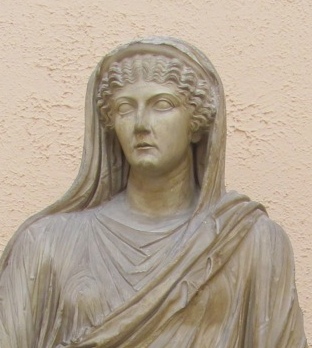 Livia Drusilla But we can finesse the picture a little. A very small number of women from the elite political class began to receive public honours and accolades during the Republican period (509BC-27BC) and during the age of emperors (27BC-AD 476) as my first book explores, we see empresses like Livia, Agrippina, Julia Domna and Galla Placidia making the kind of incursions into the public sphere that would have been unthinkable before – becoming highly visible figures in the public pageantry of their sons and husband’s reigns and, according to some sources, exercising extraordinary influence over them.
Even so, we must be careful before we start indulging in fantasies about these women being the real power behind the throne. For a woman to stray too far out of the domestic and into the public sphere – in other words to act too much the man – was a very dangerous game in the Roman world. This, in fact, is part of what makes Hortensia’s story so intriguing. Although her speech was much praised by male Roman writers, it’s made clear the excellence of her oratory is a tribute to the fact that she’s inherited the gift from her father. When my Hortensia ventures into the male-dominated world of the Roman law court and at the same time begins investigating a series of murders that appear to lead to a conspiracy at the heart of Roman politics, her reputation as well as her life is at stake – she is going somewhere women are not supposed to go.
What are the chief obstacles and pleasures of researching and writing women in Republican Rome, a period which ran from 509-27 BC?
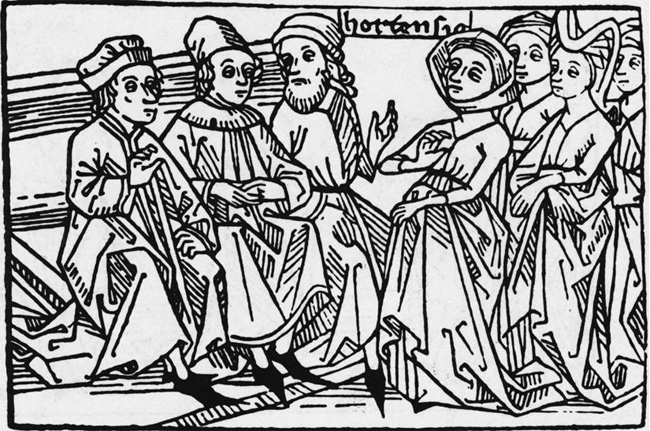
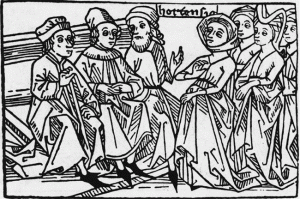 Medieval depiction of Hortensia Sometimes, I look wistfully at the kind of sources historians from later eras have and think, what wouldn’t I give for a diary or a letter written by a Roman woman in her own hand. The biggest obstacle in researching Roman women is the simple fact that virtually no writing by a woman from the period survives. Even Hortensia’s speech only survives second-hand. Did she write it all herself? Is it a verbatim account of what she said? We just don’t know. We are always limited to seeing Roman women through the eyes of others, usually men who never met them and who are often writing about them decades or even centuries after their deaths.
Conversely, that means that the fragments and clues we DO have are all the more precious and fascinating. There are wonderful, surprising examples of evidence for Roman women’s lives that were certainly helpful to me in writing Rivals of the Republic. To give just one example, I did some research into real-life Roman court cases involving women and came across a divorce case from 100 BC where a man tried – and failed – to keep his wife’s dowry on the grounds that she had been unfaithful during their marriage. I used that case as the inspiration for the trial scene in which Hortensia makes her court room debut.
But for me the greatest joy of writing historical fiction as opposed to non-fiction has been the freedom it’s given me, not just to make good use of the evidence for women’s lives that we do have, but to fill in the gaps around it and paint a full colour portrait of a flesh and blood woman and the world she inhabited. Hortensia feels very real to me now, and I’m hoping that people will love her as much as I do.
Thank you so much, Annelise. (I certainly enjoyed my advance copy of Rivals of the Republic and will be posting a review.)
Connect with Annelise:
Twitter: @afreisenbruch
Website: www.annelisefreisenbruch.co.uk
Rivals of the Republic (hardback) is available now on Amazon.com and for pre-order on Amazon UK.
So what’s Rivals of the Republic about?
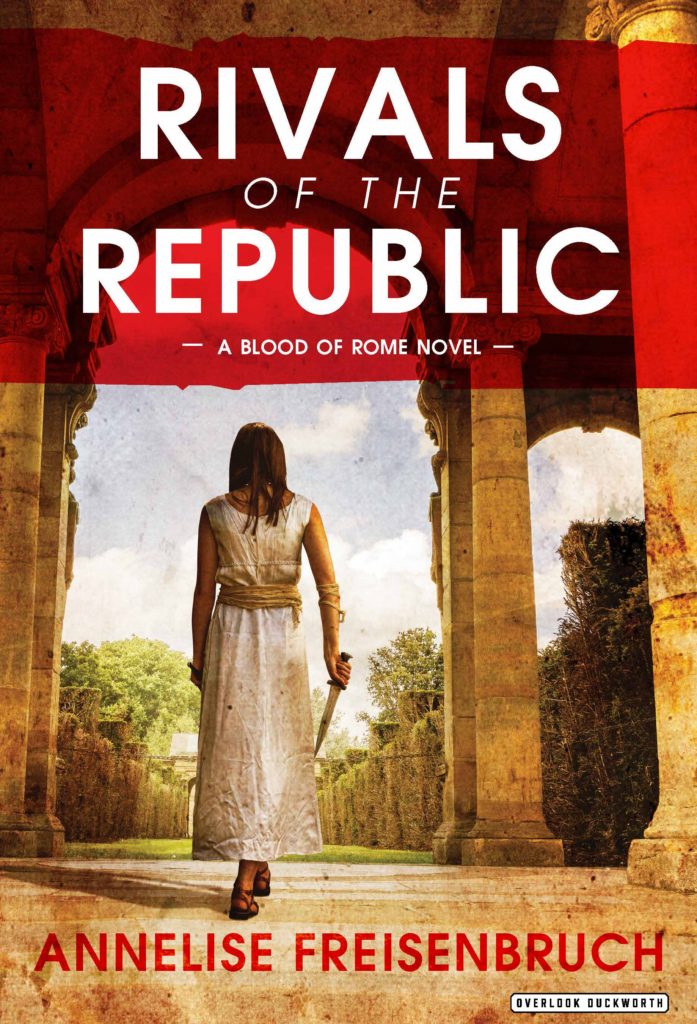 The body of a Vestal Virgin is dragged out of the River Tiber. A senator bleeds to death in his bath. Rome has just survived a period of bloody civil war, and while politics seem steady on the surface, discontent is rising as new alliances—and enemies—are formed. The body of a Vestal Virgin is dragged out of the River Tiber. A senator bleeds to death in his bath. Rome has just survived a period of bloody civil war, and while politics seem steady on the surface, discontent is rising as new alliances—and enemies—are formed.
As the authorities turn a blind eye, Hortensia, daughter of the capital’s most celebrated orator, feels compelled to investigate a trail of murders that lead to the dark heart of Rome. Flying in the face of her husband’s and father’s attempts to protect her, rebelling against the constraints imposed upon her sex, she is drawn ever deeper into the corrupt underworld that lurks in the shadows cast by the city’s all-powerful elite.
As Hortensia races to uncover and obstruct a plot to overthrow the Roman Republic, only one man can save Hortensia from becoming the next victim of a conspiracy to destroy the Republic: Lucrio, the damaged ex-gladiator to whom she already owes her life. But will the secrets of his own tragic past threaten to subsume them both…
UPDATE: Read Annelise’s article “7 surprising facts about Roman women” at BBC History Extra.
Alison Morton is the author of Roma Nova thrillers, INCEPTIO, PERFIDITAS, SUCCESSIO and AURELIA. The fifth in the series, INSURRECTIO, was published in April 2016.
Find out more about Roma Nova, its origins, stories and heroines…
If you enjoyed this post, do share it with your friends!
|
Subscribe to Blog via Email
Join 368 other subscribers.
Categories
Archive
|