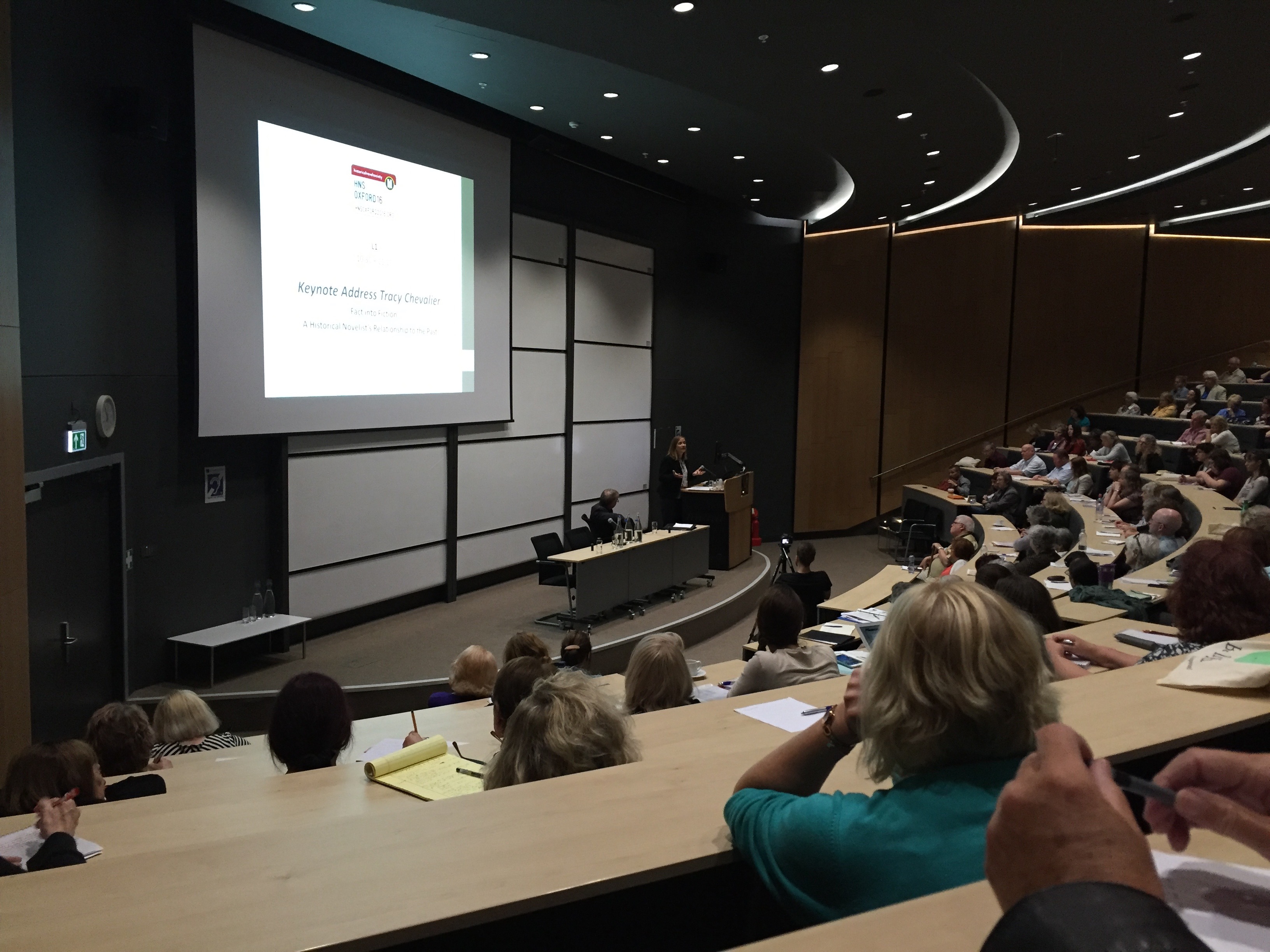
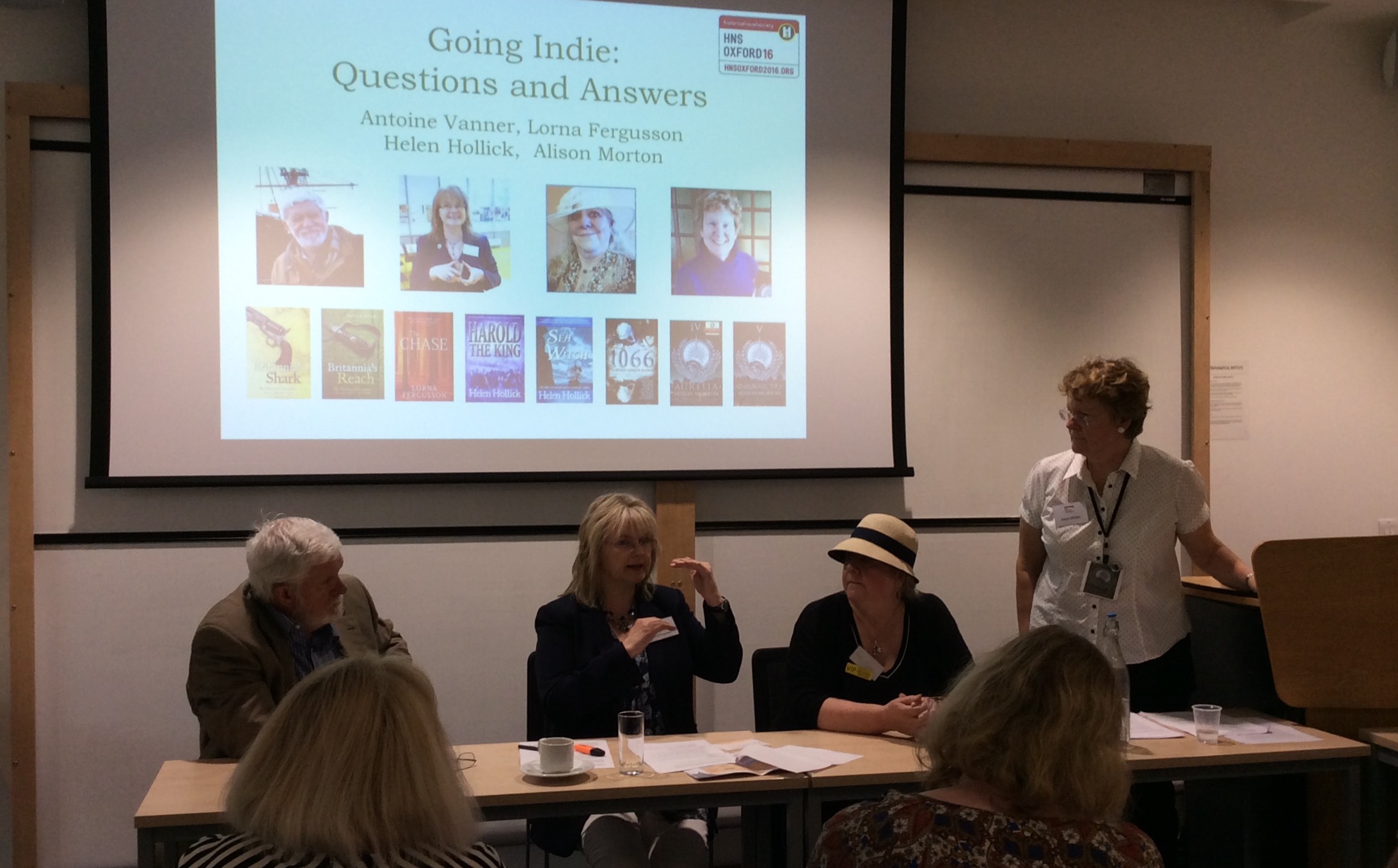
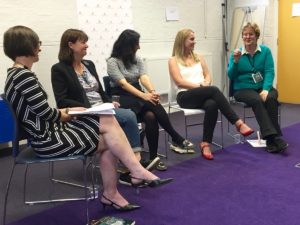
 Speaking at conferences is one thing – you know what your defined role is, whether giving a talk, being a panel member or running a workshop. You are on the inside track, you prepare materials, you mix with attendees, carrying on discussions from your talks. You are giving back. Speaking at conferences is one thing – you know what your defined role is, whether giving a talk, being a panel member or running a workshop. You are on the inside track, you prepare materials, you mix with attendees, carrying on discussions from your talks. You are giving back.
Attending a conference as a delegate is different. If you’re not speaking, why are you there?
- Education – You’re learning new skills, honing existing ones and remembering ones you haven’t used for some time.
- Networking – Wherever you are in your writing journey, you need to make contacts (authors in your genre, agents and publishers, people who have inspired you), find new providers of services and meet virtual friends in the flesh.
- Being counted – Most writers’ conferences are run by genre associations and societies, professional groups, interest groups, local litfests, etc. This is the time to show your support for them, to be there at the major annual/biennial event.
- Discovering what’s trending, what’s new, how to prepare for and take advantage of future developments.
- Fun – Shut up in your writing garret, your writing shed or the spare bedroom, you are alone. Going to a conference means you socialise with real people who ‘get’ writing.
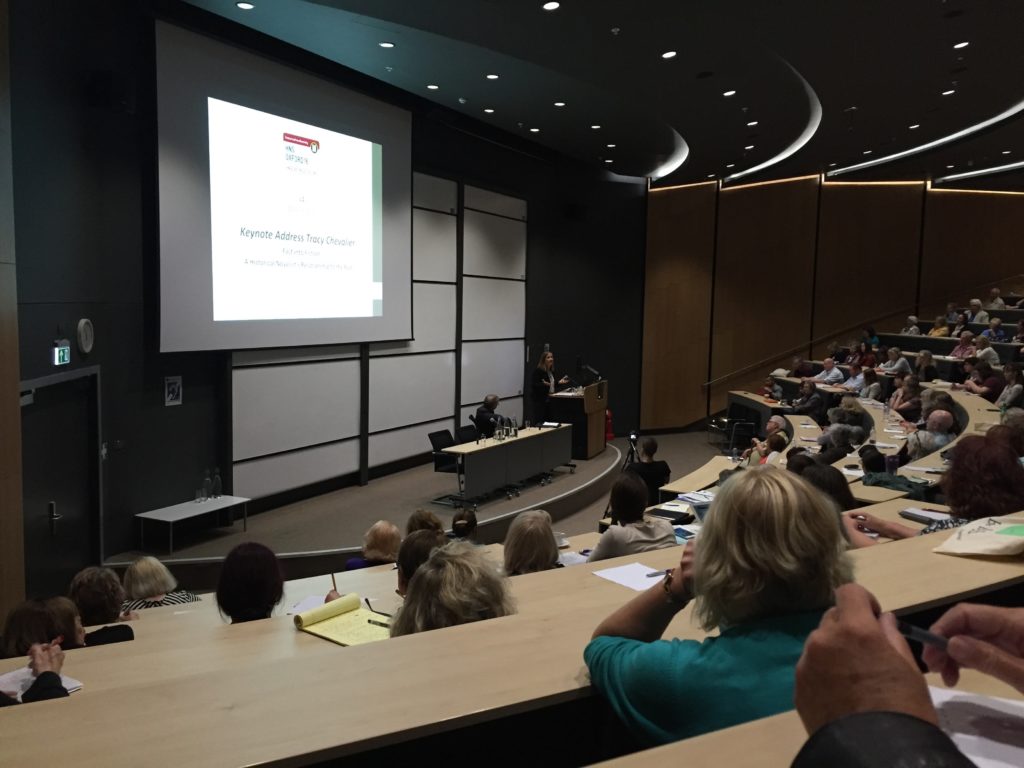
How get the best out of a conference
Preparation
- Select the right one – Is it relevant to you at this time? With travel, accommodation and meals, conference going can represent a significant expense. Be hardheaded about whether you’re going to gain something that will benefit your writing/writing life, not just be an agreeable trip to see your mates.
- Be informed – Check the information sent to you, find the organisation’s conference website/Facebook page/Twitter handle and check for updates and release of new essential information
- Prioritise – Mark up the talks/panels/workshops which you judge ‘essential’, ‘very helpful’ and ‘would be nice’. Also note the sessions you may want to miss. Many genre specific events arrange one-to-one mini interviews with an agent, publisher or book doctor who will assess a sample of your writing (sent in advance). Appointments are fixed weeks or even months before the event and snapped up incredibly fast. Check the exact details on how to bag one of these as soon as you can, and apply immediately.
- People – If you receive an advance attendance list (You don’t always get one.), mark up the people you already know and the attendees you’d like to meet. Getting to know others can be a delightful surprise!
- Practicalities – Don’t take too many clothes – check the event details – but one complete change is sensible. Accidents do happen! Take extra teabags, coffee, wine and a mug/glass. Some events give away a goody bag in which you can cart your papers and book purchases around, but slip an extra cloth bag or small carrier in your case as a precaution. Talk ahead of time to others who have been to the previous year’s event.
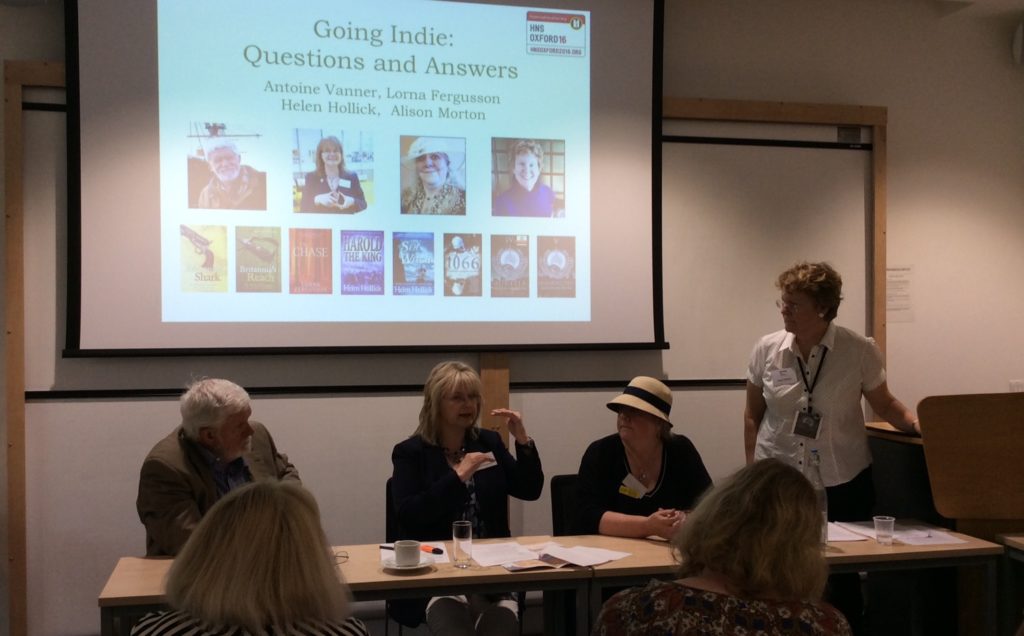
At the event
- Timing – Turn up on time. It’s better to arrive on the afternoon before the conference so you can get settled into the accommodation without rushing and be ready for some early networking. Sometimes a pre-conference drink or meal is where important contacts are made. And when the conference proper starts, getting to each of your chosen sessions promptly means you get a good seat!
- Speakers should let you know whether they will answer questions as they go along or prefer to take them at the end of their talk. If you wish to ask them a question at the end, wait politely as each person has their turn. Sometimes you and the speaker have to leave the room as the next session may be starting. If they’re not going straight to another talk, they may be happy to talk over a cup of tea now or glass of wine later. Keen as you are to chat to them, don’t hassle or hog the speaker. 😉
- Ask questions – Many people are nervous about this, but you can be sure that if you stand up and ask, others will be grateful you did.
- Keep your ears open for informal arrangements – drinks, readings, meals, side discussions, parties, etc.
- Bookshop bargains – Books are sometimes discounted at events, plus it’s more than likely that the author will sign them for you.
- Make notes, pick up any handouts on offer, jot down websites and exchange business cards. In all the buzz from the event, you won’t remember everything…
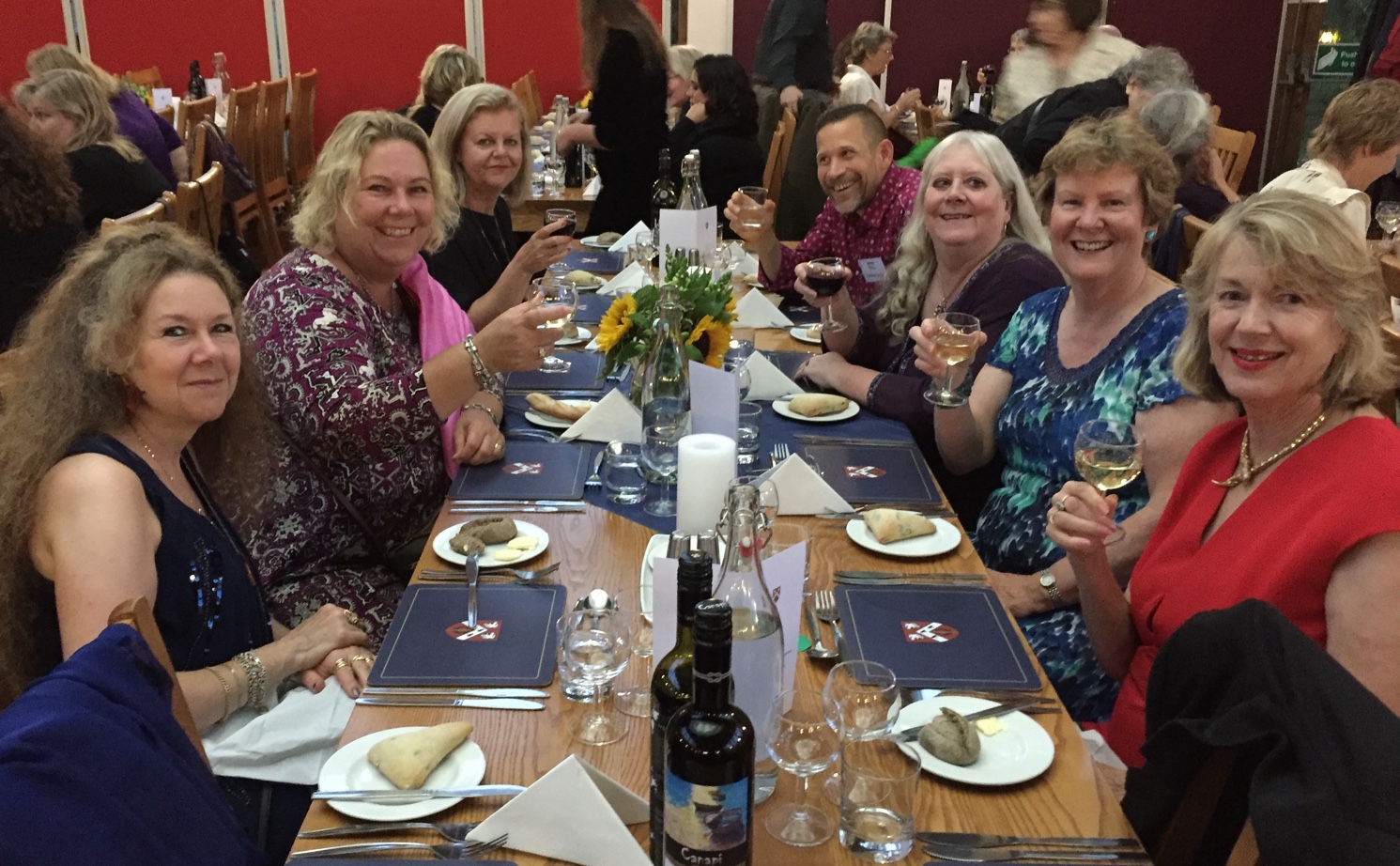
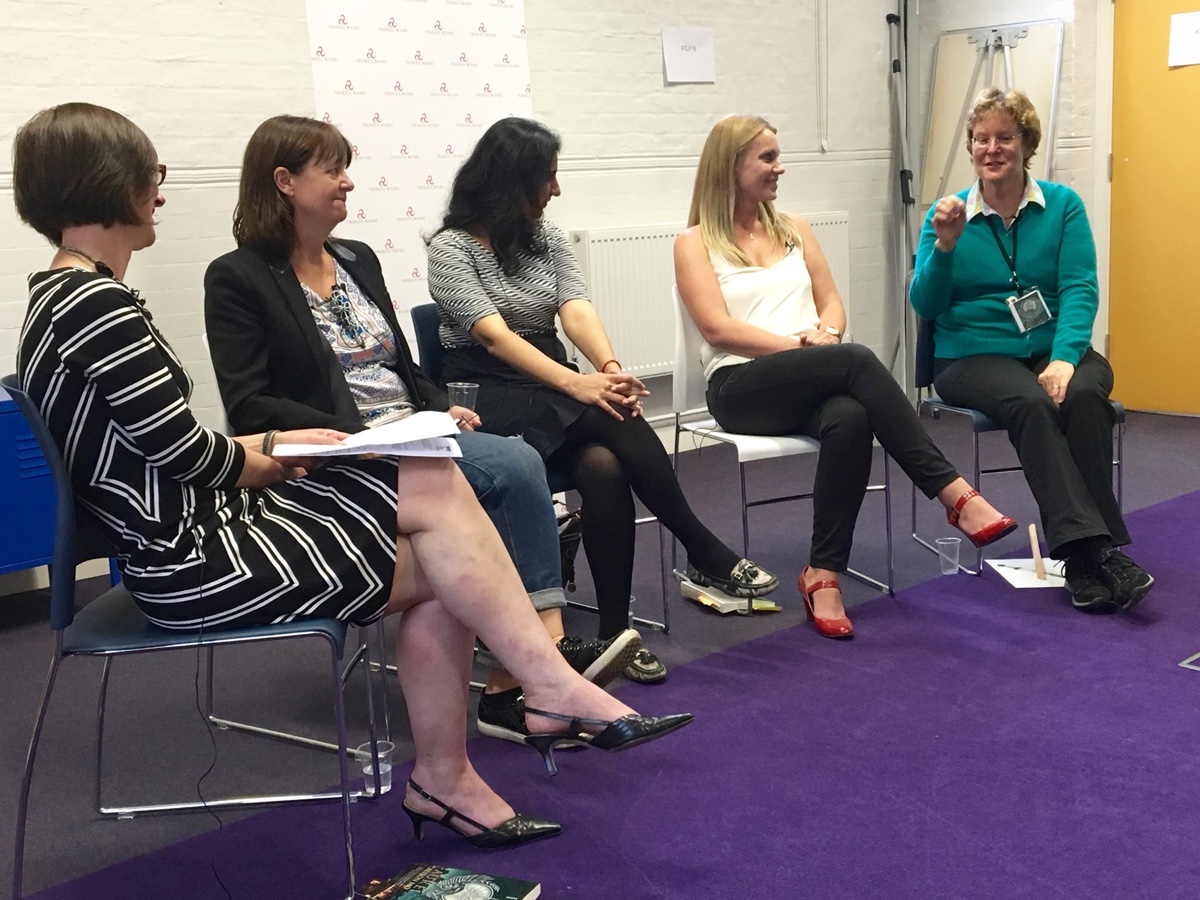
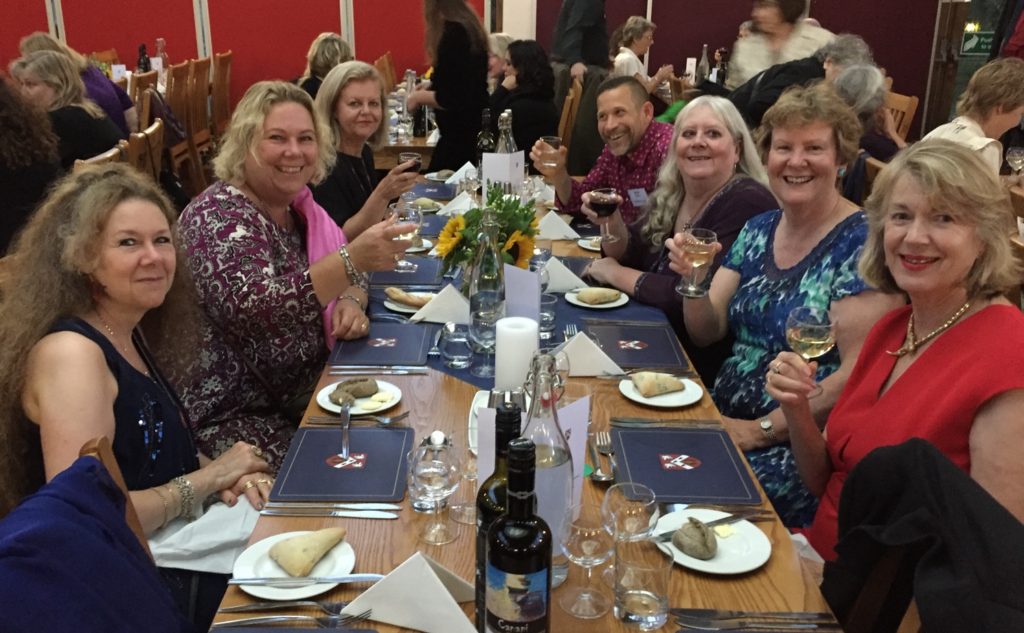 And have fun! Left to right Christina Courtenay, Anna Belfrage, Incognito (sorry!) Christoph Fischer, Helen Hollick Alison Morton, Denise Barnes/Molly Green (HNS 2016) What have I missed out There’s bound to be something you can add!
Alison Morton is the author of Roma Nova thrillers – INCEPTIO, CARINA (novella), PERFIDITAS, SUCCESSIO, AURELIA, NEXUS (novella), INSURRECTIO and RETALIO, and ROMA NOVA EXTRA, a collection of short stories. Audiobooks are available for four of the series. Double Identity, a contemporary conspiracy, starts a new series of thrillers. JULIA PRIMA, Roma Nova story set in the late 4th century, starts the Foundation stories. The sequel, EXSILIUM, is now out.
Find out more about Roma Nova, its origins, stories and heroines and taste world the latest contemporary thriller Double Identity… Download ‘Welcome to Alison Morton’s Thriller Worlds’, a FREE eBook, as a thank you gift when you sign up to Alison’s monthly email update. You’ll also be among the first to know about news and book progress before everybody else, and take part in giveaways.
If you enjoyed this post, do share it with your friends!Like this:Like Loading...
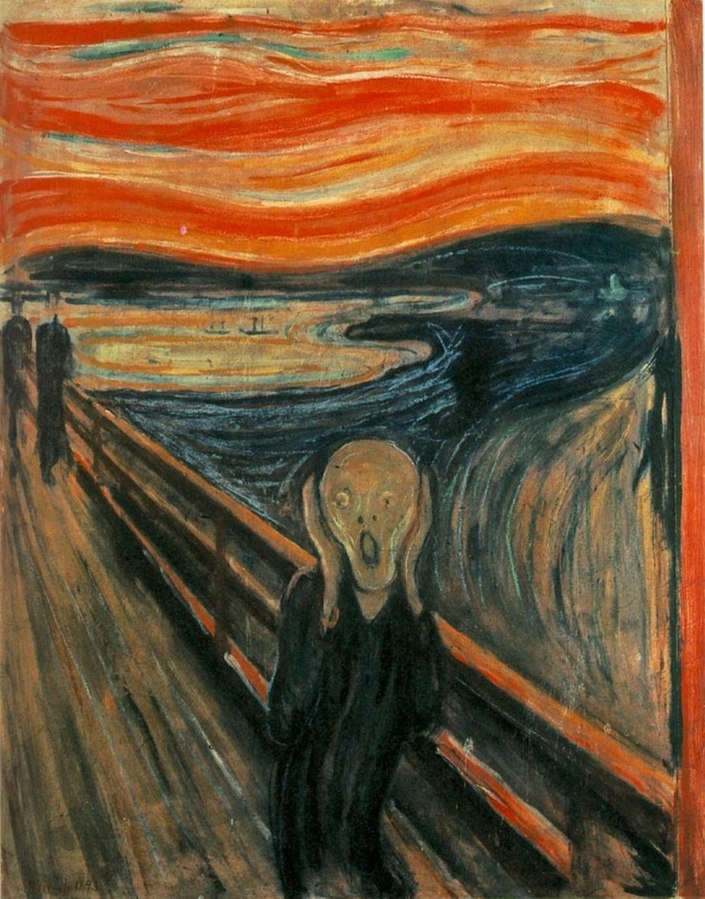 The Scream, Edvard Munch, 1893 When I read yet another ‘buy my book’ direct message on Facebook Messenger this morning, I screeched out loud. I’m surprised it wasn’t heard from one end of Europe to the other.
Direct messaging (DM) or private messaging (PM) is a utility on social media, in particular Twitter and Facebook and a one-to-one message channel between ‘friends’, i.e. people you are happy to interact with on those media.
You may want to say something only applicable to the other person, or small group of people, or something sensitive or confidential. In this way, it’s like a quick ‘n’ dirty form of fast email without messing around with subject lines, composing a message, etc.
I use it principally on my phone to fix timings, send an instant photo or link to a friend, chat to family, fellow FB group admins, friends, and to answer queries. It’s a place for private conversations.
IT IS NOT A SALES CHANNEL.
DM sins
- Inviting me to be your friend then sending me a ‘buy my book’ message within the following 24 hours
- Sending me a ‘please endorse my book’ (True friends don’t ask like this.) or ‘like my new book page’ message. (Use the invitation facility on your Facebook page!)
- Trying to sell me something
- Being a creepy person and trying to hit on me virtually
How to use DMs
- If you have researched and tried every other way of contacting somebody – looking on their website (email address or contact form), a friend who might know them, Googling – then send them an ultra polite DM with a hint of what you want to talk about. Send only once. If you are not ‘friend’ or they don’t follow you, you may just have to be patient until they spot your message.
- If a conversation in open forum needs a personal or confidential answer, then offer to DM them
- Observe confidentiality about what’s said in a DM
- Use them to exchange telephone numbers, addresses and personal email addresses. You should never do this openly on social media.
- Put yourself in the other person’s shoes and respect their privacy
And what do I do if I am a target of one of the ‘sins’?
Instant unfriend or unfollow.
What’s your take on these messages?
Alison Morton is the author of Roma Nova thrillers – INCEPTIO, PERFIDITAS, SUCCESSIO, AURELIA, INSURRECTIO and RETALIO. CARINA, a novella, and ROMA NOVA EXTRA, a collection of short stories, are now available. Audiobooks are available for four of the series. NEXUS, an Aurelia Mitela novella, will be out on 12 September 2019.
Find out more about Roma Nova, its origins, stories and heroines… Download ‘Welcome to Roma Nova’, a FREE eBook, as a thank you gift when you sign up to Alison’s monthly email newsletter. You’ll also be first to know about Roma Nova news and book progress before every
If you enjoyed this post, do share it with your friends!Like this:Like Loading...
 Christmas tree 2017 It’s Christmas Eve morning and I’ve had my croissant and pain au chocolat. We normally have much healthier muesli, but as we bought a boxful of butter laden pastry morning goods for the visitors, why not raid one or two?
No sign of life from the visitors – they probably need the sleep. I’ve opened the shutters and switched on the Christmas tree lights. Two strings of small lights circle the tree.
This year we have rescued ducks from an old set and plonked them on some of the lights. Now we have ducks, angels, flowers, snowmen, robins, stars and balls. Not a sign of tinsel, thank you.
But the lights… They work, almost with demonic insistence, they work. I kneel down and flick the master control. The receptors in my eyeballs are singed with airburst level blazing lights. Even Jupiter’s thunderbolts didn’t flash like these little horrors. I fumble with the control box, pressing maniacally through the programs to find the still, gentle state of just being ‘on’. No flashing, nor fading nor alternating, nor Mexican waving – just on. At the seventh press, tranquillity returns and I sit back, the adrenalin dispersing, heart rate reducing, happiness returning.
My question: why can’t the default setting be just ‘on’? Why must the lights start in agitation mode? Where are the dim, but gentle fairly lights of my childhood?
Then I started to think. Dangerous, I know. In 2017, we all have to ‘hit the ground running’, ‘be up for it’, run five kilometres before 6 a.m. Images, news, stories, information, rants, alternative facts bombard us 24/7. The lights in life are on agitated flashing mode by default.
 Christmas 2015 (author’s son’s photo) Christmas itself is when generations meet; they laugh, bicker, sulk, drink, eat different food and visit their parents’ friends, but they also talk face to face, go on walks, rest and watch films and Christmas specials together. They live in different worlds, or bubbles, and while they touch, they can never fully integrate again. Younger ones are bored by the accounts of older ones’ operations; older ones don’t understand their children’s job titles, let alone what they do all day at their work. But somehow, they do touch here and there.
Which brings me to emotional blackmail… When I was younger, it was ‘expected ‘ by my parents and parents of their generation who had fought a terrible war and only desired a stable and happy family life afterwards, to ‘go home’ for Christmas. You may be in your forties and have your own children with their own needs for a family Christmas, but if you didn’t report for duty in your parents’ home, you were in trouble. Don’t get me wrong – I loved it. A week of no work, sleeping in, no domestic chores, drink on tap, great talks, stories and jokes. But it was always assumed. Hurt, anger and bewilderment flowed down the phoneline if you tried to make a break for it. So you gave in. If you were married, you alternated between parents or you did a Tour d’Angleterre for two weeks on the middle of winter and returned to work in January, exhausted but relieved.
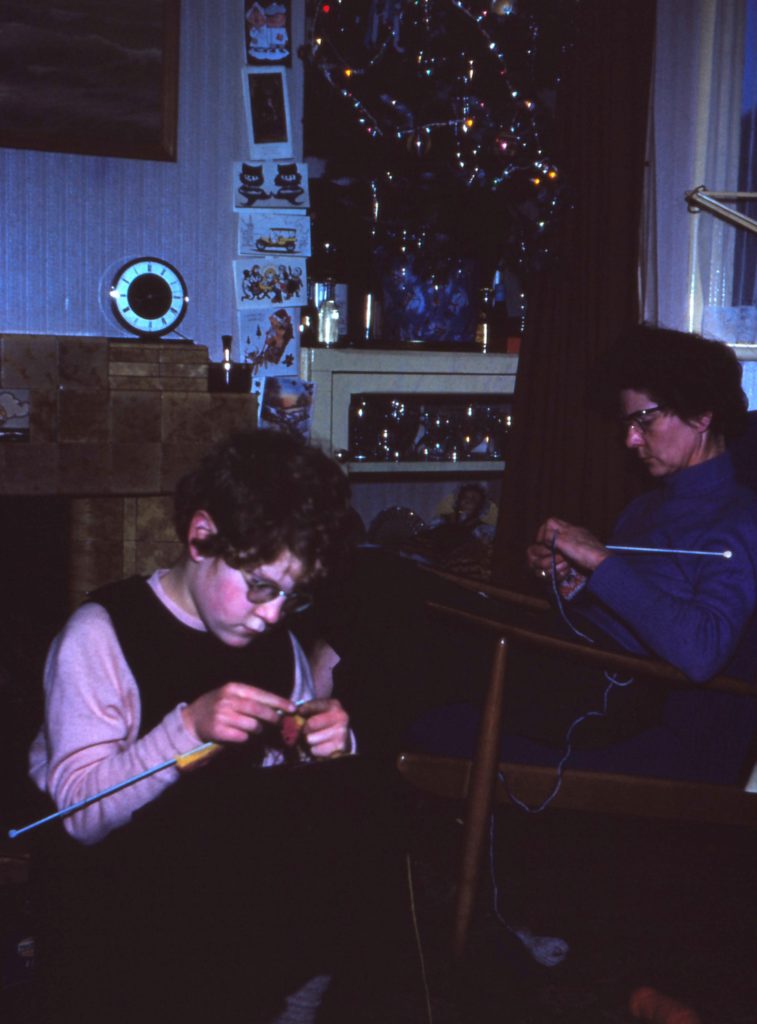 Christmas 1960 (author’ father’s photo) In my turn, I love having my adult child and partner (aka daughter in law) here. We’re not very exciting, but they seem to keep coming back. But we never ask and we never expect. I vowed that when I became the older generation, I would never demand their presence, and I don’t. But I’m really rather pleased they want to come and see us…
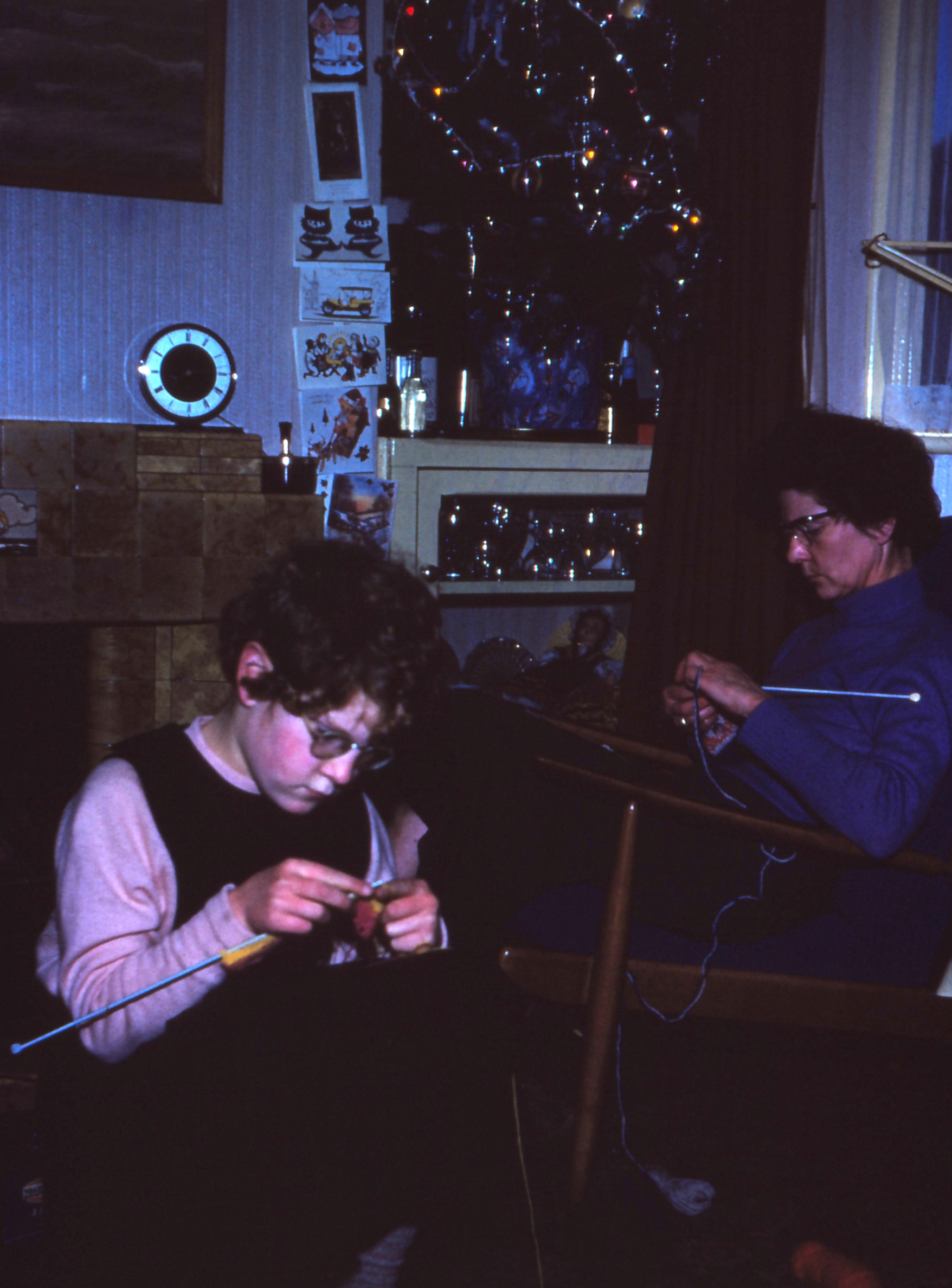
So, no more fuzzy felt, jigsaws, listening quietly to Childrens’s Hour on the wireless, learning to knit in front of a coal fire and starting the ‘thank you’ letters of my childhood. Today it’s watching The Crown on Netflix, posting and tweeting with transcontinental friends on tablets, phones and laptops, using the Jacquie Lawson e-card service, swapping trends, jokes and stories. Talking of which we have a new trend chez Morton: a multiple international Skype on Christmas morning, all participants with a glass of bubbly in their hand.
But we still have a good lunch, Christmas pud and listen to the Queen at 3pm. And I have learnt to tame the bloody lights.
Alison Morton is the author of Roma Nova thrillers INCEPTIO, PERFIDITAS, SUCCESSIO, AURELIA, INSURRECTIO and RETALIO. CARINA, a novella, is available for download now. Audiobooks are available for the first four of the series.
Find out more about Roma Nova, its origins, stories and heroines… Get INCEPTIO, the series starter, for FREE when you sign up to Alison’s free monthly email newsletter
If you enjoyed this post, do share it with your friends!Like this:Like Loading...
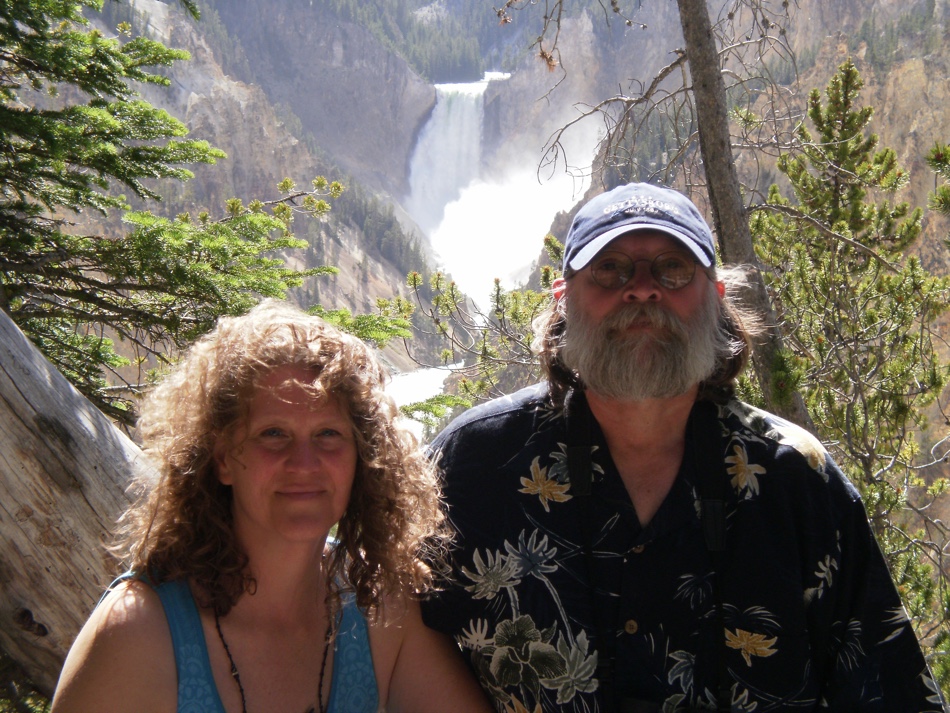
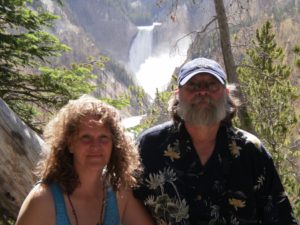 Darryl and Paul Bennett Today, my guest is the delightful Paul Bennett who lives in the New England town of Salem, Massachusetts with his wife Daryl and writes historical fiction, the first of which The Clash of Empires is set during the French and Indian Wars.
Discovering his future did not include the fields of mathematics or science, he focused more on his interest in history; not just the rote version of names and dates but the causes. He went on to study Classical Civilization at Wayne State University with a smattering of Physical Anthropology thrown in for good measure. Logically, of course, Paul spent the next four decades drawing upon that vast store of knowledge working in large, multi-platform data centres, and says he is considered in the industry as a bona fide IBM Mainframe dinosaur heading for extinction.
Over to you, Paul!
When Alison asked if I would like to do a guest spot on her blog, I immediately said yes. A few moments later reality set in as I realized I didn’t know what I would blog about. I have written one book, so I don’t think of myself as an expert on the subjects surrounding being a good author. For example, I frequently see advice on how to develop a systematic approach to writing, and then I look back on how I approach it. My, oh my, it’s a miracle I finished the book in a manner that is coherent. 🙂 Or, a how to on character development; again I plead ignorance and amazement at my results.
So, after mulling over the possibilities for a couple of days, my Muse whispered in my ear that instead of a how to blog, I should write a why blog. Why do I write historical fiction; why did I choose The French and Indian War as a subject? The root or genesis of the first question lies at the feet of Kirk Douglas and Tony Curtis. Spartacus and other movies of the time like Ben Hur, The 300 Spartans, and Cleopatra kick-started an interest in ancient times. This led to my reading about Heinrich Schliemann and his discoveries at Mycenae, and at Troy. I was hooked on history from then on. In high school, I elected history classes when given a choice; my favorite being an advanced American History class where I found that the causes were more important to learn rather than just the results. My major at Wayne State University was Classical Civilization; a curriculum that required the learning of Ancient Greek, so I must have been serious about it. 🙂
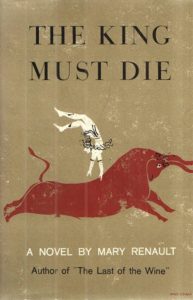 The fictional aspect came from Mary Renault’s The King Must Die. That was the first book that showed me that historical events could be rendered into fiction, albeit in this case mythological history. What an eye opener, and one that propelled me into a voracious frenzy of reading and learning; a situation that has not abated over the decades. Indeed, the number of talented historical-fiction authors I have come across over the years is truly astounding. The fictional aspect came from Mary Renault’s The King Must Die. That was the first book that showed me that historical events could be rendered into fiction, albeit in this case mythological history. What an eye opener, and one that propelled me into a voracious frenzy of reading and learning; a situation that has not abated over the decades. Indeed, the number of talented historical-fiction authors I have come across over the years is truly astounding.
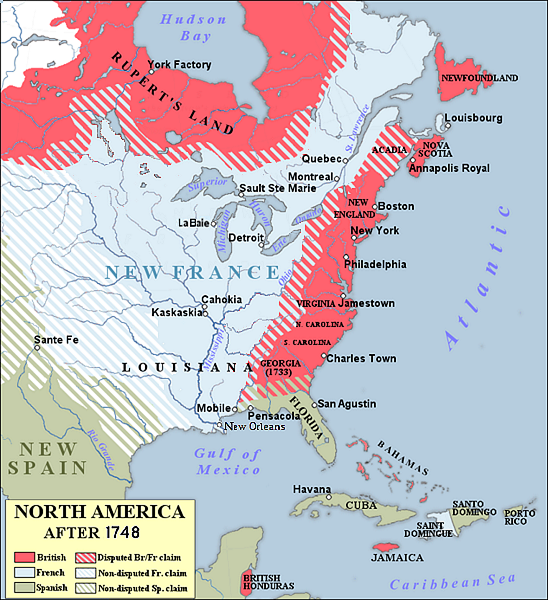
Through the medium of social networking I have become friends with many of those authors, and it is because of them that I not only started a book review blog (see the link below), but also began my journey to producing Clash of Empires; the first book in my series, The Mallory Saga. Thus, we come to the second question; why that subject. The French and Indian War seemed to me to be the perfect historical event to begin my ambitious idea to portray the history of this country through the eyes of a fictional family, the Mallorys. This was a worldwide, cataclysmic event; indeed some have called it the real First World War as it was fought not only here in America, but also in Europe, and the West Indies. It also proved to be rather costly for the British even though they won the war. The subsequent taxation and trade policies with the American colonies set the stage for revolution.
In Clash, I was able to incorporate the historical events with a fictional spin; staying true to the history but seen through the eyes and actions of my fictional frontier family. A great deal of the action in the war took place in western Pennsylvania, and much of that at Fort Duquesne; modern day Pittsburgh. The Mallorys were settled in that area before the outbreak of the war and become intimately involved in the conflict. One of the big challenges I found was keeping true to the nature and speech of the historical figures; a young George Washington leading his first militia command, General Braddock leading his force into a deadly trap. A challenge, yes, but at the same time a whole lot of fun.
One thing I have learned while writing Clash is that the characters I created, that I gave life to, often have minds of their own. I’ll have an idea where I want a particular passage, scene, or conversation to go, but when I start writing that bit something happens. It’s as if my characters have hijacked my fingers and voilà, a new idea is born. I suspect that this activity on the part of my characters is part of a conspiracy concocted and led by my feisty Muse. She seems to delight in surprising me, often while I am driving to and from work. Just the other day I spied a bald eagle flying overhead as I was passing Minuteman National Park, the site of the famous battle of Lexington and Concord that began the Revolutionary War. I know that was my Muse in the guise of an eagle, scouting out the area for the chapter I was soon to write about that battle.
Despite all of the challenges facing the historical fiction author, I have found it an exhilarating experience. A chance to not only entertain, but perhaps even to teach. I hope I have achieved that in Clash of Empires.
Thank you, Paul!
About Clash of Empires
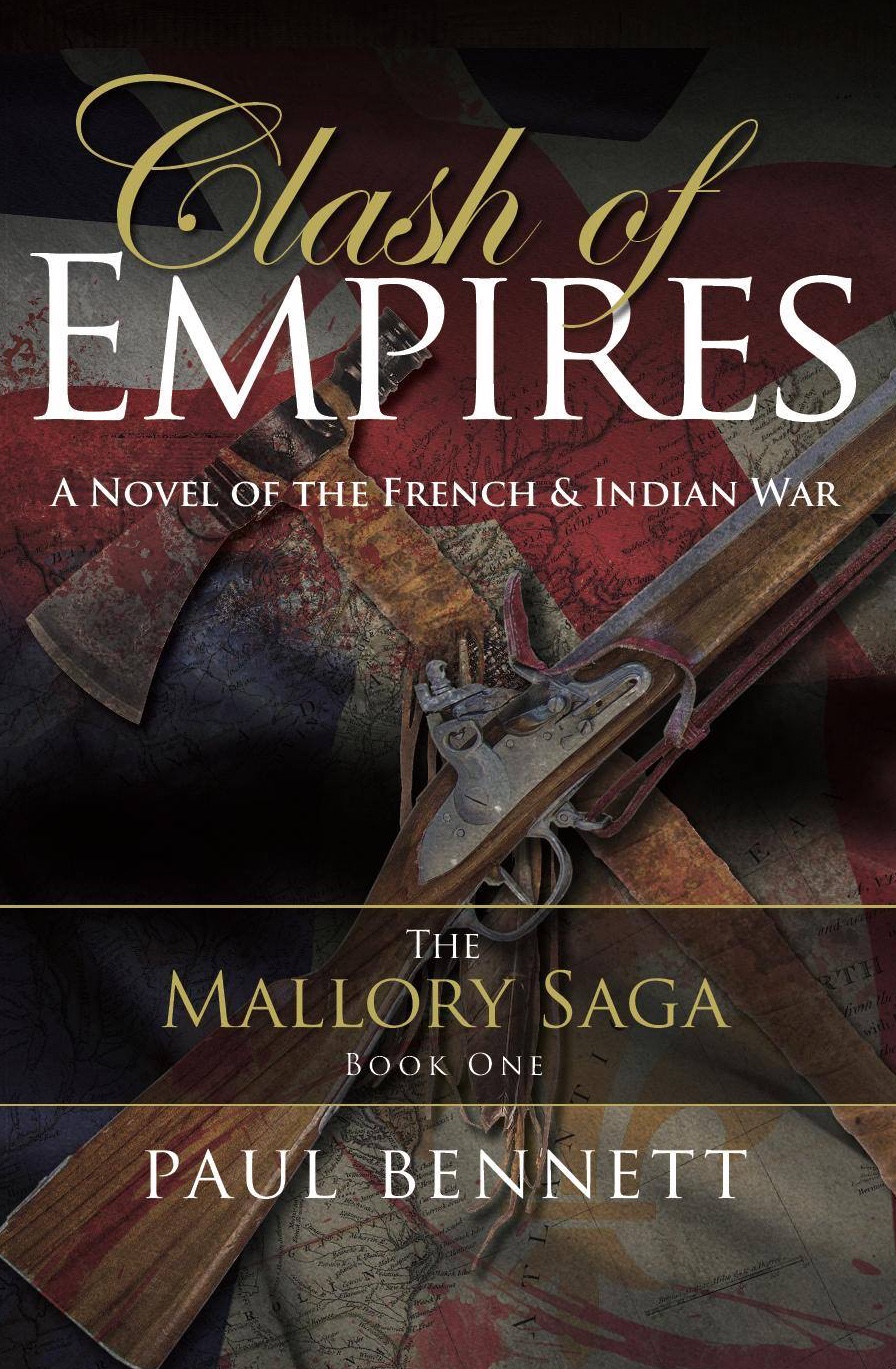
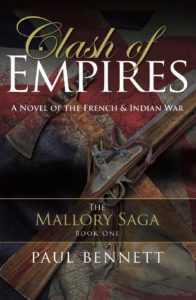 1756 – Britain and France are on a collision course for control of the North American continent that will turn into the first truly world war, known as The Seven Years’ War in Europe and The French and Indian War in the colonies. The Mallory family uproots from eastern Pennsylvania and moves to the western frontier only to find themselves in the middle of war. 1756 – Britain and France are on a collision course for control of the North American continent that will turn into the first truly world war, known as The Seven Years’ War in Europe and The French and Indian War in the colonies. The Mallory family uproots from eastern Pennsylvania and moves to the western frontier only to find themselves in the middle of war.
Three siblings, Daniel, Liam and Liza, are caught up in the conflict and endure emotional trauma. Their story is woven into historical events such as the two expeditions to seize Fort Duquesne from the French and the fighting around Forts Carillon and William Henry. We meet historical characters George Washington, Generals Braddock, Forbes and Amherst. The book also includes Pontiac’s Rebellion in which the Mallorys play important roles. Clash of Empires explores events running up to July 1776, events that will be chronicled in the second book, Paths to Freedom as I follow the exploits and fate of the Mallory clan.
You can buy Clash of Empires on Amazon.com Amazon.co.uk
Read Paul’s excellent book review blog
Connect with Paul on Twitter: hooverbkreview
Alison Morton is the author of Roma Nova thrillers INCEPTIO, PERFIDITAS, SUCCESSIO, AURELIA, INSURRECTIO and RETALIO. CARINA, a novella, is available for download now. Audiobooks are available for the first four of the series.
Find out more about Roma Nova, its origins, stories and heroines… Get INCEPTIO, the series starter, for FREE when you sign up to Alison’s free monthly email newsletter
If you enjoyed this post, do share it with your friends!Like this:Like Loading...
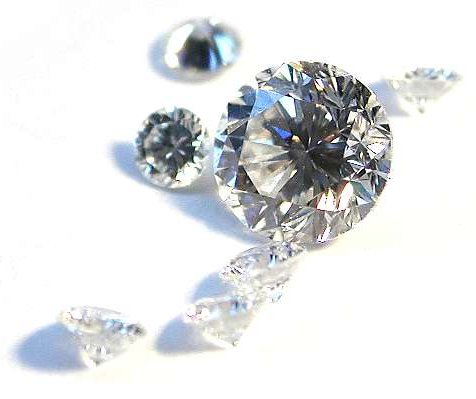
They say “Diamonds are a girl’s best friend” and “A diamond is forever” but that is just marketing. Diamonds have played a far more significant rôle in human culture, and for a much longer time.
The name “diamond” is derived from ancient Greek αδάμας (adámas), “proper”, “unalterable”, “unbreakable”, “untamed”. Stones are thought to have been first recognised, mined and traded in India at least 3,000 years ago, probably longer. Also, significant alluvial deposits of diamonds were found many centuries ago along the rivers Penner, Krishna and Godavari.
Diamonds’ popularity rose in the 19th century because of increased supply, improved cutting and polishing techniques, growth in people’s spending power within a growing world economy and innovative and successful advertising campaigns.
Today, we are still fascinated by the sparklers, and authors frequently have a tale to tell about them. Instead of a standard advent calendar, a group of authors are offering their readers a series of scintillating diamond stories, polished to dazzling beauty.
A Roma Nova diamond is there on 17 December – Saturnalia – about the young Imperatrix Silvia, her husband and a very special diamond’s story. In the meantime, start with today’s story from Richard Tearle – a throat-grabber and heart-wrencher.
3rd December Richard Tearle Diamonds
4th December Helen Hollick When ex-lovers have their uses
5th December Antoine Vanner Britannia’s Diamonds
6th December Nicky Galliers Diamond Windows
7th December Denise Barnes The Lost Diamond
8th December Elizabeth Jane Corbett A Soul Above Diamonds
9th December Lucienne Boyce Murder In Silks
10th December Julia Brannan The Curious Case of the Disappearing Diamond
11th December Pauline Barclay Sometimes It Happens
12th December Annie Whitehead Hearts, Home and a Precious Stone
13th December Inge H. Borg Edward, Con Extraordinaire
14th December J.G. Harlond The Empress Emerald
15th December Charlene Newcomb Diamonds in the Desert
16th December Susan Grossey A Suitable Gift
17th December Alison Morton Three Thousand Years to Saturnalia
18th December Nancy Jardine Illicit Familial Diamonds
19th December Elizabeth St John The Stolen Diamonds
20th December Barbara Gaskell Denvil Discovering the Diamond
21st December Anna Belfrage Diamonds in the Mud
22nd December Cryssa Bazos The Diamonds of Sint-Nicholaas
23rd December Diamonds … In Sound & Song
Do look out for the hashtag #Diamondtales on social media.
Enjoy!
Alison Morton is the author of Roma Nova thrillers INCEPTIO, PERFIDITAS, SUCCESSIO, AURELIA, INSURRECTIO and RETALIO. CARINA, a novella, is available for download now. Audiobooks are available for the first four of the series.
Find out more about Roma Nova, its origins, stories and heroines… Get INCEPTIO, the series starter, for FREE when you sign up to Alison’s free monthly email newsletter
If you enjoyed this post, do share it with your friends!Like this:Like Loading...
|
Subscribe to Blog via Email
Join 368 other subscribers.
Categories
Archive
|
 Speaking at conferences is one thing – you know what your defined role is, whether giving a talk, being a panel member or running a workshop. You are on the inside track, you prepare materials, you mix with attendees, carrying on discussions from your talks. You are giving back.