 When I mentioned to a new friend that I wrote thrillers with an alternate history setting, she batted aside (or maybe ignored) the alternate history bit and asked, “What do you call a thriller, then?”. When I mentioned to a new friend that I wrote thrillers with an alternate history setting, she batted aside (or maybe ignored) the alternate history bit and asked, “What do you call a thriller, then?”.
Er, isn’t it obvious?
Apparently not.
Merriam-Webster defines a thriller as “a work of fiction or drama designed to hold the interest by the use of a high degree of intrigue, adventure, or suspense“.
So are Georgette Heyer’s The Talisman Ring and The Reluctant Widow thrillers? Is Florence and Giles a Gothic thriller, a historical novel or literary fiction? Are C J Sansom’s Shardlake historic novels also thrillers? Does Kate Mosse’s Sepulchre qualify?
Or are we looking at books by Lee Child, Tom Clancy, or J D Robb which send adrenaline pumping around the body, keeps the reader glued to the book and on the edge of their seat? Whatever the tension level, the protagonist hits, and has to deal with, a problem – an escape, a mission, a mystery or a death threat; he or she always faces acute danger.
Literary devices such as cover-ups, red herrings, plot twists and cliffhangers are crucial to maintaining tension. And, of course, the plot always has a good, meaty villain often just as clever and cunning as the protagonist and who presents obstacles that the hero must overcome. The tension rachets up throughout the book and leads to a highly stressful climax often via car chases, shootouts and physical and/or psychological confrontations.
So is it all car chases, bombs and fights?
Common subgenres include psychological, crime and mystery thrillers, not to mention spy and political, historical and sci-fi/alternate history thrillers.
Crime thrillers often centre around murder, ransoms, heists, revenge and kidnappings. Mystery thrillers are more investigations, either “whodunit” or “whydunit”. Psychological thrillers feature mind games, psychological themes, stalking, confinement/deathtraps, disturbed personality, paranoia and obsession. Fringe theories and false accusations are common in many thrillers, especially catastrophe/disaster/environmental ones while threats to entire countries, espionage, gadgets, technology, assassins and electronic surveillance are common in spy thrillers. And the huge range included in speculative fiction (romance, adventure, literary, space opera, time-slip) naturally includes alternate history thrillers.
You’ll have to wait until the next episode to find out about what exactly makes up a thriller…
If you enjoyed this post, do share it with your friends!
Yesterday, I danced round the house. I’d received the following email:
(Parts have been removed to protect their modesty.)
The following payment is related to digital royalties for Amazon.co.uk. It will be paid by bank transfer directly into your bank account. Please allow up to five business days for the funds to appear in the available balance of your bank account.
If you have a query regarding this payment please email ap-amazondigital-uk@amazon.com and be sure to include the information below to expedite your request.
| Payment made to: |
ALISON MORTON(EHBVS) |
| Our Supplier No.: |
xxxxxx |
| Supplier site name: |
xxxxxx |
| Paid to bank: |
Hidden for security |
| Paid to account: |
Hidden for security |
| Payment number: |
000000000 |
| Payment date: |
24-MAY-12 |
| Payment currency: |
GBP |
| Payment amount: |
000000 |
| Invoice Number |
Invoice Date |
Invoice Description |
Discount Taken
|
Amount Paid
|
| 5CN-DIGITAL-Y3CPxxxxxxxxxx |
17-APR-12 |
Mar 2012 Kindle Direct Publishing p |
|
000000
|
Oh, yes!
It won’t buy me much (You’ll have to take my word for that). That’s not the point. For me, it means that some people have thought enough of my book to buy it. The have exchanged some of their hard earned dosh for my work and so attributed value to it.
Always the acid test.
Military or Civilians? The curious anomaly of the German Women’s Auxiliary Services during the Second World War is available as an ebook on amazon.co.uk, amazon.com, amazon.de
If you enjoyed this post, do share it with your friends!
 Drafting my latest query letter, I did a little exercise. No, not twenty press-ups on the floor, but one prompted by this particular agency’s submission guidelines. As part of the marketing approach, I was asked to thinking of two to three (i.e. three) comparable books. That wasn’t a problem, but it started me thinking about what books I liked, the ones I returned to or was impressed, exhilarated or moved by so I drew up a list and put them into genres. Drafting my latest query letter, I did a little exercise. No, not twenty press-ups on the floor, but one prompted by this particular agency’s submission guidelines. As part of the marketing approach, I was asked to thinking of two to three (i.e. three) comparable books. That wasn’t a problem, but it started me thinking about what books I liked, the ones I returned to or was impressed, exhilarated or moved by so I drew up a list and put them into genres.
The results:
History
Historical fantasy
Romance (All of Georgette Heyer, Austen)
Urban fantasy
Literary fiction
Crime
Espionage
Thrillers/suspense
Modern/general fiction
Sci-Fi (all types)
Several combined genres, such as Lindsey Davis’ Roman detective, Falco, or JD Robb’s 2057 detective Eve Dallas, many contained a strong romantic theme e.g. Diana Gabaldon’s Highlander series as well as their core genre of historical fantasy adventure and some were European literary fiction with a fantasy element such as Carlos Ruiz Zafon’s The Shadow of the Wind.
So the answer seems to be a base of history, the next layer thriller/crime, a large dollop of fantasy, and flavoured throughout with romance.
Which is quite a relief as that’s what I write.
What does your reading history point towards? And are you surprised by it?
Updated 2024: Alison Morton is the author of Roma Nova thrillers – INCEPTIO, CARINA (novella), PERFIDITAS, SUCCESSIO, AURELIA, NEXUS (novella), INSURRECTIO and RETALIO, and ROMA NOVA EXTRA, a collection of short stories. Audiobooks are available for four of the series. Double Identity, a contemporary conspiracy, starts a new series of thrillers. JULIA PRIMA, Roma Nova story set in the late 4th century, starts the Foundation stories. The sequel, EXSILIUM, is now out.
Download ‘Welcome to Alison Morton’s Thriller Worlds’, a FREE eBook, as a thank you gift when you sign up to Alison’s monthly email update. You’ll also be among the first to know about news and book progress before everybody else, and take part in giveaways.
If you enjoyed this post, do share it with your friends!
 Two years ago, I wrote a post on research, setting out five steps to getting a best result. During the past two weeks, I’ve been following that same methodology to assess service suppliers and have narrowed my search to two possibilities. Two years ago, I wrote a post on research, setting out five steps to getting a best result. During the past two weeks, I’ve been following that same methodology to assess service suppliers and have narrowed my search to two possibilities.
I googled then sifted the results, gathered reports, opinions, financial data (from the sycophantic to the ranting) and filed the source URLs of the most valuable. (Note to self and others: never, ever fail to copy the URL to somewhere safe. You will forget the site name and you won’t be able to find it again. And you’ll kick yourself raw. Emailing it you yourself is pretty solid.)
But then you have to get down to the dirty stuff.
I used the net to dig out clients of the two suppliers and then wrote to them in confidence. If you do this, you have to keep that promise. Whatever the temptation. You cannot blat out what you have been told all over the web. Well, you could, but you mustn’t.
Why? Because one day, when you have become the Great Wise One, somebody might do it to you.
If you enjoyed this post, do share it with your friends!
 Now I’ve finished the first run through of edits on Book3, I’ve finished my heroine’s story. I’ll leave her for 6-8 weeks at least until I even glance at her again. Now I’ve finished the first run through of edits on Book3, I’ve finished my heroine’s story. I’ll leave her for 6-8 weeks at least until I even glance at her again.
So, Book 4. Yes, I’m acquainted with the main character and I want to tell her story. But that’s it. I need to let her run around in my head a bit, to have some adventures, get into trouble, struggle to get out, land in more – you know the rest. More than anything, I have to get to know her, to find out what she wants, what’s stopping her, what she has to do, or GMC, as creative writing tutors call it.*
My way of doing this is to write down 30 lines of plot. Less an outline, more of a wireframe as I like the 3D analogy better.
Line 1: The beginning – the initiating incident
Line 2: Impact and realisation
Line 3: The plan
Line 6: First enormous set-back (turning point 1)
Line 15: First glimmer of light (turning point 2)
Line 21: Gritting on in face of terrible odds and sacrifice (turning point 3)
Line 25: Despite developments, we might be getting there – the false dawn
Line 28: Catastrophe/black moment – do or die
Line 30: The end – the resolution and loose-end-tying-up
Not all there, but you get the idea.
Off now to fill in the missing lines and to release the muse…
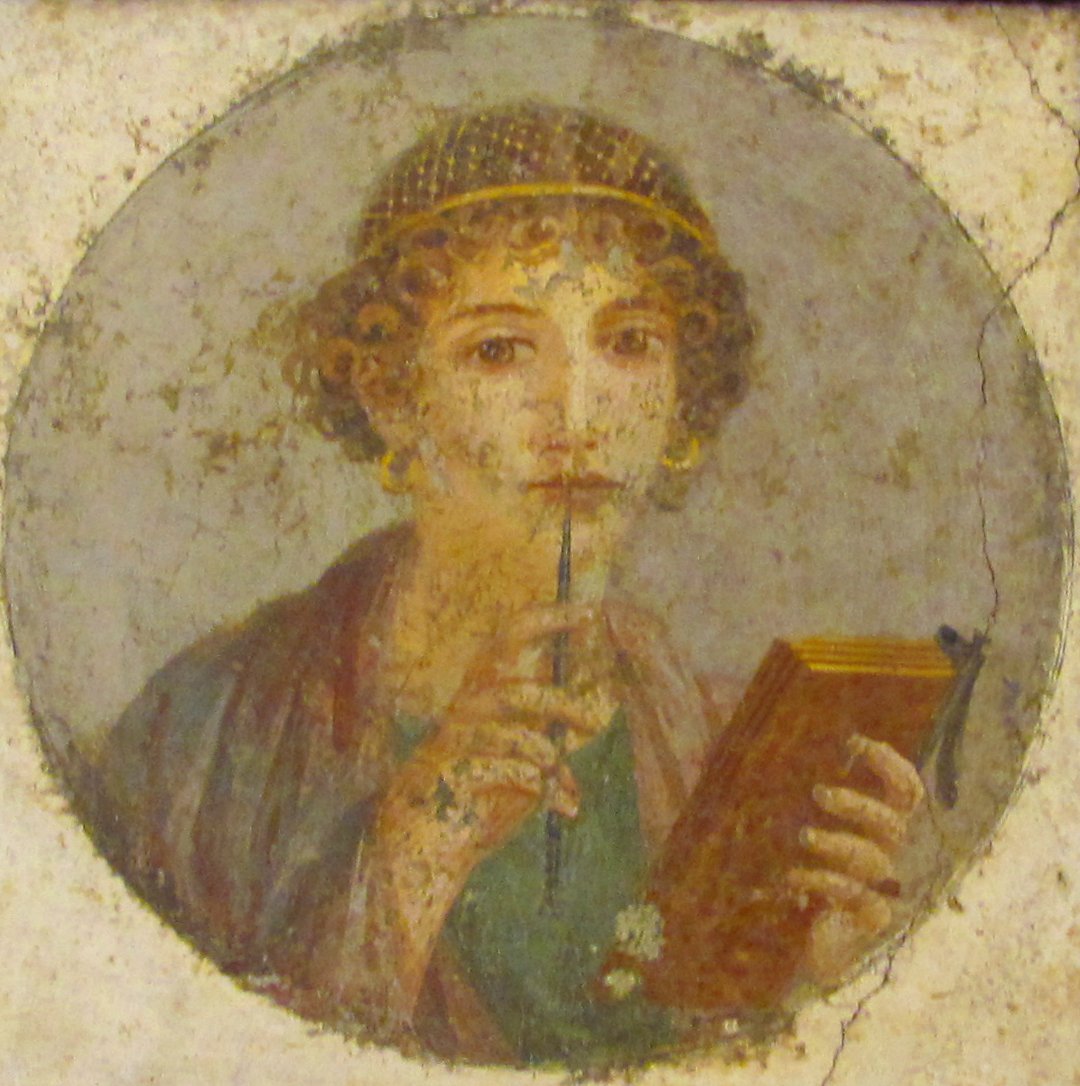
Picture: My photo taken in the Naples Archeological Museum. More here.
*Goal, Motivation, Conflict
Updated August 2020: Alison Morton is the author of Roma Nova thrillers – INCEPTIO, PERFIDITAS, SUCCESSIO, AURELIA, INSURRECTIO and RETALIO. CARINA, a novella, and ROMA NOVA EXTRA, a collection of short stories, are now available. Audiobooks are available for four of the series. NEXUS, an Aurelia Mitela novella, is now out.
Find out more about Roma Nova, its origins, stories and heroines… Download ‘Welcome to Roma Nova’, a FREE eBook, as a thank you gift when you sign up to Alison’s monthly email newsletter. You’ll also be first to know about Roma Nova news and book progress before everybody else, and take part in giveaways.
If you enjoyed this post, do share it with your friends!
|
Subscribe to Blog via Email
Join 368 other subscribers.
Categories
Archive
|