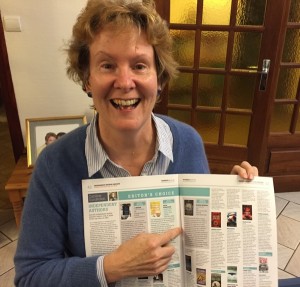
 Is an author who publishes books, by whatever route, entitled to a fully private life? Yes, and no. Is an author who publishes books, by whatever route, entitled to a fully private life? Yes, and no.
Publishing a work – fiction, non-fiction, academic – makes that work and its author’s name available to the public. A fiction writer may use a pseudonym, of course. Readers will read the work – let’s call it a novel – and perhaps leave a review on a retailer site. The novel may get selected by a critic, a blogger or a book group who write reviews and/or discuss it. The ripples of publicity are starting.
Social media picks it up, perhaps from the author’s own blog, their Facebook account, a post on Google+ or a Tweet. Other bloggers ask the author for an interview, the author starts to attend events, to carry out book signings, to speak at events. Photos are taken for blog posts, reports in magazines. Perhaps the event is streamed live on Facebook, photos posted live on Instagram.
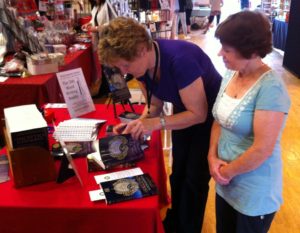 The author is acquiring a degree of fame. And fame, reviews, interviews, appearances, etc. sell books. Readers talk to authors at events, interact on social media, read their newsletters and blogs and send them emails. The author is acquiring a degree of fame. And fame, reviews, interviews, appearances, etc. sell books. Readers talk to authors at events, interact on social media, read their newsletters and blogs and send them emails.
Many authors love this, many are very happy, some will do it because it has to be done, others will feel nervous, embarrassed or even dislike the public side of publishing their work. But if you make your work public, i.e. publishing it, you are making yourself public. And if you want to sell books, you need to tell people about them and about you.
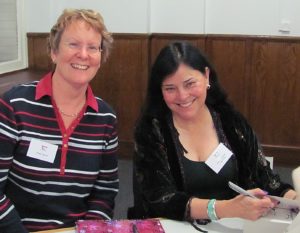 With Diana Gabaldon(!) Why?
It’s the old adage – people buy people. As a reader, I love to know about the author of a book that has engaged me. Why did they write it? What happened in their life? Do they have another occupation? Where can I go and see them speak? These days I read their blog, Facebook page and follow them on Twitter. I love to read about their research, their motivation, their passions, even their cat. Actually, especially their cat. And if I can meet them and get a signed copy of their book, I’m in Elysium.
So, reversing this…
Readers will want to know the same about their favourite authors including you. Depending on your inclinations and opportunities, you may write articles in magazines, appear on radio, on other people’s blogs. You may write your own blog, keep up on social media and make appearances. Part of your life has become public.
Keeping a balance
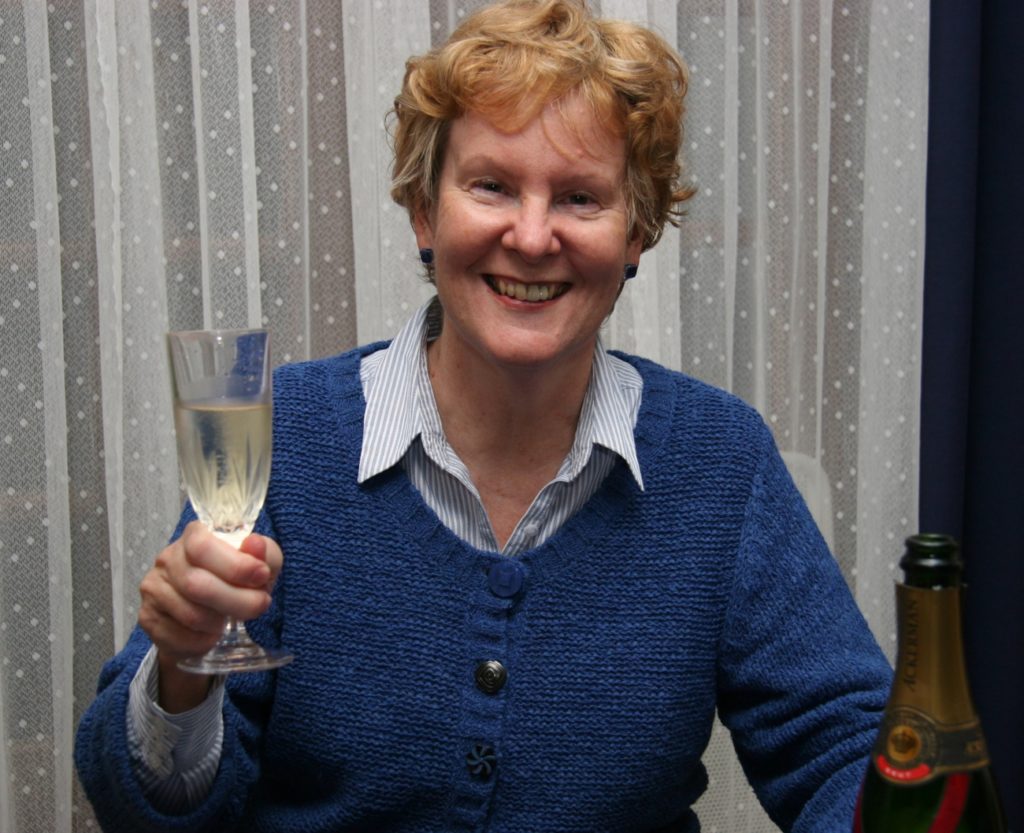 How much of your personal life you disclose is entirely up to you, but talking exclusively about your books is a tad boring, even on a Facebook author page. Some nice photos of your book signing, or places you’ve visited for research are interesting, but it’s the slightly more personal posts and blogs that interest people. Not your messy divorce or deep family grief, but your garden, (aforementioned) cat, cooking disasters, quirky facts from daily life attract a good following. I always get a surprising number of likes if I have a glass of wine in my hand! How much of your personal life you disclose is entirely up to you, but talking exclusively about your books is a tad boring, even on a Facebook author page. Some nice photos of your book signing, or places you’ve visited for research are interesting, but it’s the slightly more personal posts and blogs that interest people. Not your messy divorce or deep family grief, but your garden, (aforementioned) cat, cooking disasters, quirky facts from daily life attract a good following. I always get a surprising number of likes if I have a glass of wine in my hand!
But… (You knew there was a ‘but’)
Anything you disclose on social media or in a newspaper/magazine will be out there forever, whether stored digitally or in a newspaper archive. You cannot retract Tweets, photos will be viewed and shared. You therefore need to decide where you set the line. I would caution posting photos of young children on social media for obvious reasons, but fellow authors and other adults are fair game. The smartphones are everywhere. The only way to ensure you do not appear drunk on social media is not to get drunk in public.
You are ‘on duty’ all the time you are at an event, mixing with the public and even with colleagues. But other times when you are out privately with your family, doing your shopping, going on holiday, you are entitled to privacy. But if you choose to talk to a fan/reader in a social situation, then you are back on duty as an author.
Alison Morton is the author of Roma Nova thrillers – INCEPTIO, PERFIDITAS, SUCCESSIO, AURELIA, INSURRECTIO and RETALIO. CARINA, a novella, and ROMA NOVA EXTRA, a collection of short stories, are now available. Audiobooks are available for four of the series. NEXUS, an Aurelia Mitela novella, will be out on 12 September 2019.
Find out more about Roma Nova, its origins, stories and heroines… Download ‘Welcome to Roma Nova’, a FREE eBook, as a thank you gift when you sign up to Alison’s monthly email newsletter. You’ll also be first to know about Roma Nova news and book progress before every
If you enjoyed this post, do share it with your friends!
 This is going to get me into trouble, but I’m trying to find perspective. This is going to get me into trouble, but I’m trying to find perspective.
It’s obvious that bullying – sexual, emotional, mental, physical or other – is wrong. Violent bullying, abuse or rape is criminal and punishable by law – rightly so. But the problem is not just about non-consensual sex; that’s the way feelings and urges are expressed. We have to look deeper at why.
To be clear, I’m not including comradely pats on the back, helping somebody on with a coat, hugs between friends or any other permitted or consensual touches.
A scenario…
Everybody’s been at a student party, a works’/staff Christmas party or a jolly of some sort when usual standards of behaviour slip and hands and lips go to places they shouldn’t. Between experienced colleagues of equal status, the answer is a pushing away, a biting comment or if necessary a slap across the face or a knee in the groin. But if the perpetrator has any level of authority or power over the victim, then the whole situation changes, whatever the actual actions. The victim is shocked, not just by the physical touch, but by the instant rupture of trust, and confused about what to do, especially if they are young and this is the first time. Nobody wants a bad annual assessment or becoming known as unreliable or unpromotable or not being able ‘to take a joke’.
This puts the victim in a double quandary and a not inconsiderable place of fear. They worry if their behaviour or dress has encouraged the perpetrator; in this way they absorb the blame for the incident. Afterwards, they feel partly responsible which adds another layer of reluctance to report it. This is wrong in so many ways, of course, but telling people to be courageous in such circumstances is easily said, but incredibly hard to do when in those circumstances. The victim attempts to wipe it from their memory and dismiss it as high jinks or a one-off aberration by the perpetrator. Big mistake. Understandable, but big mistake.
The perpetrator has made first base of gaining power over the victim. And however the tiny scale, that power relationship will colour everything in the future. We only need to look at the Roman example of patron and client. The client is at the patron’s beck and call whether it’s waiting for hours on his feet to gain a small favour, voting in an election or carrying out some dirty work for his patron. The client wishes for advancement, the patron exerts authority, control, even dominance. The patron has the client’s fate in his hands. Clients sometimes flourished under the benign and disinterested protection of a patron who advanced the client’s interests, sidelining others with more ability but less influence. Today, although we consider ourselves liberal and enlightened in comparison, none of this is all that different.
Why does one individual do this to another?
I’m not a psychologist, just an opinionated observer of people, but here are my few pennyworths…
- Sexual harassment, and worse, is about power, authority and lack of responsibility. We’ve seen power and authority above, but responsibility? Superiors of any sort have the responsibility of the care of their juniors. They have no right to go over the line of the limited authority they hold over them. Superiors, while expecting juniors to carry out their work or duties, do not ‘own’ those juniors (not these days).
- It’s about entitlement. Nobody is entitled to subject anybody else to speech or actions that person does not wish, whether it’s an off-colour remark, quick grope or a violent rape.
- Nobody is an object to be used and thrown away.
- Rape or physical attack is not the way to express your personal insecurity in a difficult world, nor is it a way to show others that you are ‘hard’.
But..
Let’s keep some balance
People are very easily offended these days
I come from a more robust generation which has seen so much progression from the restricted 1950s of my early childhood through the various social, sexual and legal revolutions too numerous to count. Believe me, it’s paradise compared to then. Balance and equilibrium are often forgotten today in the search for extremes and the extraordinary.
Invading personal space is a big no-no
Different cultures have different customs and unwritten rules. The French give kisses in greeting to almost everybody, including same sex, the Brits shake hands (when they remember), Americans often stand there and wave hands nervously in the air and just say ‘hi’. I exaggerate and generalise, but these are tendencies. Within cultures, some people need a fifty-centimetre personal exclusion zone, others see closeness and touch as normal social behaviour. Somebody’s harassment is another person’s bonding. This is where law will have a problem, but this is where teaching social norms to the young is so important.
The key to interpreting these sort of gestures is the intent behind them
Many of us have experienced the lingering hand on the shoulder or arm, the ‘accidental’ bumping of hip or breast. Here the intent is obvious. The ‘hand on knee’, which is in the news at present, is a gesture I’ve often seen male-to-male, especially in middle-aged men and older. I think it’s a bonding thing. As long as the male hand doesn’t go under the other person’s clothing and the touch is brief, I see it as only mildly creepy. I wouldn’t sit too near them again, but I certainly wouldn’t ostracise them. Women tend to touch each others’ and men’s forearms for similar purposes. However, if the hand lingers on the knee and there is a glint in the other person’s eye watching for reaction, then the alarm bells should sound very loudly.
Social media
Facebook, Twitter, Instagram all play a role today in exposing, fairly and unfairly, people’s weaker moments as well as joyous ones. If you elect to go into public life, it seems you will need to behave like a chaste, sober and perfect person at all times. You may go bonkers inside, but that’s the reality today in a smartphone environment. Even an unguarded quip flares round the digiverse like a fire in a drought.
Trust
Trust takes a long time to build but a second to be destroyed. And the fallout is permanent. Is it really worth the personal, economic and social losses that follows such a rupture? The victim is crushed and humiliated inside, even though they don’t show it. They blame themselves and lose self-confidence. And the business, department or association may lose a competent and clever employee when they walk out of the door.
So, what to do?
It’s quite easy, really. Complete mutual respect of everybody you deal with; physically, emotionally, mentally. No exceptions. Ever.
I’m sorry to target you, chaps, but men are in most in need of this mental and emotional shift. Women are not second rate, there for your convenience, or to be taken advantage of. Just because a woman employee is efficient and caring, reminds you of meetings, brings you coffee, smiles at your visitors, does not means she is your dogsbody to go and buy your sex toys. Women find their friendships and links with other women easier because (generally) there isn’t the automatic pressure of looking out for sexual come-ons or harassment.
Women should be heard in meetings not just in a tokenist way but actively listened to. And don’t pinch their ideas and promote them as yours; it’s rude and bloody irritating.
Children should be taught manners and respect for others. The playground is a robust, often hard place. Children can be cruel to each other as they seek to establish their own place in the hierarchy. A little less hierarchy and a little more flexibility and acceptance at this age would go a long way.
So, it looks like mutual respect and common decency might crack it for the future. But can we do it?
Alison Morton is the author of Roma Nova thrillers INCEPTIO, PERFIDITAS, SUCCESSIO, AURELIA and INSURRECTIO. The sixth, RETALIO, came out in April 2017. Audiobooks now available for the first four of the series
Find out more about Roma Nova, its origins, stories and heroines… Get INCEPTIO, the series starter, for FREE when you sign up to Alison’s free monthly email newsletter
If you enjoyed this post, do share it with your friends!
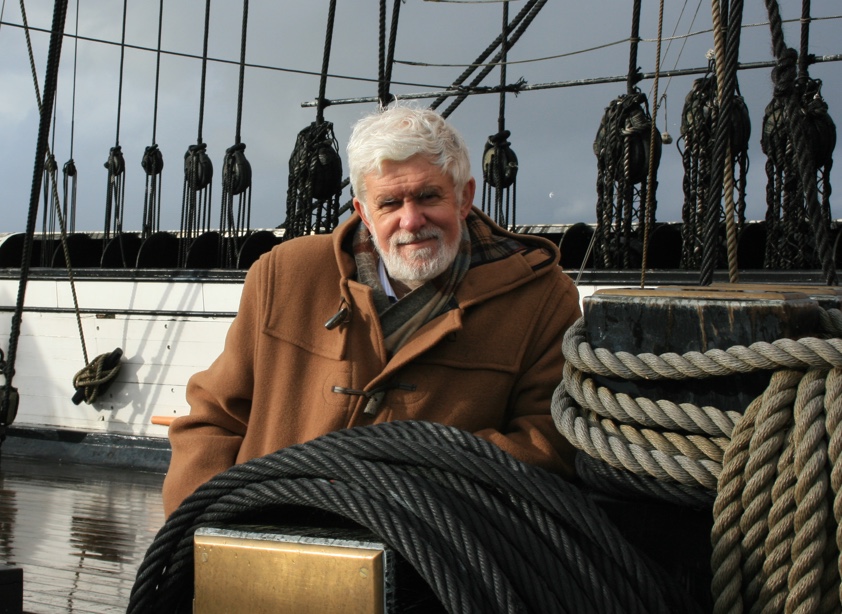
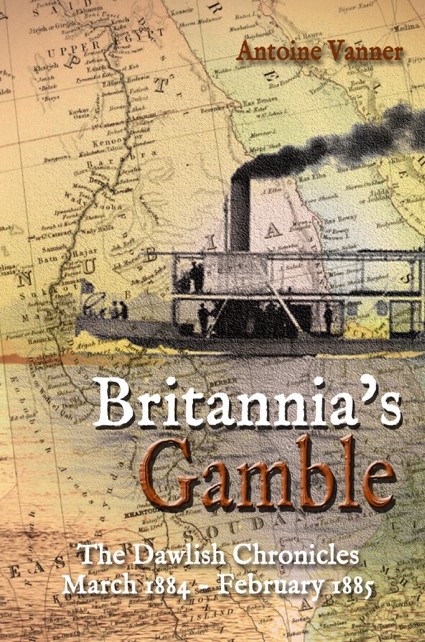
 My guest today is Antoine Vanner is author of the Dawlish Chronicles, naval fiction set in the 1870s and 1880s. His latest novel, Britannia’s Gamble, was published last month (October 2017). Royal Navy officer Nicholas Dawlish is a fascinating character, very much in the mould of Hornblower, something that attracted me to Antoine’s novels. The author himself spent many years in international business in all kinds of dangerous places, but now lives more calmly in Britain although he continues to travel extensively on a private basis. His books are published by The Old Salt Press, a New Jersey-based association of writers working together to produce the best of nautical fiction and non-fiction. My guest today is Antoine Vanner is author of the Dawlish Chronicles, naval fiction set in the 1870s and 1880s. His latest novel, Britannia’s Gamble, was published last month (October 2017). Royal Navy officer Nicholas Dawlish is a fascinating character, very much in the mould of Hornblower, something that attracted me to Antoine’s novels. The author himself spent many years in international business in all kinds of dangerous places, but now lives more calmly in Britain although he continues to travel extensively on a private basis. His books are published by The Old Salt Press, a New Jersey-based association of writers working together to produce the best of nautical fiction and non-fiction.
Welcome back, Antoine. Over to you…
Historical fiction, at its best, is a time machine that transports the reader into another time and place. The best of the genre – such as Steven Pressfield’s Gates of Fire, Zoe Oldenbourg’s Destiny of Fire, David Caute’s Comrade Jacob, Kenneth Roberts’ North-West Passage, C.S. Forester’s Hornblower series – don’t just tell a story but give the actual “feel” of a past era, with its complexities, its concerns, its challenges, its fears and its hopes. In such novels, the styles and construction, and the settings, may be radically different, but all share the characteristic of realism, the impression of a story is being told by an eyewitness who is themselves part of the actual cultural and societal context.
How is this achieved?
I’ve identified below a (non-exhaustive) list of features essential for realism.
Background
- Wide understanding of the social, political, religious and cultural context, as well as of the main events, ideologies and movements of the era. This is the sort of knowledge picked up over years, indeed decades, of reading. 95% of this information is never used specifically but in the writer’s mind it sets the stage on which the story will be played out.
- Accepting that values may be radically different to those of our own time and that even decent people may have had views and attitudes we might regard as repugnant today. High infant and maternal mortality, low life expectancies, surgical procedures that were as likely to kill as to cure, exposure to animal-slaughter, a ruthless-enforced social hierarchy, all fostered a callousness that accepted torture and savage executions in times of peace and that descended into unbounded savagery in times of war.
- Recognising the fog of ignorance that has enveloped much of human history and the fears – and the superstitions – it brought with it. Medicine and technology were based on trial and error, not on reasoned research. The origins of disease were a mystery and, even for intelligent people, witchcraft, astrology and alchemy all seemed to have a rational basis.
- The importance of religion – and especially concern about eternal damnation – is not easy for a modern writer to appreciate. Demonic forces and fear of hell governed many lives and heresy – deviation from orthodox belief, often over abstruse theological issues – was often regarded as treason against the state. The values of the Enlightenment took hold only very slowly, even in sophisticated Western societies, and as the scientific revolution gathered pace in the nineteenth century new insights into the age of the earth and human evolution triggered agonies of conscience for many educated people.
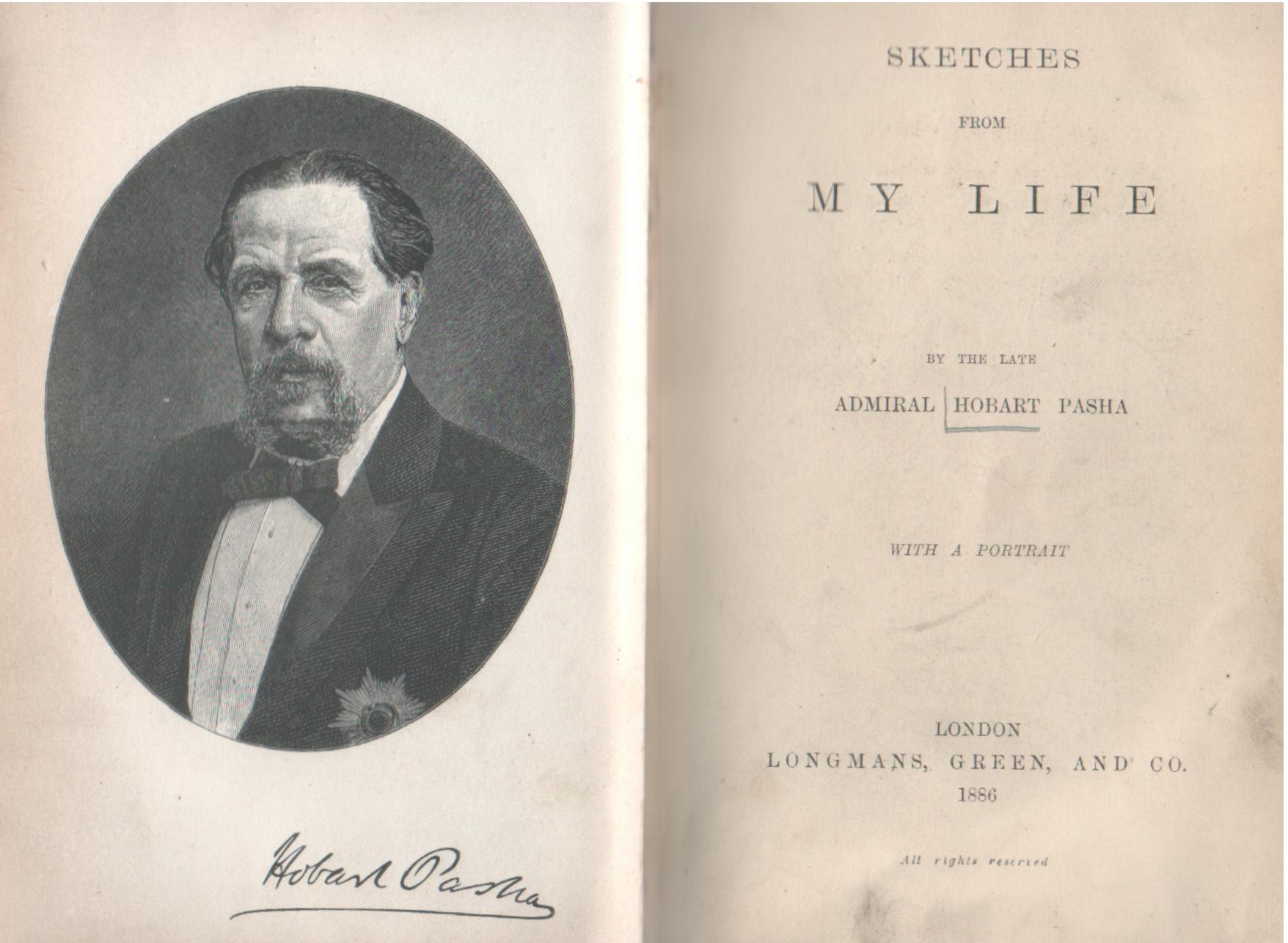
- Wide reading in available contemporary literature is crucial for a writer’s understanding of the ethos of any historical period. The closer that time is to the present, the greater the range available, but the further back one goes the fewer the resources. For me, who writes about the late nineteen the century, there is an embarrassment of riches – Victorians wrote copious and entertaining memoirs – but authors focussing on other eras may encounter appreciable difficulties.
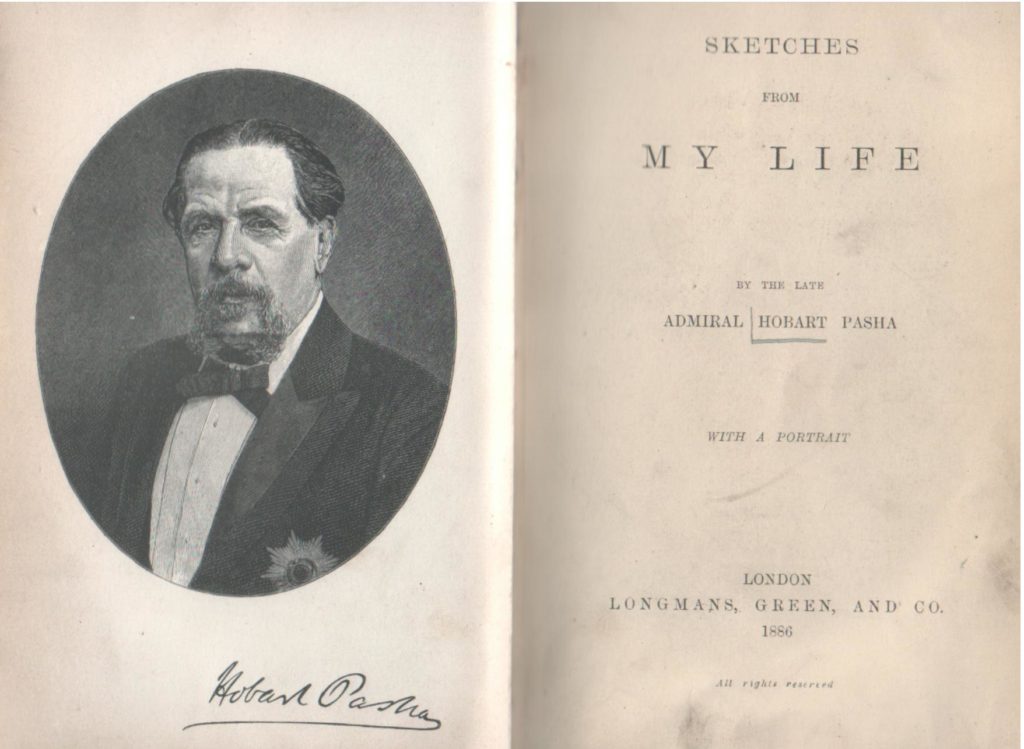 Victorian memoirs can be a delight – and surprisingly racy!
“Feel”
- This involves conveying how it felt, both mentally and physically, to be alive in the past, an experience usually markedly less comfortable than the more cosseted lives we live today.
- Bereavement was all but a constant in a world of low life expectancy. A small proportion did live to what we now regard as old age but most families experienced loss of spouses, children or parents at young ages. Marriage was a potential killer for women – frequently a one in six or seven chance of death in childbirth (chance at each confinement multiplied by average number of confinements), as in some African countries today, and many wisely chose life in a nunnery if they could. “Hopping into bed” was a dangerous activity for health reasons as well as for societal-taboos that could be mercilessly enforced.
- Epidemics of communicable diseases were random but frequent, and lack of hygiene was not recognised as a cause, nor were bacterial or viral infection. Outbreaks spread terror, which often triggered persecution of minorities perceived as somehow “other”. The memory of such epidemics cast a shadow of fear for generations to come.
- For much of history, the forces of law, order and governance were remote and inefficient. A high level of violence was accepted as the norm and when the authorities did dispense justice it was frequently with savagery. Desperation and uncertainty in the face of crime and low-level anarchy made vendettas a way of life in many societies.
- The physical reality of daily life was often of endless discomfort – cold and sodden clothing, inadequate footwear, poorly heated houses, squalor and filth, the drudgery of hauling water and chopping wood, lice and vermin, respiratory diseases caused by poor ventilation, malnutrition and poor diet. Fear of famine was seldom absent. When disease struck the king was little less vulnerable than the peasant.
- It is all but impossible to imagine how bereft of human rights so many people have been throughout history and how rigid barriers of class and power inflicted such misery on millions. The greatest tragedy was that, knowing nothing else, they accepted it as normality.
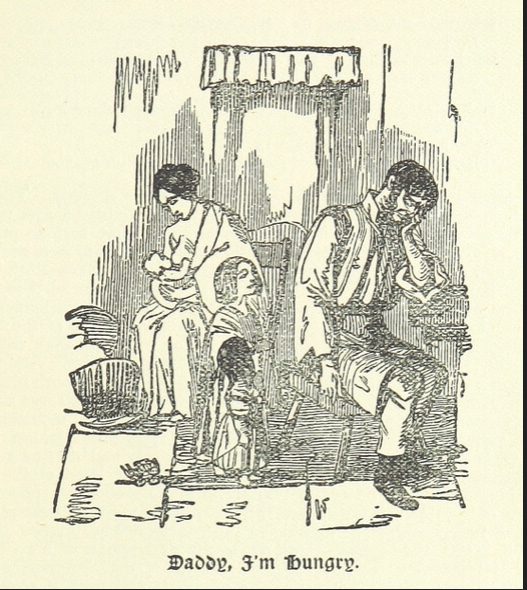 From “Young Ireland”(Charles Gavan Duffy, 1896, British Library) Physical Space:
- “Distance” is a concept that has changed radically over time and, during much of human history, was measured in days rather than in miles. Depending on modes of transport available – including the humble shank’s pony – the perception of distance depended on the state of tracks and roads, on river or canal transport, on the capabilities of open-water shipping. In fiction, whether the journey itself is the story, or merely a transition between one scene an another, the difficulties and duration of travel needs to be credibly represented.
- It’s essential to recognise the impact of seasons on journey times and that winter rains and snow could bring all land transport, and much of commerce and society, to a grinding halt. The same applied to movement by sea and an appreciation of the limitations of shipping – in terms of passenger and freight capacity, ability to harness wind effectively and impact of the arrival of steam technology – is essential.
- Travel speed impacted also on spread of information and days and weeks might pass before news arrived. And once it disappeared over the horizon, a ship was a self-contained and vulnerable world that was lost to all human contact until it docked again. Information-based decision making was a necessarily slow and uncertain process.
- Use of maps, whether they appear in the final book or not, are invaluable plotting tools. Whether on a global or a local scale, and taking account of natural or human obstacles, they allow calculation of travel durations. They may also raise trigger opportunities for plot elements that would not otherwise come to mind. The same applies to maps of towns, villages, campaigns and battles, whether real or fictional.
Hardware
- This term covers not just tools, weapons, vehicles, ships, domestic utensils, surgical instruments and housing but also clothing and uniforms.
- Among readers there will always be experts in one or more of these areas. One error of detail – a button too few on a general’s uniform, a hairstyle that appeared a decade later than in the story’s action, a rifle that actually had a shorter effective range than that at which a hero takes down an adversary – will be enough to destroy credibility. No matter how realistic the remainder of the story may be, a seed of doubt will have been sown.
- The good news is however that this is the easiest type of detail to get right. Not only are myriad written, electronic and illustrative references sources available – including photographs for more recent periods – but in many cases actual artefacts can be seen in museums. Experts in such topics are usually very glad to share information generously and many can be contacted via social media.
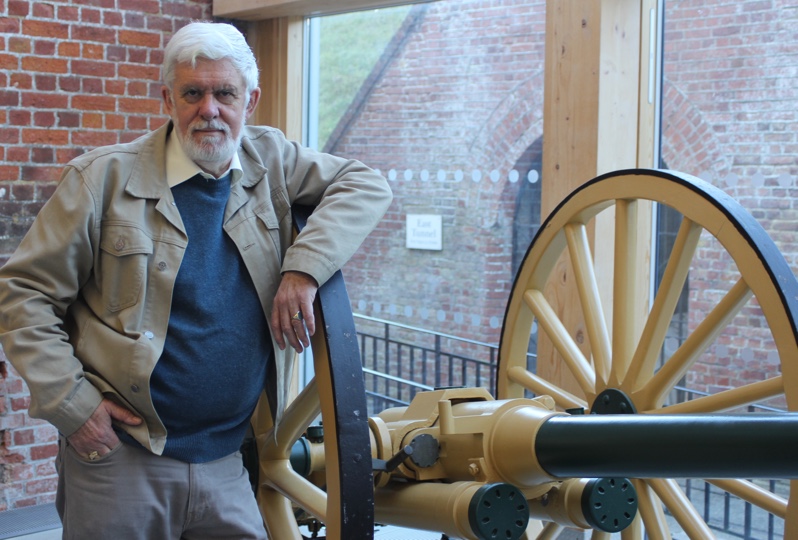 No substitute for seeing the real thing! Timelines and Real-Life Characters
- Much historical fiction plays out in the context of real events and involves actual real-life characters. In such cases realism makes three demands, as below.
- Except in minor details, the plot’s timeline must dovetail with what really happened.
- At the end of the story the fictional action must not have changed the outcome of history (otherwise it’s the realm of alternative history, another genre entirely).
- Where real-life personages appear, they must behave in character even if whatever the plot calls upon them to do is fiction. Such players also represent a complication as regards refining timelines – if a plot needs George Washington to be attending ball in Philadelphia on the night he was actually crossing the Delaware, then some knowledgeable reader will see the error. From that point on, all sense of realism is lost.
And finally…
The past was different to the present, often vastly so, even if there may be some similarities. People saw the world differently, may have been terrorised by fears that give us little concern and even the genuinely virtuous may have behaved, with clear consciences, in ways that would outrage us today. If this truth is ignored then the resulting historical fiction will be populated by twenty-first century characters kitted out in re-enactors’ costumes.
Good luck to all other historical novelists. I’ve been there, and I am there, and even if it’s hard at times it’s splendid and rewarding fun. Let’s get on with it!
Britiannia’s Gamble – read Antoine’s latest!
1884. A fanatical Islamist revolt is sweeping all before it in the vast wastes of the Sudan and establishing a rule of persecution and terror. Only the city of Khartoum holds out, its defence masterminded by a British national hero, General Charles Gordon. His position is weakening by the day and a relief force, crawling up the Nile from Egypt, may not reach him in time to avert disaster.
But there is one other way of reaching Gordon…
A boyhood memory leaves the ambitious Royal Navy officer Nicholas Dawlish no option but to attempt it. The obstacles are daunting – barren mountains and parched deserts, tribal rivalries and merciless enemies – and this even before reaching the river that is key to the mission. Dawlish knows that every mile will be contested and that the siege at Khartoum is quickly moving towards its bloody climax.
Outnumbered and isolated, with only ingenuity, courage and fierce allies to sustain them, with safety in Egypt far beyond the Nile’s raging cataracts, Dawlish and his mixed force face brutal conflict on land and water as the Sudan descends into ever-worsening savagery. And for Dawlish himself, one unexpected and tragic event will change his life forever…
Britannia’s Gamble is a desperate one. The stakes are high, the odds heavily loaded against success. Has Dawlish accepted a mission that can only end in failure – and worse?
Find out more about Britannia’s Gamble

“Antoine Vanner is the Tom Clancy of historical naval fiction”
Author Joan Druett
Much more on www.dawlishchronicles.com
Follow Antoine Vanner’s historical blogs on www.dawlishchronicles.com/dawlish-blog/
Alison Morton is the author of Roma Nova thrillers INCEPTIO, PERFIDITAS, SUCCESSIO, AURELIA and INSURRECTIO. The sixth, RETALIO, came out in April 2017. Audiobooks now available for the first four of the series
Find out more about Roma Nova, its origins, stories and heroines… Get INCEPTIO, the series starter, for FREE when you sign up to Alison’s free monthly email newsletter
If you enjoyed this post, do share it with your friends!
 Did you ever think you’d write a book? Or several? Many writers come to it late or write part-time; they’ve had or still have a Real Life. Faced with the organisation behind marketing their book, which seems like rebuilding Rome, they worry about their inadequacies on the business side. All they ever wanted to do was write! Did you ever think you’d write a book? Or several? Many writers come to it late or write part-time; they’ve had or still have a Real Life. Faced with the organisation behind marketing their book, which seems like rebuilding Rome, they worry about their inadequacies on the business side. All they ever wanted to do was write!
Publishing means making public. If you decide to publish your work, whatever route you choose, it becomes a publicly available product. I know some will cringe to call their work of creative art ‘a product’, but that’s what it is. Readers will not come knocking at retailers’ doors if they don’t know your book exists, so you need to tell them.
Marketing is a distinct profession, but authors can borrow some of those skills and better still educate themselves about the basics. This is the fun part of being an author today – you get to learn new things every day!
“But I don’t know how to do any of it!” you cry. My answer is that you’d be surprised…
Things we need to do
- Set up a simple website/blog from the beginning, preferably before publication
- Ensure our book is on the major retailer sites
- Let people know our book exists
- Write blogposts – own blog and guest
- Join social media sites but only the ones you feel like doing. Join the conversation
- Speak about our book
- Sell our book face to face
- Join groups and associations
- Educate ourselves continuously (Continuous Professional Development, or CPD, if you want the proper term )
- Learn basic record keeping and tax/legal requirements
- Manage expectations
- Have fun
What skills do we need
- Reading – the ability to read, absorb a lot of information then sift it
- Writing – not just our creative work, but blog posts. social media posts, press releases, synopses, précis and hooks
- Organising – good organisation, online using folders and offline using filing
- Computer skills – word-processing, spreadsheets, managing simple graphics, copying and pasting, uploading files
- Record keeping
- Basic accounting
- A thirst for knowledge
- A willingness to learn
- A mindset for sharing and teamwork
- Interpersonal skills
- Listening skills
- Negotiation skills
- Project management
I hear your mind reeling!
But stop! If you’ve been working for a few years, managed a household or worked in the volunteer sector, club or organisation, you probably have at least some of these skills, possibly many of them. The others can be developed, I assure you.
Let’s do a skills audit!
You can give yourself marks out of ten, but be honest but not over modest. This is for you and nobody else.
Breaking down into small bites the skills you already have acquired from previous jobs highlights what you have already achieved. Think also about some of these:
- Projects, tasks, objectives and goals you have completed.
- What you specifically did and/or what your role was in an activity.
- What you achieved and the impact of your work on both day to day and special projects.
- What has gone well, what has gone not so well and what you’d like to change?
1. Practical skills
- Keyboard skills: word-processing and spreadsheet
- Filing and organising your work, digitally and paper
- Copying and pasting, uploading images and files to sites
- Fixing appointments, arranging meetings, arranging travel, taking staff or team meeting minutes
- Writing work plans, schedules, timetables
- Preparing and managing your own work
- Making presentations to staff, teaching skills to new staff
- Keeping accounts, whether for a tea club, the staff outing or in a professional context
- Research skills
- Managing a household budget
- Managing stock, allocating resources and inventory
- Keeping records, confidential information
- Completing tasks to specification, on time and within budget

2. Team skills (being an author and getting your work published is a team effort)
- Working as a project member or leader, enabling everybody to contribute
- Working as a staff or union representative
- Treating subordinates and superiors with equal courtesy
- Running a voluntary club, residents’ association, as a hospital volunteer or local councillor
- Running or helping at the school fete, or as a parent governor
3. Personal communication skills
- Talking fluently to people whether outside the school gate or to a prestigious client
- Listening actively and observing; I once won a good contract listening to somebody at the supermarket checkout!
- Negotiating: with children (especially toddlers or teenagers), other family members, clients, suppliers, insurance companies or with the boss or colleagues at work
- Being professional and pleasant at all times however obnoxious the person you’re speaking to is (even if it is your unfavourite telephone company or low cost airline).
- Making others laugh or at least smile
- Explaining your position or case clearly
- Knowing how far to push your case or cause and when to stop
4. Expert knowledge (a bonus)
- As an accountant, lawyer, marketer, teacher, doctor
- Translator, copy writer, image editor, journalist
- Academic
- Business owner or manager
- Skilled craftsperson, software engineer, other IT specialist, police officer
- Other
5. The fuzzy stuff
- Persistence – If you have always been determined whether in family, community or work environment, this will be an invaluable asset as an author
- Dealing with insults, especially those at distance which can be personal, hurtful and untrue
- Resilience – revising, honing and polishing your work endlessly without losing heart
- Spotting opportunity – In your work you’ve seen how things can be improved or where you could add to the company’s balance sheet. Writing, publishing and marketing a book is a perfect place to use that business ’nose’.
So, now you’ve assessed yourself against these criteria and others I’m sure you’ve added, you may be surprised by how many 5 out of 10s and above you have already.
Go back to the list we had at the beginning of this post. Now you’ve done your skills audit, you’ll be able to see what you can already do and where any gaps are. Are you surprised?
Apart from all the things you can already do, you’ve identified the things you need to find out or learn. Find out about tax and National Insurance via the HMRC online site (UK) or your own local tax office, ask at the local chamber of commerce, do a short course in book-keeping, steel yourself and do a one-day course on making presentations. Anita Chapman (neetsmarketing) runs excellent social media courses for nervous beginners as well as those who wish to hone their social media skills. Find a teenage geek to set up a simple website with a blog for you.
I’d suggest you join a few author groups on Facebook. If you are indie/self-published, you will find the Alliance of Independent Authors’ Advice Centre invaluable. Actually, most authors would!
If you think it’s impossible, it’s not. I was surprised when I started writing my Roma Nova series just how many skills I could transfer over. And so can you.

Updated 2022: Alison Morton is the author of Roma Nova thrillers – INCEPTIO, CARINA (novella), PERFIDITAS, SUCCESSIO, AURELIA, NEXUS (novella), INSURRECTIO and RETALIO, and ROMA NOVA EXTRA, a collection of short stories. Audiobooks are available for four of the series.Double Identity, a contemporary conspiracy, starts a new series of thrillers. JULIA PRIMA, a new Roma Nova story set in the late 4th century, is now out.
Find out more about Roma Nova, its origins, stories and heroines and taste world the latest contemporary thriller Double Identity… Download ‘Welcome to Alison Morton’s Thriller Worlds’, a FREE eBook, as a thank you gift when you sign up to Alison’s monthly email update. You’ll also be among the first to know about news and book progress before everybody else, and take part in giveaways.
If you enjoyed this post, do share it with your friends!
 Opening Word to crack on with my new story, I was disconcerted to see a message flash up that support for Word 2011 would be withdrawn in 10 days’ time. Eyes on stalks at the screen. Opening Word to crack on with my new story, I was disconcerted to see a message flash up that support for Word 2011 would be withdrawn in 10 days’ time. Eyes on stalks at the screen.
Ten days? My other half and I did that clichéd thing of mutual dumbfounded disbelieving staring.
He recovered first. In my fevered writer’s mind, it was an evil world marketing conspiracy by Microsoft. He, the logical engineer, started looking for a solution. Should we ‘rent’ software in the cloud monthly or buy? What about multi user licences against single? Was this cloud thing going to develop into a perfect storm?
I know about the cloud – we are Mac users, but Windows now has a cloud. I see Olympian gods battling it out, thunderbolts hurled across the sky.

The other half tells me to calm down. After an hour or two examining options, we make our choice to rent monthly. You get free updates and other stuff, apparently.
Now my reaction seems overdone, but earlier in the week we’d had a major operating system update; two desktops, two MacBooks, then the phones and tablets. Okay, fairly routine, but some fiddling about.
Oh, and did I mention our Internet speed here is is 5/6 Mbps download,1Mbps upload so updates and backups take a little while…? We are supposed to be getting fibre (FTTH) next year, so they haven’t bothered upgrading the Internet speed in the meantime.
Then, joy of joys, our WordPress backup to Dropbox provider stops service. My other half looks after 20 sites in all, so this is wonderful news. Not. He spends a day and a half searching and testing alternatives for usability, reliability and robustness and liaising with the server people about (?)php recognition fixes (Don’t ask!)
And this month’s additional project is converting all the sites from HTTP to HTTPS. We are enmeshed in a world of security certificates, fixes, insecure sites and cyber horror.
Now, I’m not a Luddite. I learnt my computing in 1989 on a Viglen PC using WordStar, SuperCalc and DBase. Windows graphical interface was a revelation; a wonky one, but still… I wrote my first web page in the late 1990s.
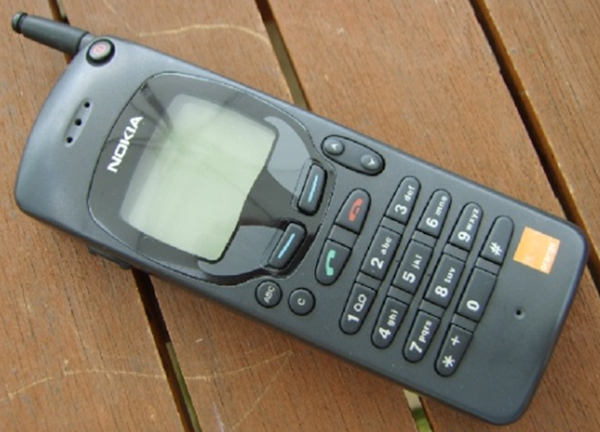
 My first website. Bad, isn’t i? But it was first written in the 1990s when few (small) businesses had websites. I was one of the first in my business circle to have a mobile (cell) phone, then a Nokia camera phone. I was the first in my family to buy a Kindle. You catch my drift.
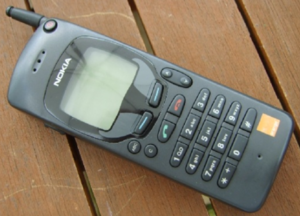
Then, we had to learn fast, but it was all possible; a wondrous new world of email, text messaging, information at our fingertips. And for the record, I started Tweeting in 2009 although I came a little later to Facebook. And GPS – we had an early one but I did keep my trusty mapbook…
But now we’ve gone from wonderment at sending people into space to grumping when our phone loses signal in the middle of the countryside or our TV satellite receiver picture breaks up into pixels. Did we ever think this would be the main use of space exploration?
I love all the things I can do with photos, with researching plants, guns, diamonds and Latin poets, talking to people across five continents, posting stuff about life and books and getting reactions in seconds from Edinburgh, Sydney and North Carolina. So I’m a keen user.
But as products have become so sophisticated with new services and new careers burgeoning in and around the computer industry, the average consumer finds herself bamboozled. Despite the marketing, there is no ‘one quick fix’. And everything needs updating. Continuously. Online identity thieves and fraudsters lurk round every cyber corner, ready to mug us. You need to run a feasibility study on everything to check it meets your requirements.
With so much choice and complexity, we spend a high proportion of time trying to get through the maze, no, jungle of technology. And it all sucks up so much of that time. Even half-techie people can be overwhelmed.
All I really want to do is get on with normal life and write…
Alison Morton is the author of Roma Nova thrillers – INCEPTIO, PERFIDITAS, SUCCESSIO, AURELIA, INSURRECTIO and RETALIO. CARINA, a novella, and ROMA NOVA EXTRA, a collection of short stories, are now available. Audiobooks are available for four of the series. NEXUS, an Aurelia Mitela novella, is now out.
Find out more about Roma Nova, its origins, stories and heroines… Download ‘Welcome to Roma Nova’, a FREE eBook, as a thank you gift when you sign up to Alison’s monthly email newsletter. You’ll also be first to know about Roma Nova news and book progress before everybody else, and take part in giveaways.
If you enjoyed this post, do share it with your friends!
|
Subscribe to Blog via Email
Join 368 other subscribers.
Categories
Archive
|
 The author is acquiring a degree of fame. And fame, reviews, interviews, appearances, etc. sell books. Readers talk to authors at events, interact on social media, read their newsletters and blogs and send them emails.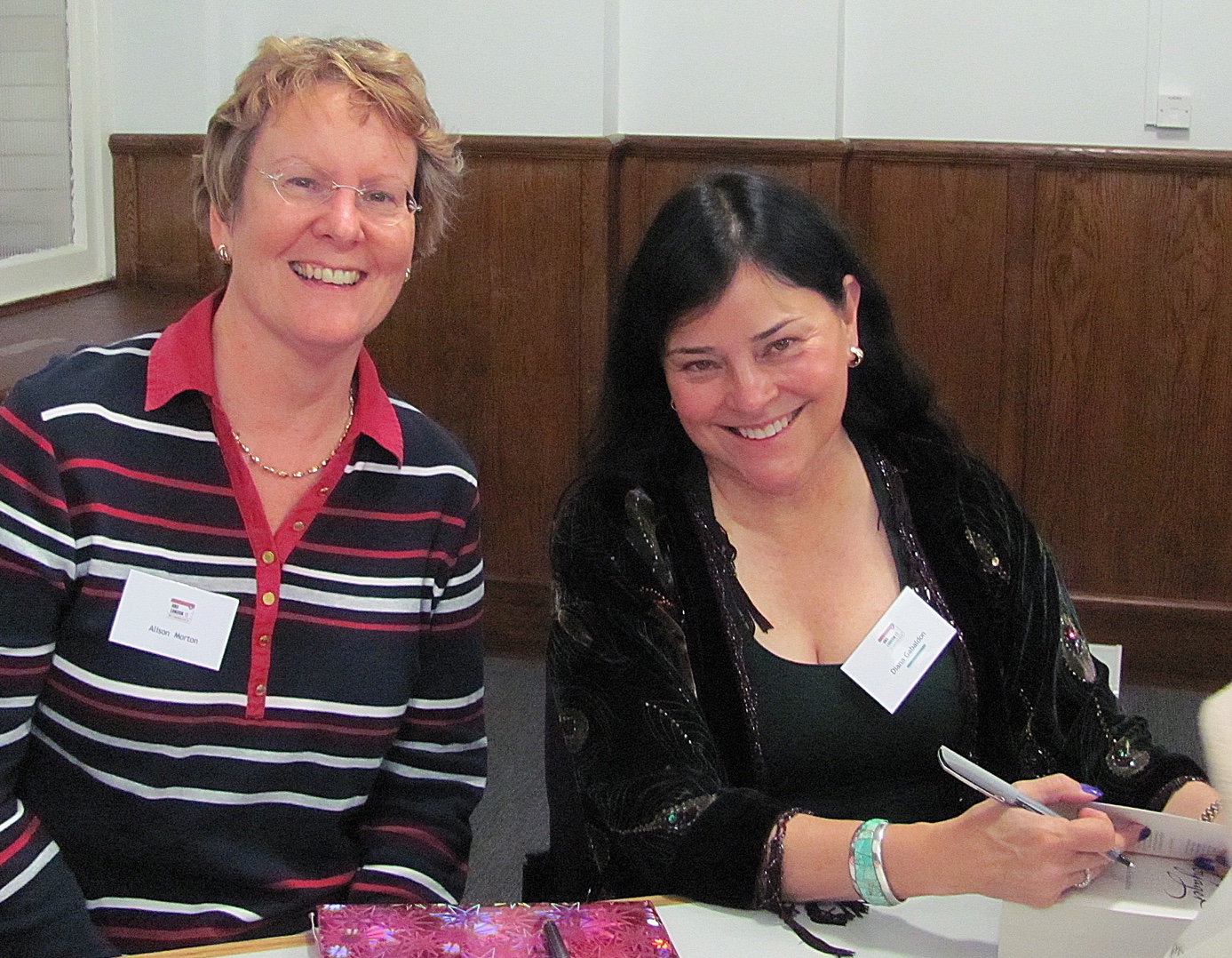
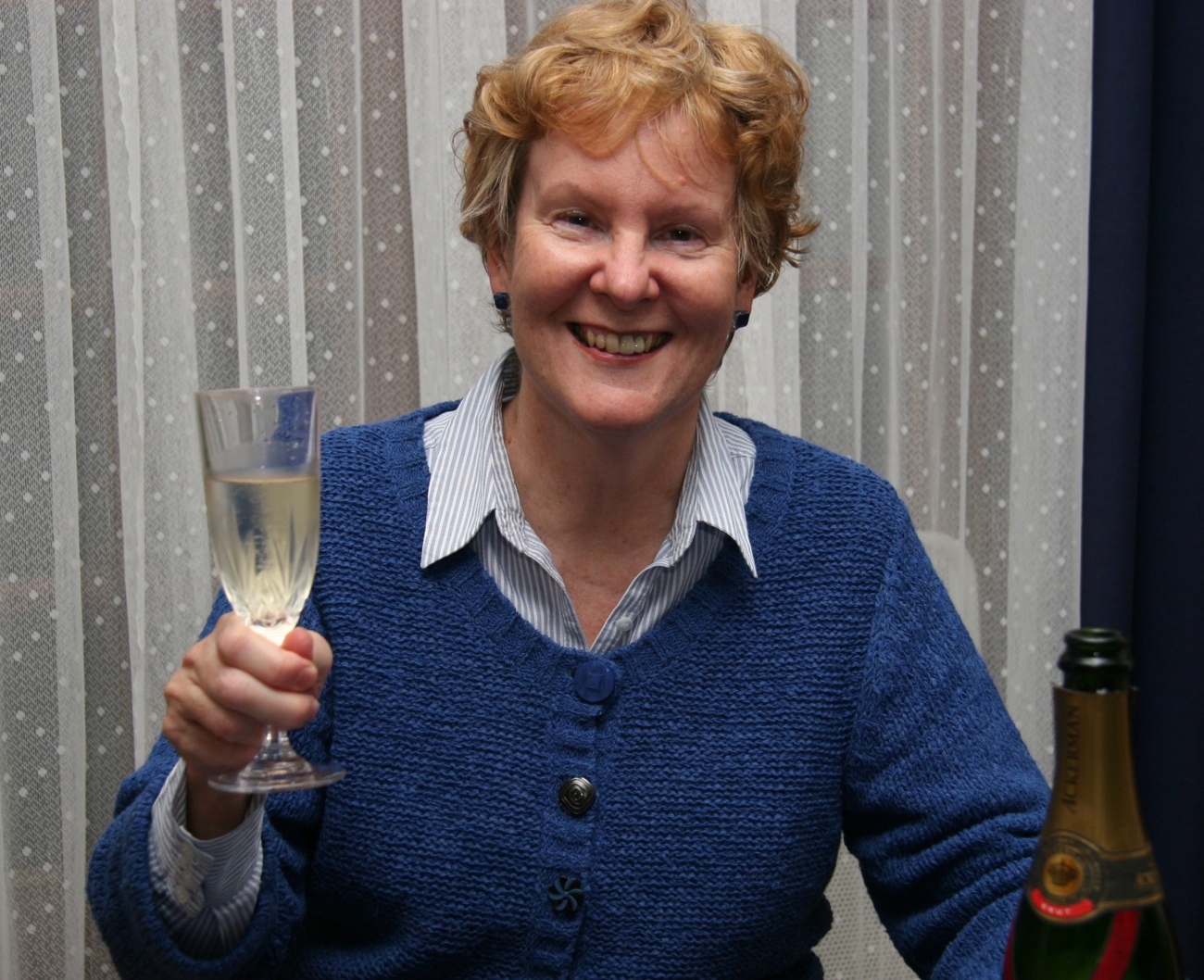 How much of your personal life you disclose is entirely up to you, but talking exclusively about your books is a tad boring, even on a Facebook author page. Some nice photos of your book signing, or places you’ve visited for research are interesting, but it’s the slightly more personal posts and blogs that interest people. Not your messy divorce or deep family grief, but your garden, (aforementioned) cat, cooking disasters, quirky facts from daily life attract a good following. I always get a surprising number of likes if I have a glass of wine in my hand!