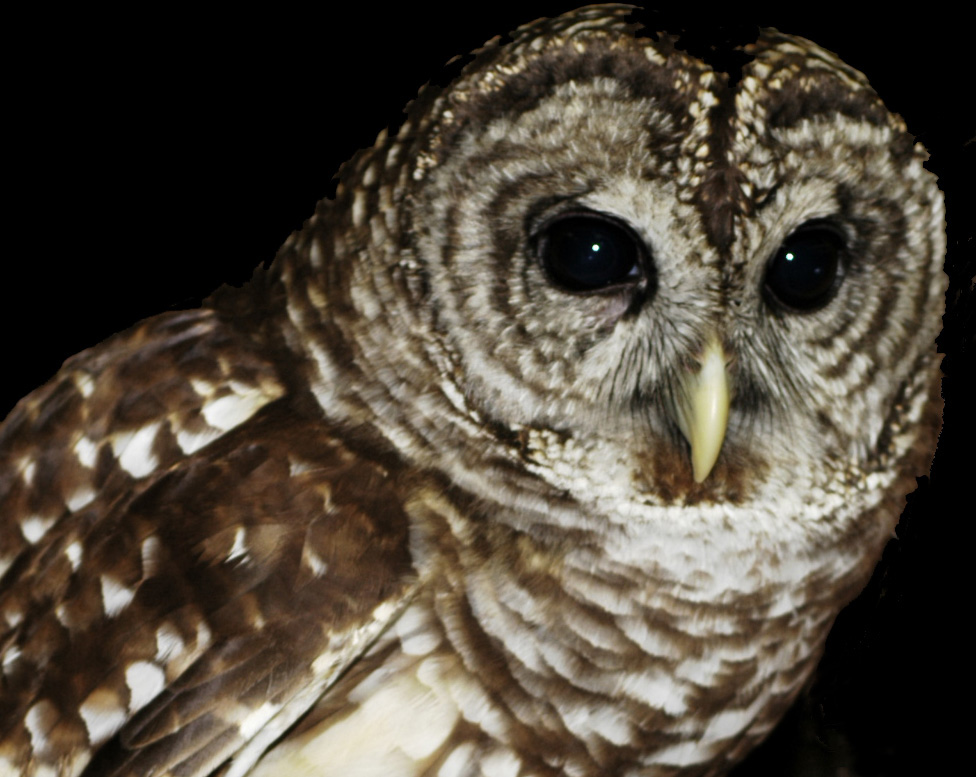
 Photo: George A Shealy Jr This is a weird question, not just for implications for me as a writer, but because I’ve sometimes been both. I decided to investigate further.
A night owl is a person who tends to stay up until late at night, or into the early hours of the morning, whereas an early bird, or lark, tends to be somebody who goes to sleep at a time considered early and then wakes early.
Night owls often stay awake past midnight, and extreme night owls may stay awake until just before or even after dawn. Night owls tend to feel most energetic just before they go to sleep at night.
A study among 1,000 adolescents by the University of Madrid found that night owls are better than early birds in intelligence, creative thinking and inductive reasoning. However, they lag behind larks in academic performance and they tend to have unhealthier eating habits, as well as higher rates of smoking.
Forced to arise earlier than their circadian rhythm dictates, night owls have a low body temperature and may require a few hours to feel really awake. They are unable to fall asleep as early as larks can. If it becomes a real social and professional problem, morning light therapy may be helpful in shifting sleep rhythms to some extent.
Weird factoids
The night-owl pattern is more prevalent in men than in women.
Night-owls are more likely to be single than in long-term relationships.
Most people tend to have a small or moderate tendency to be a night owl and that personal tendency can change over time, It’s influenced by multiple factors, including:
- a genetic predisposition
- the person’s age, with teenagers and young adults tending to be night owls more than young children or elderly people, and
- the environment the person lives in.
While it’s been suggested that a person’s circadian rhythms may change over time, including dramatic changes that turn a morning lark to a night owl or vice versa, familial patterns of early or late waking seem to contradict this, and individual changes are likely on a smaller scale. If it becomes a real social and professional problem, morning light therapy may be helpful in shifting sleep rhythms to some extent.
Notable writing night owls include Michael Chabon, Marcel Proust, Gustave Flaubert, George Sand, Samuel Johnson, J R RTolkein and Franz Kafka. (But Churchill, Stalin and Castro were also night owls.)
Moving on…
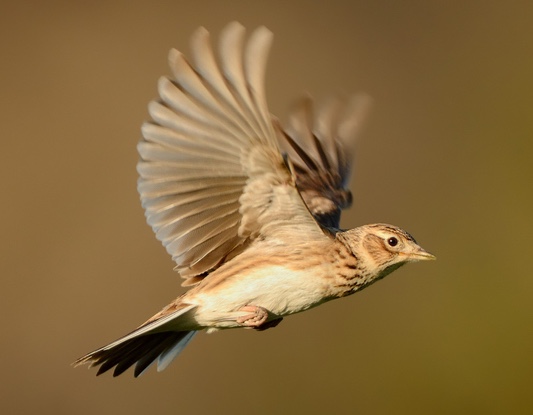 Sky Lark (Alauda arvensis) A lark or early bird usually gets up early in the morning and goes to bed early in the evening and tends to feel most energetic just after they get up in the morning.
Larks will generally not be able to sleep in, even if they’ve stayed up later than usual. They may feel hampered socially when continually confronted with events scheduled in the evening. (Or like me, they may just be getting older and can’t hack all-night parties.)
Age is also implicated in the way one becomes a morning or a night person.(Ah!) In general, people are more night owls in their teens but become larks later in life. Young children and infants also tend to be early risers, as all parents know!
Waking up early as a conscious act is said to be a ‘productivity method’ – rising early and consistently in order to be able to accomplish more during the day. This method has been recommended since antiquity; people in those times rose with the sun, did their work by daylight hours and went to bed at sunset. The philosopher Aristotle said, ‘It is well to be up before daybreak, for such habits contribute to health, wealth, and wisdom.’
The proverb ‘The early bird gets the worm‘ suggests that getting up early will lead to success during the day. But James Thurber, in his book Fables for our Time, ended the Fable of the Shrike: ‘Early to rise and early to bed, makes a Shrike healthy, and wealthy, and dead‘.
Such universal recommendations to get up early may make some people with different natural sleep patterns appear lazy or unmotivated which is rather unfair. Somebody used to a later natural start time could be being asked to wake up 3–4 hours early. Teenagers can fall into this category. They tend to require at least 9 full hours of sleep each night and changes to the endocrine system during puberty shift the natural wake time later in the morning. Enforcing early start times despite this can have negative effects on mood, academic performance, and social skills. (Nothing new there!)
Me? I only sleep for 6 hours, so I read until midnight, then usually wake in between 6 and 6.30 a.m. And I’ve always been like this. You see why I can’t decide whether I’m an owl or a lark. I hope I have the intelligence and creative thinking of a night owl and the academic performance and healthier eating habits of a lark. It may, of course, be the other way round…
But whether you are one or the other, and whether you are a writer or reader, we all benefit from a good night’s sleep.
——-
Writing challenges so far:
Day 11: Favourite writing snacks/chocolate porn
Day 10: Post an old picture of yourself
Day 9: Post 5 random facts about you
Day 8: What’s your writing process?
Day 7: Introduce your ‘author friend’
Day 6: How the writing all began
Day 5: What inspired the book I’m working on
Day 4: The setting for the new Roma Nova book
Day 3: Introducing the main characters Julia and Apulius
Day 2: Introduce your work in progress
Day 1: Starting with revealing information
Alison Morton is the author of Roma Nova thrillers – INCEPTIO, PERFIDITAS, SUCCESSIO, AURELIA, INSURRECTIO and RETALIO. CARINA, a novella, and ROMA NOVA EXTRA, a collection of short stories, are now available. Audiobooks are available for four of the series. NEXUS, an Aurelia Mitela novella, is now out.
Find out more about Roma Nova, its origins, stories and heroines… Download ‘Welcome to Roma Nova’, a FREE eBook, as a thank you gift when you sign up to Alison’s monthly email newsletter. You’ll also be first to know about Roma Nova news and book progress before everybody else, and take part in giveaways.
If you enjoyed this post, do share it with your friends!
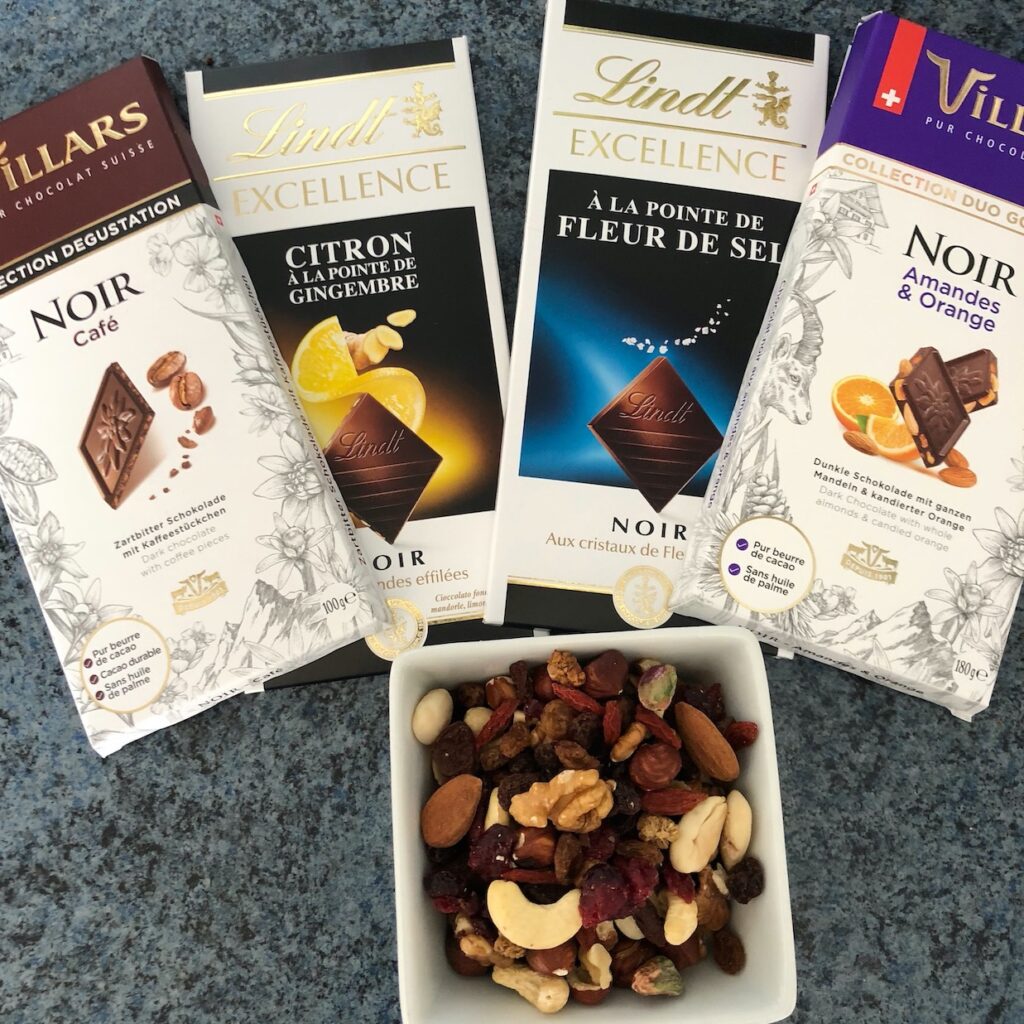
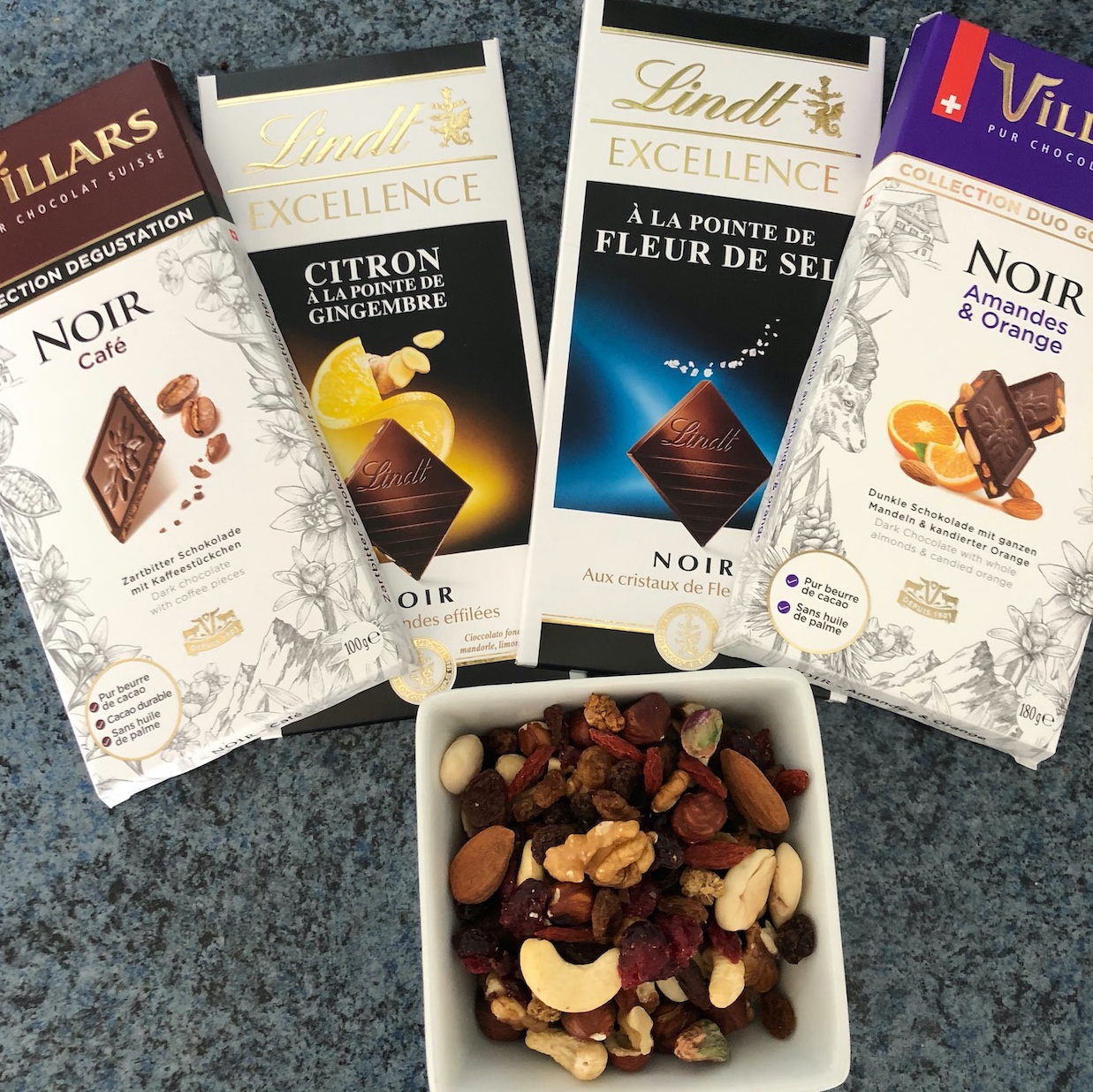
Yep, chocolate, the stereotypical writer’s munch.
The nuts and raisins, although also calorhorrific, are a nod towards healthiness. But these are both types of energy foods, so writers must need to replenish their energy levels fairly constantly. Thus must mean that it takes a lot of exhausting work to write.
So, what does chocolate do for us?
1. Flavonoids
Chocolate is chock-full(!) of flavonoids—naturally-occurring compounds found in the cacao plant, as well as in red wine, tea, fruits, and vegetables. Flavonoids may have potentially beneficial effects on cardiovascular health. They may also act as antioxidants, which are believed to prevent or delay certain damage to the body’s cells and tissues.
2. Good cholesterol
Chocolate and cocoa butter contain two main saturated fats (palmitic and stearic acids) and one mono-unsaturated fat (oleic acid). Unlike other saturated fats, stearic acid is a neutral fat and does not appear to raise bad cholesterol (LDL). Oleic acid is the same type of fat in olive oil and may actually raise good cholesterol levels (HDL).
3. Vitamins and minerals
Chocolate contains essential trace elements and nutrients such as iron, calcium and potassium, and vitamins A. B1, C, D, and E. Cocoa is also the highest natural source for Magnesium. Magnesium deficiency is linked with hypertension, heart disease, diabetes, joint problems and pre-menstrual tension (PMT or PMS).
4. The feel good factor
Chocolate contains small amounts of a chemical called phenylethylamine (PEA), which is a mild mood elevator. It’s the same chemical that our brain produces when we feel happy or in love. Chocolate stimulates the secretion of endorphins, producing a pleasurable sensation similar to the “runner’s high” a jogger feels after running several miles.The mild rush we get from this substance may be why some people say they’re addicted to chocolate
Surely nobody can argue with this?

Writing challenges so far:
Day 10: Post an old picture of yourself
Day 9: Post 5 random facts about you
Day 8: What’s your writing process?
Day 7: Introduce your ‘author friend’
Day 6: How the writing all began
Day 5: What inspired the book I’m working on
Day 4: The setting for the new Roma Nova book
Day 3: Introducing the main characters Julia and Apulius
Day 2: Introduce your work in progress
Day 1: Starting with revealing information
Alison Morton is the author of Roma Nova thrillers – INCEPTIO, PERFIDITAS, SUCCESSIO, AURELIA, INSURRECTIO and RETALIO. CARINA, a novella, and ROMA NOVA EXTRA, a collection of short stories, are now available. Audiobooks are available for four of the series. NEXUS, an Aurelia Mitela novella, is now out.
Find out more about Roma Nova, its origins, stories and heroines… Download ‘Welcome to Roma Nova’, a FREE eBook, as a thank you gift when you sign up to Alison’s monthly email newsletter. You’ll also be first to know about Roma Nova news and book progress before everybody else, and take part in giveaways.
If you enjoyed this post, do share it with your friends!
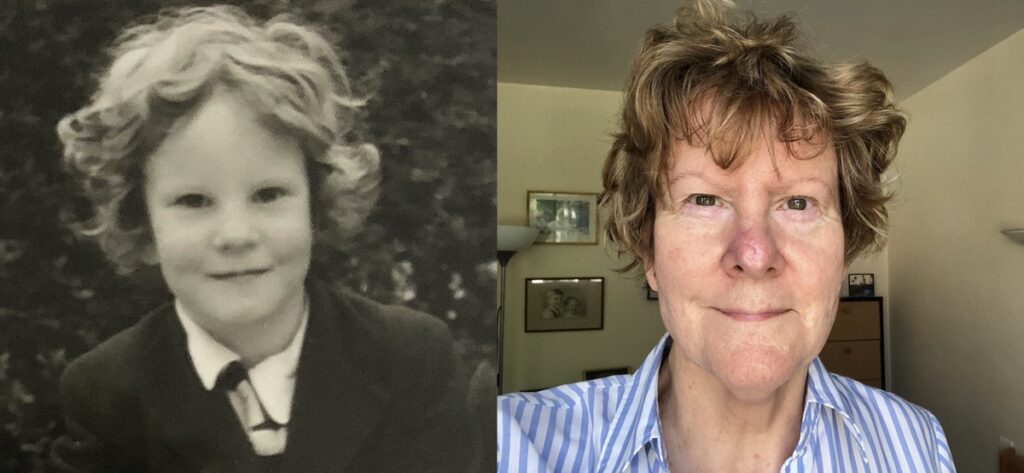
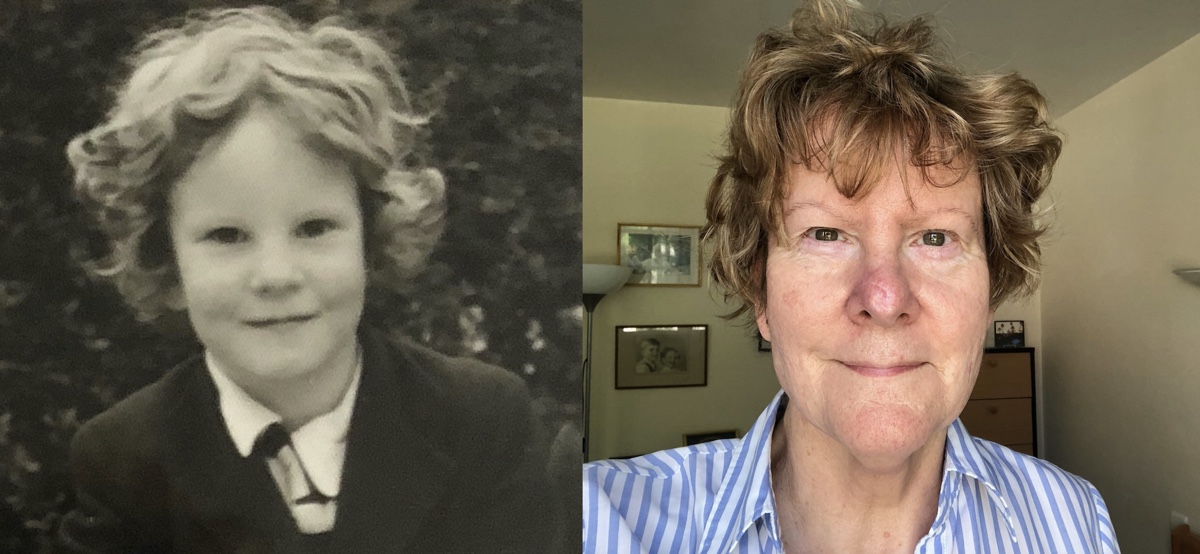
Age is the weirdest thing. At seven, you are fresh-faced and hopeful; several decades on, bolder and more cynical. And in between several other things depending on where you are and what you’re doing. And what you have learnt.
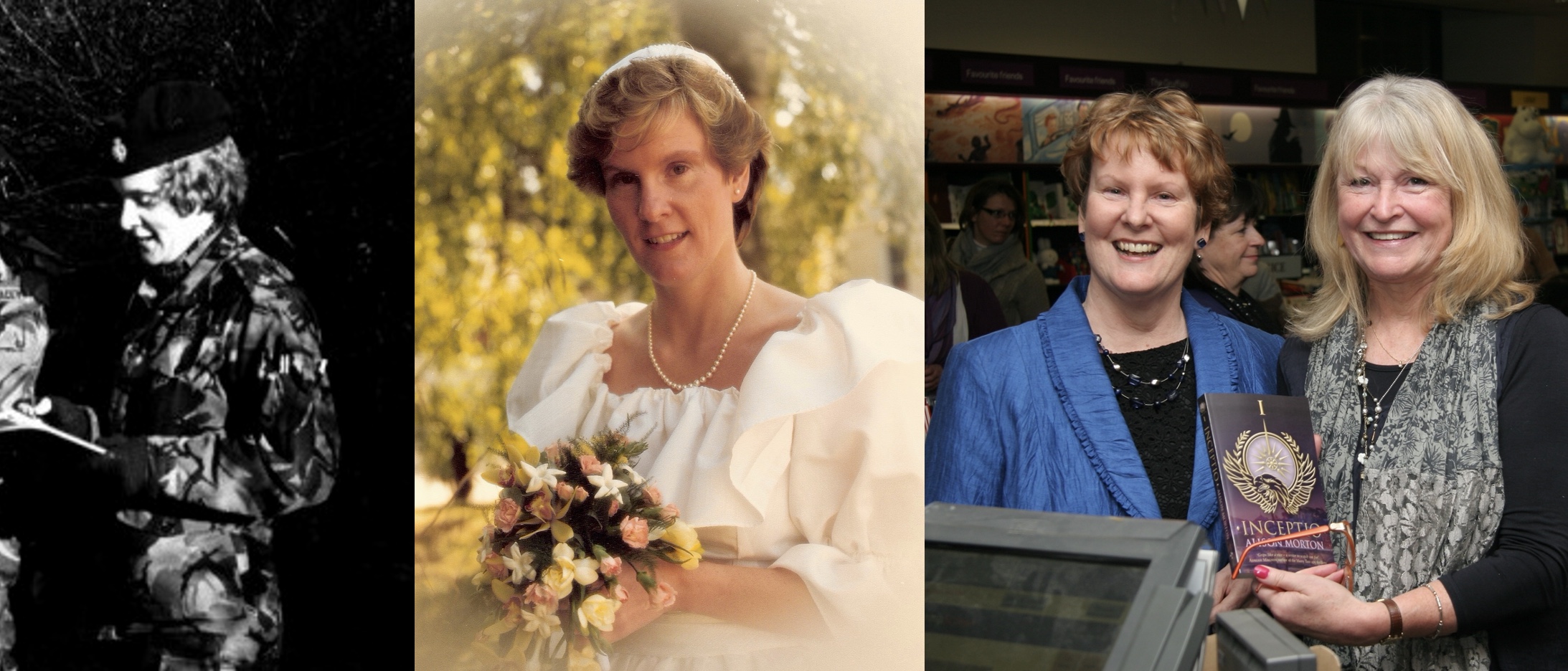
Sometimes you have full make-up on and tummy pulled in; other times you don’t care or didn’t know somebody was taking a photo. Some mark life events, others a glimpse snatched in the moment.
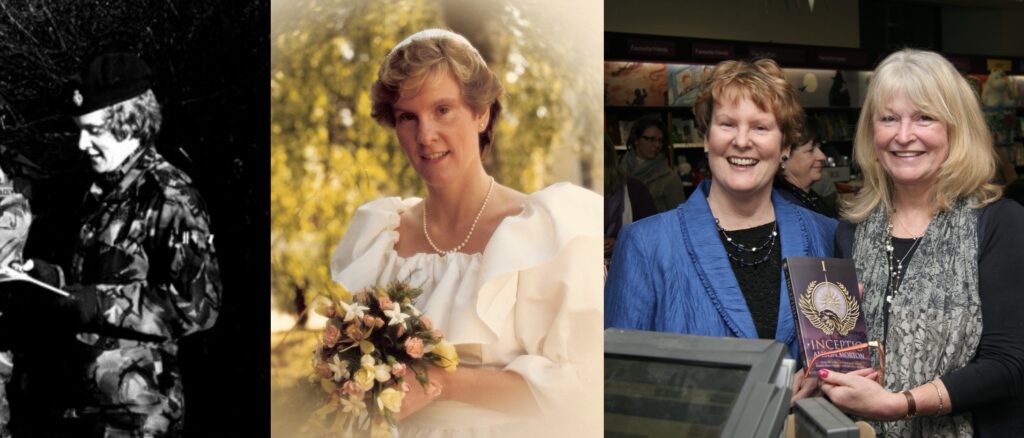 1984, 1985 and 2013 But all photos reveal. Probably more than they should…
Writing challenges so far:
Day 9: Post 5 random facts about you
Day 8: What’s your writing process?
Day 7: Introduce your ‘author friend’
Day 6: How the writing all began
Day 5: What inspired the book I’m working on
Day 4: The setting for the new Roma Nova book
Day 3: Introducing the main characters Julia and Apulius
Day 2: Introduce your work in progress
Day 1: Starting with revealing information
Alison Morton is the author of Roma Nova thrillers – INCEPTIO, PERFIDITAS, SUCCESSIO, AURELIA, INSURRECTIO and RETALIO. CARINA, a novella, and ROMA NOVA EXTRA, a collection of short stories, are now available. Audiobooks are available for four of the series. NEXUS, an Aurelia Mitela novella, is now out.
Find out more about Roma Nova, its origins, stories and heroines… Download ‘Welcome to Roma Nova’, a FREE eBook, as a thank you gift when you sign up to Alison’s monthly email newsletter. You’ll also be first to know about Roma Nova news and book progress before everybody else, and take part in giveaways.
If you enjoyed this post, do share it with your friends!
 Like everybody else, my life is a jumble of random facts. Selecting five is a bit like being asked to name my favourite book but here goes… Like everybody else, my life is a jumble of random facts. Selecting five is a bit like being asked to name my favourite book but here goes…
Childhood
Contrary to popular belief, I was once a child. but it was a long time ago. And yes, that is a smocked frock.At the time, small children were hauled off to a photographic studio, given a soft toy to manhandle and told to smile for the nice man (And it almost always was a man in those antique times.)
Favourite holiday?
Where other people don’t go. Good food, warm but not boiling hot weather and some interesting Roman ruins, especially where you can shut your eyes and take a deep breath without getting run over. Did a lot of camping throughout Europe over the years, but it was more like glamping.
Name dropping
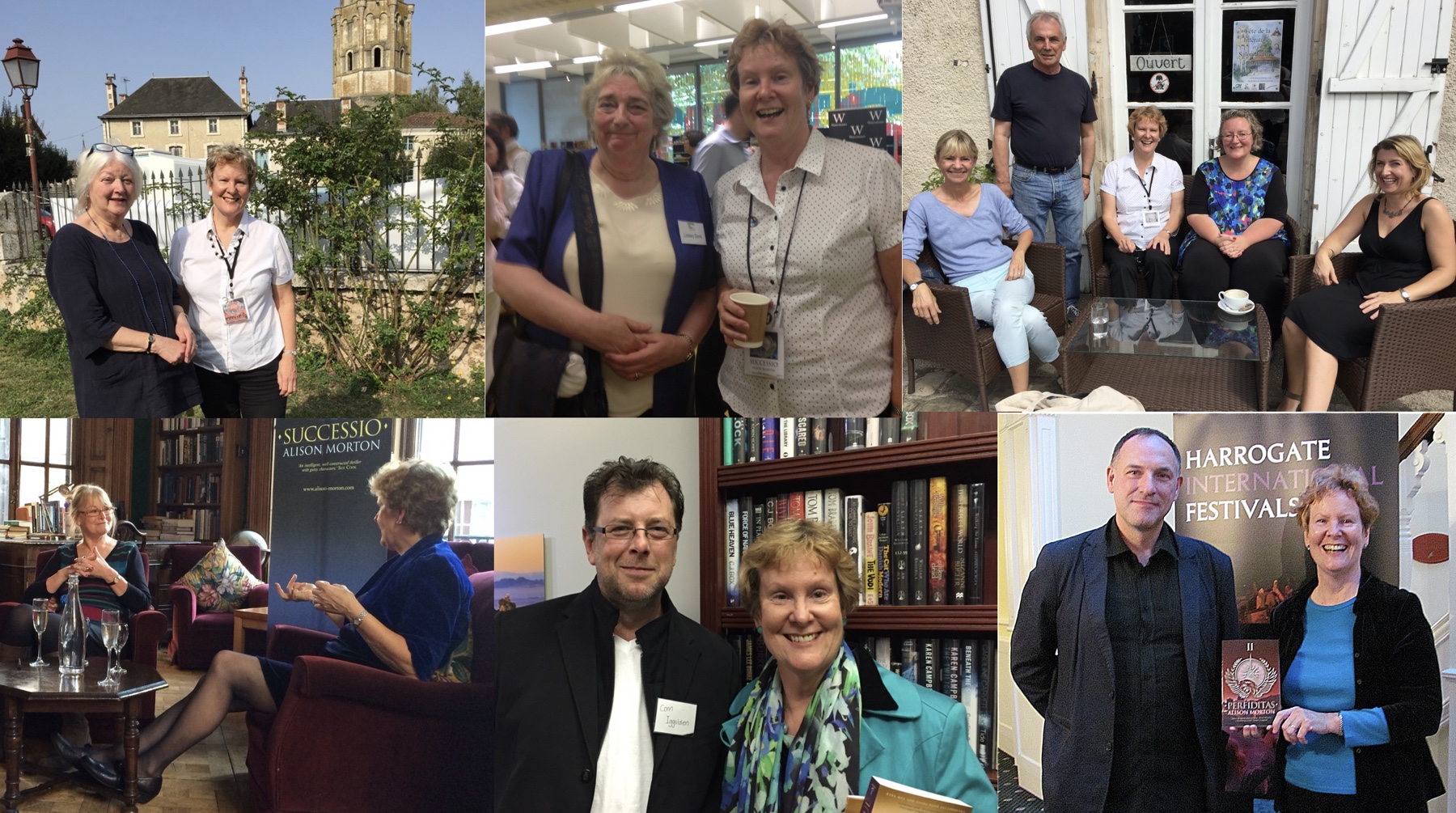
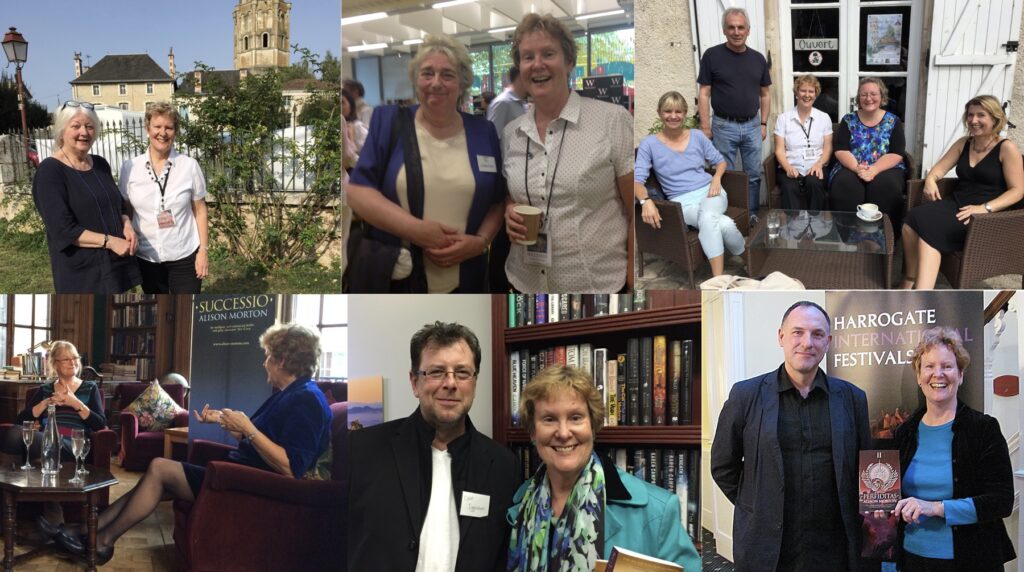
To my great pleasure, I’ve met and spoken at events with Lindsey Davis, Kate Mosse and Barbara Erskine and had books endorsed by Sue Cook, Conn Iggulden and Simon Scarrow.
Enough of that…
The military link
I spent six years in uniform doing lots of silly things in different parts of the world, some of it not in uniform… But I learned things most people don’t and also met my husband.
Favourite drink
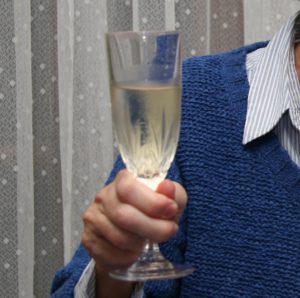
Tea when working, otherwise bubbly, of course. I’m lucky to live in the Loire Valley where they produce some exceedingly fine wine. Cheers!
Writing challenges so far:
Day 8: What’s your writing process?
Day 7: Introduce your ‘author friend’
Day 6: How the writing all began
Day 5: What inspired the book I’m working on
Day 4: The setting for the new Roma Nova book
Day 3: Introducing the main characters Julia and Apulius
Day 2: Introduce your work in progress
Day 1: Starting with revealing information
Alison Morton is the author of Roma Nova thrillers – INCEPTIO, PERFIDITAS, SUCCESSIO, AURELIA, INSURRECTIO and RETALIO. CARINA, a novella, and ROMA NOVA EXTRA, a collection of short stories, are now available. Audiobooks are available for four of the series. NEXUS, an Aurelia Mitela novella, is now out.
Find out more about Roma Nova, its origins, stories and heroines… Download ‘Welcome to Roma Nova’, a FREE eBook, as a thank you gift when you sign up to Alison’s monthly email newsletter. You’ll also be first to know about Roma Nova news and book progress before everybody else, and take part in giveaways.
If you enjoyed this post, do share it with your friends!
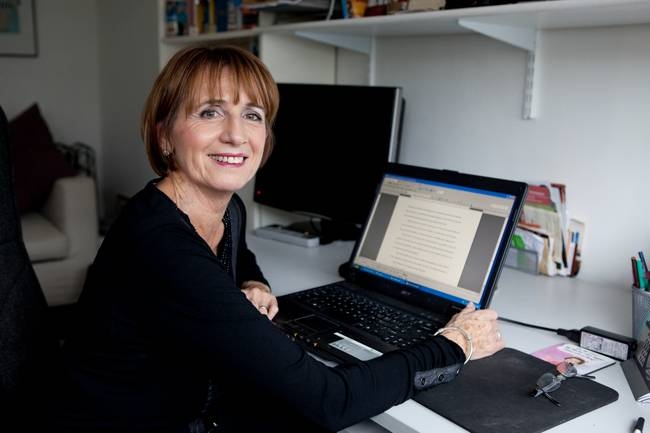 Today’s guest is Liz Harris a friend from my earliest writing days. Liz was born in London. After graduating with a law degree, she moved to California for six years where she led a varied life from waitressing on Sunset Strip to working as secretary to the CEO of a large Japanese trading company to helping with studio tours at MGM. Real life eventually intervened and she returned to the UK, completed a London University degree in English and then taught for a number of years in Berkshire and later in Cheshire. Today’s guest is Liz Harris a friend from my earliest writing days. Liz was born in London. After graduating with a law degree, she moved to California for six years where she led a varied life from waitressing on Sunset Strip to working as secretary to the CEO of a large Japanese trading company to helping with studio tours at MGM. Real life eventually intervened and she returned to the UK, completed a London University degree in English and then taught for a number of years in Berkshire and later in Cheshire.
Liz’s first six novels were published by Choc Lit including The Road Back (US Coffee Time and Romance Book of the Year), A Bargain Struck (RoNA shortlisted for the Best Historical Novel). They and Evie Undercover, The Art of Deception, A Western Heart and The Lost Girl were shortlisted by the Festival of Romantic Fiction. Liz’s latest novel, The Dark Horizon, is Book 1 in the Linford Series. Book 2, The Flame Within will be published in October 2020.
A (fellow) member of the Romantic Novelists’ Association and Historical Novel Society, Liz gives talks and workshops at conferences and literary festivals, and regularly speaks to WI and book groups.
Over to Liz to discuss one of my favourite writing topics!
I heard your groan at the word research! And I, too, have been known to groan when faced with a day of fact-digesting. When I hear ‘research’, I see myself bending over a pile of dusty books. And to be honest, it’s not a vision I like. I’m more at ease with a vision of myself wherein I’m holding forth among friends, a large glass of wine in my hand.
But needs must. If you write an historical series set in the 1920s and early 1930s, with an important part of the first novel set in New York, as with The Dark Horizon, you must research that period and location.
The place to begin is with books. This is only a fraction of the books in which I’ve lost myself as I build a picture of what my characters wear, eat, drink; how they fill their day, be it with a paid job, or otherwise; how they get about; the aromas in the air/streets; what the climate is like; what flora and fauna surround them. And so on.
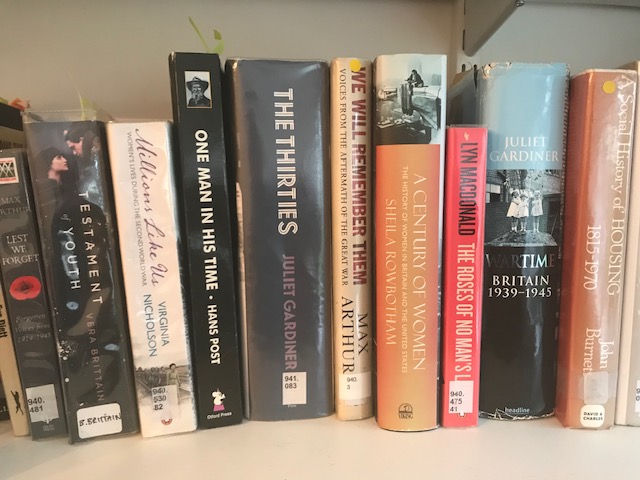 Some of the research books on my shelf For certain facts, you need books or the internet. For example, for a saga set between the wars you’ll possibly need to know the prevailing situation regarding divorce. Books/the internet will tell you that the Matrimonial Causes Act, 1857, introduced divorce through the High Court in London, the proceedings being in open court. Men could petition for a divorce on the basis of their wife’s adultery. If a woman was divorced due to adultery, she had no legal rights to her children.
However, women wanting to divorce their husband needed to prove, in addition to adultery, an aggravating factor, such as rape or incest. The aggravating factor wasn’t removed until an Act in 1923 finally put men and women on an equal footing.
But there’s some research that’s ideally done in person, if possible. So I made the great sacrifice of going to New York for hands-on research. I wanted to feel like an immigrant in the 1920s, so I headed for Lower East Side, known as the Garment District, the main destination for the immigrants, who streamed through the immigration station at Ellis Island between 1880 and 1924.
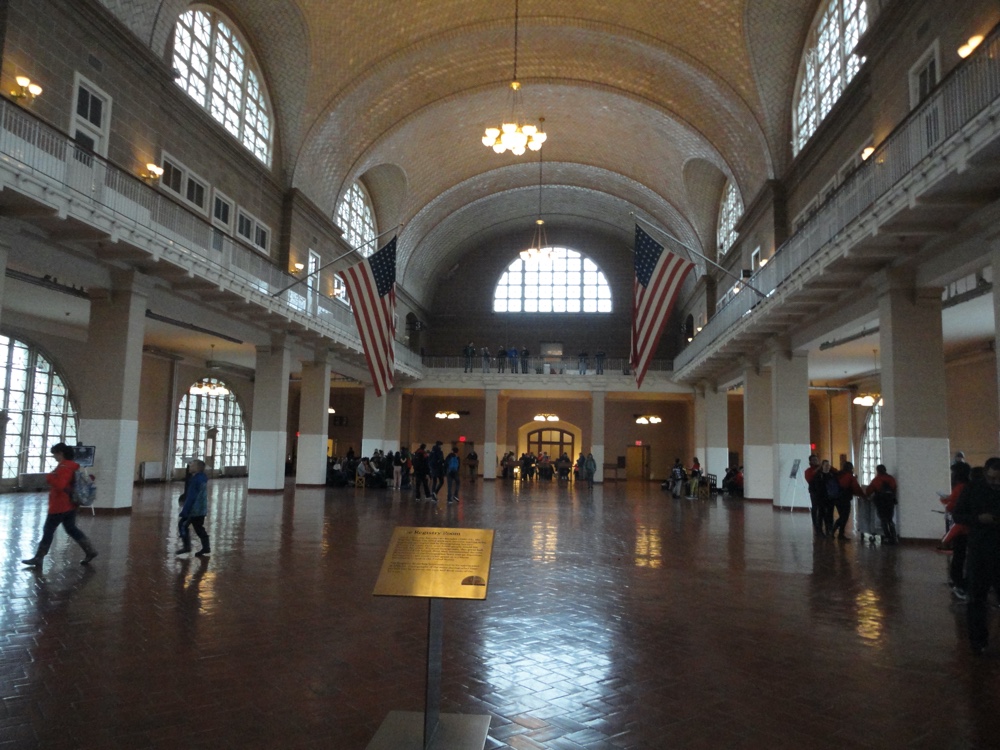 Immigration Hall, Ellis Island, New York I walked the streets they walked, shopped in the shops they used, breathed the air they breathed (it had been recycled a few times since the 1920s, but so be it).
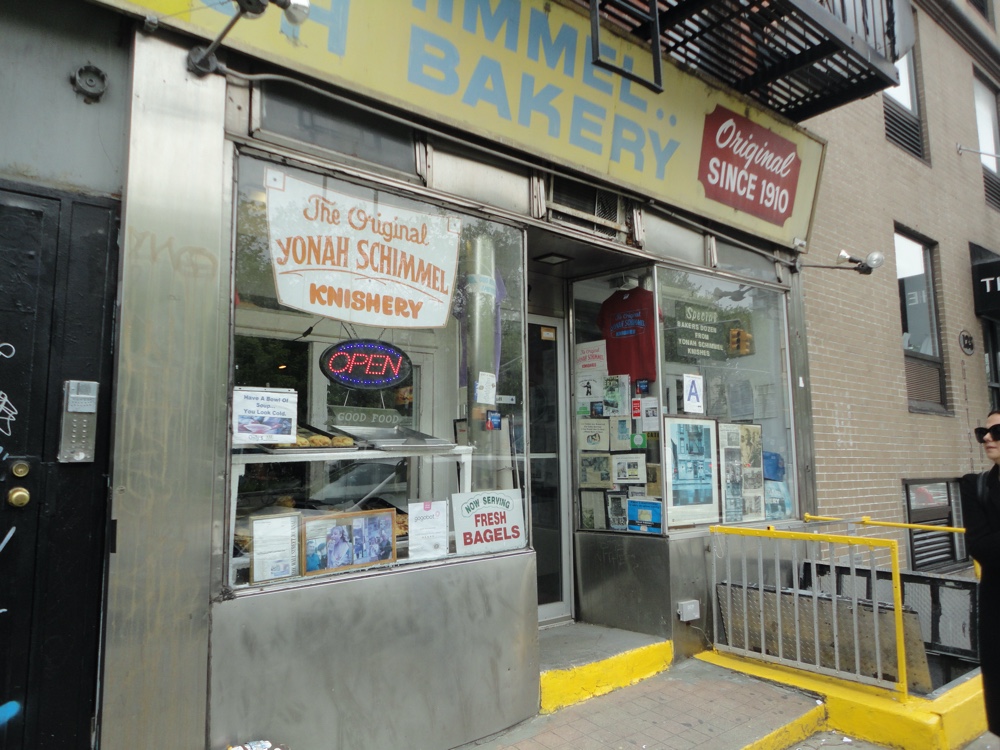 Yonah Schimmel’s Bakery I learned that in the early 1900s, almost 500,000 of the Lower East Side’s residents were Jewish, the largest Jewish community in the world, and mostly they lived in five- and six-storey tenement buildings. Each building contained four apartments per floor, and often several families lived in each apartment, in conditions that were cramped and dark, with little natural sunlight.
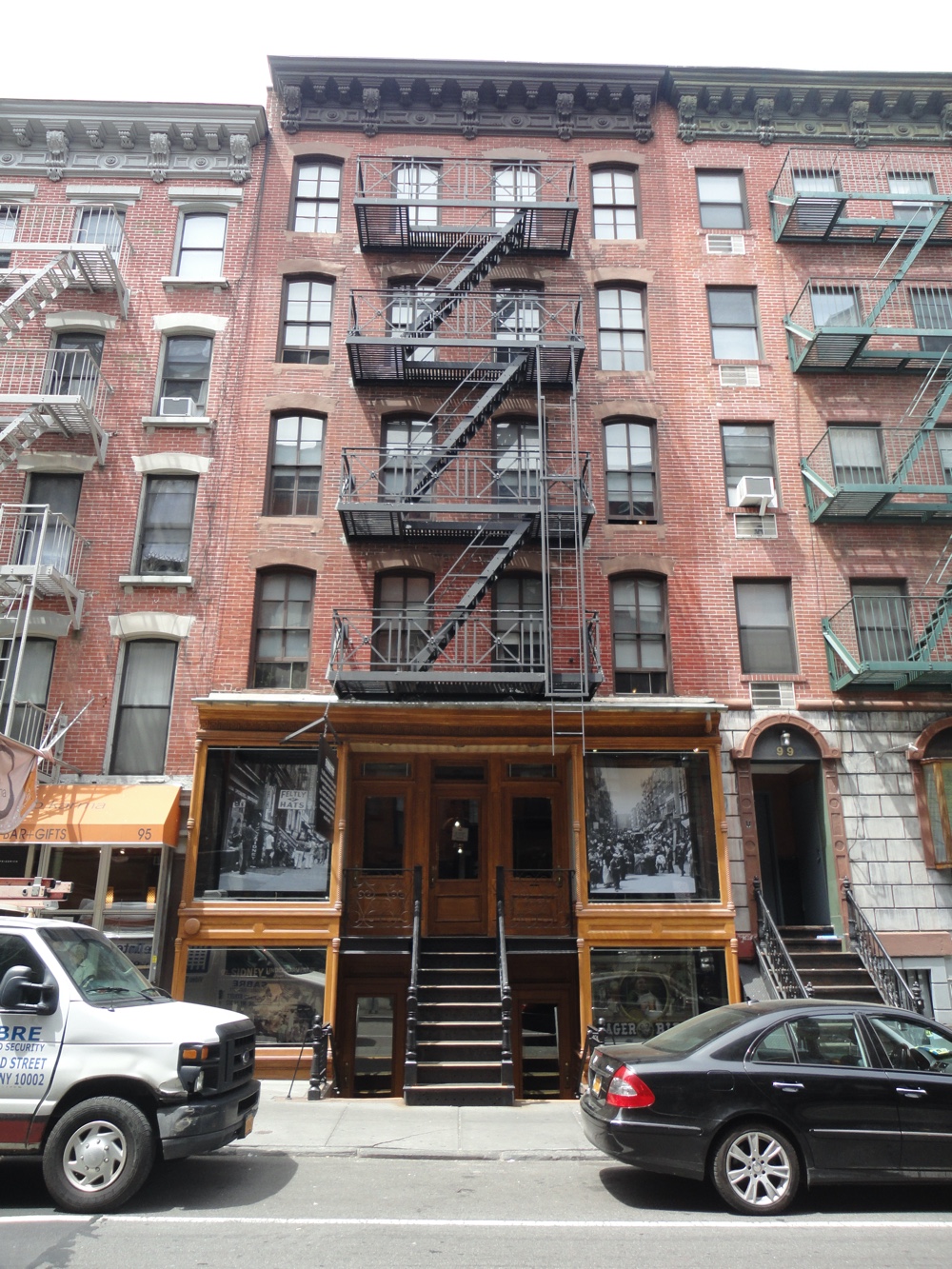 Lower East Side tenement building in Orchard Street where the apartments have been meticulously restored to the original Tenement apartments were frequently not only a home, but a place of work, as the tenants often employed others to work for them in their apartment, as well as working there themselves as piecework seamstresses or tailors.
The apartments became known as sweatshops. I used to think the term ‘sweatshop’ applied only to factories with dubious practices. But not so. The nature of the work and the working conditions—low wages, long hours, unhealthy environment—defines a sweatshop, not the building, nor the number of people working there.
How the work was arranged was that Macy’s, for example, would order 100 dresses from a factory. They’d pay the factory $75. For speed, the factory subcontracted different parts of the garments to sweatshops, paying by the piece. Wages were permanently depressed as there’d always be someone who’d take on the work, no matter how low the pay.
Making mass-produced cigars was also common in the tenements. The cigar mould, invented in 1860, meant tobacco could be pressed into several grooves, thus making multiple cheap cigars.
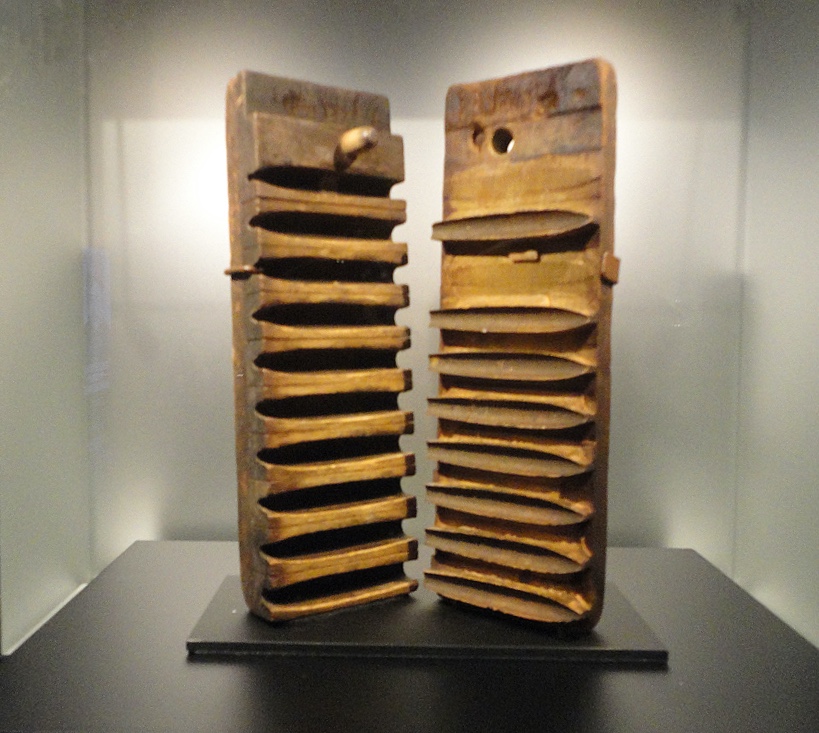 Cigar mould In 1901, sweatshops were outlawed and tenement dwellers forbidden to employ anyone from outside the home. But being virtually impossible to regulate, and the manufacture of cheap goods so desirable, this was widely ignored.
In a move clearly intended to reduce the influx of Jewish and Italian immigrants, the Immigration Act, 1924, restricted the overall number of immigrants, establishing quotas based on nationality. The number of immigrants substantially fell, and when tenement dwellers moved to other towns in the US, as they invariably did—it was a transitory population—there were insufficient people to fill the apartments, and many lay empty.
 Eldridge Street Synagogue. Built in 1887, this was one of the earliest synagogues in the US, its inner elegance reflecting the immigrants’ hopes for the New World. But this is called The Research Diet., I can hear you wail. Where does dieting come into this, you ask.
Aha! Researching your novel, whether through books at home or in the library, whether on the internet or on location, is so utterly absorbing that you’ll completely forget to eat!!
Haha! Brilliant, Liz. These photos reminded me of my own research trip to New York for the early part of INCEPTIO. Lovely reminders, thank you.
Connect with Liz…
Website: www.lizharrisauthor.com
Twitter: https://twitter.com/lizharrisauthor @lizharrisauthor
Facebook: https://www.facebook.com/lizharrisauthor
Instagram: https://www.instagram.com/liz.harris.52206/ liz.harris.52206
What’s The Dark Horizon about?
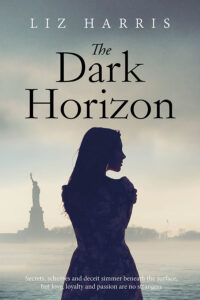 From the award-winning author of The Road Back comes the first in a sweeping saga set between the wars, which introduces the Linfords, a family simmering with secrets, schemes and lies. From the award-winning author of The Road Back comes the first in a sweeping saga set between the wars, which introduces the Linfords, a family simmering with secrets, schemes and lies.
Oxfordshire, 1919
The instant that Lily Brown and Robert Linford set eyes on each other, they fall in love. The instant that Robert’s father, Joseph, chairman of the family’s successful building company, sets eyes on Lily, he feels a deep distrust of her.
Convinced that his new daughter-in-law is a gold-digger, and that Robert’s feelings are a youthful infatuation he’d come to regret, Joseph resolves to do whatever it takes to rid his family of Lily. And he doesn’t care what that is.
As the young couple are torn apart, the Linford family is told a lie that will have devastating consequences for years to come.
Amazon (universal) buying link: https://getbook.at/TheDarkHorizon
Alison Morton is the author of Roma Nova thrillers – INCEPTIO, PERFIDITAS, SUCCESSIO, AURELIA, INSURRECTIO and RETALIO. CARINA, a novella, and ROMA NOVA EXTRA, a collection of short stories, are now available. Audiobooks are available for four of the series. NEXUS, an Aurelia Mitela novella, is now out.
Find out more about Roma Nova, its origins, stories and heroines… Download ‘Welcome to Roma Nova’, a FREE eBook, as a thank you gift when you sign up to Alison’s monthly email newsletter. You’ll also be first to know about Roma Nova news and book progress before everybody else, and take part in giveaways.
If you enjoyed this post, do share it with your friends!
|
Subscribe to Blog via Email
Join 368 other subscribers.
Categories
Archive
|