“Designed to fit comfortably in a womans hand” We girlies must celebrate. That lovely company, Bic, has come to our rescue. No longer must we struggle to lift those heavy, huge Bic pens, chip our nails on them or cry with disappointment when, because of our weaker fingers, we drop them.
Bic have brought out “BIC For Her Amber Medium Ballpoint Pen “. One selling point is that they are “Designed to fit comfortably in a womans hand“.
Well, that’s all right, then. What else have we got to do with our hands?
Oh, yes, Lego for Girls: Mia the animal-lover, Olivia the smart girl, Emma the beautician, Andrea the singer and social butterfly Stephanie (Source: Huffington Post January 2012).
I feel so sorry for the designers of these products. They are going to get such a slapping from half the world’s population.
If you enjoyed this post, do share it with your friends!Like this:Like Loading...
 Listening to or reading about how other writers “did” it can sometimes sap your enthusiasm. They’ve given up the vile and/or boring day job, they get up at 5am and rattle off a couple of chapters before a long walk. A quick cup of coffee and they’re back to it. They give us a vague smile and say that they limit themselves to 3,000 words a day to keep the muse impatient for the next day. After lunch, a nap, then they mingle virtually with other authors on Twitter, Facebook or emails and spend time researching the arcane science of dowsing or the latest hard resin weapon. The next day, it’s a whirl of meetings with editor and agent, then off to sit for a professional photographer and an evening talk and networking with other (published, of course!) writers. Listening to or reading about how other writers “did” it can sometimes sap your enthusiasm. They’ve given up the vile and/or boring day job, they get up at 5am and rattle off a couple of chapters before a long walk. A quick cup of coffee and they’re back to it. They give us a vague smile and say that they limit themselves to 3,000 words a day to keep the muse impatient for the next day. After lunch, a nap, then they mingle virtually with other authors on Twitter, Facebook or emails and spend time researching the arcane science of dowsing or the latest hard resin weapon. The next day, it’s a whirl of meetings with editor and agent, then off to sit for a professional photographer and an evening talk and networking with other (published, of course!) writers.
Oh, to live this life! But is it as attractive as we think?
- Giving up the day job must have been an agonising decision – everybody has to pay their mortgage – and few writers make a decent living from their work.
- Getting up at 5am? They probably went to bed at 9.30pm, knackered. At that time of the morning, at least they get no interruptions from phone, children, spouse, neighbours, deliveries.
- The cup of coffee? Grabbed as the writer sees their precious “peace hours” ebbing away. No time for breakfast.
- Walking/swimming/the gym is essential to clear a stuffy head and to remind the rest of the body that it still works. And the head will appreciate the increased blood flow.
- Perhaps there’s a little bit of smug over-egging, but 3,000 words is the maximum they can write before their hands cramp up.
- The post-prandial nap? Think why doing the 2.30 pm talk/lecture/meeting is unproductive and half the audience is asleep. Even the most entrepreneurial take a power nap while their body naturally breaks its daily rhythm after seven to eight hours of activity.
- And that time-sucking social media? Simple – if you don’t interact, people forget you. A quick natter with friends perks you up. And there might be a blog referral that could save your novel…
- Research is the lifeblood of writing. Doing it in the afternoon switches the brain into a different mode, giving the muse a rest, but it can be a frustrating slog-fest if the information refuses to come out to play.
- And finally, it might sound glamorous, but a day traipsing up to London, fighting your way through the Tube and noisy streets, harried meetings, a quick lunch, then a lot of pre-photographic primping and trying to project studious or jolly as required while worrying about that spot developing on your nose, doesn’t sound that relaxing. The best bit is a quick glass of wine with mates in the evening before you rush back for the train.
So, still an intense “day at the office”; ruthlessly grabbing time, constant application, staying healthy, dedication to research, daily interaction with colleagues and keeping up with industry developments. And it all has to be self-driven…
Easy or what?
If you enjoyed this post, do share it with your friends!Like this:Like Loading...
 It’s 1976 and in the world of The Alteration England is dominated by a pervasive and morally twisted Catholic theocracy with a suspicion of but willingness to exploit science. Martin Luther became the radically reforming Pope, Germanian I, and the English succession skipped the man we know as Henry VIII and passed to Prince Stephen, the son of Catherine of Aragon and Henry’s elder brother, Arthur. It’s 1976 and in the world of The Alteration England is dominated by a pervasive and morally twisted Catholic theocracy with a suspicion of but willingness to exploit science. Martin Luther became the radically reforming Pope, Germanian I, and the English succession skipped the man we know as Henry VIII and passed to Prince Stephen, the son of Catherine of Aragon and Henry’s elder brother, Arthur.
Hubert Anvil is a ten-year-old chorister with a sublime voice. The Church hierarchy, anxious to preserve it for the the glory of God, decrees Hubert should be turned into a castrato – an “alteration” that could bring him fame and fortune, but would also separate him permanently from an adult world he is curious to discover.
The narrative follows Hubert, his indecision and ultimate rebellion against the process. His stern, devout father heads a household where his wife Margaret counts herself lucky he discusses concerns in private and does not enforce his marital rights. Hubert is sympathetically drawn, and I found myself engaging fully with his sense of being trapped by his parents, his school and his society. For me, a weakness is that although he is supposed to be an old head on young shoulders, he acts more like a 16 or 17-year-old.
Amis’ beautifully written world bustles with altered technology and yet retains familiar historical details: express barouches, seven-hour transport between London and Rome, gaslight, photograms and airships yet ermines, silks, velvet, fustian, servants and apprentices. The language is historical and structured, such as you would find in C J Sansom or Ann Lyle, but it never disguises people’s motivations or emotions. And then there are the witty allusions to Jean-Paul Sartre as a Jesuit, Foot and Redgrave as enforcers and the Yorkshire pope who could be Harold Wilson.
Darker themes such as population control through war, separate development (aka apartheid) and brutal intransigence against any other orthodoxy than the official one are woven into the narrative as if they were perfectly natural.
The Alteration describes both the threat hanging over Hubert and the alteration in the historical timeline which symbolises the strangulation of the development of European civilisation. All Amis’ usual knack for character, incident and satire is there in The Alteration. The most disturbing thing is how convincing this alternative world is.
If you enjoyed this post, do share it with your friends!Like this:Like Loading...
 The Roman Empire didn’t ‘fall’ in a cataclysmic event as the movies and TV would have you believe – it localised and eventually dissolved like chain mail fragmenting into separate links, giving way to rump states, local city states and petty kingdoms. New, dynamic and often warring nations emerged – Goths, Franks, Alamans and Burgundians. The Roman Empire didn’t ‘fall’ in a cataclysmic event as the movies and TV would have you believe – it localised and eventually dissolved like chain mail fragmenting into separate links, giving way to rump states, local city states and petty kingdoms. New, dynamic and often warring nations emerged – Goths, Franks, Alamans and Burgundians.
But one part of the Roman empire hung on in Gaul – the intriguing Domain of Soissons.
Officially, the last Roman emperor in the West reigned until AD 475 (Julius Nepos) or AD 476 (Romulus Augustulus) – take your pick of the two available contenders. But the last really effective Roman emperor, Majorian, had died in AD 461. Before he did, he’d appointed Aegidius in AD 457 to command all military forces in Gaul as magister militum (master of soldiers).
Soissons in the north-west was the only remaining Roman territory in Gaul by then and included Angers, Orleans, Reims, Paris and much of modern day Normandy up to the Channel coast. A corridor to Italy was annexed by the Germanic tribes occupying Gaul, cutting off Aegidius and his citizens from the empire.
Aegidius managed to rule in much of his province, but died in AD 464 or AD 465 and after a brief rule by Paulus, a Roman official, his son Syagrius succeeded him as ruler. Although Syagrius was sometimes called Rex Romanorum (King of the Romans), probably by the barbarians settled on Soissons’ borders, the citizens living there didn’t consider themselves as anything other than inhabitants of a separated province of the Western Roman empire. They perpetuated Roman rule and core structures for nearly thirty years despite being cut off from the Italian homeland (which was also pretty chaotic at this time).
 Alaric handing Syriagus over to Clovis Unfortunately for Syriagus, in AD 486 he came up against the most dynamic and ruthless leader of the new Europe, the Frankish king Clovis, and lost the Battle of Soissons. Syriagus sought sanctuary with Alaric, king of the Visigoths, but when Clovis threatened war, he handed Syriagus over to Clovis for execution.The Gallo-Roman enclave was absorbed into the Frankish kingdom, a step that established the Franks as the major regional power and laid the foundations of a later nation-state, France.
Even though it’s a footnote of history, Romans carrying on a Roman life – social, economic, legal – surrounded by barbarians does have a tinge of the romantic, of a people stranded in time…
Alison Morton is the author of Roma Nova thrillers, INCEPTIO, and PERFIDITAS. Third in series, SUCCESSIO, is now out.
Find out about Roma Nova news, writing tips and info by signing up for my free monthly email newsletter.
If you enjoyed this post, do share it with your friends!Like this:Like Loading...
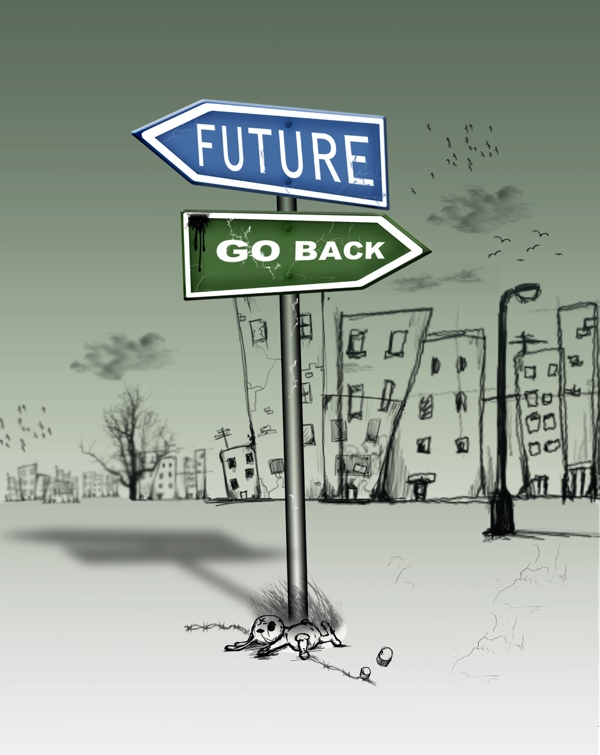 How do you make a decision? Whether it’s buying a new pair of shoes, going to law or plunging into a new life in a different country and culture, it’s a complicated question. How do you make a decision? Whether it’s buying a new pair of shoes, going to law or plunging into a new life in a different country and culture, it’s a complicated question.
First of all, there’s an instinctive reaction to the decision: you see, you want, you say yes. Then your brain kicks in: do I have the money, will I have the time, will this change my life, will I look better, will I enjoy it, do I want all that upheaval?
Basically, it boils down to the hassle of pushing yourself to change from where you are versus the pleasure you will gain or threat you’ll avoid once you’ve made the decision.
Most people love the status quo – it’s familiar, the pluses and minuses are there to be seen (And I’m not talking about the rock band!). The original Latin in statu quo res erant ante bellum (in the state in which things were before the war), meant all troops were withdrawn and boundaries back where they were before the war. These days status quo generally means the ways things are set up at the moment. Status quo can also refer to a situation that nobody likes but the result of changing it seems too risky.
Here you have two choices: wait and see, or take a risk to change it.
Human beings tend to be irrationally loss averse. In other words, we sometimes prefer to avoid the risk of loss even at the cost of a better than fair prospect. This isn’t us being wimpish; our propensity to protect what is already in hand is hard-wired into our brains. For most of human evolution, our biological ancestors lived in an environment where resources were scarce. If you wanted to feed your family, you had to hunt or gather. If there were natural impediments such as extreme weather, or unfriendly wildlife like sabre-tooth tigers, you might not survive. Over countless generations, this developed a biological basis to loss aversion.
So, taking a decision means overcoming an instinctive dislike of risk. For most people it’s “Shall I buy those shoes?”, “Can I get into that parking space?”, “Which type of pasta shall we have for supper?”. For your hero or heroine, it’s “Shall I turn my back on this?”, “Shall I put myself in danger?”, “Can I trust him/her?”, “Why would I leave my safe but boring life and risk an uncertain but wealthy life with strangers?”.
Writers have the power of pushing characters to that decision point by introducing a crushing threat. Readers love seeing characters struggling with these decisions, it makes delicious tension. But writers must chart how their characters deal with conflict and come to make decisions or they’ll look unbearably smart and a bit wooden.
Of course, it’s a heroic virtue to be able to make a good decision under pressure, but even the most decisive character has to have a wobble from time to time…
References: Kahneman & Tversky’s Prospect theory (http://en.wikipedia.org/wiki/Prospect_theory) and Pearlman’s Loss aversion, evolution and Risk complacency (http://philpearlman.com/2009/02/03/75319882/)
UPDATED 2022:Alison Morton is the author of Roma Nova thrillers – INCEPTIO, CARINA (novella), PERFIDITAS, SUCCESSIO, AURELIA, NEXUS (novella), INSURRECTIO and RETALIO, and ROMA NOVA EXTRA, a collection of short stories. Audiobooks are available for four of the series.Double Identity, a contemporary conspiracy, starts a new series of thrillers. Double Pursuit, the sequel, is now out!
Find out more about Roma Nova, its origins, stories and heroines and taste world the latest contemporary thriller Double Identity… Download ‘Welcome to Alison Morton’s Thriller Worlds’, a FREE eBook, as a thank you gift when you sign up to Alison’s monthly email newsletter. You’ll also be among the first to know about news and book progress before everybody else, and take part in giveaways.
If you enjoyed this post, do share it with your friends!Like this:Like Loading...
|
Subscribe to Blog via Email
Join 368 other subscribers.
Categories
Archive
|