I’m delighted to welcome Rosemary Hayes back to the writing blog. She has written many books for children in a variety of genre, from edgy teenage fiction, historical fiction and middle grade fantasy to chapter books for early readers and texts for picture books. Many of her books have won or been shortlisted for awards and several have been translated into different languages. I’m delighted to welcome Rosemary Hayes back to the writing blog. She has written many books for children in a variety of genre, from edgy teenage fiction, historical fiction and middle grade fantasy to chapter books for early readers and texts for picture books. Many of her books have won or been shortlisted for awards and several have been translated into different languages.
Rosemary has travelled widely but now lives in South Cambridgeshire. She has a background in publishing, having worked for Cambridge University Press before setting up her own company Anglia Young Books which she ran for some years. She has been a reader for a well-known authors’ advisory service, runs creative writing workshops for both children and adults and reviews for historical publications.
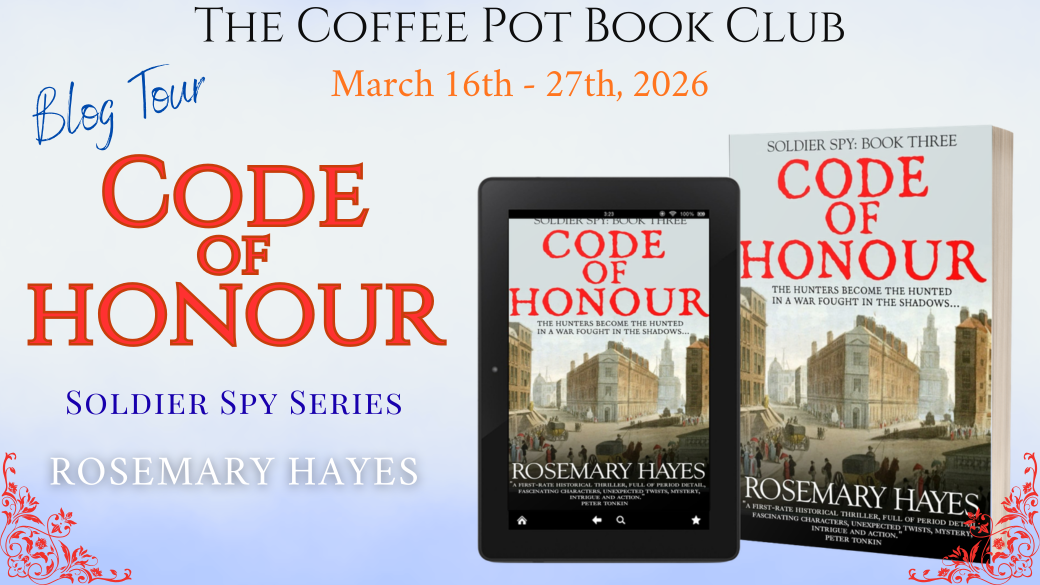
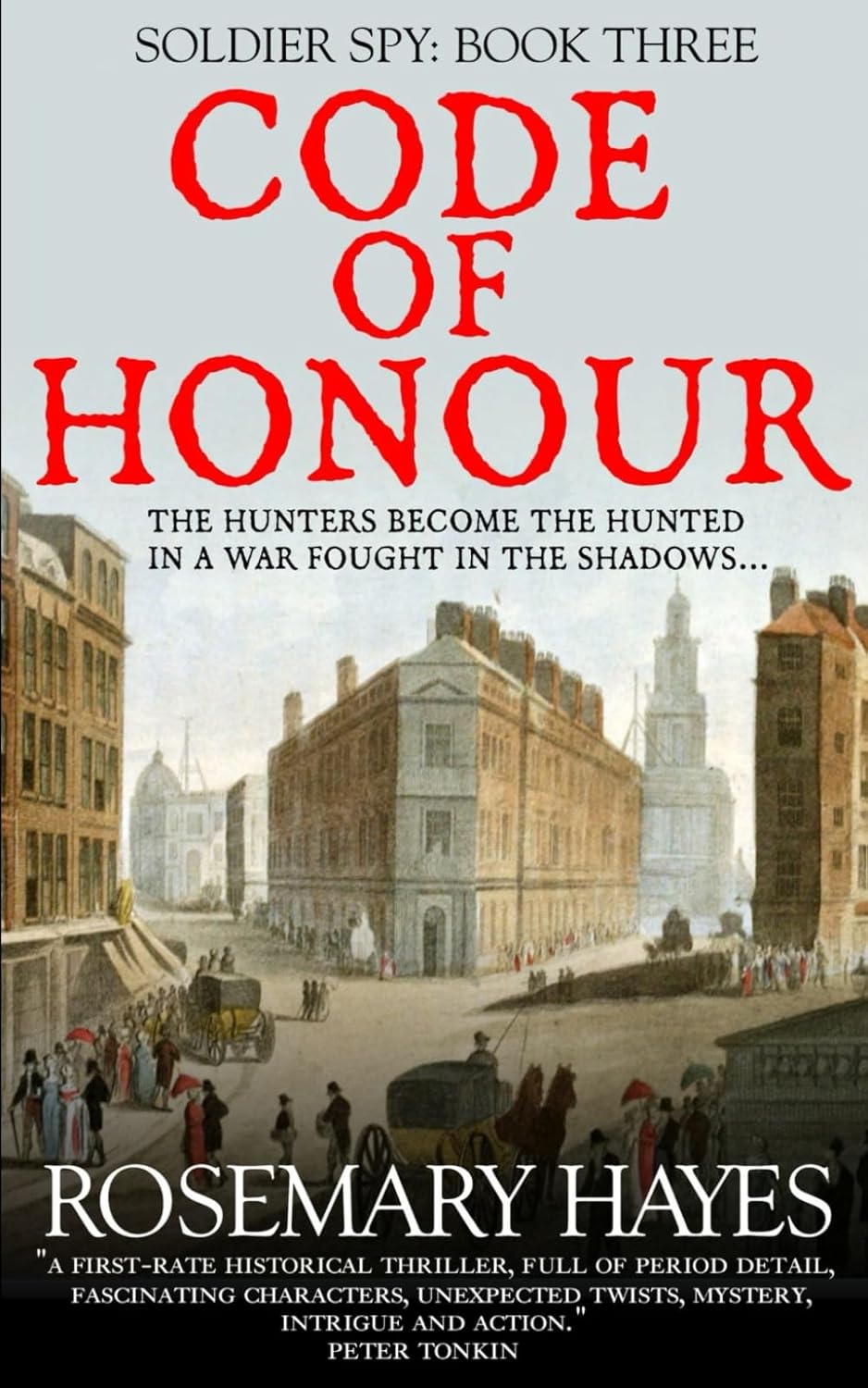
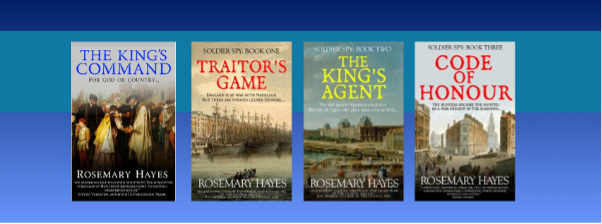
Rosemary has now turned her hand to writing adult fiction. Her historical novel ‘The King’s Command’ is about the terror and tragedy suffered by a French Huguenot family during the reign of Louis XIV. Traitor’s Game is the first book in the Soldier Spy trilogy, set during the Napoleonic Wars. The King’s Agent is the second and the third, Code of Honour, has recently been published.
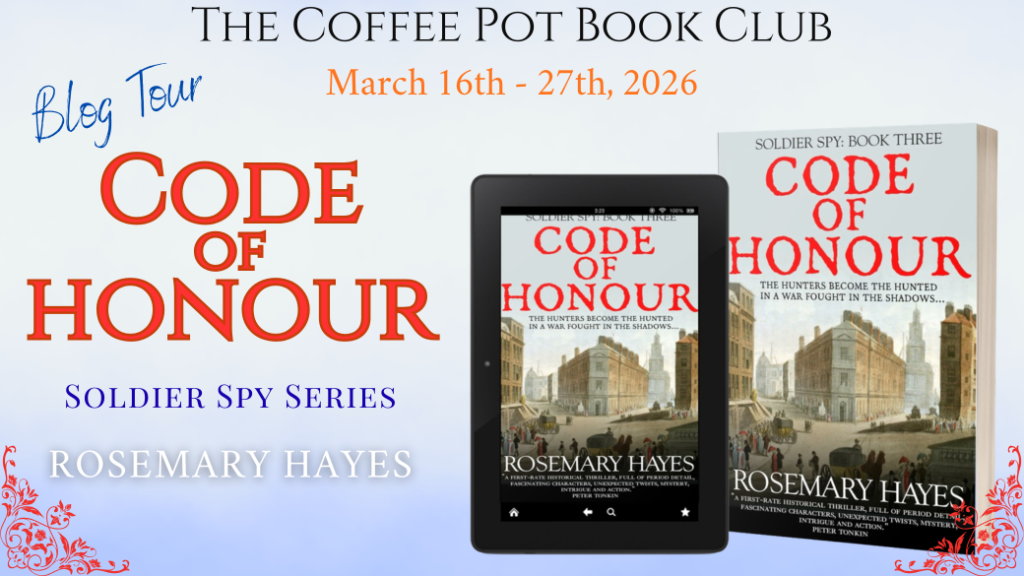
Over to Rosemary to tell us about the fascinating history behind the stories in the ‘Soldier Spy’ trilogy.
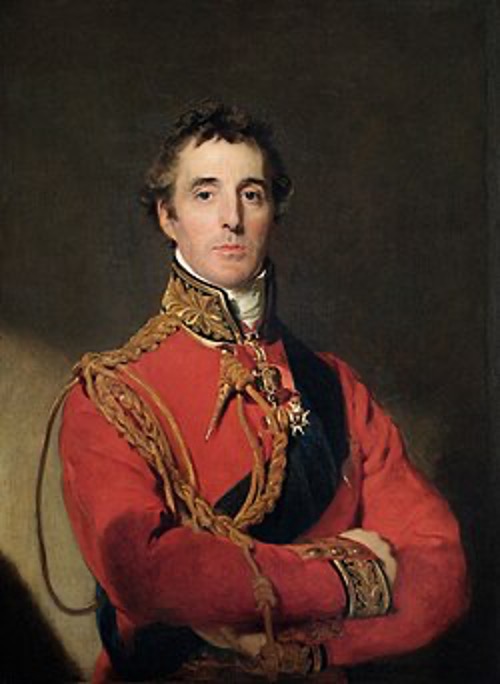 Arthur Wellesley, later Duke of Wellington The extent of spying on both sides during the Napoleonic Wars was considerable. Not only at a diplomatic level, through overseas embassies and through the Alien Office in London and highly placed double agents, but among networks of ordinary people, too, who passed on maps and documents, letters, money and even arms. Smaller documents or items of intelligence could be sewn into clothing or hidden in hollowed out walking sticks or riding crops. Or even, apparently, in a hatpin! Larger items were hidden in barrels or at drop off points on the French coast such as oyster sheds. And fishermen sometimes buried items on uninhabited islets for later collection.
Both sides employed complex codes and ciphers to protect their communications. Codebooks and cipher wheels were standard kit. One captured French codebook was worth its weight in gold to the British intelligence service.
In 1803, Britain declared war on France, ending a fragile peace between the two countries. In 1804, Napoleon Bonaparte crowned himself Emperor of the French.
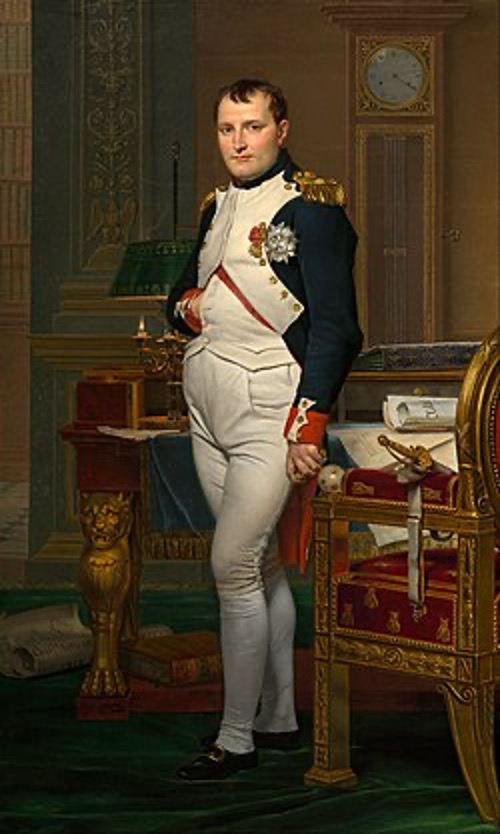 Napoleon Bonaparte, Emperor of the French The Napoleonic Wars were global and by 1808 France dominated the majority of continental Europe. The wars finally ended in 1815 with the Duke of Wellington’s defeat of the French at Waterloo.
The ‘Soldier Spy’ trilogy is set during the Peninsular War (1808-1814) in which the British, Spanish and Portuguese fought against the French. The war started because Portugal continued to trade with Britain. French troops marched through Spain into Portugal. Spain’s uneasy alliance with France soon broke down and French troops occupied Madrid.
In May 1808, Napoleon’s brother Joseph was installed as King of Spain, causing rebellions across the country. After the French suffered some defeats in Spain, Napoleon himself took charge and enjoyed some success, forcing British troops to withdraw.
But Napoleon did not stay long and he never returned to that theatre of war. He left in 1809 to oversee the defeat of Austria and then the disastrous invasion of Russia in 1812. His marshals were left in charge of the French troops in the peninsula.
Battles continued to rage in Portugal and Spain but it was the British victory at Salamanca in 1812 that was a major factor in Napoleon’s downfall. By this time, the ‘unbreakable’ Paris Cipher had been more or less cracked by the British so Wellington had advance knowledge of the battle plans of the French.
This, then, is the background to my three books, which begin in 1808 and end in 1812.
In the first book Traitor’s Game, we meet Captain Will Fraser, sent back from Portugal having been dismissed from the army in disgrace. With him is his sergeant, Duncan Armstrong, who has been severely wounded in battle. In London, they go to find Will’s brother, Jack. But Jack has vanished and in their desperate search for him they become unwittingly involved in the murky world of espionage, with tragic consequences.
In the second book, The King’s Agent, Will and Armstrong are working as agents for the British Government. Despatched to France to rescue undercover spies who have been exposed by a traitor, they must embed themselves with the enemy and play a dangerous game of deception. And Will Fraser also has a very personal score to settle.
In the final book of the trilogy, Code of Honour, Will and Armstrong are back in the thick of the Peninsular War, but this time as spies. The French are using a new code which is proving impossible to decipher. Now they must work with Spanish guerrillas to intercept messages between French Commanders and pass them to Wellington’s codebreakers, putting themselves in constant danger.
And it is here that Will’s troubled past catches up with him. Four years ago he lied to protect the woman he loved. Now he must tell the truth to save himself.
________
Connect with Rosemary
Website: www.rosemaryhayes.co.uk
Twitter/X: https://x.com/HayesRosemary
Facebook: https://www.facebook.com/rosemary.hayes.129
Amazon Author Page: https://www.amazon.co.uk/Rosemary-Hayes/e/B00NAPAPZC
Goodreads: https://www.goodreads.com/author/show/80106.Rosemary_Hayes
________
What’s Code of Honour about?
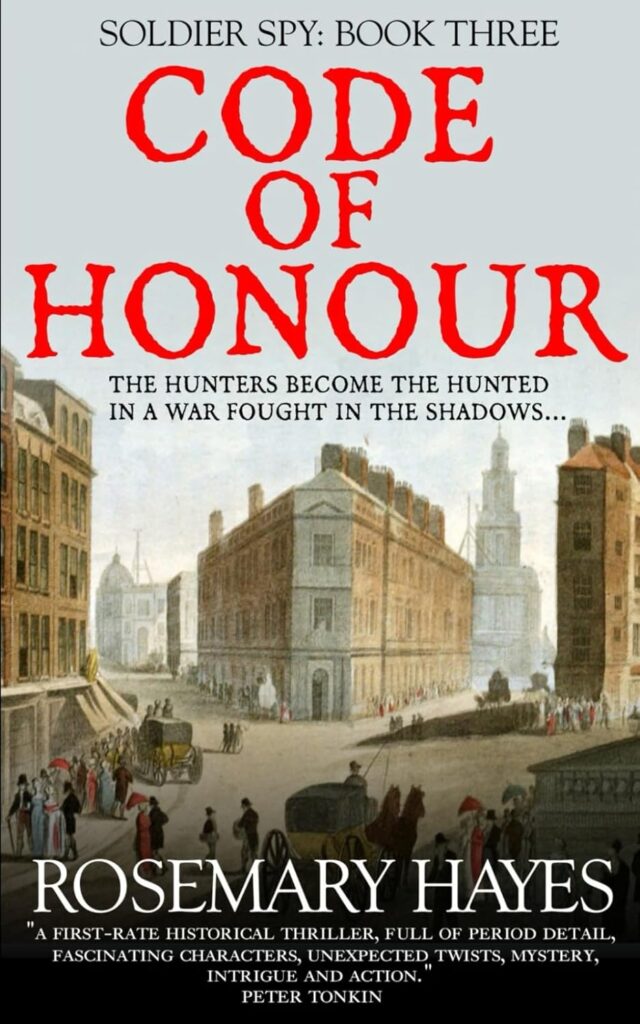
1812. Britain’s war against Napoleon continues.
Will Fraser and Duncan Armstrong have served their country well as spies, exposing traitors and rescuing betrayed royalists.
Now they are asked to support military operations in the Peninsular War. The French are using a new code which is proving impossible to decipher. Will and Armstrong must work with Spanish guerrillas to intercept messages between French Commanders and pass them to Wellington’s codebreakers.
Will is reluctant, however. Portugal was where he was falsely accused of cowardice and desertion and forced to leave the army. And Captain Harcourt-Browne, the jealous and vengeful officer who caused his downfall, is still serving there.
But Will is given a compelling – and personal – reason to carry out the operation. If he does go, there’s a slim chance he could be reinstated.
Enemy agents are soon on their trail; agents who want them dead. Somehow Will and Armstrong must evade them and join the guerrillas in a daring attempt to uncover Napoleon’s battle plans.
But Will’s troubled past catches up with him. Four years ago he lied to protect the woman he loved. Now he must own up to that lie to save himself.
_______
Buy Code of Honour here: https://books2read.com/u/bQLnNZ
This series is available to read on #KindleUnlimited.
_______
My thoughts about Code of Honour
Another good story from this knowledgeable author. Although hero Will knows he’s been treated unfairly, he refuses to complain and has become reconciled that his military career has been peremptorily ended. He has adapted well to working on his father’s farm and is reluctant to leave it when the call comes. But, of course, although cautious at first, he will do his patriotic duty.
The period detail is rich and authentic, not only in the description of the London and in the Spanish Peninsula, but the practical side of life. You walk through the street with Will and his sidekick Armstrong, or travel in guerilla and enemy infested country and see it as it is in vivid detail. The secondary characters, from actresses to the powerful, fictional and real, are deftly drawn.
The author handles the plot well, with good pacing. It’s an entertaining read with a satisfactory ending, although one question isleft open. I wonder if the author has left open the possibility of a fourth adventure…
The story is so good that, again, I’m reluctant to mention some editing issues that jolt. However, that’s the responsibility of the publisher and should be remedied. Will Fraser’s adventures should be better served – the character certainly merits it.
Alison Morton is the author of Roma Nova thrillers – INCEPTIO, CARINA (novella), PERFIDITAS, SUCCESSIO, AURELIA, NEXUS (novella), INSURRECTIO and RETALIO, and ROMA NOVA EXTRA, a collection of short stories. Audiobooks are available for four of the series. Double Identity, a contemporary conspiracy, starts a new series of thrillers. JULIA PRIMA, Roma Nova story set in the late 4th century, starts the Foundation stories. The sequel, EXSILIUM, is now out.
Find out more about Roma Nova, its origins, stories and heroines and taste world the latest contemporary thriller Double Identity… Download ‘Welcome to Alison Morton’s Thriller Worlds’, a FREE eBook, as a thank you gift when you sign up to Alison’s monthly email update. As a result, you’ll be among the first to know about news and book progress before everybody else, and take part in giveaways.
If you enjoyed this post, do share it with your friends!Like this:Like Loading...
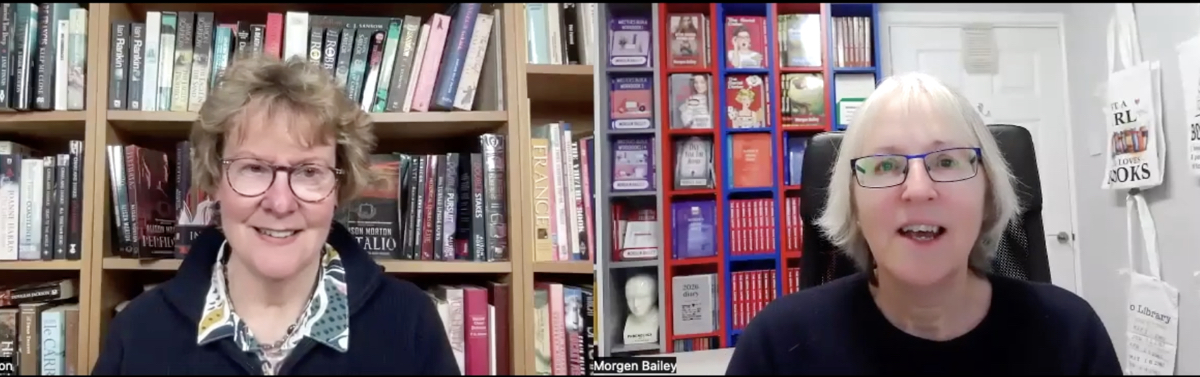
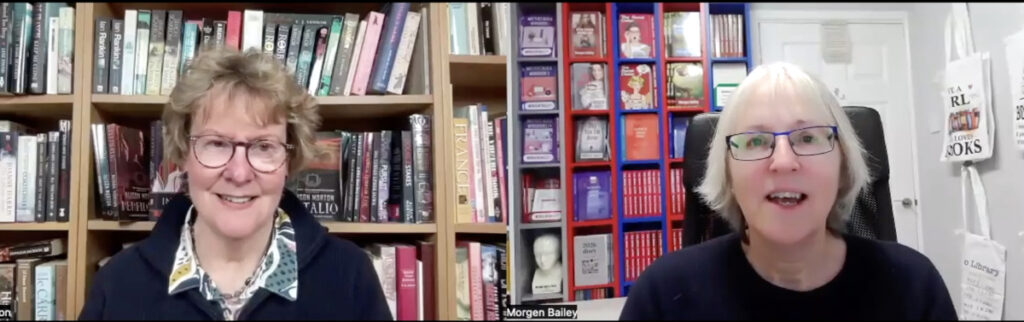 Alison and Morgen Bailey Writers can’t help talking about writing, especially when they meet other writers. When I was invited by Morgen Bailey to take part in the online Self Pub Fest in January, I enthusiastically said yes!
Self-Pub Fest is a quarterly in person book festival celebrating self-published authors. The online festival via individual hourly Zoom – a new addition – features genre panels with up to six authors in each panel. See the About page for dates and timings of both versions.
In January, I contributed to the crime fiction and historical fiction panels and loved being part of both. My fellow panellists were knowledgeable and very open to sharing their experience and their writing and publishing tips.
Morgen kindly set up a contributor page and posted the video recordings of both panels. And as generously, interviewed me at length about all aspects of writing, the writing life, self-publishing, and marketing. We had fun discussing it all and exchanging ideas – we can both talk for Europe to at least Olympic level!
Watch the video: https://youtu.be/ia0utkB3k9Y
About Morgen Bailey
Based in Buckinghamshire, England, Morgen Bailey (“Morgen with an E”) is a freelance editor, author, tutor, mentor, blogger, podcaster, WI/U3A speaker, competition judge and former Writer’s Forum magazine Competitive Edge columnist. She also runs a free monthly 50-word competition.
As well as full-length and shorter fiction, Morgen’s 40+ books also include writer’s block workbooks, writer’s ideas diaries, and an editing guide.
Morgen has edited over 300 novels, non-fiction books and short stories for publishers and authors directly since 2005.Details and testimonials on https://morgenbailey.com/editor.
She has attended many UK conferences and festivals and has hosted workshops at various venues including NAWG Festival (editing), Troubador’s Self-publishing Conference (competitions and podcasting) and Buckingham U3A (creative writing).
Before moving to Buckinghamshire, Morgen hosted eleven one-day, five/ten-week creative writing courses for Northamptonshire County Council’s Adult Learning sector from 2014-2018.
To help other writers, Morgen recently created a new academy (https://mb-creative-writing-academy.teachable.com) where she hosts live Zoom Q&A sessions, interviews established authors, provides pre-recorded video tutorials, and offers 1:1 mentoring and group workshop sessions.
Like her, her blog, http://morgenbailey.wordpress.com, is consumed by all things literary. Her website is http://morgenbailey.com, and she is ‘morgenwriteruk’ on social media.
I will add that she’s a champion of indie/self-publishing authors and seems to be always on the lookout for new ways to support the community. So, thank you, Morgen!
Alison Morton is the author of Roma Nova thrillers – INCEPTIO, CARINA (novella), PERFIDITAS, SUCCESSIO, AURELIA, NEXUS (novella), INSURRECTIO and RETALIO, and ROMA NOVA EXTRA, a collection of short stories. Audiobooks are available for four of the series. Double Identity, a contemporary conspiracy, starts a new series of thrillers. JULIA PRIMA, Roma Nova story set in the late 4th century, starts the Foundation stories. The sequel, EXSILIUM, is now out.
Find out more about Roma Nova, its origins, stories and heroines and taste world the latest contemporary thriller Double Identity… Download ‘Welcome to Alison Morton’s Thriller Worlds’, a FREE eBook, as a thank you gift when you sign up to Alison’s monthly email update. As a result, you’ll be among the first to know about news and book progress before everybody else, and take part in giveaways.
If you enjoyed this post, do share it with your friends!Like this:Like Loading...
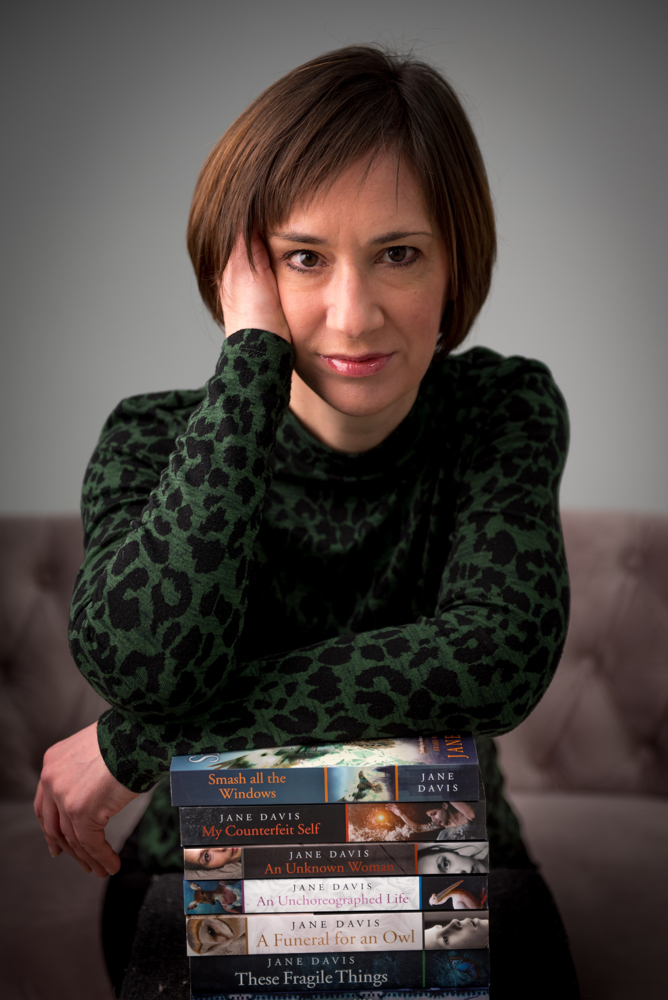 I’m delighted to welcome Jane Davis to the blog today. She is the author of character-driven historical and contemporary fiction that bridges meticulous research with compelling emotionally-rich storytelling. I’m delighted to welcome Jane Davis to the blog today. She is the author of character-driven historical and contemporary fiction that bridges meticulous research with compelling emotionally-rich storytelling.
Her novels explore subjects ranging from the life of a pioneering female photographer to families searching for justice after a devastating disaster. Interested in what happens when ordinary people are pushed into extraordinary situations, Jane introduces her characters when they’re under pressure and then, by her own cheerful admission, throws them to the lions. Expect tangled relationships, moral crossroads and a smattering of dark family secrets!
Her first novel, ‘Half-Truths and White Lies’, won a national award established by Transworld in their quest to find the next Joanne Harris. Since then, her books have continued to earn acclaim. She was hailed by The Bookseller as ‘One to Watch’. ‘An Unknown Woman’ won Writing Magazine’s Self-Published Book of the Year in 2016 and was shortlisted for the IAN Awards. ‘Smash all the Windows’ won the first ever Selfies Book Award in 2019. ‘At the Stroke of Nine O’Clock’ went on to be featured by The Lady Magazine as one of their favourite books set in the 1950s and was a Historical Novel Society Editor’s Choice.
Jane lives in a Surrey cottage that was originally the ticket office for a Victorian pleasure garden, known locally as ‘the gingerbread house’. Her home frequently finds its way into her stories – in fact, it met a fiery end in the opening chapter of ‘An Unknown Woman’.
When she isn’t writing, you may spot Jane disappearing up the side of a mountain with a camera in hand, or haunting Victorian cemeteries searching for the perfect name for her next character.
Over to Jane to tell us about…
Forgotten Pioneers: 18th-Century Businesswomen in London
My novel The Temple of the Muses tells the second part of the life of Dorcas Lackington (c. 1750–1795), wife of the London bookseller, James Lackington. Although her name isn’t written in history books, she played an active role in his business, overseeing sales, stock, and customer service, helping turn Lackington’s into London’s most affordable bookshop – an idea that was radical in its day.
We imagine Georgian England as a time when a woman’s place was in the home, but the reality is very different. Dorcas was far from being alone. London was the largest city in Europe, a global trading hub that was fast becoming a consumer society. This created huge demand for small-scale trade and services — shopkeepers, market sellers, brewers, bakers, dressmakers, lodging-house keepers, pawnbrokers and moneylenders, retail assistants and apprentices.
It relied on the great number of working class women to provide the labour force. One of those women was Mary Collier (c.1688–1762), who came from a poor rural family, but found employment in London in manual labour and domestic service. A rare example of a working class voice, she wrote about women’s labour struggles, publishing The Woman’s Labour (1739) and Poems on Several Occasions (1762) defending women’s work and describing its realities, and writing defiantly in AN EPISTOLARY ANSWER To an Exciseman, Who doubted her being the Author of the Washerwoman’s Labour:
“Tho’ if we Education had
Which Justly is our due,
I doubt not, many of our Sex
Might fairly vie with you.”
I won’t trouble you with tales of upper class women born into aristocracy, inherited wealth and property, although it is true that some managed large estates and rental properties, lent money, handled investments and provided much needed patronage for the arts.
Instead, I want to delve into a chapter of history that has often been overlooked: the remarkable women who ran businesses, produced luxury goods, and shaped the city’s economy. From Cheapside to Chiswell Street, female entrepreneurs were the beating heart of London’s commercial life.
Discovering City Women in the 18th Century
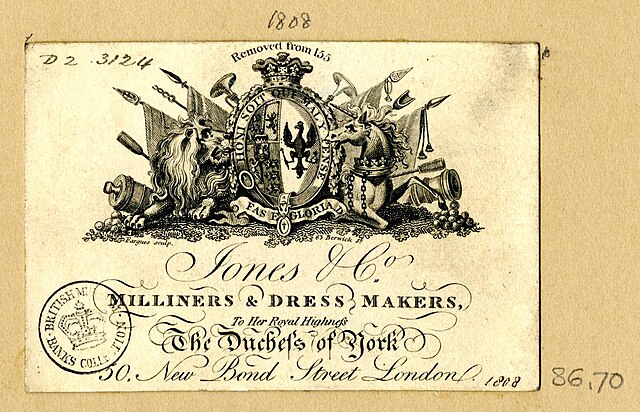
Much of what we know about the sheer number of businesswomen in London comes from trade cards and directories, tax records, records of court cases and apprenticeship records. Thanks to archives like those collected by Sarah Sophia Banks at the British Museum, we can glimpse the vibrant world of 18th-century female entrepreneurship.
Imagine the streets of Georgian London bustling with workshops, shops, and trading activity and alive with innovation, and commerce. Cheapside, known for at least five centuries as a centre for luxury goods, was home to numerous businesswomen trading in furniture, printing, fan-making, silver and gold, millinery, and mantua-making, among other trades. It was there that Elizabeth Carter traded as a silk mercer and Mary Hilton as a milliner (hat and fashion seller). And in Fleet Street, Mrs Brown, milliner, sold the latest Paris fashions.
University of Cambridge historian Dr Amy Louise Erickson explains: “There was nothing unusual about these businesswomen at the time. They were members of trade families, and it was normal for women to be in charge.” Women were not just present, but essential architects of commerce.
 CC Wikimedia Commons Families, Trade, and the Role of Women
Many businesswomen learned the trade from their families and were active in hands-on management, overseeing production, bookkeeping, marketing, and client relations. Legal structures allowed widows to inherit businesses, giving them formal authority and maintaining continuity. Marital status was no barrier: women were single, married, and widowed, and collectively they employed thousands of men and women across the city.
Although legal principles prevented women from owning property in their own right and signing legal contracts, many women traded as “feme sole traders” (recognised legally as independent in business), and we see examples of courts frequently enforcing women’s commercial contracts. Just as today, London’s economy increasingly ran on small transactions, not just big merchants — and women dominated this level.
One striking example is Mary and Ann Hogarth, sisters of the artist William Hogarth. In 1730, Hogarth designed their business card as they moved to new premises. The sisters sold fabrics and ready-made clothes, and even supplied uniforms for Christ’s Hospital School, which educated orphaned children of City freemen.
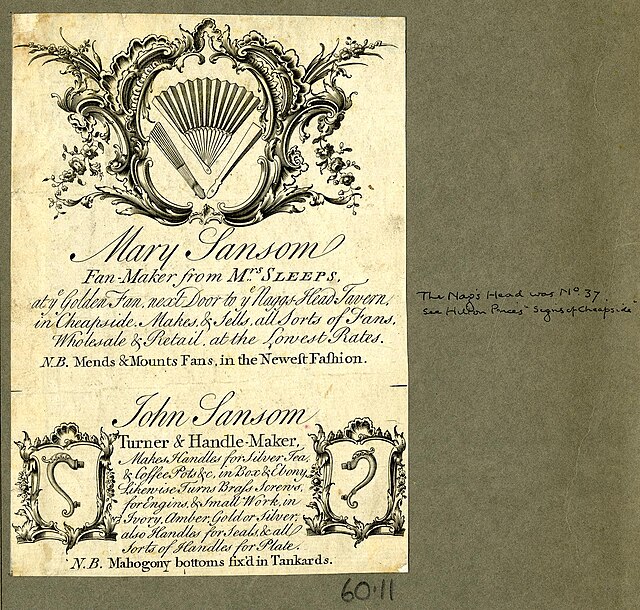 CC Wikimedia Commons Equally remarkable were the Sleepe sisters—Martha, Esther, and Mary—who built on the legacy of their mother, herself a fan-shop owner. Martha traded independently for over 35 years in St Paul’s Churchyard. Mary created a joint business card featuring both her own trade of fan-making and her husband’s as a turner and handle-maker. Esther married Charles Burney and bore nine children, including the novelist Frances Burney, while maintaining her business interests.
Notable 18th-Century Businesswomen
These women exemplify the range and impact of female entrepreneurship in London:
- Elizabeth Caslon (1730–1795)
Elizabeth worked alongside her husband in the Caslon Type Foundry on Chiswell Street, supplying metal type for printing across Britain and the American colonies. After her husband’s death, she continued managing the business alongside her sons, ensuring the family’s typographical legacy endured.
- Eleanor (Mary) Coade (1733–1821)
The daughter of a wool merchant and known as the “Queen of Artificial Stone,” Coade perfected Coade stone, a durable ceramic used for architectural ornamentation. Her firm, Coade & Co., produced statues, pediments, and decorative façades for royalty and public monuments, including St George’s Hall, Kew Gardens, and the Royal Pavilion, Brighton. Her success combined scientific experimentation with business acumen, navigating a male-dominated industry with extraordinary skill.
- Mary Hayley (1728–1808)
After the death of her husband, Mary ran a transatlantic trading firm, importing tea and other goods, and later operated whaling and sealing ventures. She conducted her business across London and Boston, a relatively rare example of a woman leading international trade.
- Martha Wray (1739–1788)
Martha inherited her husband’s medicinal warehouse and managed the sales of Turlington’s Balsam of Life, maintaining its popularity well into the 19th century.
- Hannah Humphrey (1750–1818)
As a print seller and publisher, Hannah worked alongside her husband and later independently, publishing works by James Gillray and becoming a central figure in London’s print culture.
- Elizabeth Godfrey (active 1720–1766)
A goldsmith and jeweller, Elizabeth ran her own workshop after her husband’s death, producing luxury items for aristocratic clients.
Patterns and Legacy
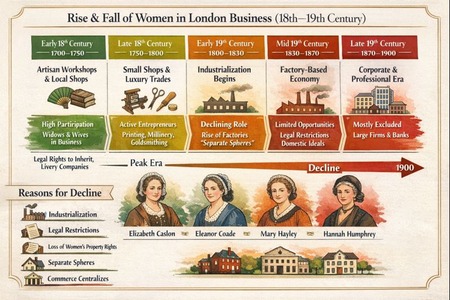
Several patterns emerge from these stories:
- Women often took over businesses as widows, but many were active co-managers during their husbands’ lifetimes. In the 18th century, widows and unmarried women could inherit property and run businesses in their own right, but upon marriage the common law principle of Coverture meant that her legal identity merged with her husband’s. This limited their formal control over property and business.
- Luxury and knowledge-based trades—books, printing, fans, jewellery, and fabrics—were common avenues for female entrepreneurship.
- The City of London’s livery companies and legal framework allowed women to inherit and run businesses formally, giving them real authority.
- Businesses were multi-generational, with workshops and homes often integrated under one roof.
As Dr Erickson notes: “These City businesswomen prospered and practiced a range of occupations in a way which would have been inconceivable in the middle of the 20th century. Historians still don’t understand exactly how or why women dropped out of the management of manufacturing and commerce.”
Part of the reason was that in the 18th century, trade was still largely artisan-based and workshop-centred, where family-run businesses were common, and women could contribute hands-on.
The 19th century saw the rise of industrial factories and large-scale commercial operations. Manufacturing became capital-intensive, increasingly male-dominated, and hierarchical. Women were often relegated to low-wage labour (assembly line, textile mills) rather than ownership or management.
In the 18th century, women were active members of livery companies, giving them formal recognition and networks. Over time, guilds became less central to commerce, removing a structure that had legitimised female business ownership.
Until The Marriage Property Act 1882 was passed, women did not have the right to full legal control over property they owned before marriage and property acquired after marriage. But by this time, cultural shifts had brought stronger ideas of “separate spheres”: men in the public sphere (commerce, politics, law) and women in the private, domestic sphere. Even women who had the skill or capital to run businesses were often discouraged from doing so because it was deemed socially inappropriate. Public respectability and social norms pressured middle- and upper-class women to focus on home, charity, and family.
Remembering London’s Forgotten Entrepreneurs
Late 18th Century life offers a vibrant snapshot of an era when women were vital participants in commerce, something that wouldn’t been seen again until the 20th century. I invite you to experience this extraordinary city – and one of its businesswomen – at a time of profound change.
The ebook of Jane’s novel The Temple of Muses is now out and the paperback will follow on 2 April 2026. See below for details.
———-
Connect with Jane
Website: https://jane-davis.co.uk
Facebook page: https://www.facebook.com/JaneDavisAuthorPage
Twitter/X: https://x.com/janedavisauthor
Pinterest: https://pinterest.com/janeeleanordavi/boards/
Get a FREE copy of her time-slip, photography-themed eBook, I Stopped Time, when you sign up to her newsletter
———-
About The Temple of the Muses
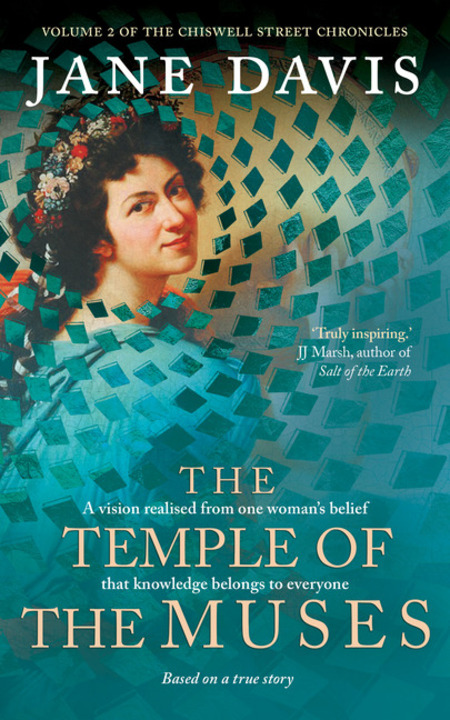 Volume 2 of the Chiswell Street Chronicles Volume 2 of the Chiswell Street Chronicles
The story continues…
London, 1780. As the city smoulders in the aftermath of the Gordon Riots, booksellers James and Dorcas Lackington refuse to answer despair with charity. Instead, they place their faith in something far more radical: books.
Convinced that reading offers the surest escape from poverty, the Lackingtons launch a daring experiment—pricing books so cheaply that even apprentices and servant girls can afford them. It is a bold challenge to the rigid social order of Georgian England, and one that places them squarely in danger.
Dorcas knows that life alongside James and his unshakable optimism will never be smooth. But she is no mere helpmeet. She is his compass, his conscience, and often the sharper mind. In a modest corner of Moorfields, their bookshop ignites a quiet revolution as ordinary people encounter philosophy, liberty, reason, and love for the first time.
Not everyone welcomes this awakening. The Junto, a powerful circle of men who believe that books breed dangerous ideas in the minds of the poor, move swiftly to crush the Lackingtons’ venture. As threats and intimidation escalate, Dorcas realises that survival will not come from retreat—but from becoming too large to silence.
Her answer is audacious: to build a cathedral to literature, not for kings or scholars, but for every woman and man who has ever been told that knowledge is not theirs to claim – The Temple of the Muses.
Perfect for readers of Maggie O’Farrell, Tracy Chevalier, Hilary Mantel, Sarah Waters, and Philippa Gregory, and for anyone who loves women’s historical fiction, book club fiction, and stories about books and the lives they change.
Buy the ebook here: https://books2read.com/thetempleofthemuses
You may also like to read the first book in the series, The Bookseller’s Wife which is only 99p until 15 March 2026.
Alison Morton is the author of Roma Nova thrillers – INCEPTIO, CARINA (novella), PERFIDITAS, SUCCESSIO, AURELIA, NEXUS (novella), INSURRECTIO and RETALIO, and ROMA NOVA EXTRA, a collection of short stories. Audiobooks are available for four of the series. Double Identity, a contemporary conspiracy, starts a new series of thrillers. JULIA PRIMA, Roma Nova story set in the late 4th century, starts the Foundation stories. The sequel, EXSILIUM, is now out.
Find out more about Roma Nova, its origins, stories and heroines and taste world the latest contemporary thriller Double Identity… Download ‘Welcome to Alison Morton’s Thriller Worlds’, a FREE eBook, as a thank you gift when you sign up to Alison’s monthly email update. As a result, you’ll be among the first to know about news and book progress before everybody else, and take part in giveaways.
If you enjoyed this post, do share it with your friends!Like this:Like Loading...
 A writing tic is something you write over and over again without realising it. Perhaps you’re in the zone and the words are flowing, especially on your first draft. You’re bashing the story out and before you know it your favourite writing tic is all over the place. A writing tic is something you write over and over again without realising it. Perhaps you’re in the zone and the words are flowing, especially on your first draft. You’re bashing the story out and before you know it your favourite writing tic is all over the place.
We can be completely oblivious to the way we overuse words and phrases without realising it. Their repetition can be distracting or boring for readers. Readers notice patterns, even if they can’t pinpoint exactly what’s wrong. Or perhaps it’s something that only we, the writers, spot when we go back and reread our work.
Sometimes, you discover (or are told!) you’ve used the same expression three times on a page. The problem? That repetition makes your writing sound amateurish and weak, even dull.
A confession
The text for my new book came back from the editor who pointed out some word repetitions. Two examples were ‘tight’ as in expression, and ‘pull’. (Action heroes are always pulling something or somebody…) After going through my manuscript with her suggestions, I thought (rather casually) that it might be worth quickly checking for others. Imagine my horror when I found ninety-two ‘looks’ in 24,000 words!
To be fair, many were doing different jobs
‘Look, can we reschedule?’
‘I’m looking for a good hotel’
He gave me a puzzled look.
She looked down.
‘Let’s have a quick look.’
‘Look’ is such a common word that we often overlook(!) it. But goodness me! So I went to work and halved the number, then pared that second selection. The text is now much stronger.
Possible alternatives
‘Do you think we could reschedule?’
‘Could you recommend a good hotel?’
The ‘he’ subject could say ‘What on earth are you talking about?’
She studied the ground, or She bowed her head, or She suddenly found her shoes very interesting.
‘Shall we quickly check?’
If you really can’t get away for a direct use of ‘look’, consider ‘gaze’, ‘study’, ‘glance’ and ‘search’.

Other common horrors include:
Overused dialogue tags (speech tags beyond ‘said’, ‘replied’, ‘continued’ and ‘added’. You’re allowed the occasional ‘cried out’ or ‘shouted’. 🙂 )
Repeated gestures (characters always running hands through hair)
Filler words (‘just’, really’, ‘quite’) and filler verbs (‘try’, ‘manage’, ‘start’)
Stereotypical descriptions (everyone has ‘piercing’ eyes)
Be careful with your smiles and the overuse of ‘I/he/she knew’ and ‘I/he/she thought’.
Remedies
First of all, be prepared to be self-critical. I know that’s unfashionable, but it alerts you to the fact that you have probably not written the most accomplished prose ever.
Use Find/Replace in your writing programme for words you suspect you overuse. I am fully aware I write ’turn’ and ‘pull’ far too often. These are my first targets.
I keep a list now. At the top are those two, plus (of course) ‘look’, ‘glance’ (eyes again!), ‘tight’, ‘really’, ‘smile’, ‘yet’ and ‘eye roll’.
For speech tags, resist the urge to add an adverb or use a less common word to produced potential jolters such as ‘he uttered dramatically’ or ‘she admonished’ in order to convey meaning. I’m sure you can insert tension in the scene by other means. Sometimes you can drop the speech tag entirely.
After you’ve done that, put your work through a critique writing partner, a strict beta reader and, best of all, an editor.
When you examine each of your tic words and think about their function in the sentence, you will nearly always find a different way of expressing it by using a stronger word, dialogue or a reaction.
Happy writing!
Alison Morton is the author of Roma Nova thrillers – INCEPTIO, CARINA (novella), PERFIDITAS, SUCCESSIO, AURELIA, NEXUS (novella), INSURRECTIO and RETALIO, and ROMA NOVA EXTRA, a collection of short stories. Audiobooks are available for four of the series. Double Identity, a contemporary conspiracy, starts a new series of thrillers. JULIA PRIMA, Roma Nova story set in the late 4th century, starts the Foundation stories. The sequel, EXSILIUM, is now out.
Find out more about Roma Nova, its origins, stories and heroines and taste world the latest contemporary thriller Double Identity… Download ‘Welcome to Alison Morton’s Thriller Worlds’, a FREE eBook, as a thank you gift when you sign up to Alison’s monthly email update. As a result, you’ll be among the first to know about news and book progress before everybody else, and take part in giveaways.
If you enjoyed this post, do share it with your friends!Like this:Like Loading...
Is it better to put a title at the beginning of each chapter in your book or should you merely put a simple number? I’ve never used chapter titles when writing my own books although I’ve absorbed them when reading other books.
What do chapter titles do?
 They can act as promises of what’s to come in the next few pages, be it a potential escalation (The Reading of the Will), an emotional disaster like loss or dread (The First Betrayal), or perhaps they point to an ironic promise that primes the reader for subversion (Happy Ever After?). They can act as promises of what’s to come in the next few pages, be it a potential escalation (The Reading of the Will), an emotional disaster like loss or dread (The First Betrayal), or perhaps they point to an ironic promise that primes the reader for subversion (Happy Ever After?).
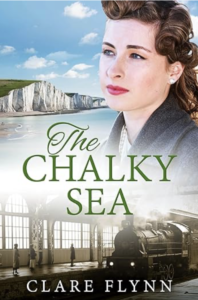
Clare Flynn’s The Chalky Sea set in southern England during the Second World War gives us The New Housekeeper, Raining Bombs and Sunday Roast with the Underwoods, all of which intrigue. Readers dive into the chapter already prepared for change, terror or a potentially joyful or awkward occasion. This can increase narrative momentum – especially useful in long novels.
Titles can give the author a chance to make a sly comment
Today, we are supposed to write from a distinct point of view – first person, third person, etc. and unlike in previous ages, the author is supposed to keep their nose out of the narration. However, chapter titles allow us to insert little comments in a sly way. Take, for instance In Which our Heroine Finds She has Made a Big Mistake, or If Only He’d Listened to the Weather Forecast or Losing your Camel in the Desert is Never a Good Idea. The author’s voice comes through clearly without seeming overtly intrusive.
Short, punchy titles can keep the pace going
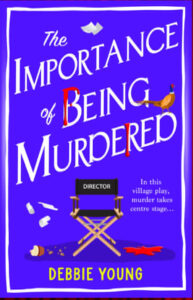 Debbie Young writes cosy crime stories set in a Cotswold village. Her next novel, The Importance of Being Murdered, set around the local amateur dramatic group putting on a play, has these chapter titles: 1 House-hunting, 2 Made Up, 3 Starstruck, 4 Caught in the Act, 5 Crushed, 6 Game for Anything… You can see the theatrical references, but my immediate reactions are to ask who and why. You can see the story has pace, just from these chapter titles. Debbie Young writes cosy crime stories set in a Cotswold village. Her next novel, The Importance of Being Murdered, set around the local amateur dramatic group putting on a play, has these chapter titles: 1 House-hunting, 2 Made Up, 3 Starstruck, 4 Caught in the Act, 5 Crushed, 6 Game for Anything… You can see the theatrical references, but my immediate reactions are to ask who and why. You can see the story has pace, just from these chapter titles.
Keeping the reader’s attention and interest
Titled chapters help readers navigate narratives that switch back and forth in time or where different characters tell their version of events in the story. Readers will feel guided rather than lost, especially in complex literary works. Sometimes they are downright intriguing such as A Surprise Involving Pink Lips from Mavis Cheek’s Amenable Women.
Contradicting expectations
 Sometimes, chapter titles can contradict the chapter’s surface action such as a chapter titled Safety that contains none, The Truth followed by lies or Home At Last in a place that isn’t safe. This can be the author being devious where they create irony, unease or moral tension without stating it explicitly. Sometimes, chapter titles can contradict the chapter’s surface action such as a chapter titled Safety that contains none, The Truth followed by lies or Home At Last in a place that isn’t safe. This can be the author being devious where they create irony, unease or moral tension without stating it explicitly.
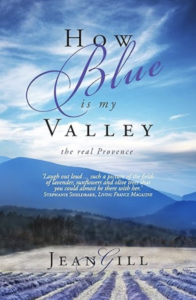
In her memoir about moving to France, How Blue is My Valley, Jean Gill uses chapter titles to contradict expected stereotypes: Connecting to Mains Alcohol, Interesting Things to do in a Bath, Over-sexed Foreign Bees.
Remembering where you are
These days, time can be at a premium and readers often consume one chapter at a time, and often at bedtime. Titles are more memorable than single numbers, especially if referring to an event: The Country Wedding, The Convoy North or That Day in Waitrose. This is more important for longer novels and for readers returning after a break.
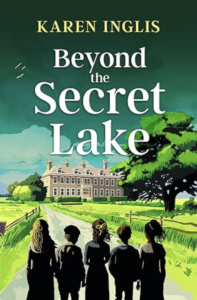 In children’s fiction, clever titles help keep young readers focused on the story. Good examples are The Trapped Pigeon, Jack’s Dream, Time Travel Plan, A Trip below Stairs in Karen Inglis’s Beyond the Secret Lake. In children’s fiction, clever titles help keep young readers focused on the story. Good examples are The Trapped Pigeon, Jack’s Dream, Time Travel Plan, A Trip below Stairs in Karen Inglis’s Beyond the Secret Lake.
Historical fiction writers often put a time and place, e.g. Virunum, Roman Noricum 370 AD or The Gates of Vienna 1683. While not strictly chapter titles, they also serve to orientate the reader in time and place.
What are the disadvantages of using title chapters?
Chapter titles carry both power and risk. Could they be regarded as old-fashioned or pretentious – too clever by half? Authors often avoid titles when they want maximum immediacy or to keep the author voice interrupting the narrative or to avoid being perceived as guiding the reader how to feel. Plain numbered chapters, especially without even the word ‘Chapter’ can feel starker, colder, more relentless – a legitimate artistic style choice.
Too much information!
Used carelessly, a chapter title could remove any ambiguity/tension in the scene intended by the author, or explain a joke before the scene unrolls, thus making the scene flop. It could pre-empt an emotional discovery – spoiler alert! Thrillers and other suspense-driven fiction are particularly vulnerable. Unless the writer is skilful, titles can leak information. Even vague titles create expectations the author may not intend.
Chapter titles can slow momentum
Titles create a pause – the eye stops and the brain resets. That pause isn’t always welcome in, for instance, fast-paced thrillers as they rely on seamless chapter-to-chapter flow. The risk is a loss of urgency – particularly damaging in action-heavy or minimalist narratives.
But having said that, I found that techno thriller writer Tom Clancy used short chapter titles in some of his Jack Ryan blockbusters such as The Sum of All Fears and they are still among the most successful thrillers around.
Exposing the author!
In a way, the author is intervening and so becoming visible. This is fine if the novel is self-aware, such as Henry Fielding’s The History of Tom Jones where the author’s voice is highly visible and signals design and structure: Chapter iv. – The reader’s neck brought into danger by a description; his escape; and the great condescension of Miss Bridget Allworthy.
Mannered or decorative
Weak titles are worse than no titles. Vague ones such as ‘Change’, ‘Loss’ or ‘Becoming’ or overly poetic phrases risk looking like artificial frosting that doesn’t earn its place.
They are hard to sustain consistently
This is dear to my heart! I find thinking up book titles hard enough. Strong chapter titles require careful thought, discipline and coherence. The first few chapters may have clever, consistent and intriguing titles, but by Chapter 30, inspiration may have fled. Readers are fairly canny and will spot weaknesses in an instant.
Are chapter titles considered old-fashioned?
Ah, this may be the crux of the matter. Chapter titles were quite popular in 19th-century novels (Charles Dickens’ works), mid-20th-century children’s books (C S Lewis’s Narnia series), classic fantasy (Susanna Clarke’s Jonathan Strange and Mr Norrell) and comic and satirical fiction. Modern minimalist literary fiction, particularly American novels, has trained readers to see numbered chapters as more serious and titled chapters as ornamental and frivolous.
But…
This is genre- and culture-specific. In British fiction, titled chapters have never fully disappeared. They’re not strongly stigmatised and are often seen as confident rather than quaint. In fantasy, historical, and speculative fiction, they remain mainstream.
Are they considered pretentious?
They can be, but only when misaligned. Pretentiousness arises when the title sounds wiser than the chapter , the image conjured up by the title exceeds the scene’s depth or the title points to themes the novel doesn’t handle. For instance, a chapter title Ontology followed by a scene where two people argue over a meal about whether to go on holiday that summer is plain silly.
The unspoken modern ‘rule’
Contemporary readers are comfortable with chapter titles if at least one of the following is true: the book has a strong voice; the structure is complex; readers of the genre expect guidance or clues; or the titles perform by providing orientation, irony or rhythm. Readers dislike chapter titles when they distract from the flow, the prose is already heavy or the titles feel ornamental.
When would you use chapter titles?
Questions to ask yourself:
- Does a title add something the prose cannot?
- Does it frame rather than explain?
- Would the chapter be significantly diminished if the title were removed?
- Is the title doing work, not merely acting as a decoration?
My conclusion
Chapter titles are neither inherently old-fashioned nor pretentious but a craft choice, although one with a narrow margin for error. They should intrigue enough to keep the reader turning the pages without spoiling the plot or the flow of the narrative. Used well, they signal authority and design; used poorly, they signal self-consciousness and author self-indulgence.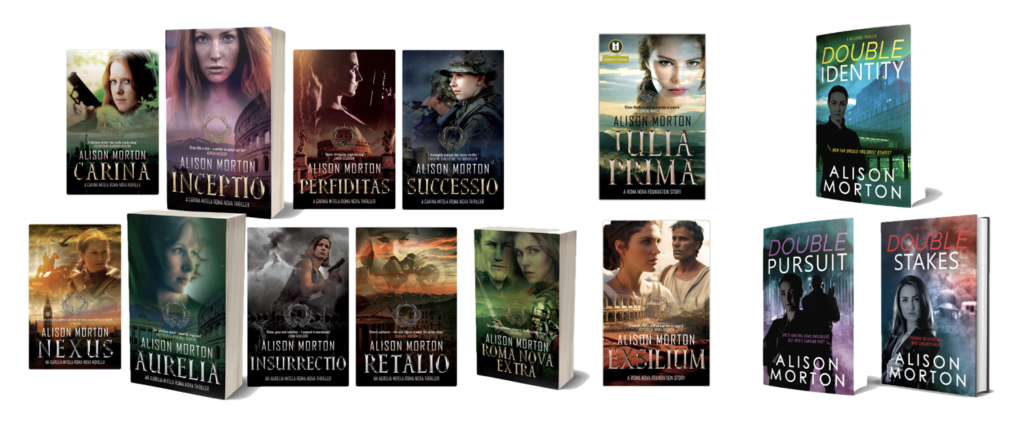 Although I do give parts in my Roma Nova thriller novels a title, I don’t use one for each chapter. The parts introduce distinctly separate acts of the story, but I want the narrative inside each act to flow, so the chapters are headed by a nice plain numeral. In my Mélisende Doubles novels, I take the minimalist route and readers get just a number as I don’t want to interrupt their reading pleasure. Although I do give parts in my Roma Nova thriller novels a title, I don’t use one for each chapter. The parts introduce distinctly separate acts of the story, but I want the narrative inside each act to flow, so the chapters are headed by a nice plain numeral. In my Mélisende Doubles novels, I take the minimalist route and readers get just a number as I don’t want to interrupt their reading pleasure.
What do you think?
Do you enjoy titles in the stories you read? Do you think they add or detract? I’d love to know your thoughts!
—————-
Note: Except where explicitly mentioned, all examples are made-up
Alison Morton is the author of Roma Nova thrillers – INCEPTIO, CARINA (novella), PERFIDITAS, SUCCESSIO, AURELIA, NEXUS (novella), INSURRECTIO and RETALIO, and ROMA NOVA EXTRA, a collection of short stories. Audiobooks are available for four of the series. Double Identity, a contemporary conspiracy, starts a new series of thrillers. JULIA PRIMA, Roma Nova story set in the late 4th century, starts the Foundation stories. The sequel, EXSILIUM, is now out.
Find out more about Roma Nova, its origins, stories and heroines and taste world the latest contemporary thriller Double Identity… Download ‘Welcome to Alison Morton’s Thriller Worlds’, a FREE eBook, as a thank you gift when you sign up to Alison’s monthly email update. As a result, you’ll be among the first to know about news and book progress before everybody else, and take part in giveaways.
If you enjoyed this post, do share it with your friends!Like this:Like Loading...
|
Subscribe to Blog via Email
Join 368 other subscribers.
Categories
Archive
|