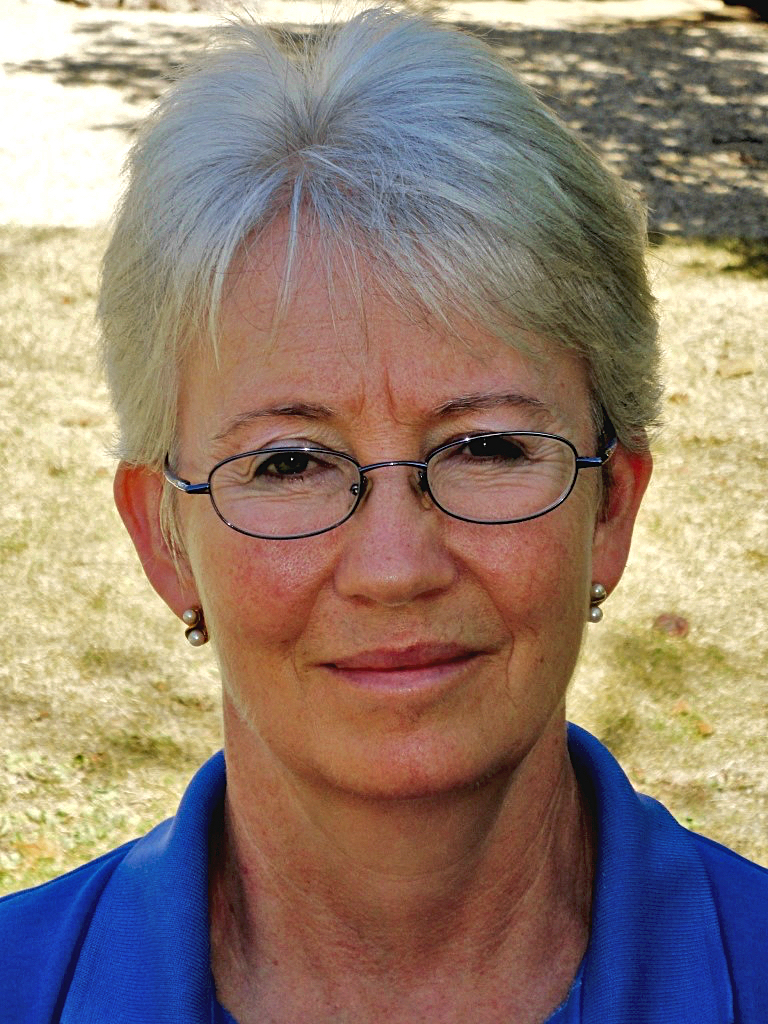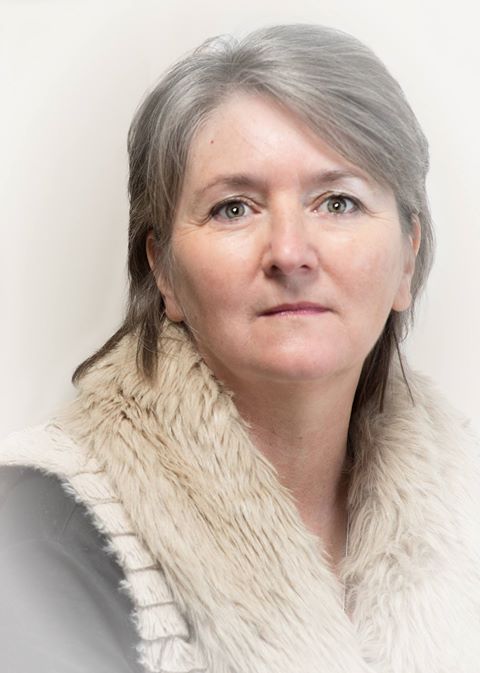
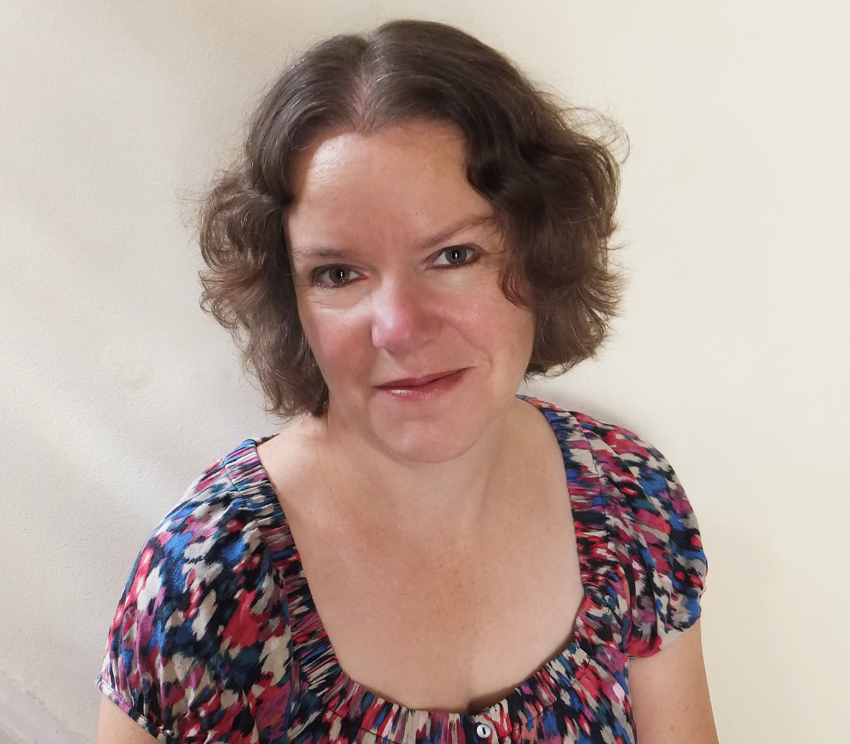
This week’s guest in the writers abroad series, Jean Gill, is an award-winning writer and photographer who left rainy Wales in 2003 to follow her creative dreams in Provence. She lives with two scruffy dogs, a Nikon D750, a beehive named Endeavour,and a man. For many years, she taught English in Wales and was the first woman to be a secondary headteacher in Wales. She is mother or stepmother to five children so life was hectic.
Since her first book of poetry was published in 1988, Jean has written twenty-three books in various genres. She is best known for her recent historical fiction and fantasy novels but her work also includes a popular dog book and a cookery book on goat cheese. With Scottish parents, an English birthplace and French residence, she can usually support the winning team on most sporting occasions.
Over to Jean to reveal her particular terroir…
I imagine myself back in that Swansea café thirty-six years ago. The Man’s eyes are an intense blue as he says, ‘I’d like to take you to the south of France.’
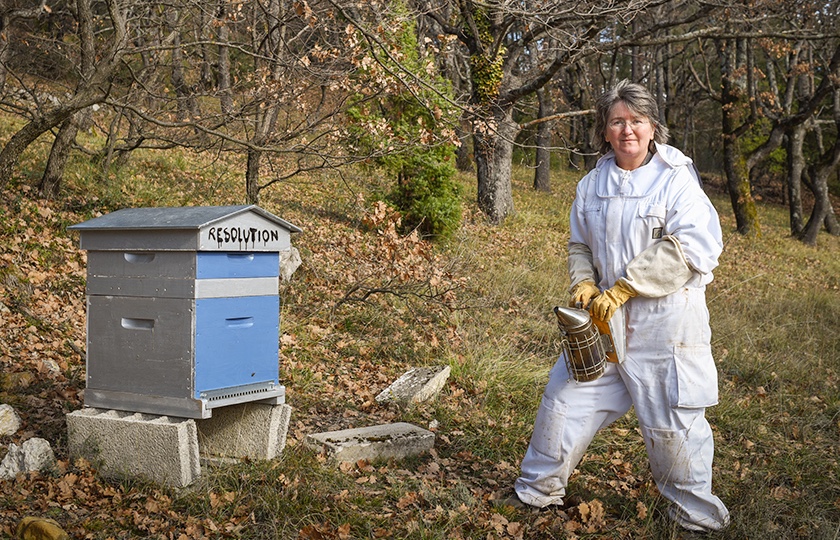
With hindsight I reply, ‘One day, we’ll be dressed in white suits, stumbling around a Provençal hill-side in the dark, carrying a beehive full of honeybees.’
Maybe he’d have thought twice about a shared future.
But there we were on a balmy August night, waiting for the bees to go to bed so we could shut their entrance with foam, carry the hive off to the car and relocate it in a carefully prepared site in our orchard.
On hot summer evenings, bees cluster around their entrance like neighbours gossiping on the porch, and we waited a long time until they headed for bed. Then we secured the hive with leather belts and took the new lodgers home.
My Beemaster had given me full instructions on how to recuperate the hive he’d carefully nurtured for me but I was no longer the apprentice. These were my bees now and I’d watched them from the moment we caught the swarm hanging on a branch. This swarm was destined for me, much to the envy of the other learners, who all wanted bee colonies.I was also there when the Beemaster painted a pink spot on the queen – the colour code for that year. I called the queen Lily the Pink, knowing already that naming bees leads to heartache but unable to resist the temptation.
So began my first year beekeeping in 2015, after two years’ practical course. My sole aim was to keep bees alive but in a good year we do harvest the honey and have fifty jars of amber sweetness stored in the cellar. Nothing tastes as good as the honey harvest from your own bees, working on your own ‘terroir’, the French word that means so much more than ‘land’. ‘Home’, ‘soil’, ‘origin’ all contribute to the flavour of ‘terroir’.
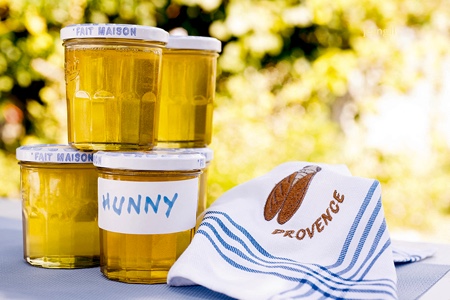
When I taste our honey, I taste the garrigue, herbs and wildflowers, or the sap of holm oak trees after it’s been processed by ants. I’ve watched my bees harvesting this glistening ‘honeydew’ from the leaves of truffle oaks in our orchard. Each harvest is a different colour, depending on weather, flowers in bloom and time of harvest.
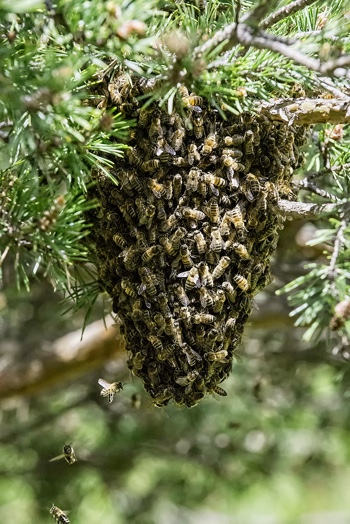 Everything a beekeeper does is a judgement call, based on personal philosophy and analysis of the bees’ needs. If it was easy to help bees thrive these days, it wouldn’t be as important, so there are highs and lows as we fight against the damage caused by pesticides, environmental destruction, climate change and human ignorance. Everything a beekeeper does is a judgement call, based on personal philosophy and analysis of the bees’ needs. If it was easy to help bees thrive these days, it wouldn’t be as important, so there are highs and lows as we fight against the damage caused by pesticides, environmental destruction, climate change and human ignorance.
Wouldn’t it be amazing if we could shift shape into bees, enter a beehive and experience life as bees? How different that mindset would be from our human obsessions with individuality and rights. How different would be our vision of the natural world, not just in adding ultra-violets to our colour spectrum and losing red, but in being part of a super-organism, a hive mind.
A writer only has to wonder, ‘What if?’ for a story to begin working its magic. In this case the story of a misfit girl, stung by wild bees in the forbidden forest and reborn as their shape-shifting queen. A story written from love of bees.
All photos © Jean Gill
Thank you, Jean. I love watching the bees busy around the lavender, sage and rosemary in my garden. Busy little people!
———–
Find out more about Jean
Website: www.jeangill.com
Twitter: https://twitter.com/writerjeangill @writerjeangill
Facebook: https://www.facebook.com/writerjeangill
Instagram: https://www.instagram.com/writerjeangill/
———–
And now, a terrific offer from Jean!
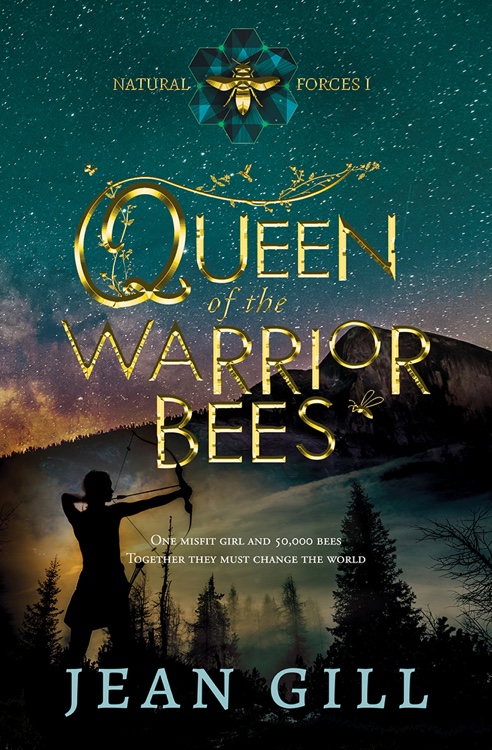
Award-winning epic eco-fantasy
One misfit girl and 50,000 bees against the might of the Citadel.
Mielitta, a despised servant of dubious parentage, yearns to be an adult and fit into Citadel society but the all-powerful mages won’t even consider her for the Maturity Test. As they fight amongst themselves, Mielitta overhears their secrets and plans to escape.
Bastien and Jannlou, the boys who terrorised her as a child, have grown into their status as Mages and she cannot escape them forever.
In desperation, she flees to the forbidden Forest and its dangerous attractions. Her scent angers thousands of bees and, although she survives their attack, she has changed. As a bee-shifter, Mielitta sees the world differently.
This bond works both ways and the bees need Mielitta’s help as the rift widens between Forest and Citadel. Can Mielitta find the fulfilment she craves or will the Mages crush every cell of her second nature?
Block Nature out and she’ll force a way in.
‘Gill’s work stands apart through its strikingly inventive concept, distinctive sense of place, and masterful use of imagery.‘ The Booklife Prize
Queen of the Warrior Bees is FREE until 31 May – https://books2read.com/QueenBee
Alison Morton is the author of Roma Nova thrillers – INCEPTIO, CARINA (novella), PERFIDITAS, SUCCESSIO, AURELIA, NEXUS (novella), INSURRECTIO and RETALIO, and ROMA NOVA EXTRA, a collection of short stories. Audiobooks are available for four of the series. Double Identity, a contemporary conspiracy, starts a new series of thrillers.
Find out more about Roma Nova, its origins, stories and heroines and taste world the latest contemporary thriller Double Identity… Download ‘Welcome to Alison Morton’s Thriller Worlds’, a FREE eBook, as a thank you gift when you sign up to Alison’s monthly email newsletter. You’ll also be among the first to know about news and book progress before everybody else, and take part in giveaways.
If you enjoyed this post, do share it with your friends!Like this:Like Loading...
 This week’s guest in the writers abroad series, Kathleen McGurl, actually lives in Christchurch, England but when pandemics allow she spends a lot of time travelling in Europe with her husband in their motorhome, especially France and Spain. She has written ten dual timeline novels, set in England, France and Ireland, and is constantly inspired by the history of any place she finds herself in. This week’s guest in the writers abroad series, Kathleen McGurl, actually lives in Christchurch, England but when pandemics allow she spends a lot of time travelling in Europe with her husband in their motorhome, especially France and Spain. She has written ten dual timeline novels, set in England, France and Ireland, and is constantly inspired by the history of any place she finds herself in.
Over to Kathleen!
I write dual timeline novels, where a historical mystery is uncovered and resolved in the present day. I write the two storylines as alternating chapters. It’s a tricky genre to write, as each novel needs two sets of characters and two plot-lines, yet must hang together as a single story.
One way to tie the two timelines together is by using a strong and distinctive setting, that is ‘seen’ by the reader in both time periods. Often the location has changed dramatically over the decades or centuries between the two storylines. I’ve used a west of Ireland village abandoned during the 1840s famine (The Girl from Ballymor); a Lake District valley evacuated and flooded to make way for a reservoir which then dried out during a drought (The Drowned Village); and a large country house that’s now a hotel (The Daughters of Red Hill Hall).
In The Secret of the Château, it’s probably no surprise that the setting is a French château. The historical story is set during the French revolution, when it is lived in for the last time by members of the doomed aristocracy. And in the contemporary story, I had a group of newly retired friends decide to pool their resources and buy it – something I’ve dreamed of doing with my mates!
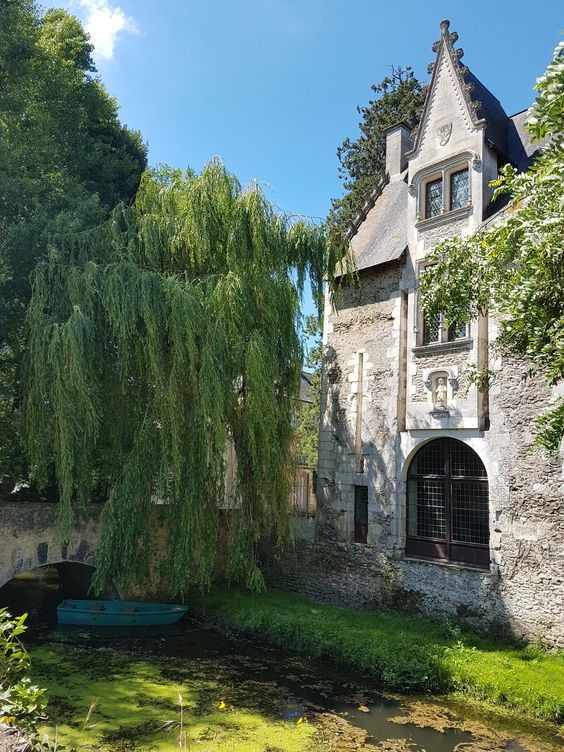 I’d seen a small château in the Loire valley that had inspired my book, and took some photos of it to use when writing it. But my favourite part of France is the Alpes-Maritimes. I’m a mountain lover, and being near the Alps while also within easy reach of the Mediterranean coastline is my idea of heaven. So I decided to uproot my château and put it in one of the high valleys where I’d spent a couple of months touring, in 2019. I’d seen a small château in the Loire valley that had inspired my book, and took some photos of it to use when writing it. But my favourite part of France is the Alpes-Maritimes. I’m a mountain lover, and being near the Alps while also within easy reach of the Mediterranean coastline is my idea of heaven. So I decided to uproot my château and put it in one of the high valleys where I’d spent a couple of months touring, in 2019.
There aren’t so many châteaux in that area, but there are enough that my story was plausible, and I very much enjoyed having my contemporary character go for walks in the local hills as well as visit the nearby village, shopping in the market, watching the locals play pétanque etc. It was a fun book to write, and my research was helped immensely by having spent those weeks touring the area in our motorhome.
Covid-19 and lockdowns have meant our travelling has been severely restricted recently. Thankfully I came up with an idea for a novel set right where I live – Christchurch, England, and that’s my current work-in-progress. I hadn’t realised until I moved here in December 2020 that it was a hotbed of smuggling in the 18th century. With the help of the local library I’ve researched its history thoroughly and have come up with a dual timeline novel that encompasses many real-life local smuggling stories. I am having a wonderful time writing it!
My newest completed book is The Lost Sister (publication date 12th May 2021). It tells the story of three sisters who work on three sister ships – Olympic, Titanic and Britannic. Much of the setting of the historical story is on board the ships, so of course this research had to be done via books. That worked, during the pandemic.
Soon we’ll be able to travel again, I hope. I have a novel in mind set in Dublin during the 1916 uprising, and another set in Chamonix, France. Before I embark on either book I’d like to go back to these areas and really immerse myself in the locations.
————-
Connect with Kathleen
Website: https://kathleenmcgurl.com
Twitter: https://twitter.com/KathMcGurl @KathMcGurl
Facebook page: https://www.facebook.com/KathleenMcGurl
————-
Discover more about The Secret of the Château…
(Which I enjoyed immensely and recommend!)
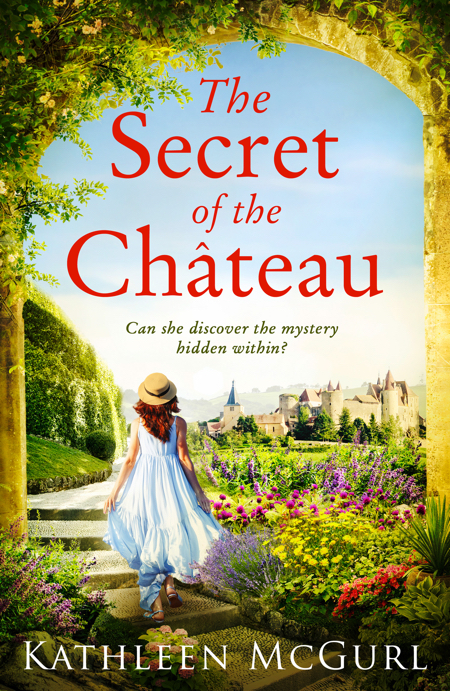
1789. Pierre and Catherine Aubert, the Comte and Comtesse de Verais, have fled the palace of Versailles for their château, deep in the French Alps. But as revolution spreads through the country, even hidden away the Auberts will not be safe forever. Soon they must make a terrible decision in order to protect themselves, and their children, from harm.
Present day. When Lu’s mother dies leaving her heartbroken, the chance to move to a château in the south of France with her husband and best friends seems an opportunity for a new beginning. But Lu can’t resist digging into their new home’s history, and when she stumbles across the unexplained disappearance of Catherine Aubert, the château begins to reveal its secrets – and a mystery unsolved for centuries is uncovered…
Buy from Amazon UK
Alison Morton is the author of Roma Nova thrillers – INCEPTIO, CARINA (novella), PERFIDITAS, SUCCESSIO, AURELIA, NEXUS (novella), INSURRECTIO and RETALIO, and ROMA NOVA EXTRA, a collection of short stories. Audiobooks are available for four of the series. Double Identity, a contemporary conspiracy, starts a new series of thrillers.
Find out more about Roma Nova, its origins, stories and heroines and taste world the latest contemporary thriller Double Identity… Download ‘Welcome to Alison Morton’s Thriller Worlds’, a FREE eBook, as a thank you gift when you sign up to Alison’s monthly email newsletter. You’ll also be among the first to know about news and book progress before everybody else, and take part in giveaways.
If you enjoyed this post, do share it with your friends!Like this:Like Loading...
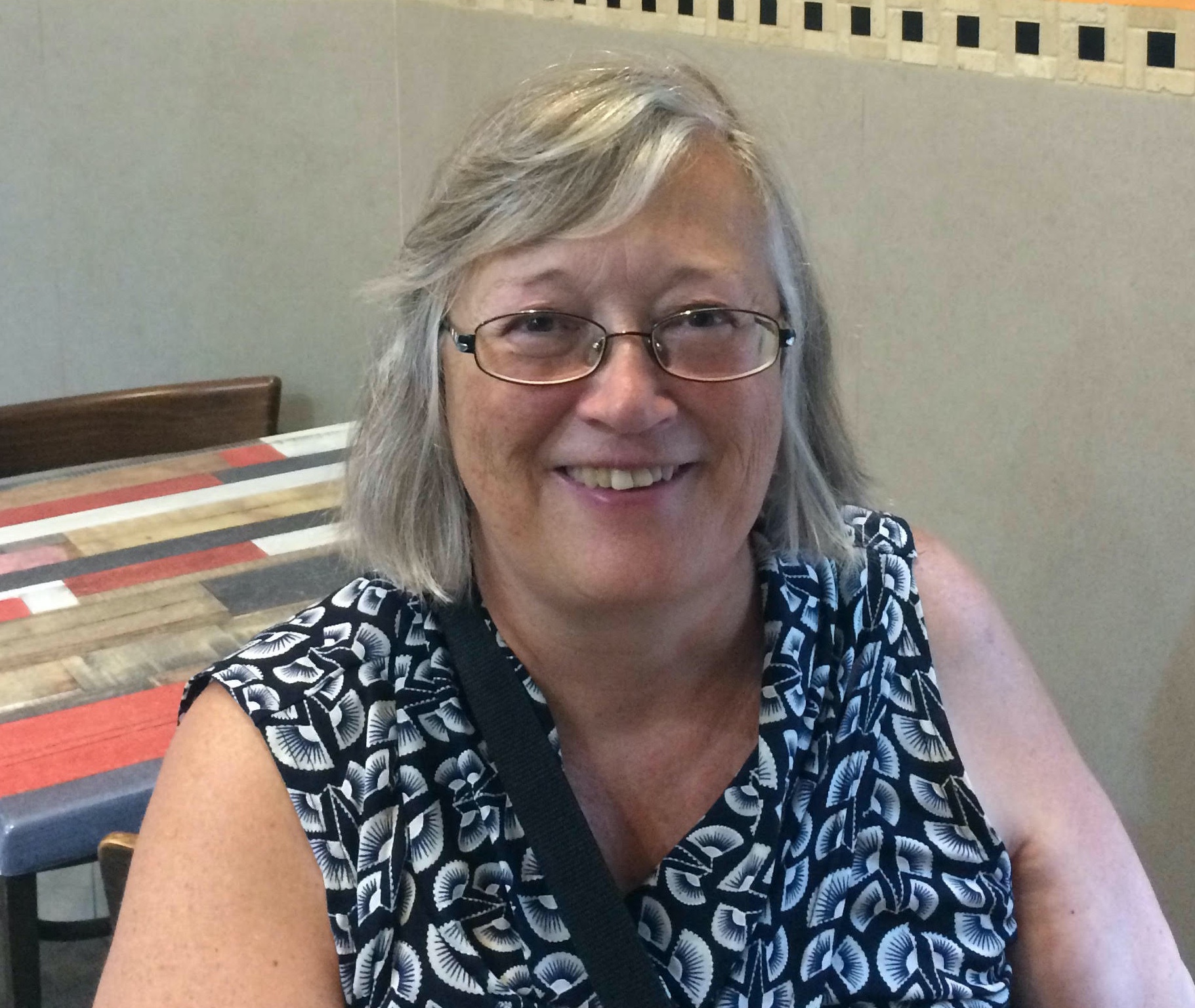
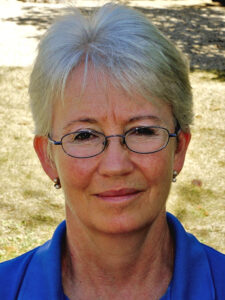 Continuing the writers abroad series, this week it features Vanessa Couchman whom I met at a literary festival here in France. Vanessa writes historical novels and short stories set in France or on the Mediterranean island of Corsica. Quirky true stories often find their way into her fiction, and she likes nothing more than pottering around ruined châteaux or exploring the lesser-known byways of France. Continuing the writers abroad series, this week it features Vanessa Couchman whom I met at a literary festival here in France. Vanessa writes historical novels and short stories set in France or on the Mediterranean island of Corsica. Quirky true stories often find their way into her fiction, and she likes nothing more than pottering around ruined châteaux or exploring the lesser-known byways of France.
Over to Vanessa!
People sometimes say to me, “How’s life in Provence?” When you mention the South of France, people naturally think of living the good life in some Lubéron village, like Peter Mayle.
Actually, I live in the other South of France, the Southwest: less well known, but no less interesting, and endowed with its fair share of picturesque places and glorious scenery.
We moved down here from London nearly twenty-five years ago, seeking a less frantic, more satisfying lifestyle. We are still here, so it was a good move, although a bit of a leap in the dark.
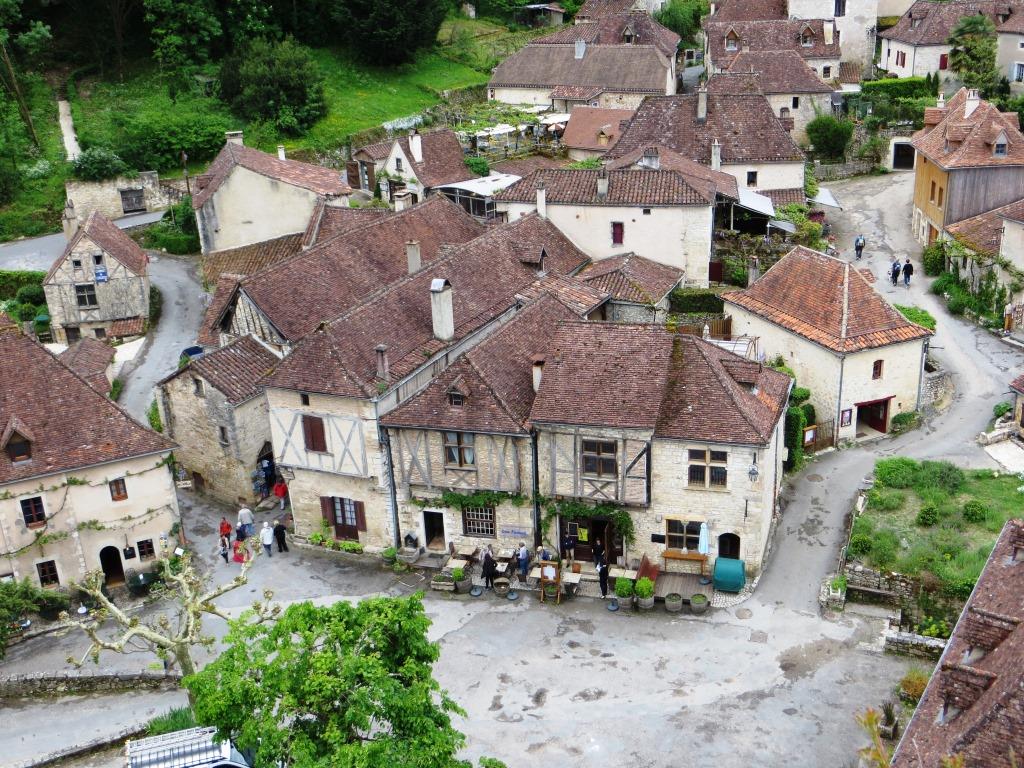 Saint-Cirq-Lapopie – one of the region’s many hilltop villages France has had a huge influence on me as a writer. First, if we hadn’t moved here, I would probably never have started writing fiction again after a gap of decades. My freelance lifestyle offered more opportunity to return to it.
Just as important, France has given me the inspiration behind my writing. Our region is pervaded by history. It was once a frontier zone with an independent spirit, which it retains today. Much of its past involved crusades against heretics or wars with foreign powers.
All this has made its mark on the now-tranquil countryside and villages and left plenty of material for a history nut like me.
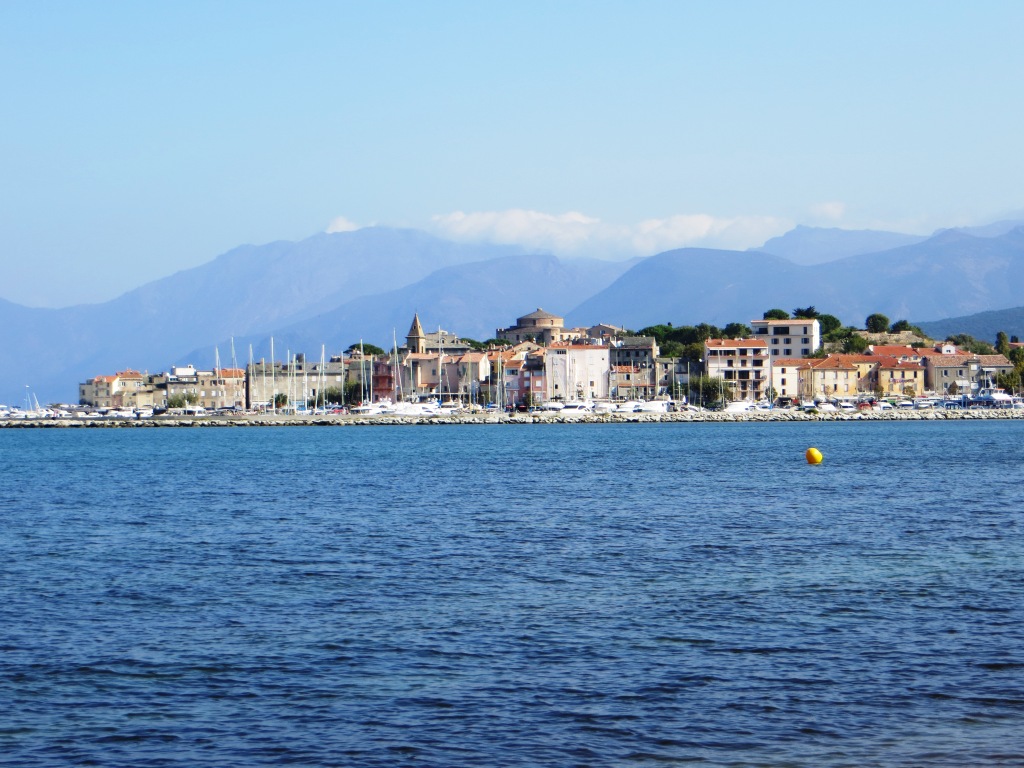 Corsica – Saint-Florent with Cap Corse mountains behind In fact, my first forays into novel-writing were set not in mainland France, but on the French island of Corsica. From our first visit in 2003, I was smitten. The magnificent, mountainous landscape, distinctive culture and turbulent history are gifts for a novelist. My first two books are set there, and I plan to return to Corsica for future novels.
Coming back to “France continentale”, as the Corsicans call it, I am writing a trilogy set partly in Southwest France, spanning the period from the 1890s to 1945.
The series follows the fortunes of a young woman born to a modest farming family in Aveyron, one of France’s most rural départements (counties). She has ambitions well above her station, and the trilogy chronicles her progress as an opera singer through the momentous events of the 20th century.
The protagonist travels far from her native Aveyron to Paris, Vienna, Italy and New York, among other places, but she retains a deep attachment to her roots. French people are strongly connected to their rural past. This has spawned a genre of novels, Romans du Terroir. They are mostly rustic family sagas, which venerate a lifestyle that disappeared not so very long ago.
Alongside wars and political upheaval, profound social changes took place in French rural society over the 20thcentury. Farmers abandoned the land, attracted by the much shorter working hours and the more regular income the towns offered. The mechanisation of agriculture, although slower to take hold in France than in other countries, also cut a swathe through the rural workforce.
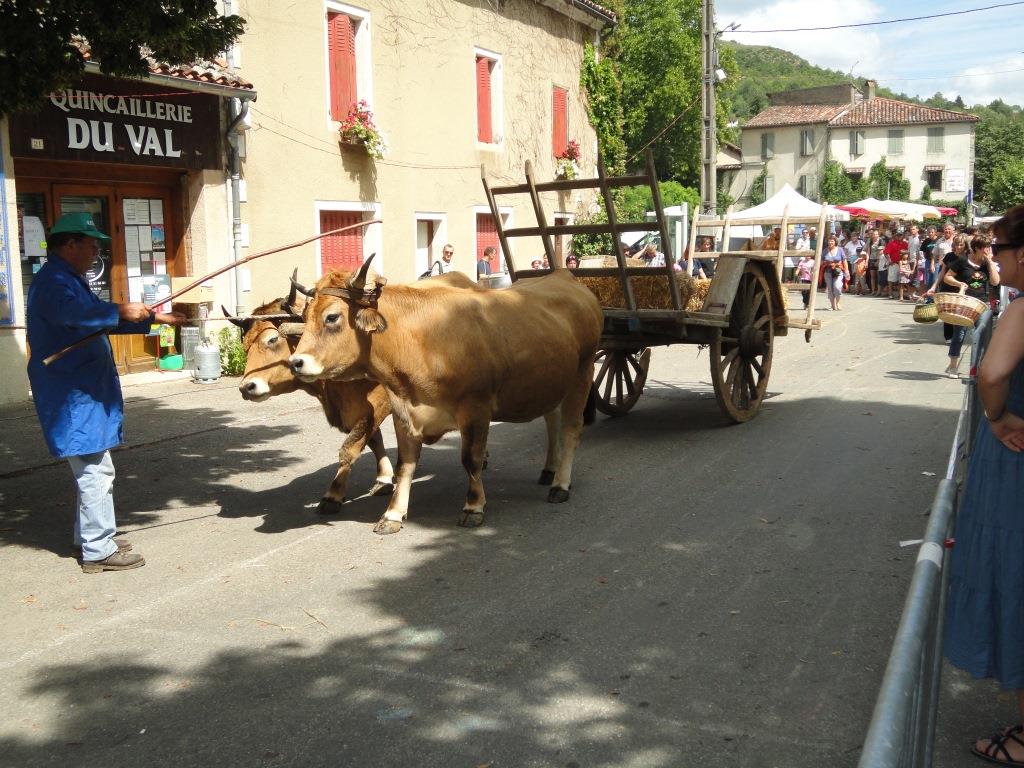 Oxen once used for ploughing In researching past times, I am fortunate that acquaintances have lived through them. Our very elderly neighbour told us stories of his youth, when they harvested with scythes. Our friend Claude (now in his early seventies) said his parents still ploughed with oxen.
These first-hand accounts have enabled me to incorporate some authentic colour, and I have unashamedly adapted people’s anecdotes for my novels.
Finally, after so many years here, I now speak French well, although not perfectly. Despite years of French at school, I could barely string two words together when we arrived. Intensive language classes put me on the right road.
As well as facilitating conversations with local people, reading French is essential for my writing. This has enabled me to immerse myself in the Romans du Terroir I mentioned earlier and to gain a feel for the spirit of the age. I can also study French history books, consult primary sources and navigate online French archives, which are not always the most user-friendly. Thank goodness for the internet, though, especially in these restricted times!
If travel broadens the mind, living abroad expands one’s horizons.
All images ©Vanessa Couchman
———
Connect with Vanessa
Website: https://vanessacouchmanwriter.com.
Facebook: https://www.facebook.com/vanessacouchman.author/
Twitter: https://twitter.com/Vanessainfrance
———
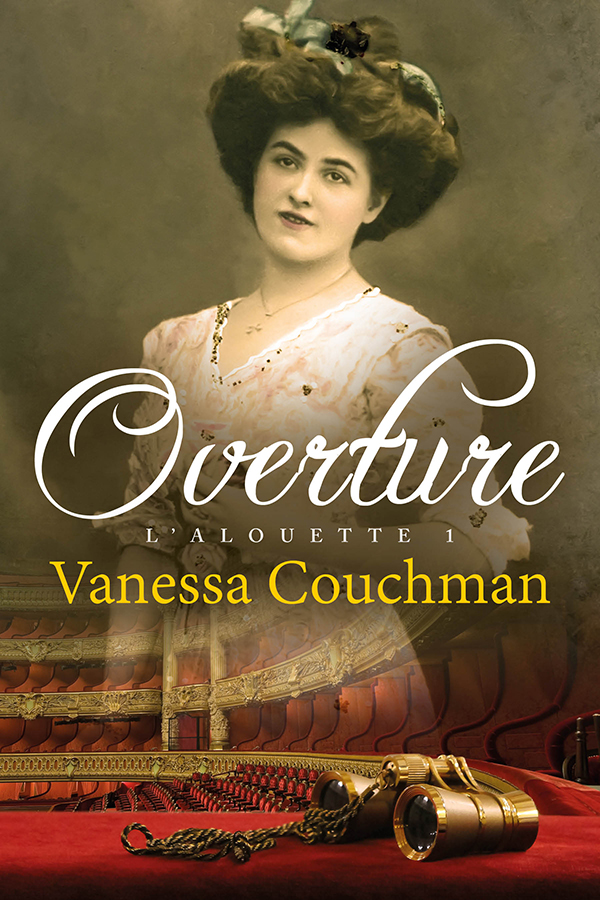
Discover Overture, Book 1 of the Alouette Trilogy:
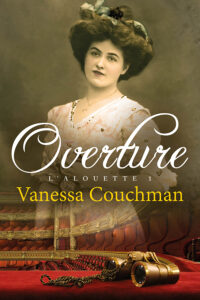 All Marie-Thérèse wants to do is sing, but everything conspires against her dreams. All Marie-Thérèse wants to do is sing, but everything conspires against her dreams.
France, 1897.
Born to a modest farming family, Marie-Thérèse has a remarkable singing voice and wants to become a professional singer. But too many obstacles, including her parents’ opposition, stand in her way. Through no fault of her own, she makes a dangerous enemy of the local landlord.
The family circumstances change suddenly. Marie-Thérèse and her mother must move to Paris to work in her aunt’s restaurant. Her ambitions rekindle, but the road to success is paved with setbacks, until a chance meeting gives her a precious opportunity.
She is close to achieving all her dreams, but the ghosts of the past come back to haunt her and threaten Marie-Thérèse’s life as well as her career.
Overture is the first in a trilogy set in France, starting in 1897 and finishing at the end of the Second World War.
Buy Overture here: http://mybook.to/OvertureBook1
Alison Morton is the author of Roma Nova thrillers – INCEPTIO, CARINA (novella), PERFIDITAS, SUCCESSIO, AURELIA, NEXUS (novella), INSURRECTIO and RETALIO, and ROMA NOVA EXTRA, a collection of short stories. Audiobooks are available for four of the series. Double Identity, a contemporary conspiracy, starts a new series of thrillers.
Find out more about Roma Nova, its origins, stories and heroines and taste the latest contemporary thriller… Download ‘Welcome to Alison Morton’s Thriller Worlds’, a FREE eBook, as a thank you gift when you sign up to Alison’s monthly email newsletter. You’ll also be among the first to know about news and book progress before everybody else, and take part in giveaways.
If you enjoyed this post, do share it with your friends!Like this:Like Loading...
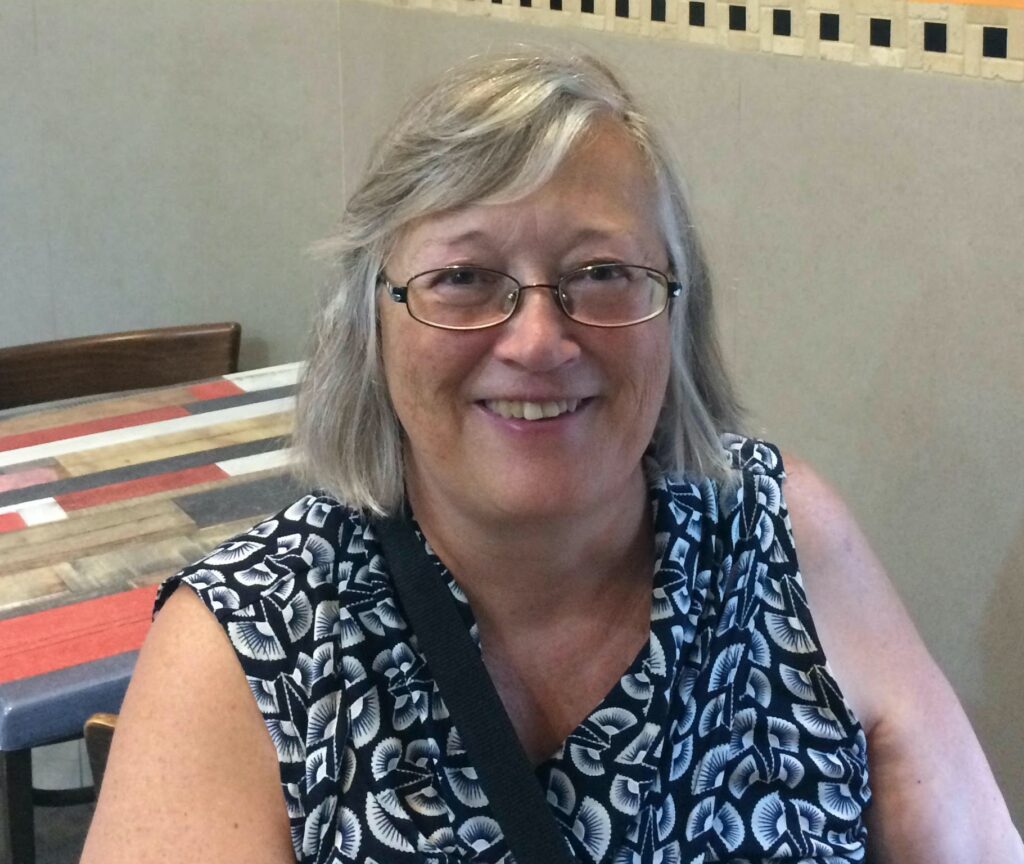 Photo by Sara Perry Continuing our series about English-speaking writers based in Europe and their ‘terroir’ – the place where they live. How does it affect their writing? This week, it’s Tracey Warr who lives near Albi in southern France.
She has published five novels set in early medieval Europe. Her first novel, Almodis, was shortlisted for the Impress Prize and the Rome Film Festival Book Initiative. Her second novel, The Viking Hostage, recounts the true story of a French noblewoman kidnapped by Vikings.
Tracey’s Conquest trilogy follows the tumultuous life of the medieval Welsh princess, Nest ferch Rhys in the aftermath of the Norman conquest. The trilogy was supported by a Literature Wales Writer’s Bursary.
Her next project, Three Female Lords, is a biography and has received an Author’s Foundation Award. She is Head of Research at Dartington Trust and teaches on MA Poetics of Imagination at Dartington Arts School.
Over to Tracey!
I was born in north London. Twenty years ago my only child—my daughter—grew up and left home and I resigned from my academic job. What next? A friend was in India for six months and offered me his house in the south of France, near Toulouse.
In October, the cat and I found ourselves in a tiny hamlet in the Tarn Valley. Wifi was good. Mobile coverage was poor. The only heating in the ancient, rickety house was a woodburning stove. I don’t drive and there was no public transport. The nearest shop (so small that a visiting friend thought it was a larder rather than a shop) was a 20-minute walk each way. I set up my desk, took a few last autumn swims in the river, and the cat and I hunkered down for the winter.
I expected to be in splendid isolation for months. I did a YouTube tutorial and got coaching over the phone from my Welsh friend on how to light the woodburning stove. The only local wood delivery man asked: ‘What do you think of Tony Blair?’ My answer passed the test and I woke one morning to the thuds of a few tons of logs being tipped onto the road outside. Moving them into the cave would be a mammoth task. I stepped from the front door, pulling on my gardening gloves, and was amazed to see two neighbours, who I had not said more than hello to, doing the same—automatically coming to help when they heard the sound.
Neighbours became friends, took me on trips to the supermarket, invited me over for Christmas, and my French improved. When I locked myself out one neighbour peered at the ancient lock and made a key. One morning I flung open the shutters and almost knocked another neighbour off a ladder where he was, unasked, pruning the rose and vine rambling round the house. As a city girl, this kindly camaraderie was unexpected.
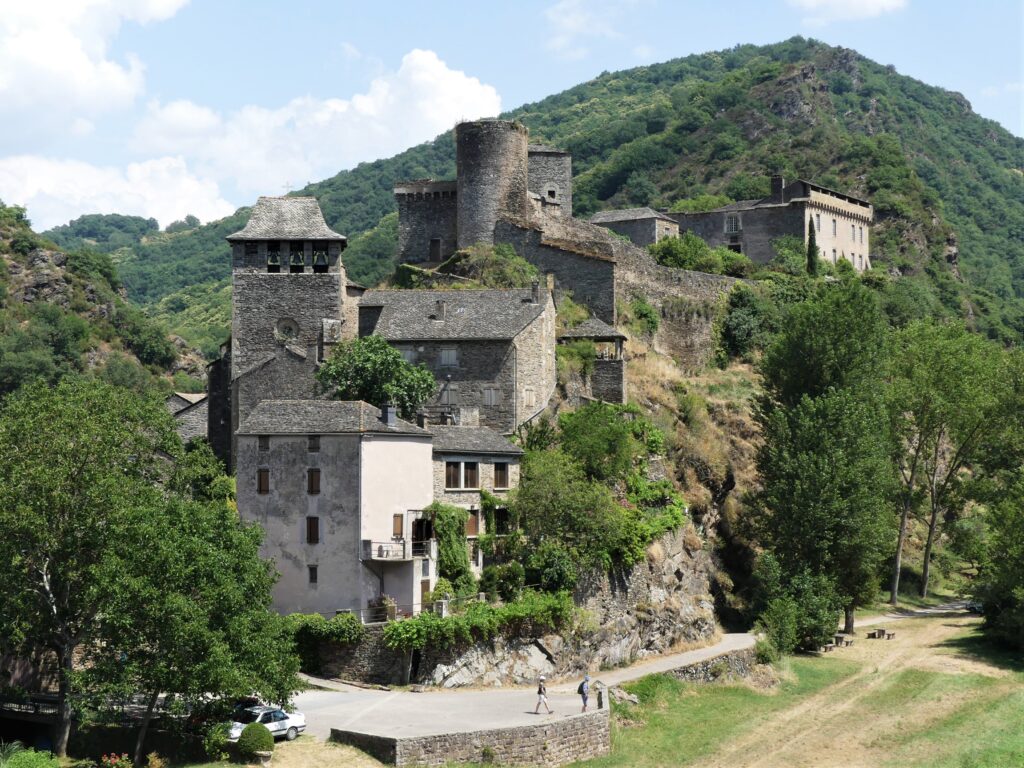 Brousse-le -Château Photo by Père Igor (Creative Commons) I went on a trip to Brousse-le-Château, an intact medieval village and, the next day, started researching and writing early medieval fiction based on the lives of real women I came across in an 11th century chronicle.
I fell in love with the pace of village life that gave me focus to write. I delighted in the markets, river landscapes and medieval castles. Swimming in the river and strolling on the bank gongoozling (watching the life of the river go by) complemented time writing and researching.
A year later, still obsessed with the French medieval women I’d discovered, I joined an MA in Creative Writing in Wales to reinforce my new life choice to be a historical fiction writer. Ten years later, I bought a tiny, dilapidated, medieval house on a river in another village near Albi, not far from the first place I had stayed.
Being separated from my family in the UK in COVID times has been hard. Another challenge is that occasionally I must have the British Library. I can get far with online research and buying books, but more obscure sources require ‘proper’ research in a reference library. I make what I think of as a guerrilla raid on the library – a few weeks’ concentrated work that I bring back to my desk like booty.
 Almodis de la Marche (left) (Public domain) My first novel focused on Almodis de La Marche, the real 11th century countess of Toulouse and Barcelona. The monk William of Malmesbury accused Almodis of being afflicted with a Godless female itch, which seemed to me to be a good reason to write about her. Now I am writing her biography.
My writing is inspired by material culture—objects in museums, archaeology, illustrated manuscripts—and by sensory experiences of places.
Living in France, I have easy access to site research. I visited Lusignan near Poitiers in the Aquitaine, the site of Almodis’s first marriage and the Melusine fey story, which may be associated with her. I visited the tiny chapel of Sant Pere del Burgal over the border in the Pyrenees, which has a fresco of Almodis’s sister, Lucia. I undertook writing residencies in the Pyrenees and in the splendid medieval village of Saint-Cirque-Lapopie in the Lot valley.
I belong to a writers’ group where we give each other feedback on works in progress, and cake. I run workshops for other writers’ groups and participate in bilingual literary festivals, including the marvellous Festilitt in Parisot where I met the original Poldark, Robin Ellis, and watched him giving a cookery demonstration and sporting a Sex Pistols apron. I give talks in local libraries and was honoured that my village invited me to join its annual Christmas Salon du Livre.
Writing is a respected occupation in France!
————–
Connect with Tracey
Website: https://traceywarrwriting.com
Facebook: https://www.facebook.com/traceywarrhistoricalwriting
Twitter: https://twitter.com/traceywarr1 @traceywarr1
Goodreads: https://www.goodreads.com/author/show/16786.Tracey_Warr
————-
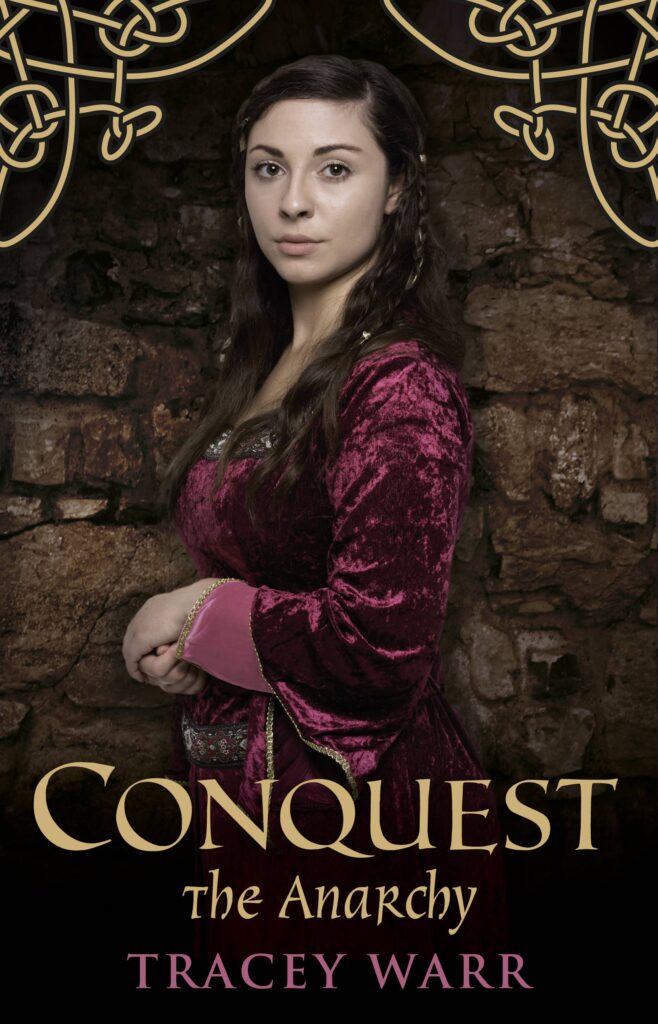 In 1121 the Welsh princess, Nest, is unhappily married to the Norman constable of Cardigan Castle. She becomes increasingly embroiled in the Welsh resistance against the Norman occupation of her family lands. In 1121 the Welsh princess, Nest, is unhappily married to the Norman constable of Cardigan Castle. She becomes increasingly embroiled in the Welsh resistance against the Norman occupation of her family lands.
She visits her former lover King Henry in England hoping to secure a life away from her unwanted husband. Grieved and stressed at the death of his son, the King is obsessed with relics and prophecies and under increasing pressure to name his successor.
In Normandy, Sheriff Haith distracts himself from the fact that Nest is married to another man by following clues surrounding the mystery of the drowning of the King’s heir in the wreck of The White Ship.
As Haith tries to piece together fragments of the tragic shipwreck in which three hundred young Norman nobles died in the English Channel, he discovers a chest full of secrets, but will the revelations bring a culprit to light and aid the King? Will the two lovers be united as Nest fights for independence and Haith struggles to protect King Henry?
Buy the paperback Kindle ebook on Amazon UK
Merci bien, Tracey!
Alison Morton is the author of Roma Nova thrillers – INCEPTIO, CARINA (novella), PERFIDITAS, SUCCESSIO, AURELIA, NEXUS (novella), INSURRECTIO and RETALIO, and ROMA NOVA EXTRA, a collection of short stories. Audiobooks are available for four of the series. Double Identity, a contemporary conspiracy, starts a new series of thrillers.
Find out more about Roma Nova, its origins, stories and heroines and taste the latest contemporary thriller… Download ‘Welcome to Alison Morton’s Thriller Worlds’, a FREE eBook, as a thank you gift when you sign up to Alison’s monthly email newsletter. You’ll also be among the first to know about news and book progress before everybody else, and take part in giveaways.
If you enjoyed this post, do share it with your friends!Like this:Like Loading...
 If you subscribed to this blog by email, you probably used a little sign up box which was managed by Feedburner (owned by Google). If you subscribed to this blog by email, you probably used a little sign up box which was managed by Feedburner (owned by Google).
Well, Feedburner/Google have decided to stop this ‘subscribe by email’ service. 🙁
If you wish to continue following my blog by receiving an email when something (hopefully exciting and interesting) appears on the blog – and I hope you do – just resubscribe by email to the new service I’ve added in the side bar at the right.
Don’t you love technology?
See you back here soon!
Alison Morton is the author of Roma Nova thrillers – INCEPTIO, CARINA (novella), PERFIDITAS, SUCCESSIO, AURELIA, NEXUS (novella), INSURRECTIO and RETALIO, and ROMA NOVA EXTRA, a collection of short stories. Audiobooks are available for four of the series. Double Identity, a contemporary conspiracy, starts a new series of thrillers.
Download ‘Welcome to Alison Morton’s Thriller Worlds’, a FREE eBook, as a thank you gift when you sign up to Alison’s monthly email newsletter. You’ll also be among the first to know about news and book progress before everybody else, and take part in giveaways.
If you enjoyed this post, do share it with your friends!Like this:Like Loading...
|
Subscribe to Blog via Email
Join 368 other subscribers.
Categories
Archive
|