 I’m not going to list, discuss or make any judgement about self-publishing – plenty of people have done that; blogs, conference workshops, books, newspaper articles abound. Just enter “self-publishing” in the search box on Google and wait for the flood. I’m not going to list, discuss or make any judgement about self-publishing – plenty of people have done that; blogs, conference workshops, books, newspaper articles abound. Just enter “self-publishing” in the search box on Google and wait for the flood.
I want to write about the confusion facing a fledgling writer. Me.
I’ve drafted three thrillers set in an alternate reality. Experts have given me feedback, some challenging, some encouraging, always plenty to work on. And now my polishing cloth is well-worn. Agents have given me praise: ‘well-written”, “intelligent”, imaginative”. Authors whom I respect immensely have been rocks of support and encouragement. Beta readers have raved about my work (Read the comments!).
Rejection is a normal part of the path to publishing. I blogged about it here. And any guidance or information gleaned from the process can do nothing but help/guide/refine. But the siren voice of an immensely attractive alternative is getting louder. Both traditionally published and not-yet-published writers are putting their books up on Amazon, Smashwords, etc. and finding success (whatever that is 🙂 ).
But there is so much opinion out there for the relatively inexperienced writer. My friend Talli Roland summed it up neatly in her recent post:
“If we believed all the rhetoric on the web these days, writers wouldn’t know which way to turn. Many seem to be divided into traditional versus self-publishing, each slinging dirt at the other for the decisions they make. But aren’t we all writers, struggling to make a living? Shouldn’t we be celebrating the options now available to us, instead of decrying how naive someone is when they sign with a traditional publisher, or looking down at a writer when they self-publish?”
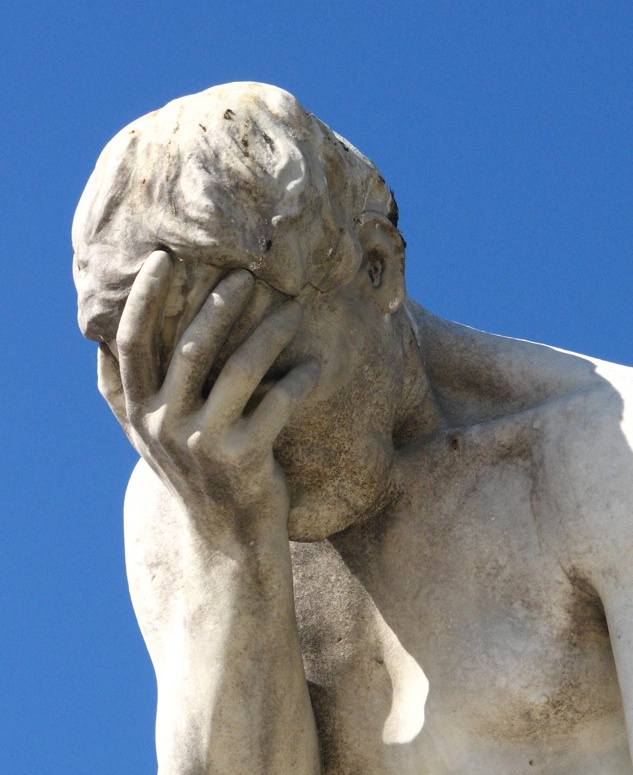
So here’s the crux: we have so much choice and so much opinion about choice that we find ourselves in the middle of a whirlwind.
Writing a book is hard work, but marketing and selling a book is also hard and is a business. So there’s instant brain-split. Do not think that if you self-publish you can do it all yourself. How do we find a good editor/cover designer/publicist? A traditional agent/publisher mix would do much of the business work for you, but would you be content with a small percentage of the book sale price or does Amazon’s 70% beckon you? Do you yearn to walk into a bookshop and burst with pride as you reach up and touch the book with your name on or do you want into the digital bookshop at a few keystrokes?
One guideline to steer by may be to think why you want to publish your book? Is it working through a story that’s been in your head for years? Is it proving something to yourself or others? Do you want to make your living out of it? Do you have a message for other people? Or is it that you can’t you stop tapping on that damned keyboard?
I’m still out. I’m editing book3 but by the end of the summer, I will stop dithering and make a decision. Are you facing this same dilemma?
If you enjoyed this post, do share it with your friends!Like this:Like Loading...
 My friend and fellow writer, Liz Harris whose book The Road Back is out later this year, has recently started blogging Welcome to my World My friend and fellow writer, Liz Harris whose book The Road Back is out later this year, has recently started blogging Welcome to my World
In her last post, she asked for help from fellow authors. It’s such a good question, I’d like to ask something similar. She’d introduced some well-researched period vocabulary in her new novel, but some critique group members had suggested they were too obscure and she should substitute something more generic. So she asked her blog readers for their opinion.
I and thirty-thousand others urged her to leave them in.
These words, such as cuirasse, buckler, poke bonnet, castrum, stanchion, frigidarium, photon torpedo, palla, goose grease, etc. are what give our books their unique flavour.
As a reader, do unknown words put you off or intrigue you? Would you rather have an easy, grey novel or do you enjoy learning as you read?
If you enjoyed this post, do share it with your friends!Like this:Like Loading...
 Since I published my first book, a non-fiction title called Military or Civilians? The curious anomaly of the German Women’s Auxiliary Services during the Second World War on Amazon last Wednesday quite a few people have asked me why I did it. Since I published my first book, a non-fiction title called Military or Civilians? The curious anomaly of the German Women’s Auxiliary Services during the Second World War on Amazon last Wednesday quite a few people have asked me why I did it.
Comments have included:
“I thought you wrote alternate history thrillers with a Roman theme.”
“Aren’t you looking for agent representation and the trad publishing route?”
“What’s German women’s history got to do with the Romans?”
All good questions. Here are the answers:
Yes, I do.
Yes, I am.
They’re both history.
OK, that’s a bit glib. Here’s some history, or maybe it’s archaeology…
Picture me at fifteen, making O-level choices. I had to chose two out of three of Latin, History and Geography. As a budding linguist, Latin was easily chosen. But the other two? Both deep loves. Geography won as I needed it if I wanted to do A level (which I did). But History – I felt I was abandoning a child in an Arctic wind. My History teacher was ‘disappointed’.
But I knew history would stay with me. It coloured my entire thought process. It was licenced nosiness. Why did people do that? What were the circumstances? How did they achieve it? What did this object mean? Why was this so important to them? What do they tell us with their “messages across time”?
On every holiday/business trip/family outing I couldn’t and can’t help it: buildings shriek out at me, monuments beg for attention and the latest news always has a historical context. I’ve been lucky enough to see Roman palaces, roads, art, to marvel at the Bayeux Tapestry and the sadness of Oradour, and see Berlin before and after the fall of the Wall. I’ve handled Commynes’ commentaries and my own great-great grandfather’s medals from the Boer War.
But where were the women in these stories? In the small universe of my family, I discovered although my mother was in a reserved occupation as a student then a teacher in 1939, her two sisters had joined the WRNS and my father’s sister the WRAF. All survived the Second World War.
When I was choosing my MA History dissertation topic, I remembered a German friend mentioning her late grandmother had worn a Wehrmacht uniform during the Second World War. A woman wearing a Wehrmacht uniform? I’d never heard of such a thing. But my friend pulled out an old photo of a young girl in a size-too-big greatcoat, dark tie around her neck, a side cap with badge; she looked straight to camera, at once serious and so young. The result was my dissertation and a few years later, with the digital revolution making it possible, the book I published last Wednesday.
The Romans? Now my German women’s history book is in the world, I’m back in my Roman-themed thriller world again.
Now where did I put my stylus?
Military or Civilians? The curious anomaly of the German Women’s Auxiliary Services during the Second World War is available as an ebook on amazon.co.uk amazon.com, amazon.de
If you enjoyed this post, do share it with your friends!Like this:Like Loading...
 If you were young, German and female in 1939 you were at the poorer end of the gender scale. Unable to hold professional posts, ill-educated, your role was defined politically, ideologically and socially as a servant, assistant, mother. You’d taken part in political youth activities, but had no outlet for personal develop and no chance of a career. If you were young, German and female in 1939 you were at the poorer end of the gender scale. Unable to hold professional posts, ill-educated, your role was defined politically, ideologically and socially as a servant, assistant, mother. You’d taken part in political youth activities, but had no outlet for personal develop and no chance of a career.
By early 1945, you were very likely manning an anti-aircraft gun in a cold field all night, wearing a thick serge Luftwaffe uniform, or working a signals link in a military unit under bombardment, and serving alongside male soldiers, praying it would all end soon.
So how did the ideological and gender norms change so radically in Nazi Germany? Why were young women, the future mothers of the nation, in uniform, under fire and playing a crucial role in their nation’s war efforts. And why have they had to bury such experience, fearing to be seen as part of a criminal regime? Now in their 80s and 90s, many former Helferinnen are speaking out.
500,000 young women worked in the German armed forces by the end of the Second World War. Uniformed, under military discipline, posted to every corner of the German Reich and occupied territories, could they still be regarded as civilians or were they truly military?
Military or Civilians? The curious anomaly of the German Women’s Auxiliary Services during the Second World War is available as an ebook on amazon.co.uk (link below in box), amazon.com, amazon.de
Alison Morton is also the author of Roma Nova thrillers, INCEPTIO, and PERFIDITAS. Third in series, SUCCESSIO, is out early summer 2014.
If you enjoyed this post, do share it with your friends!Like this:Like Loading...
 I stood on the rounded road stones, warmed by spring sunshine under a deep blue sky, and gazed up the road as it rose to the horizon. Red-tiled and grey stone shop fronts each side of the road. I steadied my breath, shut my eyes and heard the noises of nineteen hundred years ago. I stood on the rounded road stones, warmed by spring sunshine under a deep blue sky, and gazed up the road as it rose to the horizon. Red-tiled and grey stone shop fronts each side of the road. I steadied my breath, shut my eyes and heard the noises of nineteen hundred years ago.
This was Pompeii for me a week ago. Maybe I’m fanciful, but when I get to a location and I stand quietly, closing off the visual and aural senses, I try to draw on those other hidden intuitive senses to feel the place I’m in. I imagine the crowds, the smells, the rattling carts, the cheeky kids, pickpockets, shopkeepers, the noise of humans shouting, pack-animals braying, dogs barking.
Then I can start writing…
More pictures of my Roman tour here.
If you enjoyed this post, do share it with your friends!Like this:Like Loading...
|
Subscribe to Blog via Email
Join 368 other subscribers.
Categories
Archive
|