You’d think that once in print, on paper or digitally, a piece of written work was finished. Well, no. Revised editions, additional content and reworking show that change is continuous. In fact, change is all around us; time, seasons, weather, people moving in, moving out, governments, friends, cars, shops, children, relationships. One of the things that is deep-seated in our psyche and which marks us out as human beings is our ability to adapt to change.
Good writing is nothing if not dynamic. Being open about changing our words is the spirit behind good editing. As a new writer, I acted like a mother tigress defending the precious sentences that I’d wrenched out of my soul, but now I know that was being precious in the other sense. Change through editing can give your words more impact, more power and more life.
Ensuring your story reflects and embraces change will resonate strongly with readers. Your plotline may change and that’s quite normal as you develop your narrative. But two areas are often forgotten: setting and character.
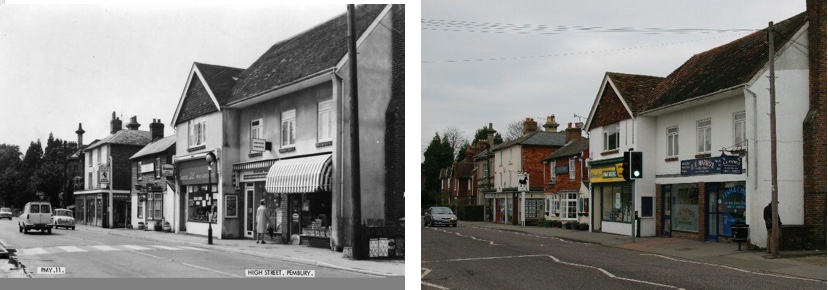 Pembury Kent, 50 years apart: shops, cars, height of trees, zebra to pelican crossing, pub sign Setting changes
The easy one first – setting, which includes physical environment, weather and atmosphere. It’s unlikely the weather stays the same between two scenes if your story is set in the UK. In France, we have longer periods of settled weather, but shadows lengthen and shorten as sunlight strengthens and weakens. Wind, storms, floods, Siberian blasts across plains and blizzards in mountains convey passing time.
Governments rise and fall, politicians itch with change, the most rigid of social groupings are broken, polarised and re-formed. Landscapes are impacted by war, technology and changes in industrial and farming practice and policies.
Seasons change as do plant cycles. I once read a book set in January where ripe grapes hung on vines! No, you should be pruning stick-like remnants then to within an inch of their life. Less romantically, roads are built and repaired (or not), new industrial buildings erected and shops open and close. Who hasn’t gone back to their childhood home and noticed how much it’s changed?
Character changes
I’m taking it for granted that your characters change and/or are changed by your story whether through an experience, an event or an encounter with another character, or all three. A child grows up, a teenager learns a harsh lesson, a retiree suddenly has to cope alone when a partner has gone.
But if your story takes place over a few years, people should age: change in hair colour, skin tone, the need for glasses or hearing aids, illness, childbirth, disease or injury. A sixty-year-old can’t hack it like a forty-year-old who can’t hack it like a twenty-year-old. That confident twenty-year-old who thinks she is the mistress of the universe doesn’t generally have the experience, wisdom or maturity of a sixty-year-old.
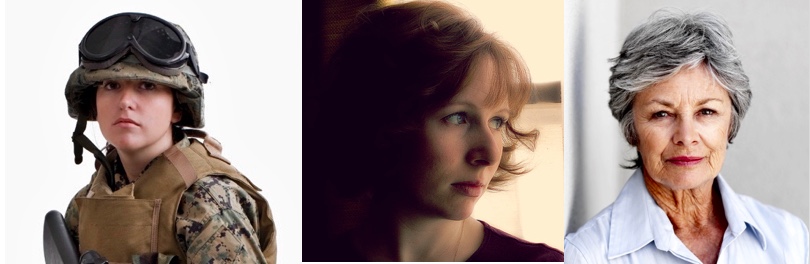
People often change their names through adoption, marriage, divorce, widowhood, emigration or a need to hide their past. They also change their style of clothing, or sometimes stay fixed in the fashion or their youth, or what is comfortable.
And people’s needs change, not just in the physical environment like housing or food. After the acquisition phase of life, many people yearn for a simpler, streamlined existence and refocus on experiences and relationships rather than things.
If you write series, some of your characters will soften or harden attitudes, and change needs while retaining and honing their core values. The older Aurelia in my first Roma Nova trilogy is a lot calmer and wiser at 70/77 and 85 years old than she is in the prequel trilogy which takes place in her youth (28 years old) and middle period of her life (45/47 years old).
Great stories can come from change, or lack of it. I suggest you keep the word ‘Change?’ pinned up on somewhere visible on your writing noticeboard and consider it for every scene you write.
Happy writing!
Alison Morton is the author of Roma Nova thrillers – INCEPTIO, CARINA (novella), PERFIDITAS, SUCCESSIO, AURELIA, NEXUS (novella), INSURRECTIO and RETALIO, and ROMA NOVA EXTRA, a collection of short stories. Audiobooks are available for four of the series. Double Identity, a contemporary conspiracy, starts a new series of thrillers.
Find out more about Roma Nova, its origins, stories and heroines and taste world the latest contemporary thriller Double Identity… Download ‘Welcome to Alison Morton’s Thriller Worlds’, a FREE eBook, as a thank you gift when you sign up to Alison’s monthly email newsletter. You’ll also be among the first to know about news and book progress before everybody else, and take part in giveaways.
If you enjoyed this post, do share it with your friends!Like this:Like Loading...
 Some reflections for International Women’s Day… Some reflections for International Women’s Day…
All fictional characters are, er, fictional. We borrow, mine, or lift characteristics from Real Life, but unless we want to get sued, the finally moulded form is a construct. We can gender mirror (I love using that expression – also made up), we can speculate, we can imagine.
Ditto the setting. Even if your thriller story is set in a gritty suburb, a private tropical island, a galaxy far, far away, or grounded by finding a parking space at Waitrose, your book world is fictional. And time… Are you in Ancient Rome, today’s London or 30,000 years in the future? It’s not real time; it’s fictional time.
Opening any book opens you to a new world and releases you from the confines of your place and time, whether as reader or writer. And this is a perfect way into speculating about the “what if”, especially for women. In Real Life, women see fewer aspirational patterns and models than men do. Perhaps this is why there are significantly more women writers and women readers than men; women are seeking an alternative..
 Sian Phillips as Livia in I, Claudius (BBC) In many works, male heroes are outspoken, forthright, taking leadership, leading the action, making decisions; women are secondary – the wife, girlfriend, assistant, the rape victim, the soft contrast to the hero. If they do take a leading role, they are uncomfortable, unhappy or unfulfilled as women or, stereotypically, the “evil one” even in childhood reading such as the Narnia series. And as for Livia as portrayed in I, Claudius – don’t get me started!
Women with power and agency, i.e. who can and do act, seem to be seen as a threat, so they are slotted in as angels or demons, nurses or harlots. What a shame.
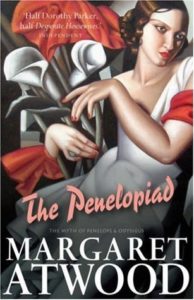 Enter science fiction, fantasy and its subgenres, including alternative history. SFF (for short) has long served as a platform for social criticism and commentary. George Orwell, Ursula Le Guin and Margaret Attwood are obvious examples. But it too has been crammed chock full of reduced or neglected female figures. We’ve been a long time waiting for Wonder Woman to go mainstream. Enter science fiction, fantasy and its subgenres, including alternative history. SFF (for short) has long served as a platform for social criticism and commentary. George Orwell, Ursula Le Guin and Margaret Attwood are obvious examples. But it too has been crammed chock full of reduced or neglected female figures. We’ve been a long time waiting for Wonder Woman to go mainstream.
But an ever increasing number of authors in speculative genres are using their stories to question the central issue of gender roles. Readers travel to places far removed from their current social reality where the givens are not only questioned but tipped upside down. All constraints are down and the result may be welcome or reflect real fears. And once an idea has entered somebody’s head, it can rarely be dislodged. The synapses are firing…
Resolution, loyalty, serving the state are not exclusively male qualities. Caring, empathy, supporting are not exclusively female ones. All genders can express love, hurt, self-doubt but also happiness, acceptance and friendship. Mix all that together and bake in different tins until well done.
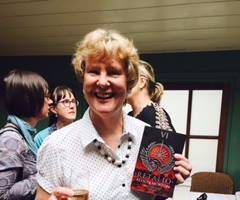 My Roma Nova novels aim to do just that. It took a feminist mother, a Roman nut father, voracious reading of the weird and wonderful, six years in the military and a bad film to trigger this for me, but I remembered everything and once sparked, the Roma Nova world with its courageous and complex heroines has never left my mind. My Roma Nova novels aim to do just that. It took a feminist mother, a Roman nut father, voracious reading of the weird and wonderful, six years in the military and a bad film to trigger this for me, but I remembered everything and once sparked, the Roma Nova world with its courageous and complex heroines has never left my mind.
Engaging with concepts, worlds and characters that seem impossible or unrealistic lets us play with a hidden, secret or yearned for adventure we couldn’t take in real life, not least due to our gender. Science fiction and fantasy novelists can show readers a radically different worldview and cultures through stories of astounding adventures in alternative realms.
And who knows? Perhaps speculative stories, with their heroic women and their derring-do have the potential to provoke change in the real world.
Update 2024: Alison Morton is the author of Roma Nova thrillers – INCEPTIO, CARINA (novella), PERFIDITAS, SUCCESSIO, AURELIA, NEXUS (novella), INSURRECTIO and RETALIO, and ROMA NOVA EXTRA, a collection of short stories. Audiobooks are available for four of the series. Double Identity, a contemporary conspiracy, starts a new series of thrillers. JULIA PRIMA, Roma Nova story set in the late 4th century, starts the Foundation stories. The sequel, EXSILIUM, is now out.
Download ‘Welcome to Alison Morton’s Thriller Worlds’, a FREE eBook, as a thank you gift when you sign up to Alison’s monthly email update. You’ll also be among the first to know about news and book progress before everybody else, and take part in giveaways.
If you enjoyed this post, do share it with your friends!Like this:Like Loading...
Super exciting news! I’ve been chosen to be a panellist at the prestigious CrimeFest in May! I’ll be on ‘The Indie Alternative’ at 9.30 Sunday 20 May with fellow Alliance of Independent Authors writing friend Debbie Young, and authors Ian Andrew and Karen Millie James, with Zoë Sharp in the chair. Do have a look at the full programme.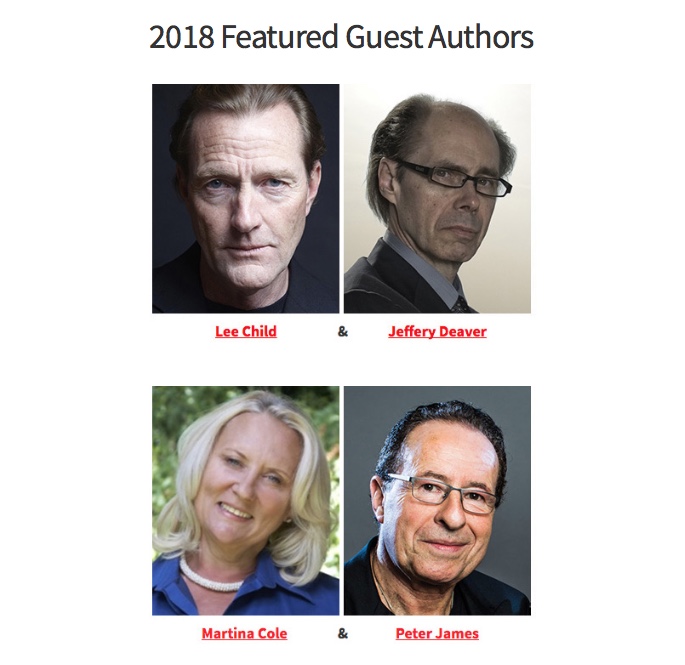
It’s an enormous privilege given the calibre of the other speakers like Lee Child, Martina Cole, Jeffrey Deaver and Peter James *swoon*. When I looked at the attendance list, there are so many writing friends going.
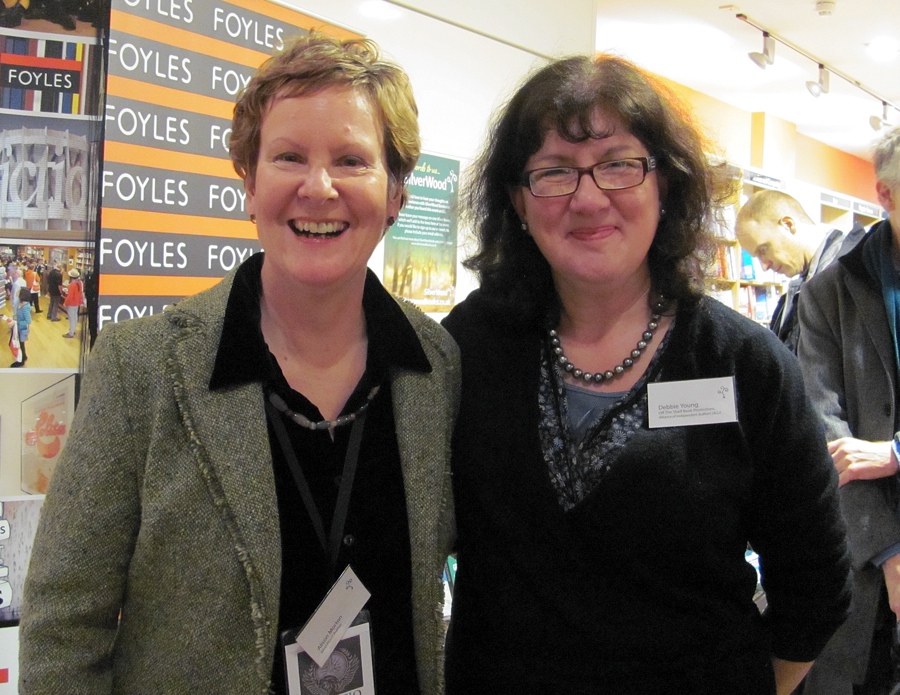 With Debbie Young at a previous event, Foyles in Bristol I’ll be in full participation mode: forensic excursion, full programme, gala dinner, bar attendance, plus catching up with old friends and making new ones.
Roll on May!
http://www.crimefest.com
UPDATE: And this is how it went…
Alison Morton is the author of Roma Nova thrillers INCEPTIO, PERFIDITAS, SUCCESSIO, AURELIA, INSURRECTIO and RETALIO. CARINA, a novella, is available for download now. Audiobooks are available for the first four of the series.
Find out more about Roma Nova, its origins, stories and heroines… Get INCEPTIO, the series starter, for FREE when you sign up to Alison’s free monthly email newsletter
If you enjoyed this post, do share it with your friends!Like this:Like Loading...
 Last Thursday, I was delighted to be internet-based ExpatRadio‘s special guest on ‘The Scribblers’ spot. They let me witter on (in between music) for an hour. No, it was more of a conversation with Mike Madden, Wendy H Jones and Eilidh McGinness. I’ve met Wendy several times before – we both spoke a the last Dublin Writers’ Conference (and will be at the next one in June) and I know Eilidh from social media. Mike asked some good open questions and Dave Hailwood, the station supremo, held it all together. Last Thursday, I was delighted to be internet-based ExpatRadio‘s special guest on ‘The Scribblers’ spot. They let me witter on (in between music) for an hour. No, it was more of a conversation with Mike Madden, Wendy H Jones and Eilidh McGinness. I’ve met Wendy several times before – we both spoke a the last Dublin Writers’ Conference (and will be at the next one in June) and I know Eilidh from social media. Mike asked some good open questions and Dave Hailwood, the station supremo, held it all together.
They let me mention not just Roma Nova and the books, especially the latest CARINA, a novella set in between the first and second in the series (INCEPTIO and PERFIDITAS) but also thank SilverWood Books (at 21 minutes) who helped me get going on my publishing journey. I also got a plug in for The Deux-Sèvres Monthly, my local English language magazine for expats, where I write a column on writing and publishing.
We chatted and joked in between alternative history, heroines, emotion, writing skills and France. That hour passed far too quickly. They’ve invited me back when my next book is out… 🙂
Here’s the recording (minus the music) and no, we weren’t on gin, just good humour):
(There are some tiny repeats here and there due to internet buffering, but shouldn’t detract from the enjoyment!)
Alison Morton is the author of Roma Nova thrillers INCEPTIO, PERFIDITAS, SUCCESSIO, AURELIA, INSURRECTIO and RETALIO. CARINA, a novella, is available for download now. Audiobooks are available for the first four of the series.
Find out more about Roma Nova, its origins, stories and heroines… Get INCEPTIO, the series starter, for FREE when you sign up to Alison’s free monthly email newsletter
If you enjoyed this post, do share it with your friends!Like this:Like Loading...
 A plot in a novel gives the reader the main character’s goal; the challenges the character has to overcome to achieve the goal, what’s stopping her/him and the dire consequences if she/he doesn’t succeed. A plot in a novel gives the reader the main character’s goal; the challenges the character has to overcome to achieve the goal, what’s stopping her/him and the dire consequences if she/he doesn’t succeed.
My own goal is to produce a readable, entertaining and thought provoking book at least once a year. But every now and again, when I come up for air, I try to pin down why I write and why I spend hours at my keyboard doing it.
A year or two ago, I wrote about this in my column for The Deux-Sèvres Monthly. I asked some writing friends for their thoughts…
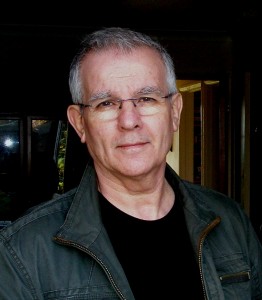 Adrian Magson (First endorser of INCEPTIO) I write because I don’t really know how not to write. Making stories is something that is so intrinsically part of who and what I am, that I can hardly imagine what it would be like not to do it. Also, writing is a fabulous excuse to not do the dishes and the laundry. Liesel Schwarz, steampunk author
I write to explore how I feel about the things that trouble me and to tell stories to entertain. Ann Cleeves, Shetland series
I write because I must and it’s what I’ve always wanted to do. Simple. I also work hard at it and believe it will come out right. Adrian Magson, thriller writer
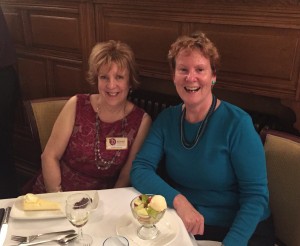 With Elizabeth Chadwick I write because I have been telling myself stories of one sort or another almost from birth. It’s a deep part of who I am. Elizabeth Chadwick, historical writer
I write because it’s my family business – and also because it’s the best way I know to make a living. Victoria Lamb, historical writer
I have perceived myself as being a writer from when I was a little girl and always had something I was burning to say.
These days I just say it at more length. Trisha Ashley, women’s fiction writer
I began writing in the mid nineties for practical reasons. I’d sustained a serious wrist injury that ended my career as a probation officer. For me, writing on a computer was physiotherapy following surgery but also to keep my mind occupied. I was bored at home and far too young to be retired. At the time I had no aspirations to become a professional crime writer. It was years when that thought occurred. These days, I write because I must. Mari Hannah, crime writer
And the master, Stephen King… I really can’t imagine doing anything else and I can’t imagine not doing what I do.
My conclusion so far (This may change, of course!)
If you know what you want from your writing, why you write, your writing will be tighter and more focused. If you’re not clear now, it will come back to haunt you later in your writing life especially when faced with choices which could mean pursuing one part of your goal but at the expense of neglecting another.
And me? The story was just bursting to get out and was triggered by seeing a rubbishy film at the local multiplex. ‘I could do better than that,’ I whispered to my husband in the dark. ‘So why don’t you?’
And why I carry on? I just can’t leave it alone…
Alison Morton is the author of Roma Nova thrillers – INCEPTIO, PERFIDITAS, SUCCESSIO, AURELIA, INSURRECTIO and RETALIO. CARINA, a novella, and ROMA NOVA EXTRA, a collection of short stories, are now available. Audiobooks are available for four of the series. NEXUS, an Aurelia Mitela novella, will be out on 12 September 2019.
Find out more about Roma Nova, its origins, stories and heroines… Download ‘Welcome to Roma Nova’, a FREE eBook, as a thank you gift when you sign up to Alison’s monthly email newsletter. You’ll also be first to know about Roma Nova news and book progress before everybody else, and take part in giveaways.
If you enjoyed this post, do share it with your friends!Like this:Like Loading...
|
Subscribe to Blog via Email
Join 368 other subscribers.
Categories
Archive
|