Nobody can fail to be shocked by the devastation in Japan. Word like apocalyptic and cataclysmic are flying around. Historians recall the Minoan civilisation was one destroyed by a tsunami.
The threads of modern life are multiple and complex, but fragile, vulnerable to stretching and snapping in seconds. Futurologists predict that tiny individual incidents in accumulation or suddenly en masse could trigger the end of everything. And there’s the old saw that we are three meals away from savagery. Japan isn’t half a world away; it’s your neighbour, your work colleague, a large proportion of your personal life goods.
So, we need to take action en masse, to accumulate individual incidents but in a positive way. And every person’s individual effort counts.
Writers are raising funds via Authors for Japan, where donation bids are auctioned for a token prize. It opens today and runs to 20 March. Perhaps it may not raise millions, but it’s one of those hugely important individual efforts. Proceeds go to the British Red Cross.
Close to my heart, as I’m a practical person, are shelterboxes.
To quote their website: “The ShelterBox solution in disaster response is as simple as it is effective. We deliver the essentials a family needs to survive in the immediate aftermath of a disaster.
Each large, green ShelterBox is tailored to a disaster but typically contains a disaster relief tent for an extended family, blankets, water storage and purification equipment, cooking utensils, a stove, a basic tool kit, a children’s activity pack and other vital items.”
So your twenty quid is needed. Now would be good.
If you enjoyed this post, do share it with your friends!Like this:Like Loading...
Simon Scarrow always succeeds in letting me into his tough, male Roman world without alienating me from an environment so different from my own. His heroes, Macro, the blunt-speaking grizzled veteran, and Cato, the educated and younger soldier, bash their way through numerous adventures (including Eagle in the Sand) in the time of Emperor Claudius.
The adept/tyro dynamic twists between the pair, each learning from the other, while becoming friends, no, comrades, in the face of a series of dangers thrown at them. Yet, I identify with their values, their reasons for their decisions in an uncompromising often brutal world. But if I based my behaviour on theirs, I would end up doing twenty years in Holloway.
So, what’s going on here?
Simon Scarrow builds his world accurately and succinctly. No question. You are in the middle of a forced march, a seige in the scorching desert or emmeshed in the corrupt palace politics. You feel the bitterness of a lover killed, the conspirator escaping, the relief that you are alive after rebels and Parthians have killed many of your comrades.
And that’s the point. Scarrow builds a plausible world in meticulous detail, drawing on original sources and painstaking research. But he entices us into the parallel world of emotions experienced by Macro and Cato as human beings. Despite the alien values framework by 21st century norms, many of their dilemmas are the same and the decisions just as difficult to make.
But what if the alien world isn’t based on history? This is both the task and a trap before science fiction, alternate history and fantasy writers. Many such worlds dip heavily into our own history, folk myths and basic fears: Tolkein used Anglo-Saxon culture for Theoden, C S Lewis used the wicked female witch versus golden, enigmatic and noble male, H G Wells despaired about our future as a race. And I’m not going to try and work out who or what the Klingons are…
The most intruiguing, for me, is the alternative history model where history changes at a point in the past and canters off in a different direction. Michael Chabon’s The Yiddish Policemen’s Union is a stylish noir murder mystery packed with pathos, wit and bizarreness set against the premise that in 1947 the Jews were given part of Alaska as their homeland instead of Palestine. But only for 50 years. And the lease is up…
The world weary detective’s character has the usual elements: failed relationships, faithful sidekick fighting to stay in the “normal” world, a tough boss (his ex-wife), a dead relative to avenge and gritty determination. But although the world-building is achieved with dense, interlocking detail, it’s the essential shared dilemmas and emotions that bind us into this fantastical world.
If you enjoyed this post, do share it with your friends!Like this:Like Loading...
 What is that strange feeling when you schedule work in that day, but at 6 pm and the nth cup of tea, you wonder what happened. Many people suffer from this. Especially writers, it seems. What is that strange feeling when you schedule work in that day, but at 6 pm and the nth cup of tea, you wonder what happened. Many people suffer from this. Especially writers, it seems.
Diversion is a word that comes up a lot. Doesn’t sound too bad: something that distracts the mind and relaxes or entertains. Indeed, divertissement was the word for pleasant entertainment or a short interlude.
The Romans, pragmatic as ever, used divertus to signify turned aside, probably meaning a river, rather than the flow of thought. Today, many people get diverted by Twitter, so perhaps diversion is really a a time-suck.
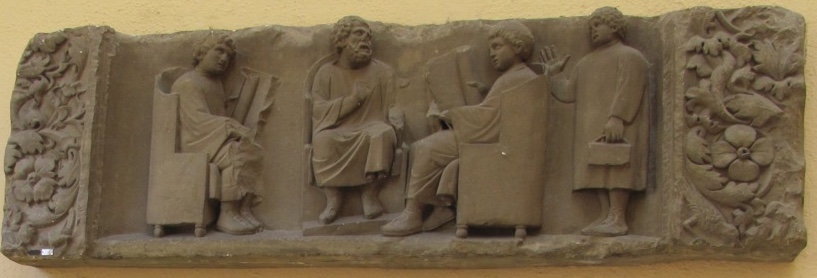 Procrastination, to forward to tomorrow (pro + crastinus, of tomorrow (from cras, tomorrow). Hm. Romans again, but persistently current, especially when faced with hundreds of pages of edits… Still that deadline is a long way away, isn’t it? Procrastination, to forward to tomorrow (pro + crastinus, of tomorrow (from cras, tomorrow). Hm. Romans again, but persistently current, especially when faced with hundreds of pages of edits… Still that deadline is a long way away, isn’t it?
As long as you haven’t succumbed to an artistic form of accidie – spiritual sloth, apathy, indifference. Sorry, can’t be bothered to finish this paragraph…
Irrespective of how you describe it, FTI is the outcome. Failure to implement was originally used in IT and possibly in economics. Now it’s one of the most often heard business buzz-words. Broken down, you get failure – not meeting a desirable or intended objective and implement – execution of a plan.
So why do we dilly-dally, drag our feet, or heels, lollygag, stall or shilly-shally? Why are we diverted by tidying, cake-baking, gardening, fiddling under the car bonnet, spending our precious writing time on Facebook and Twitter? We should be time-managing and compartmentalising, scheduling and meeting deadlines. No?
Could it be because writing is not seen as worthy, as a proper way to spend time?
Alison Morton is the author of Roma Nova thrillers, INCEPTIO, and PERFIDITAS. Third in series, SUCCESSIO, is now out.
Find out about Roma Nova news, writing tips and info by signing up for my free monthly email newsletter.
If you enjoyed this post, do share it with your friends!Like this:Like Loading...
Today, the book world moves. It’s out there saving libraries for you and the next several generations.
If you do nothing else this dull and cloudy weekend, go and take a book out. Or audio book. Or CD. Or DVD. Go and browse the Internet for free. Ask those incredibly clever librarians for information, guidance or just chat about books. Find out when the next pre-school storytime or bookclub takes place. Search local history. Find a quiet desk where you can write your own book…
The day would be over before I could list everything you could do in a library.
I discovered magic worlds there when I was 5 years old. Just go there today and look for yourself.
If you enjoyed this post, do share it with your friends!Like this:Like Loading...
The renowned Nicola Morgan, famously proud to be the first Google result for “Crabbit Old Bat” and an award-winning author of around ninety books, never fails to offer diamonds to aspiring writers. Frankness and occasional brutality are her hallmarks. But she’s usually right.
So, in my morning scan of blogs, I found her post today especially pertinent. She describes her personal experience of how emotional upset or personal crisis can throw a creative writer completely off kilter. She also offers possible solutions… Do go and read her post, then come back. 😉
I exchanged emails with Nicola a last month about a family crisis and the emotional shredding that went with it. But also about my strategy vis-à-vis my writing. I abandoned new writing, but carried on with brief, grabbed sessions of editing. I maintained contact, however tenuous, with my obsession.
Physically exhausted and mentally drained, my other half and I dawdled back down the M6 and M40. We listened to music, talked in snatches about nothing in particular. As we reached the ferry port in Portsmouth, we almost wept in reaction. We slept nearly the whole eight hours of the crossing. We’d never worked so hard, but we’d achieved a satisfactory resolution to the crisis through sheer drive and nervous energy.
 Disembarking from the boat in Le Havre, we revelled in the glorious sunrise, refreshed in a strange way. Five gold stars to nature. We took it easy for the next few days, throwing vitamins, fruit, coffee, wine and rest at our systems. I picked up again with my Twitter and email friends. I fiddled about doing some more edits (see previous post). Then my diary peeped at me. The York Festival of Writing. I had to write something in preparation of the one-to-one sessions with an agent and a book doctor. The deadline was 1 March, but I had fixed 7 Feb as my personal one. Disembarking from the boat in Le Havre, we revelled in the glorious sunrise, refreshed in a strange way. Five gold stars to nature. We took it easy for the next few days, throwing vitamins, fruit, coffee, wine and rest at our systems. I picked up again with my Twitter and email friends. I fiddled about doing some more edits (see previous post). Then my diary peeped at me. The York Festival of Writing. I had to write something in preparation of the one-to-one sessions with an agent and a book doctor. The deadline was 1 March, but I had fixed 7 Feb as my personal one.
I sat down and wrote. And it came. I reviewed and fiddled, but my brain threw words at my fingers at an accelerated rate of knots and they typed.
Not a new novel, not even a chapter of a new novel, but a start. As is this blog post…
If you enjoyed this post, do share it with your friends!Like this:Like Loading...
|
Subscribe to Blog via Email
Join 368 other subscribers.
Categories
Archive
|